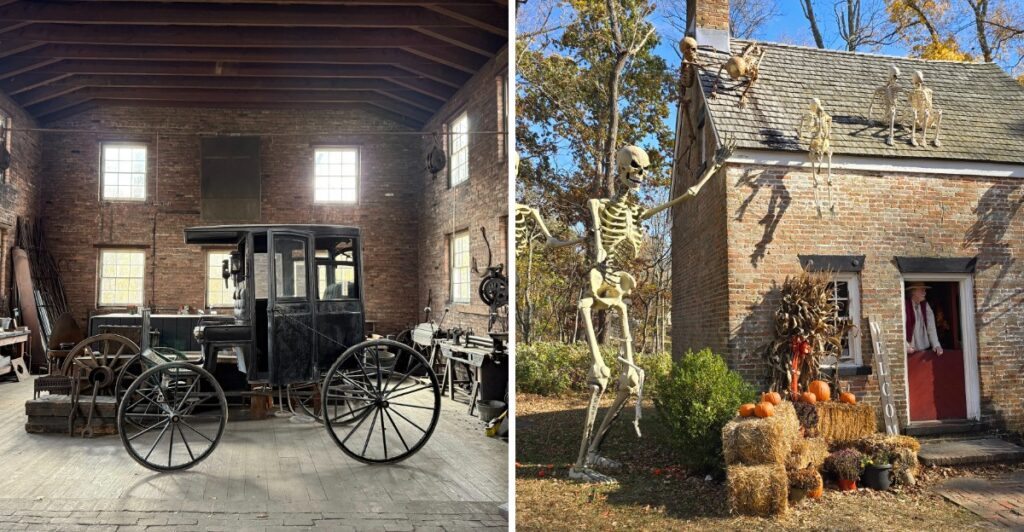
A blacksmith shop built in 1836 with four forges still has working blacksmiths inside. Back then, it ranked among the largest in New Jersey.
Today, those smiths still make items for the village and for sale.
The whole place freezes the clock at 1836. That was the busiest, most prosperous year for this old iron-making town.
Thirteen original buildings still stand on their first foundations.
I like how nothing here feels like a movie set. A bakery still fires up its beehive oven for demonstrations.
A general store that once held a post office still welcomes shoppers.
I can’t imagine a better way to make history feel real for kids or grown-ups. You get the sounds, the tools, and the stories in one spot.
An Entire 1836 Iron Town Is Waiting In The Woods
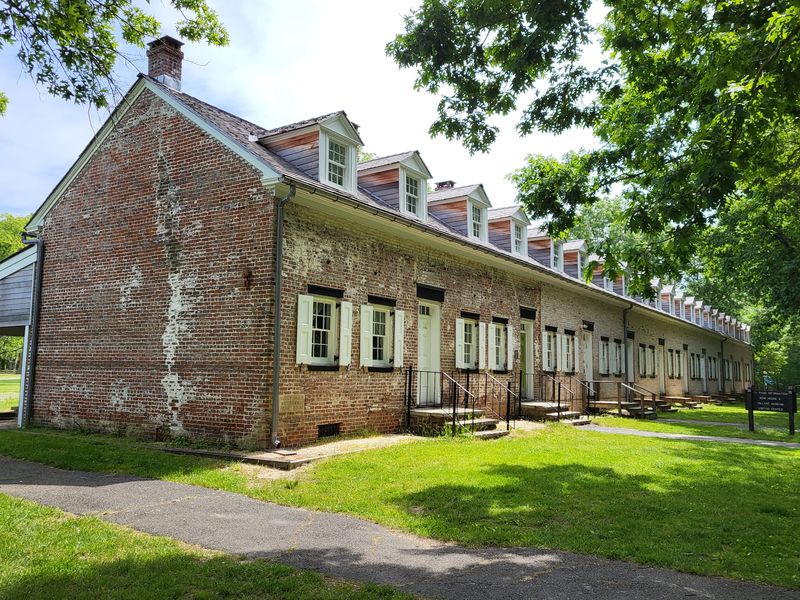
Back in 1822, a businessman named James P. Allaire bought a bog iron property and built a whole town around it.
Today, that place is called The Historic Village at Allaire, and most folks simply say Allaire Village.
It works as a living history museum inside Allaire State Park in New Jersey. Everything here is set in 1836, the town’s most successful year.
At its peak, around 500 people lived and worked in this self-contained community. They made pig iron and castings that shipped to Allaire’s steam engine works in New York City.
The furnaces also turned out pots, water pipe, and stove plates for stores.
The wood-burning iron business faded, and the village closed in 1846. Thirteen original buildings survived, still standing on their first foundations.
That’s a rare thing in any state.
Here’s a fun twist worth knowing before you go. In the 1830s, this spot was likely bare and dusty from all the busy work.
Now it’s leafy and green, which makes for a much nicer stroll.
Sparks Fly At One Of New Jersey’s Biggest Old Forges
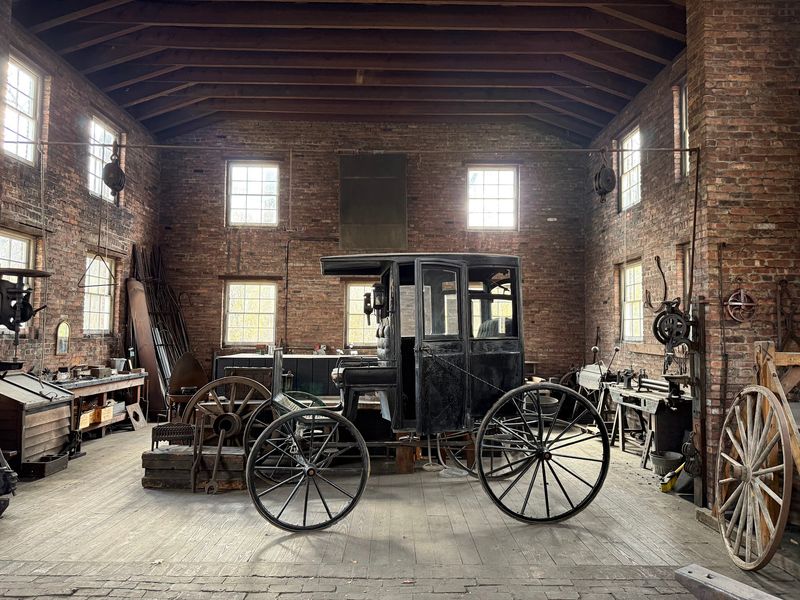
Clang, hiss, repeat. The Blacksmith Shop is the loudest reason to visit, and honestly, the best soundtrack in the village.
Built in 1836, the shop holds four forges. That made it one of the largest blacksmith shops in New Jersey at the time.
Workers here once kept a busy iron town running with tools, hardware, and repairs.
The fires didn’t go out for good. Blacksmiths still work in the shop today, making pieces used around the village.
Some of their handmade items are also sold, so you can take a little 1800s craftsmanship home.
Kids tend to lock onto the glowing metal right away. Watching iron change shape under a hammer explains more about history than a textbook page ever could.
It also shows how much skill and muscle old jobs required.
A quick tip helps here. Demonstrations depend on the day, so check the schedule before you go.
Weekends are your best shot for catching the forge in action and asking a few questions.
Your Nose Will Find The Beehive Oven Before Your Map Does
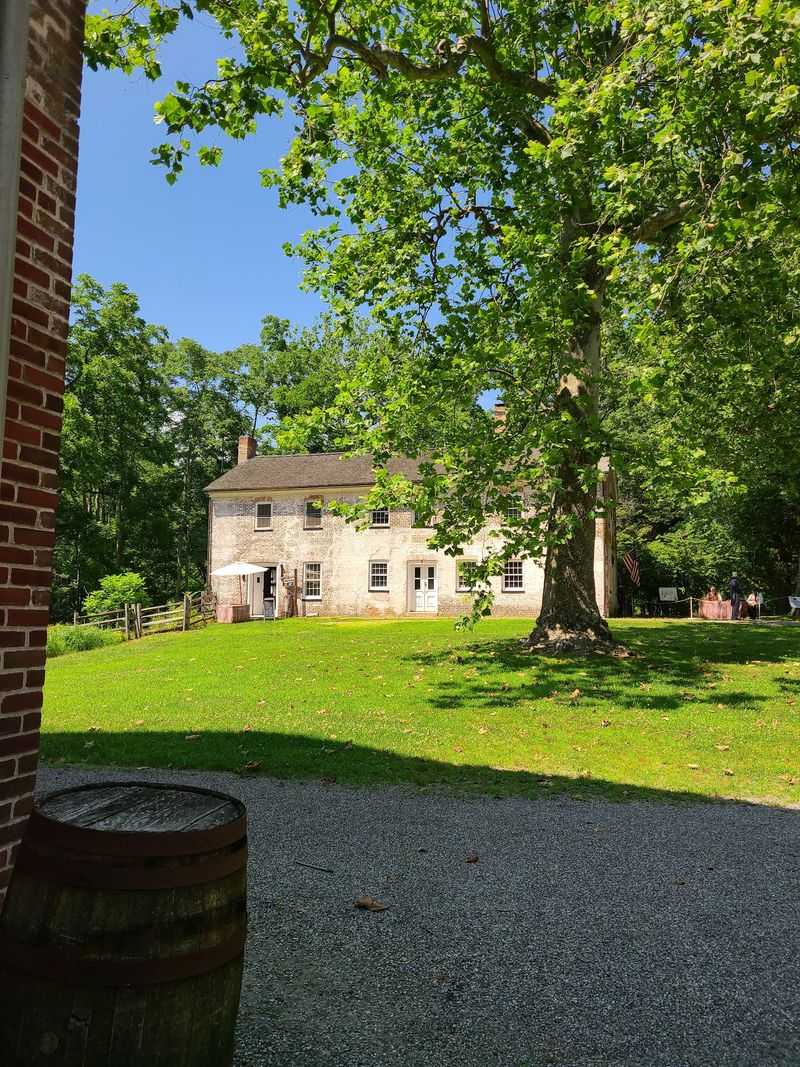
Bread was serious business in a town of hundreds of hungry iron workers. The Bakery, built in 1835, once supplied loaves for the whole community.
Its star feature is a beehive oven. The name comes from its rounded, dome-like shape.
Bakers would heat the oven with fire, then use the stored heat to bake.
Today, the oven is used for baking demonstrations. You get to see how people cooked long before electric stoves and timers that beep at you.
Think about the daily routine back then. No grocery store bread aisle existed, and every loaf took planning, fuel, and real effort.
Seeing the oven up close makes that very clear. It’s a great stop for curious younger visitors. They can compare this setup to their own kitchen at home.
Expect plenty of questions about how anyone knew when the bread was done.
Pair this stop with the nearby shops for a full picture of daily life. Food, tools, and trade all connected in this busy little town.
The General Store Once Handled Your Mail Too
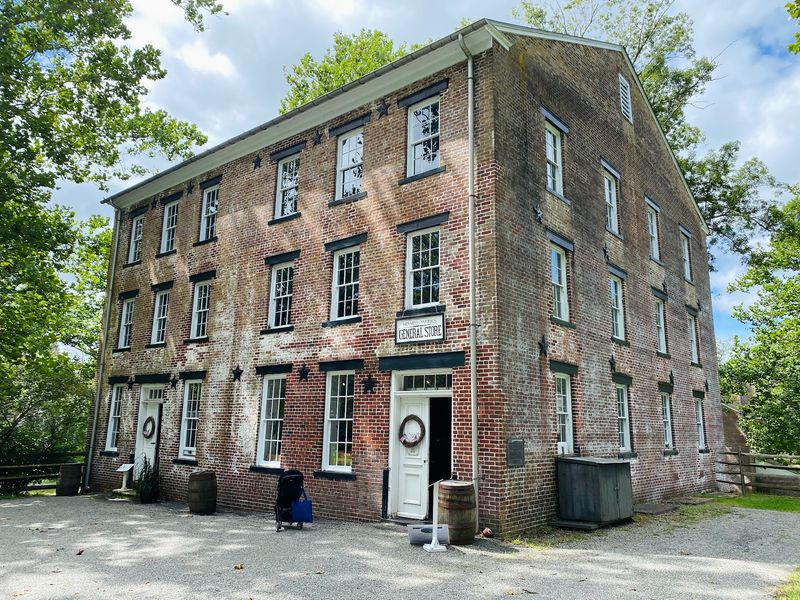
Shopping, gossip, and letters all happened under one roof. The General Store at Allaire Village was the town’s shopping hub and also held a post office.
That made it the center of everyday life. Workers could buy goods and pick up news from far away in the same quick trip.
Today, the building serves as the museum gift shop. It’s a fun place to browse for souvenirs and small treasures connected to the village.
Your purchase also helps a good cause.
That cause matters more than you might expect. The village is run by Allaire Village, Inc., a nonprofit licensed by the State of New Jersey.
It doesn’t receive state funding. Instead, it depends on donations, memberships, and fundraising events. So buying a small keepsake actually helps keep these old buildings standing.
The store often keeps longer hours than the other buildings. It has opened on some weekdays as well as weekends.
Check current hours first, since schedules can shift with the seasons.
Woodworkers And Row Houses Show How Families Really Lived
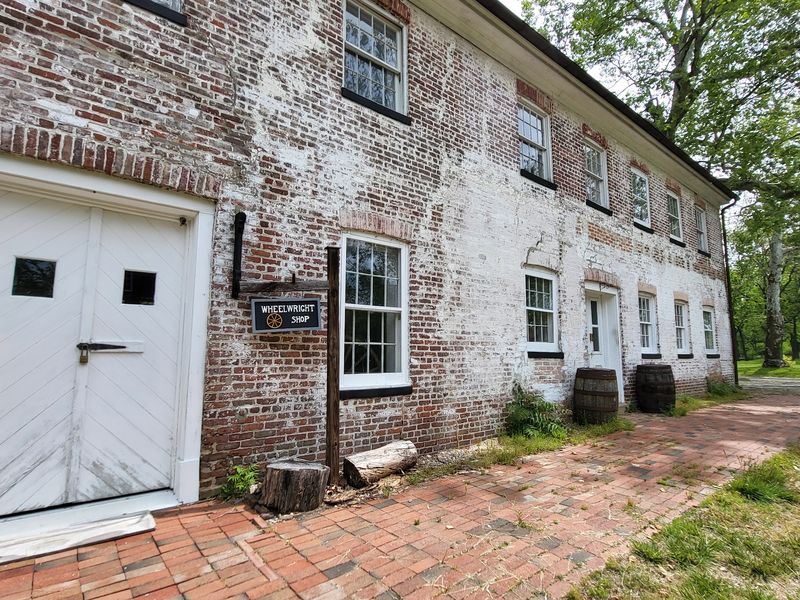
Iron got the glory, but wood kept everything moving. The Carpentry and Pattern Making Shop played a key role in the old ironworks.
Pattern makers carved wooden shapes that helped form molds for iron castings. So before a stove plate existed in metal, it often started as a careful wooden pattern.
That connection is easy to miss. Once you understand it, the whole village starts to click together like a puzzle.
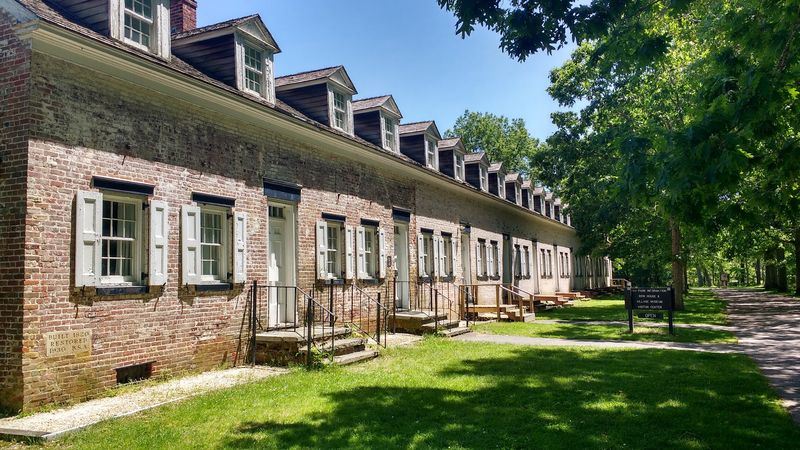
Close by, the Workers’ Row Houses tell a quieter story. These homes housed the people who powered the furnace, shops, and daily chores.
Their lives were busy and far from fancy.
Then compare them with the Manager’s House. Different jobs meant different living spaces, and seeing both helps explain how the town was organized.
Costumed interpreters help bring these spaces to life. They share stories and show traditional crafts depending on the day.
Ask them how a family spent a typical evening. You might hear details that never made it into the history books.
Say I Do Or Just Say Wow At The Little Chapel
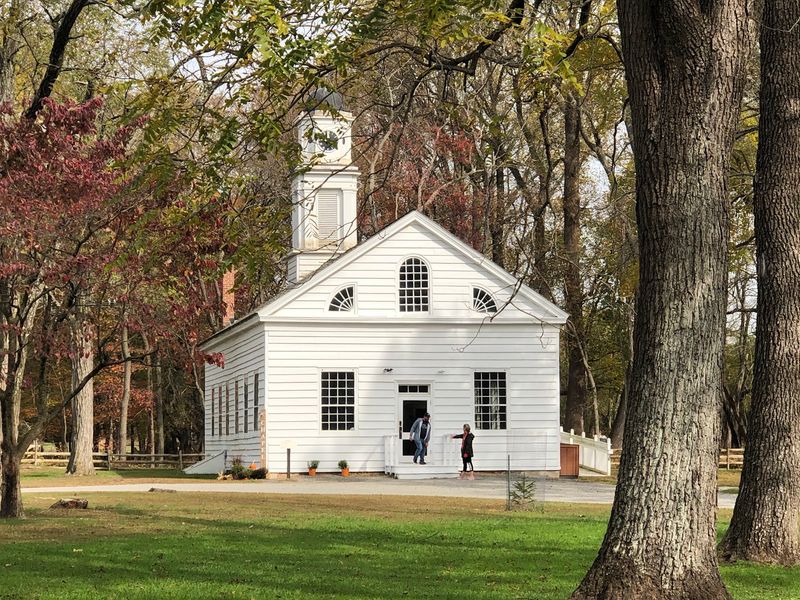
Few buildings here pull double duty quite like this one. The Chapel also served as a schoolhouse, making it a place for both Sunday services and lessons.
Picture town kids learning their letters in the same room where families gathered for worship. Small towns had to make every building count.
Today, the Chapel is a popular spot for weddings. Its classic look and wooded setting make it a natural pick for couples who love history.
So if you visit on a weekend, don’t be shocked by a little celebration nearby. Just give the happy couple space and enjoy the scene.
The Chapel also plays a role in some seasonal events. Holiday tours and special programs often include stops at different village buildings, depending on the year.
It’s a lovely place for photos too. Simple lines, old wood, and tall trees make a scene that feels straight out of a storybook.
Bring your camera, but be respectful during private events or services.
Start Smart With The Bog Iron Story At The Visitor Center
Bog iron sounds like something from a fantasy novel. It was actually a real resource pulled from wet, swampy ground in this part of New Jersey.
The Visitor Center explains how that iron industry worked. Exhibits also show how the self-sufficient village handled food, work, and daily life.
Starting here is a smart move. Once you know the backstory, the forge and bakery feel much more meaningful.
The land’s history goes back further than the ironworks. Before 1650, it was a Native American ceremonial ground.
By 1750, Isaac Palmer had a sawmill here.
Later, it became an iron furnace known as Williamsburg Forge or Monmouth Furnace. The name then changed to the Howell Works before James P.
Allaire bought it.
Restrooms are another practical perk. The Visitor Center is one of three spots with handicap-accessible bathrooms, along with the Snack Bar and General Store.
For directions, use 4263 Atlantic Ave, Wall Township, NJ 07727. Some listings also show a Farmingdale mailing address.
Flea Markets, Hayrides, And Candlelight Make Every Season Different
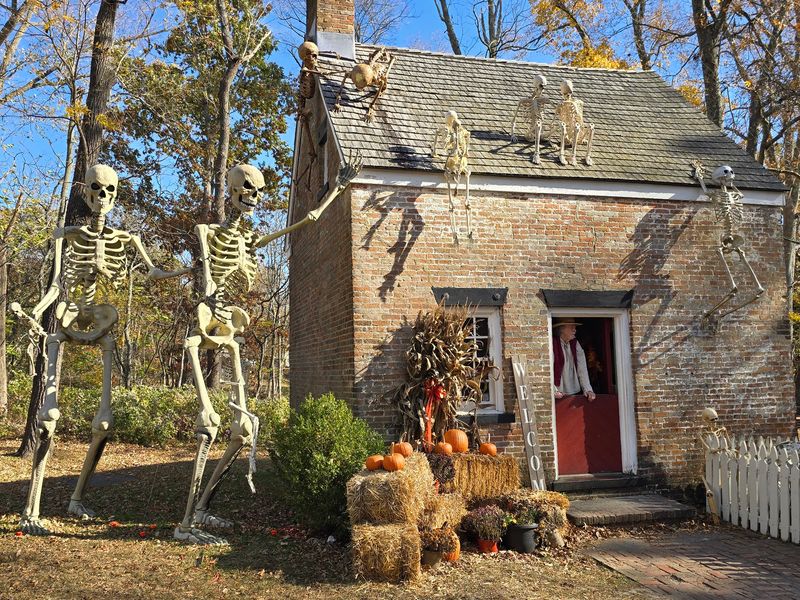
One visit won’t cover everything here, and that’s kind of the point. The village hosts special events throughout the year, so the vibe changes with the calendar.
Treasure hunters can look for flea markets packed with vintage finds. Craft shows bring handmade goods to the historic grounds.
Music jamborees add a toe-tapping twist.
Fall brings a spookier side. Haunted hayrides have been part of the lineup, giving the old streets a playful shiver.
Later in the year, holiday candlelight tours show the village in a softer glow. Antique car shows also roll through, mixing two kinds of history in one afternoon.
Schedules change from year to year, so check before you plan. Some events require separate tickets or have different hours than regular days.
Here’s a helpful note about regular visits. The open season generally runs from April to November.
Building tours have typically been offered on weekends, while the outdoor grounds stay open year-round.
Pack A Picnic And Wander The Rest Of Allaire State Park
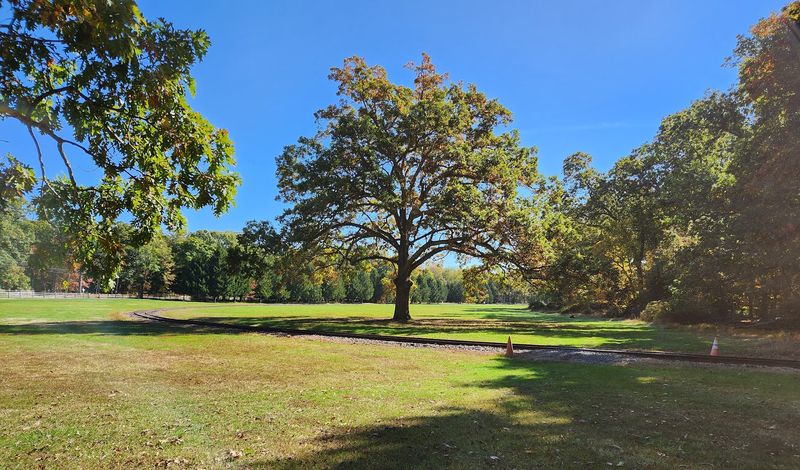
History works up an appetite. Luckily, covered picnic tables near the village make lunch easy and relaxed.
Bring your own food and plan ahead for cleanup. Allaire State Park follows a carry-in, carry-out policy, so all trash leaves with you.
Once lunch is done, the bigger park is ready to explore. Walking trails wind through the woods, and wildlife watching adds a peaceful break after busy shops.
Want to stay longer? The park also offers camping, which turns a day trip into a full outdoor weekend.
The park has its own story too. In 1941, Phoebe C. Brisbane deeded 800 acres, including the village, to the State of New Jersey. That gift helped create the recreational park people use today.
Before that, the Boy Scouts used the land as Camp Burton and started early restoration work.
So every step you take here connects to a long chain of caretakers. Pretty great payoff for a simple sandwich and a stroll.
Share this story