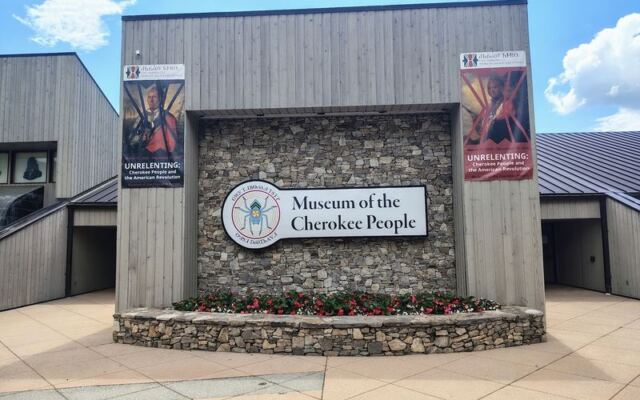
Long before anyone drew a state line across the Blue Ridge, people were already living, farming, and telling stories in these mountains. Their story did not end in a textbook chapter, and one small museum in Cherokee makes that point clear from the very first room.
Holograms, murals, and a language display that lets you hear words spoken aloud sit alongside thousands of years of history. Some parts are joyful, some are hard, and all of them are worth an afternoon of your weekend.
A Mountain Town Museum With Deep Roots
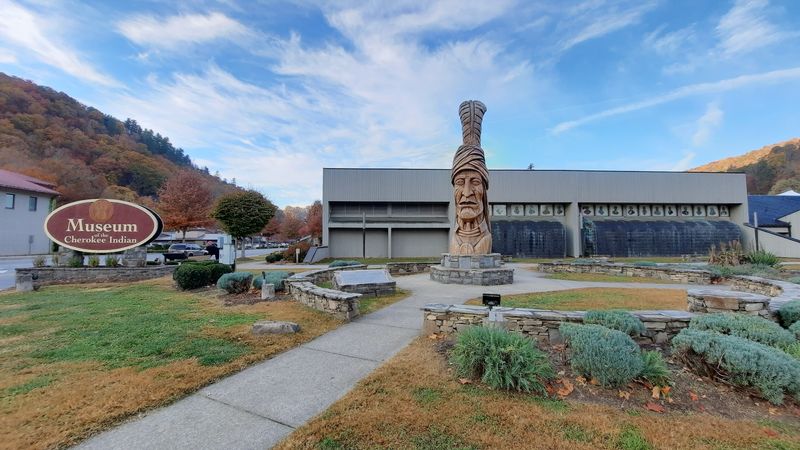
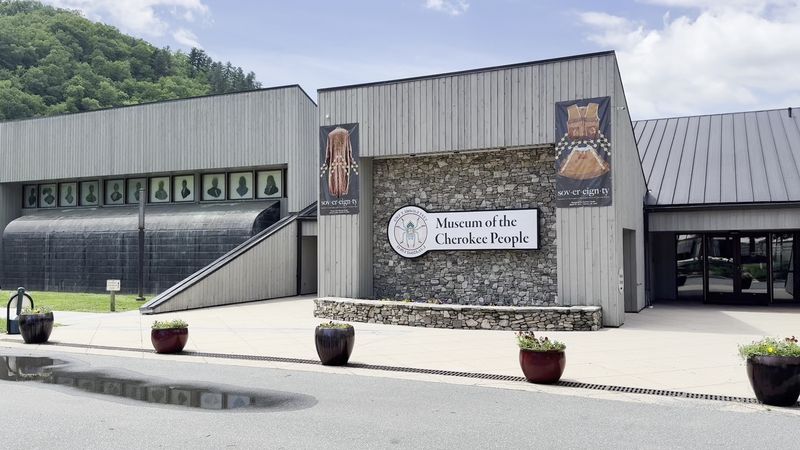
Western North Carolina holds plenty of mountain overlooks, but few stops explain who called those ridges home first. The Museum of the Cherokee People sits at 589 Tsali Blvd, Cherokee, NC 28719, in the heart of the Qualla Boundary and the mountains of western North Carolina.
The museum tells the story of the Cherokee people through exhibits, digital films, photographs, and holographs. Its focus covers art, history, and culture across thousands of years.
Cherokee itself makes an easy anchor for a weekend outing. The town sits right near the national park that draws so many North Carolinians to the Smokies each year.
That location matters. Many people pair the museum with a day of exploring the park, then end the afternoon learning about the people whose homeland surrounds them.
The building is often described as a small museum, yet it packs a surprising amount of ground into its galleries. Expect to spend roughly an hour or more, depending on how many panels you read.
For a state that loves its mountain towns, this stop offers something many day trips skip: the backstory behind the scenery.
Thousands of Years Before the Map
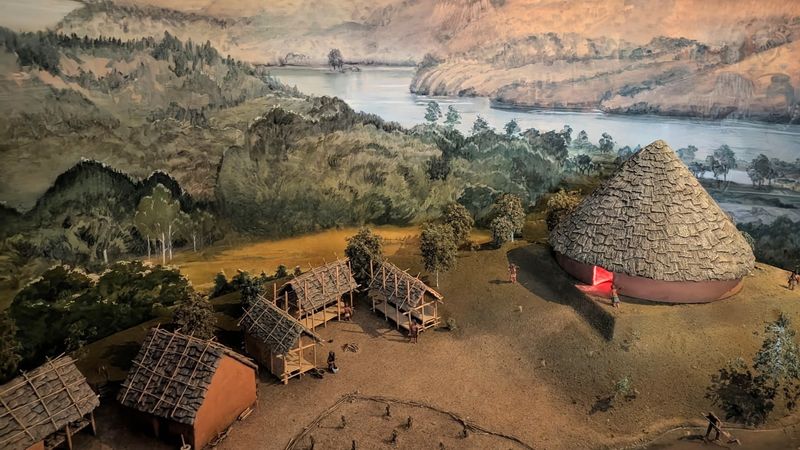
Ten thousand years is a long time to fit into one building. The galleries start with ancient origins and the indigenous peoples who came before the Cherokee, then move forward era by era.
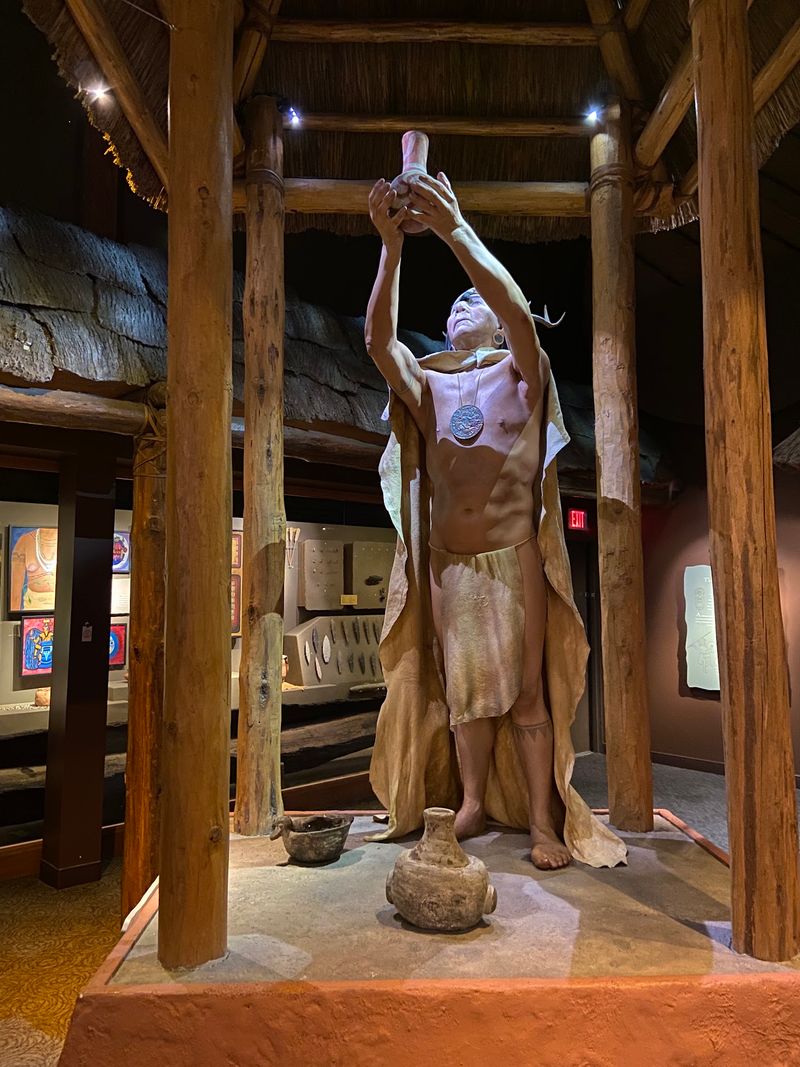
Artifacts form the backbone of this early section. Stone tools, pottery, and other objects help show how people adapted to life in these mountains over countless generations.
The walk is laid out like a timeline. You move from one period into the next, seeing how communities lived, worked, and played long before European contact changed everything.
Panels and plaques carry much of the storytelling here. They are easy to read and packed with information, which makes the early galleries especially rewarding for people who like to linger.
Anthropology fans tend to find this part fascinating. It offers a clear picture of the region’s earliest residents without drowning anyone in jargon.
Kids may move faster than adults through these rooms, and that is fine. There is enough variety in the displays to keep younger eyes busy while grown-ups catch up on the details.
By the time you leave this stretch, the mountains outside start to feel a lot older.
Holograms, Murals, and Full-Size Scenes
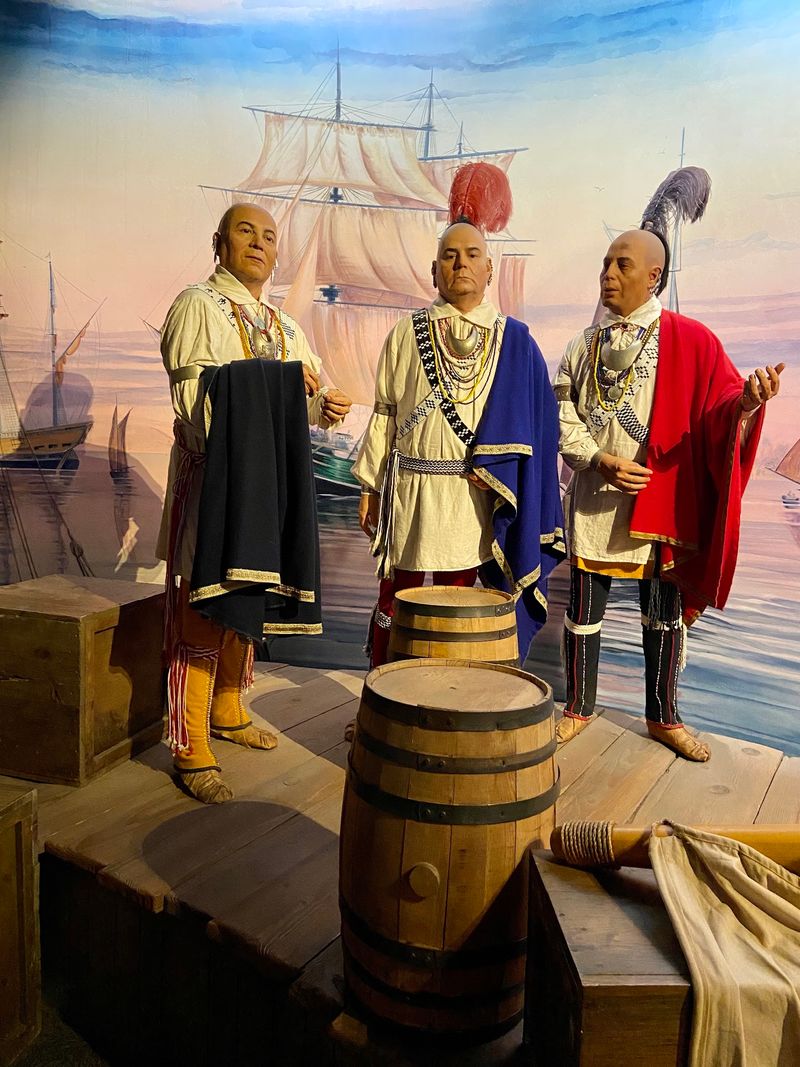
History rarely shows up as a hologram, but here it does. The museum uses computer-generated holograms, soundscapes, and digital films to bring older stories into the present.
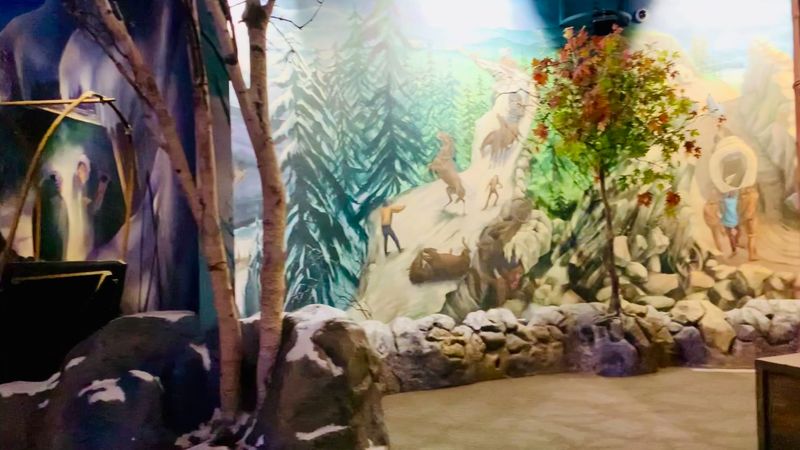
Full-size displays and large murals add another layer. Some scenes include lifelike figures that help show what daily life may have looked like in different periods.
These touches give the galleries a sense of motion. Instead of reading panel after panel, you can stop, watch, and let a scene carry the story for a moment.
Families often appreciate the mix. Children who might drift away from text can stay engaged with a moving image or a large painted wall.
The lighting stays low in many rooms. That creates a calm mood, though a few exhibits can be harder to view because of it, so take your time near the darker displays.
Still, the overall effect works. The technology never pushes the history aside, and it often helps the past feel close rather than distant.
Think of it as a museum that knows when to talk and when to show, which is a rare balance in any small gallery.
Hearing the Cherokee Syllabary Spoken
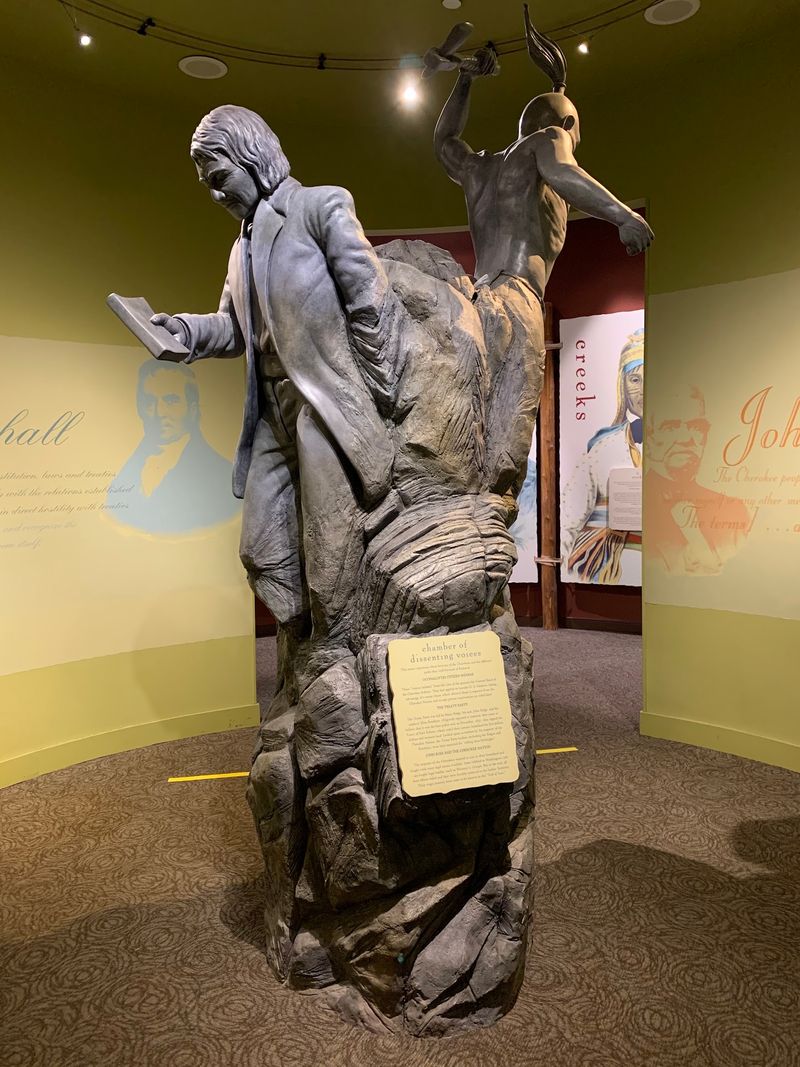
Push a button, and a word comes back to you in Cherokee. One exhibit places the Cherokee writing system on push buttons, letting you hear how each character is pronounced.
It is one of the most talked-about features in the building, and for good reason. Language can feel abstract on a sign, but hearing it spoken makes it personal.
The syllabary has a remarkable place in history, and the museum gives it room to stand out. Seeing the characters laid out together helps show how complete and distinct the system is.
Language also connects the older galleries to today. Cherokee is still spoken, and this display reinforces that the culture on view is very much alive.
Kids usually love this stop. Adults tend to spend longer than planned trying out different sounds.
The display also opens other doors. Nearby sections touch on Cherokee culture and lifestyle, including the seven Cherokee clans, which give context to how communities were organized.
Leave a few extra minutes here. It is a small corner of the museum, yet it often becomes the part people mention first on the drive home.
Masks, Pottery, and Handmade Traditions
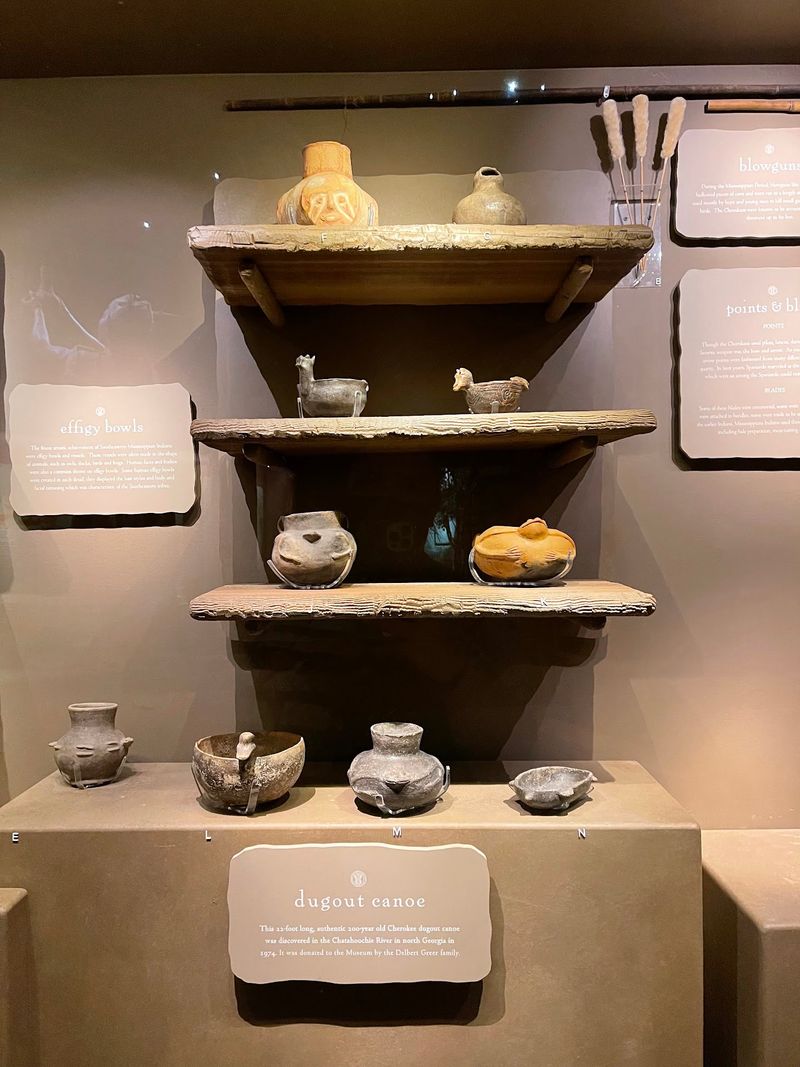
A mask made from a wasp nest is not something you see every day. It is one of the standout pieces among the art and craft displays, each paired with a clear description.
Pottery appears throughout the collection as well. These pieces help trace how artistry and everyday function have long gone hand in hand in Cherokee communities.
The arts and crafts exhibits do more than look back. They show how skills have been passed down and continue today, linking older objects with contemporary work.
That thread of continuity shapes the whole museum. Traditions are presented as ongoing practices rather than relics behind glass.
Contemporary art also earns space in the galleries. Its presence reminds you that Cherokee creativity did not stop at a certain date on a timeline.
Take time to read the labels near each case. They often explain the meaning or use of an object, which adds a lot to what is on display.
Craft lovers from Asheville to Boone will find plenty to appreciate here. Just be warned that this section tends to make the gift shop much harder to resist later on.
Facing the Trail of Tears
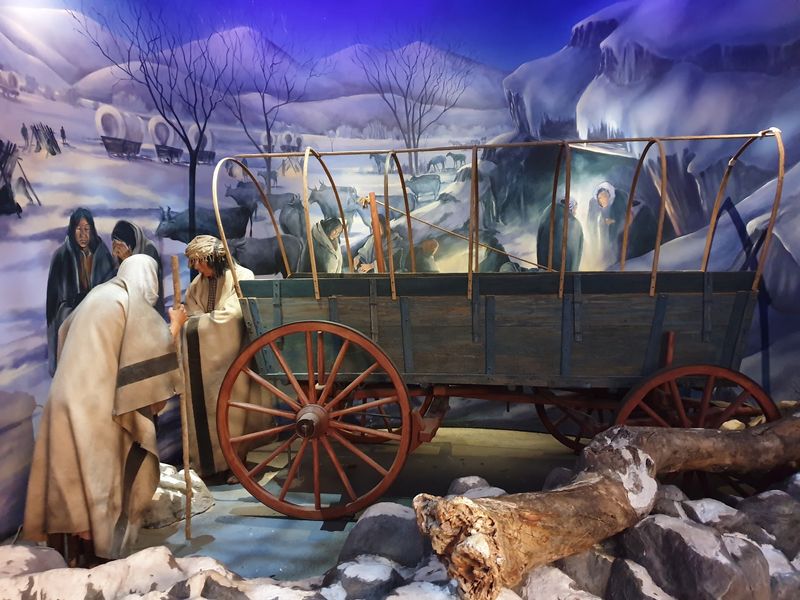
Not every room is easy, and the museum does not pretend otherwise. The Trail of Tears exhibit covers the forced removal of the Cherokee from their homelands in the 1830s.
Treaties made and broken roughly two centuries ago are part of this section. The displays explain how land was taken and how families were pushed west toward present-day Oklahoma.
Many people describe this part as emotional and eye-opening. It is educational, yet it also carries real weight.
The museum handles the subject with care. Rather than dwelling only on what was lost, it shows the story behind it and what endured afterward.
That approach leaves room for several feelings at once. Grief, respect, and hope can all sit together during a single walk through the galleries.
Parents planning to bring children may want to talk about the topic beforehand. The material is presented thoughtfully, but it is serious history.
For North Carolinians, this section carries extra meaning. It helps explain why a Cherokee community still lives in these mountains today, a question that often surprises people seeing the Qualla Boundary for the first time.
A Story Told by the People It Belongs To
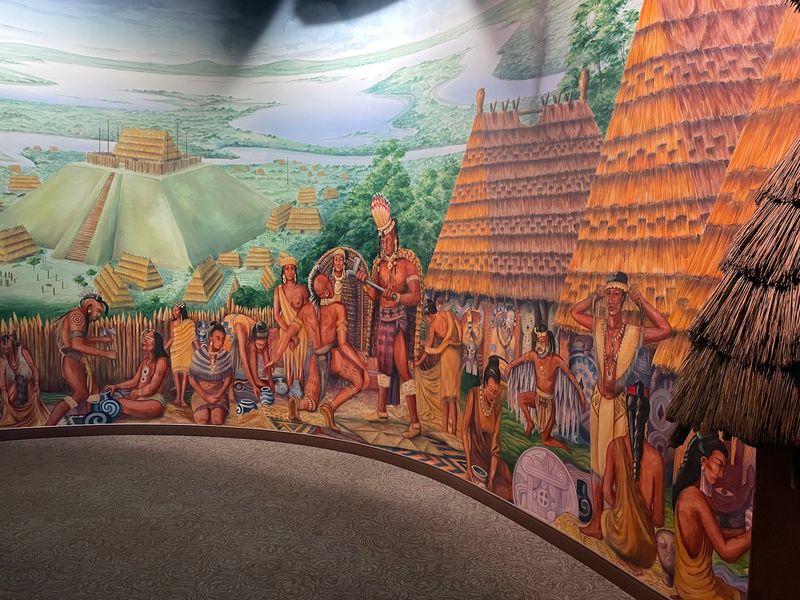
Who tells a story matters as much as the story itself. The museum has been reviewing and reshaping its displays so that the Cherokee people are represented by the Cherokee people.
Modern context runs through the galleries. Exhibits pair historical depth with present-day perspectives, including topics like sovereignty and contemporary art.
That balance changes the experience. The museum feels less like a look at the past and more like a conversation with a living, evolving community.
Change is ongoing here. Some exhibits have been temporarily down or under update, and new interactive information has been in the works.
There has also been talk of a larger building in the future. Plans like that suggest the museum is growing, though details are best confirmed directly before a visit.
Returning guests often say they learn something new each time. With exhibits shifting and improving, repeat trips can feel fresh.
For anyone who saw the museum years ago, this may be a good reason to go back. The core story remains, yet the way it is shared keeps moving forward, much like the community at its center.
Friendly Faces Behind the Front Desk
Good exhibits help, but people make the difference. Staff at the museum are often described as polite, welcoming, and genuinely happy to talk.
Many team members are eager to share their tribe’s history. Asking a question can turn into a meaningful conversation that adds depth beyond any wall panel.
That openness shapes the atmosphere. The museum feels approachable, even when the subject matter turns heavy.
The galleries themselves are spacious, so there is room to move at your own pace. Nobody needs to rush, and lingering at a favorite display is easy.
The mood suits a wide range of guests. History buffs, curious families, and anyone passing through Cherokee can all find a comfortable rhythm here.
Some people visit again and again, bringing kids or relatives along. Familiar faces and evolving exhibits make it a stop that rewards repeat trips.
Consider arriving with a couple of questions in mind. Topics like clans, language, or traditions can spark great answers.
Those small exchanges often become the most memorable part of the afternoon, which is not something every museum can say about its front desk.
The Gift Shop Worth Budgeting For
Plenty of museums end in a gift shop, but few gift shops get this much praise. The shop here is one of the most frequently mentioned parts of a trip.
Its shelves feature handcrafted items rather than mass-produced trinkets. Many goods come from indigenous artists and local makers.
That makes shopping feel connected to the museum’s message. Buying a piece here can directly support artists and the community whose story you just explored.
The variety is wide. You may find pottery, crafts, dream catchers, and other locally made items suited for gifts or keepsakes.
It is easy to spend more time browsing than expected. Some guests joke that the shop is where their wallets got the most exercise.
The best approach is to tour the galleries first. After learning about the traditions behind the crafts, the items on the shelves take on extra meaning.
For North Carolinians looking for a gift with a story attached, this is a strong option. Just leave a little room in the car, and maybe in the budget, before you head back down the mountain.
Hours, Admission, and Parking
Planning is refreshingly simple. The museum is open every day of the week from 9 AM to 5 PM.
Admission has been listed at around $15 per person. Many guests call the price affordable, especially given how much ground the exhibits cover, though it is smart to check the official website at motcp.org before you go.
Parking is free, which is always welcome in a busy mountain town. That makes the museum an easy addition to a day already packed with scenic drives.
There is a picnic area in front of the building. On cooler days it can be a nice spot to pause, though summer heat may make shade hard to find.
Plan on at least an hour inside. Readers and repeat guests may want longer to take in every plaque and display.
The museum works well as a bookend to a park day. Arriving in the afternoon after exploring nearby trails can make a balanced outing.
Weekends and peak seasons in Cherokee can bring crowds. An earlier arrival may give you quieter galleries and more time to chat with staff.
Why This Stop Belongs on Your Mountain Weekend
Some outings fill a few hours, while others change how you see a whole region. This museum falls firmly into the second group.
It covers a vast stretch of time, from ancient peoples to today’s artists and leaders. It does so with holograms, murals, artifacts, and a language exhibit that speaks back to you.
The hard chapters are handled honestly. The joyful and enduring parts get equal care, leaving room to reflect on both.
Families, history fans, and curious road-trippers all tend to leave with something new. Many plan to return with children or friends.
For North Carolinians, there is a special pull. This story belongs to our mountains, and it is still being written by the community that has lived here the longest.
Pair it with a drive through the Smokies, an afternoon in town, or a browse through handmade crafts. Each adds to the picture.
The next time the mountains call, consider making Cherokee more than a pass-through. The trails will still be there afterward, and they may feel a little different once you know whose footsteps came first.
Share this story