South of Bend, a staircase of about 180 metal steps drops below the pine forest and into the dark. At the bottom waits a tunnel that a volcano built long before anyone wrote down its story. The walk goes more than a mile in and the same distance back out, and the air stays near 42 degrees all year.
You will need a light, a warm layer, and a reservation that costs just a couple of dollars. That small price is part of what makes this place special for Oregon families who want an adventure that does not drain the budget. Keep reading to learn how the tube formed, what you will find inside, and how to plan a smooth trip without surprises at the gate.
A Tunnel Hiding Off Cottonwood Road
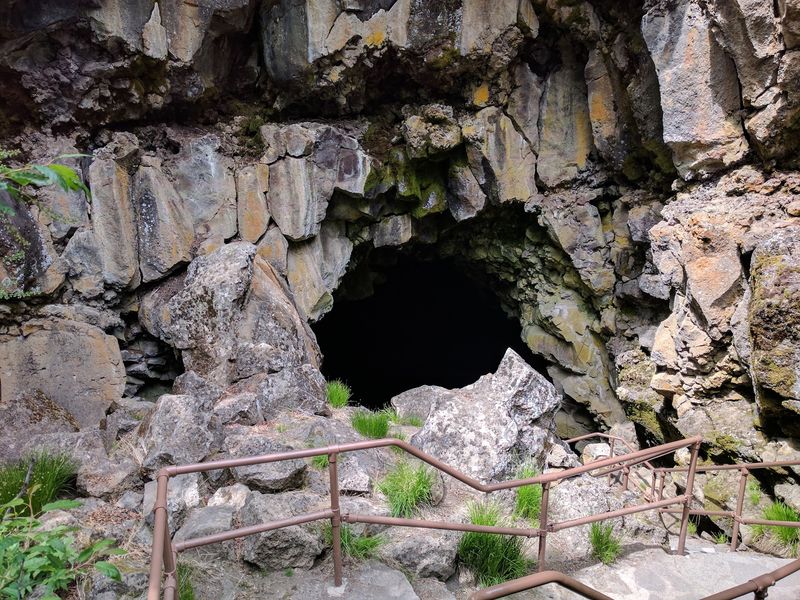
Most trailheads lead up a mountain. This one leads straight down into the earth.
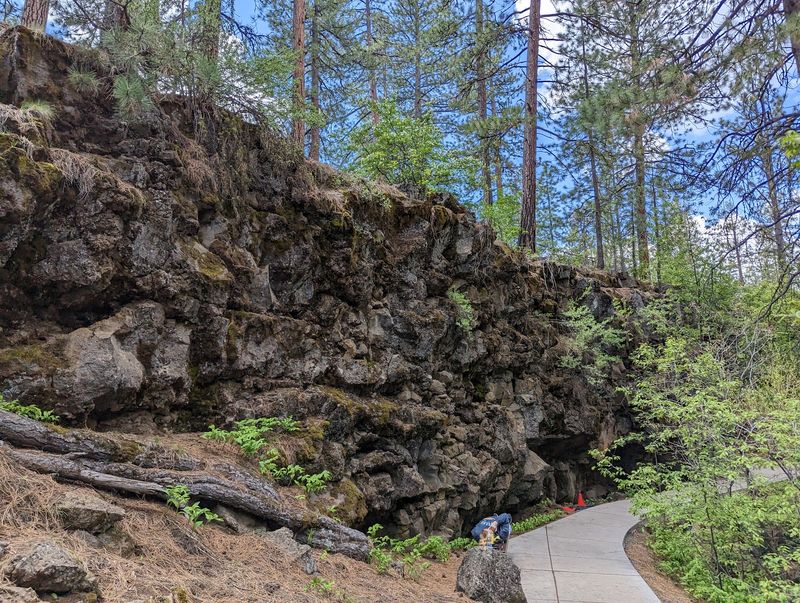
Lava River Cave sits on Cottonwood Rd, Bend, OR 97707, in Central Oregon. It is managed as an interpretive site within the Deschutes National Forest.
The cave is a lava tube, which means it is not a cave carved by water. Flowing lava shaped it instead.
Tours here are self-guided, so you set your own pace once you head below ground. A ranger gives a short talk at the start, and then the tunnel is yours to explore.
The site is about an eight-minute drive from Sunriver, which makes it an easy add-on to a Central Oregon weekend. Folks staying in Bend or La Pine can reach it quickly too.
Above ground, the setup is simple. There is a station for renting lights, a small gift shop, and clean restrooms.
Below ground is where the real show begins, and the first stop is learning how this place got its shape.
Volcanic Roots Near Lava Butte
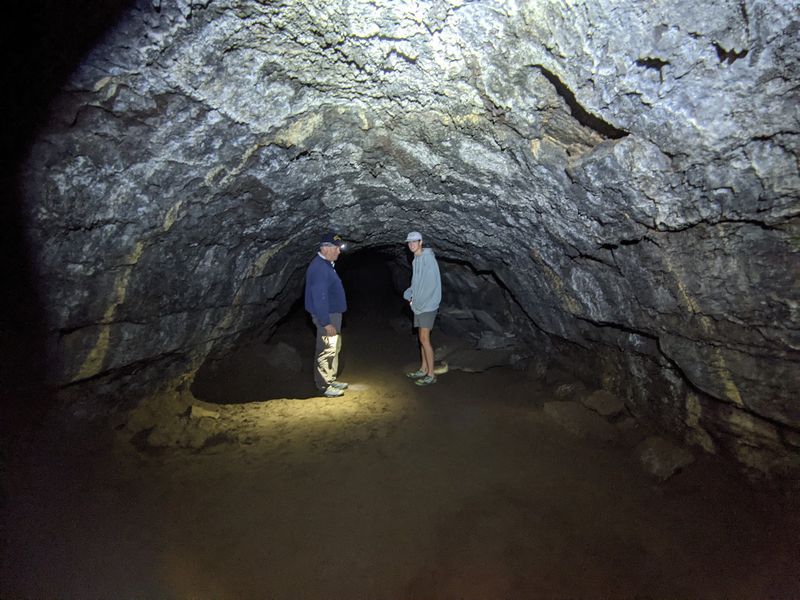
Long ago, molten rock moved through this ground like a river. The outer layer cooled and hardened into a roof while hot lava kept flowing underneath.
When that flow drained away, it left behind a hollow tube. That is the tunnel you walk through today.
The tube is tied to volcanic activity in the upper Newberry Volcanic Complex, near Lava Butte. That region is one of the most active volcanic landscapes in Oregon’s history.
Here is the fun part. Lava River Cave is considered the longest continuous lava tube in the contiguous United States, and it remains well preserved.
That makes it more than a quick tourist stop. It is a working lesson in how the ground under Central Oregon came together.
Signs and maps along the route explain the science as you go. Kids and adults both come away knowing a little more geology than they had that morning.
Science homework rarely gets this cool, in more ways than one.
Found in 1889
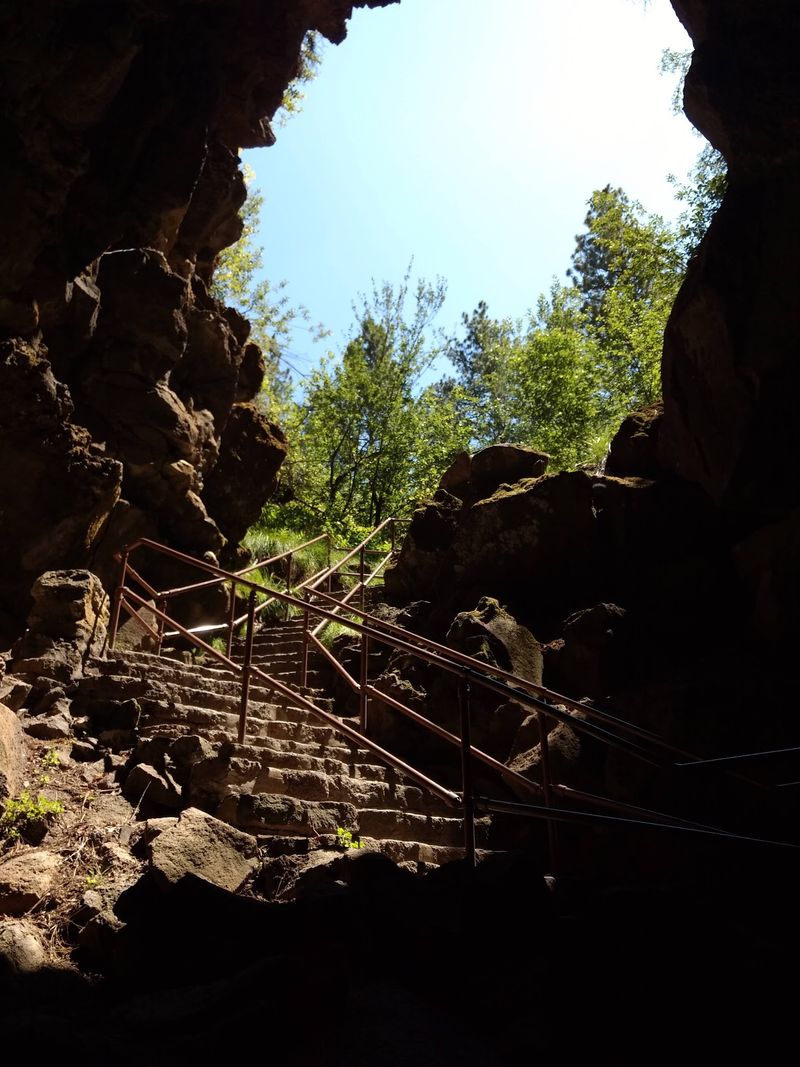
The year was 1889 when this lava tube was discovered. Since then, it has turned into one of the best-loved underground stops in the state.
For many Oregon families, the cave is a tradition passed down through generations. Some grown-ups remember walking it with a grandparent as kids, and now they bring their own partners and children.
That kind of staying power matters. Familiar places like this are part of what makes Central Oregon feel like home.
The Forest Service has kept the experience simple and affordable over the years. There are no fancy rides or costly add-ons, just a tunnel, a light, and your own two feet.
Protecting the cave is part of the plan, too. Rangers explain rules meant to keep the tube healthy, so future visitors can enjoy it the same way.
A place discovered more than 130 years ago still welcomes walkers every open weekend. That is a story worth keeping alive.
The 180-Step Descent
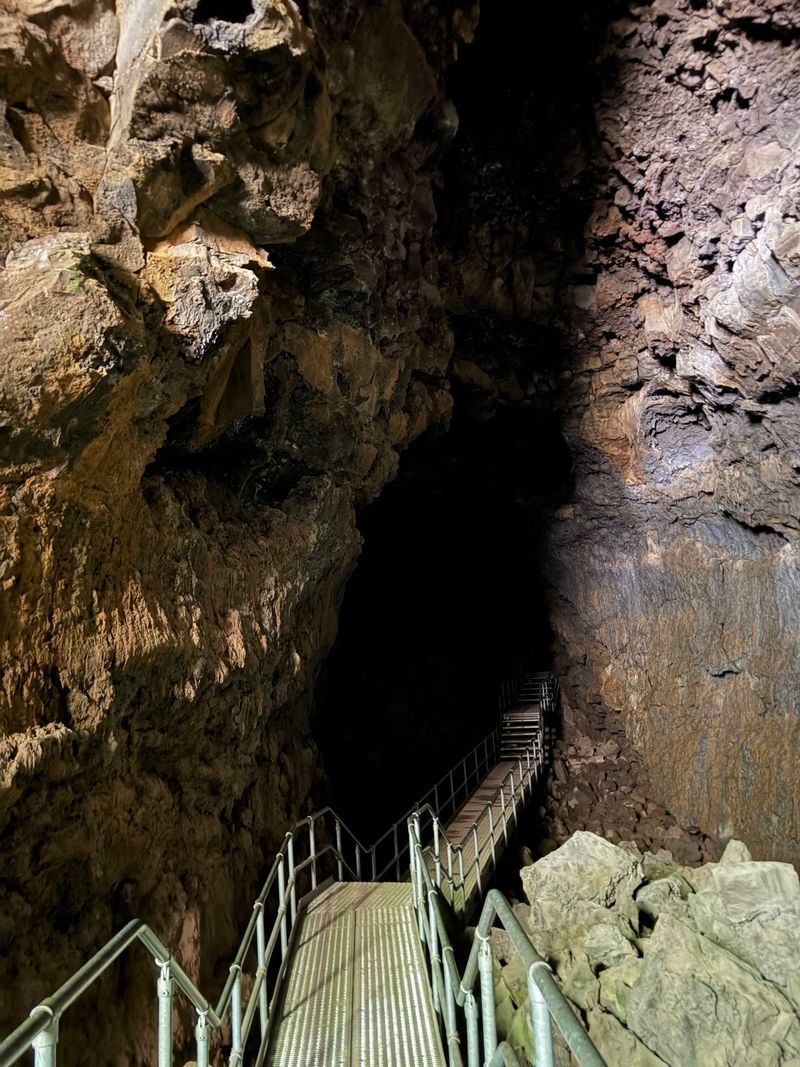
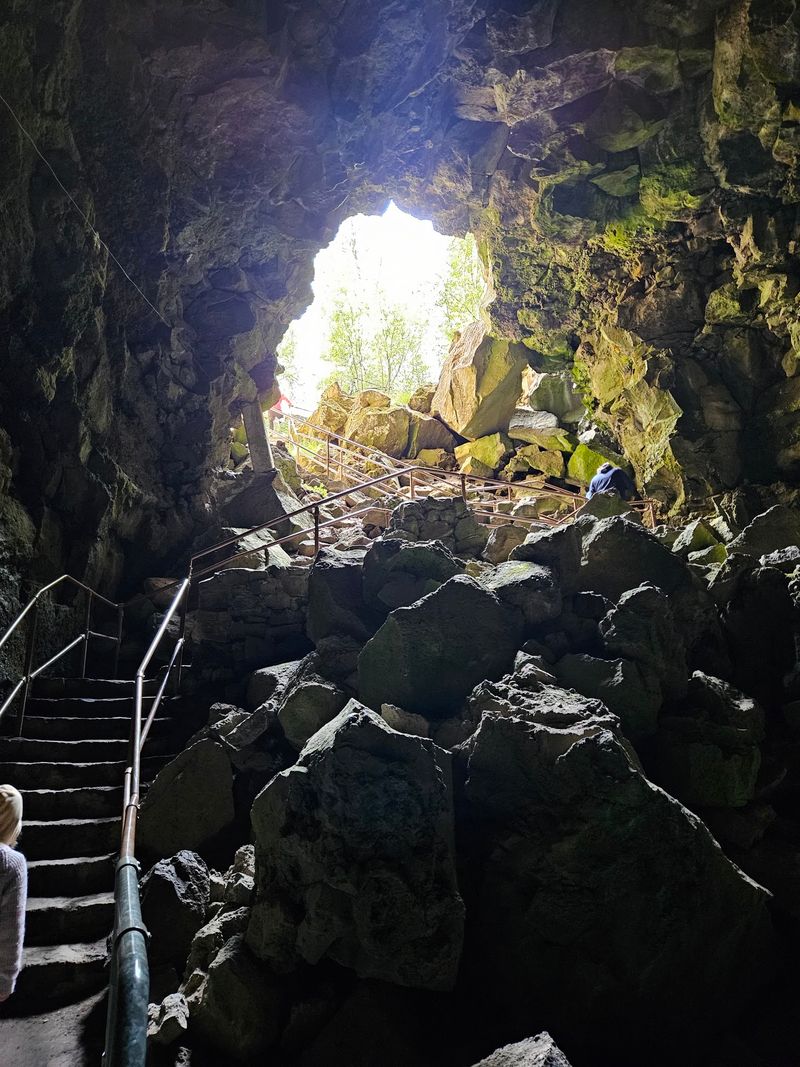
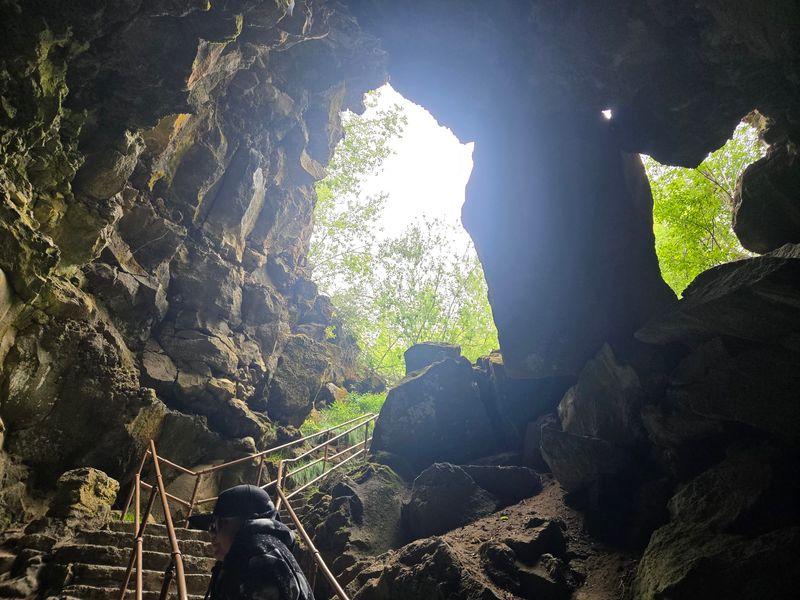
Every trip starts with stairs, and lots of them. About 180 metal steps carry you from the surface down into the tube.
The stairway down is not hard for most people. Coming back up at the end is the part your legs will notice.
Once you reach the bottom, the built path ends. From there, the ground is natural rock and packed sand.
Take the stairs at a steady pace and hold the rail. There is no prize for racing to the bottom.
The steps also mark the shift from the warm world above to the chilly one below. Many people pause at the bottom to zip up a jacket and switch on a light.
Think of it as the warm-up lap. The main event, a mile of open tunnel, starts right after the last step.
A Mile of Tube Each Way
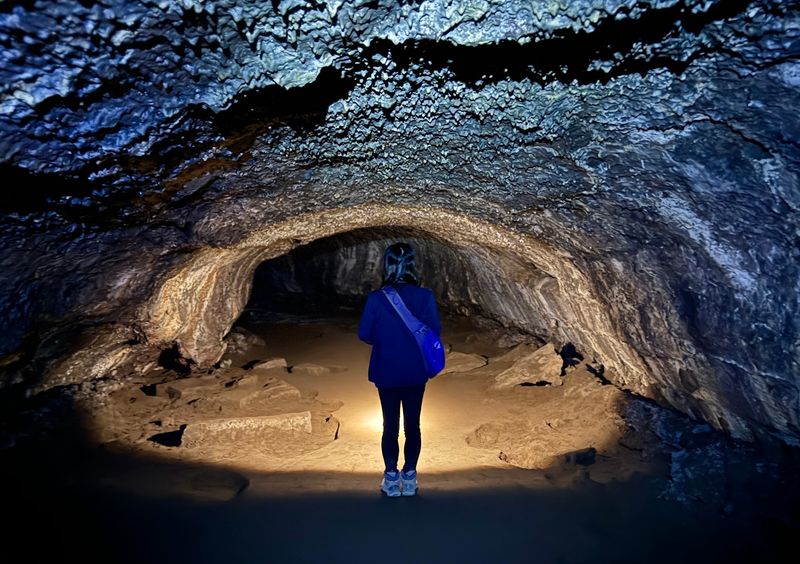
Numbers tell the story here. The tube runs about 1.1 to 1.2 miles from the entrance to the end, for a round trip of roughly 2.2 miles.
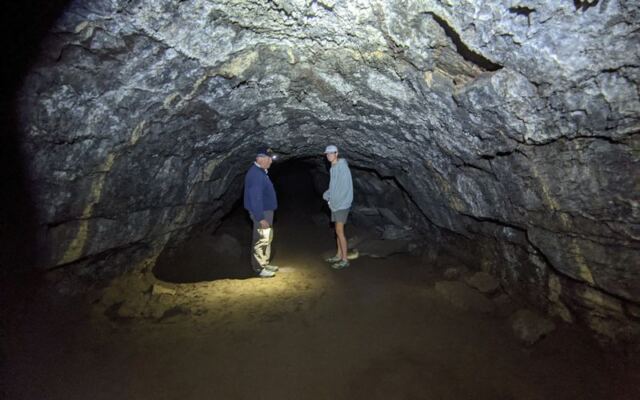
The ceiling is spacious for most of the walk. In some spots, it rises as high as 60 feet.
There are only a few short places where taller folks need to duck. No crawling is needed anywhere on the route.
Many people go all the way to the end and back. The trip usually takes between one and two hours, depending on how often you stop to read signs or look around.
Maps along the way show how far in you are. That helps with pacing, especially for families with younger kids.
Your reservation time slot covers about two hours, and taking a little longer is not a problem. Still, it helps to plan for the return trip, since the exit is the same way you came in.
What goes in must come out, including you.
The Double Tunnel Surprise
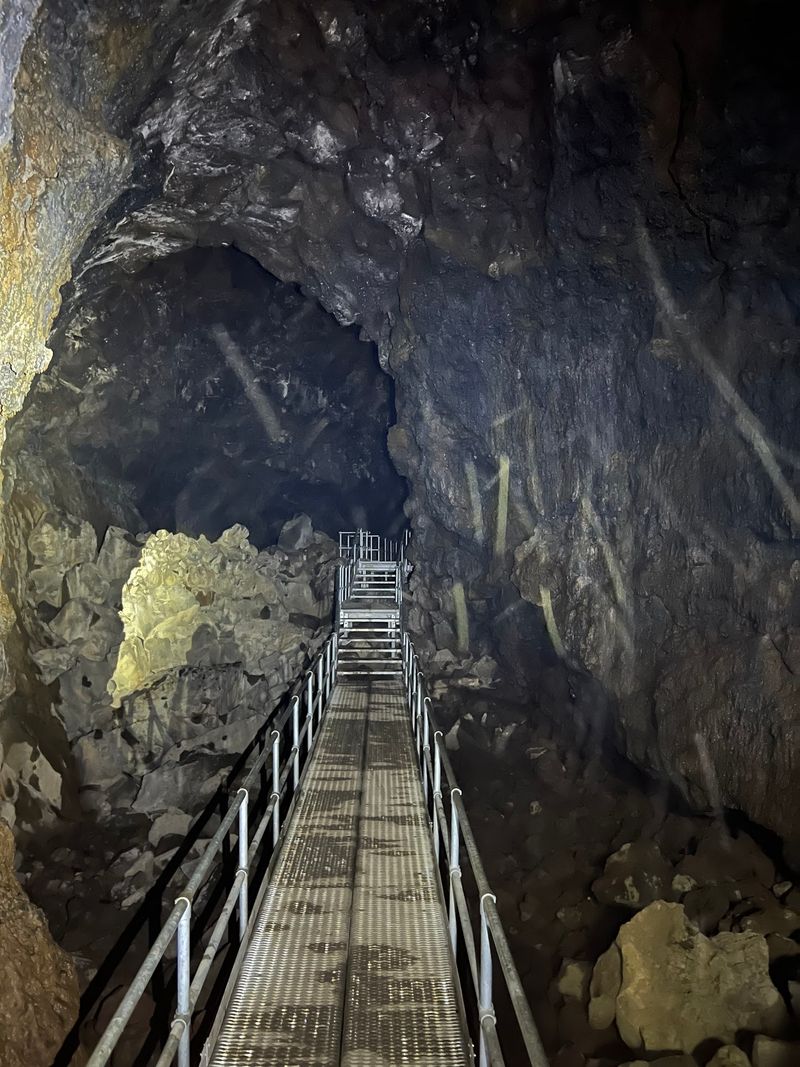
Partway through the walk, the tube pulls a trick. One section splits into what is known as a double tunnel.
It is one of the most talked-about features inside. The layout shows how lava flows could shift and stack as they moved.
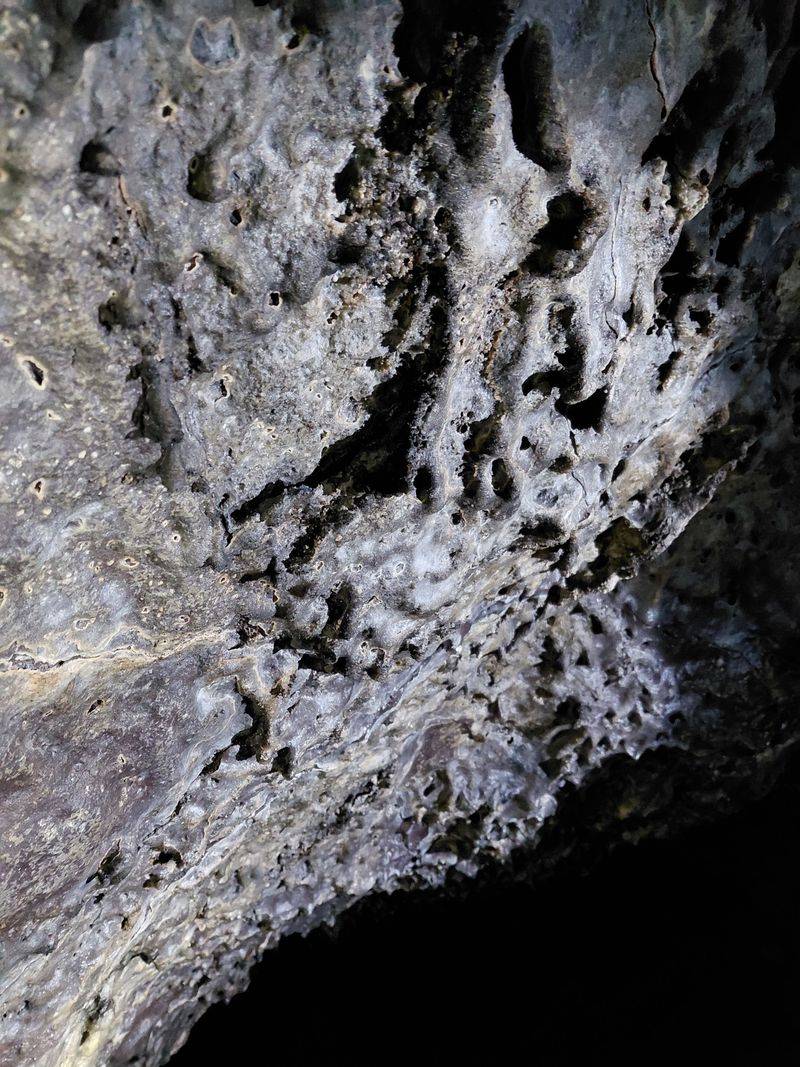
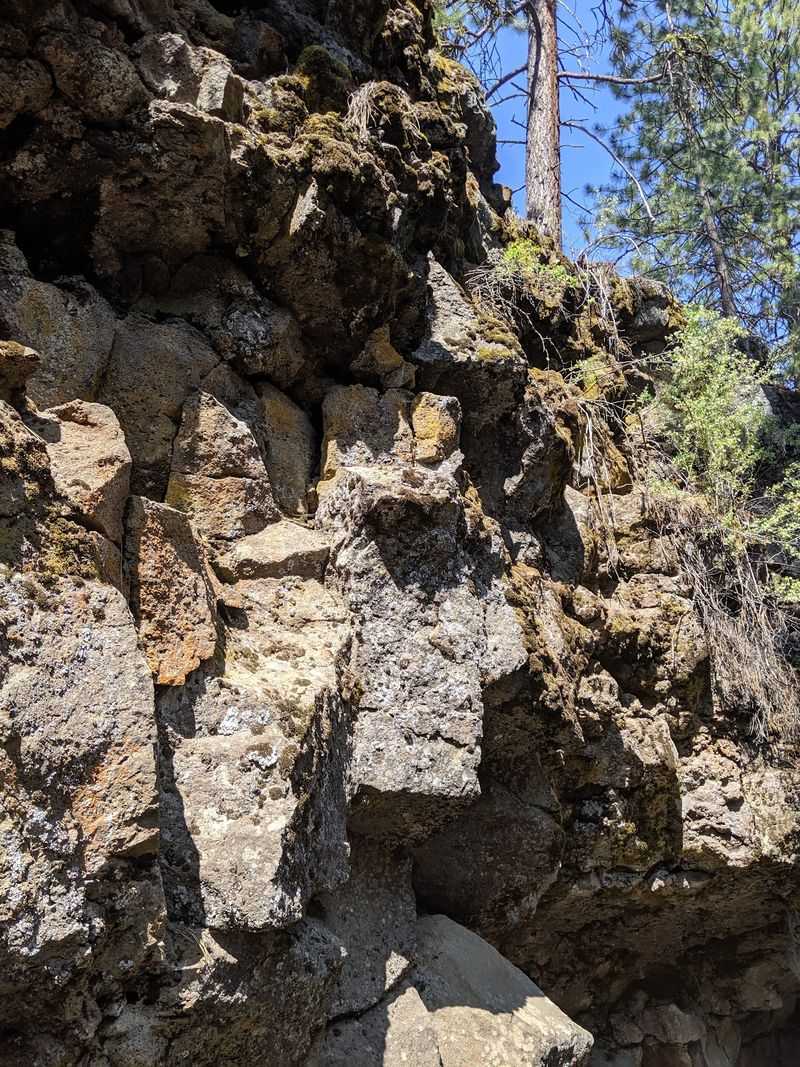
The rock walls themselves add interest too. Many sections show colorful stone that stands out under a strong light.
Exhibits along the route explain what you are looking at. They turn a simple walk into a self-paced science lesson.
A smart move is to stop walking before you look up. The ground is uneven, and gazing at the ceiling while stepping forward is a quick way to stumble.
Photos can be tricky in the dark. Some of the best shots come from using the lights of other groups ahead of you to show off the size of the tube.
Footing on Rock and Sand
Flat does not mean smooth. The tube floor is mostly level, but it is bumpy, rocky, and slick in places.
Sturdy shoes with good traction make a real difference. Sneakers can work, but hiking shoes give more grip on the rough patches.
Some people call it an easy hike, and others find it more of a workout. Much depends on comfort with uneven ground and the climb back up those stairs.
Watch where you step and keep your light pointed low as you walk. Save the big views for when you stop.
There is just one bench along the route. Plan rest breaks with that in mind.
Families with young kids do well here when everyone moves slowly. A careful pace beats a twisted ankle every time.
Bring Your Own Daylight
There are no lights installed in the tube. Whatever you carry is the only light you get.
That is why the light rental booth is so popular. Rental lights cost about $7 each and are known for being very bright.
Headlamps help you see your path, but many cannot reach the high ceiling. The rental lights can light up the whole tube, roof and all.
A good combo is a headlamp for your feet plus a strong flashlight for the walls. If you bring your own, make sure it is fully charged.
Kids often have a blast being in charge of the big flashlight. It gives them a job and keeps them engaged the whole way.
For seven dollars, it is one of the best deals in the forest. Skimping on light is the one mistake worth avoiding.
Jacket Weather Year-Round
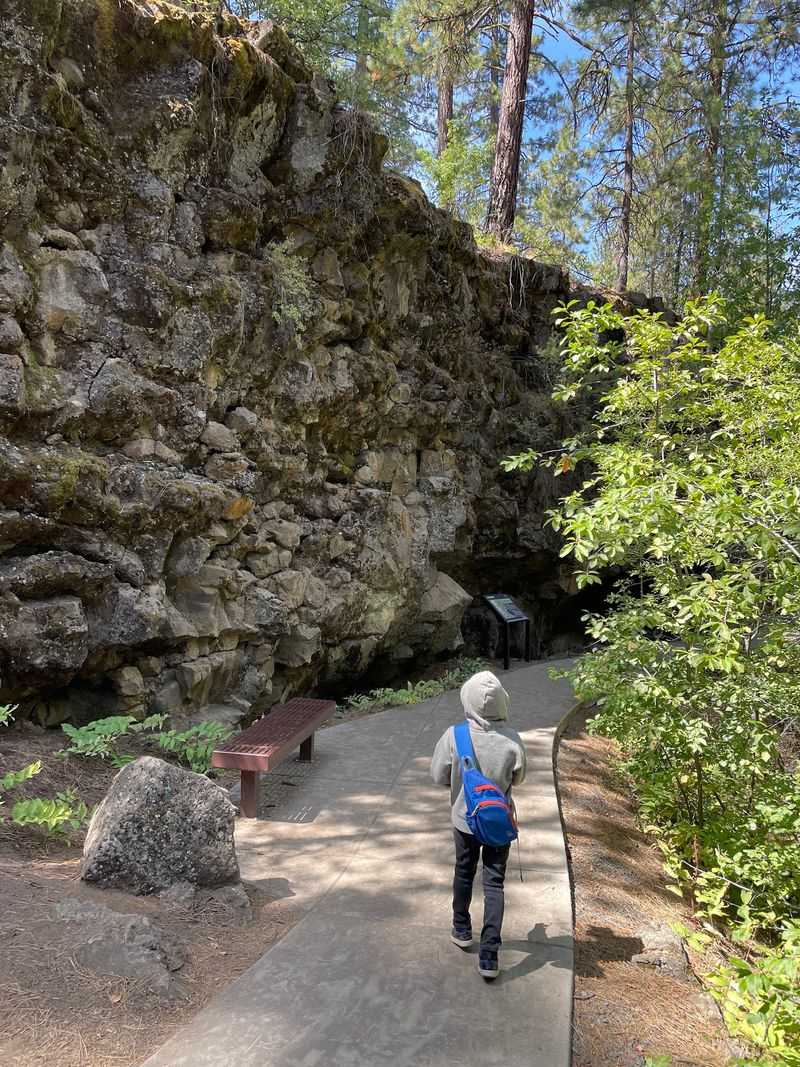
Summer in Bend can be hot. Down in the tube, it is a different season.
The temperature stays in the low 40s all year, around 5 to 6 degrees Celsius. That chill is steady from the first step to the last.
Dressing in layers is the way to go. Long sleeves, pants, and a warm jacket or hoodie keep most people comfortable.
Even those who handle cold well often add a layer halfway through. Moving slowly in cool air adds up over an hour or two.
Layers also help after you climb out. The parking lot has no shade, so you may want to peel off that jacket fast.
Pack for two climates in one trip. The cave keeps its cool, and you will want to keep yours.
Bats and the Clothing Rule
Bats call this tube home, and that shapes how the site is run. Many people never spot one, but the rules exist to protect them.
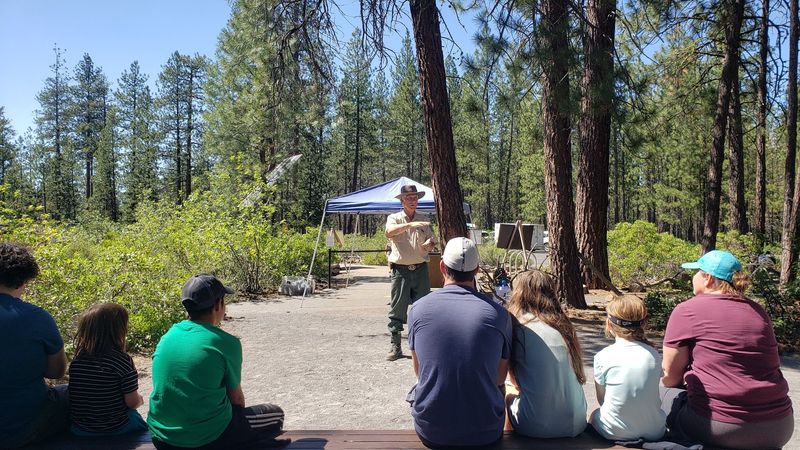
Before heading in, a ranger gives a short briefing of about five minutes. It covers safety and how to care for the cave.
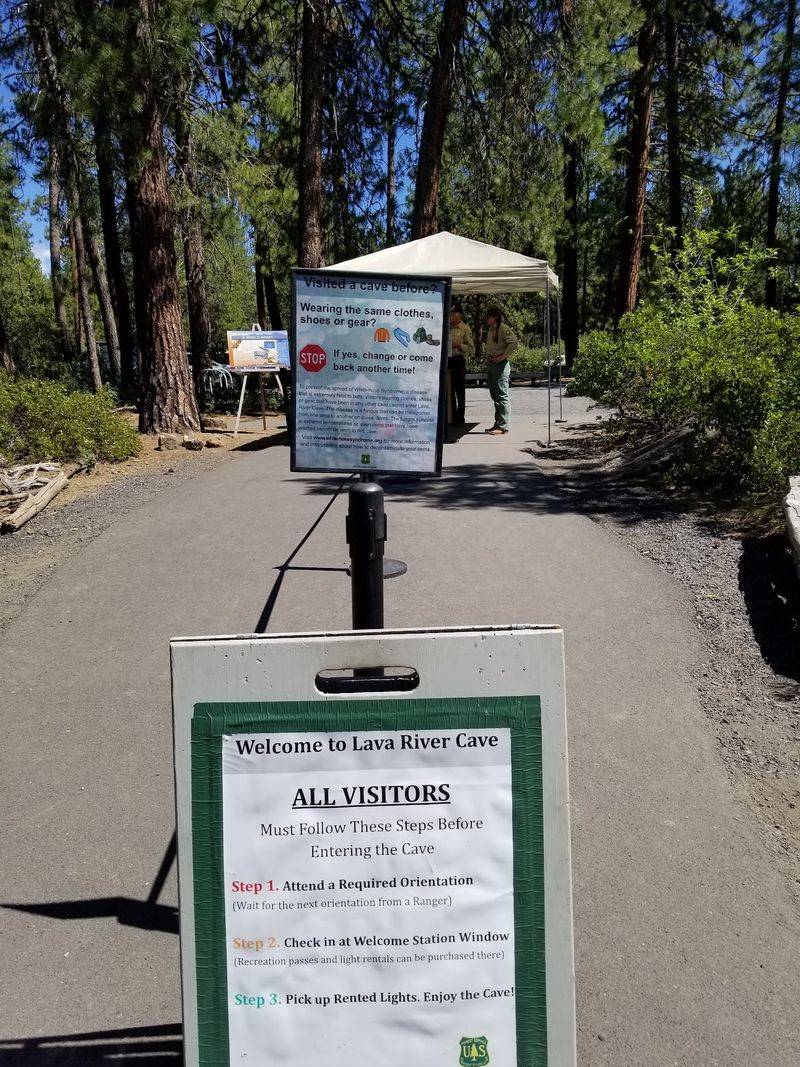
A key point is about your clothes and gear. Rangers ask that you not wear items you have worn in a different cave.
That rule helps keep problems from spreading between caves. It is a small step that helps protect bat colonies.
The rangers here are friendly and full of information. Their talks often become a highlight of the trip, especially for curious kids.
Listen closely, ask questions, and follow the plan. Good guests make sure the cave stays open for the next group.
Who Will Love the Trip
Couples on a road trip, families with kids, and longtime locals all find a reason to come. The tube suits almost anyone who can handle stairs and rough ground.
Fans of caverns and mines tend to love it. The long, open passage gives plenty of room to explore at your own speed.
The quiet and darkness are part of the appeal. It feels like a true break from screens and busy streets.
Anyone who feels uneasy in tight spaces should think it over. The tube is large, but it is still underground and dark.
Dogs are not allowed in the cave. With no shade in the parking lot, leaving them in the car is not an option either.
For most people, this is a first-time thrill worth doing at least once. Plenty come back for a second lap with friends.
Reservations and Small Fees
Good news for budgets: this adventure costs only a few dollars. The catch is that you must plan ahead.
A reservation is required and is made through Recreation.gov. It costs about $2, and one reservation covers the whole car no matter how many people ride along.
You also need a recreation pass. An America the Beautiful pass or Northwest Forest Pass works, or you can buy a day pass of about $5 on site.
There is no separate ticket per person to enter the cave. Your car’s entry covers everyone inside it.
Spots are limited because parking is tight. Passes have been released one week ahead and again 24 hours ahead, with day-before tickets opening at 7 AM.
Peak travel times fill up quickly. Booking early is the simplest way to avoid a long drive that ends at a full lot.
Hours, Seasons, and Timing
Timing is everything here. The site is open Friday through Monday from 9 AM to 4 PM, and it is closed Tuesday through Thursday.
The last entry is around 2 PM. Arriving earlier leaves more time to enjoy the walk without rushing.
The cave is typically open from late spring through summer. Check the Forest Service website before you go, since seasons and details can change.
Show up right at your reserved time. Groups are let into the tube in waves, and being punctual keeps things smooth.
Early summer visits are a smart choice. The site gets busy as the season heats up.
A morning slot also leaves the rest of the day free for Bend or Sunriver. Not a bad way to split a weekend.
Worth the Climb Back Up
Some trips cost a lot and deliver little. This one flips that idea around.
For a couple of dollars, a forest pass, and maybe a $7 light, you get a mile of volcanic history underfoot. The tube is long, grand, and well cared for.
It also carries the kind of memories families pass down. People who walked it as kids now return with the next generation.
That is the real value of a place like Lava River Cave. It stays affordable, protected, and open to everyone who plans ahead.
Pack layers, charge your lights, and book that reservation. Then take the long way down and the long way back.
By the time you reach the top of those 180 steps, the warm Oregon sun will feel like a reward you earned.
Share this story