If you think the oldest corners of America only survive behind velvet ropes and museum glass, Elfreth’s Alley in Philadelphia will completely change your mind, because this narrow residential street has been continuously inhabited for more than three centuries and still feels intimate, human, and unexpectedly alive in a way that polished historic landmarks often do not. Walking here is not just about admiring old bricks or peeking at colonial architecture, it is about feeling the strange thrill of standing in a place where generations of craftspeople, families, workers, and neighbors all shaped the same small stretch of city, leaving behind a story that feels both deeply local and unmistakably national.
What makes Elfreth’s Alley so memorable is that it never reads like a frozen stage set, since laundry, flower boxes, shutters, doorways, and everyday rhythms keep reminding you that history here has always been lived rather than simply preserved, which makes every detail feel more personal and every step more revealing. If you want one Philadelphia place that quietly captures the endurance, texture, and charm of early American urban life while still offering something real to people visiting today, this is the street worth slowing down for.
1. A Street Older Than the Nation
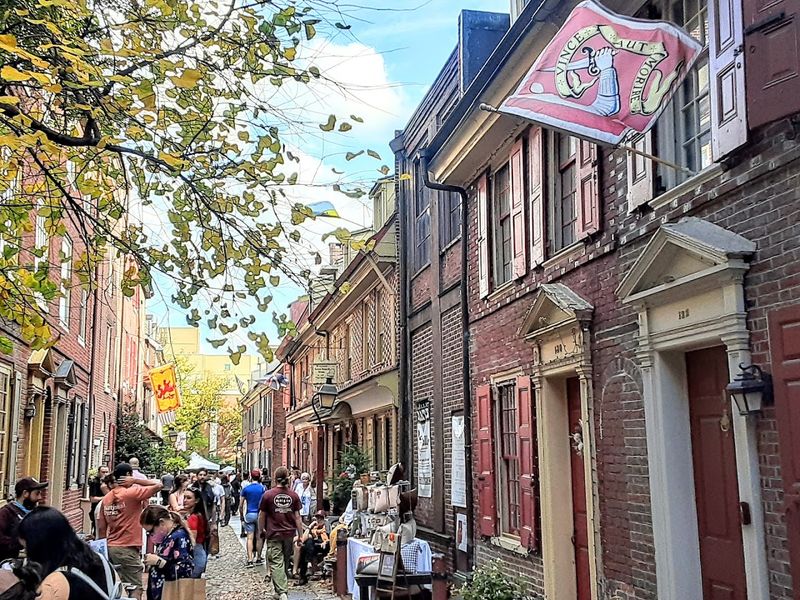
Tucked into Old City, Elfreth’s Alley feels less like a tourist stop and more like a living block where daily life never really left.
When you step onto its brick path, the scale changes instantly, and the sounds of modern Philadelphia seem to fall back behind the rowhouses.
That closeness gives the street much of its emotional pull.
Long before the United States existed, residents were already building lives here.
The alley took shape in the early 1700s, and its homes still show how working Philadelphians once lived in compact, practical spaces near the waterfront and commercial center.
You are not looking at a reconstruction, but at a street that truly endured.
That continuity matters because it makes history feel human instead of abstract.
Elfreth’s Alley is impressive not just for its age, but for the fact that people kept returning home here, century after century, turning one short residential lane into a remarkable witness to urban American life.
2. Built for Working Philadelphians
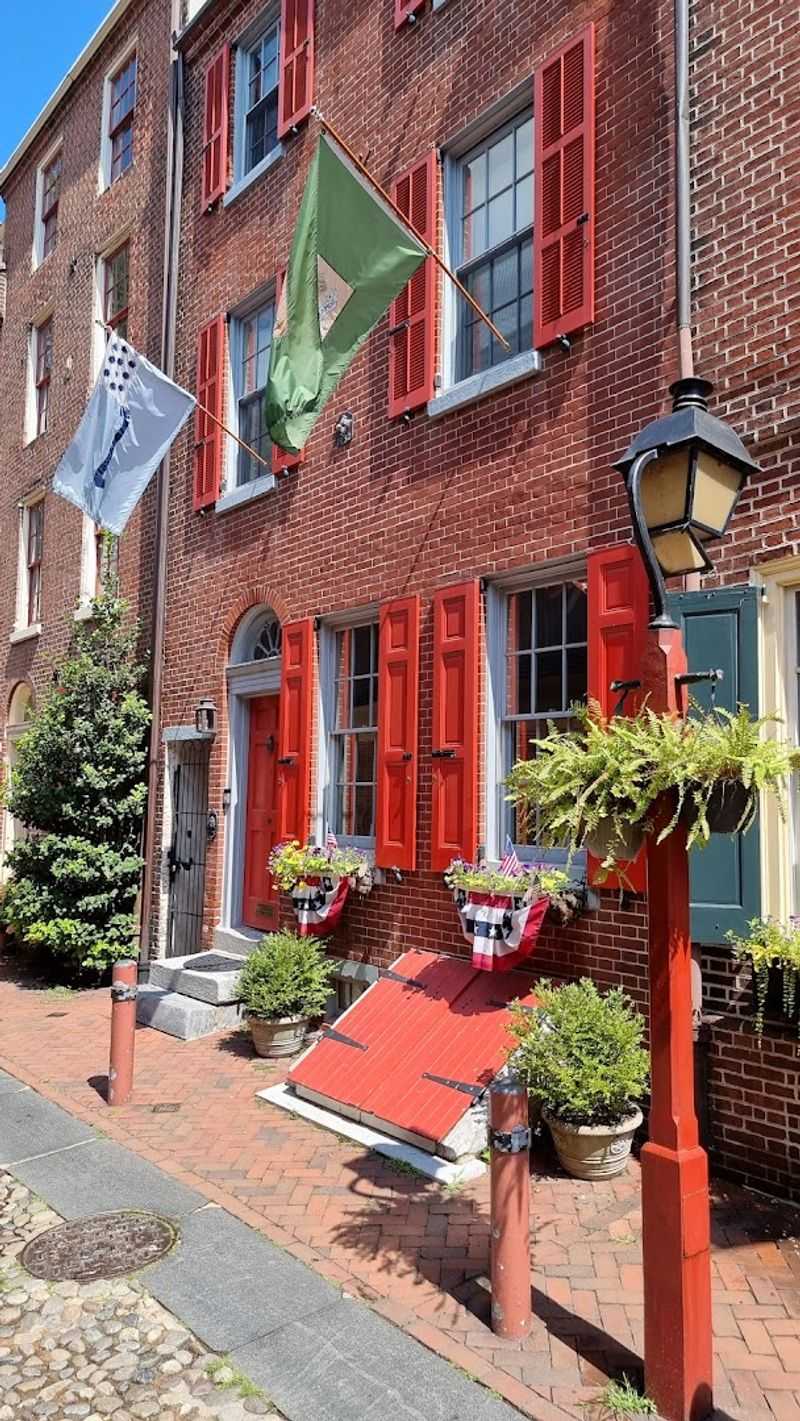
One of the most fascinating things about Elfreth’s Alley is that it was never designed for governors, merchants on a grand scale, or national icons.
These houses were built for ordinary tradespeople, artisans, and laborers who needed to live close to jobs in colonial and early national Philadelphia.
That purpose still shapes the alley’s modest, grounded character today.
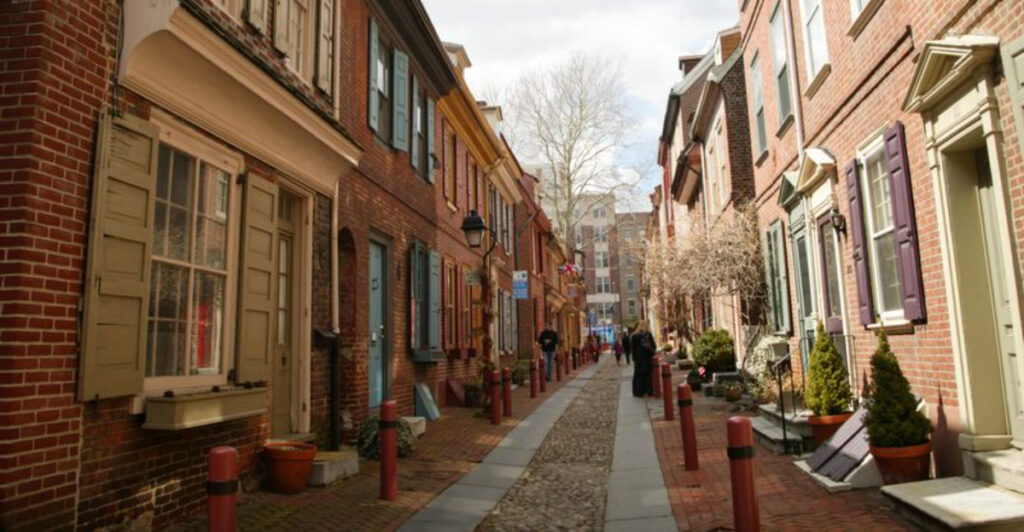
As you look from door to door, the homes reveal practical urban design rather than showy wealth.
Narrow frontages, steep roofs, dormers, shutters, and carefully used interior space reflect a neighborhood where efficiency mattered, but beauty still found its way into brickwork and proportion.
The effect is humble, not plain.
That is what makes the alley feel so relatable.
Instead of telling only the story of famous founders, it preserves a fuller picture of the city, one where everyday residents built communities, raised families, and contributed to Philadelphia’s growth through work that rarely receives the same spotlight.
3. Architecture in Small, Rich Details
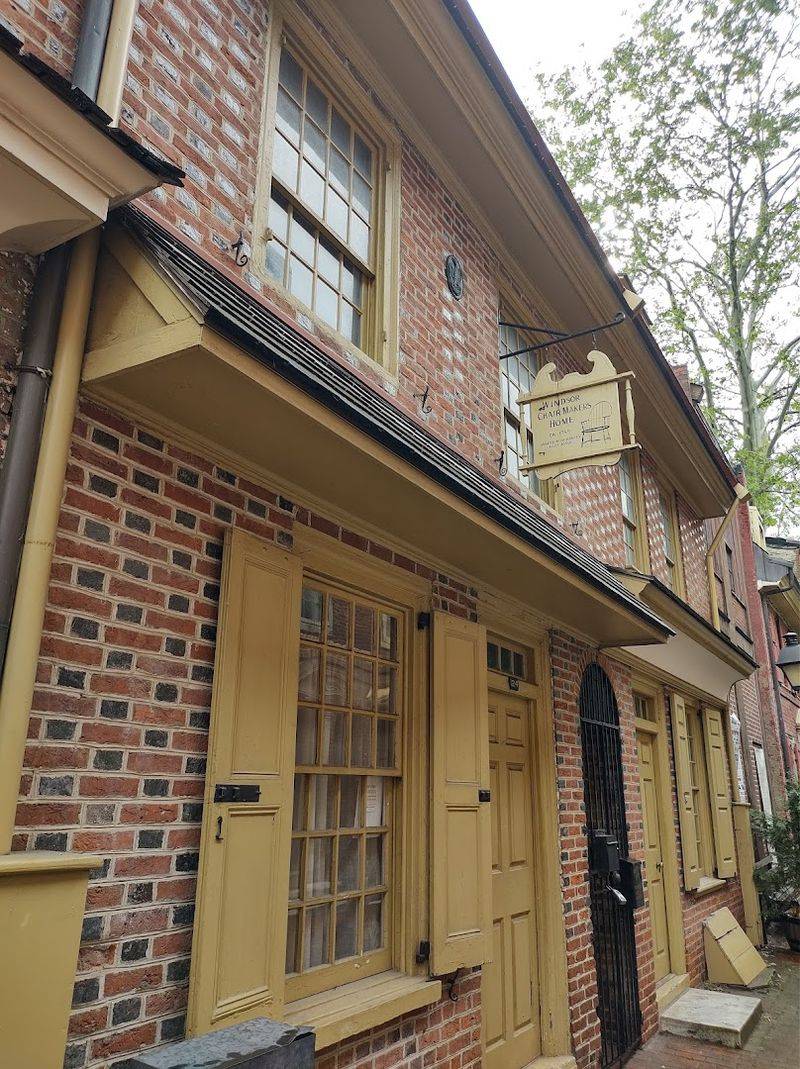
Elfreth’s Alley rewards anyone who loves details, because almost every few steps reveal something worth pausing over.
The brick facades, painted trim, dormer windows, and paneled doors create a rhythm that feels unified without becoming repetitive.
Even small shifts in color and proportion tell you these homes evolved across different periods.
You can spot both Georgian and Federal influences along the lane, but the architecture never feels formal or distant.
It feels scaled to people, with doorways close to the walkway and windows that seem to watch the street in a familiar way.
That intimacy is why photographs often fail to capture the full experience.
Looking carefully also shows how preservation works best when it respects texture.
Elfreth’s Alley is beautiful not because everything looks new, but because age remains visible in the masonry, woodwork, and irregularities that give the street character.
Those imperfections are part of the alley’s enduring charm for visitors.
4. A Living Neighborhood, Not a Set
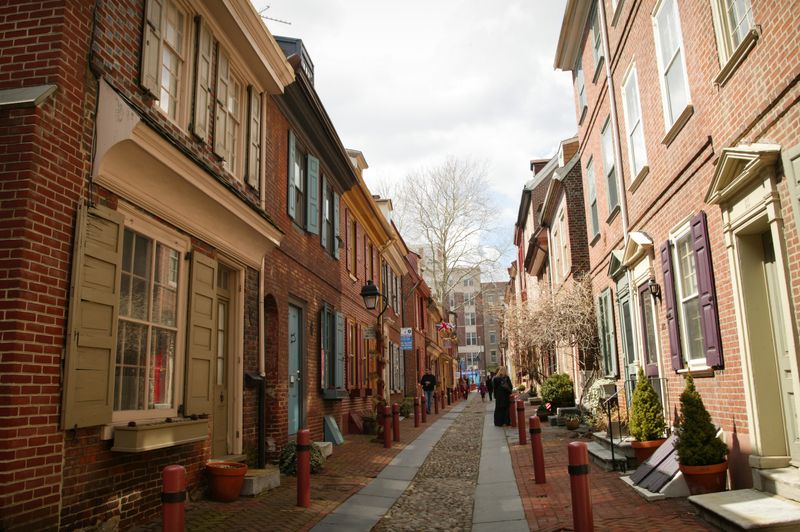
What separates Elfreth’s Alley from many historic destinations is that it still functions as a residential street.
People live here, care for their homes, decorate stoops, and move through a setting that visitors often approach as a piece of the past.
That mix of public fascination and private life gives the alley a rare energy.
You notice it in the practical details that soften the museum feeling.
Flower pots, seasonal wreaths, polished knockers, and curtains in the windows remind you that these buildings are not merely artifacts.
They are homes, and that reality keeps the history grounded in the present.
There is also something refreshing about a place that asks you to look respectfully rather than consume it quickly.
Elfreth’s Alley works best when you slow down, keep your voice low, and pay attention to the rhythms of a real neighborhood.
That restraint makes the experience feel more meaningful and memorable.
5. Inside the Elfreth’s Alley Museum
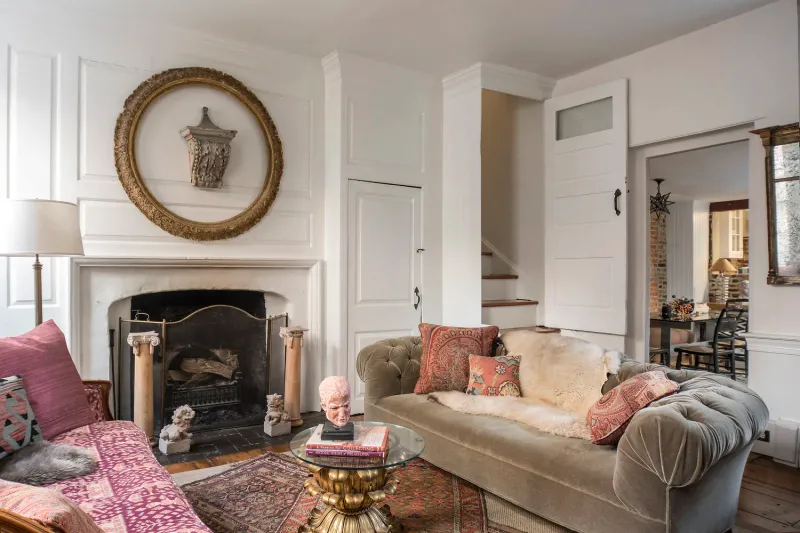
The Elfreth’s Alley Museum helps transform a pleasant walk into a deeper understanding of the people who lived here.
By stepping inside preserved house interiors, you get a clearer sense of how compact these homes were and how carefully residents organized domestic life within limited space.
The rooms make the alley’s history tangible.
Furniture, cookware, household objects, and architectural features bring everyday routines into focus.
Rather than highlighting only famous moments, the museum interprets work, family life, immigration, and neighborhood change across generations.
That emphasis helps you imagine the alley as a place of constant adaptation rather than a single frozen era.
For many visitors, this is where the emotional connection sharpens.
Seeing stairs worn by use or rooms arranged for practical living makes history feel physically close.
The museum does not compete with the street outside, but enriches it, giving context to every doorway and window you pass afterward on your walk.
6. Why the Alley Survived
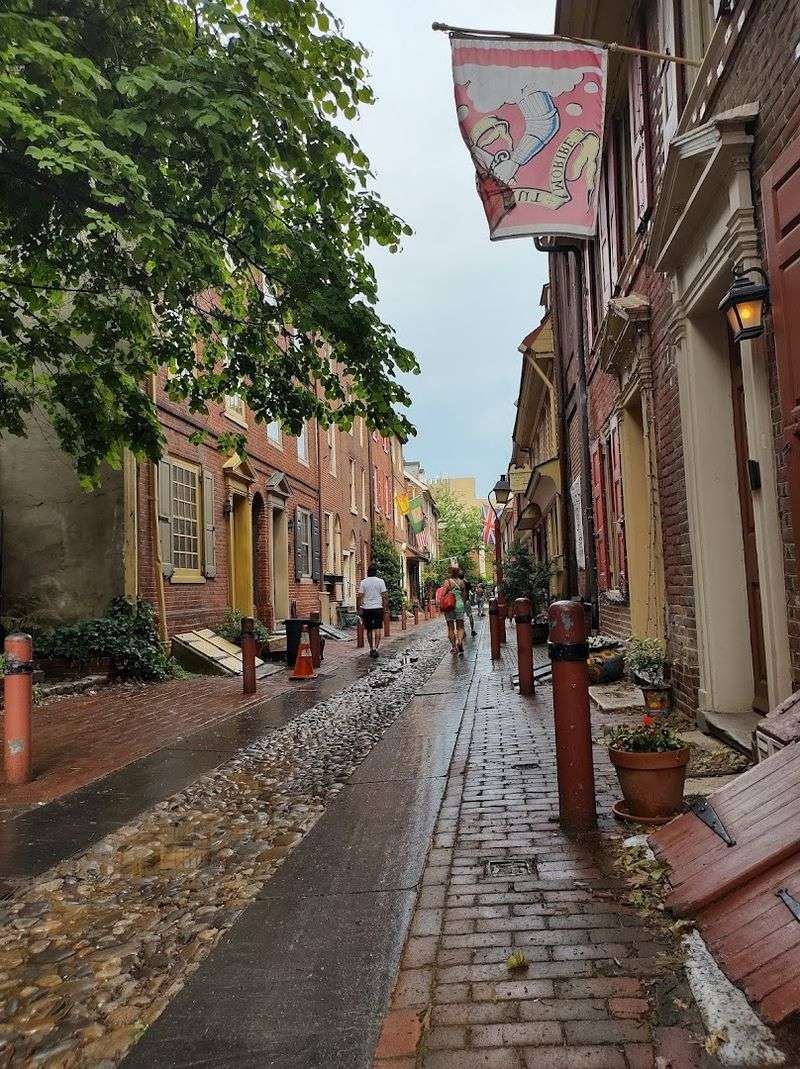
Elfreth’s Alley did not survive by accident.
Like many old urban spaces, it faced pressure from redevelopment, neglect, and changing ideas about what cities should look like.
Its continued existence reflects years of advocacy, preservation work, and community care that protected the street before its significance could be forgotten or erased.
That effort matters because old neighborhoods are often easiest to appreciate after they are nearly lost.
Supporters recognized that the alley preserved not just architecture, but a rare slice of early Philadelphia’s social history.
Saving it meant preserving a lived environment where ordinary residents had shaped the city for generations.
When you walk the alley today, you are benefiting from that long commitment.
Preservation here is not abstract policy, but something visible in bricks repointed, facades maintained, and stories interpreted with care.
The result is a place that still feels authentic while remaining accessible to people eager to understand Philadelphia more deeply.
7. Best Time to Experience the Street
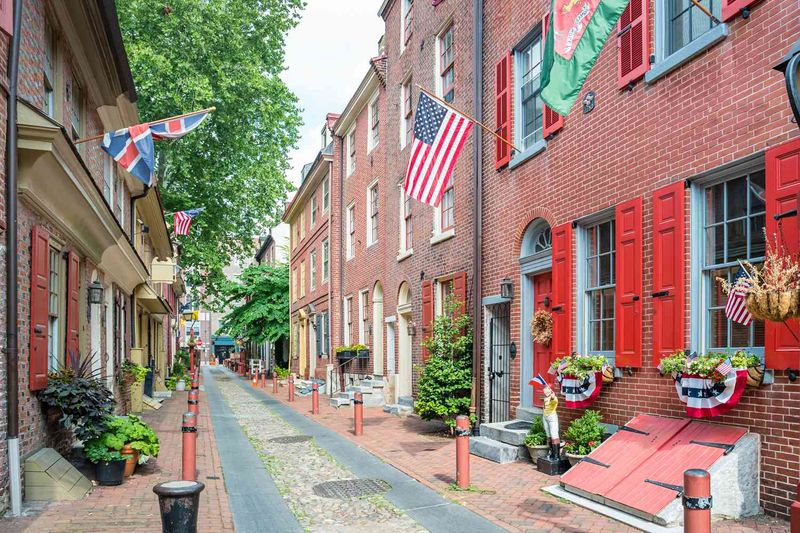
If you want to feel Elfreth’s Alley at its most atmospheric, timing makes a surprising difference.
Early morning often brings the quietest experience, when light softens the bricks and the narrow lane feels almost suspended between centuries.
Later in the day, the street can become busier, especially during peak travel seasons.
Even when other visitors are around, the alley rewards patience more than speed.
Stop at the center of the block, look upward at the dormers, and notice how tightly the homes lean into one another.
The street reveals itself slowly, through texture, scale, and the sense of enclosure that photographs cannot fully deliver.
Season also changes the mood in lovely ways.
Spring flowers, summer greenery, autumn color, and winter starkness each highlight different features of the facades and doors.
No matter when you go, the best approach is simple: treat Elfreth’s Alley less like a checklist stop and more like a place worth lingering in.
8. What Elfreth’s Alley Represents Today
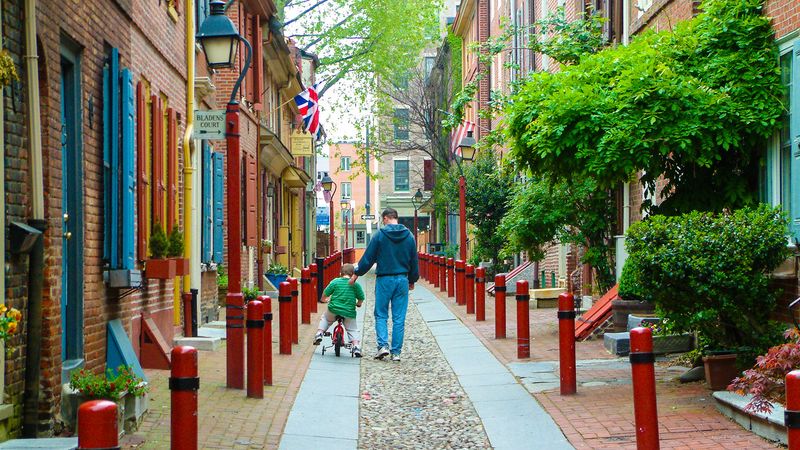
Elfreth’s Alley represents more than impressive longevity.
It captures a version of American history rooted in neighborhood life, practical architecture, and the persistence of ordinary people whose names are less famous than the events that unfolded elsewhere in Philadelphia.
That perspective gives the street unusual depth and emotional resonance.
In a city filled with major landmarks, the alley offers something smaller and sometimes more affecting.
It reminds you that national history is built from local routines, household economies, and communities that survive change one generation at a time.
The story here is not loud, but it is incredibly durable.
By the time you leave, what stays with you is often the feeling of continuity.
Elfreth’s Alley does not just show you old buildings.
It shows how a real residential street can carry centuries of memory while remaining part of the present city.
That balance is exactly why this short block feels unforgettable.
Share this story