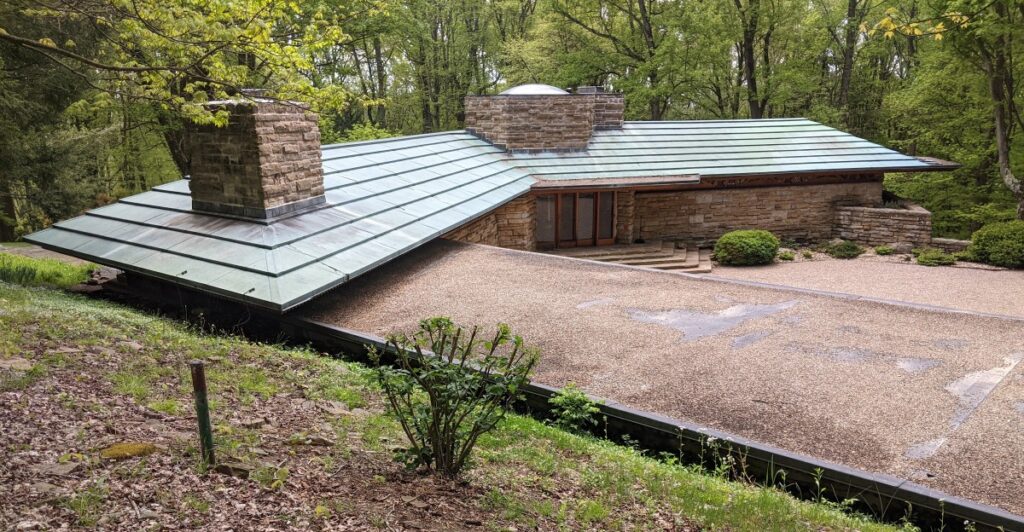
A drive through Pennsylvania’s Laurel Highlands leads to a house that seems to grow right out of its hillside. Frank Lloyd Wright’s Kentuck Knob in Dunbar brings together clever design, outdoor art, and a sweeping mountain view, creating a destination that feels connected to its surroundings from the moment you arrive. The home’s low profile and thoughtful use of natural materials help it blend into the landscape rather than compete with it.
Visiting helps you see how a home can fit into nature instead of taking it over, while the surrounding grounds offer plenty of opportunities to pause and take in the scenery. From the winding approach to the walk through the grounds, getting there is part of the fun. Give yourself time to appreciate both the architecture and the setting, because there’s more to discover here than the house itself.
1. A Country Drive That Sets the Mood
Before you see a single stone wall, the countryside begins setting the scene.
Kentuck Knob sits at 723 Kentuck Road in Dunbar, Pennsylvania, where wooded slopes and rural roads make the approach feel far removed from busy city blocks.
The drive encourages you to slow down and notice the landscape.
Use the full street address when setting your navigation, and download directions before leaving if you rely on mobile service.
Allow extra time for unfamiliar turns, changing weather, and the final approach.
Arriving early is much better than rushing toward a timed tour.
Keep sightseeing stops to safe, legal pullouts rather than road shoulders or private driveways.
Once you reach the property, follow parking signs and head to the visitor center for instructions.
That simple change from driving to exploring is where the outing starts feeling less like an errand and more like a small adventure in the quiet Pennsylvania hills.
2. Advance Planning Keeps the Day Relaxed
A beautiful drive feels better when a tour spot is waiting at the end.
Kentuck Knob offers guided visits, and booking ahead helps you avoid arriving after the final departure or finding your preferred time unavailable.
Choose your visit through the official website rather than relying on old travel posts.
Check current ticket prices, seasonal opening dates, and the details of each tour before paying.
Posted business hours do not always tell you when the last house tour begins.
If anything is unclear, call the property at 724-329-1901 for guidance.
Leave room in your schedule for checking in, getting to the house, and enjoying the grounds afterward.
Visitors report different tour lengths, so confirm the timing for your selected option.
A little planning protects the best part of this trip: having enough time to enjoy what you came to see without watching the clock at every turn along the way.
3. The House Belongs to the Hillside
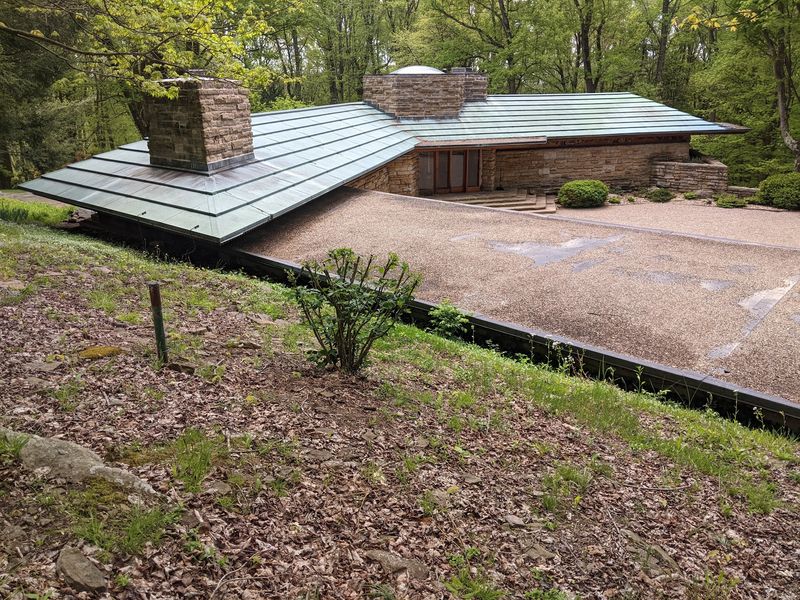
You might expect a famous architect’s house to announce itself from far away.
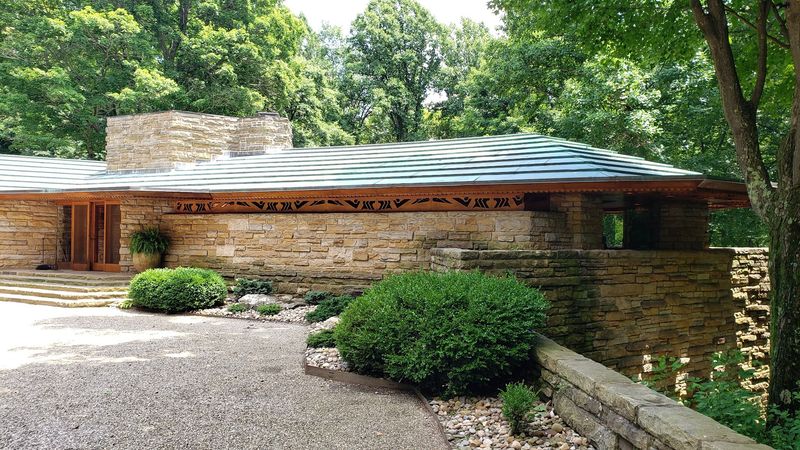
Instead, Kentuck Knob keeps a low profile, tucked into the hill rather than placed like a monument on top.
Its stone, wood, and long rooflines make the building feel connected to the surrounding land.
Wright designed the home for I.
N. and Bernardine Hagan in the 1950s, and it was completed in 1956.
The house reflects his belief that buildings should work with their setting.
Here, that idea becomes something you can see instead of just read about.
During your visit, study how the roof stretches outward and how the walls meet the slope.
Step back where permitted to notice the whole shape before focusing on smaller details.
Even without knowing much about architecture, you can understand the appeal: the home seems comfortable in its surroundings, as though the hillside helped decide exactly where it should settle.
4. Small Spaces Reveal Big Design Ideas
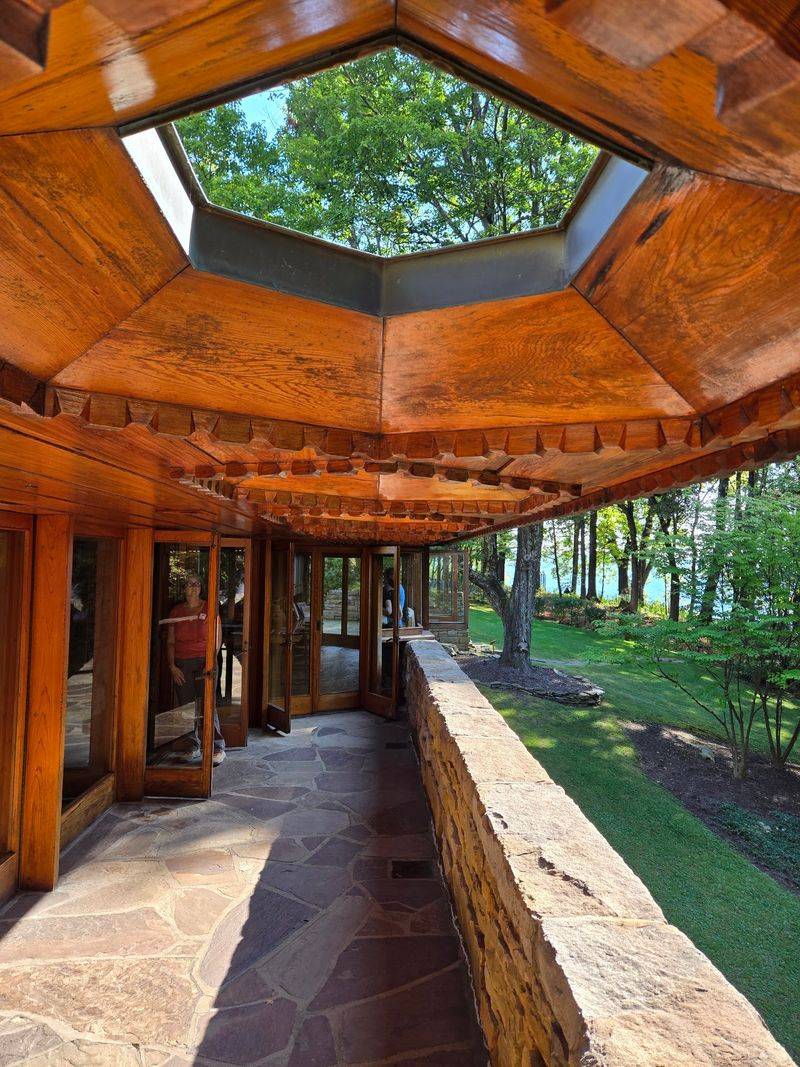
Not every memorable home needs grand stairs or enormous rooms.
Kentuck Knob shows how a smaller house can hold bold ideas through carefully planned spaces, built-in features, and strong links to the outdoors.
It belongs to Wright’s Usonian approach, which focused on a more practical kind of American home.
The design uses a hexagonal pattern rather than a simple arrangement of square rooms.
Angled walls and fitted details give the interior its unusual character.
Some passages can feel narrow, making the contrast with more open spaces especially noticeable.
Listen for your guide’s explanation of how everyday life shaped the layout.
Imagine carrying groceries, sitting down to dinner, or looking outside from a favorite chair.
Those ordinary moments make the design easier to understand than technical terms alone, and they may leave you thinking differently about the spaces you use every day, from your own kitchen to the smallest hallway at home.
5. Guides Give the Walls a Human Story
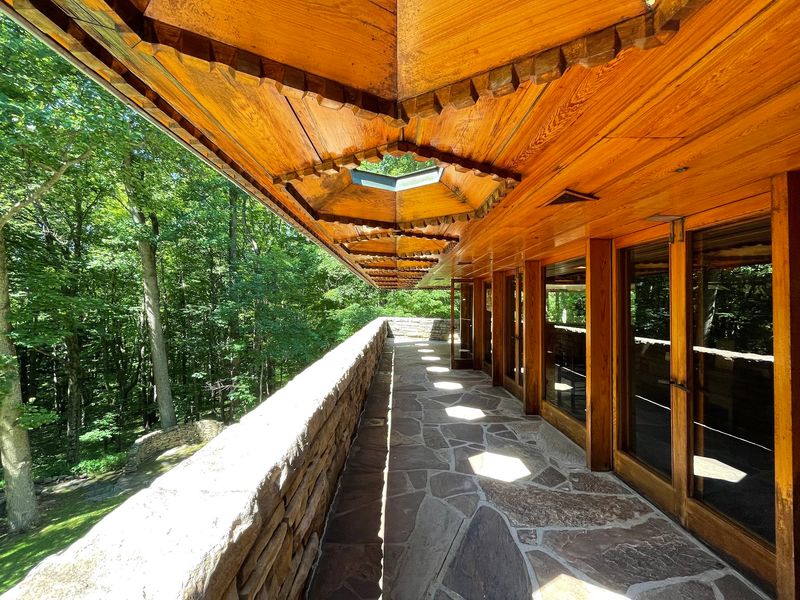
Stone and wood tell only part of the story.
A good guide brings in the people who imagined, built, and cared for Kentuck Knob, turning a striking house into a place with a past.
Visitor reviews frequently praise the staff’s knowledge and welcoming style.
Expect to hear about the Hagan family, Wright’s design choices, and the property’s later ownership by Lord Palumbo.
Exact topics depend on the tour and guide.
Ask about a feature that catches your eye rather than feeling you need an expert question.
If you enjoy deeper background, compare the standard visit with any currently offered extended tour.
Check what each option includes before booking, since names and schedules can change.
The most rewarding moments often come from one small explanation: why a window sits there, how a room works, or what the owners wanted their home to feel like during an ordinary day in these hills.
6. A Valley View Worth Lingering Over
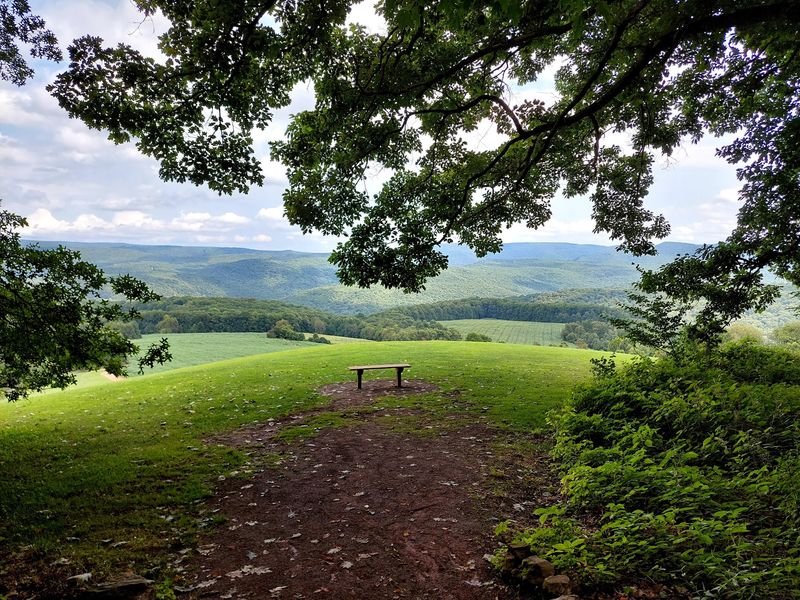
Then the trees give way, and the landscape opens.
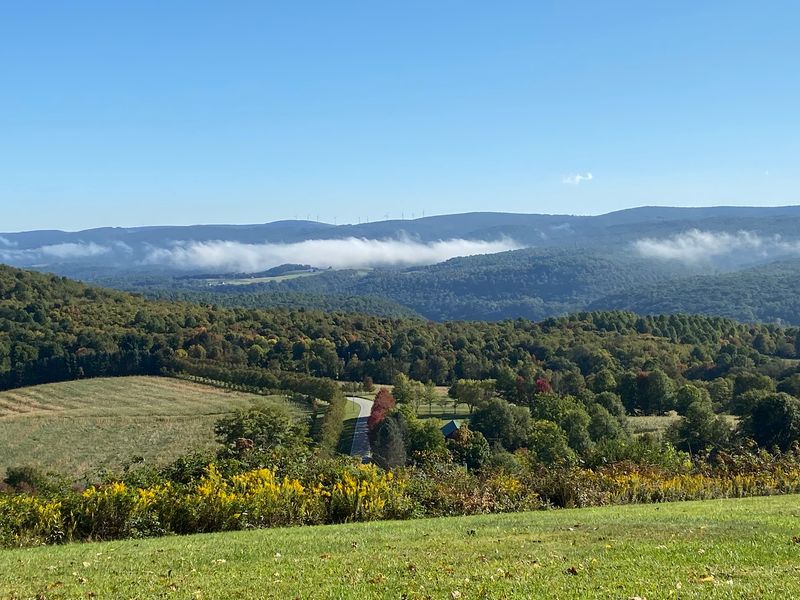
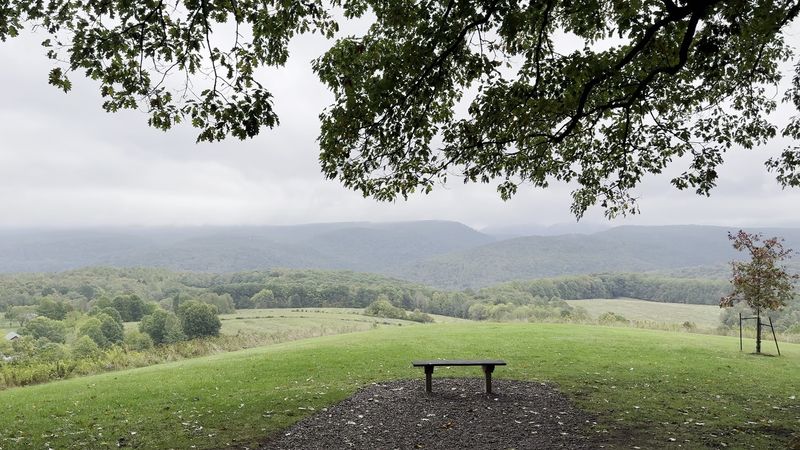
The overlook near the house offers a broad view across the Youghiogheny River valley and the surrounding hills.
After the close details of the building, that sweep of open country feels especially striking.
Give yourself a few quiet minutes here instead of treating it as a quick photo stop.
Look for overlapping ridges, changes in the tree canopy, and the way clouds shift the light.
Clear conditions reveal more distance, while mist can create a softer, moodier scene.
Ask staff how to reach the viewing area and follow marked routes.
Stay away from unsafe edges, keep children close, and avoid stepping into planted areas for a better camera angle.
You do not need special equipment to enjoy the outlook; simply pausing long enough to take it in may become the moment you remember most after the drive home from Kentuck Knob.
7. Outdoor Art Adds Unexpected Stops
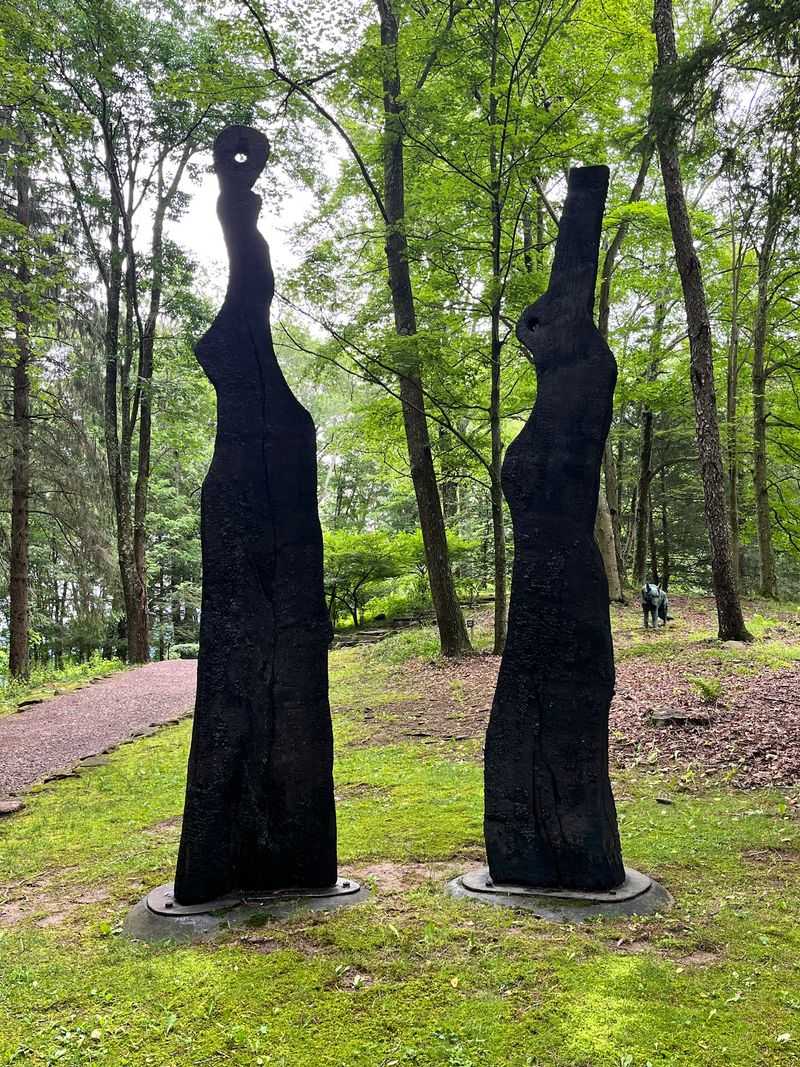
A walk here can turn into a treasure hunt for shapes and ideas.
Beyond the house, Kentuck Knob’s grounds include an outdoor sculpture collection associated with Lord Palumbo.
Art appears among lawns and trees, adding another reason to explore rather than head straight back.
Some pieces invite you to think about form, balance, or movement; others may simply make you smile.
You do not have to understand every work to enjoy the setting.
Look at each piece from more than one permitted angle and notice how the background changes its effect.
Ask whether a grounds map or artwork guide is available during your visit.
Follow any posted rules, and do not climb on or touch objects unless the property specifically allows it.
Let curiosity set your pace, but keep closing time in mind so your outdoor discoveries do not end with a hurried walk back to the visitor center that afternoon.
8. A Berlin Wall Fragment Changes the Conversation
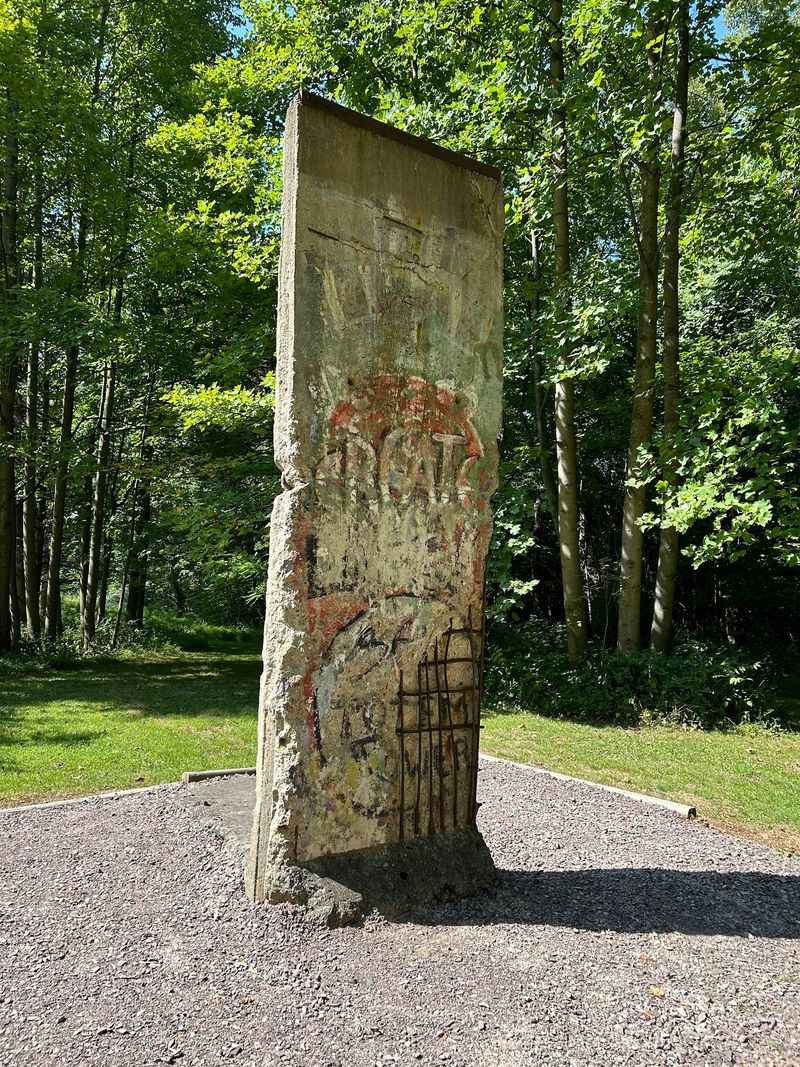
World history makes a surprising appearance in these Pennsylvania woods.
Among the objects on Kentuck Knob’s grounds is a section of the Berlin Wall, a reminder that outdoor collections can hold more than decorative art.
Its presence gives the walk an unexpected point of reflection.
The wall once divided Berlin during the Cold War, and its opening in 1989 became a powerful symbol of change.
Seeing a fragment far from Germany makes that history feel more physical.
A heavy piece of concrete carries a story much larger than its size.
Use the site’s labels or guide materials to learn about the particular object on display.
For younger visitors, explain the basic idea of a city divided before adding dates and politics.
Then allow a moment to look closely, without touching, before returning to the trail and the very different experience of exploring a peaceful hillside filled with trees and art.
9. The Woodland Walk Extends the Adventure
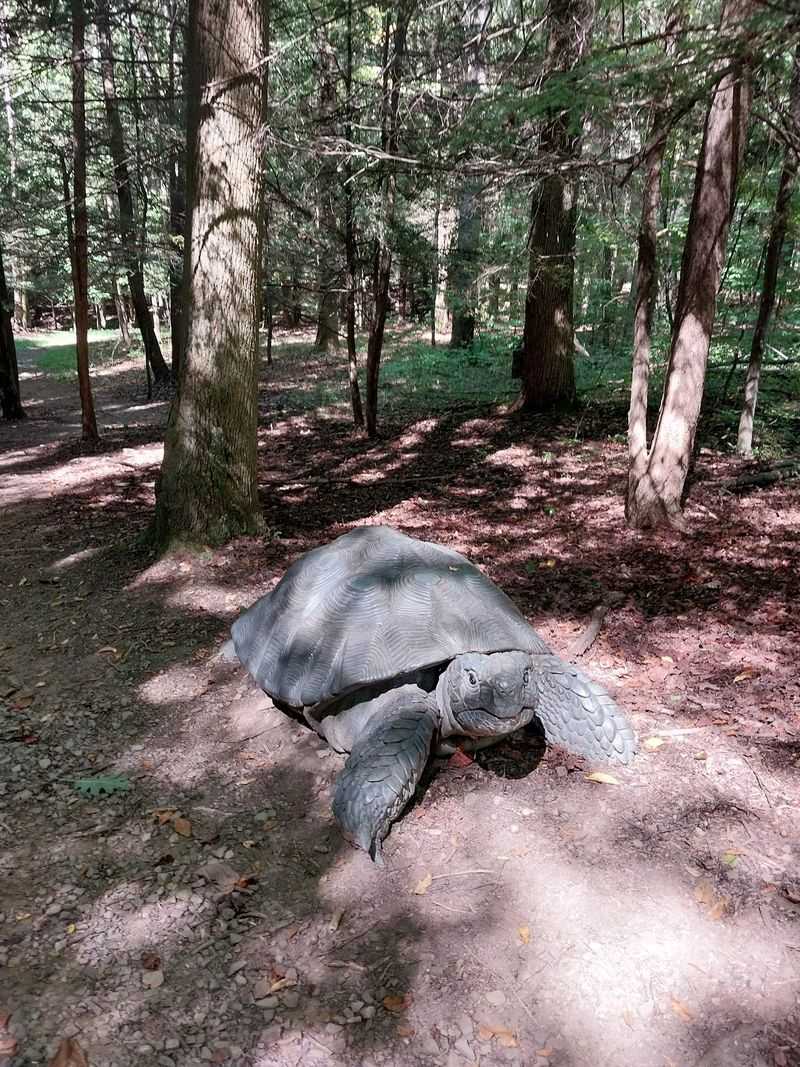
The return trip can be part of the attraction, too.
Visitors often describe walking from the house toward the visitor center through woods and past outdoor artwork.
Rather than ending when the house tour finishes, the experience continues at the slower pace of your footsteps.
Ask staff which walking routes are open and whether a shuttle return is available.
Paths may have stone surfaces, slopes, or uneven spots, so sturdy shoes are a sensible choice.
If mobility is a concern, discuss access before booking instead of assuming every route will suit you.
Carry only what you need, and dress for the forecast.
Wet leaves and stones deserve extra care after rain, while warmer days call for water and sun protection in open areas.
Choosing the walk when conditions suit you lets the journey unfold naturally, with room for a sculpture, a patch of woodland light, or one final look uphill.
10. Simple Comforts Make Room for Lasting Memories
A thoughtful finish can be as useful as a strong start.
Back at the visitor center, take time to browse the gift shop or check whether café service is available.
A book or small keepsake can help you revisit the design ideas after returning home.
Use available restrooms before heading toward the house or onto the grounds, and ask staff about facility locations.
Confirm current photography rules, too: visitors have reported that outdoor pictures are allowed while interior photography is restricted.
Respect the policy given for your tour.
Before leaving, think about what stood out most: the low roof, a guide’s story, the outdoor art, or the valley beyond the trees.
Kentuck Knob rewards attention more than speed, so there is no need to turn the visit into a checklist.
With a little preparation and time to wander, the destination and the journey become parts of the same satisfying memory.
Share this story