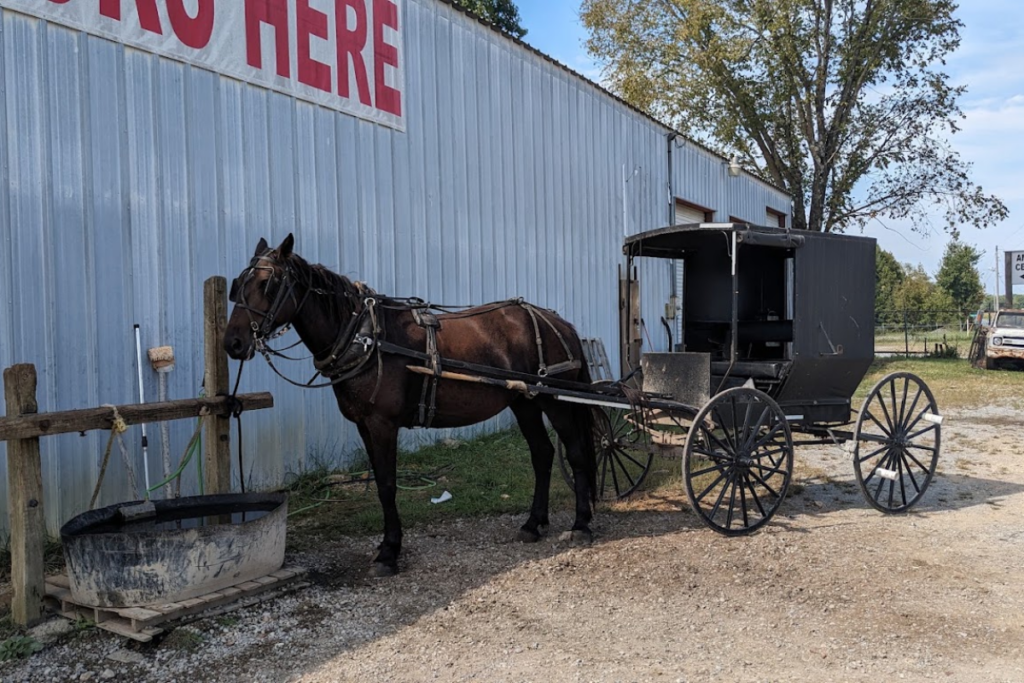
In the rolling countryside of Lawrence County, Ethridge offers a side of Tennessee that feels far removed from busy highways and fast-paced routines. Known for its Amish community, this small town is shaped by family farms, handmade goods, horse-drawn buggies, and food prepared the old-fashioned way.
Visitors come for fresh bread, fruit pies, jams, produce, furniture, quilts, and other goods sold directly from local families. But the experience is about more than shopping. Driving the back roads gives you a glimpse of a community where work, faith, craftsmanship, and tradition still guide everyday life.
Ethridge is not a staged attraction, which is exactly what makes it memorable. The best visits happen slowly, with patience, curiosity, and respect for the people who live there.
Here is what to know about the food, farm stands, traditions, and etiquette that make Ethridge one of Tennessee’s most distinctive small-town destinations.
Welcome to Ethridge, Tennessee’s Amish Country
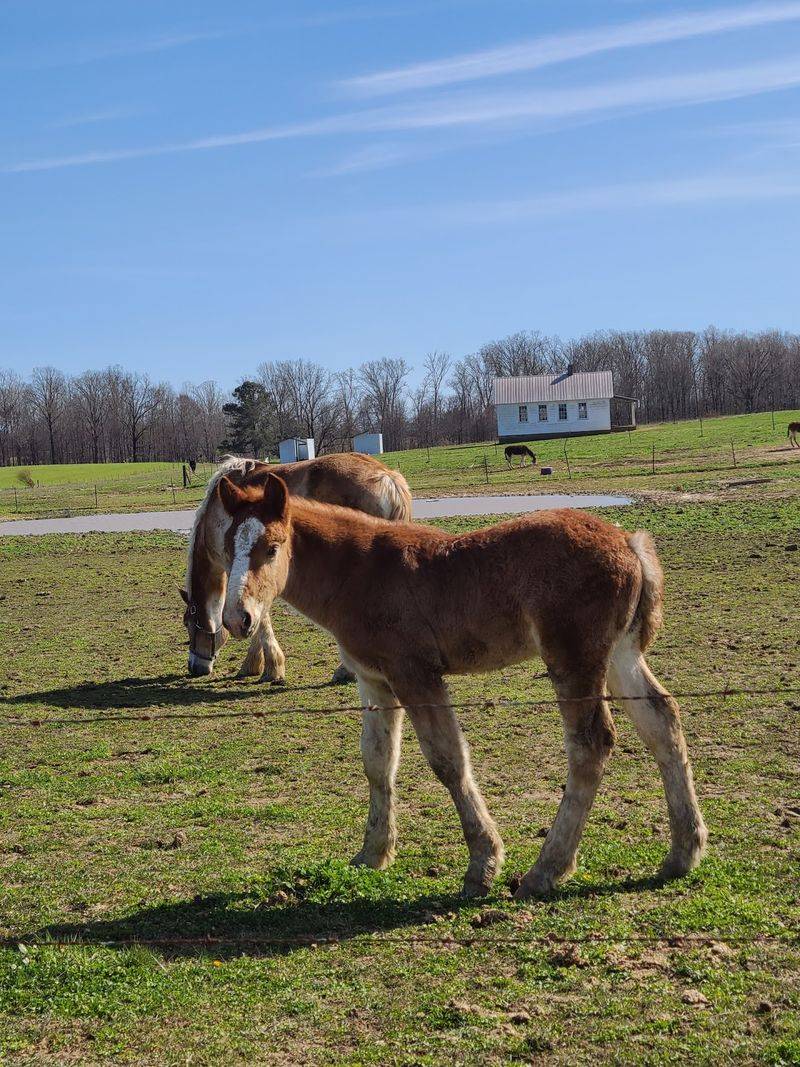
Picture a town of about 537 people, set in Lawrence County in south central Tennessee, where the loudest sound on some mornings is a horse’s hooves on pavement. That is Ethridge. It sits near the Alabama line, and its quiet roads wind past fields, pastures, and neat farmsteads.
What makes the town stand out is its Amish community. Families settled in this area and brought a way of life built on faith, work, and neighbors who look out for each other. Plain clothing, buggies, and big gardens are part of the everyday scenery.
Ethridge is not a theme park, and that is the whole charm. People here are living their normal lives, which means the experience feels real. You are a guest in a working farm community, not an audience at a show.
Fun fact: the Amish are known for speaking a German dialect at home, often called Pennsylvania Dutch, even though many families in Tennessee trace their roots to several different regions. You may hear it in passing if you stop at a shop.
Plan for a relaxed visit. Fill the gas tank before you go, bring a cooler for baked goods and produce, and leave room in the schedule for wrong turns. Some of the best finds in Ethridge come from simply following a gravel drive toward a hand-painted sign.
Think of this first stop as your mental reset. Once you slow down to the pace of a buggy, the rest of the town begins to make sense, and you start noticing details like laundry lines, tidy rows of beans, and children walking home along the shoulder of the road.
A Community Built Around Simple Living
Simple living does not mean easy living. In Ethridge, the Amish day often starts before sunrise with milking, feeding animals, and tending crops. Work is shared, and everyone from grandparents to young kids has a job.
Farming is the backbone of the community. Fields get plowed with teams of horses in many Amish settings, and gardens are huge compared to the average backyard plot. What grows there feeds the family all year long.
Family is the center of the circle. Meals are eaten together, Sundays are set aside for worship and rest, and neighbors gather for barn raisings and work days when someone needs help. If a family hits a rough patch, the community steps in.
Craftsmanship matters too. Furniture, quilts, baskets, and tools are often made by hand, with care taken over each stitch and joint. A well-built chair is expected to last for decades, not a few seasons.
Technology is limited on purpose. Many Amish communities avoid things like home internet and public power lines because they want to protect time with family and faith. Rules vary from one community to the next, so what you see in Ethridge may differ from other settlements.
Here is a useful way to think about it: the Amish are not against progress, they are choosy about it. They ask whether a new tool will bring people closer together or pull them apart. That question shapes nearly every decision, from how a barn is built to how a family travels to church.
Where Homemade Food Is Still a Way of Life
Nothing says morning in Amish country like the smell of bread rising in a farmhouse kitchen. In Ethridge, cooking from scratch is not a trend. It is simply how meals get made, and the results are the kind that make you close your eyes after the first bite.
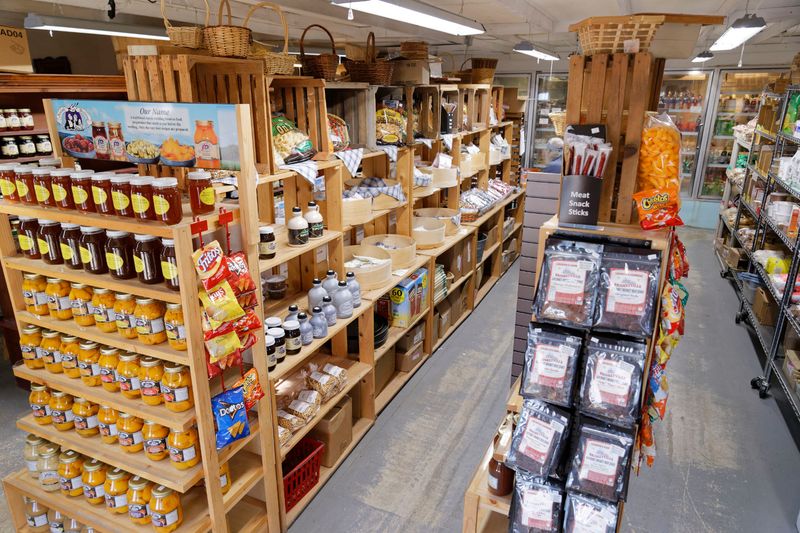
Baked goods are the headliners. Look for fruit pies, soft dinner rolls, cinnamon bread, cookies, and fried pies that are still warm in the bag. Many recipes are handed down by memory, with no cookbook in sight.
Then come the preserves. Shelves fill with jars of jam, apple butter, pickled beets, relish, and canned green beans, all put up during the growing season. Canning is a serious skill, and the rows of glowing jars show it.
Fresh produce changes with the calendar. Spring brings lettuce and strawberries, summer is tomatoes, squash, and sweet corn, and fall adds pumpkins and apples. Ask what is best this week and you will usually get an honest answer.
Dairy and farm staples may turn up as well, such as fresh eggs, homemade butter, or cheese, depending on the family and local rules. Availability changes, so do not count on any single item.
A smart move is to bring a cooler with ice packs and a little room in your trunk. Start with something sweet, add something tangy, then grab a vegetable or two so dinner has a head start. Your future self will thank you.
Farm Stands, Roadside Signs, and Buying Direct From Amish Families

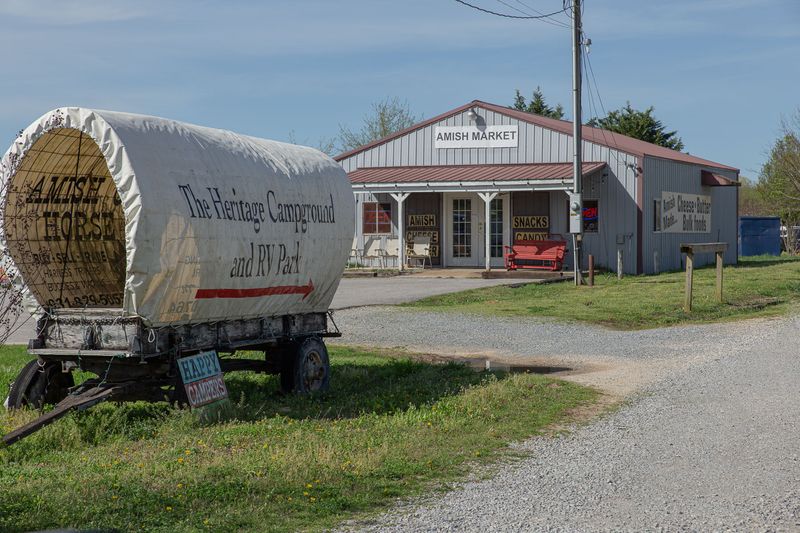
The best map in Ethridge might be your own eyes. Hand-lettered signs pop up along the back roads, advertising things like eggs, pies, honey, rocking chairs, or birdhouses. Spot one, slow down, and see where it leads.
Buying direct is a different experience from shopping at a store. You may walk up to a small stand with prices written on a card and a cash box on the table. Other times, someone steps out of the house to greet you and help you pick.
Chat a bit if the moment feels right. Asking how a recipe works or when the strawberries ripen often leads to friendly conversation. Keep it polite and brief, since folks are in the middle of a workday.
Goods go well beyond food. Handmade furniture, wooden toys, quilts, baskets, and garden items are common finds, and the quality shows in the details. Prices usually reflect hours of labor, so haggling is not the best idea.
Hours can be unpredictable. Many families do not sell on Sundays, and some stands only open on certain days or when produce is ready. If a sign says closed, simply move on and try the next one.
Bring small bills, a cooler, and a sense of adventure. Take the time to drive slowly, watch for kids and animals near the road, and enjoy the surprise of what is around the next bend. The hunt is half the fun.
Traditions That Have Survived Generations

Somewhere in an Ethridge kitchen, a young girl is learning to roll out pie crust the same way her grandmother did. No timer, no app, just hands and practice. That quiet handoff is how many traditions last.
Skills pass down through doing. Children help in the garden, learn to sew, care for animals, and pick up carpentry by working alongside parents. School often ends after the eighth grade, and learning continues through practical work at home.
Recipes carry family history. A pinch of this and a handful of that may be the only measurements, and the cook knows it is right by feel. Holiday dishes and church meals often follow patterns that have been repeated for many years.
Farming methods reflect old wisdom. Crop rotation, composting, and working with animals instead of heavy machinery are common in many Amish settlements. The goal is to care for the land so it can feed the next generation too.
Faith ties everything together. Values like humility, patience, and putting community before self shape daily choices. Worship is held in homes on a rotating basis in many Amish groups, which keeps the gathering personal.
These customs are not museum pieces. They are living habits that give people a sense of belonging. When you buy a loaf of bread or a handmade bench in Ethridge, you are touching a small piece of a very long story.
What Visitors Should Know Before Exploring Ethridge
Rule number one: you are a guest. Ethridge is a home, a workplace, and a place of worship for its Amish residents. A friendly wave and a courteous attitude go a long way.
Photography is the touchiest topic. Many Amish believe posed photos of faces go against their faith, so do not point a camera at people. Landscapes, barns, and food are usually fine, but always ask first if you are unsure.
Bring cash. Many farm stands and small shops do not take cards, and there may not be an ATM nearby. Small bills make buying a pie or a dozen eggs much easier.
Driving takes patience. Buggies move slowly, often around 5 to 10 miles per hour, and they can appear just beyond a hill or curve. Slow down early, give wide space when passing, and never honk, since horses can spook.
Check hours before you go. Sundays are typically for rest and worship, and many businesses close then. Some are open only a few days a week, so a little planning prevents disappointment.
Do not walk onto a farm or into a home uninvited. If a driveway has a sign for sales, that is your invitation. Otherwise, stay on the road, keep your voice friendly, and treat every property like someone’s front yard, because it is.
Why Ethridge Still Feels Different From Anywhere Else
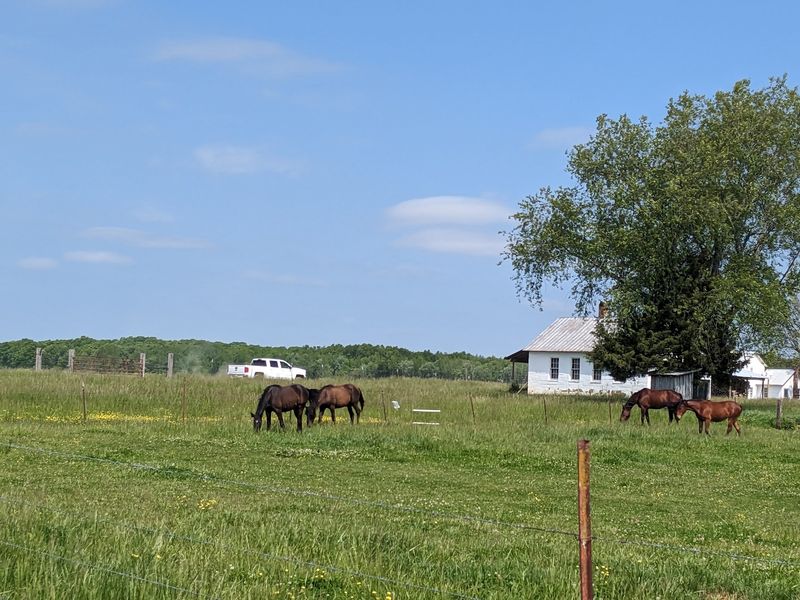
Leave the highway, and something shifts. Your phone buzzes less, the road gets quieter, and the sky seems wider. That change is what people remember most about Ethridge.
Time moves differently here. Work follows the seasons, meals take as long as they take, and visiting with a neighbor is not an interruption. It is part of the day.
The food tells the story best. A jar of jam or a pie made in a home kitchen carries effort you can taste. There are no flashy labels, only skill and care.
Agricultural traditions give the area its backbone. Fields, gardens, and animals are not scenery but a daily responsibility. Watching that rhythm up close reminds you where food really comes from.
And yes, this way of life feels increasingly rare. Most of us live in a world of screens and speed, so seeing a community choose another path is both humbling and refreshing. You do not have to agree with every choice to appreciate the dedication.
Leave with a full cooler, a handmade keepsake, and maybe a new habit or two, like slowing your drive or cooking something from scratch. Ethridge does not try to be anything it is not, and that honesty is exactly why you will want to come back.