Blink and you might miss Pearl Street in Newfield. Blink twice and you might miss the little building behind the house where one of New Jersey’s strangest, sweetest collections has been quietly growing for decades.
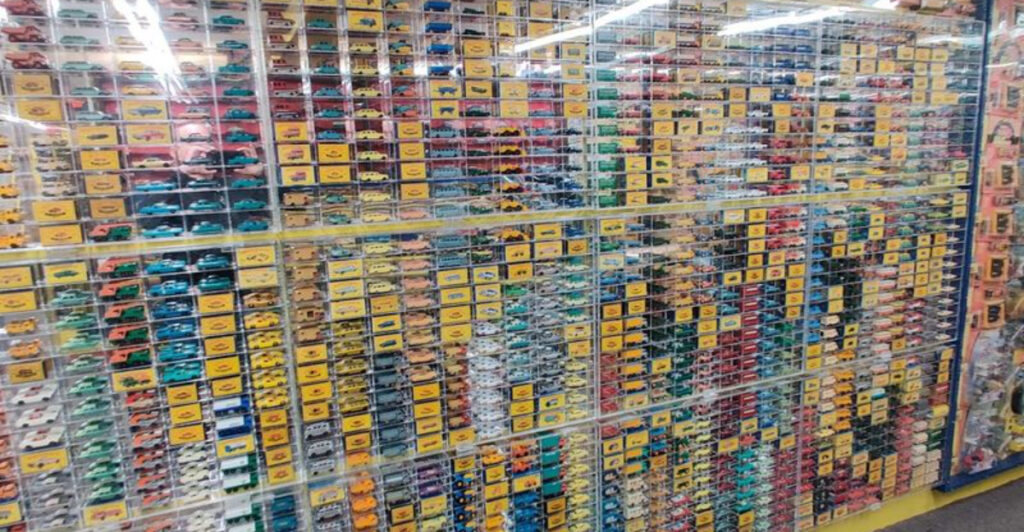
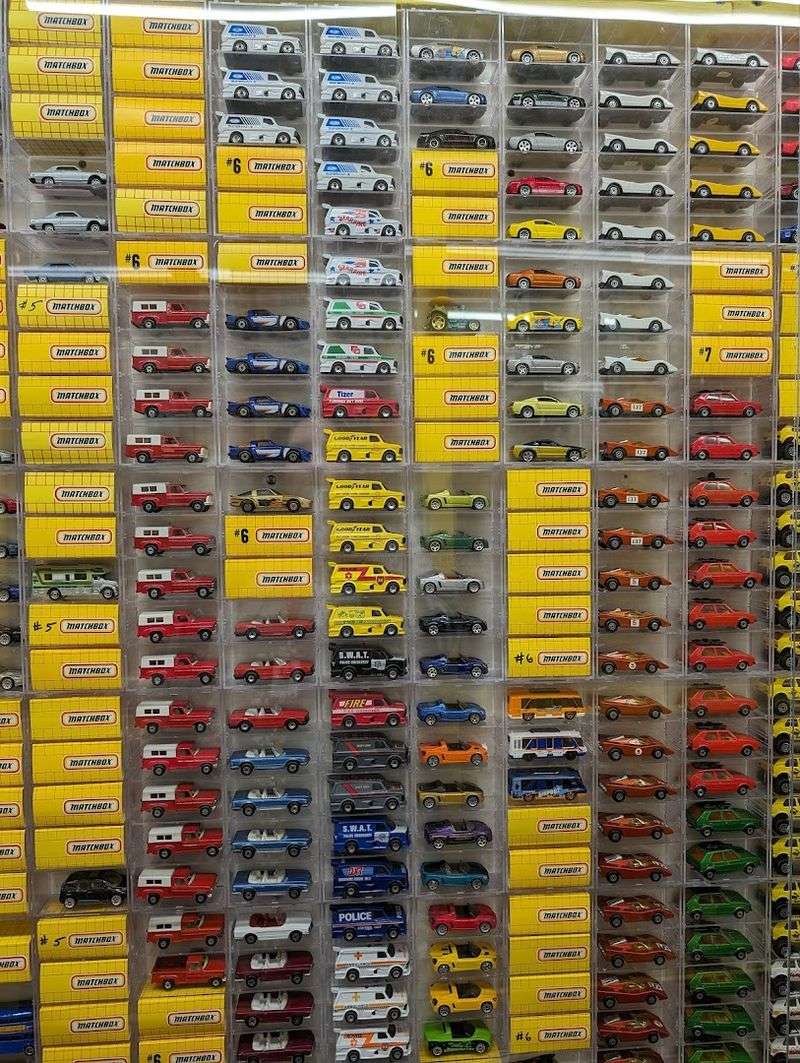
Inside, shelves and cases are packed with more than 50,000 Matchbox cars, trucks, buses, emergency vehicles, construction rigs, and tiny machines that look ready to roll straight back into somebody’s childhood.
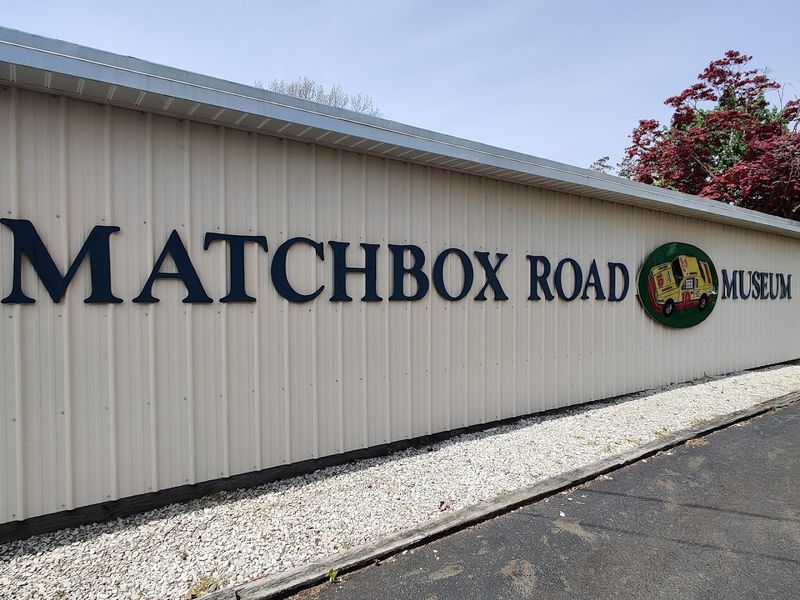
This is the Matchbox Road Museum, a donation-based, appointment-only stop in Gloucester County that feels less like a polished attraction and more like being let in on a fantastic local secret.
There is no giant neon sign, no big parking-lot fanfare, and no attempt to make the place seem grander than it is. That is part of the charm.
The surprise is the scale. From the outside, it looks modest. Inside, it is a miniature traffic jam of memory, craftsmanship, and obsession.
Newfield’s Tiny Museum With a Massive Toy Car Collection
Newfield is the kind of South Jersey town where an odd little museum can hide in plain sight. It sits in Gloucester County, not far from Vineland, surrounded by the flat roads, small neighborhoods, and farmland edges that make this part of the state feel worlds away from the Parkway rest stops and Shore traffic most outsiders picture first.
The Matchbox Road Museum lives at 15 Pearl Street, tucked into a residential area rather than a museum district. That small-town setup is not a side note.
It is the whole mood. You are not walking into a corporate attraction.
You are stepping into someone’s lifelong passion project. And then the number hits you.
More than 50,000 Matchbox cars are housed here, with some accounts putting the collection even higher. The museum was started by Newfield native Everett Marshall III, whose collecting habit grew from a childhood fascination into something much bigger than a hobby.
The beauty of it is that the museum still feels personal. Many attractions try hard to look quirky.
This one simply is. The building does not need dramatic lighting or a big scripted experience because the shelves do the talking.
Tiny cars line up by era, style, rarity, and memory. A visitor who knows die-cast collecting will start noticing variations, production details, and rare finds.
A casual visitor will probably just grin and say some version of, “I had that one.” That is the museum’s magic trick. It works whether you are a collector, a parent, a grandparent, or someone who has not thought about Matchbox cars since they were scattered under the living room couch.
How One Childhood Hobby Turned Into a South Jersey Landmark
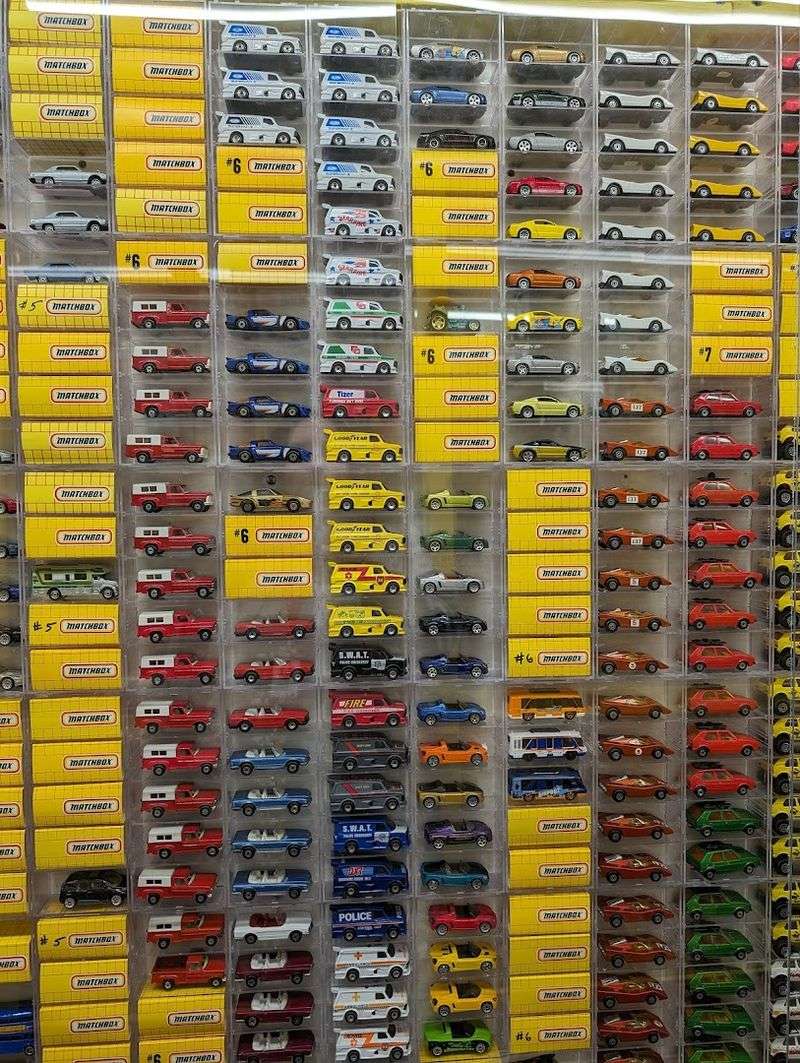
Everett Marshall III began collecting Matchbox cars in the 1950s, which means this collection stretches back to the era when the little die-cast vehicles were still becoming playground royalty. Think about that for a second.
One small toy, picked up and saved, eventually became a museum that people now detour through South Jersey to see. That is not how most childhood hobbies end.
Most collections disappear quietly. Baseball cards get rubber-banded until the corners bend.
Comic books end up in damp basements. Toy cars get traded, lost, chewed by dogs, or handed down until nobody remembers where they came from.
Marshall’s collection went the other direction. It grew, then kept growing, until a garage was not enough and a museum became the logical next step.
There is something very New Jersey about that. Not flashy.
Not over-explained. Just a person who cared about something enough to keep at it for decades, then opened the door so other people could enjoy it too.
Matchbox itself has a deep pull because the cars were never just toys. They were tiny versions of grown-up life. Fire engines, dump trucks, delivery vans, police cars, sports cars, buses, tow trucks, and roadsters gave kids a whole world they could hold in one hand.
The name came from the original idea of packaging the vehicles in boxes about the size of a matchbox, which made them easy to collect, carry, and line up anywhere a child could find a flat surface.
Inside the Matchbox Road Museum, that smallness becomes strangely powerful. The cars are tiny, but the timeline is huge.
You are looking at decades of design changes, paint choices, wheel styles, manufacturing shifts, and childhood trends. Some models look exactly like the kind you remember pushing across a kitchen floor.
Others feel like museum pieces because, frankly, they are.
Why Matchbox Fans Travel to Pearl Street
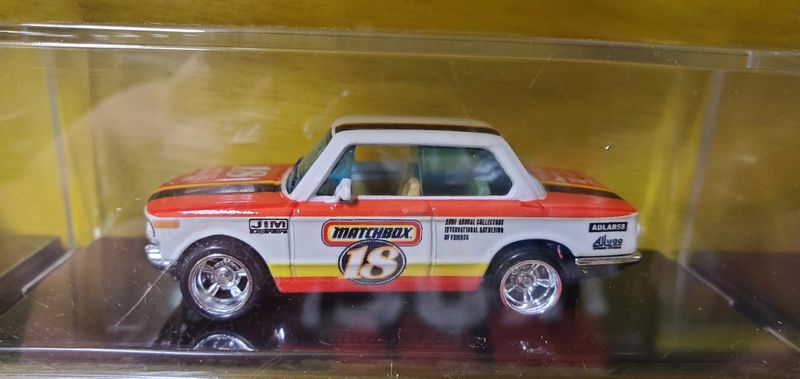
For serious collectors, Pearl Street is not just a cute detour. It is a destination.
The Matchbox Road Museum is appointment-only, and that detail changes the whole experience. This is not a place where you wander in between errands and expect a turnstile.
You call first, make sure someone can welcome you, and treat the visit with the same respect you would give any privately run collection. That appointment setup may sound old-fashioned, but here it makes sense.
The museum is intimate, and the collection is dense. You do not want to rush it with a crowd pressing behind you.
You want time to lean in, ask questions, notice the tiny differences between models, and let your own memory catch up. Collectors make the trip because this is the kind of place where the word “rare” actually means something.
It is easy to call any old toy collectible, but Matchbox collecting has layers. Condition matters.
Packaging matters. Year matters.
Country of production matters. Color variations matter.
A truck that looks ordinary to one visitor might make a collector freeze because the wheels, decals, or paint run tell a more interesting story. That is why this little Newfield museum has pull beyond its square footage.
It is not just the quantity. It is the depth.
A collection of 50,000-plus vehicles means you are not looking at a greatest-hits shelf. You are looking at a lifetime of hunting, sorting, comparing, and preserving.
There is also a social piece to it. Places like this naturally attract people who speak the language of tiny tires, paint variations, and old packaging, but you do not have to be fluent to enjoy the conversation.
The Rare Cars and Prototypes Hiding in Plain Sight
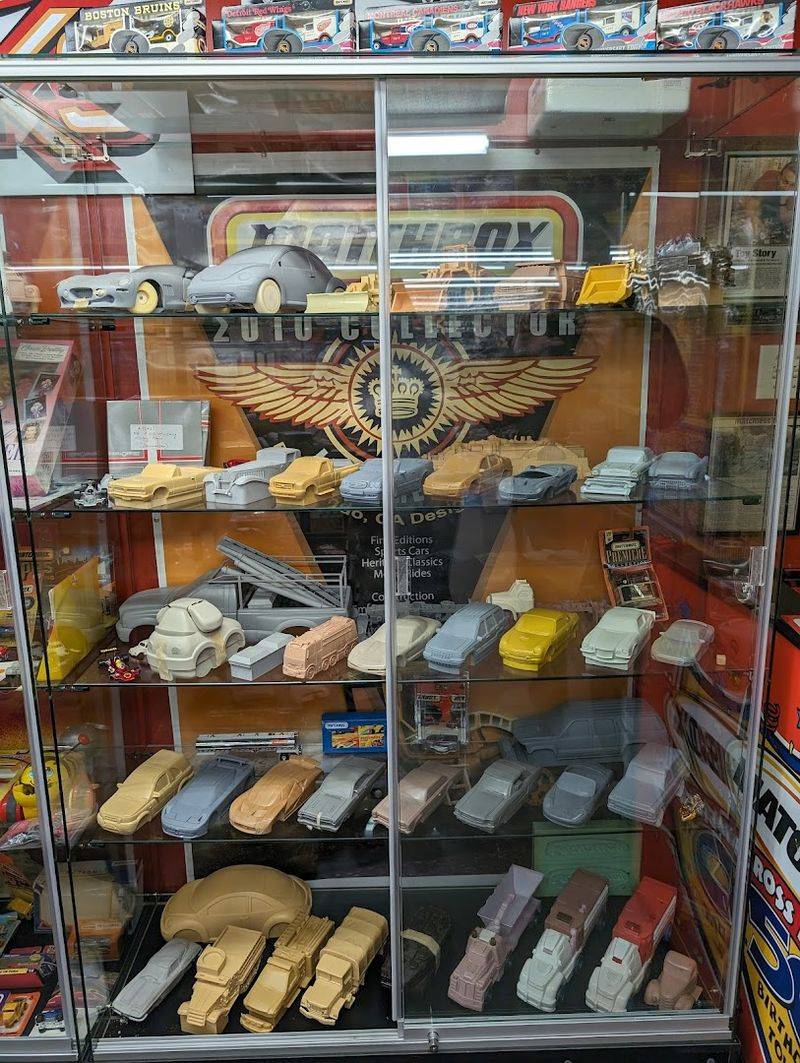
Here is where the museum gets especially fun: the most valuable things in the room do not always look valuable at first glance. That is the joy and danger of miniature collecting.
A rare prototype can sit there looking like a regular little car to anyone who does not know what they are seeing. A paint variation might seem minor until a collector explains that it came from a short production run.
A model made for an international market might look familiar, then turn out to have details that were never sold in the United States. The Matchbox Road Museum includes rare prototypes and international models, the kind of pieces many collectors may never encounter in person.
Prototypes are especially interesting because they show the toy-making process before a model becomes a store-shelf product. Some represent designs that changed before release.
Others may never have gone into regular production at all. That gives them a different kind of appeal from the cars most of us remember owning.
They are not just nostalgic. They are behind-the-scenes artifacts.
International models tell another story. Matchbox cars traveled far beyond American toy aisles, and variations from different markets can reveal how companies adapted packaging, colors, models, and distribution for different countries.
To casual visitors, that might sound like collector trivia. Once you are standing in front of case after case, it starts to feel more like a global map built out of tiny bumpers and wheels.
The best part is that the museum does not require you to arrive as an expert. You can enjoy the rows of cars purely as a visual feast.
Then, little by little, you start noticing the details. A bus with unusual markings. A construction vehicle you have never seen before. A police car from another country. A paint color that seems too odd to be accidental. That is when the room changes.
It stops being a giant pile of toys and becomes a miniature archive.
A Small Building Packed With Decades of Toy History
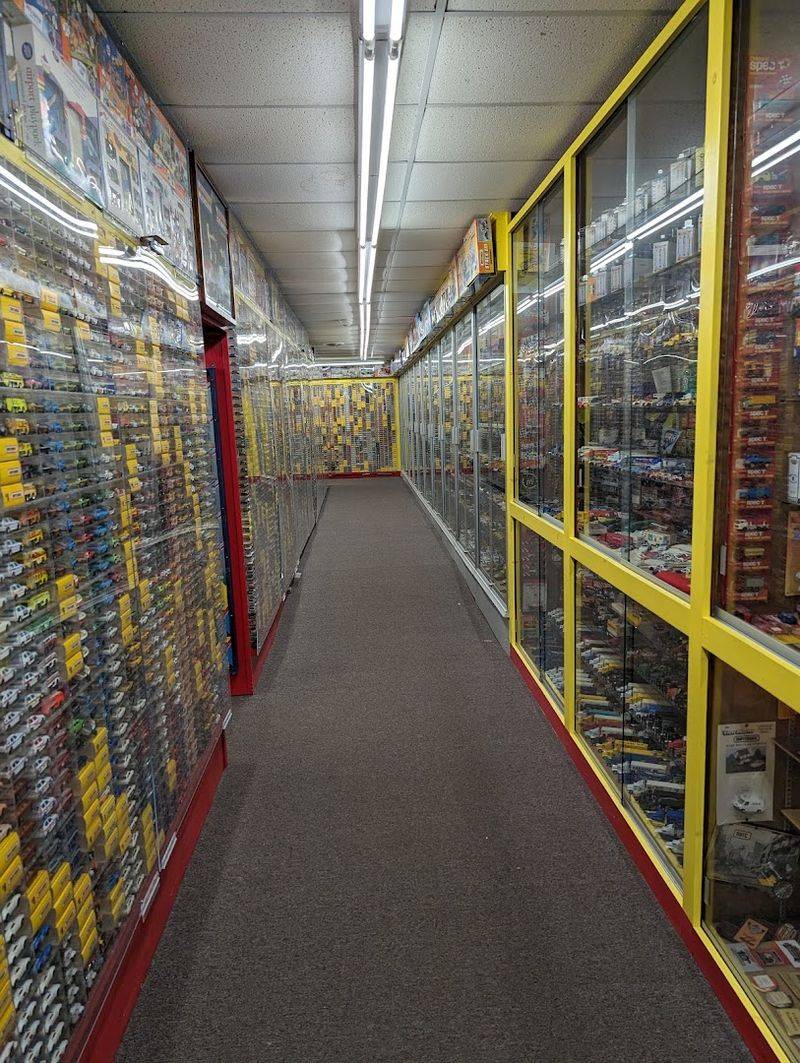
The Matchbox Road Museum has the kind of scale that plays tricks on your brain. The vehicles are small enough to fit in a pocket, but there are so many of them that the collection starts to feel enormous.
This is not a cavernous hall with empty space between exhibits. It is compact, focused, and packed.
The fun is in the abundance. Everywhere you look, there is another little vehicle waiting for attention.
That packed-in feeling matters because Matchbox cars were always meant to be handled, lined up, raced, carried around, and loved hard. Seeing thousands of them preserved together creates a funny contrast.
These were toys made for play, but here they become a record of design history. The earliest Matchbox models were produced by Lesney Products in England, and collectors often use “Lesney-era” as a shorthand for the older, classic period of the brand.
Over time, the cars changed with the real world around them. Vehicle shapes shifted.
Emergency trucks modernized. Construction equipment got beefier.
Paint colors followed trends. Wheels, packaging, and materials evolved.
A museum like this lets you see that progression in a way a single toy box never could. There is also a generational quality to the place.
Someone who grew up in the 1960s might lock onto one row of cars. A visitor raised in the 1980s may spot a completely different set of familiar shapes.
A kid today might just be amazed that so many tiny vehicles can exist in one room. Everybody gets a different doorway in.
And because the museum is donation-based, it keeps that personal, community-minded feel. It is not trying to become a theme park.
It is a small New Jersey museum built around care, memory, and the slightly wild idea that tiny cars deserve a very big home.
Why This Offbeat New Jersey Stop Feels Like a Time Capsule
Some museums make you feel like you should lower your voice. This one makes you want to point at things.
That is a better fit for New Jersey anyway. The Matchbox Road Museum is not precious in the stiff, glassy sense.
It is careful, yes, but it is also warm. The whole place has the energy of somebody opening a cabinet and saying, “Wait until you see this one.” That is why it sticks with people.
It feels personal from the first minute. It also captures a type of roadside New Jersey that is getting harder to find.
Not every worthwhile stop needs a café, a gift shop wall, timed tickets, and a branding strategy. Sometimes the best places are the ones that still run on phone calls, donations, local knowledge, and a little bit of curiosity.
This museum is one of those places. The location helps.
Newfield is not fighting to be the center of attention. Pearl Street is residential and quiet.
The museum sits behind a house, which makes the whole experience feel like you have been let in on a secret rather than processed through an attraction. It is not the sort of place most people stumble into accidentally.
It rewards people who enjoy the odd, the specific, and the lovingly preserved. The time-capsule feeling comes from more than the cars themselves.
It comes from the way they bring back the ordinary rituals around them: checking the toy aisle, trading with a friend, lining cars along the edge of a rug, building roads out of books, or keeping a favorite model in a coat pocket until the paint wore thin. A tiny vehicle can carry a surprising amount of memory.
That is what makes the Matchbox Road Museum more than a room full of collectibles. It is a reminder that small things can hold big stories, especially when someone cares enough to save them.
In a quiet corner of Gloucester County, behind an unassuming Newfield home, more than 50,000 little cars are still doing what they have always done best: making people stop, look closer, and remember.
Share this story