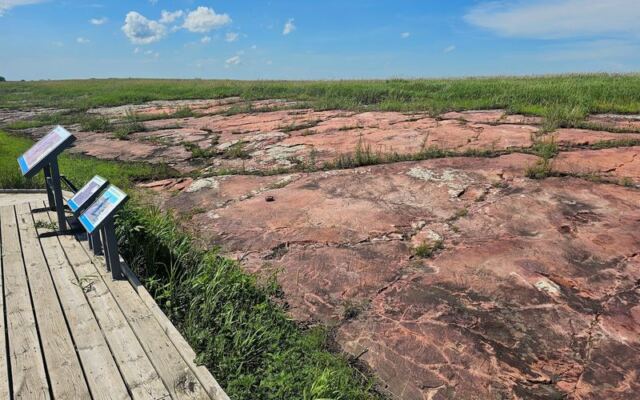
Out in southwestern Minnesota, past the corn fields and county roads, a long ridge of reddish rock rises just above the prairie grass. Etched into that stone are thousands of carvings left by people who walked this land thousands of years ago.
Many drivers pass the turnoff without a second thought, and that is a real shame. Keep reading to learn where this outdoor museum hides, why the carvings play hide and seek with the sunlight, and how to time a trip so the stone actually tells its story.
A Rock Ridge Near Comfrey
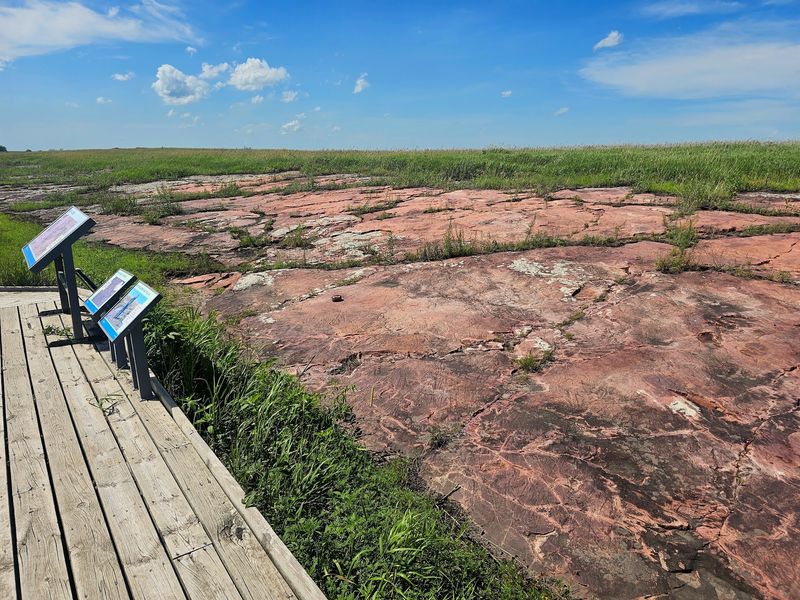
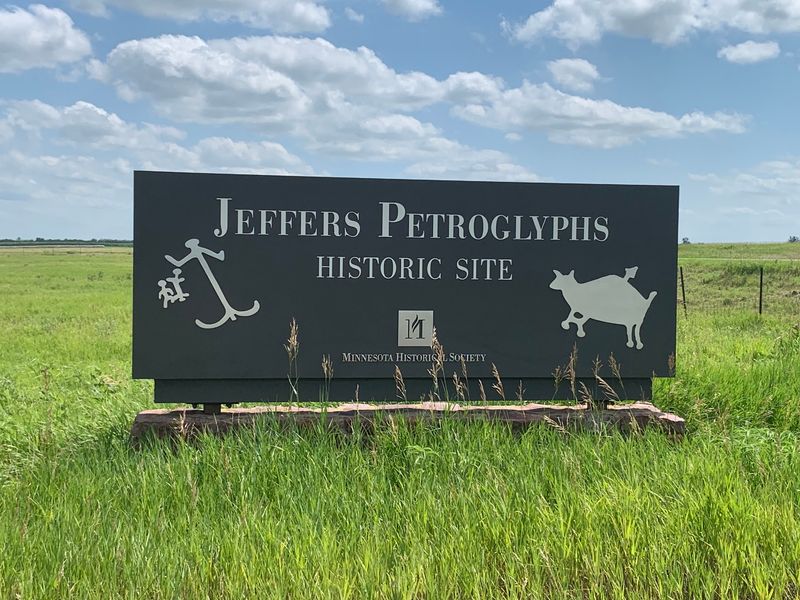
Some of Minnesota’s oldest art galleries have no walls at all. Jeffers Petroglyphs sits at 27160 Co Rd 2, Comfrey, MN 56019, in the rural southwest corner of the state.
The site is run by the Minnesota Historical Society and is classified as a history museum. Still, most of the exhibit space is outdoors, spread across a quartzite outcrop surrounded by prairie.
A modern visitor center anchors the property. From there, trails lead out to the rock where the carvings, known as petroglyphs, are cut into the surface.
The location feels tucked away, nestled between prairie grasses and farm fields. That quiet setting is part of what makes the trip memorable.
Road signs pointing the way are scarce on many of the approach routes. A phone map app will get you there reliably, so load the address before leaving cell range.
Once you arrive, the story here stretches back further than almost anything else you can visit in the state, and that story is where things get truly interesting.
Stories Older Than the State
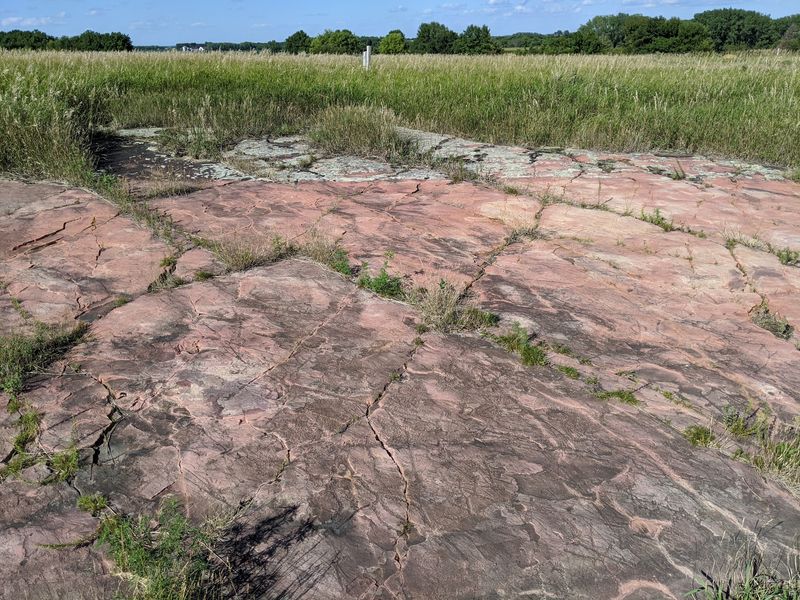
Seven thousand years is a lot of history to fit onto one ridge. People have been gathering and leaving their marks at this spot for thousands of years, and the carvings show it.
The figures cut into the stone represent a long human presence in the region. Many people who come here describe a strong sense of walking where others walked ages ago.
That connection matters deeply to Native communities today. The site shares Indigenous stories and presence, including Ho-Chunk perspectives, which many guests find meaningful to see represented in the Midwest.
Staff and guides explain the history of the land in a thoughtful, respectful way. Interpretive signs along the trails fill in background for those exploring on their own.
Plenty of folks show up unsure of what to expect. They tend to leave with a much bigger picture of who lived in Minnesota long before county roads and farm fields existed.
History this old deserves careful handling, and the next part of the visit shows why the site asks guests to tread lightly.
Why Respect Comes First
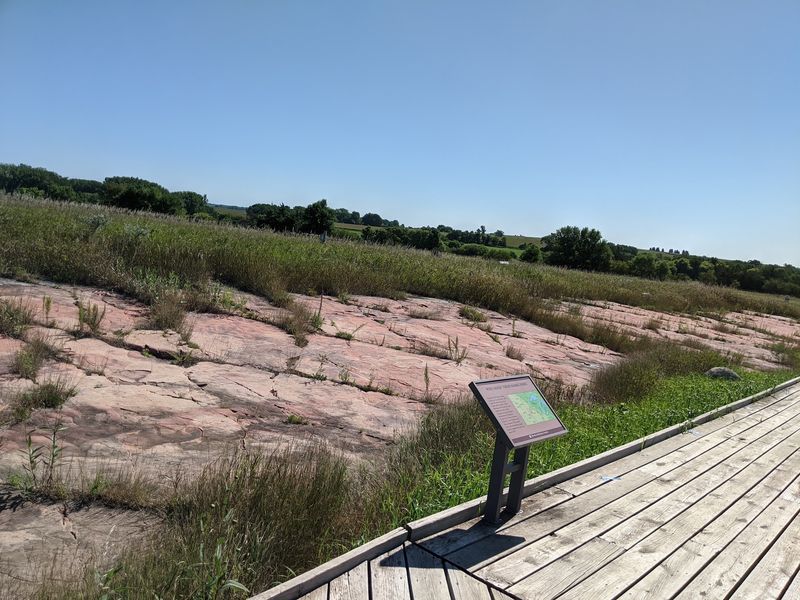
Mention this ridge to someone who has been, and the word sacred often comes up quickly. The outcrop is considered a sacred place, and the site treats it with that level of care.
Guests are asked to visit respectfully. Staff model that attitude in the way they talk about the carvings and the land around them.
One clear rule surprises first timers. Photography of the petroglyphs themselves is not allowed.
That policy means you have to see the carvings in person. Honestly, it also keeps everyone looking at the stone instead of at a screen, which suits the setting.
The preservation work here is impressive. Longtime fans have watched the property grow from a small dirt parking lot into a welcoming building backed by dedicated volunteers.
Keep the camera pointed at the prairie and the sky instead. With the ground rules settled, it is time to figure out how to actually spot the carvings, which is trickier than it sounds.
The Art of Finding Carvings
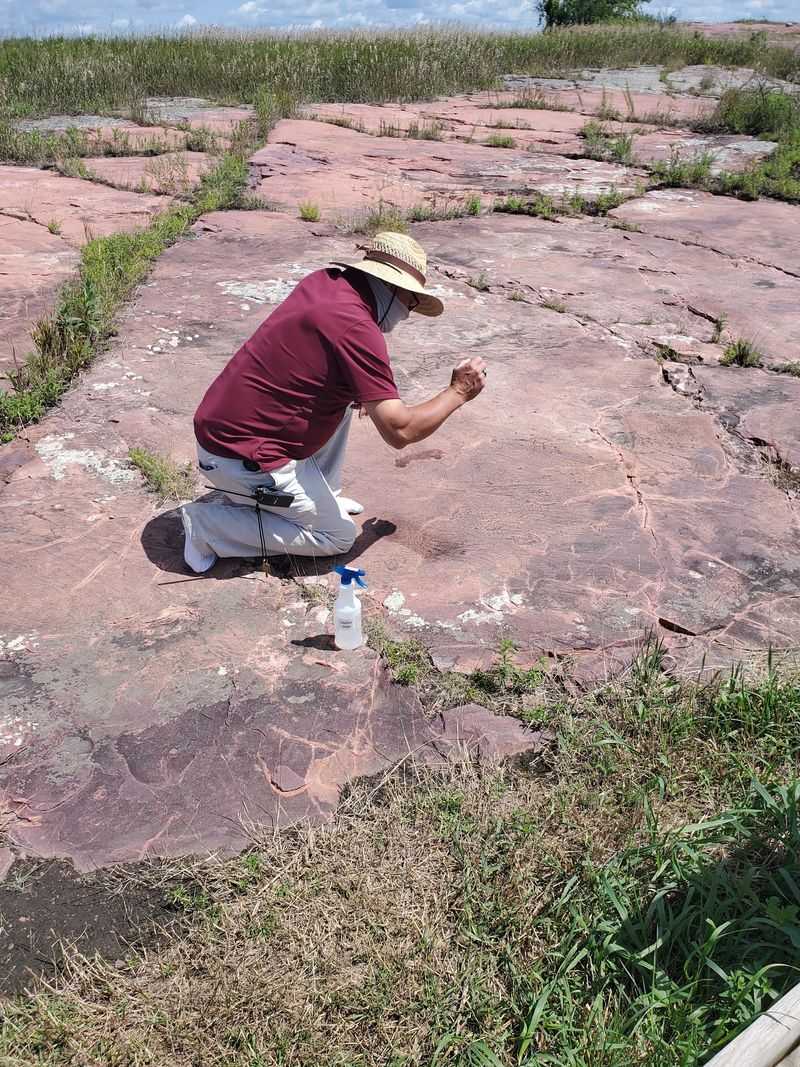
Here is the twist nobody expects: the carvings are hard to see at noon. Bright midday light flattens the stone and makes many figures nearly vanish.
Early morning and late afternoon are the sweet spots. Low light creates shadows in the grooves, so the designs stand out far better.
Weather can help too. Rain and moisture on the rock make the lines easier to pick out.
Staff sometimes spritz water on the petroglyphs to boost visibility for guests. It is a simple trick that works surprisingly well.
Some designs jump out right away. Others take patience, turning the visit into a friendly game of spot the figure.
Guests who arrive during hot, windy middle hours often wish they had planned around the light. Many promise to come back at a better time of day.
So set an alarm or plan a late lunch nearby. A guide can sharpen your eye even more, which brings us to the tours.
Guided Walks Worth Joining
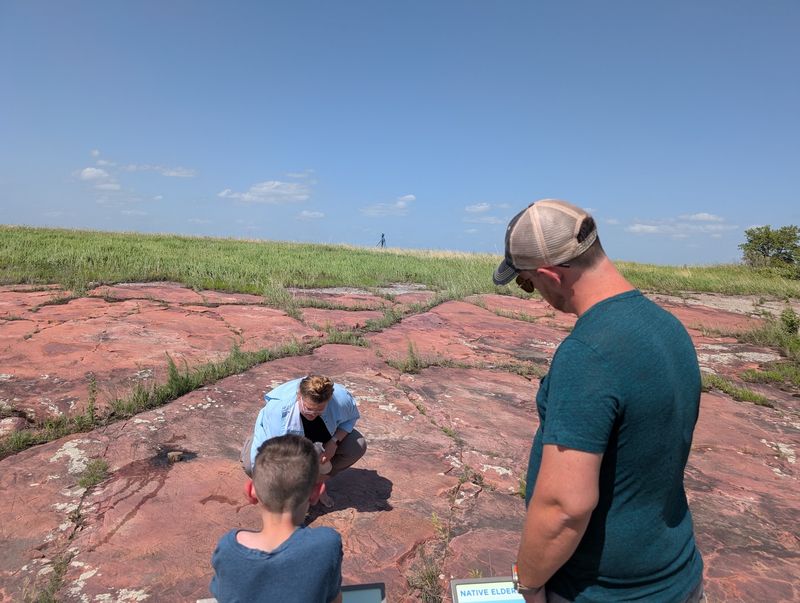
A good guide turns a slab of rock into a storybook. Guided tours are offered here, and they tend to be the highlight for many guests.
Guides point out the variety of carvings in the stone. They help you notice figures you would likely miss on your own, especially in tough daylight.
The staff earn steady praise for being knowledgeable, enthusiastic, and kind. They also know how to keep kids engaged while teaching, which parents appreciate.
Tour presentations and demonstrations add context. Many people say the park-led walk was the part they would recommend most strongly.
Prefer to wander? Self-guided visits are also an option, with clearly marked trails and helpful signs.
For first timers, though, joining a tour is the smarter play. The extra insight pays off once you are standing at the rock squinting at faint lines.
Tours are not the only hands-on part of the day. One activity lets the whole family test their aim.
Aiming at a Bison Target
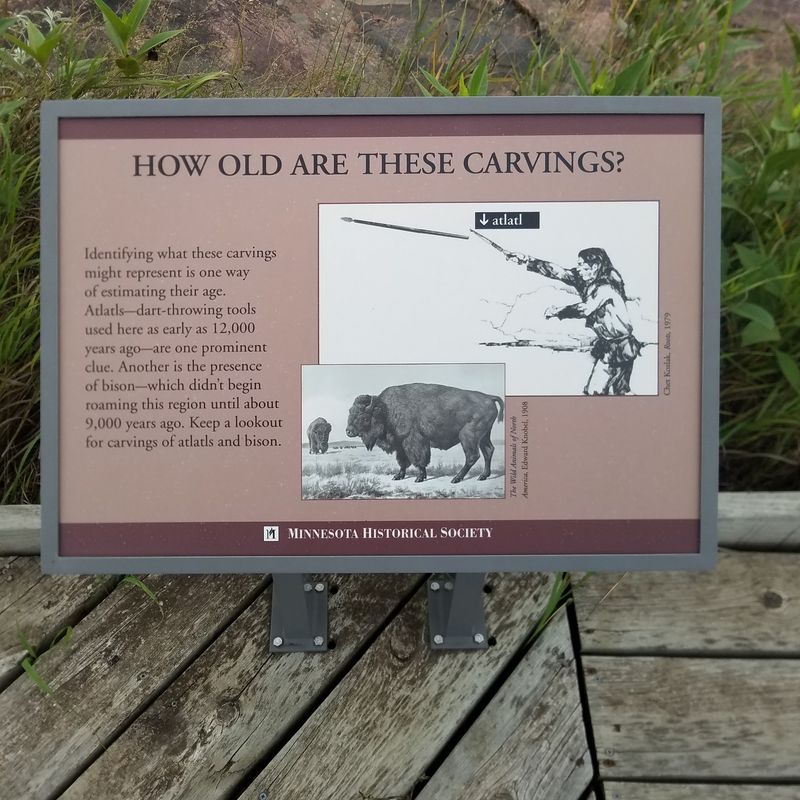
Ever tried throwing a dart with a stick? The atlatl is an ancient spear-throwing tool, and the site sometimes lets guests give it a go.
Families take turns launching darts toward a bison target. Hitting it even a couple of times feels like a genuine win.
The activity connects nicely to the history on the rock. It offers a hands-on sense of how people once hunted on these plains.
Kids especially enjoy it. Adults tend to get competitive pretty fast too.
Demonstrations like this are part of what makes the visit feel active rather than just a walk past signs. Grandparents bringing grandchildren have described the outing as both fun and educational.
Availability can vary, so ask at the visitor center about what is happening the day you arrive. Staff are happy to point you in the right direction.
After a few throws, the trail out to the carvings is waiting, and the prairie itself is a big part of the show.
Prairie Grass and Prickly Pear
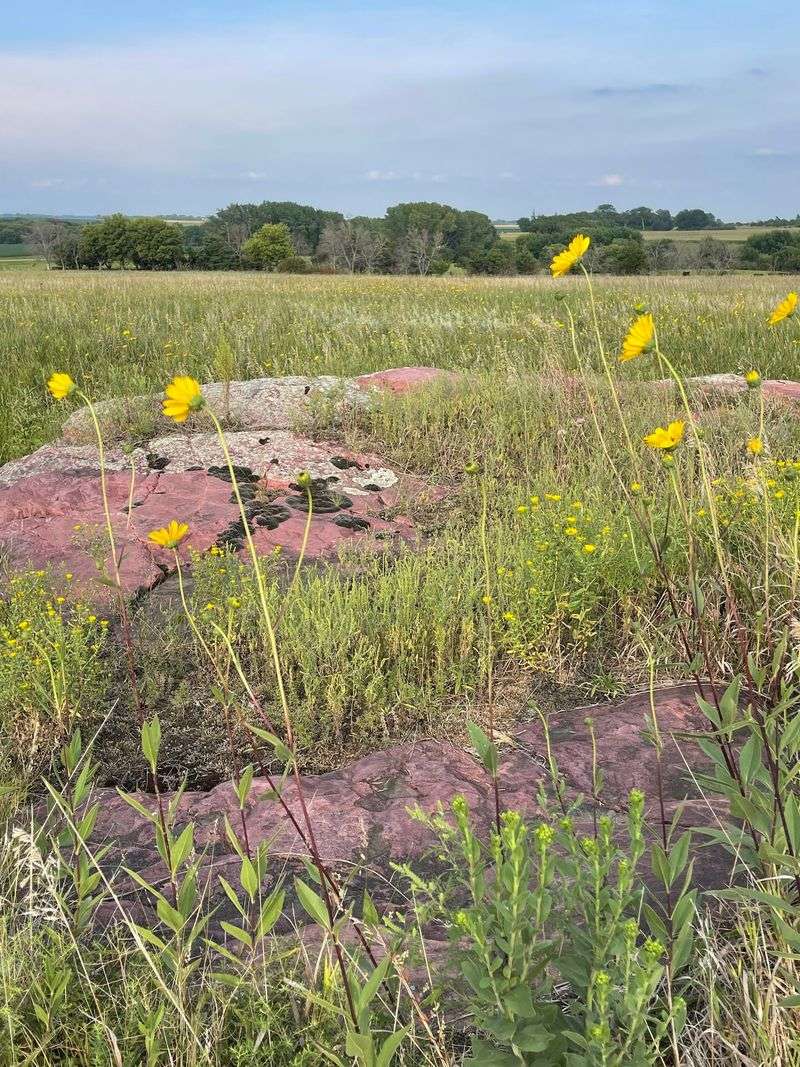
Minnesota has cactus. Yes, really, and you can find native prickly pear growing right along this property.
Watch your step around it. The spines are a common surprise for anyone wandering a little off the main path.
The trails are lined with native prairie grasses, plants, and flowers. The landscape is a living part of the exhibit, not just a backdrop.
Educational markers are placed throughout the prairie. They explain the plants and the land as you walk.
The sky gets plenty of love too. With so much open ground, the horizon stretches wide in every direction.
Botany fans and casual walkers both find something to appreciate here. Even people who come only for the carvings often leave talking about the scenery.
The walk itself is short and manageable. That makes the next topic, getting around the site, simpler than you might think.
Easy Trails and Golf Cart Help
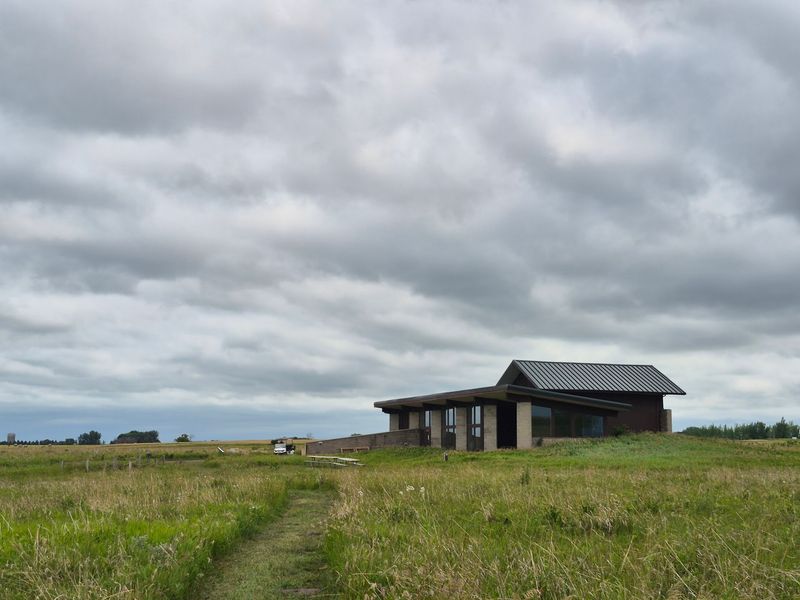
Accessibility gets real attention at this outdoor museum. Staff will drive guests up to the rock in a golf cart when needed.
The walking trails are clearly marked. The route out to the petroglyphs follows a grassy path that most people describe as a nice, short walk.
Weather on the prairie can change quickly. When a thunder shower rolls through, staff have been known to offer cart rides back to the visitor center for shelter.
That kind of help makes the outing more comfortable for families, older guests, and anyone with limited mobility.
Back inside, the gift shop deserves a stop. It carries work from Native artisans and creators, with a thoughtful selection that suits crafters and souvenir hunters alike.
Wear sturdy shoes and bring water on warm days, since there is little shade out on the prairie.
With the logistics on the trail covered, the calendar is the next thing to sort out.
Hours, Admission, and Directions
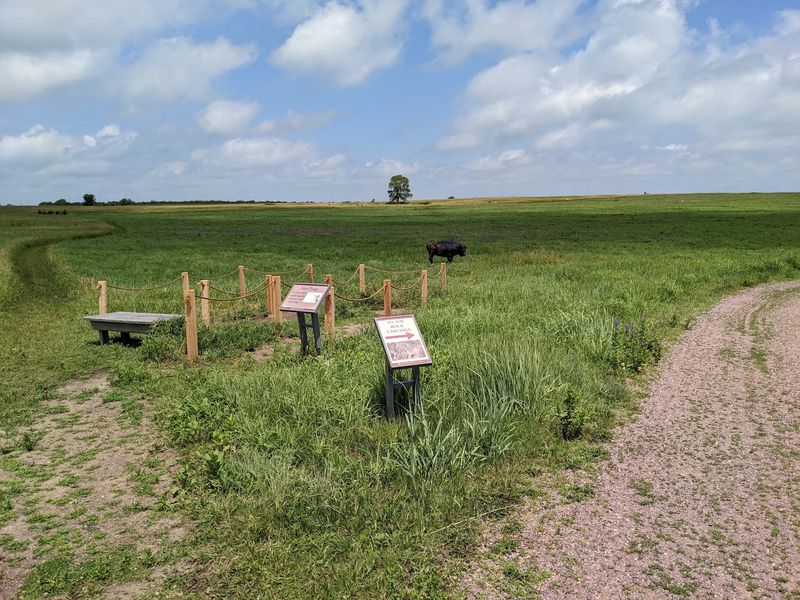
Timing is everything here, and not just because of the light. The current listed schedule shows the site open Saturday from 10 AM to 5 PM and closed the rest of the week.
Schedules can shift by season. Check the Minnesota Historical Society website before driving out.
When the site is closed, the gate is shut and the trails are not accessible. Some travelers have been caught off guard by that, so plan ahead.
Adult admission has been around $10. Some feel it is a little steep, while many others say the guided experience makes it worthwhile.
Getting there takes some navigation. Road signage is limited, but map apps handle the route well.
Arriving near opening or later in the afternoon gives you better viewing light. Crowds tend to be small, sometimes just a handful of people on the grounds.
So who will enjoy this spot most? The answer is broader than you might guess.
A Detour That Pays Off
Plenty of Minnesotans have driven past the turnoff for years before finally stopping. Most wish they had done it sooner.
History lovers, families with curious kids, prairie fans, and crafters drawn to Native artisan work all find something here. The 4.6-star standing across more than 400 opinions backs that up.
The experience rewards patience. Come at the right hour, join a guide, and give your eyes time to adjust to the stone.
Leave room in your schedule. Rushing through is the most common regret.
It is not a flashy attraction, and that is the point. The carvings ask for quiet attention and respect, and they give back a sense of deep time that few places in the state can match.
Many people call it a must-see in Minnesota and well worth the drive. Plan for a Saturday, aim for good light, and let the rock reveal its secrets one faint line at a time.
Share this story