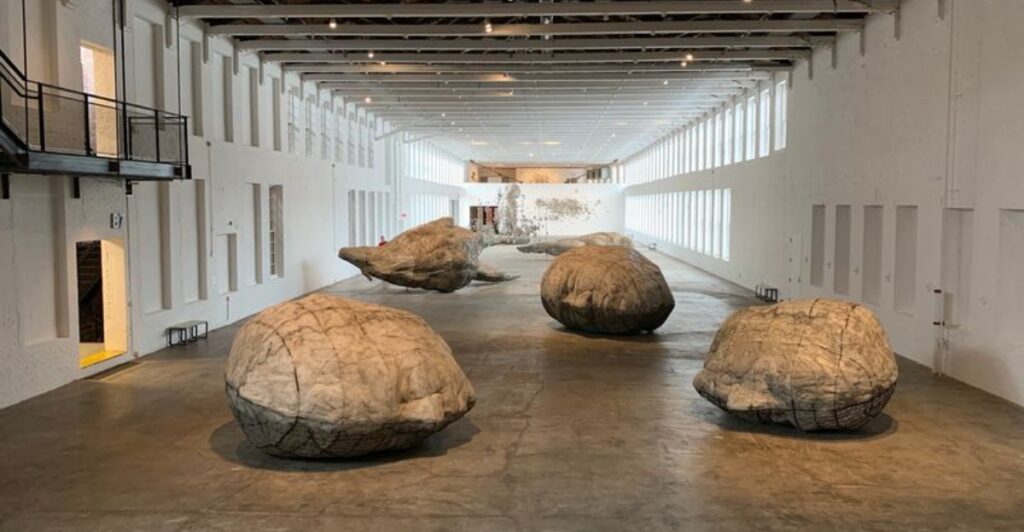
Most art museums do not make you feel like you are exploring an old industrial city within a city. In North Adams, Massachusetts, MASS MoCA fills a sprawling former mill complex with enormous installations, glowing rooms, contemporary exhibitions, and spaces designed for live performance.
The scale is part of the attraction, giving artists room to create work that would never fit inside a traditional gallery. Old brick walls and factory corridors make moving between exhibits feel like part of the experience itself.
For anyone looking for a Massachusetts museum that feels less like a quiet gallery visit and more like an adventure, MASS MoCA gives you plenty of reasons to keep walking.
Massachusetts Mill Buildings With Room to Roam
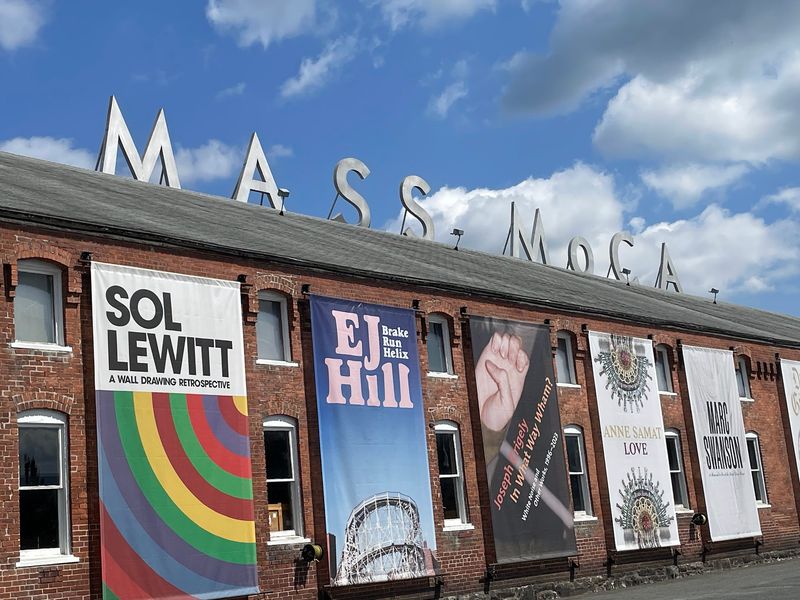
Brick walls stretch ahead, tall windows line the buildings, and the size of the campus quickly changes your idea of a museum visit. At MASS MoCA, the architecture is more than a shell around the art.
It gives your walk a shape, with long views, broad rooms, and turns between former factory spaces.
The museum occupies a complex of nineteenth century industrial buildings in North Adams. Instead of hiding every sign of their working past, the conversion lets much of that structure remain visible.
Exposed brick, sturdy supports, and generous ceiling heights help explain why artists can do unusual things here.
Look upward before you focus on the nearest artwork. Beams and windows often reveal the scale of a room better than its floor does.
Then look across the space, where a person standing near the far wall can suddenly seem surprisingly small.
Between galleries, give yourself permission to notice the building itself. A connecting passage or a view into a courtyard can provide a useful pause after a busy exhibition.
Those quieter stretches also help your eyes reset before another room filled with color, light, or movement.
A map makes this large campus easier to understand, especially on your first visit. Check where the galleries connect rather than assuming every doorway leads toward the exit.
If stairs are not suitable for your group, ask staff to explain the elevator routes before you start wandering.
For photographs, try framing a window, doorway, or row of columns instead of squeezing the whole building into one shot. Follow posted photography rules around artworks, and leave pathways clear while stopping.
Even without a camera, the contrast is striking: a place designed for repeated industrial work now makes space for experiments that refuse to follow a single pattern. Keep watching the walls as you move deeper inside the museum.
The Factory Story Behind the Gallery Walls
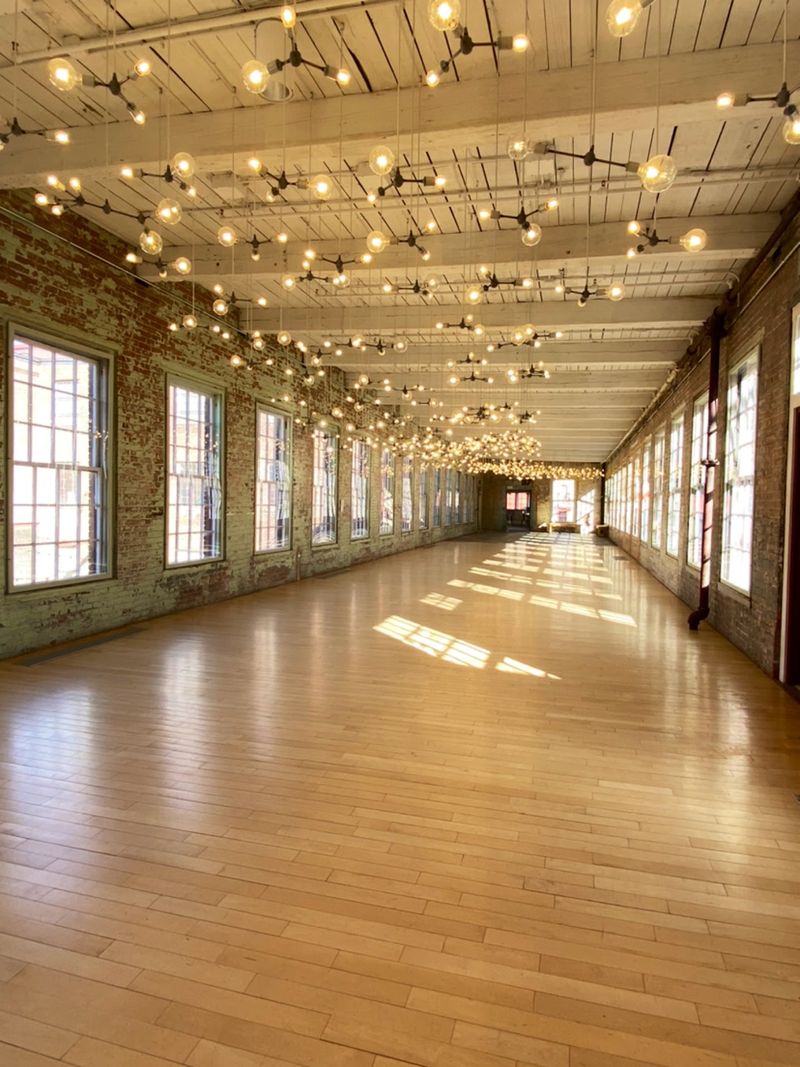
Before anyone came here to study a wall drawing, workers arrived to make things. The buildings that house MASS MoCA were once part of North Adams’ industrial economy, first through textile production and later through electronics.
Knowing that history changes how you read the rooms.
Arnold Print Works operated on the site during the nineteenth and early twentieth centuries, producing printed textiles. Sprague Electric later took over the complex and became a major local employer.
For generations, the campus belonged to the daily rhythm of factory work rather than museum visits.
When Sprague’s operations ended here in the 1980s, the empty buildings raised a difficult question for the city. What could replace such a large industrial presence?
Turning the site into an arts center offered a new use without clearing away the structures that helped define North Adams.
MASS MoCA opened in 1999 after years of planning and redevelopment. Its name stands for Massachusetts Museum of Contemporary Art, but its role reaches beyond displaying objects.
Exhibitions, performances, and creative work gave the former factory complex another reason to bring people together.
As you explore, watch for information about the site’s earlier uses. Historical details can be easy to overlook when a huge installation is waiting nearby, yet they add another layer to the visit.
The same broad floors that once served production now allow artists to build work at an uncommon scale.
Try not to treat the industrial past as a decorative backdrop. These buildings held jobs, skills, and the routines of a working community, and their reuse reflects a major change in the city’s life.
Reading one history panel before moving into the next gallery creates a useful connection between the people who worked here and the people who shape its present. The museum’s story starts well before its first exhibition opened.
Art That Needs an Entire Factory Floor
A painting usually asks you to stand in front of it. A large installation may ask you to walk around it, listen to it, or notice how it changes an entire room.
MASS MoCA gives that kind of art an unusually generous stage.
Its former factory halls can hold work that would overwhelm a smaller museum. Long sightlines and high ceilings allow artists to use distance, height, and empty space as materials.
Sometimes the most useful first step is simply stopping at the entrance and taking in the whole arrangement.
Contemporary art here is not limited to pictures hanging neatly on walls. Depending on the exhibition, you may encounter sculpture, moving images, sound, or combinations of several forms.
Changing shows mean the exact experience can differ between visits, so avoid planning around an older photograph alone.
If a piece seems puzzling, start with something you can observe. Notice its size, its materials, or the way it directs your movement.
Read the wall text afterward, allowing the explanation to add information rather than replace your own first response.
Walking farther into a gallery can reveal details that disappear in a wide photograph. A surface may have an unexpected texture, while a sound may become clearer in one part of the room.
Respect barriers and instructions, since an inviting installation is not automatically a touchable one.
Give yourself enough time to experience at least one large work without rushing toward the next doorway. You do not need to agree with every artistic choice or solve every meaning.
A useful visit can include curiosity, confusion, amusement, and close attention in the same hour. Before leaving, turn around and view the room from the opposite end; the relationship between the artwork and the old factory may look very different from there.
That second view costs nothing but a little time.
Follow the Color Through Sol LeWitt’s Wall Drawings
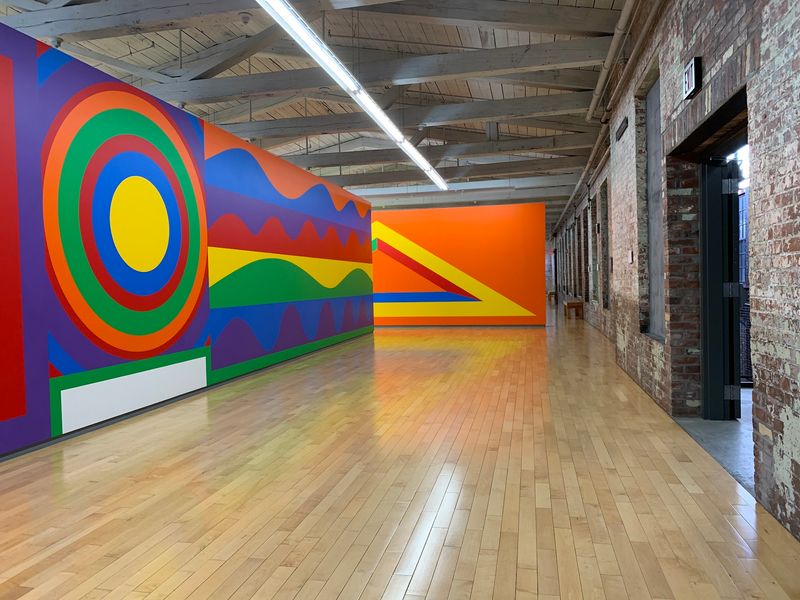
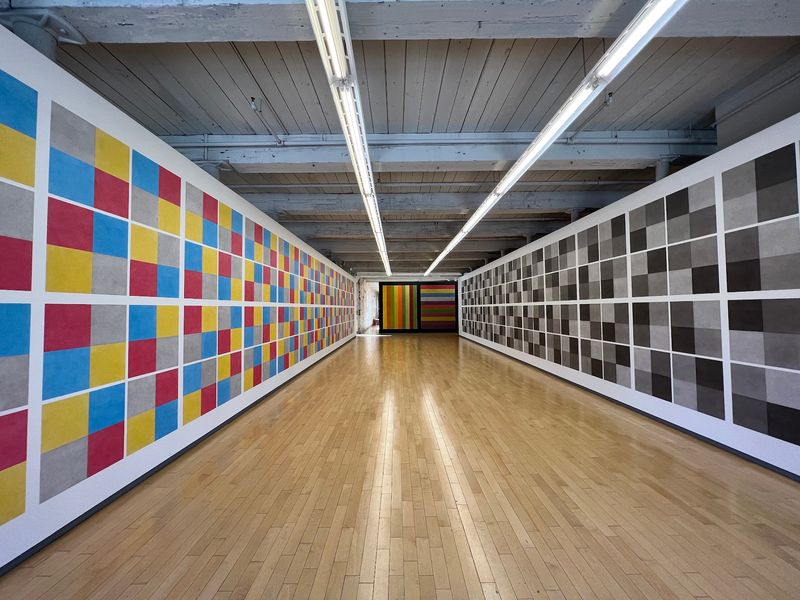
Lines can be surprisingly lively company. In the Sol LeWitt galleries, simple marks grow into patterns, bold shapes, and fields of color that cover entire walls.
The experience offers a clear way into contemporary art, even if you arrive without knowing the artist’s name.
Sol LeWitt: A Wall Drawing Retrospective brings together 105 large wall drawings across three floors. The presentation traces decades of his work, giving you a chance to see how a focused set of ideas could produce very different visual results.
Some rooms reward close study; others announce themselves across the gallery.
LeWitt’s approach separates an artwork’s instructions from the physical act of making it. Teams carry out those instructions on the walls, so the idea plays a central role in the finished work.
Think of a musical score: written directions can guide a performance without the composer playing every note.
You do not need to understand that concept before enjoying the colors. Start with a wall that catches your eye, then examine how its lines meet or how one shape changes beside another.
A drawing that looks orderly from a distance may become far more complex as you approach.
For a less tiring visit, resist giving every wall the same amount of attention. Choose a few favorites and compare them carefully.
If you are visiting with children, invite them to find repeated shapes or describe a pattern without touching the surface.
The galleries also make a useful counterpoint to exhibitions built around sound, objects, or moving images. Here, the wall itself becomes the artwork, and your own movement changes how much you can see at once.
Check the museum’s current gallery information before making a special trip for any specific work. Once inside, let the sequence guide you from spare marks toward richer arrangements, one wall at a time.
Let James Turrell Change the Way You See
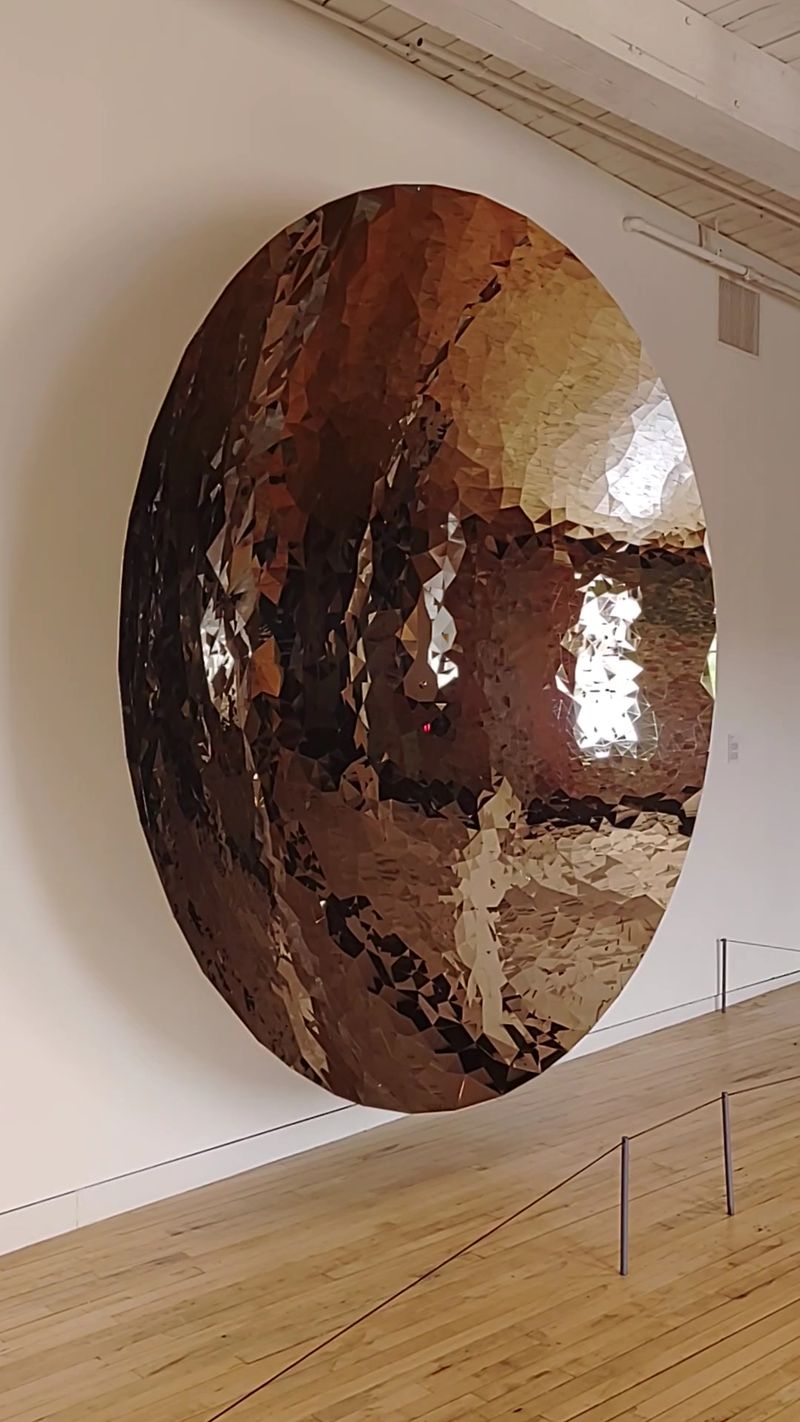
Your eyes may need a minute before your brain catches up. James Turrell’s work uses light and space to challenge the usual clues that tell you where a surface ends or how far away an opening might be.
Looking becomes the main event.
MASS MoCA’s long term presentation of Turrell’s work is a major reason to plan ahead. Rather than treating light as a tool for showing another object, he makes it the subject.
Color, brightness, and carefully shaped rooms can shift your sense of depth without a conventional picture to study.
Slow down when entering these spaces and follow the directions provided by staff. Some experiences involve controlled entry or special arrangements, and particular works may require advance reservations.
Check the current rules before your visit, since a general admission ticket should not be assumed to cover every timed experience.
Patience helps more than trying to force an instant reaction. Allow your vision to adjust, and notice whether the space appears different after a few quiet minutes.
Looking at your phone repeatedly can interrupt that process, especially when a room depends on subtle changes in light.
If darkness, enclosed spaces, or unusual lighting can cause discomfort, ask about conditions before entering. Museum staff can explain what an experience involves and help you decide whether it suits your needs.
Choosing to skip one work does not prevent you from enjoying the rest of the museum.
Photography also has limits as a way of understanding this art. A camera may record a bright rectangle while missing the way your eyes experience its depth or edges.
Treat any permitted picture as a reminder, not a substitute for standing there. After leaving, take a short pause before heading into another visually busy gallery; ordinary walls and daylight may suddenly deserve a closer look of their own.
When the Museum Becomes a Live Stage
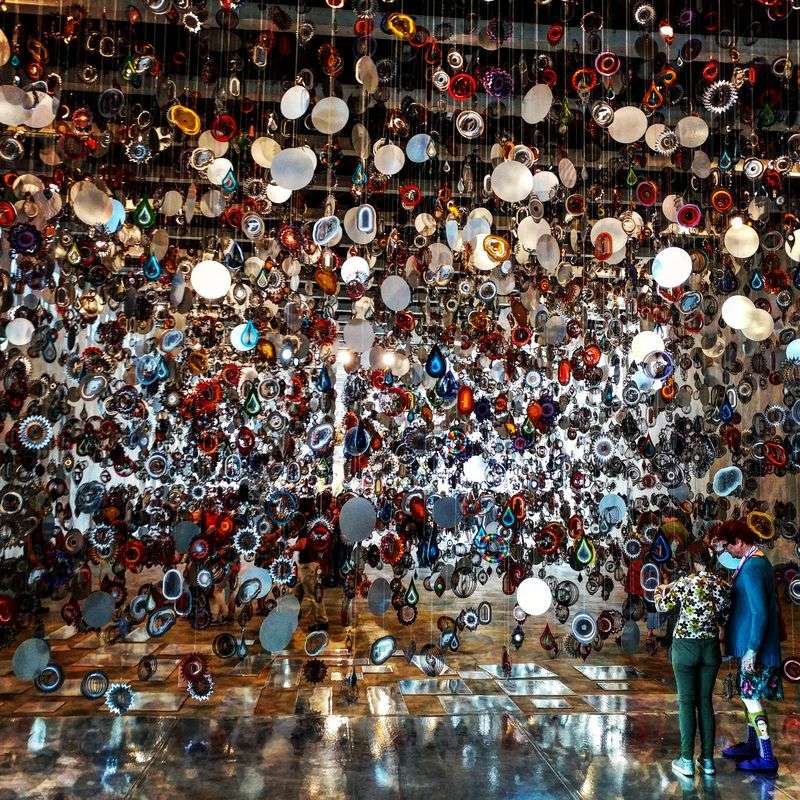
The campus does not always go quiet when gallery time ends. MASS MoCA is also a performing arts center, with a program that can include music, dance, theater, and other live events.
A visit built around a performance uses the former mill in a different way.
Large industrial spaces suit more than oversized visual art. They can become places for sound, movement, and shared attention, while outdoor areas offer other possibilities when weather and programming allow.
The setting puts an old working campus around a very current creative event.
Check the event schedule separately from the exhibition schedule. A concert may have its own ticket, entry time, seating arrangement, or access rules.
Museum admission and performance admission are not automatically interchangeable, so confirm exactly what you are buying before building your day around both.
For outdoor events, read the specific guidance about chairs, blankets, bags, and weather plans. What works for one performance may not be allowed at another.
If you need accessible seating or a route suitable for a mobility aid, request those details ahead of time rather than guessing from photographs.
Combining galleries with an evening show can be rewarding, but it also makes for a long day. Leave room for a meal and a break between activities.
Trying to absorb several hours of art immediately before a crowded performance can turn an interesting outing into an endurance test.
The strongest reason to consider the live program is the chance to see creativity unfolding rather than only viewing its finished form. Musicians, dancers, and other performers bring a temporary rhythm to spaces built for a very different purpose.
Choose an event that interests you on its own, then let the museum setting add context. Before arriving, check the final event instructions so you know where to enter and when the doors will open.
Build a Visit That Leaves Time to Look
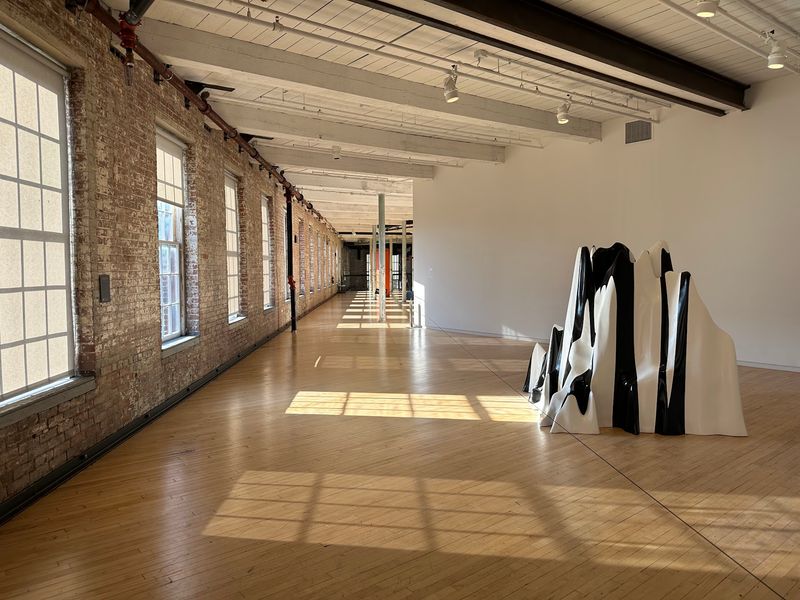
Comfortable shoes are a better starting point than an ambitious checklist. MASS MoCA is large enough that trying to see everything quickly can leave you watching the clock instead of the art.
Plan several hours, then choose the experiences you most want to give your attention.
The museum is at 1040 Mass MoCA Way in North Adams, Massachusetts. The supplied schedule lists opening hours of 10 AM to 5 PM from Wednesday through Monday, with Tuesday closed.
Confirm current hours before traveling, especially around holidays, special events, or seasonal schedule changes.
Check admission options and any separate reservations before arrival. If a particular installation is your main reason for coming, verify that it is open and understand its entry requirements.
Long term exhibitions and changing shows follow different timelines, so an older travel article cannot guarantee today’s gallery lineup.
At the entrance, pick up a map and ask staff which routes fit your available time. Locate elevators and restrooms early if those will shape your visit.
A short conversation can prevent unnecessary backtracking through a campus where distances are larger than they first appear.
Families can ask about current Kidspace activities and other resources for younger visitors. Keep the day flexible, alternating close looking with breaks rather than expecting children to study every gallery.
Follow each space’s rules, and remember that hands-on activities belong in designated areas, not wherever an artwork seems inviting.
Food options on the campus can provide a useful pause, but check their current hours separately from museum hours. Save a little energy for your final gallery instead of spending it all at the beginning.
Before leaving, revisit one work that caught your attention and give it five unhurried minutes. That simple choice turns a large museum from a room-counting exercise into a visit shaped by your own interests, pace, and curiosity.
📍 1040 Mass MoCA Way, North Adams, MA 01247
📞 +1 413-662-2111
Share this story