When the cave lights go out, you get a moment of true darkness. Then a black light reveals a glow in the rock, giving you something entirely different to look at.
That would be the part of the visit I’d still be talking about on the drive home.
Reaching the cave takes a little effort. A winding paved trail leads uphill, followed by steep stairs down into the limestone.
Inside, the air stays around 40 degrees throughout the year, so even a July visit calls for a jacket.
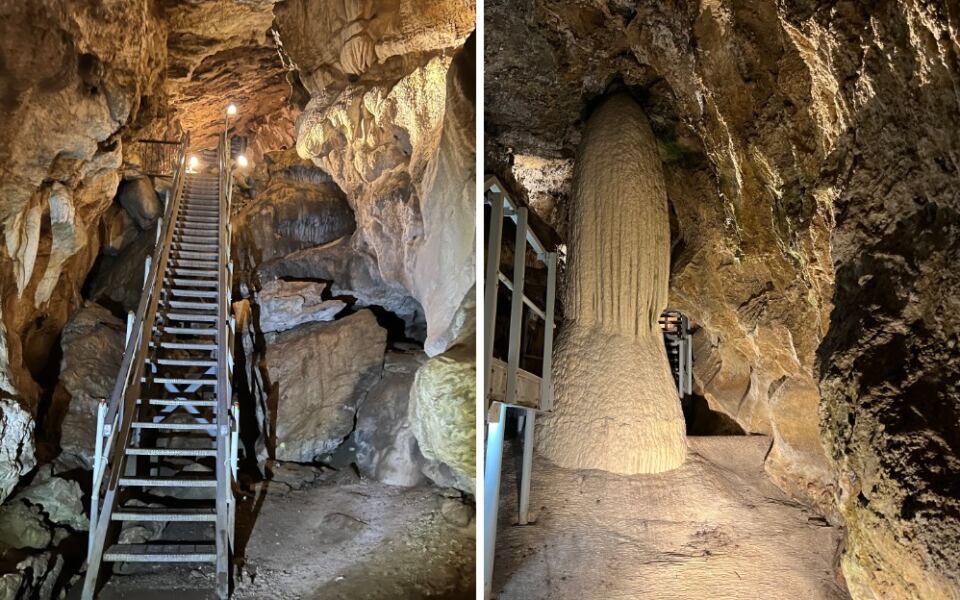
The formations grew over thousands of years, slowly taking shape as water dripped through the rock. Knowing that makes it tempting to linger over details you might otherwise pass without noticing.
There’s a bootlegger in the cave’s discovery story, too, adding an unexpected human chapter to all that geology. I like an outing that gives you both something striking to see and a story to follow.
Between the unusual history, the cold air, and that sudden darkness, this cave offers plenty to get curious about before you reach the stairs.
A Cave With a Bootlegger Backstory Is Hard to Beat
Most caves get discovered by scientists or curious kids. Gardner Cave, Metaline Falls, Washington has a more colorful origin story involving a local bootlegger.
Ed Gardner is the name tied to the cave, and his name stuck.
The cave later became public land. Washington State Parks protects it today as the centerpiece of Crawford State Park Heritage Site.
The park took its name from William Crawford, who helped bring the land into public hands.
That history matters when you visit. Guides weave the human story together with the geology, so you get more than rocks and drips.
You hear how a quiet patch of forest near the border became a protected public treasure.
The cave has about 2,072 feet of known passageways. That makes it one of the longest limestone caves in the state.
It’s not a giant cavern system, but it packs plenty of character into its narrow passages.
Knowing the backstory first makes the visit richer. You’ll look at that entrance and think about the people who stood there long ago.
Not bad for a hole in a hillside, right?
Bring a Jacket, Because Summer Stays Outside
Forty degrees. That’s roughly the temperature inside the cave, give or take a couple degrees, every single day of the year.
On a hot August afternoon, it feels like stepping into nature’s refrigerator.
The chill comes from the cave’s depth and its steady underground conditions. The outside world can bake or freeze, but the inside barely notices.
That stable air helps protect the delicate formations growing in the dark.
So pack a warm layer, even if the parking lot feels toasty. A light jacket or fleece usually works well for an hour underground.
Long pants also help, though some folks manage fine in shorts.
Good shoes matter just as much as warm clothes. The path inside includes steep stairs, metal walkways, and uneven ground with loose rocks.
Sneakers or hiking shoes with solid grip are your best friends here.
A small flashlight is a smart extra too. The cave has lighting, but a little beam helps you check your footing in shadowy spots.
Think of it as cheap insurance for your ankles. Your future self, warm and upright, will thank you.
You Can’t Just Wander In, So Plan Ahead
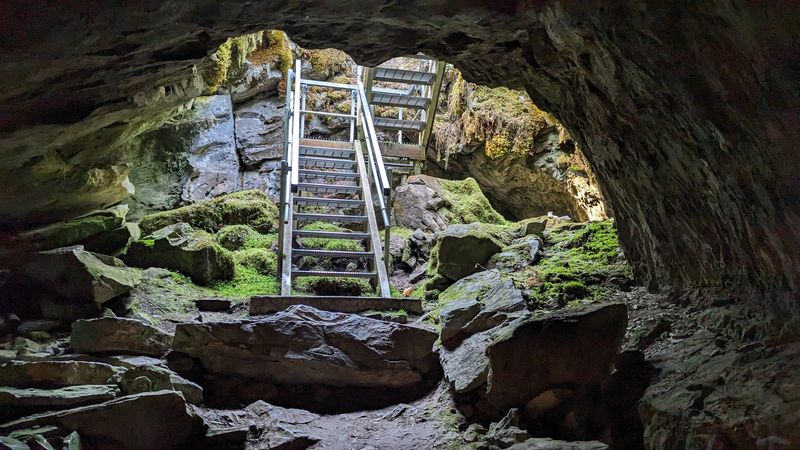
Here’s a rule worth memorizing before you leave home. Gardner Cave is open only through guided tours, and reservations are required.
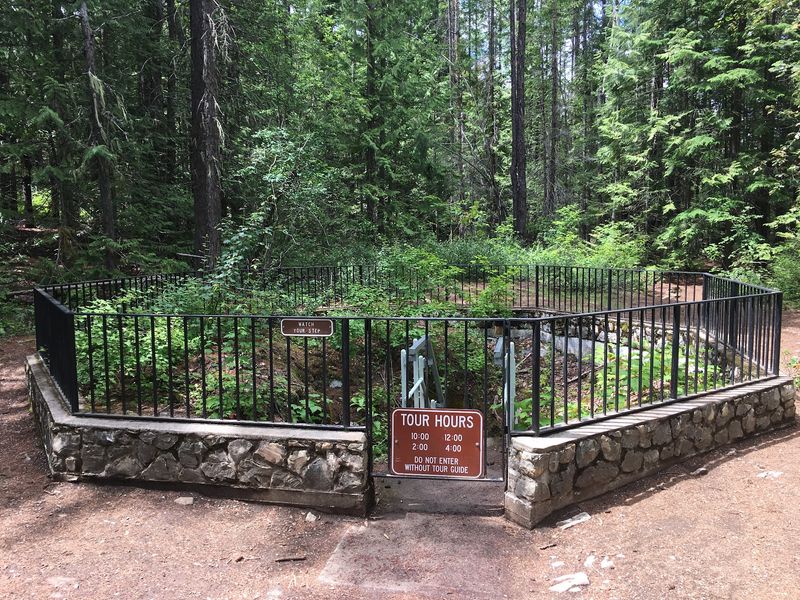
The gate stays locked when tours aren’t running.
Tours are free, which feels like a small miracle these days. Groups are kept small, so spots can fill up fast.
Booking online ahead of time keeps you from a long drive ending in disappointment.
Tours generally run during the warmer months, roughly late spring through early fall. Schedules can change from season to season.
Check with Washington State Parks before you go so your timing lines up.
Parking requires a Discover Pass. If you don’t have one, you can buy a day pass.
Carrying some cash is a handy backup in such a remote spot.
The tour starts in the parking area with a short introduction. From there, your group heads up the trail together.
Arriving a little early gives you time to use the restroom and settle your nerves. Showing up late to a cave tour is one way to miss the whole show, and nobody wants that.
The Walk Up Is a Short Warm-Up for the Real Show
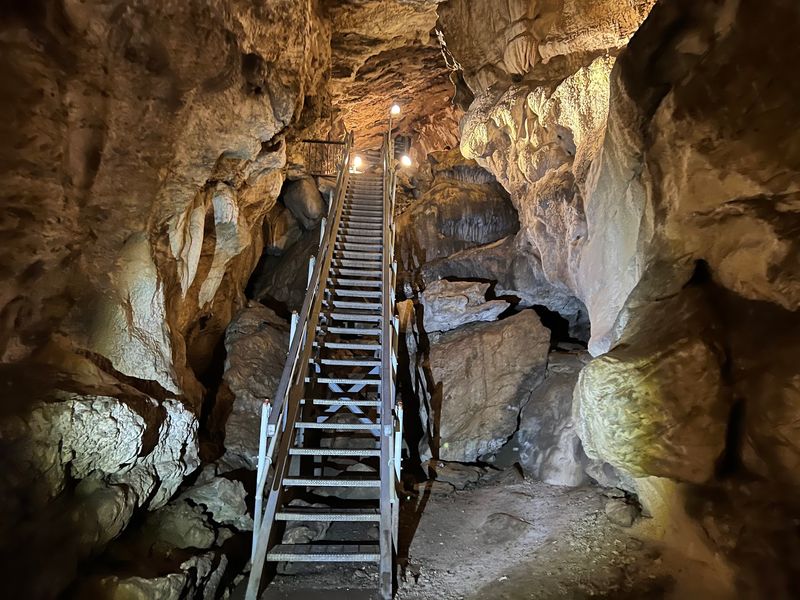
Getting to the cave takes a little effort. A paved trail with switchbacks climbs from the parking lot through tall evergreens.
It’s short, but it’s definitely uphill.
The good news is that the climb is manageable for many visitors. Take it slow, pause on the turns, and enjoy the shade.
The forest makes the walk feel more like a stroll than a workout.
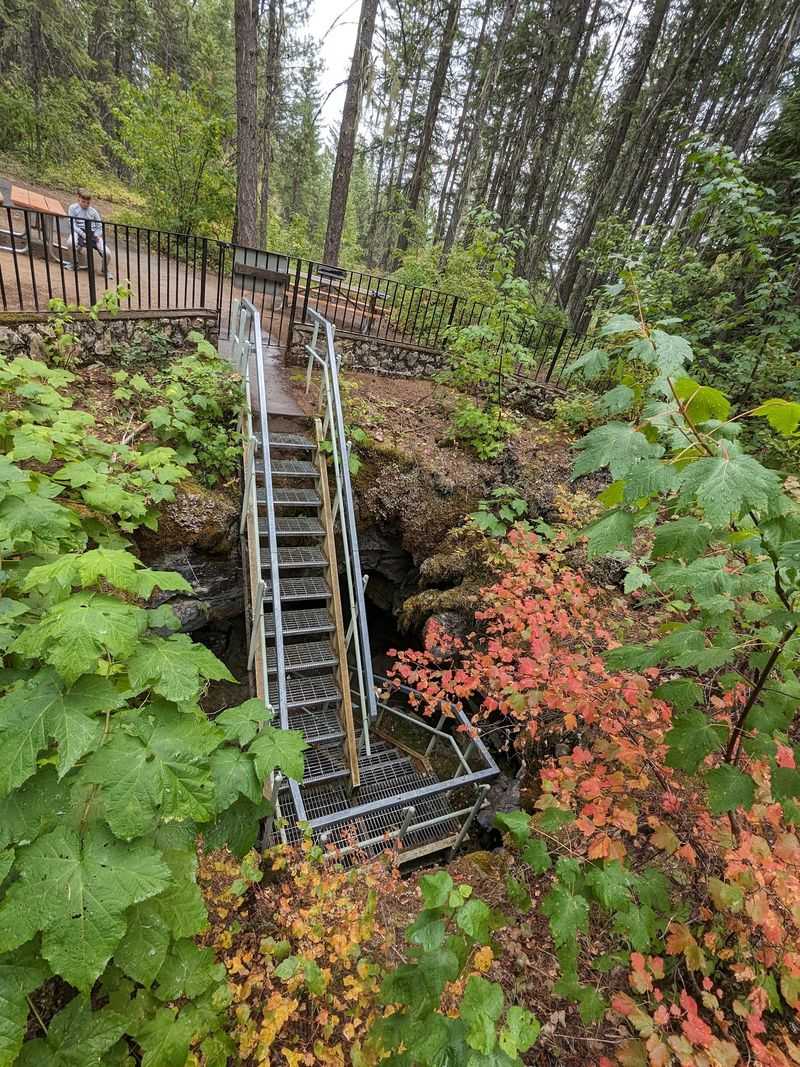
Once you reach the entrance, the cave opens below you. Fencing and a locked gate protect it when no tour is inside.
Your guide shares more details here before everyone heads down.
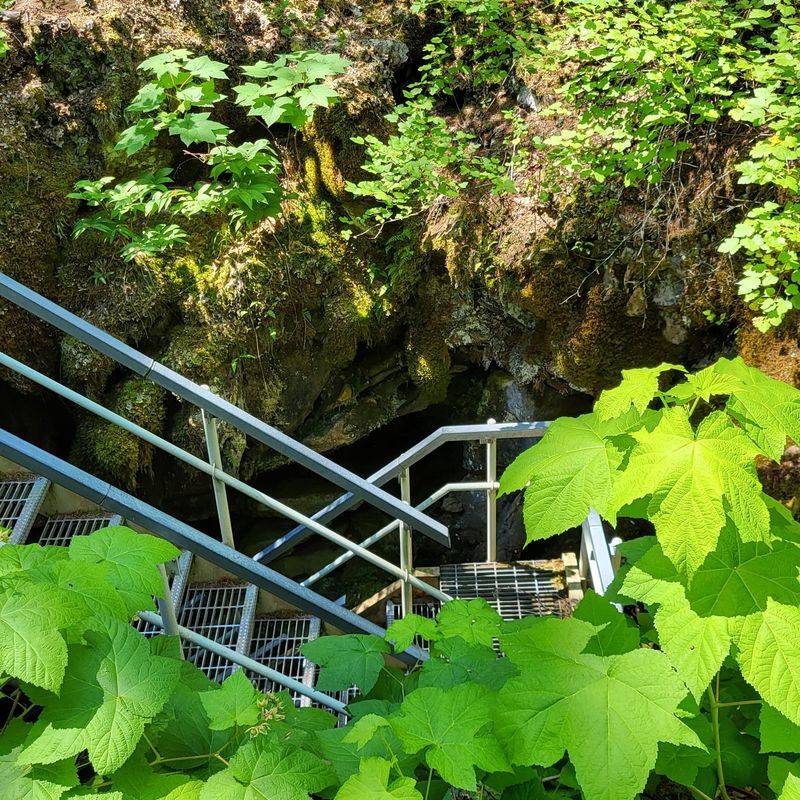
Then come the stairs. Metal steps and walkways guide you deeper, along with some rough dirt sections.
Railings help, but you’ll want to watch every step near the mouth of the cave.
Tours descend about 90 feet below the surface. That’s like going down several stories of a building without an elevator.
The climb back out is part of the deal, so save a little energy. Honestly, a few sore calves seem like a fair trade for seeing an underground world most people never notice.
Stalactites, Stalagmites, and Rock That Took Forever to Grow
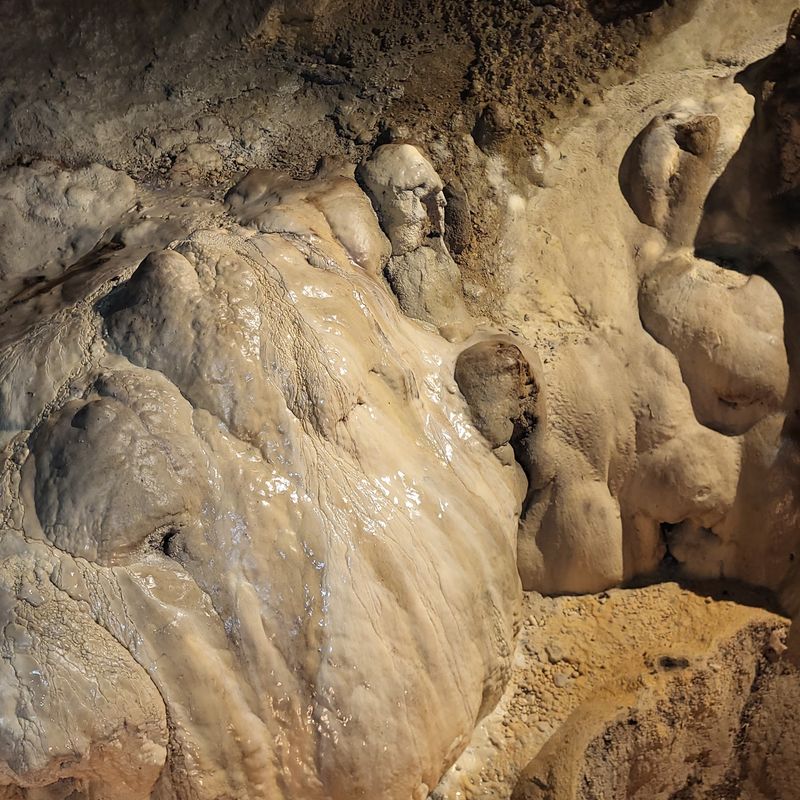
Water is a very patient artist. Inside Gardner Cave, slow drips have shaped limestone into stalactites, stalagmites, rimstone pools, and flowstone over a very long time.
Every formation started as a tiny mineral deposit.
Quick memory trick: stalactites hang tight to the ceiling. Stalagmites might reach up from the ground.
Once you learn that, you’ll start pointing at everything like a proud geologist.
Some formations meet in the middle and create columns. These take an enormous amount of time to form.
Seeing one up close makes your morning traffic jam feel pretty short.
The lighting along the route helps show off the shapes and textures. Guides explain how the cave formed and why it keeps changing.
It’s a science lesson that happens to come with a dramatic setting.
Please keep your hands to yourself, though. Oils from skin can harm formations and stop their growth.
Looking is free, and the cave keeps building for the next visitors. That’s a pretty good deal for everyone, including the rocks.
Lights Out, Then the Rocks Start Glowing
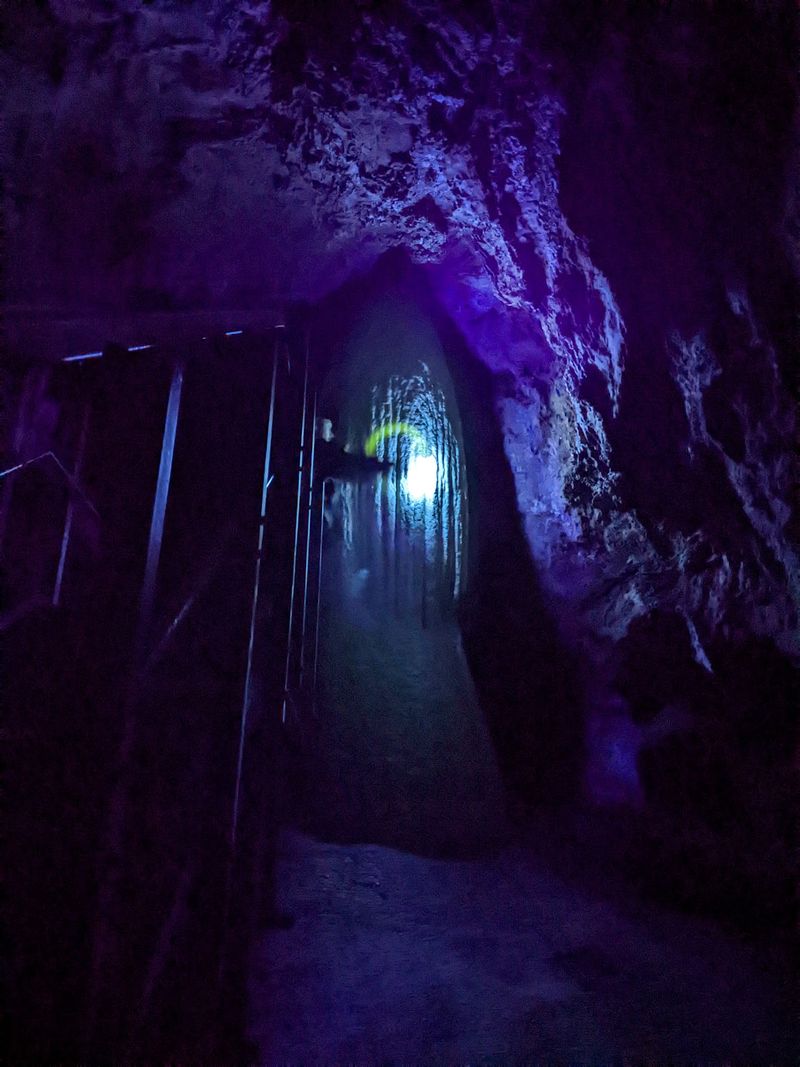
Darkness this complete is rare. Near the end of the tour, guides often switch off the cave lights.
Suddenly, you can’t see your own hand in front of your face.
It’s a strange, memorable feeling. Your eyes keep searching for any glimmer, but nothing shows up.
For a few moments, you get a sense of what the cave is like on its own terms.
Then comes the fun part. A black light reveals glowing colors in the rock, often bright blues and purples.
Certain minerals react to ultraviolet light and seem to come alive.
It feels a bit like a science fair project, only much older and way cooler. Kids and grownups both tend to react out loud.
Have your camera ready, though photos rarely match the real thing.
If total darkness makes you nervous, stay close to your group. Everything happens in a controlled, guided setting.
The lights come back on soon enough. You’ll walk away with a story you can tell at dinner, and maybe a new respect for flashlights.
Your Guide Turns an Hour Underground Into a Great Story
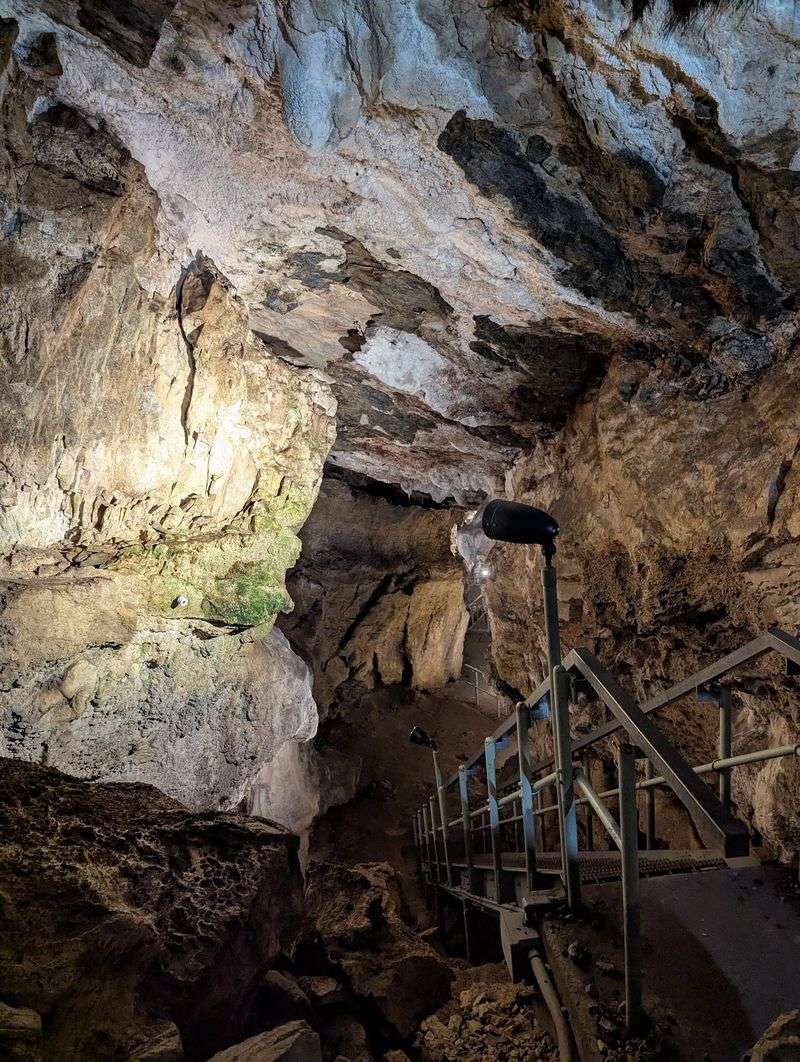
A great guide can make a small cave feel enormous. Tours at Gardner Cave last roughly an hour, and rangers or interpreters lead every group.
They cover geology, local history, and the cave’s discovery.
You’ll travel about 490 feet into the cave. That’s a portion of its full length, since the rest stays protected.
It’s plenty to get a strong feel for the place.
Here’s a practical tip. Stay near the front of the group if you can.
The passages are narrow, so the front row gets the best view of whatever the guide is pointing out.
Questions are welcome, so don’t be shy. Want to know how long a formation takes to grow?
Curious how the cave stays so cold? Ask away.
The tour leans educational, which is great for curious minds. Very young kids may get restless with all the talking.
Older kids who like science usually eat it up. Pack some patience, some curiosity, and maybe a granola bar for the walk back down.
Canada Is Basically Next Door, So Go Say Hello
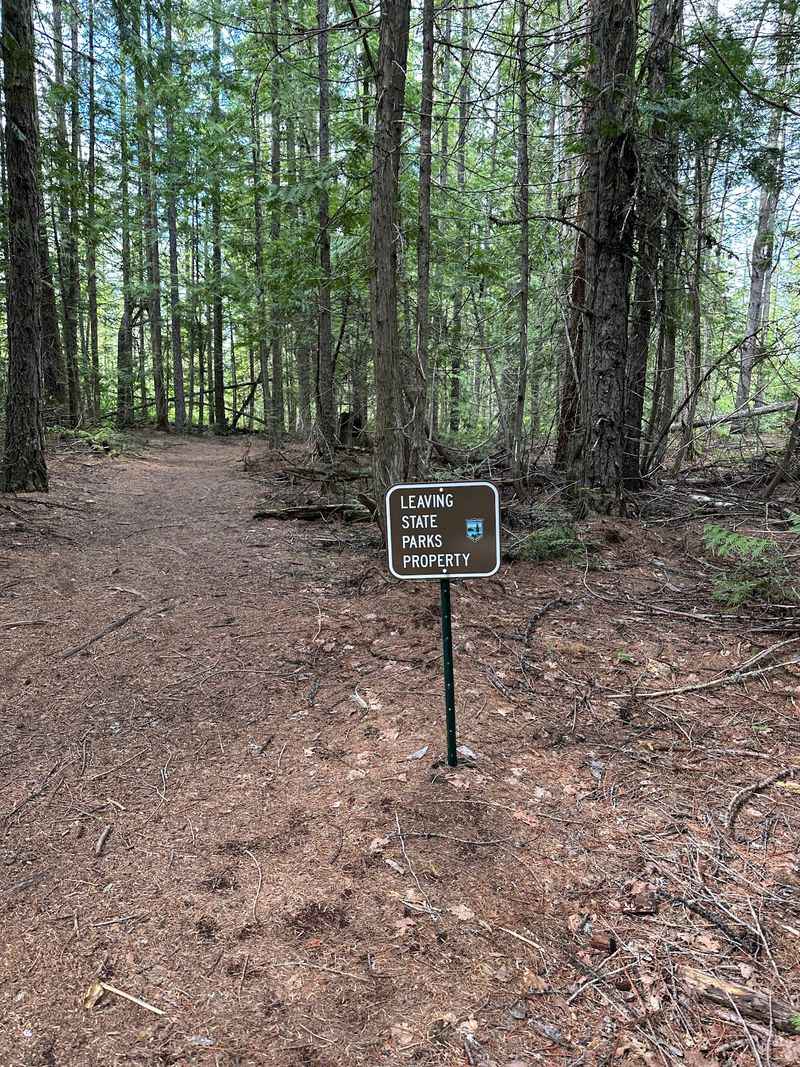
How often can you hike from a cave to an international border? A trail past the cave entrance leads to the Canadian border in roughly a quarter to half a mile.
It’s one of the quirkiest bonus walks in Washington.
At the end, you’ll see a cleared strip of forest marking the boundary. People call it the Slash.
Signs mark the line, but there’s no official crossing here.
So no passports, no customs, and no actual trip into Canada. You just get to stand right at the edge.
It makes for a fun photo and an even better story.
The path is mostly dirt and drops downhill toward the border. That means the return trip climbs back up.
Take breaks if you need them and bring water.
This walk pairs perfectly with the cave tour. You get underground geology first and then a breezy forest stroll.
Two very different experiences in one short visit sounds like smart planning to me.
It’s Far Away, and That’s Part of the Charm
Remote is the right word. Crawford State Park Heritage Site is at 425 Gardner Cave Road, Metaline Falls, WA 99152, close to the Canadian border.
Plan for a scenic drive through the forests of northeast Washington.
The park mainly exists to protect the cave. Amenities are simple, with a small parking area, restrooms, and picnic tables among the trees.
Bring snacks, since stores are not right around the corner.
A picnic after the tour is an easy win. Grab a table, eat in the shade, and talk about that moment the lights went dark.
It’s a relaxed way to wrap up the day.
Boundary Lake and the surrounding area also offer outdoor time if you want to stretch the trip. The town of Metaline Falls is a short drive south.
Its small-town setting fits the quiet mood of this corner of the state.
Check the season and days before heading out. Tours don’t run every day, and the cave is not open year-round.
A little planning turns a long drive into a memorable adventure worth every mile.
Share this story