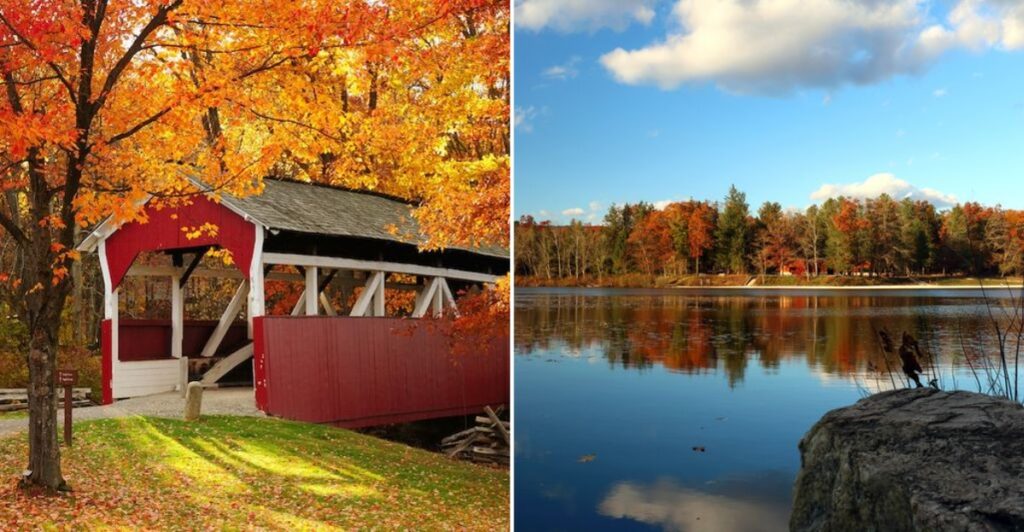
Fall gives Pennsylvania a fresh look, turning wooded hills, quiet lakes, and winding trails into scenes filled with red, orange, and gold. A simple afternoon outside can feel like a real getaway when bright leaves reflect on the water or frame a waterfall. Across the state, public parks offer places to slow down, take photos, and enjoy the season without planning a complicated trip. The best part is that each park brings something different to the experience. You might wander beside an old mill, look across a deep canyon, or watch waves roll toward a sandy beach. Some stops work well for a short visit, while others invite you to spend the whole day exploring. Families, hikers, photographers, and anyone who needs a break can find a setting that fits their pace.
Timing matters, though. Pennsylvania’s fall colors change with elevation, weather, and location, so there is no single weekend that works everywhere. Higher northern areas often change before warmer southern spots. Check current foliage reports, park alerts, and the forecast before leaving home. Bring layers, sturdy shoes, drinking water, and a downloaded trail map, especially if your plans include remote paths. The parks below offer memorable ways to enjoy autumn, from easy shoreline walks to challenging woodland hikes. You do not need fancy camera gear or a packed schedule to appreciate them. Give yourself time to stop, notice the small details, and choose a route that matches your comfort level. Sometimes the finest view appears just beyond the parking lot.
1. Hickory Run State Park, White Haven: Bright Leaves and a Field of Stone
A forest full of bright leaves is lovely, but a huge field of bare rocks makes the colors feel even more surprising.
At Hickory Run State Park, the famous Boulder Field adds an unusual twist to a classic autumn outing.
Start with the view from the edge rather than rushing onto the stones.
The gray boulders contrast with the colorful trees around them, giving photographers a scene that feels different from a standard woodland picture.
Walking across the rocks requires balance, patience, and shoes with reliable grip.
For a softer setting, explore the park’s wooded trails and stream areas.
Fallen leaves gather beside moving water, while patches of yellow brighten the paths.
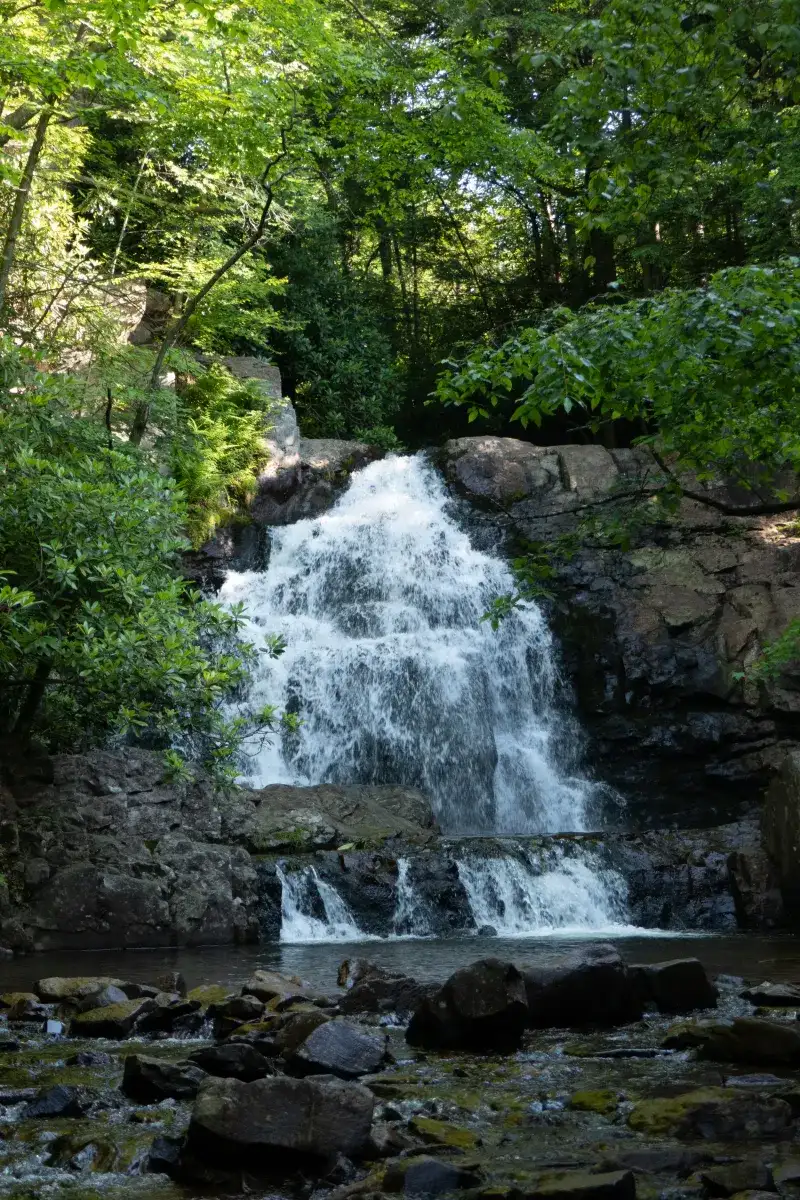
Hawk Falls is another popular destination, reached by a relatively short trail that still includes uneven ground.
Build your visit around what your group enjoys most.
A family might choose one manageable walk and a picnic, while experienced hikers can connect longer routes.
Pick up a park map and check current access information before heading toward the Boulder Field, since road conditions and seasonal arrangements can affect your plans.
Autumn weather in this part of Pennsylvania can change quickly.
Carry a warm layer even when the parking lot feels comfortable, and avoid wet rock surfaces when possible.
Leaves can cover roots and small holes, so watch your footing rather than staring only at the treetops.
For photographs, try placing a few colorful branches along the edge of your frame.
Cloudy skies can bring out rich leaf colors without harsh shadows.
Leave rocks, plants, and fallen branches where you find them, and keep the day unhurried: the park’s mix of stone, water, and forest rewards anyone willing to pause.
Before leaving, take one final look back from the trail to notice how the changing light reshapes the whole scene.
2. Promised Land State Park, Greentown: Autumn Reflected on Quiet Water
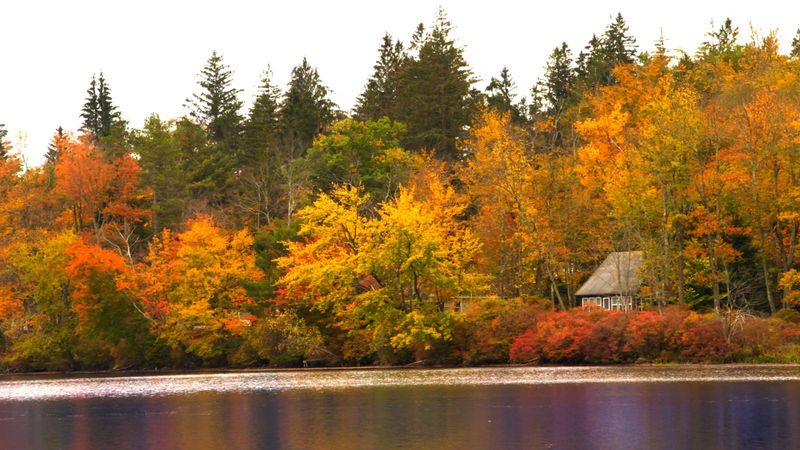
Still water can turn one colorful shoreline into two.
On a calm autumn morning, reflections at Promised Land State Park make the trees look as though they continue beneath the lake’s surface.
Set in the Pocono Plateau, the park combines lakes, forest, and places to pause near the water.
Promised Land Lake and Lower Lake offer different settings for watching the season unfold.
Evergreens remain dark green while nearby hardwoods bring patches of yellow, orange, and red.
A shoreline stop is a good starting point if you want scenery without committing to a long hike.
From there, choose a marked trail that suits your time and energy.
Walking beneath the trees gives you a closer look at details that disappear in wide landscape photographs.
Try visiting early, when the water may be calmer and picnic areas quieter.
Wind can break up reflections, but it also sends leaves drifting across the paths.
Neither condition ruins the outing; it simply changes the kind of pictures you can make.
If boating is part of your plan, confirm seasonal rental availability before arriving.
Bring the required safety equipment, wear a life jacket, and remember that cold water deserves extra caution.
A pleasant air temperature does not mean the lake is warm enough for an unexpected swim.
Pack lunch and make room for a slow afternoon.
Use designated picnic spaces, carry out your trash, and keep food away from wildlife.
The park feels especially welcoming when you stop trying to see everything and settle into one small corner of the shoreline.
Watch the light move through the branches, listen for birds, and let the lake provide the entertainment.
Before heading home, check your route back while daylight remains, since wooded trails can become dim earlier than open areas.
A little planning keeps the peaceful mood intact.
3. McConnells Mill State Park, Portersville: A Colorful Gorge with Historic Charm
The sound of rushing water sets the mood before the old buildings come into view.
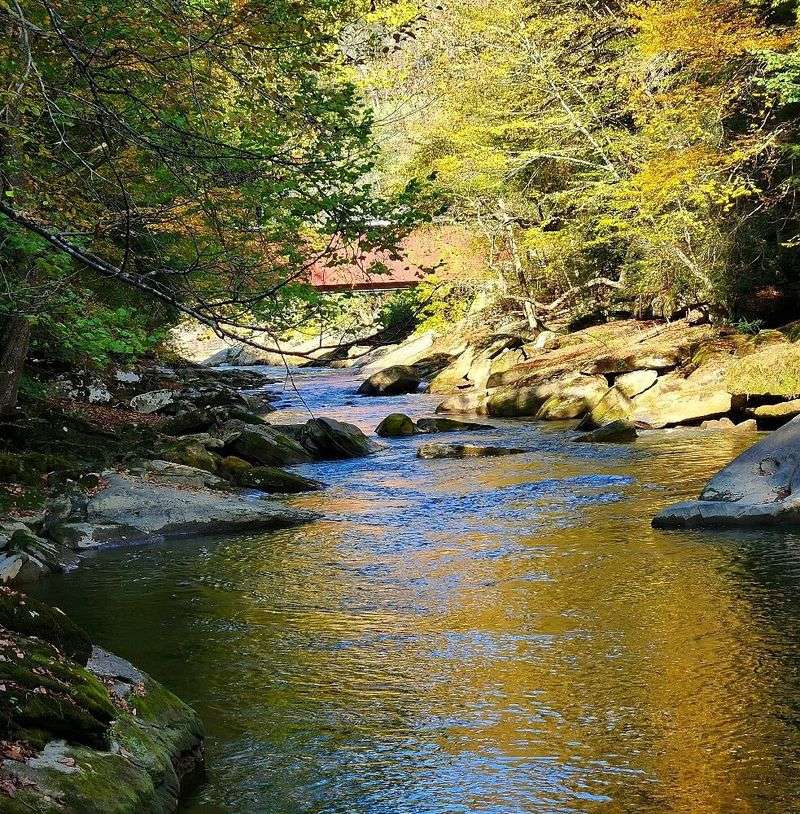
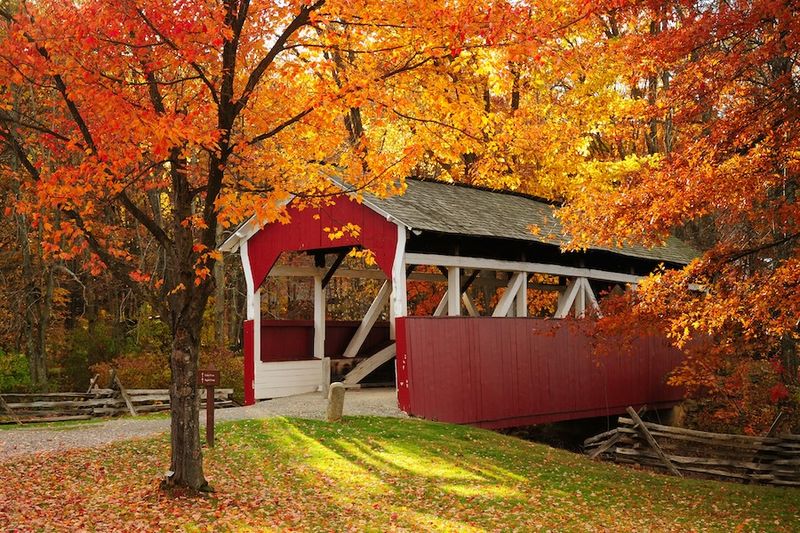
A historic mill, a red covered bridge, and a steep wooded gorge give McConnells Mill State Park a fall scene with plenty of character.
Slippery Rock Creek runs through the park, passing large rocks and forested slopes.
In autumn, bright leaves soften the rugged landscape.
The mill and bridge provide clear focal points for photographs, especially when colorful branches frame them from a safe public viewing spot.
Start near the historic area and take time to understand the terrain.
Trails along the creek can include roots, rocks, narrow sections, and slippery surfaces.
A route that looks short on a map may take longer than expected when you need to place every step carefully.
Parents should keep children close beside the water.
The creek’s current can be powerful, and swimming is prohibited.
Stay behind barriers, resist climbing onto wet rocks, and never trade secure footing for a better camera angle.
For a comfortable visit, wear sturdy hiking shoes and bring a small daypack rather than carrying loose items.
Check whether the mill is open if you hope to go inside, since building access is not the same as general park access.
Download your map before entering the gorge.
A cloudy day can be especially rewarding here.
Soft light helps show the texture of the stone, the weathered wood, and the leaves without strong glare.
After your walk, find a designated picnic area and enjoy a break away from the rushing creek.
The setting offers more than a pretty backdrop: it connects Pennsylvania’s natural landscape with the work and travel of earlier generations.
Give yourself enough daylight for the return walk, and leave the gorge with tired legs rather than a rushed finish.
That slower approach makes the visit more enjoyable.
4. Pine Grove Furnace State Park, Gardners: Lakeside Color and Trail Stories
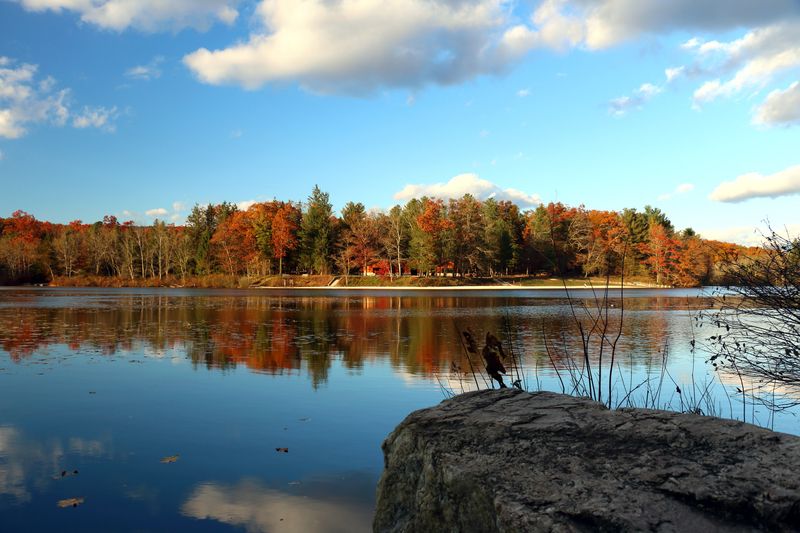
Some autumn outings call for a lake, a picnic, and no need to hurry.
Pine Grove Furnace State Park offers that relaxed rhythm, along with a surprising amount of history tucked into its wooded setting.
Laurel Lake and Fuller Lake give visitors places to enjoy fall color beside the water.
Choose an open shoreline view, then look for smaller scenes nearby: leaves on a bench, reflections between branches, or sunlight catching the edge of a maple.
You can enjoy the season without covering many miles.
The park occupies land connected to a former ironmaking community.
Historic features add another layer to the landscape, reminding visitors that these peaceful woods once supported busy industrial work.
Take a few minutes to read signs rather than treating the buildings as scenery alone.
The Appalachian Trail also passes through the park.
The Appalachian Trail Museum offers a way to learn about long-distance hiking when it is open, but check its seasonal schedule before planning your day around a visit.
You do not need to attempt a major hike to appreciate the trail’s story.
For families or mixed-ability groups, combine a manageable walk with time at a designated picnic area.
Bring a blanket for cool benches and an extra layer for shaded stretches.
Check the park map for the easiest route instead of assuming every lakeside path is flat.
Autumn afternoons can slip away while you linger over lunch or browse historic displays.
Set a comfortable turnaround time if you head farther into the woods.
Before leaving, pause beside the lake once more, because late light often changes the colors you saw earlier.
Keep to marked routes, respect closed facilities, and leave natural objects in place.
The reward here is not a dramatic challenge but a well-balanced day of water, woodland, and Pennsylvania history shared at your own pace.
5. Leonard Harrison State Park, Wellsboro: A Grand View over Pine Creek Gorge
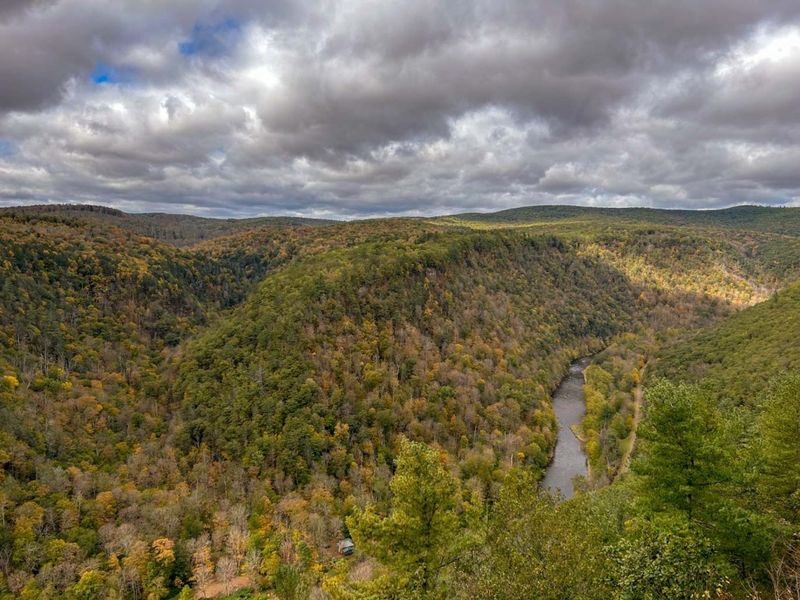
A single overlook can make you forget whatever was filling your mind on the drive.
At Leonard Harrison State Park, Pine Creek Gorge opens below you in a sweep of wooded slopes and winding water.
Often called the Pennsylvania Grand Canyon, the gorge is impressive in any season.
Autumn adds layers of color that help reveal its shape.
Reds and golds cover the hills, while shadows settle into folds that might be harder to notice during summer.
Begin at the designated overlooks and let your eyes adjust to the scale.
You do not have to descend into the gorge to enjoy a memorable visit.
For many travelers, the rim views provide the strongest reason to come.
Hikers seeking a harder outing may consider the Turkey Path, when it is open.
The route descends steeply, and the return climb demands real effort.
Check current trail alerts, carry water, and remember that walking downhill first can hide how tiring the trip back will be.
Photography works well when you include something nearby, such as a branch or an allowed section of railing, to show depth.
Avoid stepping beyond barriers or approaching unstable edges.
Wind can feel stronger at exposed viewpoints, so secure hats and keep a hand on lightweight belongings.
Wellsboro makes a useful nearby base for food and overnight plans, but allow enough time to enjoy the park without rushing back.
Peak foliage varies from year to year, and northern Pennsylvania often changes earlier than warmer parts of the state.
Follow current foliage updates rather than relying on a fixed date.
Even if some leaves have fallen, the gorge remains worth seeing.
Bare branches can reveal more of the creek below, giving late autumn its own appeal.
Bring binoculars if you have them, and spend a moment simply watching the landscape instead of photographing every view.
6. Cook Forest State Park, Cooksburg: Golden Light beneath Towering Trees
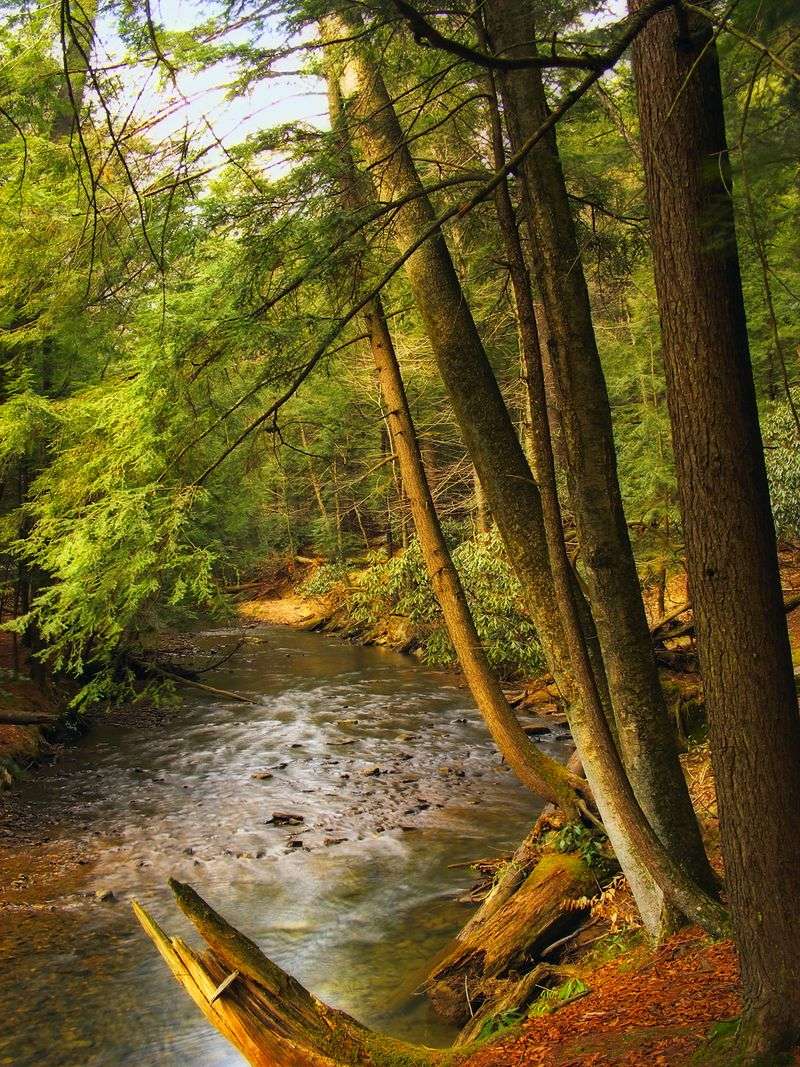
Look up, and the forest seems to keep going.
Towering trees give Cook Forest State Park a sense of scale that feels different from an open overlook or a bright lakeshore.
The park is known for its old-growth forest, including impressive white pines and eastern hemlocks.
In the Forest Cathedral area, evergreen branches remain green while nearby hardwoods add seasonal color.
Autumn here is not one solid blaze of leaves but a mix of rich tones, deep shade, and tall trunks.
Choose a marked woodland route and walk slowly enough to notice the forest’s layers.
Ferns, fallen leaves, and rough bark can be just as interesting as the canopy.
Trail surfaces vary, so check your route before assuming a short distance means an easy stroll.
The Clarion River adds another option for enjoying the park.
From appropriate public access areas, you can watch colorful slopes rise above the water.
River conditions and seasonal services change, so confirm details before planning any paddling trip.
A camera often struggles to capture the height of these trees.
Try a vertical picture with a person standing safely on the trail for scale, or focus on sunlight passing through leaves.
Keep your feet off fragile plants and avoid stepping across roots just to improve a composition.
Bring a warm layer because shaded woods can feel cooler than sunny roads.
If rain is expected, waterproof footwear can help make the walk more comfortable, though slick roots still require care.
Pack a snack and allow time for quiet pauses rather than aiming for a mileage record.
Old forests encourage a slower kind of attention.
You may arrive hoping for bright foliage and leave remembering the size of a tree, the smell of damp leaves, or the sound of wind moving far overhead.
Those smaller memories are part of the park’s lasting charm.
7. Black Moshannon State Park, Philipsburg: A Bog with an Autumn Palette
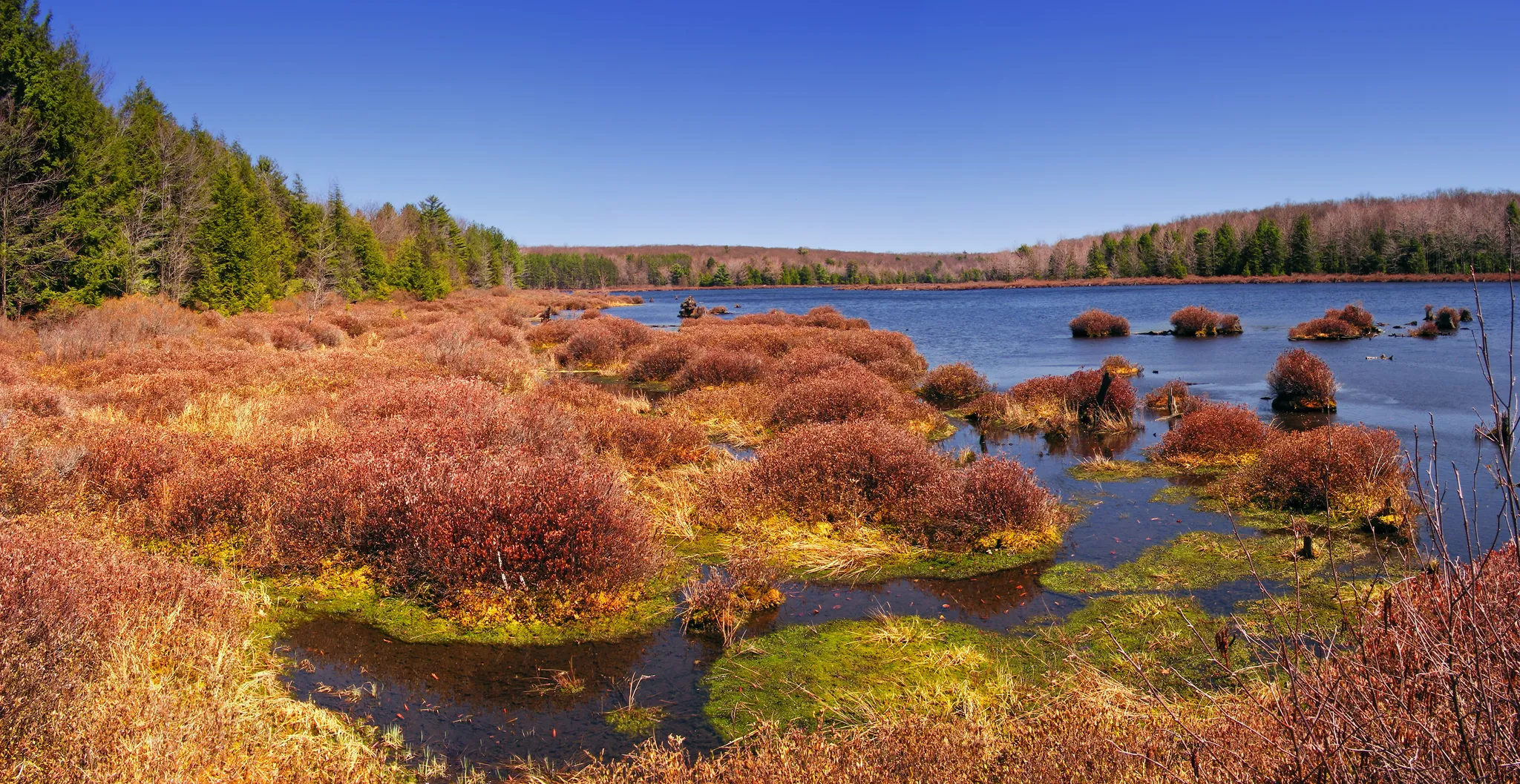
Not every fall landscape depends on a hillside full of maples.
At Black Moshannon State Park, dark water, colorful shrubs, and a distinctive bog create a quieter, more unusual autumn picture.
The lake’s tea-colored appearance comes from tannins released by plants in the surrounding wetlands.
That natural tint adds depth to reflections and helps explain the park’s name.
Against the water, golden leaves and rusty reds can look especially striking.
Make the bog area part of your visit if conditions and access allow.
The Bog Trail includes boardwalk sections that let visitors observe wetland plants without walking directly into their habitat.
Follow posted guidance and keep everyone on the designated surface.
Look downward as well as outward.
Low plants can bring their own seasonal colors, while tiny details tell the story of a landscape shaped by water.
This is a rewarding place for close photographs, provided you can take them without leaning into sensitive vegetation.
After exploring the wetland, head toward a lake view or choose another marked route through the woods.
A picnic can turn a short visit into a pleasant half-day outing.
Pack layers, since the park’s higher setting may feel cooler than nearby lower areas.
Weather changes the experience in useful ways.
Sunshine brightens the trees, while a gray sky can make the bog feel still and mysterious.
Waterproof shoes are sensible after rain, but never use them as a reason to leave the trail.
Check current park notices before traveling, especially if accessibility is central to your plans.
Bring binoculars for wildlife watching and give animals space rather than trying to draw them closer.
The appeal of this park lies in noticing what makes it different.
Take your time, read the interpretive signs, and enjoy a fall setting that offers much more than the usual colorful treetop view.
8. Ricketts Glen State Park, Benton: Waterfalls beneath a Colorful Canopy
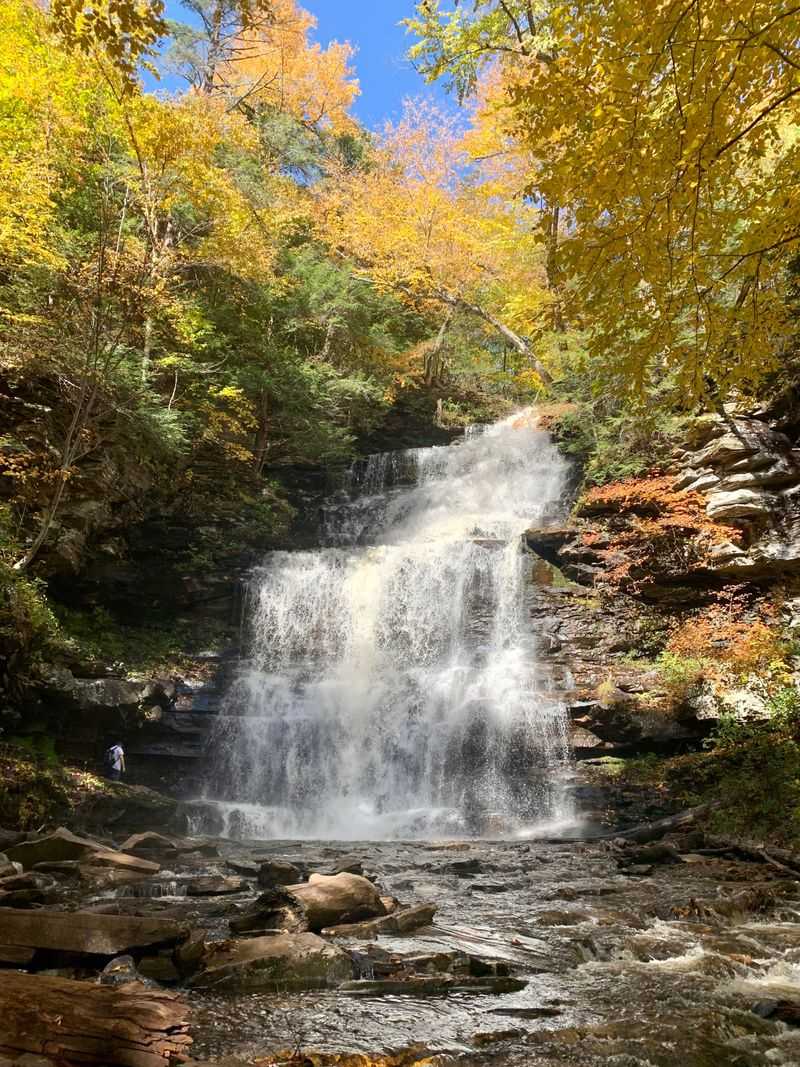
Waterfalls bring movement to a season known for still photographs.
At Ricketts Glen State Park, falling water and colorful woods share the spotlight, creating scenes that feel lively even on a quiet morning.
The park’s celebrated Falls Trail system passes a series of waterfalls through rocky ravines.
Ganoga Falls is the tallest, but smaller cascades can be equally rewarding to photograph.
Each bend offers a different balance of water, stone, and leaves.
Beauty does not make this an easy walk.
The waterfall routes include steep sections, uneven steps, and surfaces that can become very slippery.
Fallen leaves may hide wet rock, so sturdy footwear and careful pacing matter more than finishing quickly.
Check current trail conditions before leaving home, and follow closures without exception.
Choose a route that fits the least experienced person in your group.
If the ravine trails are unsuitable, consider the Lake Jean area for autumn scenery without committing to the same demanding terrain.
Carry water, snacks, and a downloaded map.
Start early enough to leave room for breaks and a safe return before dark.
Cell service may be unreliable, and stopping for photographs often adds more time than people expect.
When using a phone or camera, plant your feet securely before looking through the screen.
Never back toward an edge, climb beside a waterfall, or block a narrow trail with equipment.
Overcast weather can soften glare on the water and bring out leaf colors, making a cloudy day useful rather than disappointing.
Let faster hikers pass where there is room, and give yourself permission to turn around.
A shorter, safer visit still counts as a successful outing.
The goal is to enjoy Pennsylvania’s waterfall scenery, not collect every cascade at the cost of comfort or caution.
Save ambitious routes for a day when conditions and your energy truly match them.
9. Kinzua Bridge State Park, Mount Jewett: Fall Color from the Skywalk
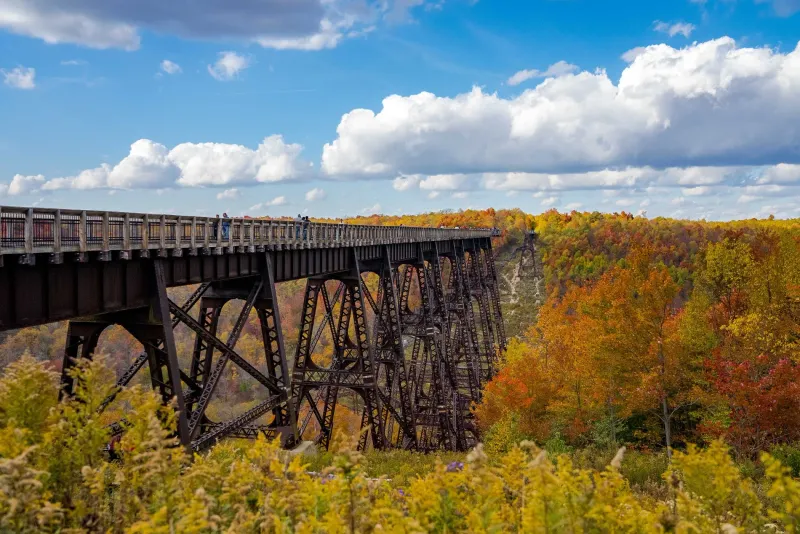
Walking onto a bridge that ends above a valley is an experience you are unlikely to forget.
The Kinzua Skywalk offers an elevated view of autumn woods, with a powerful piece of Pennsylvania history beneath your feet.
The original railroad viaduct was partly destroyed by a tornado in 2003.
Its surviving section became the skywalk, while fallen steel remains in the valley below.
Seeing both together helps visitors understand the force of the storm and the size of the original structure.
During fall, the surrounding hills add warm color to that striking scene.
From the skywalk, the forest spreads outward rather than towering over you.
Look for changes in shade across the valley as clouds move and sunlight reaches different slopes.
A glass viewing area near the end adds another perspective, but you can enjoy the visit without standing on it.
People who dislike heights should set their own limits.
There is no need to turn a scenic stop into a test of bravery.
Check park alerts before traveling because weather or maintenance can affect access.
Bring a jacket for the exposed walkway, where wind may feel stronger than it does near your vehicle.
Keep phones and other loose belongings secure.
Spend time with the interpretive displays instead of making the skywalk your only stop.
They give context to the railroad, the bridge, and the landscape.
If you choose a valley trail, study its grade and remember that a descent means a climb back up.
For photographs, include the steel structure to show how high the viewpoint sits above the trees.
Stay within public areas and never enter unstable ruins.
The best visit balances the thrill of the view with respect for the site, leaving you with both colorful images and a clearer sense of the story behind them.
Allow time for both experiences.
10. Presque Isle State Park, Erie: Beach Walks with an Autumn Twist
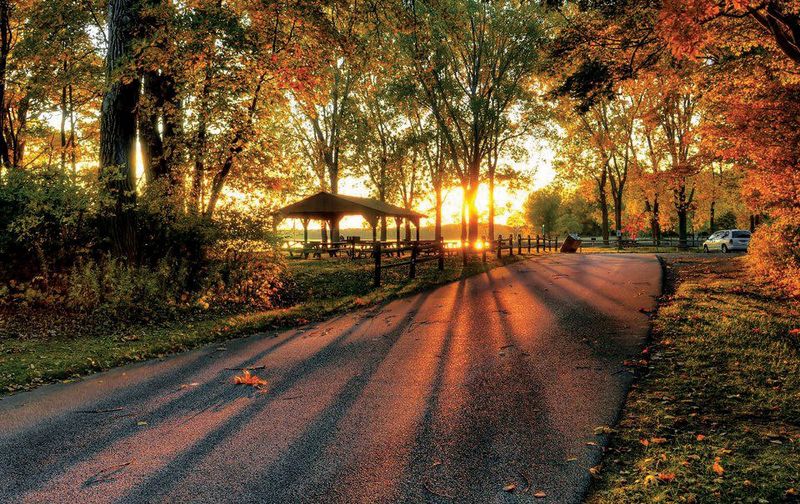
A beach day does not have to end when summer does.
At Presque Isle State Park, cool air, colorful trees, and Lake Erie waves give the shoreline a fresh personality in autumn.
The park’s sandy peninsula offers a different kind of fall escape from Pennsylvania’s mountain parks.
Instead of deep valleys, you get wide skies and open water.
Wooded areas and bays add leaf color, while the lake supplies movement and changing light.
Plan a mix of beach stops and walking rather than expecting every view to be filled with bright foliage.
Some of the strongest scenes pair a few golden branches with blue water or a cloudy sky.
The contrast is part of the appeal.
Bring a wind-resistant jacket, even if the forecast looks mild.
Conditions beside Lake Erie can feel much cooler than they do inland.
Comfortable walking shoes are useful for paved routes, while sand may call for a slower pace.
Birdwatchers may find autumn migration especially interesting.
Carry binoculars and watch from a respectful distance without approaching resting birds.
Follow posted rules and any seasonal restrictions, particularly around sensitive habitat.
Check which facilities are open before assuming summer services will still be available.
Pack drinking water and a snack, and avoid entering rough water.
Sunset can be beautiful, but leave enough time to return safely and follow the park’s posted hours.
For pictures, experiment with the shoreline as a leading line and let the sky occupy more of the frame.
You do not need a mountain of leaves to make a strong fall image.
A quiet bench, a bright tree, and waves rolling toward the beach can tell the season’s story just as well.
Finish by listening for a minute without reaching for your phone; the lake’s steady rhythm is one of the simplest pleasures this park offers in autumn.
11. Worlds End State Park, Forksville: Rugged Hills Wrapped in Fall Color
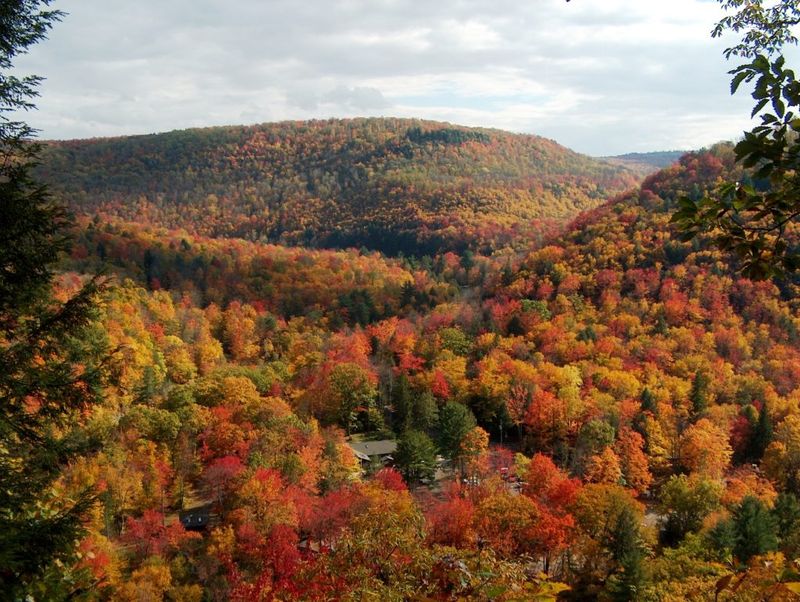
The name sounds dramatic, and the landscape does its best to live up to it.
Worlds End State Park sits in a rugged bend of Loyalsock Creek, surrounded by wooded slopes that become richly colored in fall.
Start near the creek if you want to ease into the setting.
Water moves past rocks beneath a canopy of changing leaves, offering smaller scenes before you seek a broad view.
A short pause here can be just as satisfying as reaching an overlook.
Canyon Vista is a well-known destination for seeing the valley from above.
Before choosing how to reach it, check the park map, road information, and current conditions.
Do not assume that every scenic viewpoint requires the same amount of walking.
For hikers, the park offers routes with steep grades and rocky footing.
Match the trail to your experience and save extra energy for the return.
A sturdy pair of shoes is especially helpful when leaves cover loose stones or damp roots.
Bring what you need rather than counting on nearby services.
Drinking water, snacks, a warm layer, and an offline map make a simple but useful kit.
Tell someone your hiking plan if you are heading onto a longer route.
The best photographs often come from noticing how the valley fits together.
Include a safe foreground, then let the colorful hills stretch behind it.
Stay back from edges and give other visitors room at viewpoints.
If rain arrives, consider a shorter outing rather than pushing through slippery terrain for one more picture.
Forksville provides a nearby point of reference, but the park itself can feel wonderfully removed from everyday noise.
Allow that quiet to shape your visit.
Walk at a pace that lets you hear the creek, notice the leaves, and return with energy left to enjoy the rest of your day.
No rushed finish required.
12. Ohiopyle State Park, Ohiopyle: River Views and Waterfall Energy
A roar of water gives autumn here a little extra energy.
Ohiopyle State Park pairs colorful forest with the Youghiogheny River, making it a lively choice for visitors who enjoy scenery with movement.
Ohiopyle Falls provides a memorable starting point near the town.
Watch from designated viewing areas, where you can appreciate the river without approaching dangerous water.
Bright trees along the banks add warmth to the broad curtain of moving water.
Cucumber Falls offers a different scene, with water dropping into a rocky woodland setting.
Access can involve stairs and uneven surfaces, so check conditions and think about your group’s mobility before going.
Wet leaves make careful footing especially necessary.
For a more open-ended outing, explore a suitable stretch of the Great Allegheny Passage.
The shared trail gives walkers and cyclists another way to enjoy the area.
Keep right, remain alert, and make space for others rather than stopping suddenly for photographs.
Choose only as much activity as your day comfortably allows.
You could combine a waterfall stop with lunch, or spend longer walking and exploring.
Confirm seasonal hours for rentals and other services instead of assuming everything operates as it does in summer.
The river deserves respect in every season.
Stay out of restricted areas, never climb onto slippery rocks beside fast water, and use qualified outfitters if planning an appropriate guided river activity.
Bring layers for cool spray and shaded trails.
Photographers can look for colorful branches above the water or leaf-covered rocks well away from the current.
Before heading home, take a final quiet moment at a legal viewing spot.
Between the sound of the falls and the changing forest, Ohiopyle delivers a fall escape that feels both refreshing and full of life.
Keep your plans flexible, and let weather, daylight, and your group’s energy guide the final stop of your visit.
Share this story