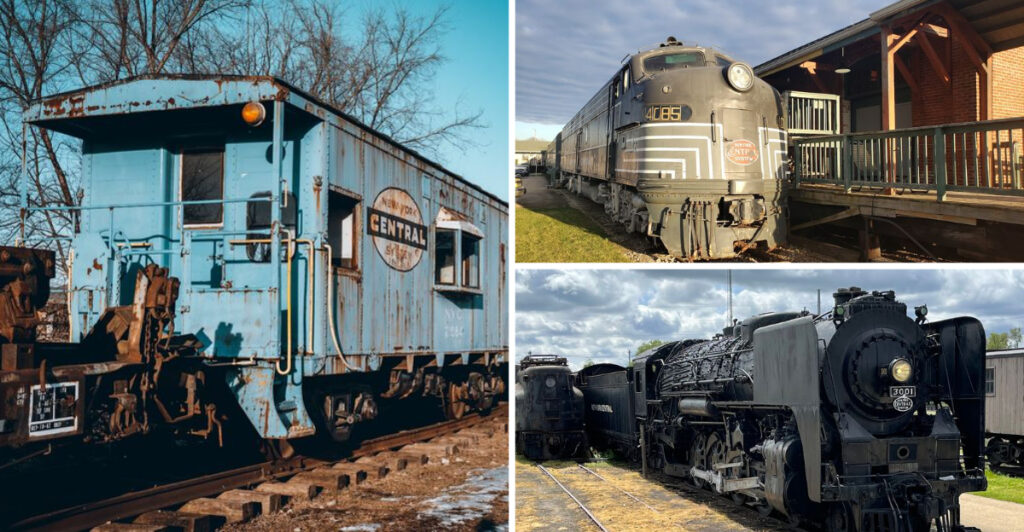
Indiana has no shortage of hidden attractions, but few are as impressive as the National New York Central Railroad Museum in Elkhart. This underrated destination gives visitors the chance to get up close to historic locomotives, explore railroad artifacts, and even climb aboard legendary steam-era equipment that helped shape American transportation.
Beyond the massive engines outside, the museum features exhibits, model trains, and fascinating stories that bring Indiana’s rich railroading heritage to life. Whether you’re a lifelong train enthusiast or simply looking for an affordable and family-friendly outing, this museum offers an experience that is both educational and surprisingly hands-on.
The Yard View Hits Before the History Does
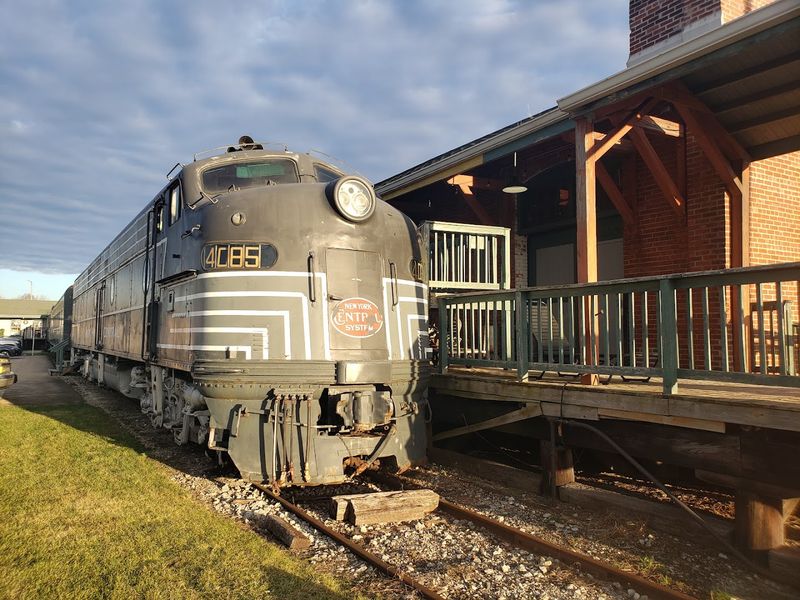
The National New York Central Railroad Museum does not ease you in gently. You arrive at a working rail town address, and the outdoor collection immediately sets the tone with steel, scale, and the kind of industrial heft that makes modern vehicles look toy sized.
Before any exhibit panel explains a thing, the setting tells you this museum is rooted in real railroad geography, not a recreated theme space tucked far from the tracks.
That matters in Elkhart, where rail traffic is still part of daily life. The museum sits near active lines and across from the local Amtrak station area, so the background often includes the rumble or flash of actual trains moving through town.
Instead of separating history from the present, the place lets both sit in the same frame, which gives even a short visit more energy than a standard indoor museum circuit.
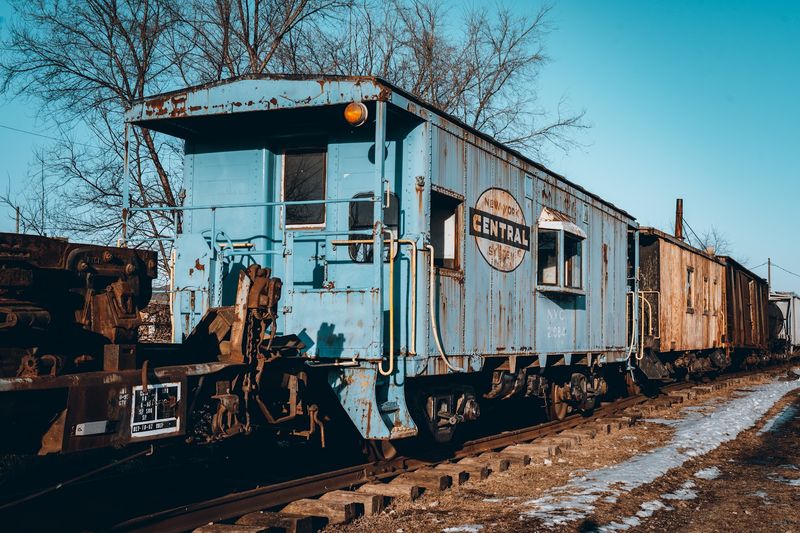
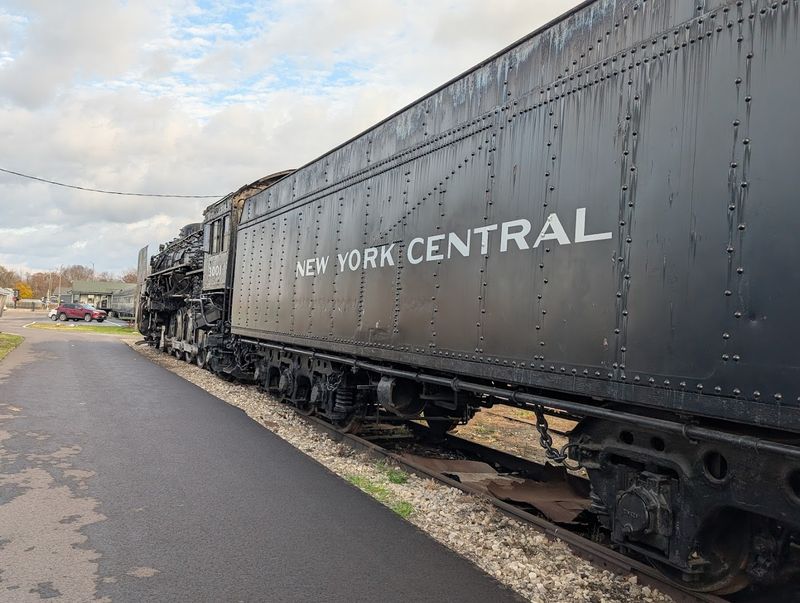
The outdoor yard is where your eyes keep jumping. A large steam locomotive anchors the scene, railcars stretch the experience beyond a single photo stop, and the long lines of track pull your attention forward like a visual invitation to keep walking.
There is no polished amusement-park gloss here, which is exactly why the place reads as convincing and specific rather than staged.
Even the worn surfaces contribute something useful. Rivets, ladders, undercarriages, and heavy couplers show railroad equipment as machinery first, not decorative nostalgia.
You start noticing dimensions, engineering choices, and the physical labor implied by every platform and handle. By the time you head indoors, the museum has already done a strong piece of storytelling without asking you to read a single paragraph.
Climbing Aboard the Locomotive Is the Headline Moment
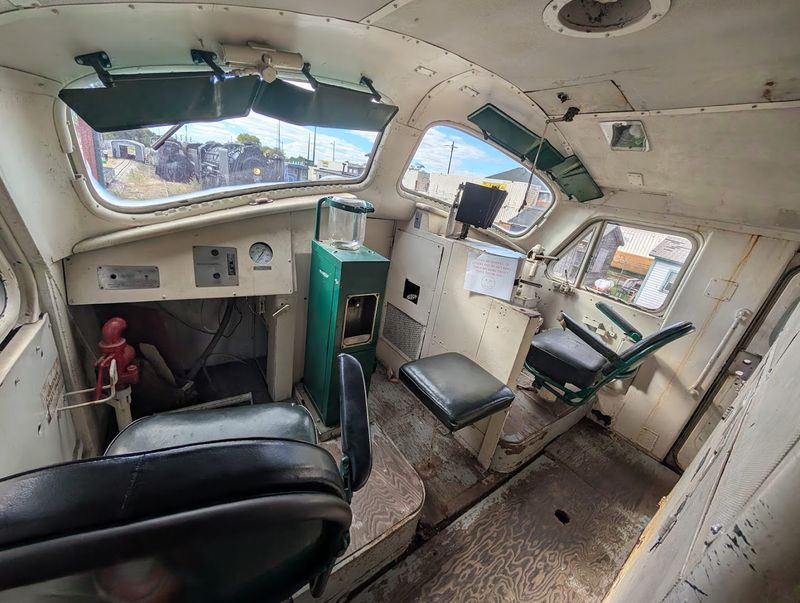
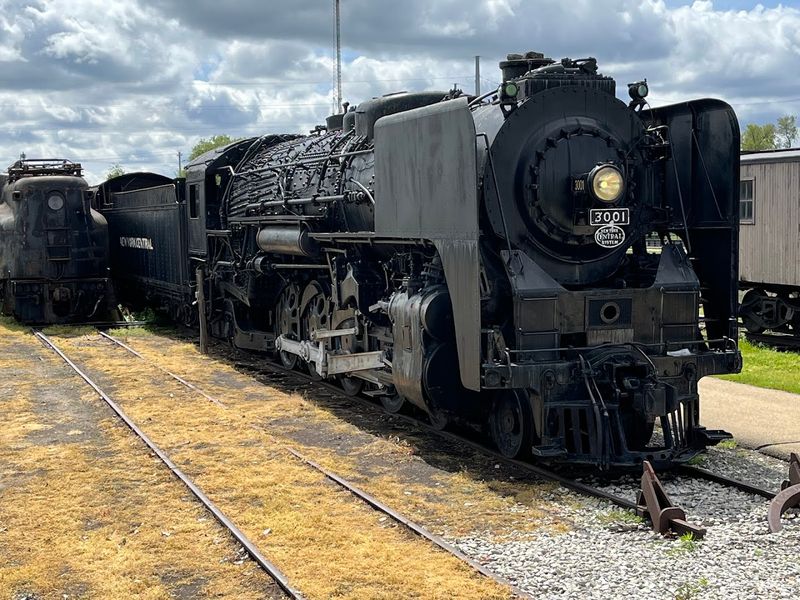
The signature draw here is simple and powerful: you can get close to a legendary steam engine in a way that immediately resets your sense of scale. The preserved locomotive is not impressive because it is old.
It is impressive because standing beside it makes you understand how enormous steam power really was, with towering wheels, thick metal components, and a body that seems built for both speed and brute force.
That physical encounter changes the pace of the visit. Instead of treating railroad history as a timeline of dates and company names, you experience it through height, weight, and proximity.
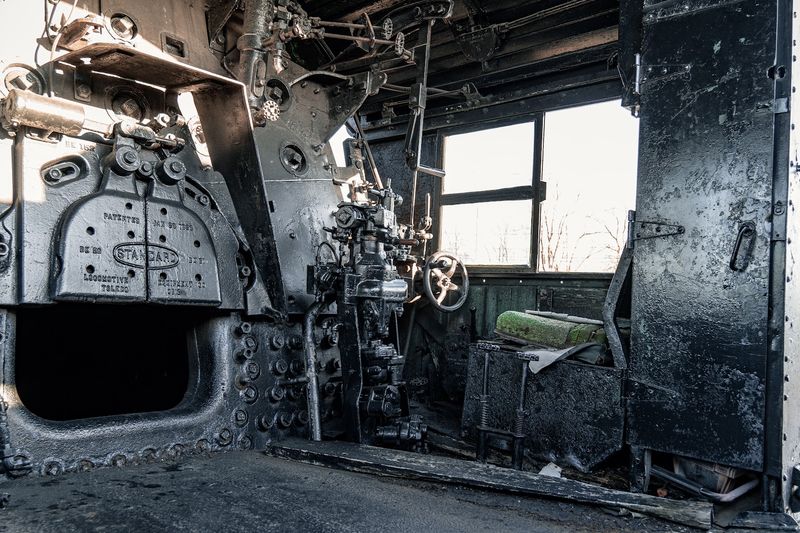
Looking up at the boiler, tracing the rods and hardware, or peering toward the cab makes the machine easier to grasp as a working tool that once demanded crews, maintenance, fuel, and constant attention.
The museum also benefits from not reducing the engine to a distant monument. Being able to approach it closely gives the locomotive dramatic presence, but it also opens up smaller details that reward patient looking.
Paint, numbering, handrails, steps, valves, and weathered surfaces all help the engine read as an object with a long life rather than a generic symbol of the steam era.
For rail fans, this is the section that can stretch into serious observation. For everyone else, it is the moment that turns curiosity into engagement because the machine is so visually overwhelming.
You do not need specialized knowledge to appreciate it. You just need a few minutes beside the engine, where the size alone explains why steam locomotives still hold such a grip on the American imagination.
Inside, the Story Gets Smarter and More Layered
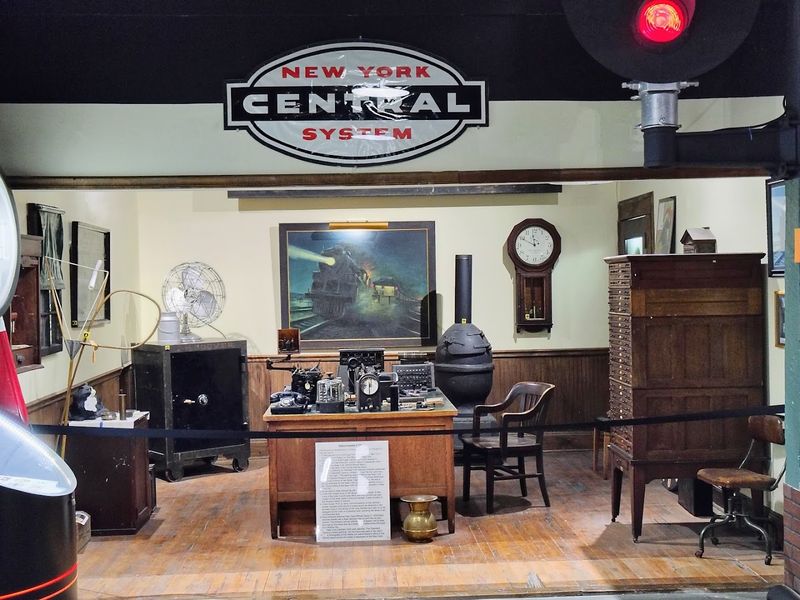
Once you step inside, the museum shifts from spectacle to context. The galleries focus on the New York Central system and its regional importance, turning the massive railroad into something more understandable through artifacts, displays, and local framing.
That is an important move, because a rail empire covering thousands of miles can sound abstract until you see how one city, one depot area, and one set of lines fit into the bigger network.
The indoor exhibits help break that scale into human terms. Railroad signs, documents, tools, equipment, and memorabilia reveal daily operations rather than just celebrating famous locomotives.
You start to see how a railroad functioned as a workplace, a transportation system, and an economic force that shaped where goods moved and where communities grew.
The layout also makes room for different levels of interest. If you want a quick pass, the visual variety keeps things moving and prevents the museum from becoming text heavy.
If you prefer to slow down, there is enough detail to follow side paths into timetables, equipment, route history, and the railroad culture that developed around uniforms, schedules, stations, and service.
That balance gives the museum broader appeal than the exterior alone suggests. The trains outside provide the dramatic hook, but the interior is where the visit gains depth and coherence.
It connects Elkhart to a larger transportation story without becoming dry or overloaded. By the time you move back toward the yard or into the model train areas, the artifacts have already sharpened your eye, making every car, engine, and railroad detail outside more meaningful than it looked at first glance.
The Model Train Room Is Where the Pace Changes
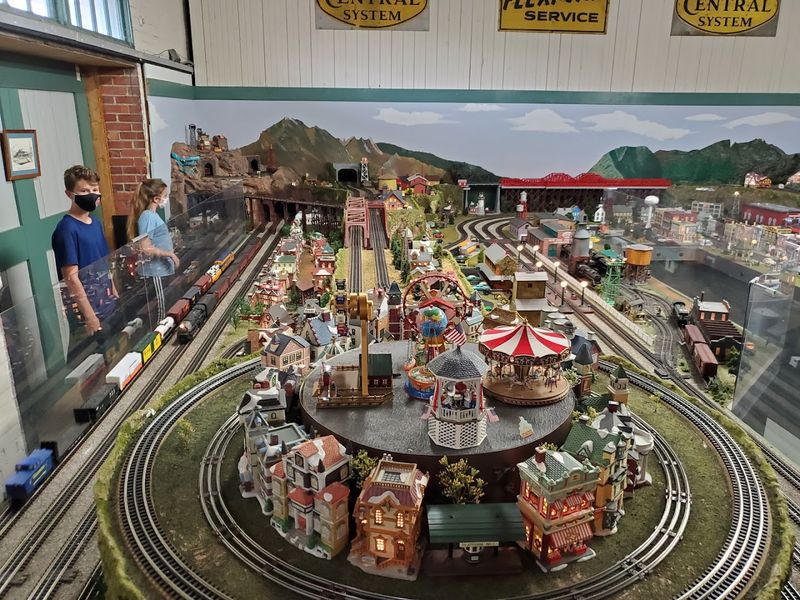
Then the museum takes a turn that makes the whole experience broader and more dynamic. After the heavy machinery and regional history, the model train displays introduce movement, craftsmanship, and a very different kind of railroad fascination.
The shift works because it is not a lesser version of the big trains outside. It is a separate pleasure built around detail, motion, and watching an imagined rail world operate at eye level.
The larger layouts can hold attention much longer than expected. Trains circle through miniature landscapes, and your focus starts bouncing between locomotives, track patterns, structures, and small scenic touches that reveal how much labor went into the display.
Even people who arrive thinking model trains are just for hobbyists usually end up lingering, because the combination of scale, animation, and precision is immediately readable.
This part of the museum is also one of the clearest examples of how well it handles mixed audiences. Children get the excitement of motion and recognizable train forms, while adults can appreciate the engineering logic, layout planning, and careful scenic work.
Nobody needs a primer to enjoy it, but railroad enthusiasts still have plenty to study in the equipment choices and operation.
There is a practical advantage here too. The model area gives the visit visual rhythm, especially if the weather outside is hot or if you want a quieter stretch between walking the yard and exploring the rest of the building.
Instead of feeling like filler, it becomes one of the museum’s strongest pacing devices. You leave that room refreshed, with your attention reset, ready to look at full-size railroad equipment again with a slightly more trained eye.
Why This Indiana Museum Matters Beyond Train Fans
Elkhart is not an accidental location for a museum like this. The city has long been tied to rail movement, and that local connection gives the National New York Central Railroad Museum more authority than a generic transportation exhibit could ever have.
You are not just learning about a famous railroad company in the abstract. You are standing in a place where railroad activity helped shape the city around it.
That Indiana setting adds texture to the New York Central story. Many people associate the railroad with larger metropolitan routes, yet the network’s importance depended on places that handled traffic, labor, maintenance, and regional connections beyond the biggest headline cities.
Elkhart helps explain that middle ground, where the sweep of national transportation history intersects with daily local realities and the practical business of moving people and freight.
The museum’s focus on the New York Central system also gives it a clearer identity than broader railroad collections sometimes have. Rather than trying to cover every rail subject equally, it uses one major railroad as a framework for understanding technology, travel, commerce, and community development.
That keeps the story coherent while still opening enough doors for different interests, whether yours leans toward locomotives, route history, or the culture built around rail travel.
There is also something refreshing about seeing major industrial history interpreted in a city that still carries visible railroad DNA. The museum does not need to manufacture relevance because the tracks, the trains, and the location keep reinforcing the point.
In a state shaped by movement, manufacturing, and connections across the Midwest, this museum lands as a focused, place-specific reminder that railroads were not background infrastructure. They were central actors in how towns like Elkhart functioned and grew.
A Surprisingly Good Stop for Kids and Non-Experts
One of the museum’s smartest qualities is that it does not trap itself in expert-only territory. Railroad history can easily become dense, technical, or overly specialized, but here the visit stays accessible without flattening the subject.
Families, casual day-trippers, and dedicated train fans can all use the same space differently, which is harder to pull off than it looks.
For children, there are interactive elements and play-oriented areas that keep the museum from becoming a long sequence of do-not-touch displays. That matters because the outdoor rail yard already asks kids to process scale, movement, and machinery.
Indoor spaces that allow imaginative play, model train watching, or hands-on engagement create a release valve, making the visit more comfortable for families who want learning but also need room for energy and curiosity.
Adults who arrive with limited railroad knowledge benefit too. The museum offers enough explanation to orient you, yet it rarely demands that you speak the language of wheel arrangements, railroad timetables, or locomotive classes before you can enjoy yourself.
You can appreciate the objects visually first, then deepen the visit with labels, conversations, or repeated loops through the galleries once the major pieces start making sense.
That flexibility is a real strength, especially for multigenerational groups. A grandparent drawn to railroad history, a parent looking for an affordable outing, and a child interested mainly in moving trains can all find an entry point here.
The museum neither talks down to beginners nor hides its substance from enthusiasts. Instead, it creates a layered experience where different ages and interests overlap naturally, turning a niche subject into a visit that works remarkably well as a shared afternoon.
How to Time Your Visit for the Best Experience
This is a museum that rewards a little planning, mainly because its appeal is split between indoor exhibits and outdoor equipment. The listed public hours are concentrated from Wednesday through Saturday, with openings at 10 AM and closures at 5 PM, so showing up early gives you the easiest pacing.
You can start outside while your energy is high, then move indoors when you want shade, context, and a slower look at displays.
Weather plays a bigger role here than at a fully enclosed museum. The rail yard is essential to the experience, and sunny afternoons can make exposed areas feel hotter than expected, especially if you are visiting with children.
Comfortable shoes help, and so does treating the museum less like a rushed checklist and more like a two-part outing with natural pauses between walking, reading, and simply looking.
Weekday visits can be especially pleasant if your schedule allows. A smaller crowd gives you more room to absorb the scale of the equipment, linger in the model train area, and take photos without feeling hurried.
The museum is compact enough that you do not need to dedicate a full day, but it has enough variety that arriving too close to closing could leave the best parts feeling compressed.
If you are the kind of traveler who likes practical value, this place lands well. It offers a substantial experience without demanding a major time commitment, and the combination of outdoor hardware and indoor interpretation keeps the visit from going flat.
Give yourself enough time to circle back once or twice. The first pass delivers the wow factor, but the second is usually when the details start locking into place.
Why This Museum Delivers Big Railroad Drama Without the Crowds
The National New York Central Railroad Museum stands out because it delivers railroad scale without demanding railroad obsession. You get the giant locomotive, the outdoor yard, the machinery, and the visual drama that make train history exciting on a gut level.
Then the museum backs that up with enough interpretation, model displays, and local context to turn a quick stop into a genuinely rounded visit.
Its size is part of the advantage. Massive transportation museums can be thrilling, but they can also become exhausting, especially when every gallery competes for attention.
Here, the experience is focused enough to stay coherent. You can move from outdoor equipment to indoor history to model train craftsmanship and family-friendly spaces without feeling scattered or buried under information.
The Elkhart setting strengthens the whole package. Active rail surroundings, a city with deep railroad ties, and a museum centered on the New York Central system give the place specificity that larger institutions sometimes lack.
Rather than presenting rail history as distant legend, it shows you how that history lives in infrastructure, regional identity, and the physical objects still standing in front of you.
If there is a final reason this museum earns attention, it is the directness of the experience. You do not have to imagine the scale of the machinery from a textbook image, and you do not need a long lecture to understand why railroads mattered here.
The evidence is right in the yard, in the galleries, and in the surrounding town. For a modest museum in northern Indiana, that is a remarkably strong combination of clarity, character, and old-fashioned railroad drama.
Share this story