Hidden away in Kingsport sits a place where time stands still and history comes alive. Exchange Place is a working 1850s farmstead where you can walk through original log cabins, meet heritage animals, and watch blacksmiths hammer iron just like they did over 150 years ago.
Whether you’re watching wool being spun on a great wheel or tasting food cooked over an open hearth, this 62-acre living museum offers a genuine peek into Appalachian farm life that you won’t find anywhere else.
Step Into the 19th Century at Exchange Place
Walking onto the grounds feels like crossing an invisible line between centuries. The air smells different here, like wood smoke and earth instead of exhaust fumes.
Spread across 62 acres of working farmland, Exchange Place isn’t just a museum where you look at stuff behind glass. It’s a place where you can actually touch the past.
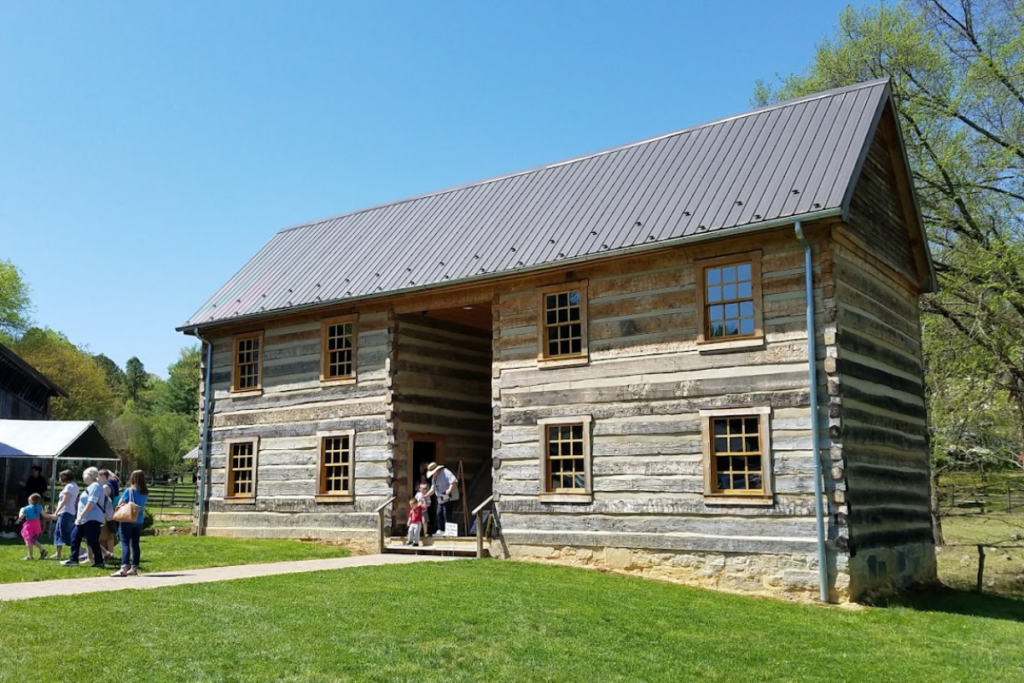
Nine of the ten original structures dating from 1816 to 1851 still stand on their original foundations. That means when you step through the doorway of the Preston House, you’re walking exactly where families walked nearly 200 years ago.
The floorboards creak under your feet the same way they did for John Strother Gaines and the Preston family who lived here.
What makes this place special is how real everything feels. The buildings aren’t recreations or replicas. They’re the actual structures that sheltered families, stored grain, and housed animals during the mid-1800s.
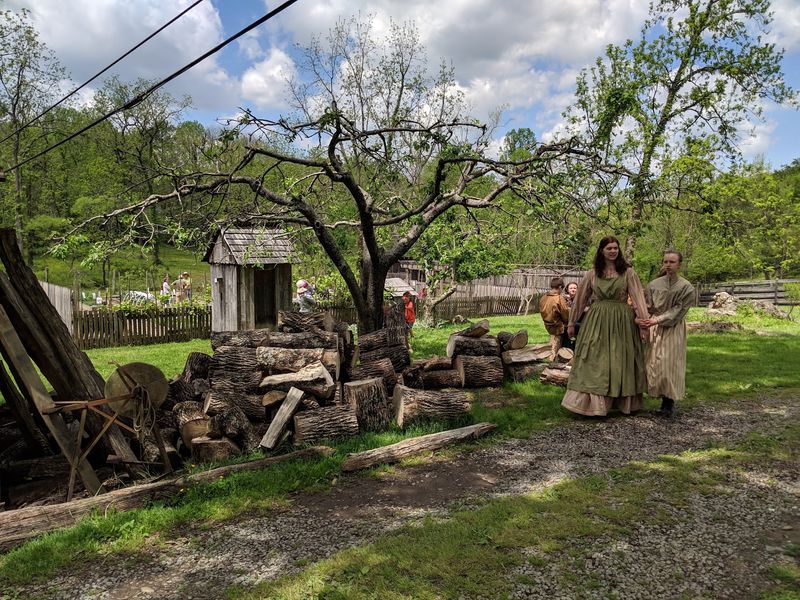
Volunteers in period clothing bring the farm to life, but they’re not actors playing pretend. They’re doing actual farm work using authentic methods.
The farmstead served as more than just a home. It functioned as a relay station along the Great Stage Road, where travelers stopped to exchange tired horses for fresh ones.
People swapped currency, traded goods, and shared news from distant places. The farm even operated as the post office for the Eden’s Ridge community, which is how it got its enduring name.
Today, this nonprofit organization runs almost entirely on volunteers who are passionate about preserving this slice of Tennessee history. Every building, every demonstration, and every carefully tended garden exists because people care enough to keep these traditions alive.
When you visit, you’re not just observing history. You’re stepping right into it.
The Story Behind This Historic Kingsport Farm
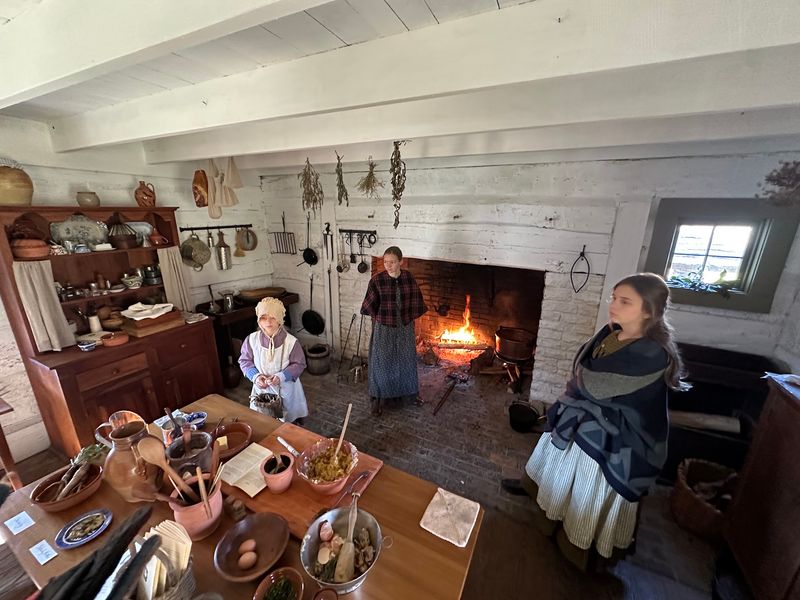
Every old place has stories, but Exchange Place has chapters that span centuries. The land’s history starts way back in 1756 with a massive 3,000-acre land grant. Imagine that much wilderness just waiting for someone brave enough to claim it.
Around 1820, John Strother Gaines established what became known as the Gaines Plantation. He didn’t just build a farmhouse and call it done. Gaines created a thriving operation that became a vital stop along the Great Stage Road, the main highway of its day.
Travelers relied on his relay station to swap out exhausted horses, exchange different types of currency, and pick up mail.
In 1845, Gaines made a deal that changed everything. He traded a significant chunk of his land, including the main house, to John Montgomery Preston.
Preston’s son James Wilson and his wife Catherine moved onto the property around 1850 and lived through some of Tennessee’s most turbulent years, including the entire Civil War period. They called it their “Tennessee Farm,” and the Preston family held onto the property for an incredible 125 years.
By 1970, the Preston descendants made a choice that preserved this piece of history for everyone. They donated a section of the homestead, which the Netherland Inn Association developed into the living history museum we can visit today.
That generous act kept these buildings and stories from disappearing under parking lots or strip malls.
The farm earned its spot on the National Register of Historic Places, officially recognized as a treasure worth protecting. Now run by dedicated volunteers as a nonprofit, Exchange Place continues its mission of showing visitors what daily life looked like for Appalachian settlers in the mid-1800s.
The stories embedded in these buildings and fields keep getting told to new generations.
Explore the Farmhouse, Barns, and Original Buildings
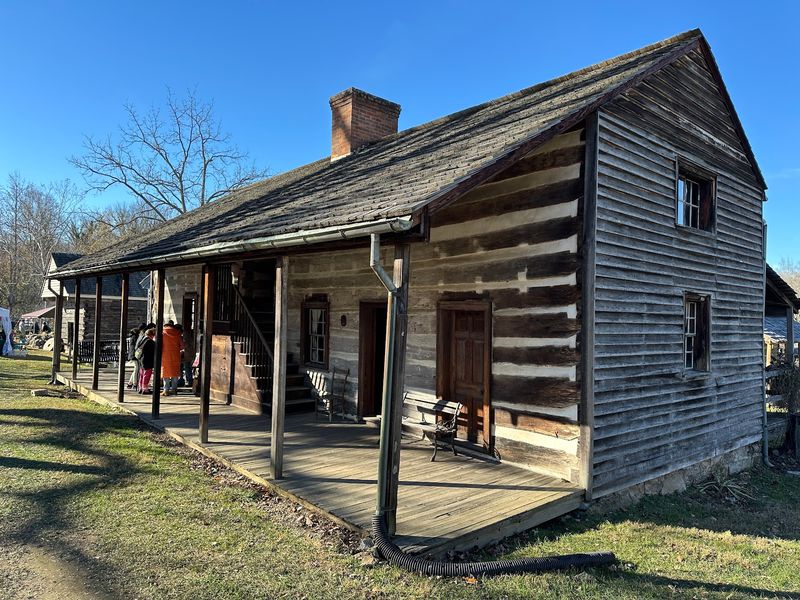
Eleven buildings wait for you to explore, and walking through them is like reading chapters in a history book written in wood and stone. The Preston House serves as the centerpiece, a “saddle bag” style double log house where the family actually lived.
Standing inside, you can almost hear the echo of conversations held around the fireplace on cold winter nights.
Each building served a specific purpose that kept the farm running. The Springhouse kept dairy products cool before anyone dreamed of refrigerators. The Smokehouse preserved meat for months using nothing but wood smoke and salt. The Kitchen stood separate from the main house because cooking fires posed such a serious danger.
The Cook’s Cabin tells a harder story. This small structure housed enslaved people who did much of the farm’s labor.
Seeing it reminds visitors that not everyone living here chose this life. History includes uncomfortable truths, and Exchange Place doesn’t shy away from them.
Other structures paint a picture of daily routines. The Schoolhouse shows where children learned their letters and numbers.
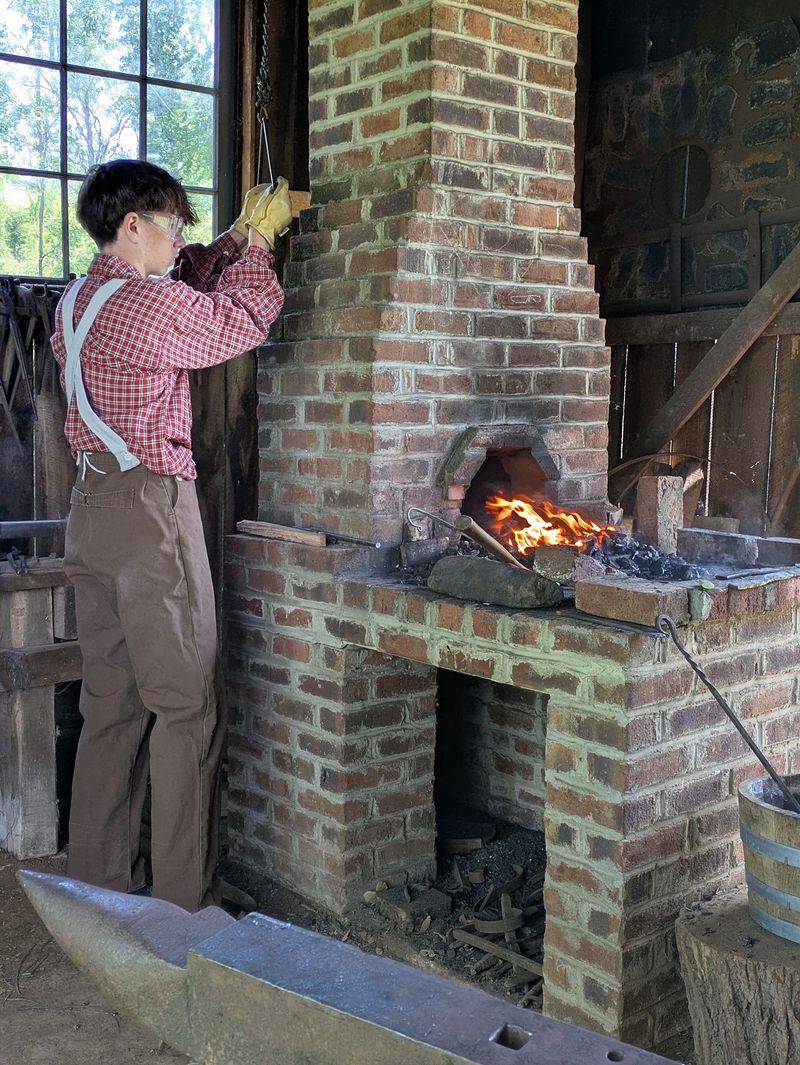
The General Store and Post Office recreate the community gathering spot where people caught up on news and gossip. The Blacksmith Shop still rings with the sound of hammer on anvil during demonstrations.
The Granary stored precious grain that meant survival through winter. The Woodshed held fuel for cooking and heating. The Log Barn sheltered animals and hay.
Two additional cabins, the Roseland and Gaines-Anderson, were moved to the site to show different building styles. The Gaines-Anderson is currently being restored to become the Burow Museum.
Between the buildings, heirloom gardens grow the same varieties of vegetables and herbs that fed families in the 1850s. These aren’t modern hybrid plants. They’re the actual types that pioneers carefully saved seeds from year after year, preserving flavors and traits that commercial farming has mostly forgotten.
Meet the Heritage Animals That Still Call the Farm Home
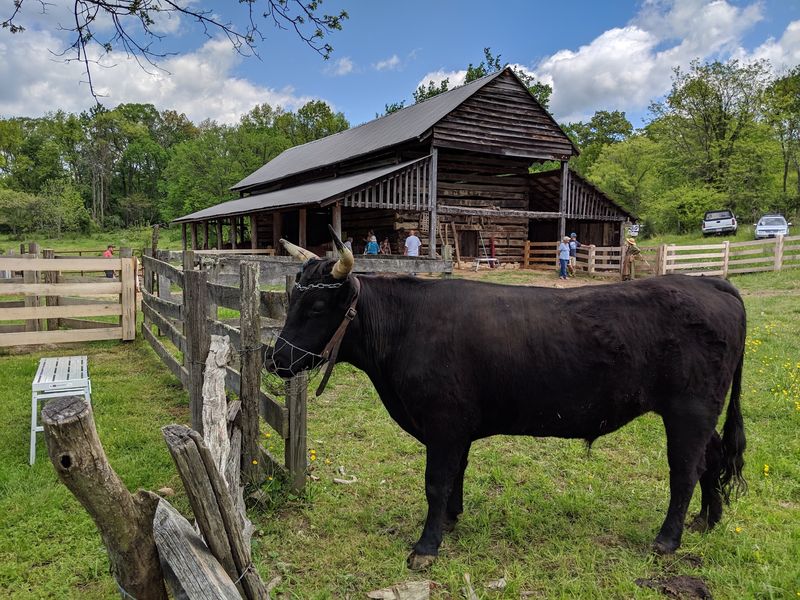
The animals here aren’t just cute additions to make kids smile. They’re living connections to the past, representing breeds that farmers actually relied on during the 1850s.
These heritage animals look different from the livestock you’d see on modern farms because they haven’t been bred for maximum production. They’re tougher, hardier, and closer to what their ancestors looked like.
Jenny the donkey greets visitors with her friendly personality. Donkeys served as essential work animals on small farms, carrying loads and pulling carts without the feed requirements of larger horses.
Bliss, the American Milking Devon cow, represents one of America’s oldest cattle breeds, valued for providing both milk and muscle power.
Lily, an American Guinea Hog piglet, belongs to a breed that nearly went extinct. These smaller pigs were perfect for family farms because they fattened on forage and table scraps instead of expensive grain.
The Dominique chickens pecking around the farmyard are America’s oldest chicken breed, recognized by their distinctive barred feathers.
Five Cotswold sheep graze the pastures, their long, lustrous fleeces prized for spinning. Tunis sheep, another heritage breed, adapt well to varying climates and produce both quality meat and wool.
The Milking Shorthorn cattle provided both dairy products and beef, making them economical choices for frontier families.
Suffolk draft horses demonstrate the power needed to plow fields and haul heavy loads before tractors existed. Watching these massive animals work gives you instant respect for the farmers who guided them through long days of labor.
Every dollar raised from admission fees goes directly toward feeding and caring for these animals. Maintaining heritage breeds costs more than keeping commercial livestock, but preserving these genetic lines matters.
If these breeds disappear, we lose centuries of careful selection for traits like disease resistance and adaptability. The animals at Exchange Place serve as a living gene bank and a reminder of farming before industrialization changed everything.
See Traditional Skills and Old-Fashioned Farm Life in Action
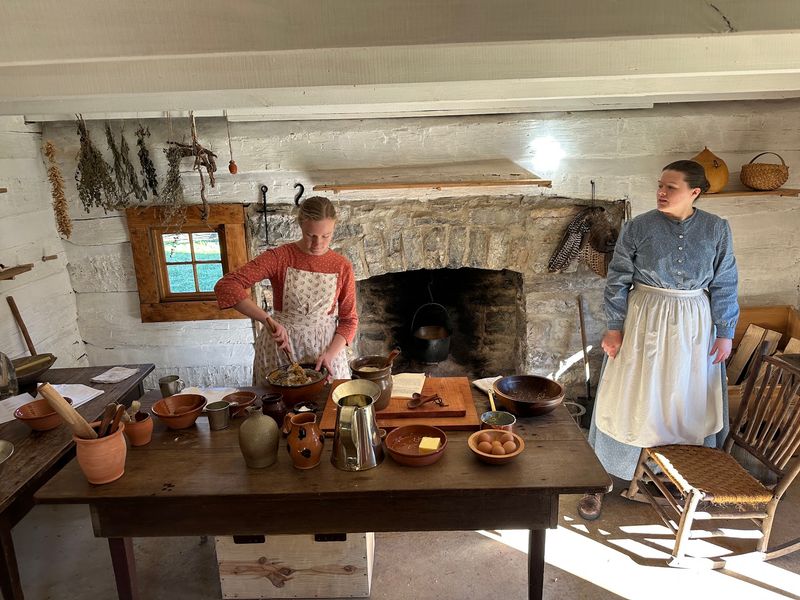
Watching someone cook over an open hearth changes how you think about making dinner. The Eden’s Ridge Hearth Cookery Society members tend cast iron pots hanging from hooks, adjusting heights to control temperature without any knobs to turn.
Every meal required skill, timing, and serious physical effort. No wonder families ate simpler food than we do.
At the blacksmith forge, sparks fly as volunteers shape glowing iron into useful objects. The ring of hammer on metal carries across the farmstead, just like it did when every community needed someone who could make and repair tools.
Kids watch wide-eyed as a chunk of iron gradually becomes a hook or hinge through nothing but heat and hammering.
Spinning demonstrations show how wool went from sheep to sweater. Volunteers card the fleece, removing tangles and debris, then spin it into yarn on wheels that look like they belong in fairy tales.
Some use great wheels that require standing and walking back and forth. Others work smaller wheels while seated.
Either way, it’s mesmerizing to watch fluffy wool transform into usable thread.
Weaving looms clack rhythmically as shuttles pass back and forth, creating cloth from those hand-spun threads. Seeing the entire process from sheep shearing to finished fabric makes you realize how much work went into something as simple as a shirt.
Modern clothing seems almost too cheap after witnessing this.
Seasonal activities keep the demonstrations fresh. Spring brings sheep shearing, where you can feel the thick fleece and smell the lanolin. Summer means butter churning, a task that gave kids sore arms. Fall features apple butter making and corn husk doll crafting. Winter includes candle dipping and soap making with lye.
Junior Apprentices, young volunteers learning these skills, add energy to the demonstrations. Watching kids master crafts like coopering (barrel making) or banjo construction proves these aren’t lost arts.
They’re just waiting for people willing to learn them again.
Seasonal Events Bring Exchange Place to Life
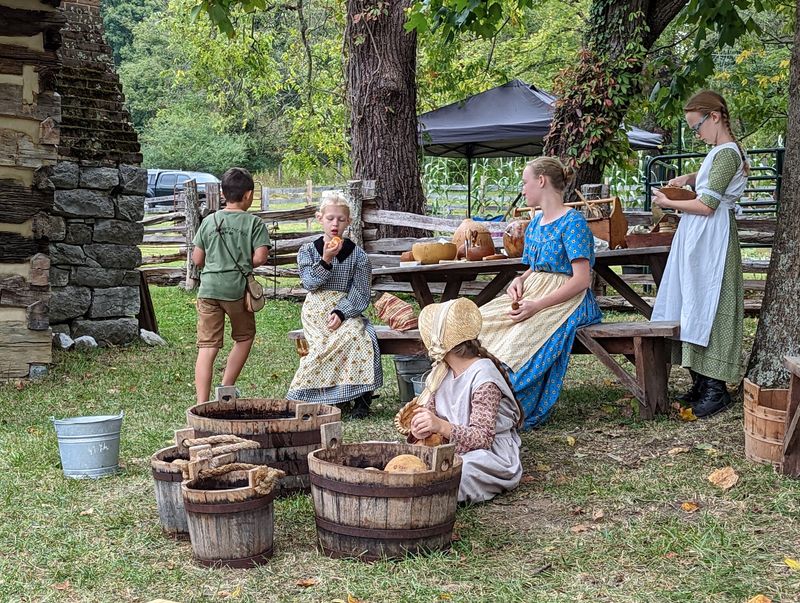
The farm truly wakes up during its seasonal festivals, when quiet buildings fill with music, demonstrations, and hundreds of visitors. The Spring Garden Fair in April transforms the grounds into a plant lover’s paradise.
Thousands of heirloom varieties tempt gardeners looking for tomatoes and flowers their grandparents grew. Vendors share growing tips while demonstrating sheep shearing and butter making.
Farm Fest typically happens in July and often offers free admission, making it perfect for families on a budget. Kids can try old-fashioned games that required nothing but imagination and maybe a stick or rope.
Watching children discover that fun existed before screens feels like a small victory.
September’s Fall Folk Arts Festival ranks as the biggest event of the year. Heritage artisans fill every building, showing off skills most people assumed were extinct.
The smell of kettle corn mixes with wood smoke while traditional musicians play instruments their great-grandparents would recognize. You can watch someone make a basket from scratch, then buy one to take home.
Witches Wynd in October adds a spooky twist with storytelling that raises goosebumps. The old buildings take on a different character as shadows lengthen and tales of mountain folklore fill the air.
It’s the perfect blend of history and Halloween spirit without being too scary for younger kids.
Christmas in the Country in December wraps up the year with festive warmth. The yule log ceremony connects visitors to ancient winter traditions.
Workshops teach crafts that make meaningful homemade gifts. Seeing the farmstead decorated for an 1850s Christmas, without electric lights or plastic decorations, reminds you that people celebrated with handmade beauty long before shopping malls existed.
Musicians performing on 19th-century instruments provide authentic soundtracks to these events. Their fiddles, dulcimers, and banjos play tunes that settlers danced to at barn raisings and corn shuckings.
The music alone makes attending worthwhile, transporting you back to when entertainment meant making it yourself.
What to Know Before Visiting Exchange Place in Kingsport
Finding Exchange Place is easy once you know where to look. The address is 4812 Orebank Road, Kingsport, TN 37664. Plug that into your GPS and you’ll wind up at the right spot. Just remember that the farm isn’t open daily like a regular museum.
Special events are your best bet for visiting, though you can arrange tours by appointment if you call ahead.
Admission prices stay reasonable, with most festivals charging just five dollars for anyone 12 and older. Kids under 12 get in free, which makes this an affordable family outing.
That entry fee might seem small, but it directly supports keeping the buildings maintained and the animals fed. Every dollar matters to this all-volunteer operation.
Before heading out, check their website for current event schedules and seasonal hours. Things can change, and you don’t want to drive all the way there only to find the gates closed.
Weather can also force cancellations, so a quick check of their social media on the day of your visit saves disappointment.
Wear comfortable shoes you don’t mind getting dirty. You’ll be walking across 62 acres of working farmland, which means grass, gravel, and possibly mud depending on recent weather.
Flip-flops are a bad choice. Sneakers or boots will serve you much better as you explore all the buildings and trails.
Most events don’t provide food or drinks, so pack water bottles and snacks, especially if you’re bringing kids. Walking around in summer heat works up a thirst faster than you’d expect.
Having your own supplies means you can stay longer without cranky, hungry children cutting your visit short.
The farm survives entirely on donations, fundraisers, memberships, and grants. No tax dollars keep this place running.
If you love what they’re doing, consider joining as a member or making a donation beyond your admission fee. For questions, call ahead or email [email protected]. The volunteers who answer are genuinely passionate about sharing this piece of Tennessee heritage with anyone willing to step back in time.
Share this story