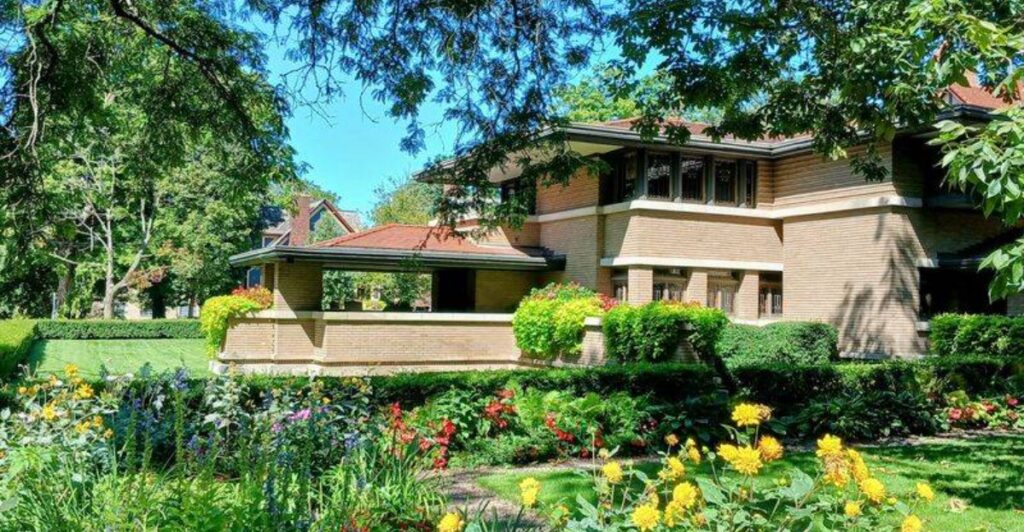
Architecture feels different when you can walk through the rooms instead of admiring it from a photograph. In Grand Rapids, Michigan, the Meyer May House gives visitors a rare chance to step inside a beautifully restored Frank Lloyd Wright home and experience his Prairie style up close.
The appeal comes from seeing how the low lines, open spaces, detailed furnishings, and careful design choices work together in a real living space. Free tours make the experience even more inviting, especially for anyone curious about architecture without wanting an expensive outing.
For design lovers, history fans, or curious travelers, this Grand Rapids landmark makes Wright’s ideas remarkably easy to see.
A Prairie House That Changes the Whole Street
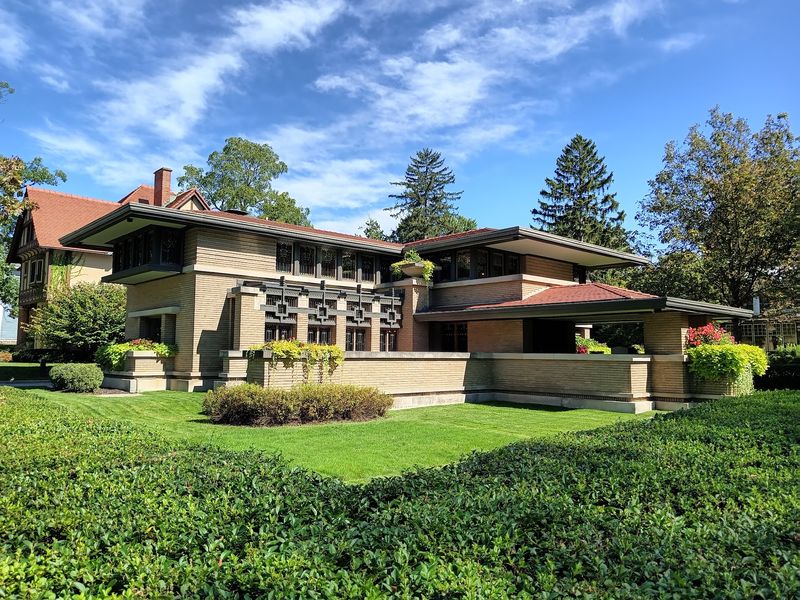
Some houses ask for attention with height or fancy decoration. The Meyer May House does the opposite.
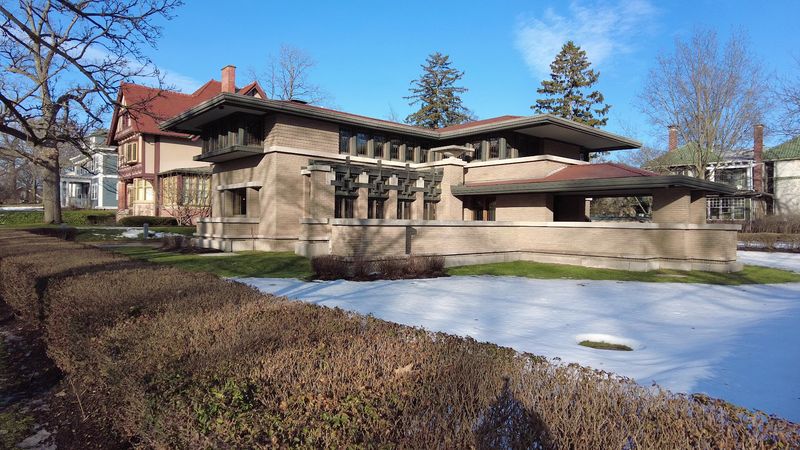
It stretches low and wide along Madison Avenue, using long rooflines, bands of windows, and strong horizontal shapes to pull your eyes across the property instead of up toward the sky.
That first impression matters because it introduces Frank Lloyd Wright’s Prairie style in a clear, easy-to-read way. The home looks grounded, almost as if it grew out of the lot.
Even before you enter, you can spot ideas Wright used again and again, including sheltering eaves, geometric balance, and a close link between the building and its landscape.
Plenty of historic homes impress from the curb, but this one creates a different kind of excitement. It feels orderly rather than flashy.
The lines are so controlled that small details, like the placement of windows and planters, begin to feel deliberate instead of decorative.
If you arrive a little early, spending time outside is a smart move. Walk slowly along the sidewalk and notice how the structure seems to unfold in sections.
From one angle, the house appears compact. Shift a few steps, and the design reveals a wider footprint and deeper layers.
That changing view is part of the fun. Wright designed homes to be experienced in motion, not understood in one quick glance.
At Meyer May House, the exterior already teaches that lesson before the tour even starts, which is one reason the place works so well for both architecture fans and curious first-time visitors.
By the time you head toward the visitor area, you have already learned to look more carefully. That makes everything inside more rewarding, because the house has trained your eyes before you cross the threshold.
Inside, the Light Does Half the Talking
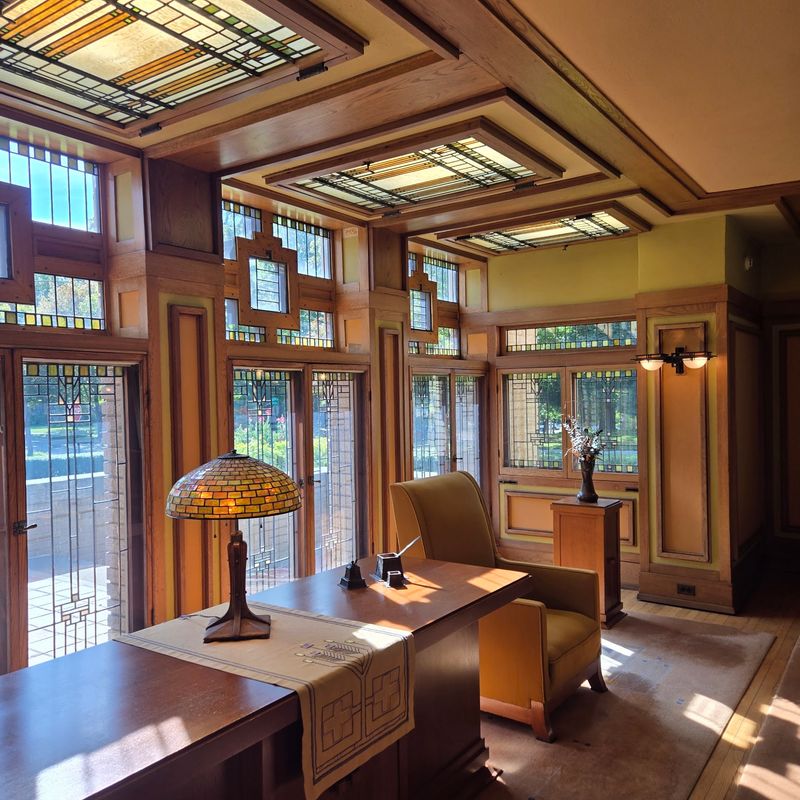
Once you step indoors, the biggest surprise is not size alone. It is the way light moves through the rooms.
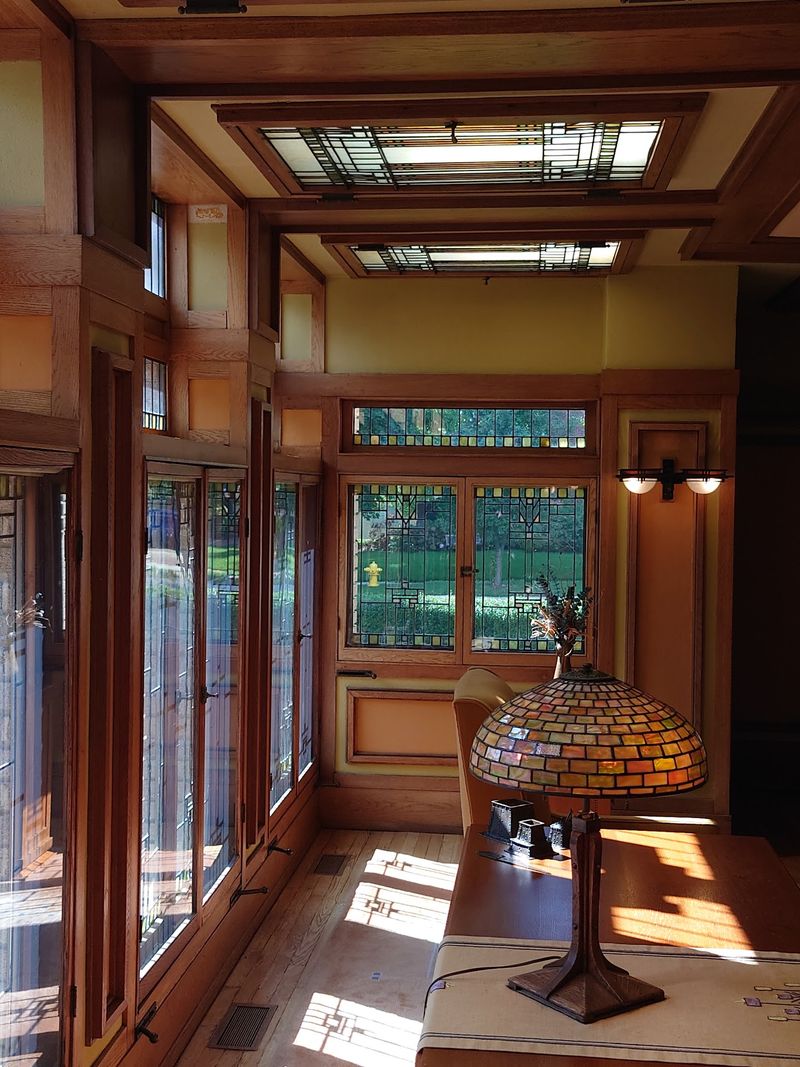
At Meyer May House, windows, art glass, and openings between spaces work together so sunlight becomes part of the design rather than just a practical feature.
Instead of flooding every room evenly, the house guides brightness in careful ways. Some areas glow softly through patterned glass.
Others open up with wider views that pull your attention toward the outdoors. That rhythm gives the interior a sense of calm, and it also helps you notice woodwork, furniture, and built-in features one layer at a time.
Wright’s homes are often praised for detail, but praise makes more sense when you can actually stand there and watch the pieces interact. A chair is not simply placed in a room.
A window is not just a window. Shapes repeat, lines continue, and materials speak to each other across the space.
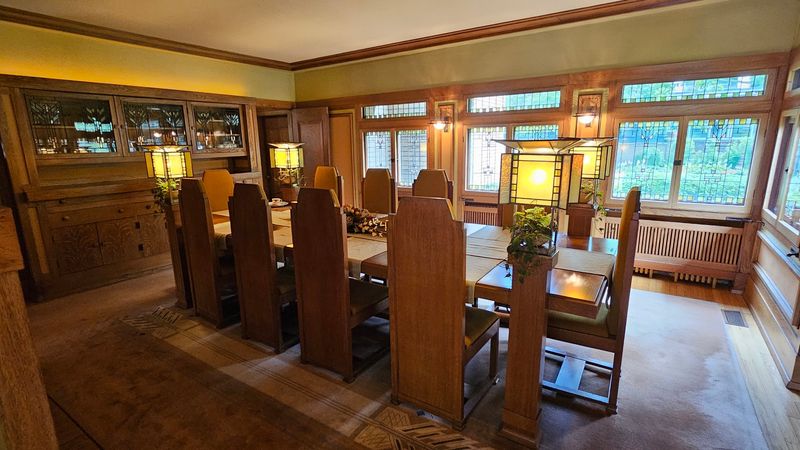
Here, you begin to understand why so many people leave talking about design rather than just age or history. The rooms are not stuffed with random period decoration.
They feel planned, measured, and connected. Even if you do not know architectural terms, you can still sense the logic.
If you enjoy taking in interiors slowly, this house rewards patience. Pause near the leaded glass and study the patterns.
Look at how low ceilings in one area can make the next space feel more open. Notice how the furnishings support the architecture instead of fighting it.
That quiet coordination is the real showpiece. Many old homes impress through ornament.
Meyer May House stands out because its beauty comes from control, proportion, and light, which makes the tour satisfying even for someone who usually thinks architecture is hard to understand.
The Restoration Story Is Part of the Main Event
Old houses often come with a short history lesson and a quick walk-through. Meyer May House takes a more revealing route.
Before the house tour, visitors typically watch a film about the restoration, and that extra context changes the entire experience in a useful way.
Seeing the home after learning what it took to bring it back gives every room more weight. You are not just looking at a handsome interior.
You are looking at a careful effort to recover Wright’s vision after years of change, wear, and loss. That makes even small details more interesting.
The restoration story adds a human layer without turning the visit into a dry lecture. Instead, it shows how preservation works in real life.
Homes like this do not simply survive on their own. They need research, patience, funding, and people willing to study original materials, furnishings, and design choices closely.
Because of that setup, the house tour has stronger momentum. You already know the broad outline before entering, so the guide can spend more time connecting visible features to the larger story.
A restored piece of furniture, a recreated pattern, or a repaired architectural element suddenly means more because you understand what was at stake.
If you usually skip introductory videos at historic sites, this is one place where staying for the full lead-in pays off. It helps first-time visitors keep up, and it gives architecture fans a deeper frame of reference.
The tour becomes less about walking room to room and more about seeing decisions brought back to life.
That balance between education and visual payoff is a big reason Meyer May House stands apart. You do not leave with only a few pretty images in your head.
You leave understanding why this home still exists in such striking form today.
Grand Rapids, Michigan Has a Frank Lloyd Wright Stop You Can Actually Access
Frank Lloyd Wright sites can sometimes feel distant, expensive, or difficult to fit into an ordinary day. Meyer May House offers a different kind of access.
In Grand Rapids, Michigan, you can visit a major architectural name in a neighborhood setting that still feels connected to the city around it.
The location helps more than you might expect. The house sits in Heritage Hill, an area already known for historic character, so the approach adds context before the official tour begins.
Sidewalks, mature trees, and surrounding homes create a sense of place that matches the age and significance of the property without turning it into a remote museum piece.
That local connection makes the visit appealing even if you are not a dedicated Wright follower. Maybe you are exploring Grand Rapids for a weekend.
Maybe you live nearby and want something different from the usual downtown stop. Either way, the house offers a compact cultural experience with a strong payoff.
Free admission is another major part of that accessibility. Historic architecture of this caliber often comes with a notable cost, but here the barrier is lower.
Space can be limited, so planning ahead is wise, yet the overall experience remains welcoming rather than exclusive.
There is also value in how manageable the visit feels. You do not need a whole vacation built around architecture to appreciate it.
The house works as a focused outing, especially for anyone who likes design, history, neighborhoods, or unusual local landmarks that reveal a city’s personality.
By placing a restored Prairie home within reach of everyday travelers, Meyer May House broadens the audience for architecture. You can come in curious, not expert, and still walk away with a clear sense of why Wright’s work changed American residential design.
Docents Turn the Design Into a Real Conversation
A beautiful house can hold your attention for a while, but a strong guide helps you see beyond surfaces. At Meyer May House, the docent-led format gives the tour shape, detail, and momentum.
Instead of wandering through attractive rooms with only a brochure, you get a fuller explanation of how the home works.
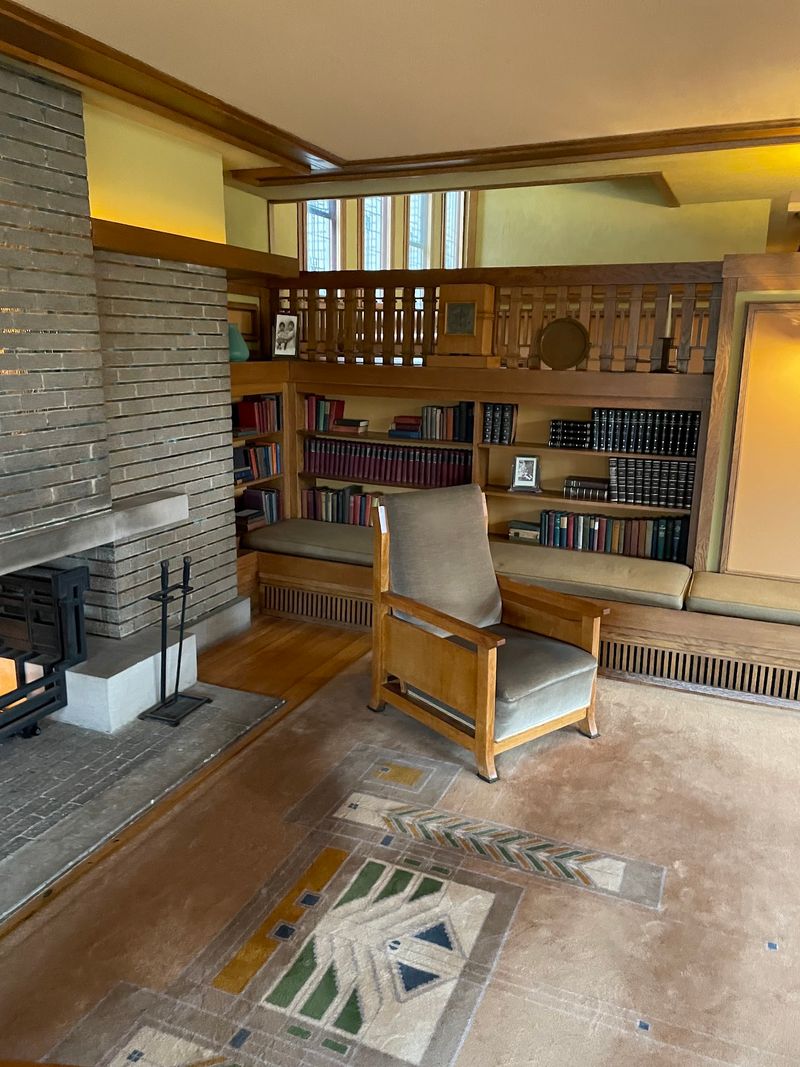
That matters in a Wright house because so much can be missed at first glance. A guide can point out repeated geometric patterns, explain how certain spaces were meant to be used, and connect the furnishings to the architecture around them.
Once those details are highlighted, the rooms become easier to read.
The best part is that the information does not have to feel heavy. A knowledgeable docent can keep the experience moving while answering questions in a plain, practical way.
That makes the house approachable for mixed groups where one person loves architecture, another prefers history, and someone else just wants to see an unusual place.
Guided tours also help with pacing. Rather than rushing toward a big room and missing everything in between, you are encouraged to notice transitions, built-ins, sightlines, and craftsmanship.
Those slower observations are where the house starts to reveal its intelligence.
If you are bringing a friend or family member who is unsure about touring a historic home, this format can make a real difference. There is a story to follow, not just a collection of old objects.
Questions are welcome, and the conversation can turn abstract design ideas into examples you can actually see.
By the end, the house no longer seems like an architectural puzzle meant only for specialists. It reads as a lived-in design statement, thoughtfully explained by people who know how to make its details click.
That human bridge between building and visitor is one of the strongest parts of the whole experience.
Plan Around the Hours and You Will Have a Better Visit
Nothing spoils a good outing faster than showing up to a landmark and finding locked doors. Meyer May House is easy to enjoy once you know the rhythm, but it is not a drop-in site with broad daily hours.
A little planning goes a long way here.
The house is open for tours only on limited days and times, with public hours typically centered on Tuesday, Thursday, and Sunday. That schedule makes sense for a carefully managed historic property, yet it also means casual last-minute travelers need to pay attention.
Reservations are often recommended because tour space can fill up.
For the smoothest experience, treat the visit like a timed event rather than a quick errand. Give yourself enough room in the day for the introductory film and the guided portion of the tour.
Rushing in late could mean missing the context that makes the house much easier to appreciate.
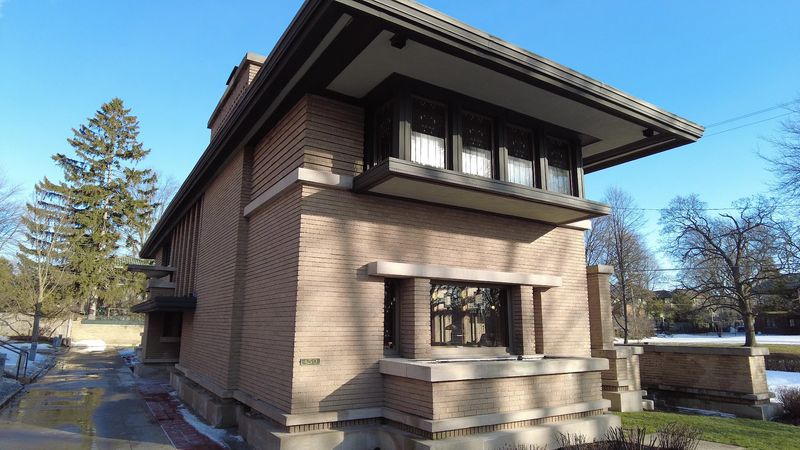
Arriving early also gives you a chance to look at the exterior and settle into the setting. The neighborhood is pleasant for a short walk, and even a few extra minutes outside can sharpen your eye for the horizontal lines and carefully arranged windows you will hear about later.
If indoor tour hours do not fit your schedule, the property can still reward a brief exterior stop. The outside alone offers a strong look at Wright’s Prairie ideas, and the grounds help frame the architecture nicely.
That said, the interior is where the deeper story unfolds, so planning ahead is the smarter move.
Practical details may not sound glamorous, but they can shape the entire visit. At Meyer May House, good timing turns a missed opportunity into a polished architectural outing.
Show up prepared, allow enough time, and the experience becomes much more relaxed from start to finish.
Why This House Lands So Well, Even If You Are Not an Architecture Buff
Not every landmark can win over both dedicated architecture fans and people who simply tagged along for the afternoon. Meyer May House manages that trick with surprising ease.
The visit is layered, but it never asks you to arrive with expert knowledge or a deep interest in design theory.
Part of the appeal comes from scale. This is a home, not a giant institution, so the experience feels personal and readable.
You can grasp the layout, notice repeating ideas, and connect individual rooms to the bigger design without getting overwhelmed by too much information at once.
The house also gives you more than one way in. Some visitors lock onto the history.
Others respond to the restoration story, the craftsmanship, the furniture, or the simple pleasure of seeing sunlight move through patterned glass. Because the place offers several points of entry, it rarely feels narrow or academic.
There is a nice contrast at work too. From the street, the home appears controlled and disciplined.
Inside, the design becomes warmer and more intimate. That shift keeps the tour lively, especially for people who expect historic architecture to feel stiff or untouchable.
Free admission helps remove hesitation, but price alone is not why the house lands so well. The stronger reason is clarity.
Meyer May House explains itself through form, light, and thoughtful interpretation. You do not need someone to insist that it matters.
Once you are in the rooms, the evidence is right in front of you.
That is what makes the stop so satisfying. It offers a nationally recognized architectural name, a strong local setting, a restoration story with real substance, and a tour format that respects your time. In one visit, the house turns a famous style into something concrete, visible, and easy to enjoy.
Share this story