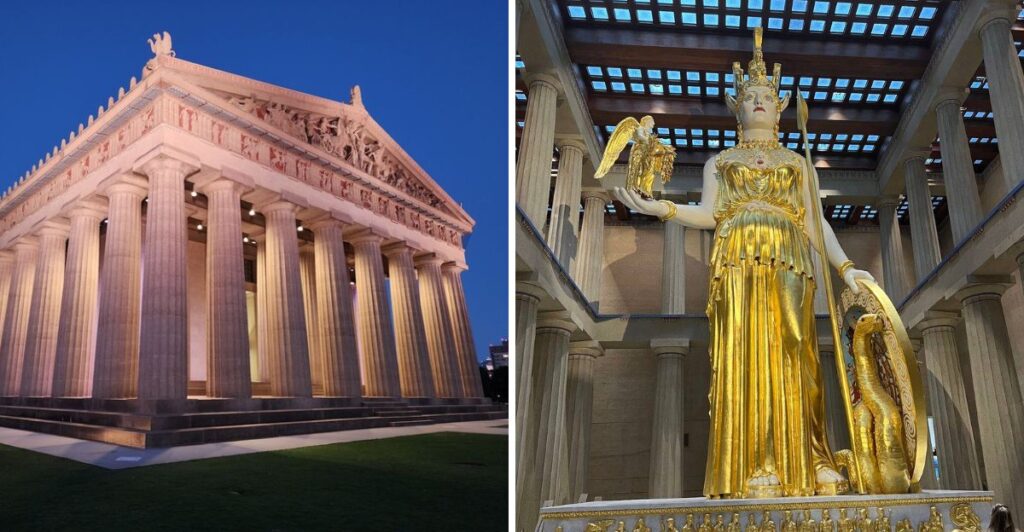
Nashville might be famous for honky-tonks and hot chicken, but it’s also home to something completely unexpected: a full-scale replica of the ancient Greek Parthenon. Built in 1897 for Tennessee’s Centennial Exposition, this architectural marvel was supposed to be temporary but became so beloved that the city rebuilt it in permanent materials. Today, it stands proudly in Centennial Park, complete with a jaw-dropping 42-foot statue of Athena inside that rivals anything you’d find across the Atlantic.
A Full-Scale Architectural Wonder That Defies Expectations
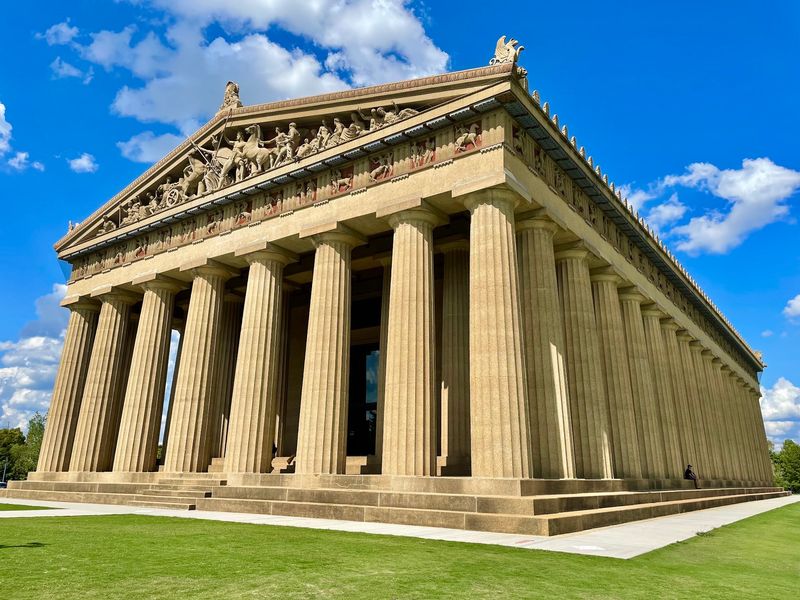
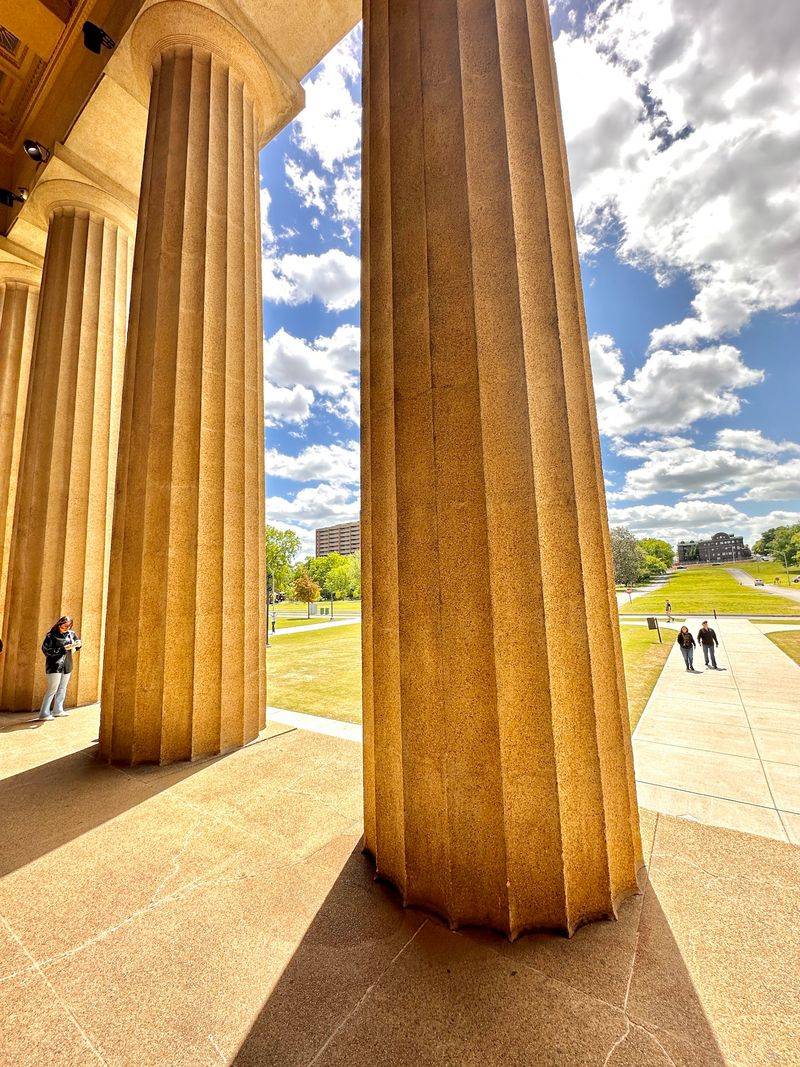
Most people do a double-take when they first spot this massive Greek temple sitting in the middle of a Nashville park. The structure measures exactly the same dimensions as the original Parthenon in Athens, right down to the last inch. Walking up to those towering Doric columns gives you an immediate sense of just how ambitious ancient Greek architecture really was.
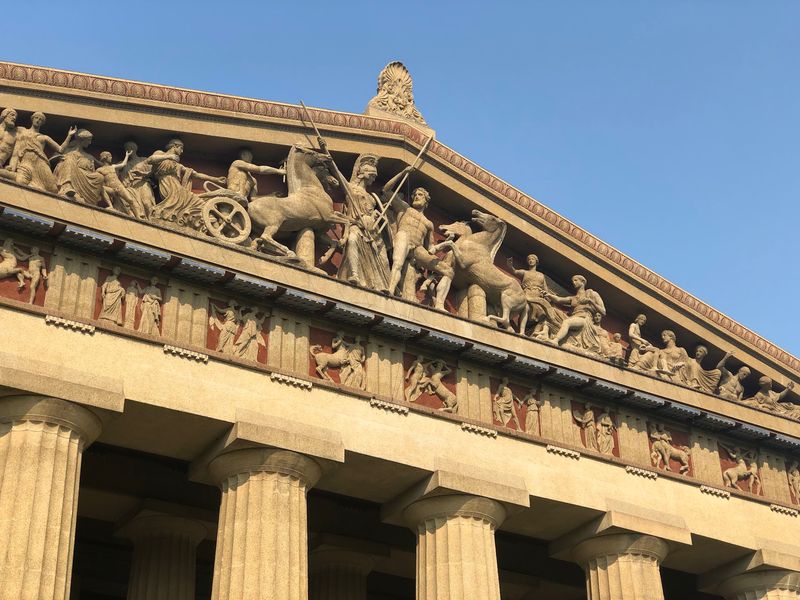
The exterior alone is worth the trip. Forty-six columns surround the building, each one meticulously crafted to match the proportions of the original. The pediments feature elaborate sculptural recreations depicting scenes from Greek mythology, including the birth of Athena and her contest with Poseidon for Athens.
These aren’t just decorative touches either. They’re faithful reproductions based on archaeological research and historical records.
What makes this even more remarkable is that Nashville’s version is actually more complete than what remains in Greece today. Centuries of war, pollution, and weathering have taken their toll on the original, but Tennessee’s replica shows visitors what the Parthenon looked like in its prime. The cream-colored concrete gives you a sense of the ancient marble without the 2,500 years of damage.
Walking around the exterior is completely free, which makes it accessible for anyone wanting to experience this architectural masterpiece. A self-guided audio tour is available via QR code right on the sidewalk, packed with fascinating details about the construction and symbolism. The building looks especially stunning at sunset when the golden light hits those columns just right.
Many locals come here regularly just to walk the grounds and soak in the grandeur.
Even if the interior is closed for renovations (which happens occasionally), the exterior experience alone justifies the visit. The sheer scale of the building photographs beautifully from every angle, and the surrounding park provides plenty of vantage points. This is architectural tourism at its finest, no passport required.
The Breathtaking 42-Foot Athena Statue That Dominates The Interior
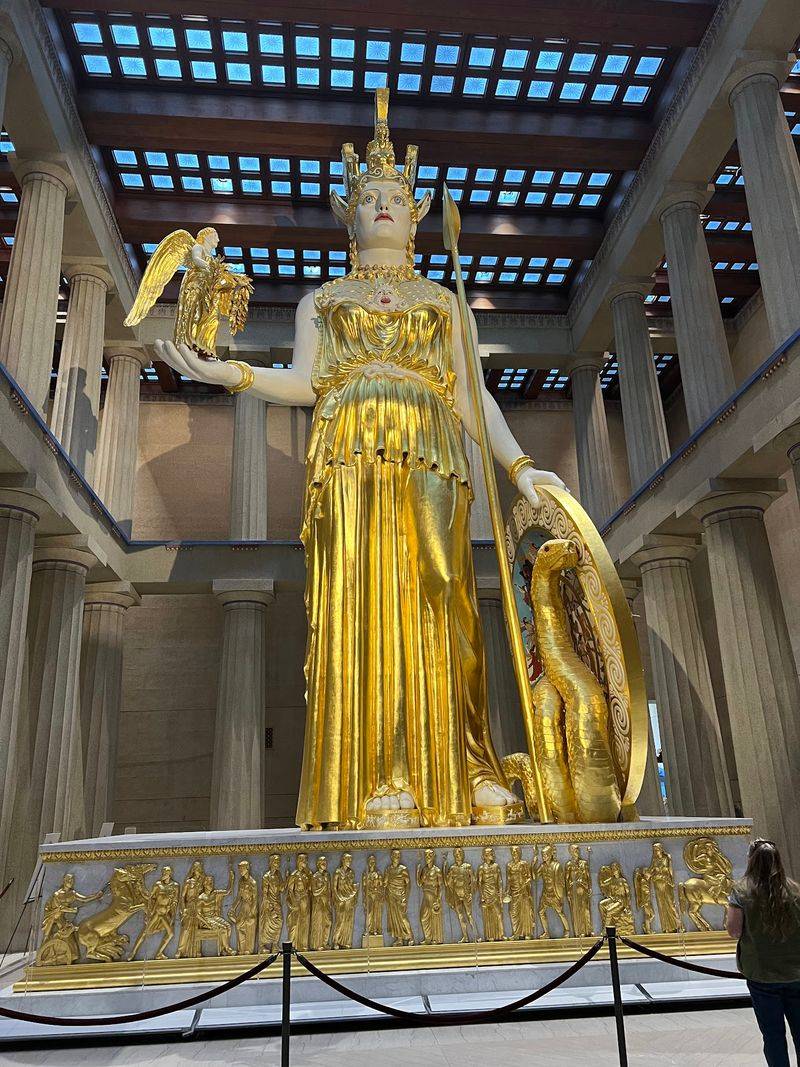
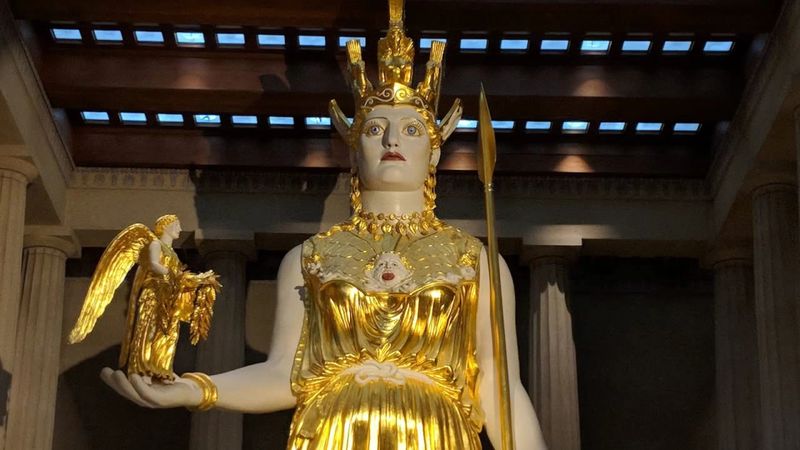
Step inside and prepare to have your breath taken away. The statue of Athena Parthenos towers over you at 42 feet tall, making it the largest indoor sculpture in the Western world. Covered in gold leaf and adorned with intricate details, she’s an overwhelming presence that commands absolute attention the moment you enter the room.
Artist Alan LeQuire spent eight years creating this masterpiece, which was unveiled in 1990. The statue recreates what scholars believe the original Athena by Phidias looked like in ancient Athens. Her right hand holds Nike, the goddess of victory, who herself stands an impressive 6 feet 4 inches tall.
Her left hand rests on a shield decorated with scenes from the battle between Greeks and Amazons.
The gold leaf alone required over 8 pounds of the precious metal, applied in sheets so thin they’re almost transparent. The result is a gleaming figure that seems to glow from within, especially under the museum’s carefully designed lighting. The level of detail is staggering when you look closely.
From the serpents on her aegis to the tiny figures carved on her helmet, every element tells a story from Greek mythology.
Visitors often spend 20 minutes or more just standing beneath Athena, taking in different details from various angles. There’s even a fun interactive display that lets you compare your height to Nike’s, which usually surprises people who didn’t realize the smaller figure was taller than most basketball players. Photography is allowed, though capturing the statue’s full majesty in a photo proves nearly impossible.
The documentary playing in the museum explains the painstaking recreation process, from the research into ancient techniques to the modern engineering required to support such a massive sculpture. Understanding the work that went into bringing Athena to life makes seeing her in person even more impressive.
An Art Museum Hidden Inside A Greek Temple
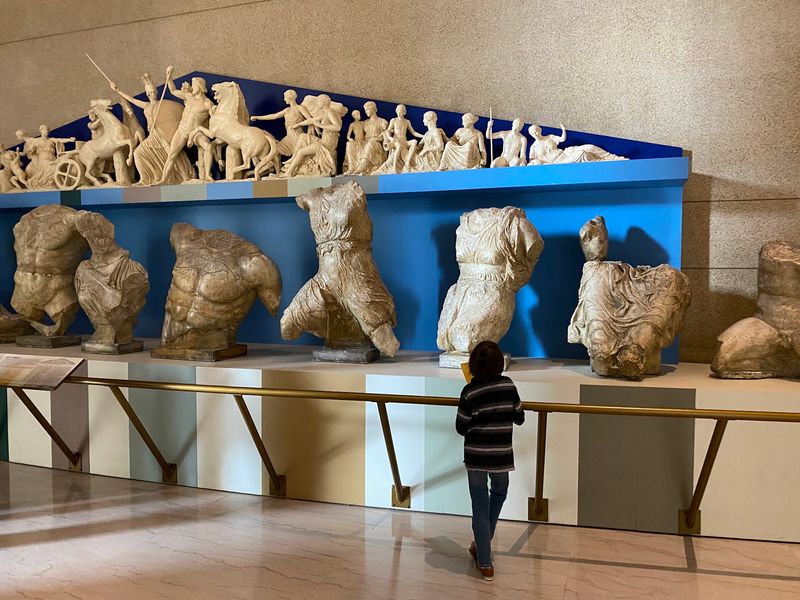
Beyond Athena, the Parthenon functions as a legitimate art museum housing an impressive permanent collection of American art. The upstairs galleries showcase 63 paintings spanning the 19th and 20th centuries, offering a surprising cultural depth that many visitors don’t expect. This combination of ancient Greek architecture and American artistic heritage creates a unique museum experience you won’t find anywhere else.
The collection focuses on American artists who studied or worked in the academic tradition, with particular emphasis on painters who trained in Europe and brought those techniques back home. You’ll find landscapes, portraits, and genre scenes that provide a window into American life during a transformative period in the nation’s history. The quality of the works is genuinely museum-grade, not just filler to occupy space.
What’s particularly clever is how the galleries are integrated into the building’s design. The rooms maintain the classical architectural elements while providing proper lighting and climate control for the artwork. Walking through these spaces, you get both the grandeur of Greek design and the intimacy of a traditional art gallery.
It’s like experiencing two museums for the price of one admission.
Temporary exhibitions rotate throughout the year, often featuring contemporary artists or thematic shows that connect to Tennessee’s cultural heritage. The museum also hosts an annual student art competition, with winning works displayed alongside the permanent collection. This commitment to nurturing local talent adds a community dimension that makes the Parthenon more than just a tourist attraction.
Many visitors admit they came just for Athena but ended up spending an hour exploring the art galleries. The plaques provide context without overwhelming you with academic jargon, making the collection accessible even if you’re not an art history expert. For anyone who enjoys museums, this second-level gallery justifies the modest admission fee all by itself.
Centennial Park’s Green Oasis Surrounding The Monument
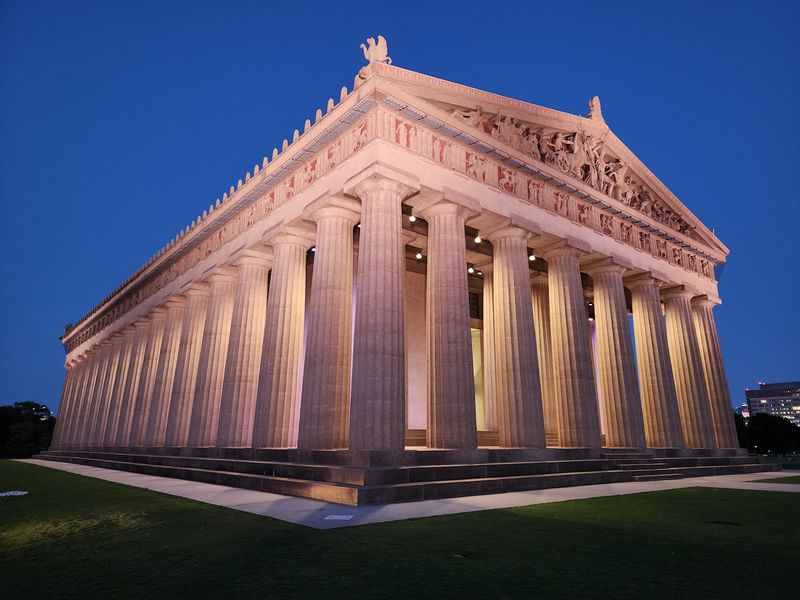
The Parthenon doesn’t exist in isolation. It anchors Centennial Park, a sprawling 132-acre green space that serves as Nashville’s premier urban park. The building’s dramatic setting, perched on a gentle rise overlooking a peaceful lake, creates picture-perfect views from multiple angles.
This isn’t just a monument you visit and leave; it’s the centerpiece of an entire outdoor experience.
Locals treat this park as their backyard, and you’ll see that community spirit in action any day of the week. Families spread blankets on the lawn for picnics, dogs chase frisbees across the open fields, and joggers loop the pathways that wind through the grounds. The diversity of people using the space gives it an authentic neighborhood feel that contrasts beautifully with the grandeur of the Greek temple watching over everything.
The lake adds another dimension to the experience. Geese and ducks paddle around the water, and while you can’t feed them (and the park doesn’t sell feed), watching them go about their business provides a surprisingly relaxing break from sightseeing. A walking path circles the water, offering constantly changing perspectives on the Parthenon as you stroll.
At sunset, the reflections on the lake create Instagram-worthy moments that capture why this spot means so much to Nashville residents.
Beyond the Parthenon itself, the park contains other points of interest worth exploring. A women’s suffrage monument stands near the building, and various sculptures and art installations dot the landscape. During warmer months, the park hosts concerts, festivals, and community events that transform the space into a cultural hub.
Even on quiet days, the park’s mature trees and thoughtfully designed landscaping make it a genuine urban retreat.
Plan to spend at least two hours here if you want to truly experience both the monument and its setting. The combination of classical architecture and accessible green space explains why this ranks among Nashville’s most beloved public spaces.
The Fascinating Story Behind Nashville’s Greek Obsession
Nashville’s nickname “Athens of the South” predates the Parthenon by decades, but building a full-scale Greek temple certainly sealed the deal. The city earned that moniker in the 1850s due to its focus on education and culture, with numerous colleges and universities establishing themselves here. When Tennessee planned its Centennial Exposition for 1897, civic leaders decided a temporary Parthenon would perfectly represent Nashville’s classical aspirations.
The original structure was built from wood, brick, and plaster, designed to last only six months. But Nashvillians fell so completely in love with their Parthenon that they couldn’t bear to tear it down. For decades, the temporary building stood in the park, slowly deteriorating until it became structurally unsafe.
Rather than lose their beloved landmark, the city committed to rebuilding it in permanent materials during the 1920s, using poured concrete that would last centuries.
This rebuilding process took meticulous research and dedication. Architects studied the ruins in Athens, pored over historical texts, and consulted with classical scholars to ensure accuracy. The bronze doors alone weigh 7.5 tons each and required specialized casting techniques.
Every detail, from the column spacing to the pediment sculptures, was carefully calculated to match the original as closely as modern knowledge allowed.
The decision to add the Athena statue came later, in the 1980s, when civic leaders realized the interior space felt incomplete without the goddess who once stood in the original. Artist Alan LeQuire took on the challenge, creating something that hadn’t existed for over 1,500 years. The statue’s unveiling in 1990 finally made Nashville’s Parthenon truly complete, inside and out.
Understanding this history transforms how you see the building. This isn’t just a quirky roadside attraction or a piece of kitsch. It represents over a century of Nashville’s commitment to education, culture, and classical ideals.
The fact that the city chose to preserve and perfect this monument speaks volumes about what Nashville values beyond its famous music scene.
Percy Jackson Film Location And Pop Culture Appeal
For a whole generation of visitors, the Nashville Parthenon holds special significance as a filming location for the Percy Jackson movie. Scenes from “Percy Jackson & The Olympians: The Lightning Thief” were shot here, bringing the building to the attention of young readers who devoured Rick Riordan’s mythology-based adventure series. Walking the same halls where Percy Jackson battled the Hydra adds an extra layer of excitement for fans.
This pop culture connection has introduced countless families to classical architecture and Greek mythology in ways that traditional education sometimes struggles to achieve. Kids who might otherwise find ancient history boring suddenly want to know everything about Athena, the Parthenon, and Greek gods. Parents report their children dragging them through every exhibit, eager to spot details mentioned in the books or seen in the film.
The museum has embraced this connection without letting it overshadow the building’s historical and artistic significance. Staff members are well-versed in fielding questions about the movie, and they use that enthusiasm as a gateway to deeper conversations about mythology and architecture. It’s educational outreach through the back door, and it works remarkably well.
Beyond Percy Jackson, the Parthenon’s dramatic appearance has made it a favorite location for photographers, music videos, and special events. The building’s timeless elegance provides a backdrop that elevates any occasion, from weddings to fashion shoots. Its presence in various media has helped establish Nashville’s identity as more than just a country music destination, showcasing the city’s unexpected cultural depth.
Even Taylor Swift fans make pilgrimages here, seeking out her bench by the pond where she used to sit and write songs. The park has become a nexus where different fandoms and interests intersect, all drawn by the Parthenon’s magnetic presence. This layering of modern pop culture onto ancient classical architecture creates a uniquely contemporary experience that somehow feels completely natural in Music City.
Practical Visitor Information And Insider Tips
Admission to the Parthenon runs about $15 for adults, which represents exceptional value considering what you get to experience. However, if you’re planning multiple visits or want to support this cultural institution, a Centennial Park Conservancy membership costs roughly the same as two admissions and provides unlimited entry for a year. Locals who visit regularly swear by this option, and it includes supporting the park’s ongoing preservation efforts.
The Parthenon operates Tuesday through Saturday from 9 AM to 4:30 PM, with Sunday hours starting later at 12:30 PM and running until 4:30 PM. It’s closed Mondays, so plan accordingly. Arriving on weekday mornings typically means smaller crowds and a more contemplative experience, while weekends bring more families and energy.
Either timing works, depending on what atmosphere you prefer.
Parking is free in the lot adjacent to the building, though spaces fill up quickly on nice weekend days. If the main lot is full, street parking along West End Avenue usually offers alternatives within a short walk. The park is also accessible via Nashville’s public transit system, making it easy to include in a larger itinerary of city attractions.
Photography is permitted throughout the building, but flash photography is prohibited to protect the artwork. The lighting inside is designed to showcase Athena and the galleries beautifully, so you can get great photos without flash anyway. Take your time composing shots from different angles, especially on the upper level where you can capture unique perspectives on the statue.
Budget at least an hour for your visit if you want to see everything properly, though two hours allows for a more relaxed pace with time to read the informational plaques and watch the documentary. The building occasionally closes for HVAC upgrades or other maintenance, so checking the website or calling ahead prevents disappointment. Even when the interior is closed, the exterior and surrounding park remain accessible and worth experiencing.
Combining your Parthenon visit with a longer exploration of Centennial Park makes for a perfect Nashville afternoon that costs less than most tourist attractions while delivering more genuine cultural value.