Tennessee transforms into a canvas of reds, oranges, and golds every autumn, offering some of the South’s most breathtaking fall displays. From the high peaks of the Appalachians to the cypress swamps of the western lowlands, the state’s diverse landscapes mean you can experience completely different versions of autumn depending on where you go.
Whether you’re after dramatic mountain overlooks, quiet lakeside reflections, or winding country roads through farmland, Tennessee delivers fall color in ways that feel both grand and intimate.
1. Roan Mountain State Park
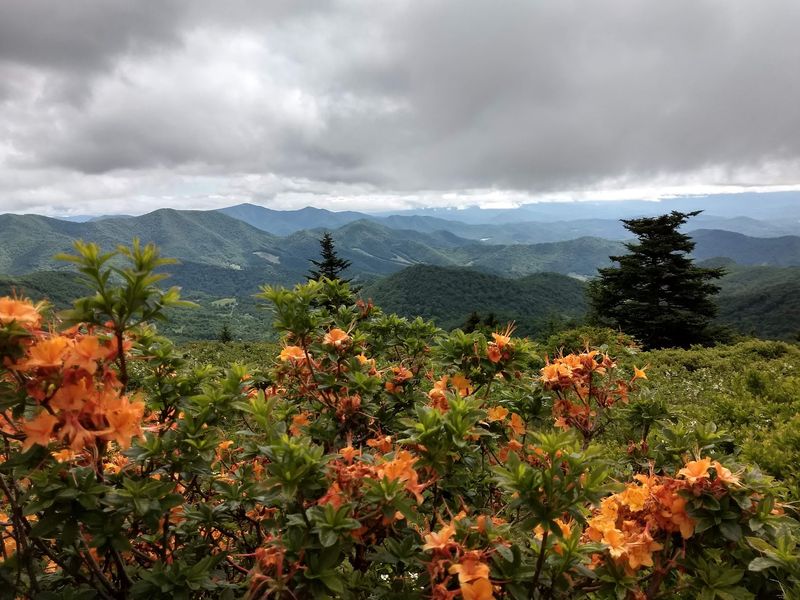
Perched along the North Carolina border, Roan Mountain sits high enough that fall arrives earlier and burns brighter than almost anywhere else in Tennessee. The elevation pushes trees into showing off their best colors by early-to-mid October, and when conditions align, the entire mountainside glows like it’s been set on fire.
You’ll find dense forests of maples, birches, and beeches that turn the trails into tunnels of gold and crimson.
The park itself covers more than 2,000 acres, but the real draw is the surrounding Cherokee National Forest and the Appalachian Trail, which cuts right through the area. If you’re up for a moderate hike, the Cloudland Trail takes you to some of the highest balds in the region, where open meadows give way to 360-degree views of ridgelines stacked in layers of color.
On clear days, you can see into three states.
Roan Mountain also offers a quieter fall experience than the Smokies, even though the scenery rivals anything you’d find there. The trails tend to be less crowded, and the campground stays peaceful well into October.
If you’re not into serious hiking, the park has plenty of shorter, family-friendly paths that still deliver big autumn payoff.
One underrated perk is the Rhododendron Gardens, which might seem like a June attraction, but in fall the surrounding hardwoods create a striking contrast with the evergreen rhododendron thickets. The combination of high-altitude forests, open balds, and mountain air makes Roan Mountain feel like the kind of place where fall was invented.
2. House Mountain State Natural Area
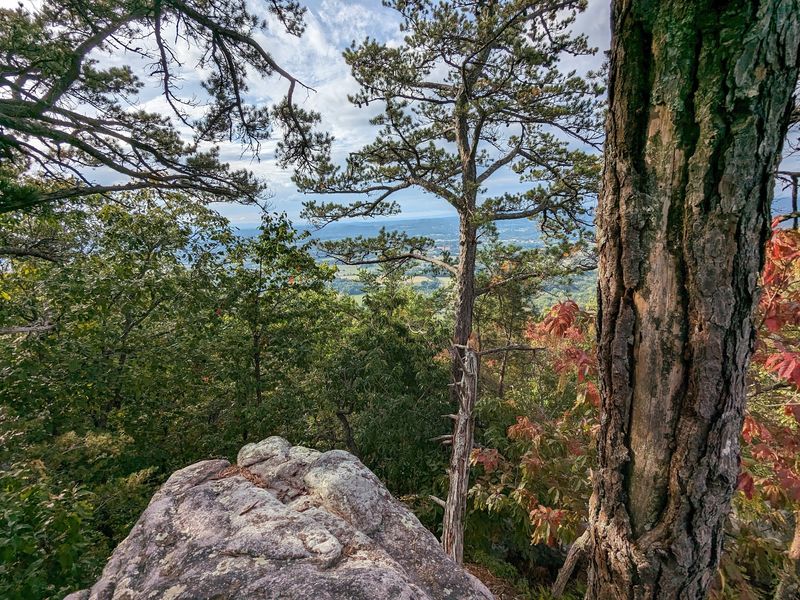
House Mountain rises 2,064 feet above Knox County, making it the tallest peak around and one of East Tennessee’s best-kept secrets for fall color. While tourists pile into the Smokies, locals who know better head here for a rewarding climb and views that stretch across multiple mountain ranges.
The trail to the summit isn’t a walk in the park, but it’s manageable for anyone with decent stamina and a little patience.
What makes this spot special is the variety of landscapes you pass through on the way up. You start in mixed hardwood forest that explodes with color in October, then climb through rockier terrain where the trees thin out and the views start opening up.
By the time you reach the top, you’re standing above a patchwork of farmland, ridgelines, and distant peaks that include the Smokies, Cumberland Mountains, and Clinch Mountain Range.
The summit offers two main overlooks, one facing east and one west, so you can catch sunrise or sunset depending on when you arrive. Fall mornings are particularly stunning when mist fills the valleys below and the sun lights up the trees like stained glass.
The hike takes most people around two hours round trip, though you’ll want to budget extra time for soaking in the views and snapping photos.
Because House Mountain sits just 30 minutes from Knoxville, it’s an easy day trip that doesn’t require the same level of planning as a Smokies adventure. The parking area is small, so weekends can fill up, but even on busy days the trail never feels overrun.
Pack water, wear sturdy shoes, and bring layers since the summit can be breezy. This is the kind of place that reminds you why Tennessee’s fall season has such a devoted following.
3. Beauty Spot
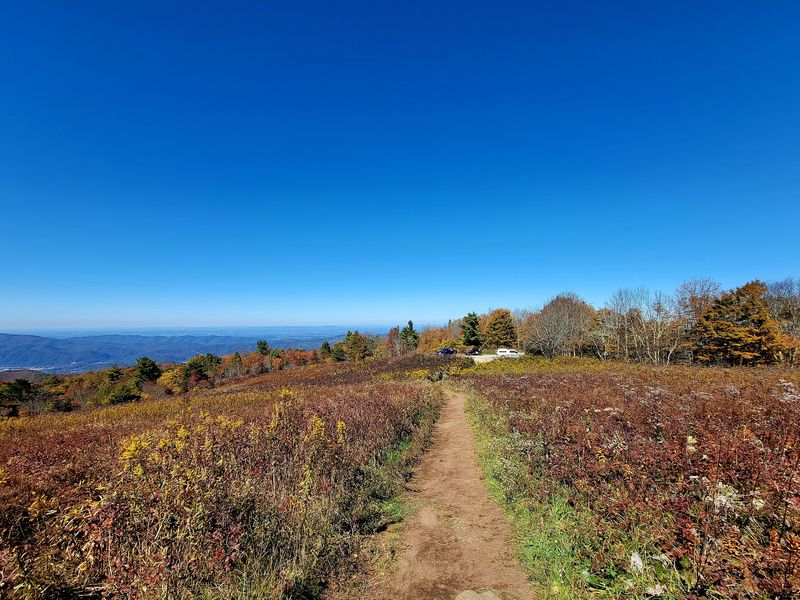
Tucked into the far northeastern corner of Tennessee, Beauty Spot lives up to its name in a way that feels almost unfair to other scenic overlooks. This high-elevation clearing sits at around 4,437 feet and offers unobstructed views across wave after wave of Appalachian ridges, all dressed in fall’s finest by mid-October.
Getting there requires a bit of effort, but that’s part of the appeal since it keeps the crowds thin and the experience intimate.
The spot itself is a grassy bald surrounded by Cherokee National Forest, meaning you’re standing in the middle of thousands of acres of protected wilderness. On clear autumn days, the views extend for miles, with layers of mountains fading into blue haze on the horizon.
The surrounding forest transitions through every shade of red, orange, and yellow, and the contrast between the open meadow and the forested slopes creates a landscape that feels both expansive and cozy.
If you’re feeling adventurous, you can extend your visit by exploring nearby Pinnacle Mountain Fire Tower or Nolichucky Ridge Cliff, both of which offer their own versions of fall drama. The fire tower gives you an even higher vantage point, while the cliff provides a more rugged, edge-of-the-world feeling.
These lesser-known spots mean you can spend an entire day chasing autumn views without retracing your steps.
Access to Beauty Spot involves driving forest roads that can be rough in spots, so a vehicle with decent clearance helps, though it’s not absolutely necessary. The final stretch is a short walk from the parking area, easy enough for most visitors.
Bring a jacket since the wind picks up at this elevation, and consider packing a picnic because you’ll want an excuse to linger. This is the kind of place that makes you feel like you’ve discovered something rare.
4. Foothills Parkway
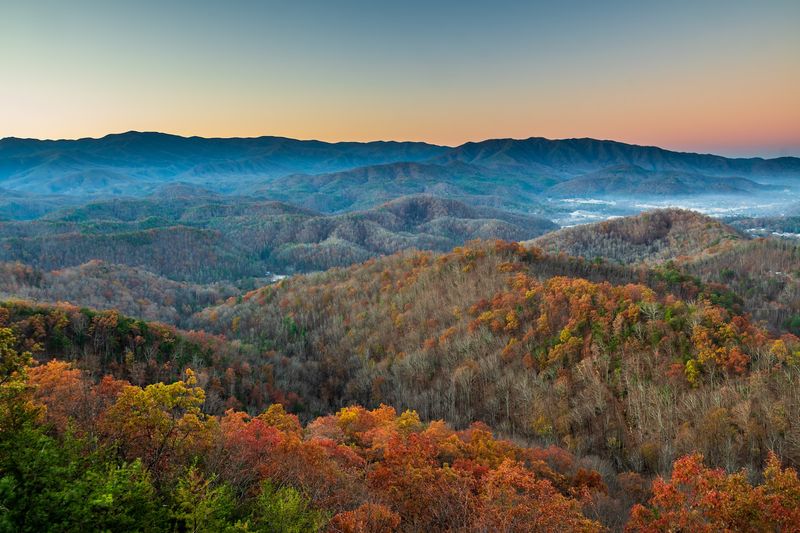
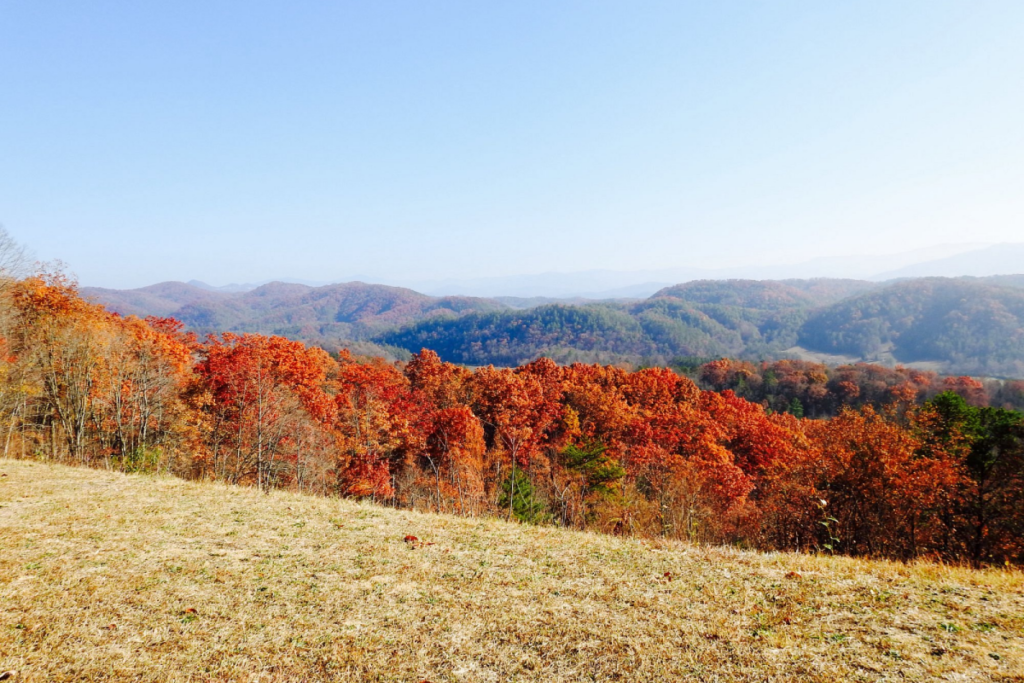
Stretching roughly 33 miles along the northern edge of Great Smoky Mountains National Park, the Foothills Parkway delivers the Smokies’ signature fall drama without requiring you to lace up hiking boots or fight for parking. This scenic drive was designed specifically to showcase the mountains, and during autumn it becomes one of Tennessee’s most rewarding lazy-day adventures.
Pull-offs and overlooks appear every few miles, each offering a slightly different perspective on the color-soaked ridges below.
The western section, which runs from Chilhowee to Walland near Townsend, is the most developed and accessible stretch. The road winds along the ridgetop, giving you constant views of valleys, farmland, and the Smokies rising in the distance.
October sunsets here are legendary, when the low-angle light turns the entire landscape into shades of amber and crimson. You can easily spend two hours just hopping from one overlook to the next, and you’ll never feel rushed.
What sets the Foothills Parkway apart from other scenic drives is how it balances grand vistas with intimate moments. One minute you’re looking across miles of mountains, the next you’re noticing a single dogwood tree burning red against the guardrail.
The road itself is smooth and well-maintained, making it accessible for any vehicle, and there’s no entrance fee since it’s technically outside the national park boundaries.
For maximum impact, time your visit for late afternoon when the sun starts dropping toward the western ridges. The combination of autumn color, mountain layers, and golden-hour light creates the kind of scenes that look almost too perfect to be real.
Pack a camera, bring snacks, and plan to take your time because this isn’t a drive you want to rush through. The Foothills Parkway proves that sometimes the best fall experiences don’t require any effort beyond turning a steering wheel.
5. Sequatchie Valley
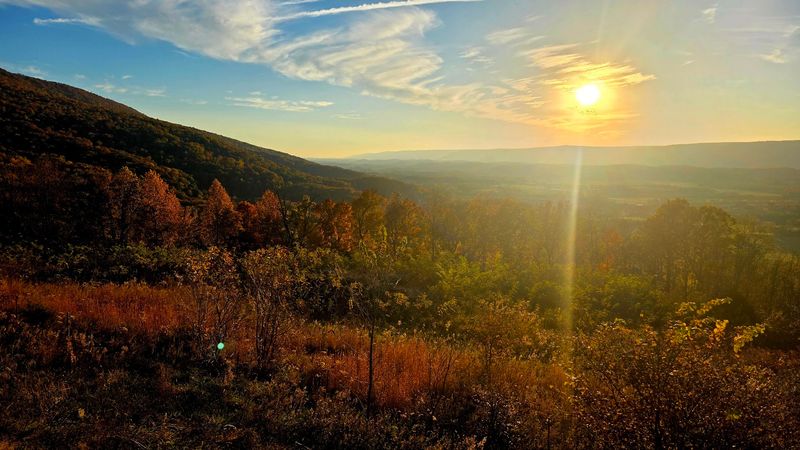
Carved between two parallel ridges of the Cumberland Plateau, Sequatchie Valley stretches for more than 150 miles through Southeast Tennessee, offering a completely different kind of fall experience than the state’s mountain hotspots. This is farm country, where the autumn palette includes not just colorful trees but also golden hay fields, red barns, and livestock grazing under broad skies.
The valley floor stays relatively flat, making it perfect for leisurely drives that feel more like time travel than sightseeing.
The Sequatchie Valley Scenic Byway winds through communities like Dunlap and follows the valley’s natural curves. Along the way, you’ll pass through small towns that haven’t changed much in decades, alongside orchards, produce stands, and wooded slopes that climb toward the plateau rim.
The ridges on either side create a natural frame for the valley, and in October those slopes light up with color that reflects the afternoon sun.
One of the valley’s best features is how uncrowded it stays even during peak leaf season. You won’t find tour buses or bumper-to-bumper traffic here, just quiet two-lane roads and the occasional tractor.
Stop in Dunlap for lunch, explore one of the small roadside markets, or just pull over wherever the light looks good. The pace here encourages you to slow down and notice details you’d miss in busier destinations.
For a more elevated perspective, consider hiking up to one of the overlooks along the plateau rim, where you can see the entire valley spread out below like a patchwork quilt. The combination of agricultural land and forested slopes creates a landscape that feels both worked and wild.
Sequatchie Valley reminds you that Tennessee’s fall beauty isn’t limited to dramatic mountain vistas and that sometimes the most memorable autumn drives are the ones that take you through the quiet, everyday places where people actually live.
6. Fall Creek Falls State Park
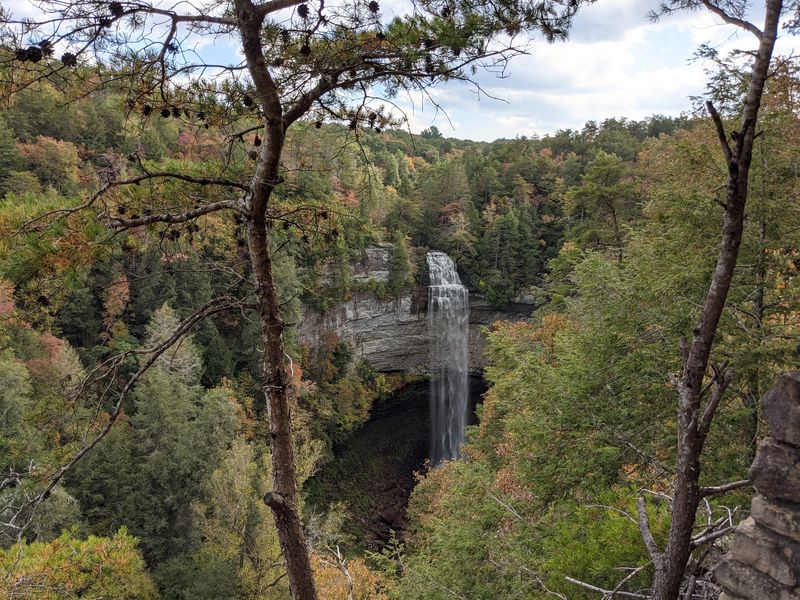
Spread across nearly 30,000 acres in Middle Tennessee, Fall Creek Falls State Park is where you go when you want fall color on a grand scale. This isn’t about spotting a few pretty trees along a trail, it’s about standing at an overlook and seeing entire mountainsides transformed into living tapestries of red, gold, and orange.
The park’s combination of waterfalls, gorges, and forested ridges creates natural amphitheaters where autumn puts on its best show.
The namesake waterfall drops 256 feet into a plunge pool surrounded by hemlock and hardwood forest, and in October the gorge walls frame the falls with layers of color that change by the day. Beyond the main attraction, the park hides multiple other waterfalls, including Cane Creek Falls and Piney Falls, each offering its own perspective on fall in the Cumberland Plateau.
Hiking trails range from easy walks to challenging scrambles, so you can tailor your experience to your energy level.
What makes Fall Creek Falls particularly rewarding during autumn is the variety of tree species. You’ll find everything from maples and oaks to hickories and sourwoods, each contributing its own shade to the overall palette.
The result is a complexity of color that shifts depending on where you’re standing and what time of day you visit. Early morning mist adds another layer of atmosphere, especially in the gorges where fog clings to the water.
The park’s size means you can spend an entire weekend exploring without retracing your steps. In addition to waterfalls and overlooks, you’ll find suspension bridges, boulder fields, and quiet forest roads perfect for biking.
Facilities include a lodge, campground, and cabins, so you can base yourself here and wake up to fall color right outside your door. Fall Creek Falls proves that Middle Tennessee can hold its own against the state’s more famous mountain destinations when autumn arrives.
7. Natchez Trace State Park
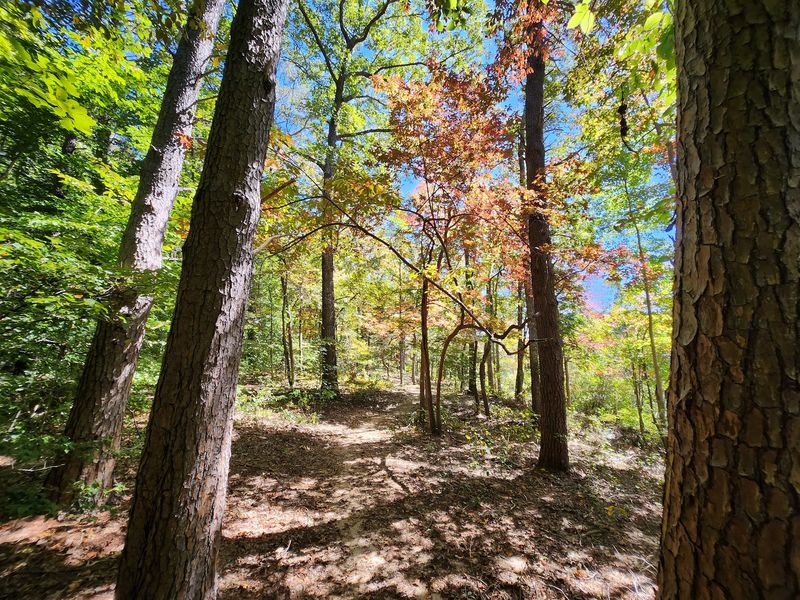
Sitting in the rolling hills of western Middle Tennessee, Natchez Trace State Park offers more than 48,000 acres of forest, lakes, and trails that most out-of-state visitors never hear about. That anonymity works in your favor during fall, when you can wander through oak and hickory forests dressed in autumn color without competing for elbow room.
The park’s four lakes add a reflective element to the scenery, doubling the impact of the surrounding trees.
Pin Oak Lake is the largest and most scenic, with forested shores that glow in October sunlight. You can paddle around the lake in a kayak or canoe, getting eye-level views of the color reflected in the water, or stick to the shoreline trails if you prefer solid ground.
Either way, the experience feels more peaceful than Tennessee’s busier fall destinations, with only the occasional fisherman or fellow hiker to share the space.
Tennessee Tourism specifically calls out Brown’s Creek Levee as one of the park’s prime scenic viewpoints, and it’s easy to see why once you arrive. The levee provides an elevated perspective over wetlands and forest, particularly striking around sunset when the low light turns the landscape into shades of amber and rust.
Bring binoculars because the area attracts migrating waterfowl in fall, adding movement and life to the scenery.
The park’s trail system covers more than 40 miles, ranging from short nature walks to longer backcountry routes. You won’t find dramatic waterfalls or mountain vistas here, but what you will find is a quieter, more contemplative version of Tennessee autumn.
The forest feels older and less disturbed than in more popular parks, with massive oaks and hickories that have been turning color here for generations. Natchez Trace State Park is proof that you don’t need Instagram-famous landmarks to have a memorable fall experience.
8. Reelfoot Lake State Park
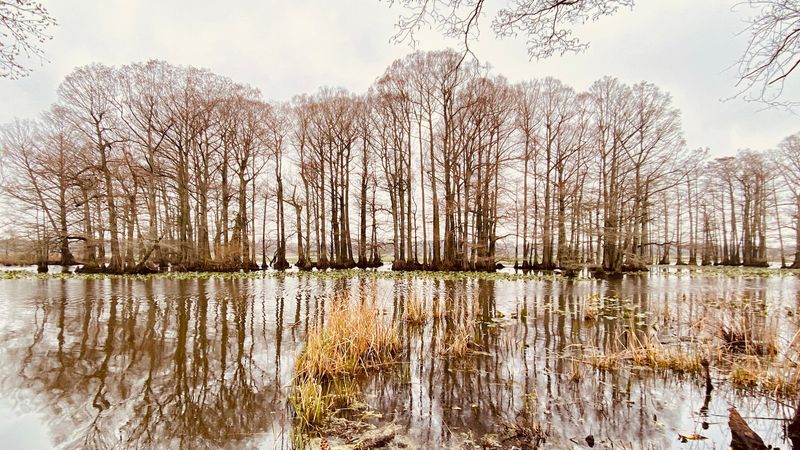
Formed by earthquakes in the early 1800s, Reelfoot Lake sits in Tennessee’s northwest corner and delivers a version of fall that looks nothing like the state’s mountain destinations. Instead of hillsides covered in maples, you get bald cypress trees rising from shallow water, their needles turning rust-orange before dropping for winter.
The lake’s glassy surface reflects everything above it, creating mirror images of sky, trees, and the occasional eagle passing overhead.
Peak color typically arrives around mid-to-late October, coinciding with the fall migration of waterfowl and raptors. Bald eagles start returning to the lake in autumn, hunting for fish and perching in the cypress trees, while ducks and geese gather in numbers that can reach into the thousands.
The combination of fall color and wildlife activity makes this one of Tennessee’s most unique seasonal destinations, especially for photographers and bird watchers.
You can explore the lake by boat, which is really the best way to appreciate how the cypress forest and open water create constantly changing patterns of light and reflection. Several outfitters offer guided tours, or you can rent your own kayak or canoe if you prefer going solo.
The water stays shallow across most of the lake, rarely more than a few feet deep, giving it an otherworldly, flooded-forest feeling.
On land, the park maintains boardwalks and observation platforms that let you get close to the cypress without getting wet. Sunrise and sunset are prime times, when the light turns the water into liquid gold and the silhouettes of trees and birds stand out in sharp relief.
The landscape here feels ancient and slightly mysterious, like you’ve stumbled into a place that time forgot. Reelfoot Lake proves that Tennessee’s fall palette extends far beyond the mountains, offering experiences you won’t find anywhere else in the state.
9. Meeman-Shelby Forest State Park
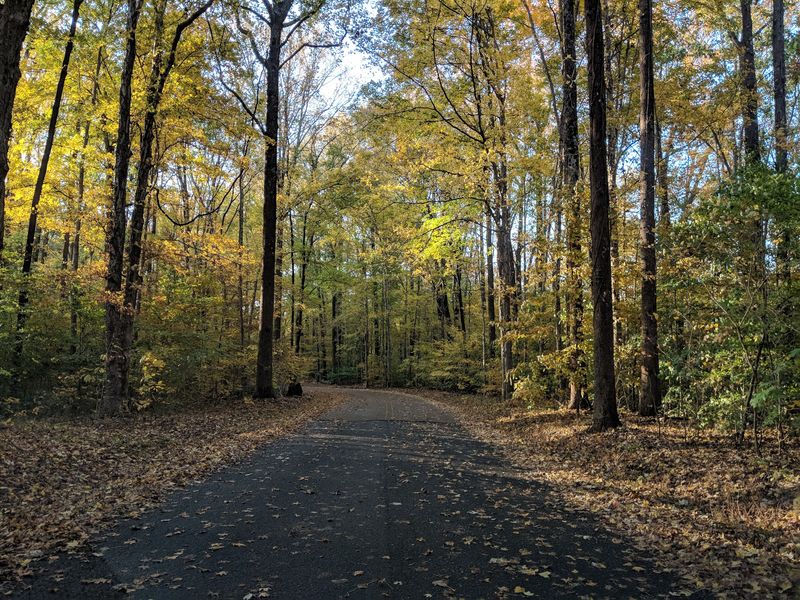
Just 13 miles north of Memphis, Meeman-Shelby Forest State Park covers more than 13,000 acres along the Mississippi River bluffs, offering a surprisingly wild escape considering how close it sits to the city. The park’s mix of bottomland hardwoods and upland forest creates diverse fall color, with oaks, tupelos, and cypresses all contributing their own shades to the October landscape.
Poplar Tree Lake sits at the heart of the park, surrounded by forest that reflects perfectly in the calm water.
The Chickasaw Bluff area provides some of the park’s most dramatic scenery, with steep slopes dropping toward the Mississippi River floodplain. Trails wind through these bluffs, taking you past massive trees and offering glimpses of the river through the foliage.
In fall, the combination of elevation changes and tree diversity means you’re constantly moving through different pockets of color, from the deep reds of sweetgums to the golden yellows of hickories.
What makes Meeman-Shelby special is how it manages to feel remote despite its proximity to urban sprawl. Once you’re a mile into the forest, the sounds of the city fade away, replaced by birdsong and wind moving through the canopy.
The park attracts serious hikers, mountain bikers, and equestrians, so the trails see regular use, but they’re extensive enough that you can still find solitude if you’re willing to venture beyond the main loops.
Facilities include a campground, cabins, and a visitor center, making it easy to spend a full day or even a weekend exploring. The lake offers fishing and paddling opportunities, and several picnic areas provide spots to relax and take in the scenery.
For Memphis residents, this park is a go-to autumn destination, but it remains surprisingly under-the-radar for visitors from other parts of the state. Meeman-Shelby proves that West Tennessee has its own version of fall beauty, different from the mountains but equally worth experiencing.
10. T.O. Fuller State Park
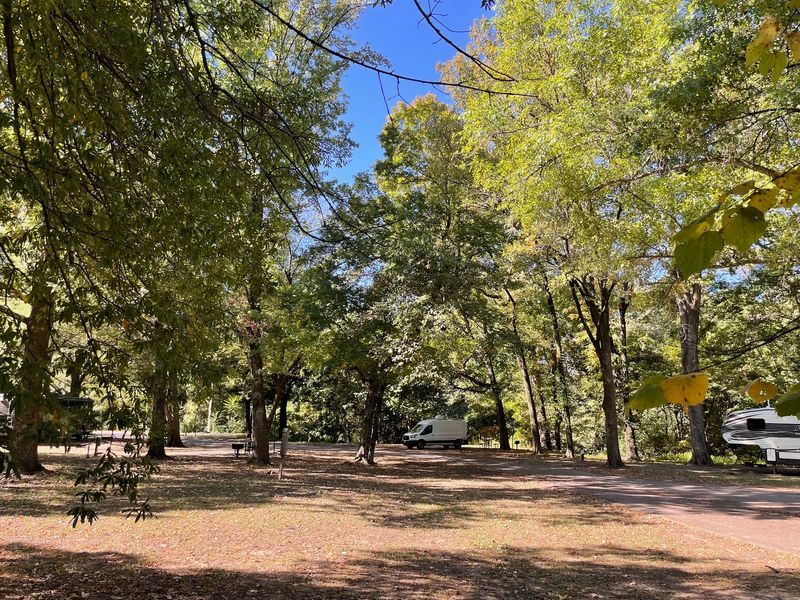
Located in Memphis and straddling the Tennessee-Mississippi border, T.O. Fuller State Park is one of those places that rarely makes it onto fall foliage bucket lists, which is exactly what makes it worth visiting.
The park covers roughly 1,100 acres of forest, with about eight miles of trails winding through hardwoods that turn color alongside the rest of Tennessee’s autumn landscape. What it lacks in dramatic vistas, it makes up for in accessibility and the quiet satisfaction of discovering fall beauty in an unexpected place.
The forest here consists mainly of oaks, hickories, and sweetgums, all of which deliver reliable color by mid-October. The trails range from easy loops suitable for families to slightly more challenging paths that venture into the park’s less-traveled sections.
You won’t find waterfalls or mountain views, but you will find peaceful stretches of woodland where the only sounds are leaves crunching underfoot and birds moving through the branches overhead.
T.O. Fuller holds historical significance as one of the first state parks in the South designed to serve African American visitors during segregation, and that history adds a layer of meaning to any visit.
The park’s picnic areas and shelters still see regular use by local families, giving it a lived-in, community feel that’s different from more tourist-focused destinations. Walking these trails in fall, you’re participating in a tradition that goes back decades.
The park also functions as a birding hotspot, with its mix of forest types attracting both resident and migrating species. Bring binoculars if you’re into that sort of thing, or just enjoy the added movement and sound that birds bring to the autumn woods.
For Memphis residents looking for a quick nature fix without leaving the city, T.O. Fuller delivers exactly that. For visitors willing to look beyond the obvious choices, it offers a reminder that fall color shows up everywhere in Tennessee, not just in the places that get all the attention.
Share this story