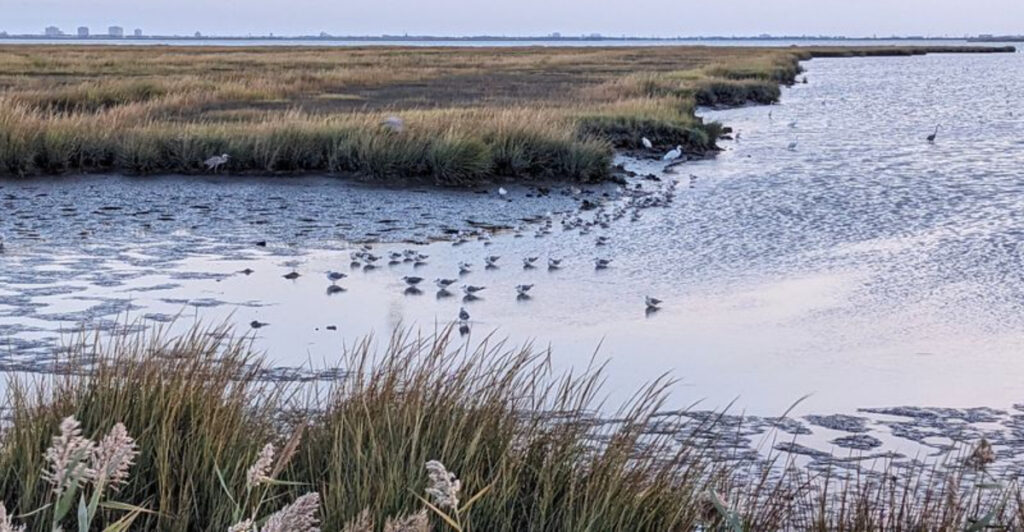
A great blue heron can stand so still in a New Jersey marsh that you may mistake it for a branch—right until it unfolds those enormous wings and glides away. That is the fun of hiking here: Wildlife often appears when you have stopped trying so hard to find it.
You do not need to scramble over boulders or haul yourself up a mountain, either. Some of the state’s best animal-watching happens beside level boardwalks, meadow paths, and short woodland loops that welcome first-time hikers.
The trails below cross wetlands, barrier islands, grasslands, river bluffs, and surprisingly wild corners of suburbia. Depending on the season and your luck, you might see a turtle warming its shell, an osprey carrying a fish, or a deer slipping between trees.
Pack water, bring binoculars if you have them, and walk quietly. New Jersey’s wild residents are already out there.
Your job is simply to notice them.
1. Wildlife Observation Center Trails – Great Swamp National Wildlife Refuge
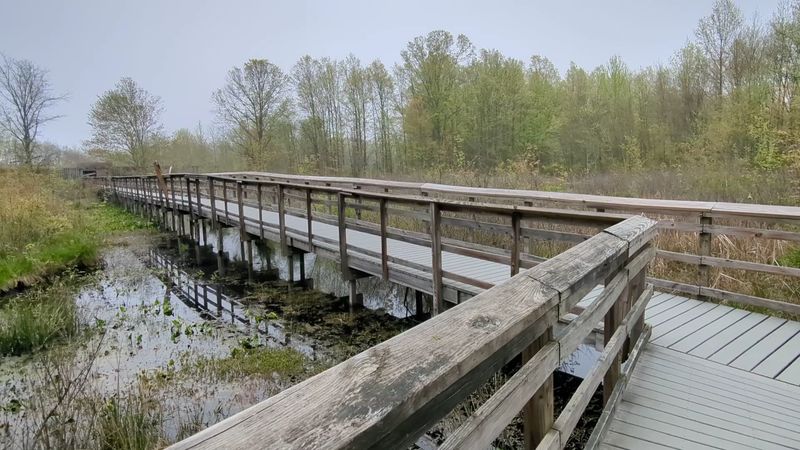
A wooden walkway disappears into the reeds, and somewhere beyond the cattails comes the throaty complaint of a heron. That is a typical welcome at the Wildlife Observation Center, one of the easiest places to experience the Great Swamp without committing to its muddier backcountry trails.
The north and south routes are short, mostly level, and connected to observation blinds where hikers can sit quietly and scan the wetlands. Great blue herons, wood ducks, red-winged blackbirds, and egrets are among the likely finds.
Painted turtles often haul themselves onto sunny logs, while white-tailed deer may appear near the woodland edges. Early morning is particularly rewarding because the refuge is quieter and animals are more active.
Bring binoculars, but do not worry if you are new to birding. The blinds encourage you to slow down, and movement usually gives a bird away before its markings do.
The center is reached from Long Hill Road in the Basking Ridge area. Parking is available near the trail entrance, and there is no strenuous climbing involved.
Boardwalks can become slick after rain, so shoes with decent traction are still a smart choice. Spring and fall bring migrating birds, while summer delivers frogs, dragonflies, and plenty of turtle activity.
In winter, bare branches make deer and hawks easier to spot. It is a gentle walk with an unusually high chance of seeing something wild.
2. Pochuck Boardwalk – Appalachian Trail
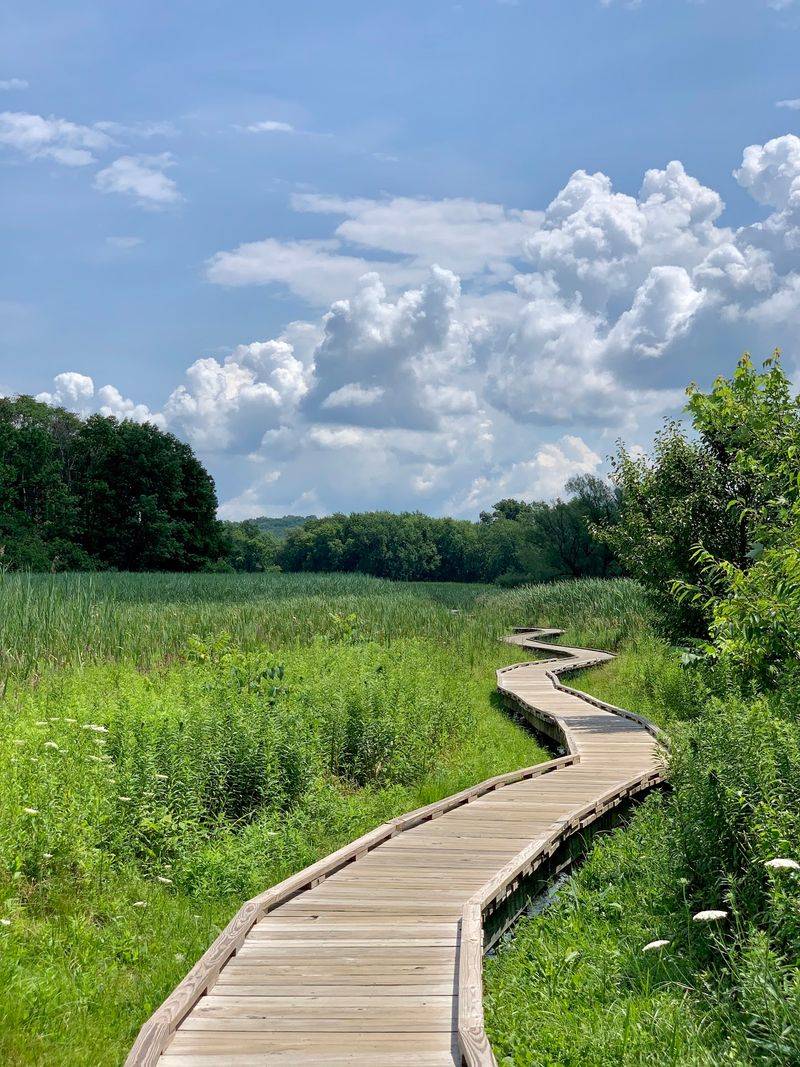
Most people picture steep ridges when they hear “Appalachian Trail.” Here, the famous footpath floats across a Sussex County wetland on planks barely above the grass. The Pochuck Boardwalk offers beginners the bragging rights of hiking the Appalachian Trail without requiring a heroic climb or a backpack full of gear.
The boardwalk passes open marsh, wet meadow, and Pochuck Creek, with a suspension bridge adding just enough bounce to make the outing memorable. Watch the water and half-submerged logs for painted turtles and snapping turtles.
Red-winged blackbirds cling to reeds, tree swallows swoop after insects, and marsh wrens chatter from cover. Muskrats are possible around quieter stretches, especially near dawn or dusk.
Deer also browse the fields bordering the wetland. An out-and-back walk lets you choose your own distance.
The boardwalk portion is gentle, though anyone continuing toward the Stairway to Heaven should know that the trail eventually becomes much steeper and rockier. Beginners can simply turn around before that transformation.
Parking near the trail crossings can fill quickly on pleasant weekends, so an early start saves both time and aggravation. After rain, expect damp approaches and potentially slippery boards.
Waterproof shoes help, but heavy hiking boots are unnecessary for the easy portion. The broad, open views also mean limited shade, making water and sun protection important in summer.
Arrive quietly, take your time, and keep checking the creek.
3. Habitat Lane – Duke Farms

A former private estate might seem like an odd place to search for wildlife, but Duke Farms has spent years restoring meadows, wetlands, lakes, and woodlands across its Hillsborough property.
Habitat Lane threads through that living landscape on an approachable route that feels polished enough for a relaxed walk yet wild enough to keep binoculars busy.
Open fields provide hunting territory for red-tailed hawks and American kestrels. Eastern bluebirds use nesting boxes around the grasslands, while wild turkeys patrol the quieter edges with the confidence of longtime residents.
Groundhogs pop up near meadow borders, and white-tailed deer are most likely during the cooler hours of morning. The property is also associated with nesting bald eagles, although sightings on any particular walk are never guaranteed.
The broad paths and paved stretches make this one of the list’s friendliest choices for strollers, wheelchairs, and anyone uneasy about roots or rocks. Stop first at the Farm Barn area to orient yourself, then choose a manageable route rather than trying to cover the entire trail network.
Duke Farms spans thousands of acres, so an innocent detour can add considerable mileage. Admission is free, but hours and parking procedures deserve a quick check before leaving home.
The property is generally closed on Sundays and Mondays, and free advance parking passes may be required on Saturdays during the busier months. Pets are not permitted, which helps reduce disturbance around wildlife.
Bring water, leave the animals plenty of room, and give yourself time for unplanned pauses.
4. Duck Pond Trail – Cape May Point State Park
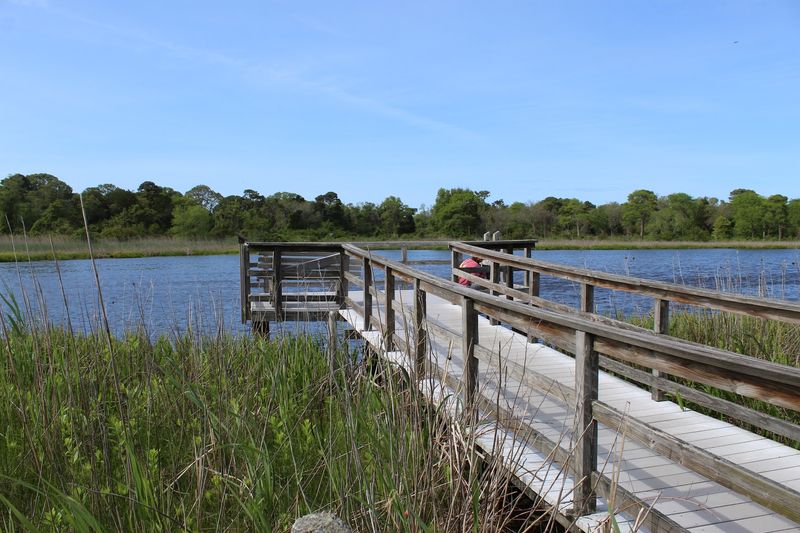
Fall can turn this little pond into an arrivals lounge for birds traveling along the Atlantic Flyway. Ducks settle on the water, warblers flick through nearby shrubs, and hawks pass overhead while monarch butterflies drift through on their own long-distance journey.
Few easy walks pack as much seasonal action into such a compact space. The Duck Pond is reached along Cape May Point State Park’s short, level trail system, where boardwalks cross freshwater wetlands and coastal habitat near the lighthouse.
Depending on the month, the water may hold mallards, teal, shovelers, buffleheads, or other visiting waterfowl. Great egrets and herons work the shallows, while turtles claim exposed logs whenever the sun cooperates.
Look closely around the brush rather than staring only at the pond; sparrows and migrating songbirds often stay low and move quickly. Because the route is easy to shorten or extend, it works well for families and first-time hikers.
Observation platforms provide natural stopping points, and the iconic lighthouse is close enough to combine with the walk. Parking is available within the state park, though prime migration weekends can get busy.
Late September through October is the showiest period, but every season offers something different. Summer brings dragonflies and nesting birds, while winter makes ducks easier to see against open water.
Wind off the ocean can be surprisingly sharp even on sunny days, so carry an extra layer. Most importantly, do not rush the pond.
Wildlife tends to reveal itself after you have stood still for a minute.
5. Spizzle Creek Bird Blind Trail – Island Beach State Park
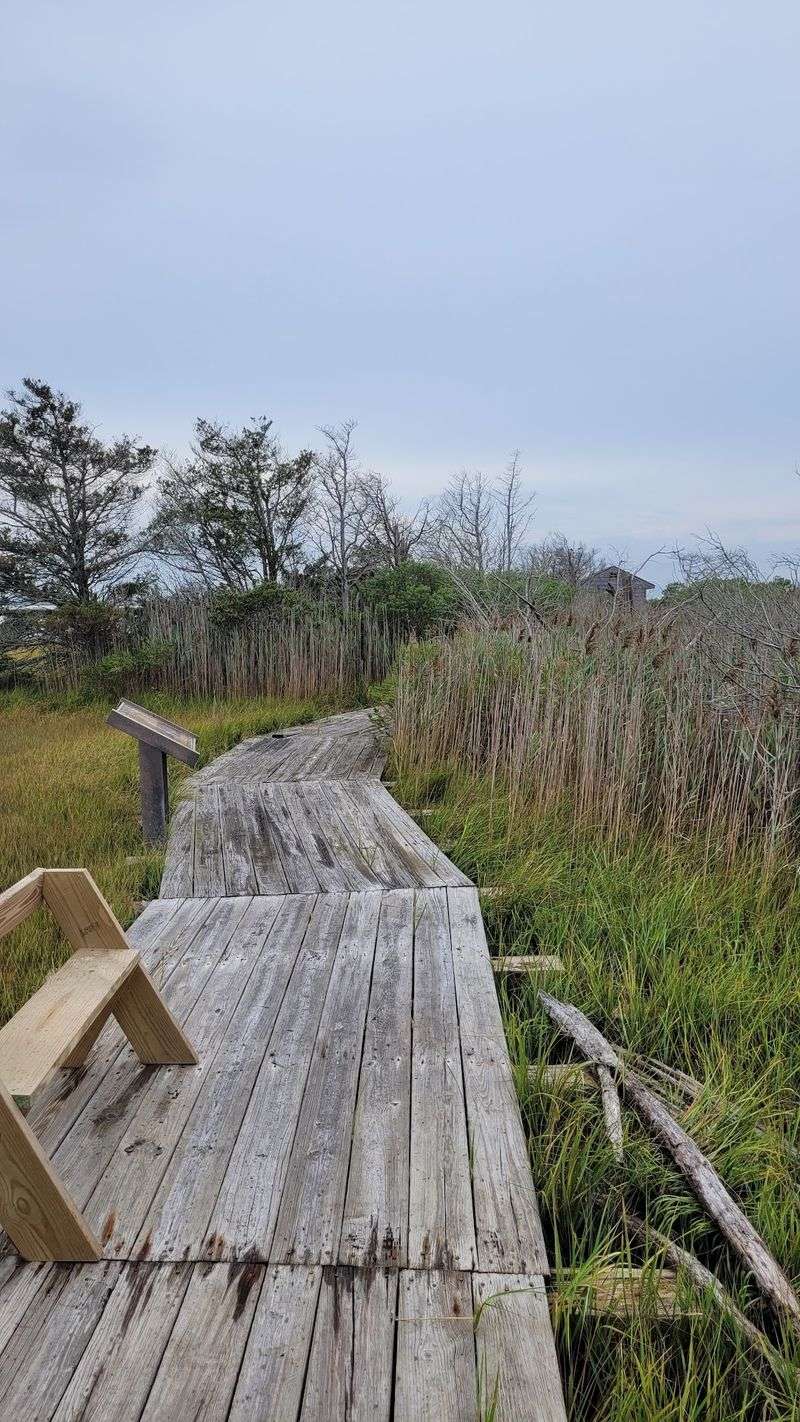
First comes the scrubby maritime forest. Then the view opens over Barnegat Bay, where an osprey may be hovering above the water before dropping feet-first toward an unlucky fish.
Spizzle Creek delivers that dramatic habitat change in a short walk, making it a strong choice for beginners who want more than a simple stroll through trees. The trail crosses a narrow barrier-island landscape shaped by salt, wind, and tides.
A blind overlooking the marsh gives visitors a sheltered place to watch without standing out against the skyline. Ospreys are the headline act during the warmer months, but great egrets, glossy ibises, gulls, terns, and other coastal birds also work the creek.
Northern harriers skim low over the marsh in cooler weather. At low tide, fiddler crabs can turn the mudflats into a tiny moving city.
The route is relatively short and mostly level, though sandy patches and exposed roots call for more attention than a paved path. Mosquitoes and biting flies can be enthusiastic during warm, still weather, so insect repellent is not optional for many visitors.
There may also be a vehicle entrance fee during the summer season. Morning generally brings cooler temperatures, softer light, and better odds of active birds.
Keep voices low when approaching the blind and resist the urge to crowd an animal for a photograph. Island Beach protects a delicate strip of coastal habitat, and the best encounters happen when wildlife barely notices that anyone has arrived.
6. Pole Farm Trails – Mercer Meadows
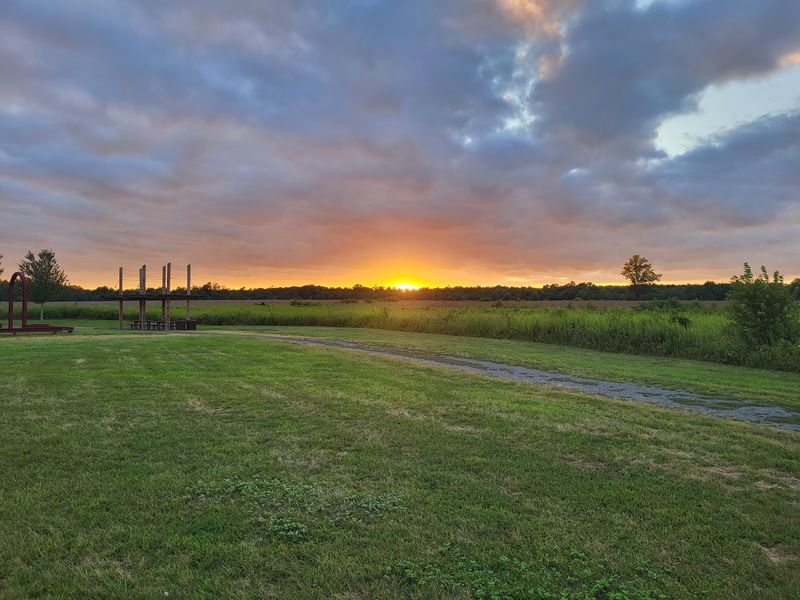
The old utility poles are mostly gone, but the name stuck. What remains is a wide sweep of preserved grassland where curving paths disappear into tall grasses and the sky feels much larger than it should in central New Jersey.
That openness makes the Pole Farm section of Mercer Meadows especially friendly to new wildlife watchers: Animals can often be seen from a comfortable distance. Spring and summer bring the possibility of bobolinks, eastern meadowlarks, and other grassland birds whose habitat has vanished from much of the region.
American kestrels perch where they can survey the fields, while red-tailed hawks circle above. Around sunrise and sunset, white-tailed deer step into the open, and foxes occasionally trot across the paths before slipping back into cover.
Butterflies gather around wildflowers as summer progresses. The trails are broad and largely flat, with several intersections that allow walkers to tailor the distance.
A short loop provides an easy outing, while connecting paths can turn the visit into a longer hike. Carry a map or photograph the trail diagram before starting; the similar-looking fields can make junctions less obvious than expected.
Parking areas around the Pole Farm district provide multiple access points, including entrances near Keefe Road. Shade is scarce, so summer visitors should bring water, sunscreen, and a hat.
Dogs are welcome on leash, but keeping them close is particularly important during bird-nesting season. For the best wildlife activity, skip the hottest part of the afternoon and arrive while the dew is still shining on the grass.
7. Maurice River Bluffs Preserve Trail
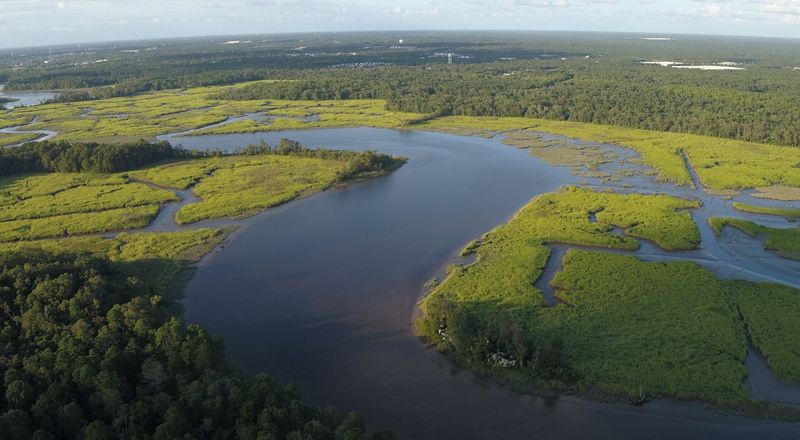
A bald eagle passing over the Maurice River can change the entire pace of a hike. Conversations stop, heads tilt upward, and everyone suddenly remembers to scan the treetops.
The protected river corridor around this Millville preserve is one of South Jersey’s rewarding places to look for eagles, ospreys, and other birds of prey. Several color-marked trails wind through forest, restored fields, and bluffs above the water.
Beginners can combine shorter sections instead of completing the entire network. The riverside route is the natural first choice, with overlooks and a dock creating clear views across the Maurice.
Eagles may soar above the channel or perch in tall trees, while ospreys patrol for fish. Wood ducks favor sheltered water, and deer move through the wooded interior.
This is the most rugged walk on the list, though it remains manageable for beginners who choose a modest route. Expect exposed roots, sandy soil, wooden steps, and a few honest hills.
Light hiking shoes are a better bet than smooth-soled sneakers, especially after wet weather. Trail reroutes may protect nesting birds during parts of the year, so follow posted signs rather than wandering toward a promising viewpoint.
The preserve is free to visit and has parking off Silver Run Road, but facilities are limited. Use a restroom before arriving, pack out all trash, and bring a trail map.
Cooler mornings offer comfortable walking and good bird activity. When you reach the river, pause before moving on; an eagle is easy to miss when you are watching only the trail.
8. Teaneck Creek Park Trails
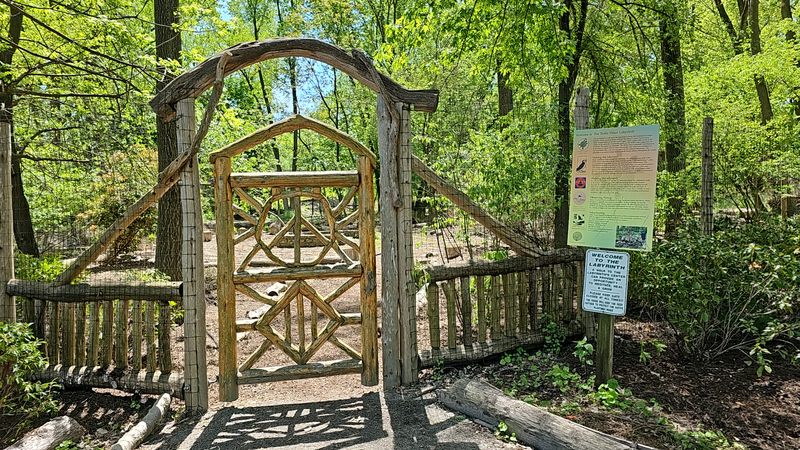
Traffic hums just beyond the trees, yet a green heron is busy stalking minnows as if Bergen County were miles from the nearest highway. That contrast gives Teaneck Creek Park much of its personality.
This restored wetland proves that an easy wildlife walk does not require a long drive into rural New Jersey. A compact network of flat paths, footbridges, and boardwalk sections circles ponds, meadows, and the creek.
Great egrets and green herons hunt along shallow water, while woodpeckers and songbirds move through the surrounding trees. Turtles bask near the ponds, frogs call from wet areas, and small fish can sometimes be seen from the bridges.
Red foxes and deer also pass through the park, though quieter morning visits offer the best chance of spotting them. Native plantings give summer its own show.
Milkweed and other flowering plants attract monarchs, swallowtails, bees, and dragonflies, making the park satisfying even when larger animals remain hidden. Public art appears along portions of the trail, adding an unexpected human layer to the restored landscape.
The main routes are short enough for a before-breakfast outing or an easy walk with children. Conditions can become muddy after heavy rain, and mosquitoes enjoy the wetlands as much as everyone else does.
Parking is available near the Puffin Way entrance, though the lot is not enormous. Keep dogs leashed, stay on marked paths, and listen carefully near the water.
In this park, the most interesting resident may be only a few yards away.
9. Cattus Island County Park Trails
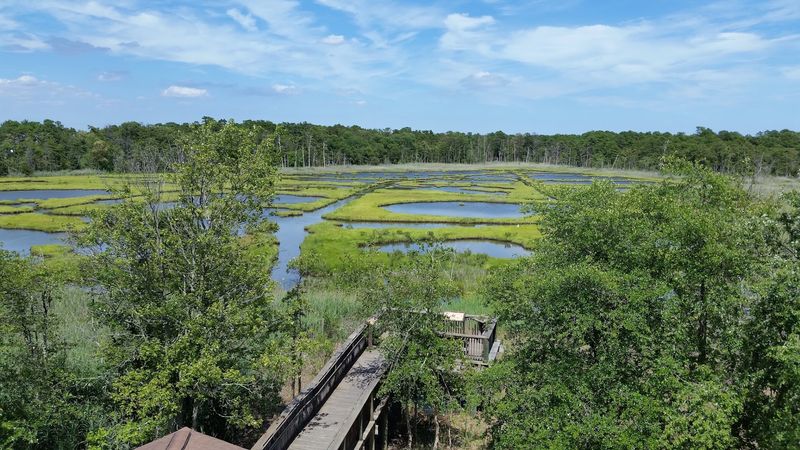
Salt marsh, pine woods, and wide views across Silver Bay all fit inside one Toms River park. The scenery shifts often enough that even a short route feels varied, and each habitat brings a different cast of possible wildlife.
That makes Cattus Island an excellent place for beginners who are not yet sure whether they prefer birds, turtles, or woodland animals. Ospreys nest around the bay and can frequently be seen carrying fish or calling from high platforms.
Egrets and herons patrol the marsh, while diamondback terrapins inhabit the brackish coastal environment. The forested sections shelter woodpeckers, owls, foxes, and white-tailed deer.
Scan sunny trail edges for reptiles, but never move a turtle unless it is in immediate danger on a roadway. The park has several miles of trails, so visitors do not need to tackle everything at once.
Choose a shorter loop through the woods and out toward the bay, allowing extra time at overlooks. Most terrain is flat, although sand, roots, and occasional wet patches add texture.
The Cooper Environmental Center near the entrance is worth visiting for displays about the Barnegat Bay ecosystem and its animals. Parking and park admission are free, and restrooms make this an easy family outing.
Summer afternoons can be hot and buggy, so mornings are more comfortable. Winter deserves consideration, too: Bare trees improve visibility in the woods, and the bay may attract different waterfowl.
Whatever the season, carry binoculars and check the osprey platforms before assuming nobody is home.
10. Liberty Loop Trail – Wallkill River National Wildlife Refuge
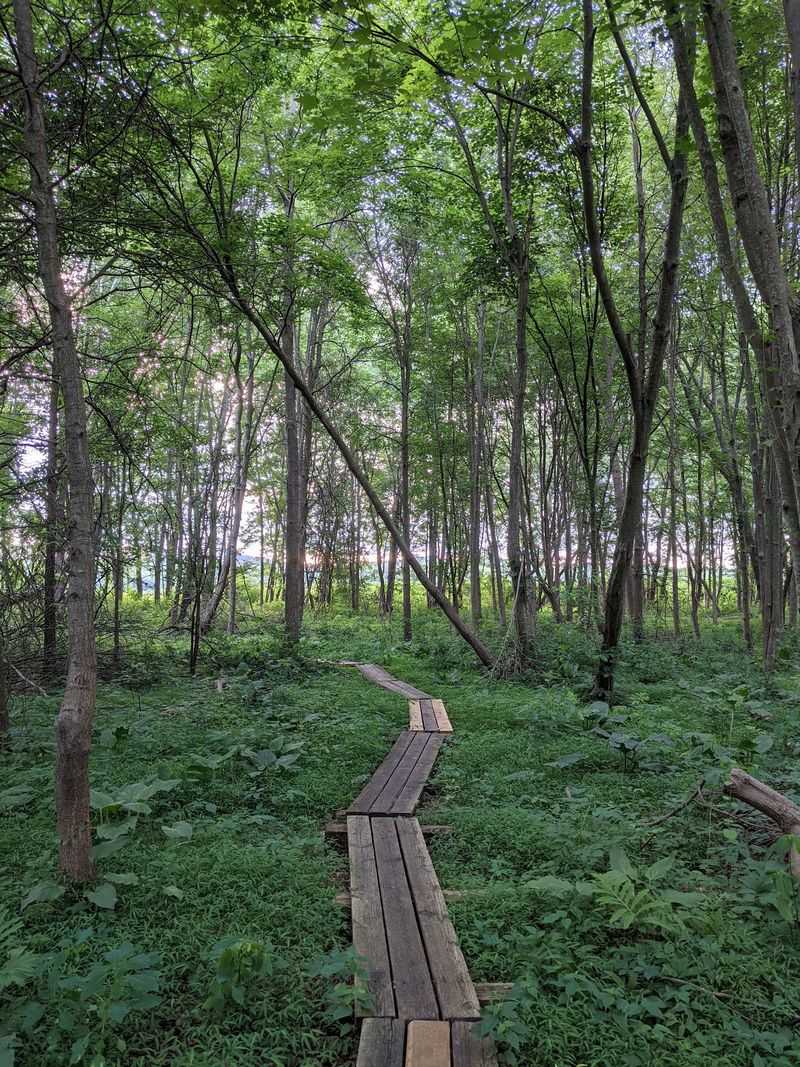
At first glance, the raised path around these wetlands looks almost too straightforward. Then a northern harrier sweeps over the grass, a muskrat cuts a V through the water, or a flock of ducks rises all at once.
Liberty Loop rewards attention rather than athleticism, which is exactly what a beginner-friendly wildlife hike should do. The approximately 2.5-mile loop follows old farm lanes and dikes around marshes, fields, and shallow pools near the New Jersey–New York border.
The terrain is flat and exposed, providing long views across the refuge. Waterfowl gather here during migration, and great blue herons stalk the edges.
Red-tailed hawks, kestrels, and harriers hunt over open ground. Deer browse near the fields, while turtles, frogs, and muskrats occupy the wetter sections.
There is little shade, so weather matters. A mild spring or fall morning is ideal; a hot summer afternoon can feel much longer than the mileage suggests.
After rain, portions may be muddy, and sturdy shoes are helpful. Bring water, sun protection, and binoculars if possible.
Because the trail is a full loop rather than a collection of tiny circuits, make sure everyone in the group is comfortable walking the entire distance. Access is available from parking areas near Oil City Road and Owens Station Road.
Leashed dogs are allowed on Liberty Loop, but they should be kept away from wildlife and wetland edges. Walk counterclockwise or clockwise—it hardly matters.
The real strategy is to stop often and scan before taking the next step.