A tiny chocolate drop called the Wilbur Bud showed up in 1894, years before the Hershey’s Kiss was around. I love that the underdog candy actually got there first. Even better, you can still buy it today in a small Pennsylvania town.
That kind of surprise kept popping up while I put this list together. One town has a jail cell with a handprint that reportedly refuses to come off the wall. Another hangs a whaling boat and an old fire engine from a museum ceiling.
These places don’t need skyscrapers to impress you. They have gas streetlamps glowing on Main Street, a covered bridge from 1825, and a pretzel bakery that opened in 1861. They also have castles made of concrete, which still sounds made up to me.
So clear your weekend and maybe leave the laundry for later. These are the kinds of small towns that make you wonder what else you’ve been missing right in your own backyard.
1. Lititz
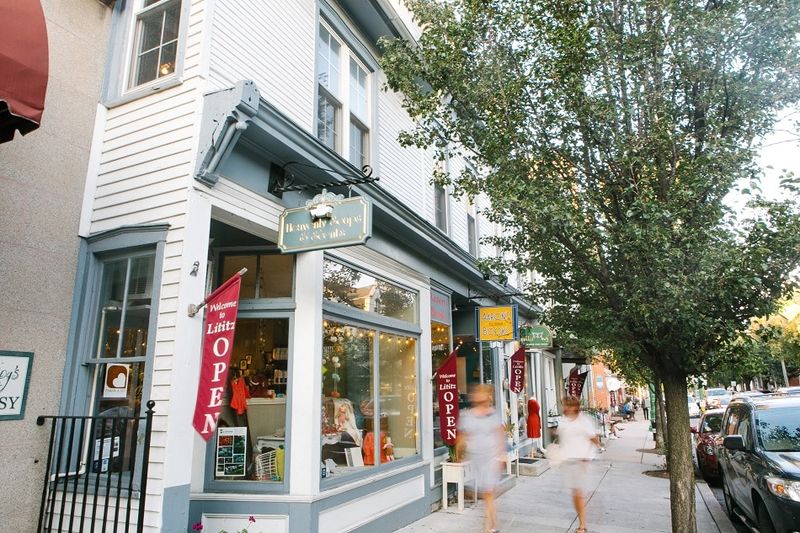
Chocolate history and pretzel history share the same small downtown here, which feels a little unfair to other towns.
Your snack plan basically writes itself.
Start at the Julius Sturgis Pretzel Bakery on East Main Street.
It opened in 1861 and calls itself America’s first commercial pretzel bakery.
The tour is the fun part.
You’ll see the original brick ovens and get a hands-on lesson in twisting your own pretzel.
Don’t worry if yours looks like a pretzel that lost an argument.
The shop sells soft pretzels, hard pretzels, and chocolate-covered ones to make up for it.
A few blocks away sits the Wilbur Chocolate Store on North Broad Street.
Wilbur and Lititz have been linked since 1934.
Look for the viewing windows.
Chocolatiers hand-dip and craft treats right where you can watch them work.
The famous Wilbur Bud came out in 1894.
That’s earlier than Hershey’s Kisses, so you can feel smug while you snack.
Next, walk off the sugar at Lititz Springs Park.
The Lititz Moravian Congregation maintains it, and it’s open to the public for free.
You’ll find paved walking trails, a playground, pavilions, and a band shell.
A natural spring with ducks gives the whole place a storybook feel.
The park also hosts the Lititz Farmers Market and a Rotary Club craft show.
It even has a visitors center, which is handy for planning your next stop.
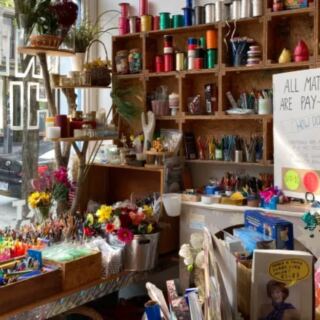
Shoppers should peek into The Main Street Peddler.
The independently owned gift shop has been around since 1994.
Its four themed rooms mix cottage, garden, and vintage pieces.
Folk art, antiques, and holiday collections fill the shelves too.
Timing matters if you love a lively street.
On the second Saturday of each month, downtown hosts Second Saturdays with music and longer shopping hours.
Stores and galleries roll out special sales and performances.
Best of all, the event is free to attend.
Pennsylvania has plenty of sweet small towns, but few let you twist a pretzel and watch chocolate get dipped before lunch.
Pace yourself.
2. Jim Thorpe
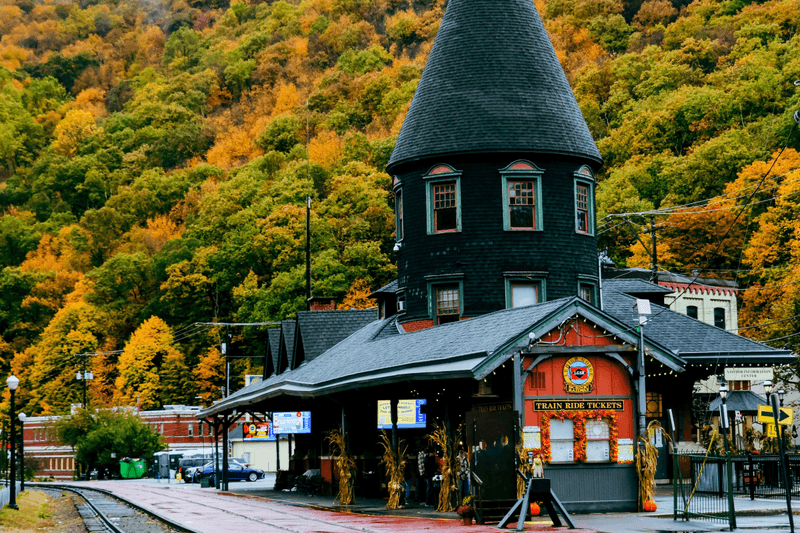
Any town nicknamed the Switzerland of America is setting some big expectations.
Jim Thorpe meets them with mountain views and a downtown packed with Victorian buildings.
The town started life as Mauch Chunk.
Its coal mining past still shapes what you’ll see on a walk.
Got a soft spot for spooky stories?
Head to the Old Jail Museum on West Broadway, built in 1871.
It served as the Carbon County jail until 1995.
Guided tours run about 30 to 35 minutes through cold hallways and 27 original cells.
You’ll also see dungeons once used for solitary confinement.
The tour connects the building to the Molly Maguires, Irish coal miners tied to a dark chapter of local history.
Then comes the famous part.
Cell 17 holds a mysterious handprint that reportedly resisted attempts to remove it.
Plan ahead, because the jail closes Wednesdays.
Weekday tours need reservations, while weekend tours are first-come, first-served.
For a lighter history lesson, try the Mauch Chunk Museum and Cultural Center.
It sits inside the former St. Paul’s Methodist Church, built in 1843.
Exhibits use videos, artifacts, and interactive displays.
They trace the area from prehistoric coal formation to the town’s modern revival.
There’s even a Firefly Planetarium Experience.
Not bad for a building that started out as a church.
Now save room for the best seat in town.
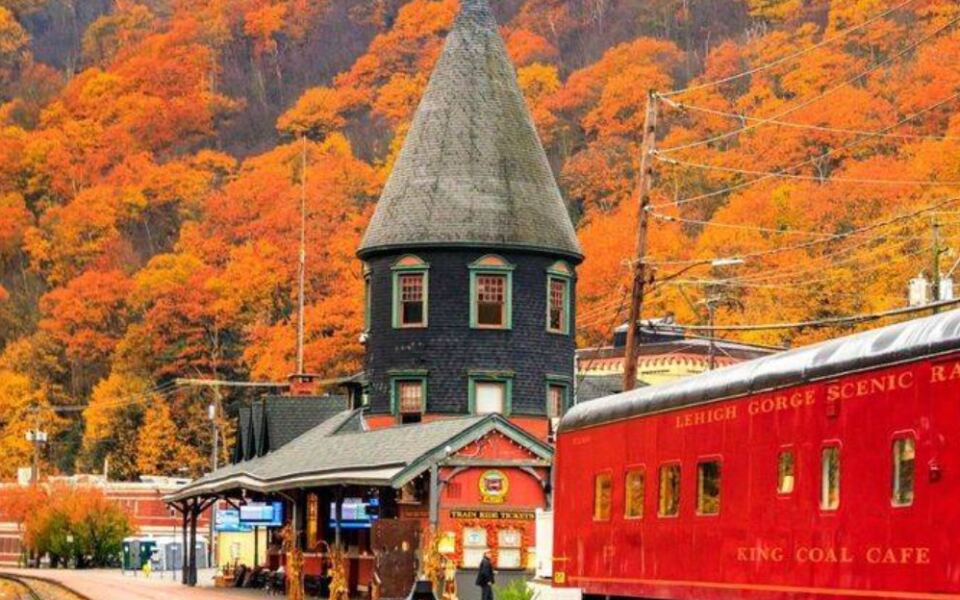
The Lehigh Gorge Scenic Railway leaves from the historic Jim Thorpe Station downtown.
The one-hour, 16-mile round trip follows the Lehigh River through Lehigh Gorge State Park.
You’ll cross bridges and roll through Glen Onoko.
Some of the vintage coaches date back as early as 1917.
Steam locomotive No. 425 pulls the train on occasion.
Bringing your pup?
The railway is pet-friendly, which might make it the happiest train ride your dog ever takes.
Seasonal trips include Fall Foliage Trains and Santa Claus Trains.
Schedules vary, so check before you go.
3. Wellsboro
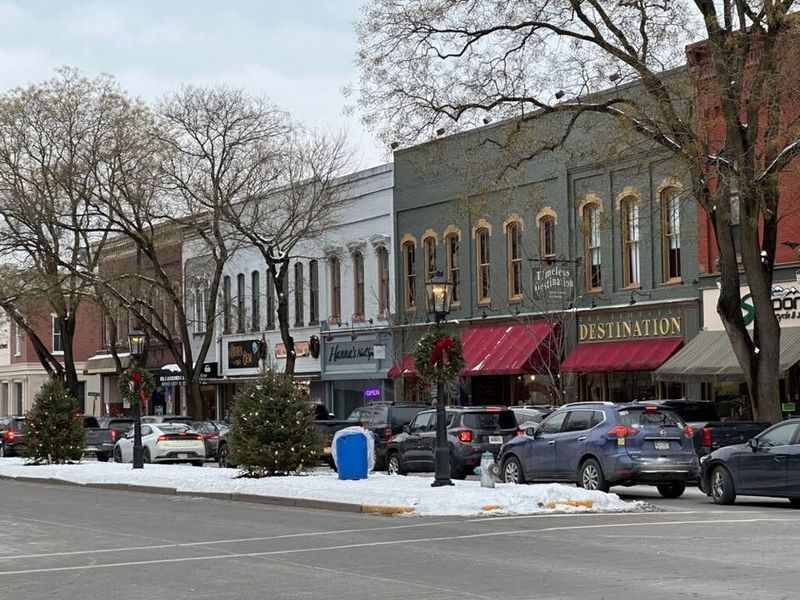
Real flames still light up Main Street after dark.
Wellsboro’s natural gas street lamps are some of the last ones working in Pennsylvania.
The first gaslights were installed in 1949, with additional lights added over the years.
They grew out of the area’s early natural gas system, and the town decorates them by season.
Wellsboro was founded in 1806 and serves as the Tioga County seat.
Its downtown has historic buildings, antique shops, bookstores, and family-run restaurants.
Need a sweet stop?
The Wellsboro Diner is an old-school railcar diner known for its pies.
Movie buffs can catch a current film at The Arcadia Theatre.
This Main Street cinema has been running for over a century.
Dunham’s Department Store also counts its history in centuries.
The family-owned shop sells apparel, home goods, and gifts.
Here’s the big reason people come, though.
Wellsboro is a gateway to Pine Creek Gorge, better known as the Pennsylvania Grand Canyon.
The gorge became a National Natural Landmark in 1968.
Parts of it reach roughly 800 to 1,000 feet deep.
Leonard Harrison State Park sits on the east rim with accessible viewing platforms.
It also has a visitor center and a snack bar.
Feeling brave?
The Turkey Path drops about 700 feet to the canyon floor, with waterfalls along Little Fourmile Run.
Going down is the easy half.
Your legs will have opinions about the climb back up.
Across the canyon, Colton Point State Park offers a quieter west rim.
Rustic 1930s Civilian Conservation Corps buildings add old-time character.
Bikers should check out the Pine Creek Rail Trail.
Its mostly flat crushed limestone path runs over 60 miles through the gorge.
Keep an eye out for bald eagles and river otters.
The trail follows the route of a railway that ran from 1883 to 1988.
December brings Dickens of a Christmas on the first Friday and Saturday.
Expect Victorian costumes, crafters, and horse-drawn wagon rides.
4. Bedford
History here doesn’t stay politely behind glass.
In Bedford, you can eat lunch inside it, sleep inside it, and wander through a whole village of it.
The story starts in 1758.
That’s when the original Fort Bedford went up during the French and Indian War, first known as Fort Raystown.
The Fort Bedford Museum was built in 1958 to honor it.
Inside are more than 4,000 objects tied to Bedford County history.
Look for an 1814 Conestoga wagon and a model of the original fort.
The museum also holds the only surviving British Red Ensign flag linked to a North American British fort.
That flag alone is worth the trip.
How often do you see something that rare in a small-town museum?
Downtown, the Golden Eagle Inn stands on East Pitt Street.
Built in 1794, it was the first brick building in Bedford.
The inn has sixteen guest rooms decorated to reflect local history.
Its restaurant serves dishes like a sweet potato waffle with buttermilk fried chicken.
Shrimp and grits and buckwheat pancakes also appear on the menu.
The kitchen focuses on locally sourced ingredients.
West of town, the Jean Bonnet Tavern dates back to 1762.
It sits at an old fork on Forbes Road, now Route 30.
Thick fieldstone walls and 250-year-old chestnut beams frame the dining room.
A large working fireplace finishes the scene.
The menu includes locally raised bison burgers and crab cake sandwiches.
It also has a reputation as one of Pennsylvania’s most haunted restaurants.
Want to step back even further?
Old Bedford Village covers life in western Pennsylvania from 1700 to 1899.
The village has more than 40 log and stone structures.
Many are historic buildings moved there from around the county.
Costumed interpreters show crafts like blacksmithing, broom making, and pottery.
You can try period games and old-fashioned chores too.
It opens Memorial Day weekend through October 31, Thursday through Sunday.
Those chores are way more fun when they aren’t yours.
5. Lewisburg
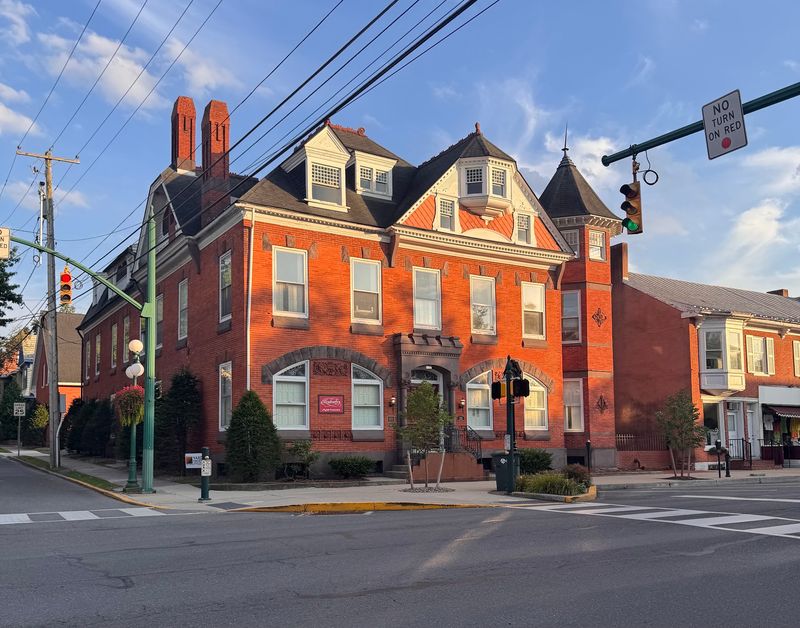
Lewisburg holds a patent on its own streetlights.
The cast iron design dates to the early 1900s, and the lamps still line the town.
That quirky detail fits a place that takes its looks seriously.
The Lewisburg Historic District counts 871 contributing buildings on the National Register of Historic Places.
Styles run from 18th-century log and stone buildings to Art Deco and mid-century Modern.
Water and Front Streets hold some of the oldest examples.
The town sits on the West Branch of the Susquehanna River.
It’s also home to Bucknell University.
Market Street is where you’ll spend most of your time.
Mondragon Books offers curated reads, and Brushstrokes sells art supplies and framing.
Hungry for breakfast?
CycleUp Cafe serves coffee and morning plates, while Elizabeth’s, An American Bistro handles seasonal dinners.
Now for the showstopper.
The Campus Theatre at 413 Market Street opened in 1941.
It’s a nonprofit, single-screen Art Deco movie house.
You’ll spot 16-foot murals and etched glass doors, with most original fixtures still in place.
A 2011 renovation protected that original design.
The theater shows new releases, arthouse picks, and classics.
It also hosts free children’s movies and open caption screenings.
Few movie nights look this good before the film even starts.
Love a good browse?
Street of Shops fills a historic mill with 375 shops selling antiques, jewelry, and furniture.
Inside, the Street of Shops Restaurant has vintage booths and a classic soda fountain.
Breakfast is served all day, which is the correct way to live.
Wednesdays have their own draw.
The Lewisburg Farmers’ Market started in 1937 and features more than 100 vendors.
Shoppers find produce, dairy, meats, flowers, baked goods, and handmade items.
It runs year-round, indoors and outdoors.
Somewhere between the movie and the market, you’ll probably start checking local real estate.
Pennsylvania river towns can do that to a person.
6. Bellefonte
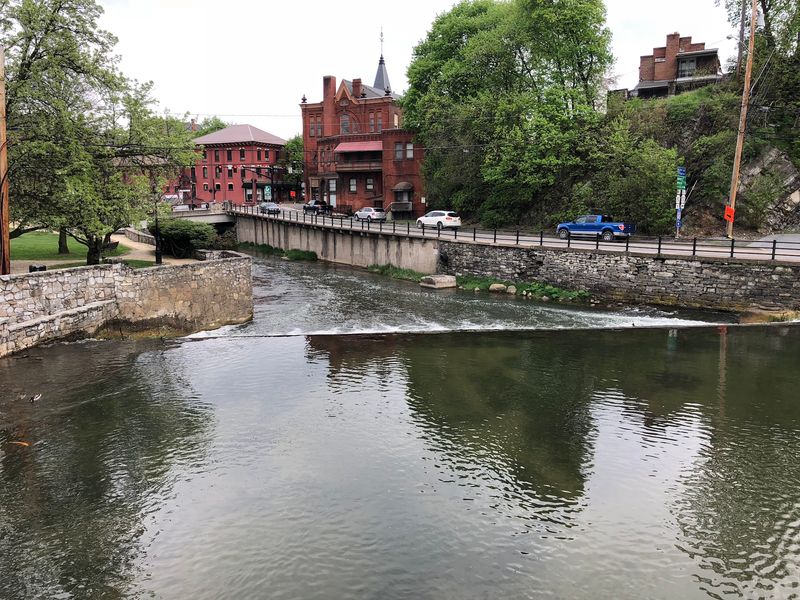
A French statesman supposedly named this town after one look at a spring.
Charles Maurice de Talleyrand is said to have called it la belle fonte, or beautiful fountain.
That spring still matters.
Big Spring can push out about 15 million gallons of water a day and supplies the town’s water.
In 2014, its water was named the best tasting in Pennsylvania.
Major William F.
Reynolds deeded the spring to the town back in 1879.
Big Spring sits within Talleyrand Park, a 3.5-acre green space along Spring Creek.
It’s right next to the downtown business district.
The park has a gazebo, a playground, an edible garden, and walking paths.
A suspension bridge built in 1986 crosses the creek.
Bring your bird-watching eyes.
Ducks, herons, and geese show up in big numbers.
Summer evenings get musical with Summer Sounds from the Gazebo.
The concerts run from June through August.
Next, wander the streets that earned Bellefonte its Victorian Jewel nickname.
The historic district includes 296 contributing buildings and joined the National Register in 1977.
You’ll see Greek Revival, Italianate, Second Empire, and Queen Anne styles.
Self-guided walking tours make it easy to explore.
Stop by the Centre County Courthouse, built in 1805.
Its entry porch has eight columns that stand 26 feet tall.
Governor Andrew Curtin, who led the state from 1861 to 1867, lived in a limestone home built in 1868.
Several governors have called this town home.
Stamp fans, this one’s for you.
The American Philatelic Society, founded in 1886, runs its headquarters from the historic Match Factory.
The Bellefonte Art Museum for Centre County sits in an 1810 building.
It starts a self-guided Underground Railroad tour with an exhibit on the Linn House.
For a meal, Creekside at the Gamble Mill serves a locally inspired menu with global flavors.
Bonfatto’s Italian Market is known for its Bonanza Sub.
7. Mifflinburg
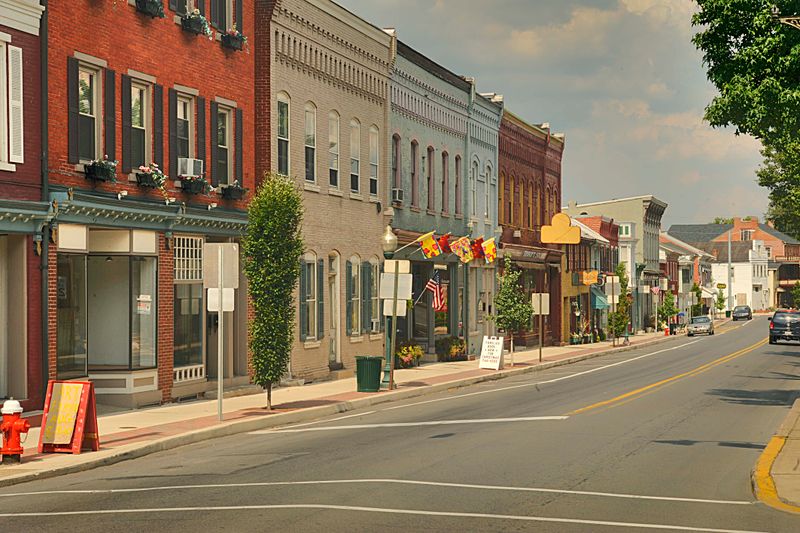
Long before minivans, this town had buggies covered.
In the late 1800s, Mifflinburg had more than 50 buggy and sleigh makers.
No wonder people still call it Buggy Town.
That heritage began in 1855 and shaped the whole community.
The Mifflinburg Buggy Museum on Green Street protects something rare.
It’s the only intact 19th-century carriage factory complex in the United States.
You’ll see the home, factory, and showroom of buggy maker William A.
Heiss.
His factory built buggies and sleighs from 1883 until 1920.
Guided tours show off his original tools and machinery.
The Heiss home is furnished to reflect life in the late 1800s and early 1900s.
A modern visitor center adds interactive displays.
Admission to that part is free.
Check the calendar first.
The museum opens Saturday and Sunday afternoons from May through October.
Less than a mile from downtown, the Hassenplug Covered Bridge crosses Buffalo Creek.
Built in 1825, it’s the oldest covered bridge in Pennsylvania.
The 80-foot bridge uses a Burr Arch Truss design.
A 2022 restoration swapped its steel floor for wide wood planks like the originals.
And yes, you can still drive across it.
It turned 200 in 2025, which deserves a slow, respectful roll.
Downtown is full of local makers.
Penns Creek Pottery and Pompeii Street Soap Co. are a couple of names to know.
Got a sweet tooth?
Gable House Bakery handles pastries, while Old Mill Creamery and Amy’s Frosty Freeze scoop ice cream.
December is the real showstopper.
The Mifflinburg Christkindl Market is billed as the oldest authentic outdoor German Christmas market in the country.
It started in 1988 and fills Market Street between 4th and 6th Streets.
Think Christmas pyramids, nutcrackers, and candle arches.
Nearly 40 food vendors serve goodies like apple strudel and gingerbread hearts.
The 2026 dates are December 10, 11, and 12.
8. Stroudsburg
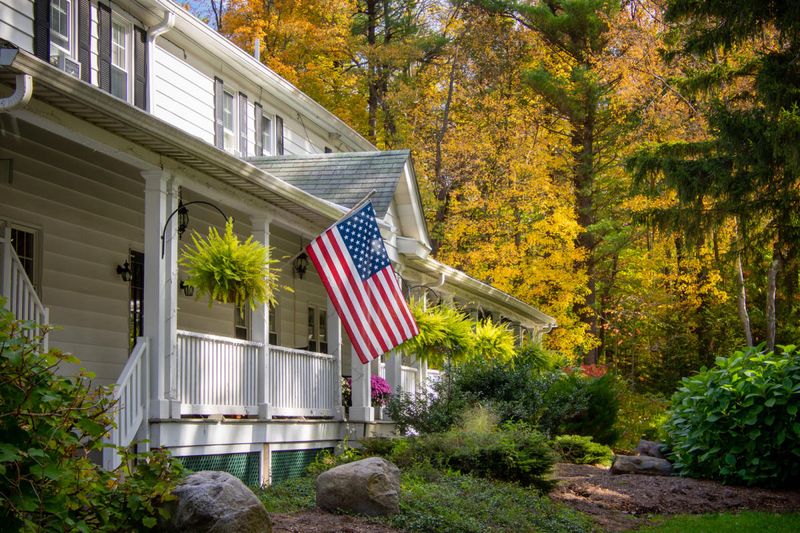
Laurel and Hardy performed on opening night at the Sherman Theater in 1929.
Not many small-town stages can drop a name like that.
The theater started as a vaudeville house on Main Street.
A fire damaged it in 1944, but it was repaired.
After falling into disrepair in the 1990s, it came back in 2005.
Today it’s a nonprofit concert hall hosting concerts, festivals, and local acts.
Next door, the Sherman Showcase handles smaller acts and a gallery.
The Pocono Arts Council uses an Arts Annex down the block.
Stroudsburg calls itself the Main Street of the Poconos.
Once you wander it, you’ll see why.
Sweet Creams Café has served homemade ice cream on Main Street for over 25 years.
The Cure Café is known for its creative brunch menu.
Record collectors can lose an hour at Main Street Jukebox.
Vinyl hunting is a sport, right?
A short walk brings you to the Monroe County Courthouse.
Built around 1890 from native sandstone, it shows off the Romanesque Revival style.
Look for arched windows and a clock tower outside.
Inside, it has marble floors and cast-iron stairways.
Families should save time for Quiet Valley Living Historical Farm.
It recreates life on a Pennsylvania German farm from the 1760s to 1913.
Costumed interpreters play family members doing daily chores and crafts.
You’ll meet goats, horses, pigs, ducks, and turkeys.
The farm opens to the public from mid-June through Labor Day, plus some spring and fall Saturdays.
Its Old Time Christmas runs the first two weekends in December.
Outdoor fans get a bonus.
The Delaware Water Gap National Recreation Area is about 15 minutes away.
It covers roughly 70,000 acres and protects 40 miles of the Delaware River.
Trails lead to waterfalls like Dingmans Falls and Raymondskill Falls.
So you can catch a concert at night and chase waterfalls by morning.
That’s a pretty great Pennsylvania weekend.
9. Doylestown
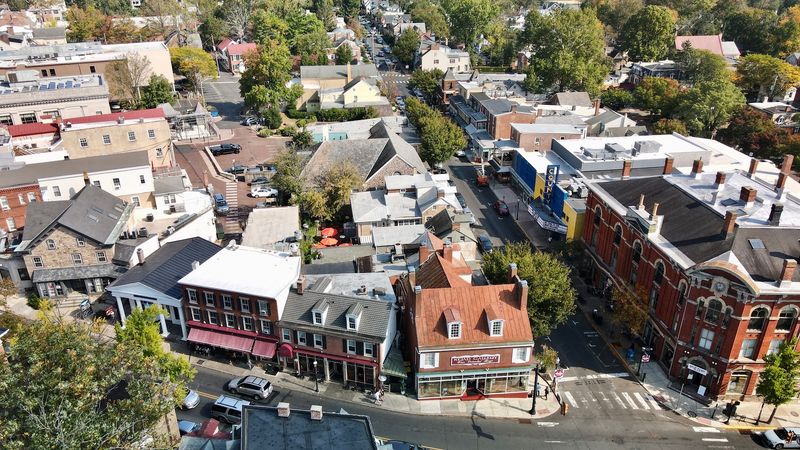
One man built three concrete castles in a single town, and honestly, who does that?
Henry Chapman Mercer did, and Doylestown is better for it.
Mercer was an archaeologist, ceramist, and scholar.
He was also a big name in the American Arts and Crafts movement.
Start with Fonthill Castle, his former home, built between 1908 and 1912.
It has 44 rooms, 18 fireplaces, and 32 staircases.
Thirty-two staircases!
Your step counter will be thrilled.
Handmade tiles cover the walls and ceilings.
You’ll see Mercer’s own Moravian tiles beside Persian, Chinese, Spanish, and Dutch designs.
The castle even had an elevator and an intercom system.
Guided tours last about an hour, though steep stairs limit accessibility.
Next up is the Mercer Museum, a six-story concrete building finished in 1916.
It holds more than 40,000 tools and objects from early American life.
The display style is the jaw-dropper.
A Conestoga wagon, a whaling boat, and an antique fire engine hang from the ceiling of the Central Court.
Kids can explore the Animals on the Loose exhibit.
It’s a fun way to keep little ones curious.
The third castle is the Moravian Pottery and Tile Works.
Mercer built the factory between 1911 and 1912.
Workers still make tile from wild Bucks County clay using his methods.
Tours end with a hands-on clay activity.
Art lovers get one more treat.
The James A. Michener Art Museum sits inside the former Bucks County Jail, original walls included.
It holds a major collection of Pennsylvania Impressionist paintings.
Admission is free on the second Sunday of each month through December 13, 2026.
Downtown, Serendipity Shops gathers artisan vendors under one roof.
Heirloom Doylestown serves seasonal farm-to-table breakfast and lunch.
Most of these sites close Mondays.
Plan around that, and you’ll have a castle-hopping day to remember.
10. Adamstown
Early birds don’t just get the worm in Adamstown.
They get first dibs on vintage treasures, sometimes as early as 5 in the morning.
The town calls itself the Antiques Capital of the USA.
A 7-mile stretch of Route 272 is packed with antique shops, markets, and malls.
Estimates put the number of dealers around 5,000.
That’s a lot of furniture, folk art, and estate jewelry to sort through.
The whole scene traces back to the early 1960s.
Dealer Charles Weik started flea markets in a shady spot called Shupp’s Grove.
Shupp’s Grove Antique Market has been running since 1962.
Vendors set up under a canopy of trees, so shopping feels like a stroll in the park.
Look for glassware, model trains, and musical instruments.
It’s open Saturdays and Sundays from late April through early October.
Sunday is the big day around here.
Renninger’s Antique Market has more than 300 indoor dealers plus a long outdoor vendor row.
Outdoor sellers can start at 5 AM.
Admission and parking are free, which leaves more money for that lamp you didn’t plan to buy.
Renninger’s also hosts Extravaganza events in April, June, and September.
Expect extra dealers and bigger crowds.
Stoudt’s Black Angus Antiques Mall adds over 100 dealers.
Four outside pavilions open on Sundays from April through November.
All that hunting builds an appetite.
Boehringer’s Drive-In has served burgers, hot dogs, and homemade ice cream since 1936.
It closes for the colder months, roughly mid-September to mid-March.
Dave’s Diner is a small retro spot serving American classics.
Nearby Stoudtburg Village features cobblestone paths and German-style buildings.
It also houses a Robot Museum, because why not?
Bring a tape measure and leave room in the trunk.
Pennsylvania road trips have a funny habit of coming home heavier than they left.
Share this story