A railroad chartered in 1832 still pulls passengers behind real steam engines. It has kept running all this time, which makes it the oldest of its kind in America. I find that wild.
That surprise is only one stop on the drive across Pennsylvania. Somewhere out there, a famous house hangs over a waterfall. A curve of track bends so sharply that trains swing around a mountainside. A stretch of old highway sits empty, with dark tunnels you can walk through on foot.
Most people treat this trip as five hours of staring at the road. I get it. Traffic is real, and the snacks run out fast. But the land between the two big cities is packed with odd, beautiful, and surprisingly sweet detours.
So why rush? I can’t think of a better excuse to pull over, stretch your legs, and see what the middle of the state has been keeping to itself.
1. Strasburg Rail Road
Andrew Jackson was president when this railroad got its charter in 1832.
Somehow, the trains are still rolling, and they still puff real steam.
Strasburg Rail Road calls itself America’s oldest continuously operating standard-gauge railroad.
It’s also the oldest public utility in Pennsylvania, which is a fun fact to drop on a road trip.
The main event is a 45-minute round-trip excursion.
An authentic steam locomotive hauls your train through the farmland of Lancaster County, where Amish farms stretch out along the route.
You get to pick how you ride.
Options include First-Class cars, open-air cars, and classic coach cars, so you can choose fresh air or a padded seat.
Hungry?
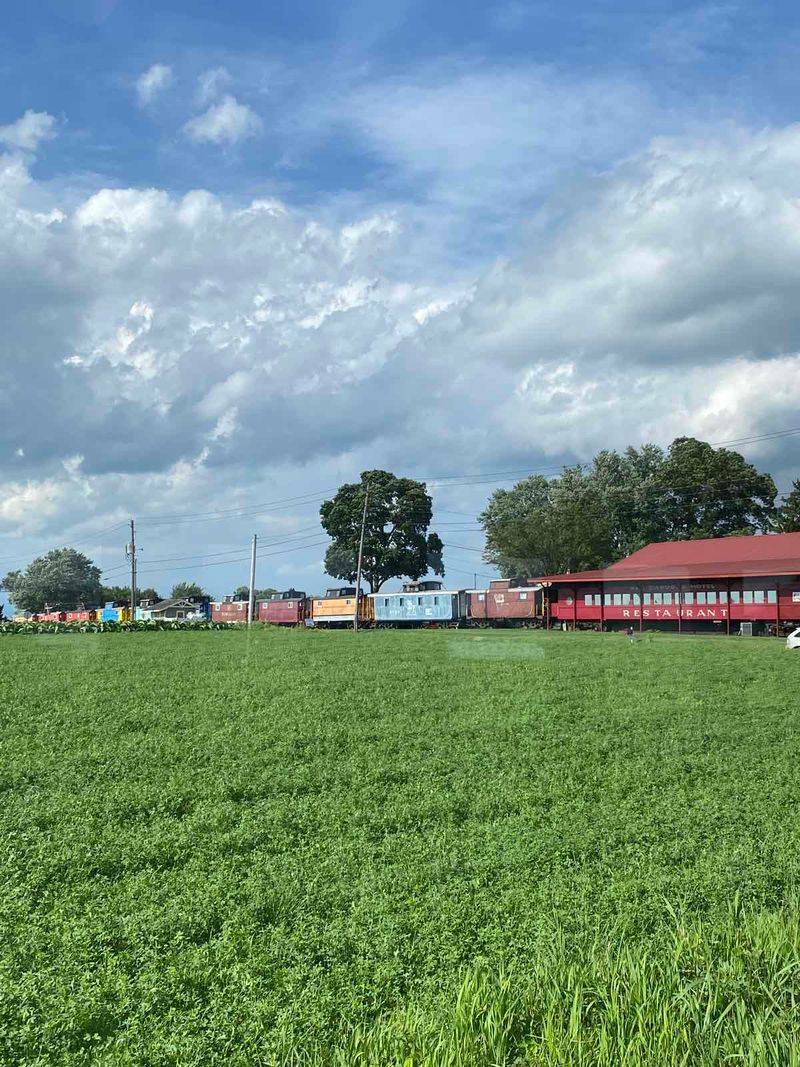
The railroad offers dining experiences aboard historic cars.
One of them, the Lee E. Brenner Dining Car, is the oldest operating all-wood dining railcar in America.
That means you can eat lunch inside a piece of history while a steam engine does the hard work up front.
Not a bad deal for a weekday.
Kids, and plenty of grown-ups, will want to stick around after the big ride.
The station area has the Pint-Sized Pufferbelly, a miniature steam train sized for smaller passengers.
There are also Cranky Cars, which you power yourself by hand.
Think of it as a gym session disguised as a train ride, with way better scenery.
Curious how these old engines keep running?
You can book a behind-the-scenes tour of the mechanical shop to learn about train operations and restoration work.
That shop tour is a smart pick for anyone who loves gears, tools, or big machines.
It shows the effort it takes to keep a railroad this old moving down the line.
Since it sits on the eastern end of the drive, this stop makes a great first chapter.
Start the trip slow, listen for the whistle, and let the farmland roll past your window.
Address: 301 Gap Road, Ronks, PA 17572
2. Hershey’s Chocolate World
Free chocolate at the end of a ride sounds like a childhood dream.
In Hershey, it’s simply how the tour wraps up.
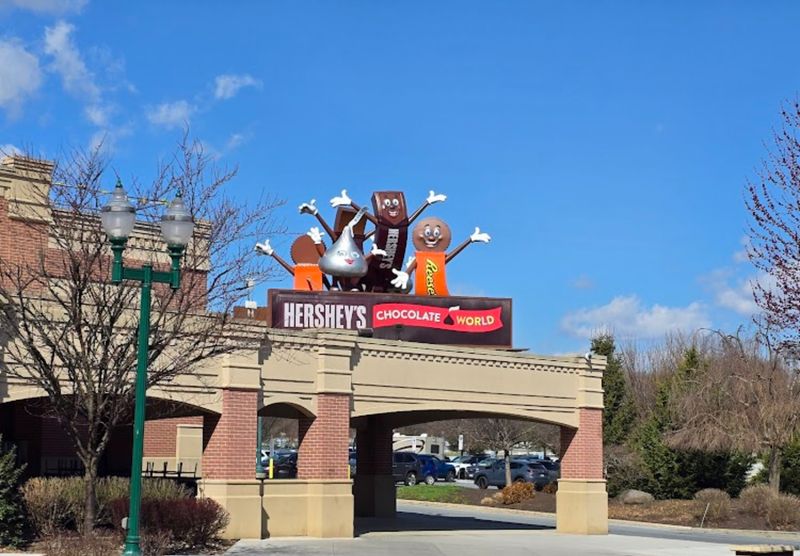
Hershey’s Chocolate World is the official visitor center for The Hershey Company.
It opened in 1973, picking up where Milton Hershey’s factory tours left off after starting back in 1910.
The star attraction is the free Hershey’s Chocolate Tour ride.
It carries you from cocoa bean to wrapped candy bar, and you get a sweet sample at the finish.
Honestly, a free ride with candy at the end is the best kind of math.
It’s a quick way to learn how chocolate gets made without wearing a hairnet.
Want something more hands-on?
The paid Create Your Own Candy Bar experience lets you pick your ingredients and design your own wrapper.
That wrapper part is sneaky fun.
You walk away with a treat that has your own creative stamp on it, which beats a plain gas station snack any day.
Then comes the shopping.
The building holds the World’s Largest Hershey’s Store, packed with exclusive products and merchandise you won’t spot at your local grocery store.
Set a budget before you go in, or at least try.
Shelves full of chocolate have a strong pull on wallets and willpower alike.
For some local history, hop on the Hershey Trolley Works.
The ride rolls through town and tells the story of Milton S.
Hershey and the community he built.
It’s a nice change of pace after the sugar rush.
You’ll see how one candy maker shaped a whole Pennsylvania town, right down to its streets.
The attraction runs year-round, so winter road trips count too.
Pull off, grab your sample, and get back on the road with a happy sweet tooth.
Address: 101 Chocolate World Way, Hershey, PA 17033
3. Pennsylvania State Capitol

Theodore Roosevelt saw plenty of buildings in his life.
At the 1906 dedication of this one, he called it the handsomest building he ever saw.
That’s high praise from a president who traveled the world.
The Pennsylvania State Capitol in Harrisburg was dedicated on October 4, 1906, and it’s now a National Historic Landmark.
Philadelphia architect Joseph Huston designed it in the American Renaissance style.
Inside, you’ll find paintings, stained glass, and furnishings made by notable artisans of that era.
Here’s the best part for your wallet.
Guided tours are free, so you can soak up the art and history without spending a dime.
On weekdays, tours start every half hour from 8:30 a.m. to 4:00 p.m.
On weekends and most holidays, they run at 9:00 a.m., 11:00 a.m., 1:00 p.m., and 3:00 p.m.
Plan your stop around those times, and you won’t be left waiting long.
It fits nicely into a lunch break on the drive west.
Don’t expect a quiet museum, though.
This is a working building where the House, the Senate, the governor, and the state Supreme Court all do their jobs.
That gives the visit a fun, real-life buzz.
You’re not just looking at history, you’re standing where today’s decisions get made.
Visitors can explore the public rotunda, hallways, and open galleries.
Bring your neck, because you’ll spend a lot of time looking up.
An Interactive Welcome Center adds hands-on exhibits about how state government works.
It’s a smart stop for students, or for adults who slept through civics class.
Harrisburg sits close to the middle of your route.
A Capitol tour turns a regular pit stop into a story you’ll actually remember.
Address: 501 N 3rd St, Harrisburg, PA 17120
4. The Belle of Saint Mary’s at Hameau Farm
Most cows stand about five feet tall at the shoulder.
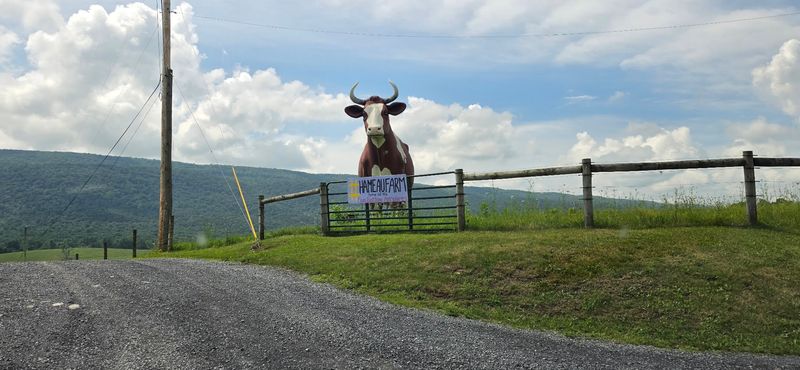
The Belle of Saint Mary’s towers at 13 feet, and she isn’t going anywhere.
She’s a giant fiberglass cow sculpture that greets visitors to Hameau Farm in Belleville.
You’ll find her in Mifflin County, keeping watch over the Kishacoquillas Valley.
Roadside giants are a classic road trip treat.
This one makes a great photo spot, especially if you want a picture that makes your friends ask, wait, where are you?
Try lining up a family shot under her for scale.
Even tall people look tiny next to a cow the height of a two-story wall.
The farm behind her isn’t just for show.
Hameau Farm is a working dairy farm, so the big cow fits right in with her real-life neighbors.
The farm keeps an Ayrshire herd, a dairy breed with a reddish-brown and white coat.
It also raises Jacob sheep, which are part of its farm operations.
There’s another layer to this place, too.
Since 1996, Hameau Farm has run a summer camp for girls ages 7 to 14.
Campers dig into real farm life.
They help with chores like feeding animals and gathering eggs, which sounds a lot more fun than cleaning your room.
Keep in mind that this is a working farm and a camp, not a theme park.
Be respectful, snap your photos, and enjoy the valley views.
The drive itself is part of the fun.
The Kishacoquillas Valley offers a scenic break from the big highways that cut across Pennsylvania.
So when your car needs a reason to leave the main road, let Belle be it.
A 13-foot cow is hard to forget.
Address: 6364 State Route 655, Belleville, PA 17004
5. Lincoln Caverns & Whisper Rocks
Road crews building U.S.
Route 22 in May 1930 stumbled onto something better than gravel.
They found a crystal cave hiding underground.
It opened to the public in June 1931 as Hi-Way-May Caverns.
The name later changed to Lincoln Caverns, which is a lot easier to say.
About ten years later, in September 1941, a second cavern turned up nearby.
That one got the dreamy name Whisper Rocks.
Today, one tour covers both.
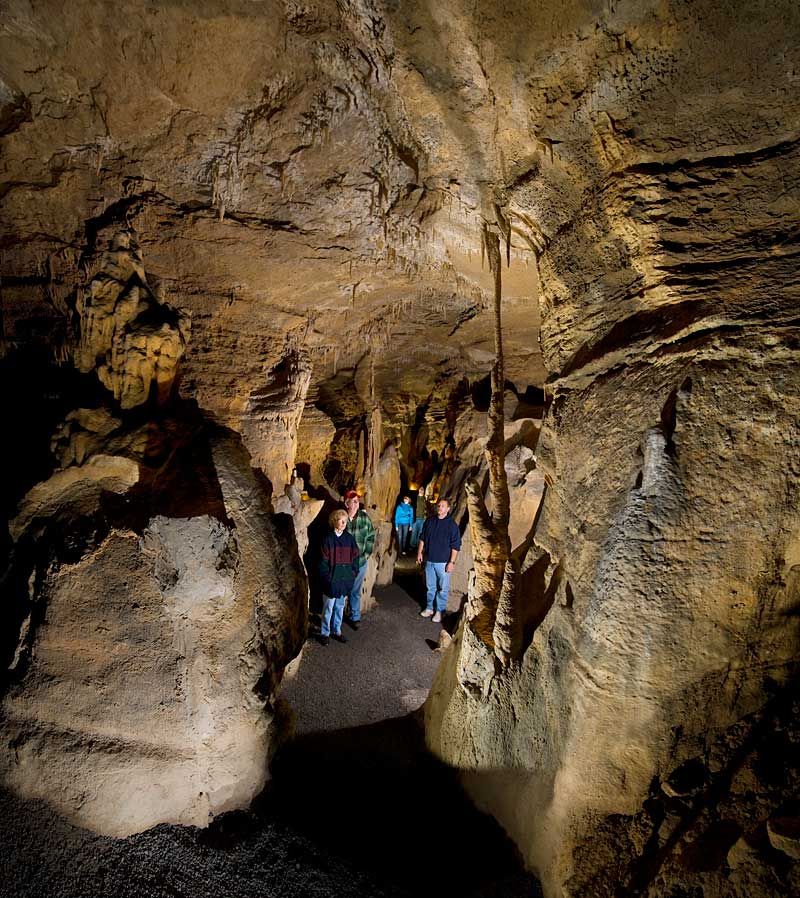
The hour-long interpretive tour leads you through the two crystal caverns in Huntingdon, with a guide explaining what you’re seeing.
And what you’re seeing is pretty dazzling.
Look for delicate crystals, sparkling stalactites, and massive flowstones that took ages to form.
Bring a light jacket, since caves usually feel cooler than the outside air.
It’s a nice escape on a hot summer drive.
The fun keeps going above ground.
You can try panning for real gems, which is basically a treasure hunt that kids and adults both love.
Want to stretch your legs?
Nature trails offer some hiking, and picnic pavilions give you a spot to unpack lunch.
Before you leave, poke around the Raystown Rocks Gift Shop in the visitors’ center.
It sells souvenirs, rocks, and minerals, so geology fans may need extra trunk space.
The caverns are generally open daily from March through November.
Tours run at regular intervals, and winter visits are available by appointment.
Since it sits along William Penn Highway, it’s easy to pair with other Huntingdon stops.
Go underground for an hour, then pop back up ready for more road.
Address: 7703 William Penn Highway, Huntingdon, PA 16652
6. Swigart Museum
Car museums are common now, but somebody had to go first.
In 1920, W.
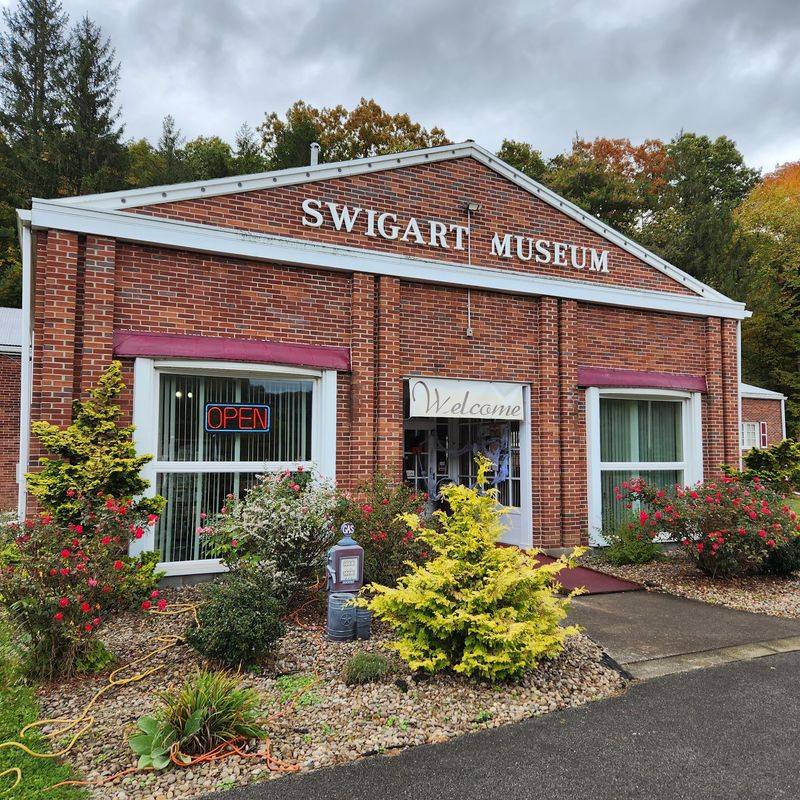
Emmert Swigart did, and his museum is America’s oldest automobile museum.
The Swigart Museum sits in Huntingdon, just down the road from the caverns.
It’s a perfect one-two punch for a single afternoon.
The collection includes antique automobiles and carriages dating back to 1896.
Nearly 200 vehicles make up the full collection.
You won’t see them all at once, though.
Around 30 to 35 cars go on display each year, and the exhibits rotate annually.
That rotation is good news for repeat visitors.
Come back next summer, and you may find a whole new lineup waiting.
Some famous wheels have rolled through here.
Past displays have included two Tucker automobiles and a 1903 Oldsmobile.
The Tucker is a legend among car fans, since so few were ever made.
Seeing two in one place is a big deal.
Look beyond the cars, too.
The museum has what’s believed to be the world’s largest collection of automotive license plates and radiator emblems.
Vintage clothing, memorabilia, and toy displays round things out.
It’s a fun way to see how people dressed and played during the early days of driving.
Timing matters here.
The museum is seasonal, typically open from Memorial Day weekend through the end of October.
Daily hours run from 10:00 a.m. to 5:00 p.m.
That gives you plenty of room to swing by during a long summer drive.
There’s something fitting about stopping at a car museum on a road trip.
Your own ride gets a break while you admire its great-great-grandparents.
Address: 12031 William Penn Highway, Huntingdon, PA 16652
7. Horseshoe Curve National Historic Landmark
Mountains are a big problem when you’re trying to run a railroad.
In 1854, the Pennsylvania Railroad solved one with a giant U-shaped bend.
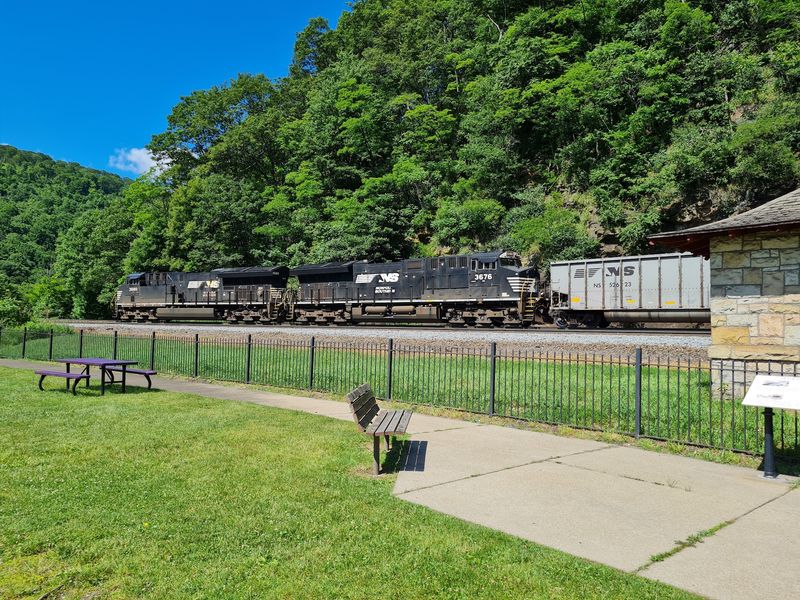
The Horseshoe Curve is a three-track curve that lets trains cross the Allegheny Mountains.
It’s now a National Historic Landmark and is known as an engineering marvel.
Before the curve, trains used the slower Allegheny Portage Railroad.
The new route replaced it and made the trip across the mountains much smoother.
Here’s what makes it special today.
The curve is still active, carrying trains on Norfolk Southern Railway’s Pittsburgh Line.
That means you might watch a long train wrap around the bend in real time.
Rail fans treat this place like a front-row seat.
The observation park was first built in 1879 and renovated in the early 1990s.
It offers prime viewing spots right beside the tracks.
Getting up there is part of the adventure.
You can climb 194 steps, or you can ride the funicular, whose cars are painted to look like Pennsylvania Railroad passenger coaches.
The funicular depends on weather and maintenance, so don’t count on it.
Check the site’s Facebook page or call ahead before you go.
Down below, a visitor center run by the Railroaders Memorial Museum shares the story.
Exhibits explain how the curve was built and why it mattered.
The site typically opens from April to November.
Hours can vary, so a quick check before leaving saves you a wasted trip.
It’s about five miles west of Altoona in Blair County.
Pack some patience, find a good spot, and listen for the rumble coming around the bend.
Address: 2400 Veterans Memorial Highway, Altoona, PA 16601
8. Abandoned Pennsylvania Turnpike
Drivers once zoomed through here at highway speed.
Now the loudest traffic might be a squirrel and a few bike tires.
This 13-mile stretch belonged to the original turnpike, which opened in 1940 as America’s first superhighway.
In 1968, it got bypassed because its two-lane tunnels caused traffic jams.
Instead of tearing it out, the old road got a second life.
Today it’s open for hiking and biking.
The section sits just east of Breezewood.
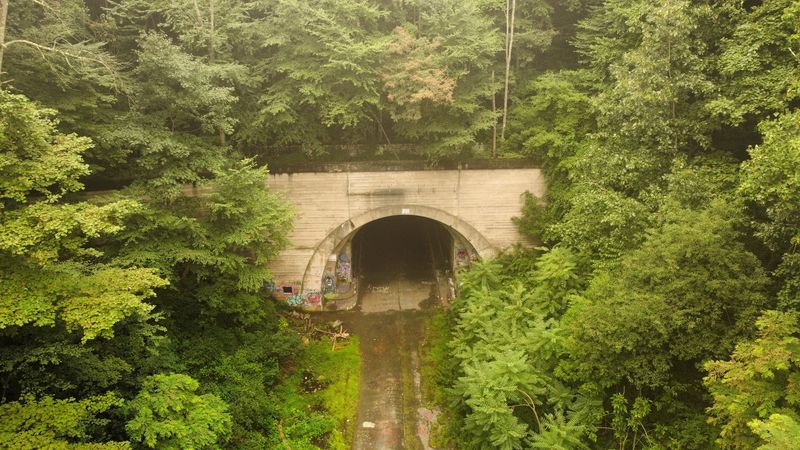
It includes two tunnels, Rays Hill Tunnel and the longer Sideling Hill Tunnel.
Walking into an empty highway tunnel feels strange in the best way.
Bring a strong flashlight, because these tunnels get dark.
Out in the open, nature is slowly taking the road back.
Weeds and trees creep toward the old asphalt, giving the whole place a surreal look.
It’s a little like stepping onto a movie set.
Your phone camera will stay busy, and your friends will ask where on earth you went.
Biking is a popular way to cover the distance.
Thirteen miles one way adds up fast on foot, so plan your turnaround point.
One access point sits near Tannery Road and US 30, east of the Breezewood interchange.
That western access area has parking.
There’s no snack bar out here, so pack water and food.
Wear sturdy shoes, since old pavement can be bumpy and cracked.
For a state famous for its long highway, this stop is a funny twist.
You get to explore the Pennsylvania Turnpike without paying a toll or fighting traffic.
Address: Tannery Road, Breezewood, PA 15533 (Western Access Point for parking)
9. Omni Bedford Springs Resort
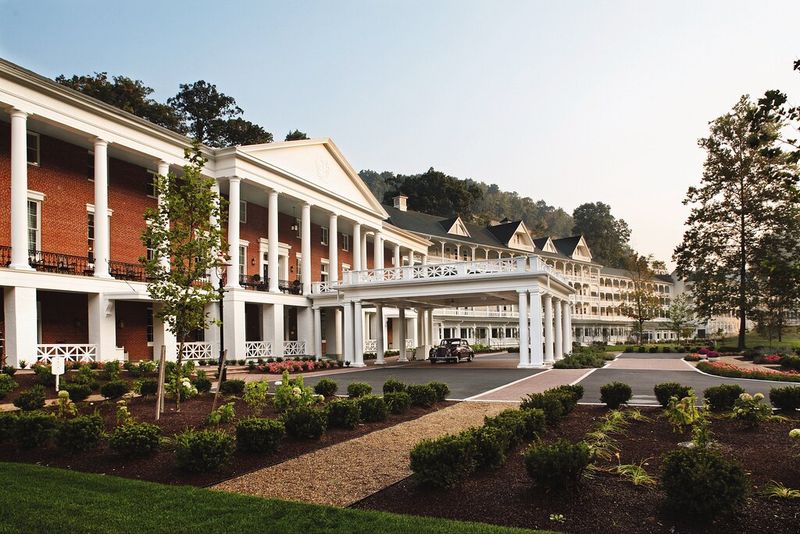
Back in 1806, folks traveled to Bedford for the water.
More than two centuries later, the mineral springs still play a starring role.
Omni Bedford Springs Resort is a National Historic Landmark District.
It’s recognized as one of the last and best-preserved 19th-century resort hotels built around natural mineral springs in the Allegheny Mountains.
That history isn’t just framed on a wall.
The spa uses the mineral waters in its treatments, linking modern pampering to the property’s early days.
Swimmers get a treat, too.
The resort has an indoor spring-fed pool that’s noted as one of the first in the country.
Golfers, pack your clubs.
The Old Course is a championship course that’s been recognized as one of the best in Pennsylvania.
Not a golfer?
No problem, because miles of hiking and biking trails wind around the grounds.
History buffs can join heritage walks into downtown Bedford.
It’s a relaxed way to learn about the area while getting your steps in.
Food is a big part of the stay.
Six indoor and outdoor dining venues feature local produce and offer scenic views.
The resort has 216 guest rooms and suites.
Some come with expansive balconies, which are perfect for slow mornings with mountain air.
This stop works best as an overnight break.
Splitting the Philadelphia to Pittsburgh drive in two makes the whole trip feel more like a vacation.
After hours of highway, a spring-fed pool and a quiet balcony sound pretty great.
Consider it a reward for surviving the turnpike.
Address: 2138 Business 220, Bedford, PA 15522
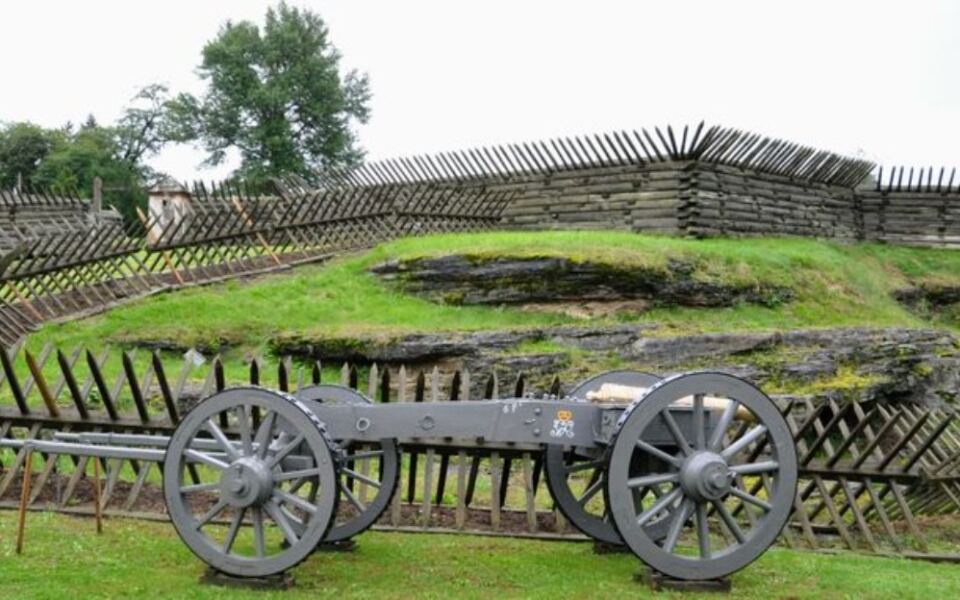
10. Fort Ligonier
Eight years, zero defeats.
That’s the record of this British fort during its time as a garrison in the French and Indian War.
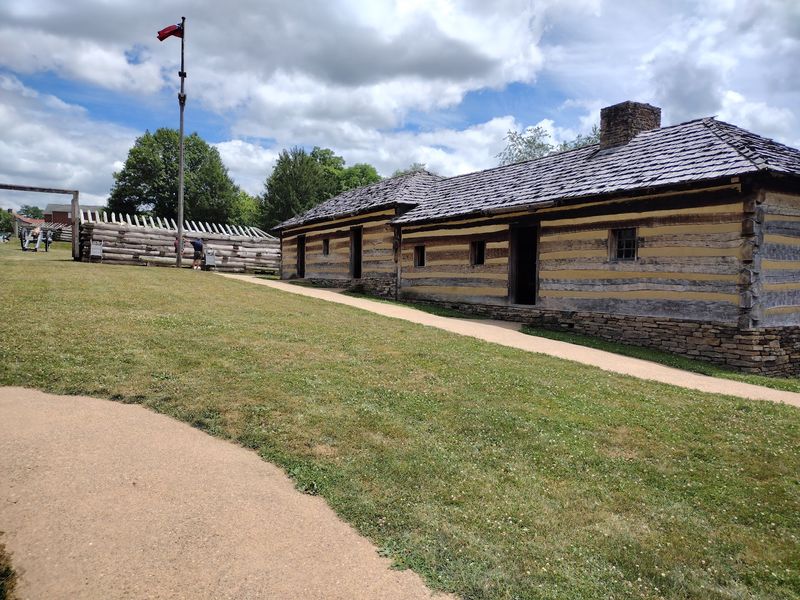
Fort Ligonier is a carefully reconstructed 1758 fortification standing on its original site.
It served as a staging area for the Forbes Expedition.
The inner fort covers 200 feet square, with four corner bastions.
Those pointed corners helped defenders cover the walls from multiple angles.
Inside, you can explore rebuilt structures like an officer’s mess, barracks, and a quartermaster store.
It’s easy to picture soldiers going about their daily routines.
Want a little adventure?
You can head down into the remains of the original underground powder magazine.
That’s one of the coolest parts, because it’s real, not rebuilt.
You’re standing in a space that dates back to the 1700s.
The museum holds an impressive collection of 18th-century artifacts and art.
Among the highlights are George Washington’s saddle pistols.
Seeing something Washington owned brings history class to life fast.
It’s a great moment for curious kids and history fans alike.
Tours are self-guided, and an audio tour is available.
Daily programs and activities add extra layers to the visit.
Check the calendar before you go.
The fort is open daily from early April through Thanksgiving weekend, 10:00 a.m. to 5:00 p.m., and it closes from December through March.
The museum stays open on winter weekends, though.
So a cold-weather trip can still include some Revolutionary-era treasures, just without the outdoor walls.
Ligonier makes a handy stop as you near Pittsburgh.
It’s a chance to stand on ground that helped shape western Pennsylvania.
Address: 200 South Market Street, Ligonier, PA 15658
11. Fallingwater
Most people build homes near waterfalls.
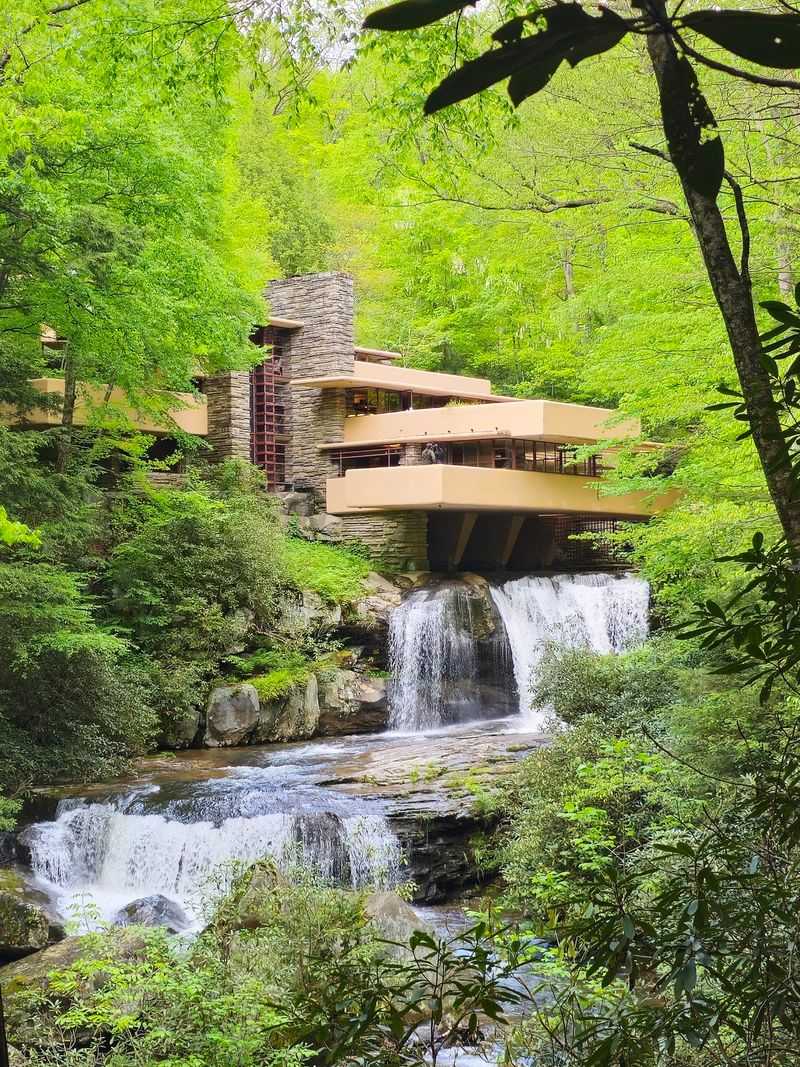
Frank Lloyd Wright built one right on top of a waterfall, and the world still can’t stop staring.
Fallingwater was designed in 1935 for the Kaufmann family.
Its terraces stretch out boldly over a natural waterfall on Bear Run in Mill Run.
The house shows off Wright’s idea of organic architecture.
He wanted buildings to blend with nature instead of fighting it.
To make that happen, the house uses mostly locally sourced stone along with reinforced concrete.
The result fits right into the woods and rocks around it.
The honors pile up here.
Fallingwater is both a National Historic Landmark and a UNESCO World Heritage site.
Since 1964, the Western Pennsylvania Conservancy has run it as a museum.
The group preserves the setting along with the original furnishings and artwork.
That means you’re seeing the home much as the Kaufmanns had it.
It feels like the family just stepped out for a walk.
Don’t miss the guest quarters, designed in 1938.
A covered walkway links them to the main house.
Planning is key for this stop.
Buy tickets in advance to guarantee admission, because showing up and hoping isn’t a great strategy.
Several tour options are available, including guided architectural tours and grounds passes.
Pick the one that matches your time and curiosity.
Tours run daily except Wednesdays, from March through December.
Mark your calendar so you don’t arrive on a closed day.
Fallingwater makes a grand final stop before Pittsburgh.
Ending a cross-state trip at a house that floats over water feels like the perfect closing scene.
Address: 1491 Mill Run Road, Mill Run, PA 15464
Share this story