A twenty-dollar bill used to feel like real grocery money, but these days it barely covers a few items at the supermarket. Tennessee’s farmers markets flip that script entirely, turning fifteen dollars into a tote bag overflowing with tomatoes, squash, sweet corn, greens, and whatever else is at its seasonal peak.
From Memphis to the Tri-Cities, growers set up stands every weekend with prices that make eating local feel less like a luxury and more like the smartest choice you can make. Here are eleven markets across the state where your budget stretches as far as your appetite.
1. Memphis Farmers Market, Memphis
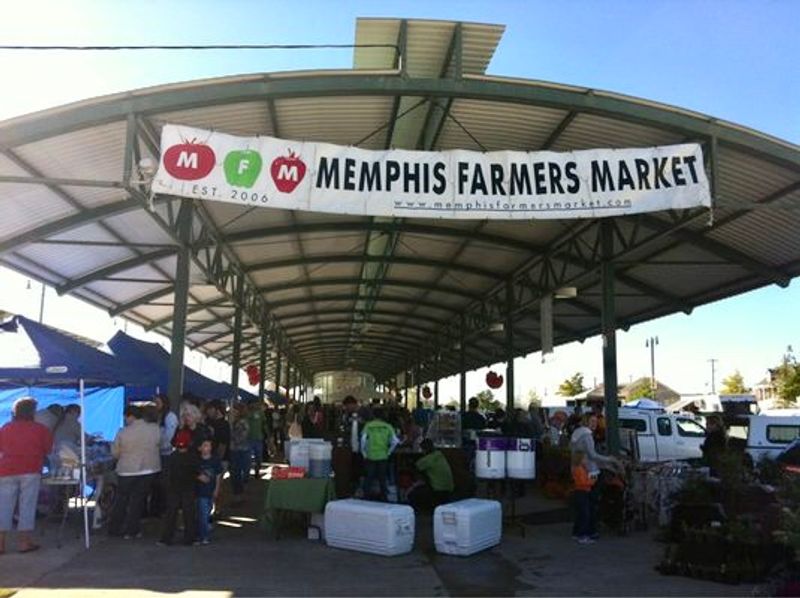
Saturday mornings in Memphis mean one thing for savvy shoppers: the Memphis Farmers Market. Tucked into the city’s urban landscape, this market draws growers from across the western edge of the state, each bringing crates of whatever thrived that week in their fields.
You’ll find heirloom tomatoes still warm from the sun, bundles of collard greens tied with twine, and baskets of peaches that smell like summer itself.
The vendor mix here leans heavily agricultural, which keeps the focus exactly where it belongs: on produce. Unlike markets that lean into crafts and baked goods, this one prioritizes the farmers who show up with truckloads of squash, peppers, okra, beans, and herbs.
That agricultural emphasis translates directly into value, because growers price their harvests to move volume, not to sit on premium margins.
Fifteen dollars goes surprisingly far when you’re buying directly from the person who planted the seeds. A few pounds of tomatoes, a bunch of kale, some sweet onions, a quart of berries, and a handful of jalapeños can all fit into that budget if you shop with the season.
The trick is arriving early enough to see the full selection but late enough that vendors start thinking about what they don’t want to haul home.
The Saturday schedule also makes it easy to build a routine. Swing by with your reusable tote, chat with the same growers week after week, and learn which stalls offer the best deals on bulk buys.
Some vendors will even negotiate a flat rate if you’re filling a bag with multiple items, especially as closing time approaches.
Memphis anchors the western end of Tennessee’s farmers market scene with a no-nonsense approach to local food. There’s no pretense here, just fresh produce, fair prices, and the kind of straightforward transactions that make you wonder why you ever paid supermarket markups.
For anyone in the Mid-South looking to eat well on a tight budget, this market delivers every single week.
2. West Tennessee Farmers Market, Jackson

Jackson sits in that sweet spot between Memphis and Nashville, and the West Tennessee Farmers Market reflects the agricultural heart of the region. This market puts the spotlight squarely on what grows best in the fertile bottomlands and rolling fields of West Tennessee: corn, beans, cucumbers, watermelons, and row after row of leafy greens.
Growers here aren’t hobby farmers; they’re working the land their families have tended for generations.
What makes this market particularly budget-friendly is the sheer volume of produce available. When a farmer shows up with a pickup bed full of Silver Queen corn or a trailer stacked with watermelons, prices drop to levels that make bulk buying irresistible.
You can walk away with a dozen ears of corn, a five-pound bag of tomatoes, and a cantaloupe for less than the cost of a single prepared meal.
The market also bridges the gap between the state’s larger cities, giving shoppers in Jackson, Lexington, Brownsville, and surrounding towns a reliable source for local food. That regional focus means vendors understand their customer base: families looking to stretch their grocery dollars, home cooks who preserve and freeze for winter, and anyone tired of paying premium prices for produce that traveled a thousand miles.
Seasonality drives everything here. Spring brings strawberries and snap peas, summer explodes with tomatoes and peppers, and fall delivers squash and sweet potatoes by the bushel.
Shopping with the calendar rather than against it keeps costs low and flavors high, because you’re buying what’s abundant rather than what’s scarce.
The West Tennessee Farmers Market operates with a straightforward philosophy: grow it, pick it, sell it fresh. There’s no middleman markup, no fancy packaging, and no artificial scarcity.
Just honest produce at honest prices, sold by the people who coaxed it out of the ground. For fifteen dollars, you can fill a tote and still have change left over for a jar of local honey.
3. Clarksville Downtown Market, Clarksville
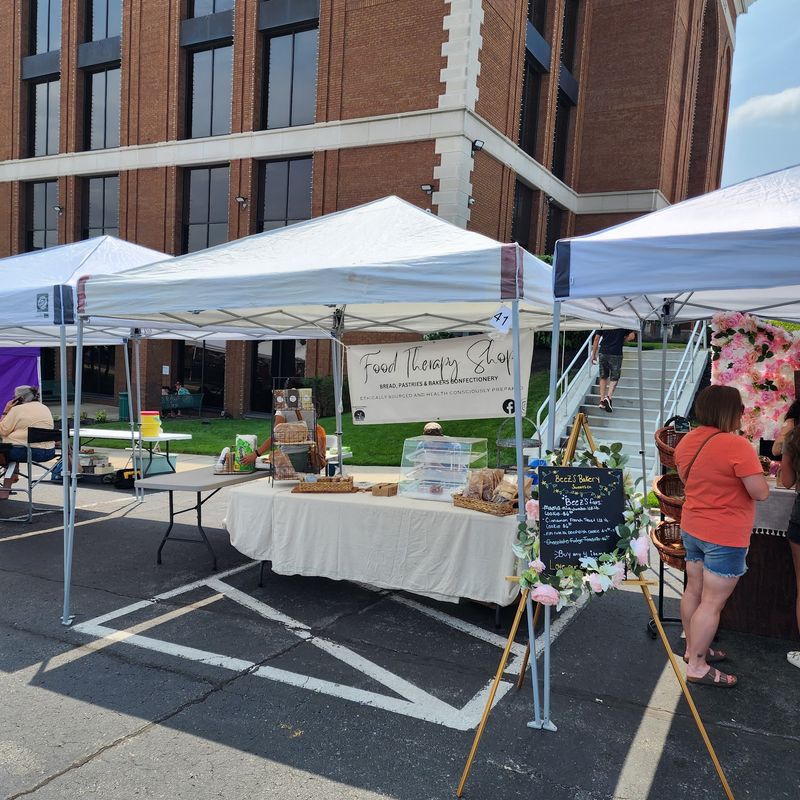
Clarksville’s Public Square transforms every Saturday into a bustling marketplace where farmers, bakers, and makers converge under the shade of old trees. The downtown setting gives this market a distinctly community-focused vibe, with vendors who recognize regular customers and growers who’ll tell you exactly how to cook the kohlrabi you just bought.
It’s the kind of place where shopping feels less like a transaction and more like a neighborhood gathering.
Local growers bring the backbone of the market: summer squash, bell peppers, green beans, beets, carrots, and whatever else is ready to harvest. Because Clarksville sits near Fort Campbell, the market draws a diverse crowd of shoppers, many of whom appreciate the chance to buy directly from the farms surrounding the city.
That steady customer base helps vendors keep prices competitive, knowing they’ll sell out if the quality and value align.
Fifteen dollars at the Clarksville Downtown Market buys you a well-rounded haul. Start with a couple pounds of tomatoes, add some cucumbers for salads, grab a bunch of fresh basil, and finish with a quart of blueberries if they’re in season.
The key is shopping the perimeter first, where the produce vendors cluster, before getting distracted by the baked goods and handmade crafts that round out the market experience.
The Public Square location also makes this market incredibly accessible. Park once, walk the loop, and you’ve seen everything.
Vendors set up in a predictable pattern week after week, so once you identify your go-to stalls for greens, tomatoes, and root vegetables, you can shop efficiently without wasting time or budget on impulse buys.
What sets this market apart is its balance. You get serious produce options without the overwhelming scale of a massive urban market, and you get small-city charm without sacrificing selection.
For Clarksville residents and anyone driving in from surrounding counties, this Saturday tradition offers the freshest food at the fairest prices, all in a setting that makes you want to linger a little longer.
4. Nashville Farmers’ Market, Nashville
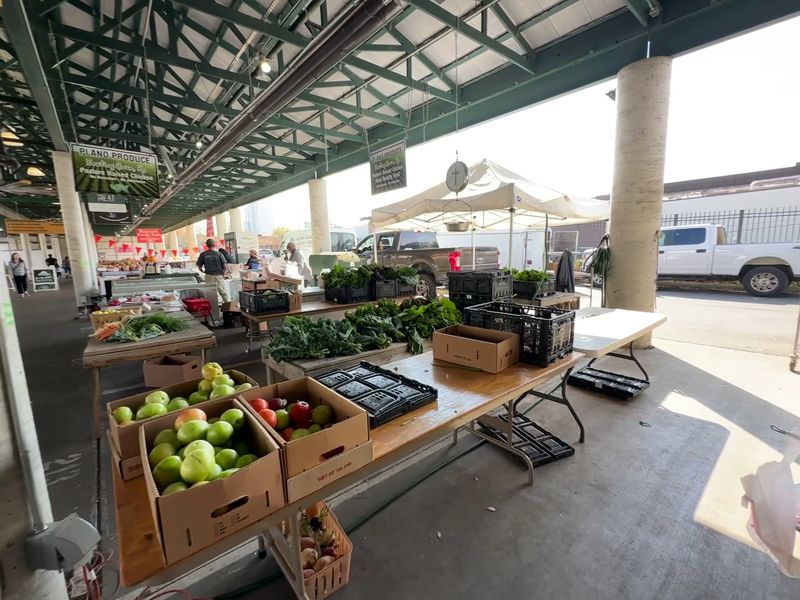
Nashville’s Farmers’ Market operates year-round, which immediately sets it apart from seasonal Saturday pop-ups. The permanent farm sheds house Tennessee growers who rotate their offerings with the seasons, meaning you can find fresh produce in January just as easily as July, though obviously the selection shifts from winter greens and root vegetables to summer tomatoes and sweet corn.
That consistency makes it a reliable stop for budget-conscious shoppers who need fresh food every week, not just during peak harvest months.
The market’s scale works in your favor when you’re shopping on fifteen dollars. Multiple vendors competing for your business means prices stay reasonable, and the sheer variety lets you comparison shop without leaving the building.
One grower might have the best deal on peppers while another offers unbeatable prices on squash, so a quick lap around the sheds before committing to any purchases pays dividends.
Because this is the state capital’s flagship market, it draws growers from across Middle Tennessee, each bringing their specialty crops. You’ll find everything from standard grocery staples like lettuce, onions, and potatoes to more unusual items like heirloom beans, specialty greens, and heritage tomato varieties.
That diversity means your fifteen-dollar tote can look different every single week, keeping your meals interesting without inflating your budget.
The year-round format also means vendors have invested in being here, which translates to better customer relationships. Shop regularly and you’ll start recognizing faces, learning which farms grow the sweetest strawberries or the crunchiest snap peas.
Those relationships often lead to deals: a vendor might throw in an extra bunch of herbs or offer a discount if you’re buying multiple items.
Nashville Farmers’ Market sits on the Tennessee Farmers Market Trail, a recognition of its importance to the state’s local food network. For anyone living in or visiting Nashville, this market offers the most consistent, most diverse, and most budget-friendly access to Tennessee-grown produce.
Fifteen dollars buys you a week’s worth of vegetables if you shop smart, stick to what’s abundant, and resist the temptation of the prepared food vendors calling from the other side of the building.
5. Main Street Murfreesboro Saturday Market, Murfreesboro
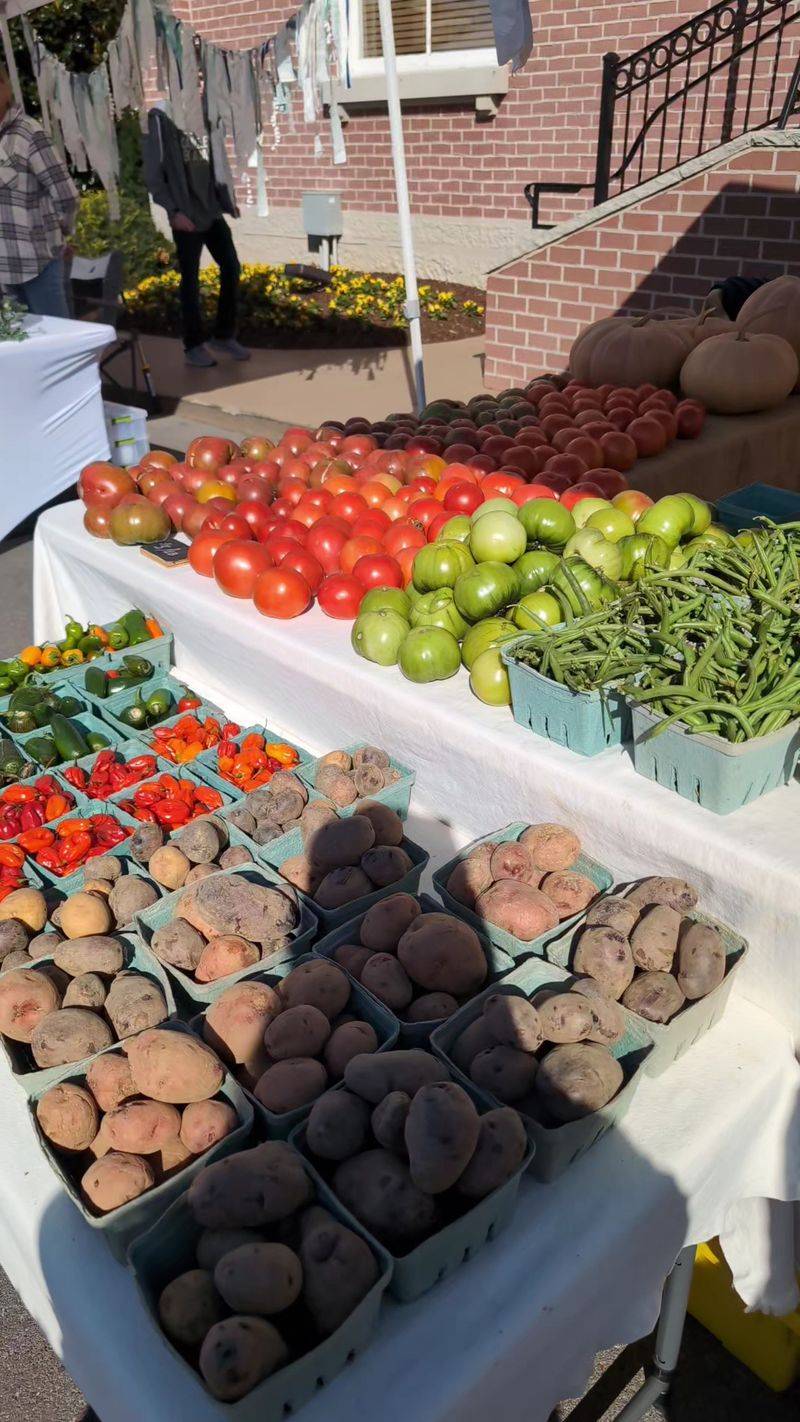
Murfreesboro’s historic Public Square comes alive every Saturday with a farmers market that feels like it’s been part of the town forever. Vendors set up around the courthouse, creating a loop of stalls where you can find everything from just-picked tomatoes to bundles of sweet corn still in the husk.
The historic setting adds character, but the real draw is the quality and price of the produce coming straight from farms in Rutherford County and beyond.
This market thrives during peak season, which in Middle Tennessee means late spring through early fall. That’s when growers arrive with truckloads of the staples that fill a tote fast: tomatoes by the pound, summer squash in multiple varieties, green beans by the bushel, and berries sold in quart containers that you’ll empty before you get home.
Prices reflect the abundance, dropping to levels that make you question why anyone shops anywhere else during these months.
Fifteen dollars at the Murfreesboro market translates to serious volume if you time it right. Arrive mid-morning rather than at opening, and you’ll find vendors more willing to negotiate on bulk purchases or offer deals on items they’d rather sell than pack back up.
A five-pound bag of tomatoes, a couple pounds of squash, a bunch of greens, some fresh herbs, and a quart of blackberries can all fit within that budget if you shop the deals rather than the premium displays.
The Public Square location also makes this market a natural gathering spot. Families make it part of their Saturday routine, stopping for produce before grabbing breakfast at one of the downtown cafes.
That steady traffic keeps vendors coming back week after week, which in turn keeps selection high and prices competitive. It’s a virtuous cycle that benefits everyone, especially shoppers stretching their grocery dollars.
Murfreesboro sits close enough to Nashville to draw some of the same growers, but the smaller scale keeps the vibe more intimate. You’re not navigating a massive warehouse of vendors; you’re walking a historic square, chatting with farmers who remember you from last week, and filling your bag with food that was growing in the ground a day or two ago.
For pure value and hometown atmosphere, this market delivers every single Saturday.
6. Cookeville Farmer’s Market, Cookeville
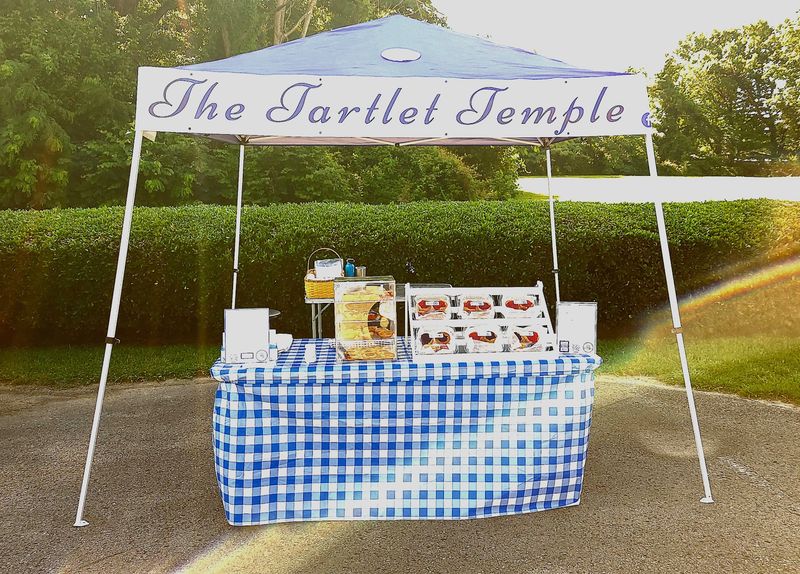
Cookeville gives this list crucial Upper Cumberland representation, filling the geographic gap between Nashville and Knoxville with a market that serves the rolling hills and small farms of the region. The Cookeville Farmer’s Market operates with a straightforward mission: connect local growers with local eaters.
No frills, no gimmicks, just tables loaded with whatever’s ready to harvest that week.
The Upper Cumberland grows exceptional produce thanks to the region’s climate and soil. Tomatoes develop deep flavor in the summer heat, greens thrive in the cooler spring and fall months, and root vegetables like carrots and potatoes grow dense and sweet.
Vendors at this market understand their product because they grew it themselves, and that knowledge translates to better shopping advice and more accurate pricing.
Budget shopping here means embracing the “bring a tote and buy vegetables” philosophy completely. Fifteen dollars buys you a surprising amount when you’re purchasing directly from farmers who set prices to move inventory, not to maximize margins.
A few pounds of tomatoes, a bag of green beans, some summer squash, a bunch of fresh herbs, and maybe a cantaloupe or a quart of berries, all fit within that budget if you focus on what’s abundant rather than what’s scarce.
Cookeville’s market also benefits from its location at the crossroads of several rural counties. Growers from Putnam, Cumberland, White, and surrounding areas converge here, creating variety that a single-county market couldn’t match.
That diversity means your fifteen-dollar haul looks different depending on which vendor you patronize, and shopping around becomes part of the strategy for maximizing value.
The market operates on a schedule that aligns with the agricultural calendar, which means peak season brings the best selection and the lowest prices. Summer Saturdays are when your fifteen dollars stretches furthest, when farmers arrive with overflowing trucks and price their produce to sell out before heading home.
For anyone in the Upper Cumberland region, this market represents the most direct line between field and table, with prices that prove eating local doesn’t require a premium budget.
7. Chattanooga Market, Chattanooga
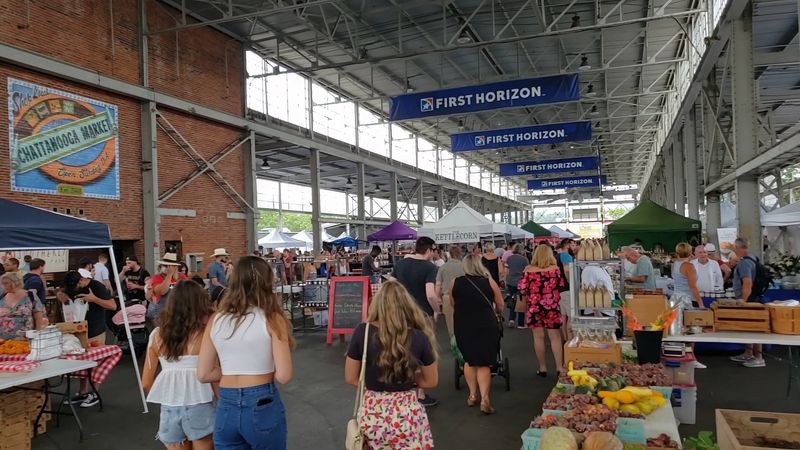
Sundays in Chattanooga mean the market at First Horizon Pavilion, one of the state’s larger destination markets where the scale alone guarantees you’ll find what you need. This isn’t a small-town square with a dozen vendors; it’s a sprawling event with enough produce stalls to keep you browsing for an hour.
That size creates competition, and competition keeps prices reasonable even in a market that’s become something of a tourist attraction.
The key to shopping this market on a budget is ignoring everything except the produce vendors. Yes, there are crafts and prepared foods and all kinds of other distractions, but your fifteen dollars goes toward vegetables if you want to fill a tote.
Stick to the growers selling tomatoes, peppers, squash, greens, beans, cucumbers, and whatever else is in season. Those stalls cluster together, making it easy to comparison shop before committing to any purchases.
Because this market draws from a wide radius, you’ll find growers from Southeast Tennessee, North Georgia, and even parts of Alabama bringing their harvests. That geographic diversity translates to variety, with mountain growers offering cool-season crops alongside valley farmers selling heat-loving vegetables.
The mix means something is always abundant, always priced to move, and always fresh enough to last the week ahead.
Fifteen dollars at the Chattanooga Market buys you a well-rounded selection if you shop strategically. Start with the basics: tomatoes, onions, and peppers form the foundation of countless meals. Add seasonal items like summer squash or green beans, grab some fresh herbs for flavor, and finish with whatever looks too good to pass up.
The abundance here means impulse buys don’t have to break the budget, because even premium items like heirloom tomatoes stay affordable when multiple vendors are competing for your business.
The Sunday schedule sets this market apart from the Saturday-morning norm, giving you a different shopping rhythm and catching vendors after they’ve already worked the weekend. Some growers price aggressively on Sundays because they’d rather sell out than haul produce home, which can work in your favor if you arrive mid-morning.
For Chattanooga residents and anyone visiting the area, this market offers scale, variety, and value in equal measure.
8. Market Square Farmers Market, Knoxville
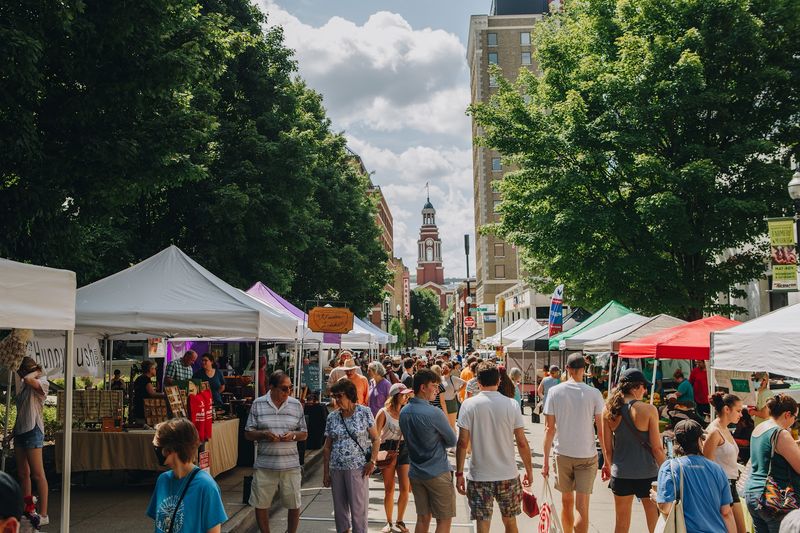
Knoxville’s Market Square has hosted farmers and shoppers for generations, and the current iteration of the Market Square Farmers Market continues that tradition with both Saturday and Wednesday market days. The downtown location makes it accessible to city residents and visitors alike, while the vendor lineup stays focused on East Tennessee growers bringing produce from the fertile valleys and hillsides surrounding the city.
East Tennessee’s growing season produces incredible variety, and this market showcases it all. Spring brings strawberries and asparagus, summer explodes with tomatoes and peppers, fall delivers apples and winter squash, and even the cooler months offer hardy greens and root vegetables.
That year-round productivity means you can shop this market across multiple seasons and always find something worth buying, though summer remains the peak for both selection and value.
Shopping on fifteen dollars requires focus, but the payoff is substantial. Multiple vendors selling similar items create natural price competition, so a quick survey of the tomato offerings before committing to a purchase can save you a dollar or two.
Those savings add up across multiple items, turning your fifteen dollars into a tote bag packed with five or six different vegetables, herbs, and maybe even some fruit if berries or peaches are in season.
The Saturday market draws the bigger crowds and the fuller vendor lineup, while Wednesday offers a more relaxed midweek option for shoppers who want to avoid the weekend rush. Both markets feature the same commitment to local agriculture, the same direct-from-farmer pricing, and the same opportunity to buy food that was growing in the ground yesterday.
Which day you choose depends more on your schedule than on any difference in value or selection.
Market Square’s central location also makes it easy to incorporate market shopping into other downtown errands. Park once, hit the market first while everything is fresh and fully stocked, and then continue with the rest of your day knowing your produce needs are covered for the week.
For East Tennessee residents, this market represents the most convenient access to local food at prices that make eating well feel achievable rather than aspirational.
9. Johnson City Farmers’ Market, Johnson City
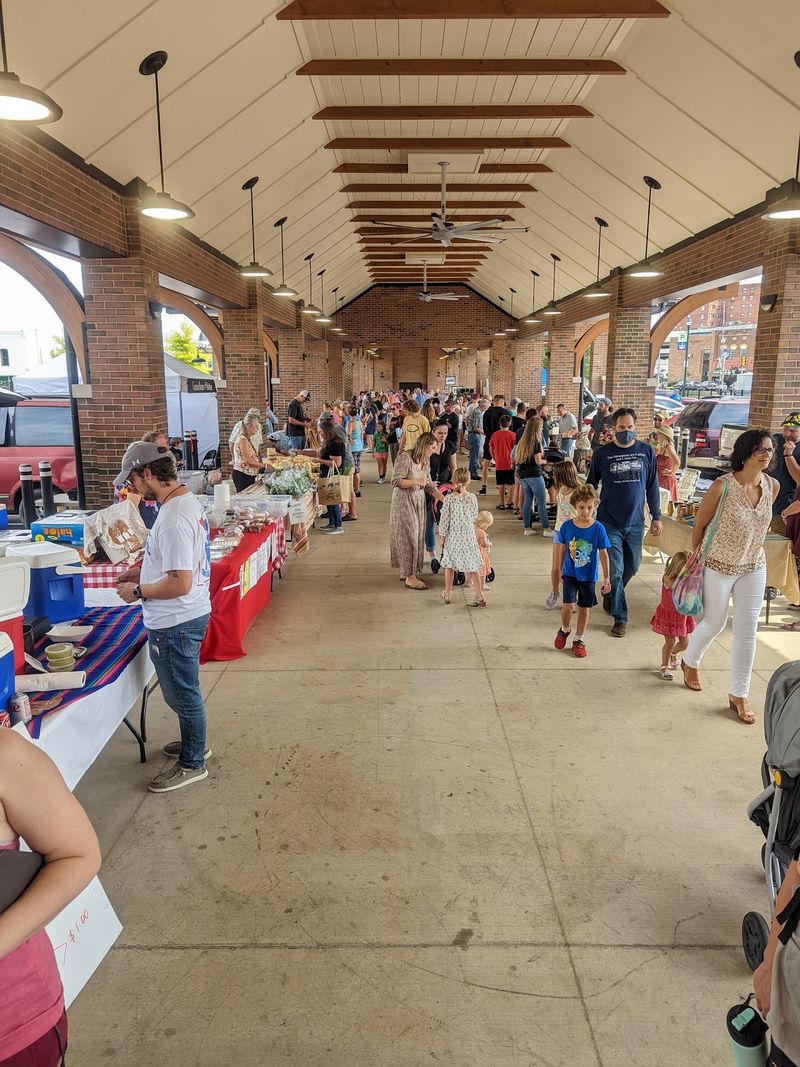
Johnson City anchors the Tri-Cities region with a farmers market that reflects Appalachian agriculture at its finest. The hills and valleys surrounding the city produce food with character: strawberries that taste like they were picked an hour ago, tomatoes with the kind of acidity and sweetness you can’t find in a supermarket, and greens so fresh they squeak when you wash them.
Growers here work land that’s been farmed for generations, and that experience shows in the quality of what they bring to market.
The Appalachian growing calendar drives everything at this market. Spring means strawberries and early greens, summer brings tomatoes and beans, and fall delivers squash and apples.
Each season has its stars, and shopping with that rhythm rather than against it keeps your budget intact while maximizing flavor. When strawberries are abundant in May, they’re priced to sell; when tomatoes flood the market in July and August, you can buy them by the bucket.
Fifteen dollars goes remarkably far when you’re buying produce at peak season from farmers who need to move volume. A flat of strawberries, several pounds of tomatoes, a bag of green beans, some summer squash, and a bunch of fresh herbs can all fit within that budget if you shop the deals and avoid the premium displays.
The trick is recognizing abundance and buying accordingly, loading up when prices drop rather than trying to buy out-of-season items at inflated costs.
Johnson City’s market also benefits from its Tri-Cities location, drawing shoppers from Johnson City, Kingsport, and Bristol, along with smaller towns throughout the region. That customer base supports a solid vendor lineup, ensuring you’ll find multiple options for staple items and creating the price competition that keeps costs reasonable.
Growers know they’re competing for your business, and that knowledge influences their pricing strategies in your favor.
For anyone in Northeast Tennessee, this market offers the most direct connection to regional agriculture. The food here tastes like the place it comes from, grown in Appalachian soil by people who understand the land.
Your fifteen dollars supports that system while filling your tote with vegetables that make every meal better.
10. Kingsport Farmers Market, Kingsport
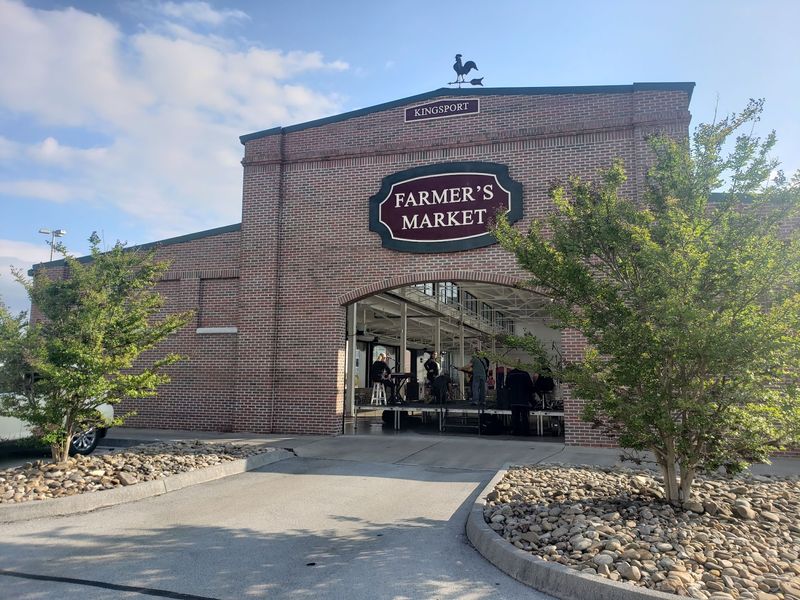
Kingsport gives this list a second Tri-Cities option, ensuring the coverage feels genuinely statewide rather than concentrated in a few urban centers. The Kingsport Farmers Market operates with a community focus, serving shoppers from Kingsport proper and surrounding Sullivan County with produce grown within a short drive of the market itself.
That hyperlocal approach means food moves from field to market in hours, not days, preserving freshness and flavor in ways that long-distance shipping never could.
The vendor mix here leans heavily toward traditional row crops: tomatoes, peppers, cucumbers, squash, beans, corn, and greens. These are the staples that fill a tote and form the foundation of home cooking, and they’re priced accordingly.
Farmers growing commodity vegetables for local markets operate on volume, which means they price to sell rather than to sit on inventory. Your fifteen dollars benefits directly from that business model.
Shopping this market means embracing seasonality completely. You won’t find tomatoes in March or strawberries in October, but when those items are in season, they’re abundant and affordable.
Summer is when your fifteen dollars stretches furthest, when growers arrive with trucks loaded with produce that needs to sell before it overripens. A few pounds of tomatoes, some cucumbers for pickling, a mess of green beans, summer squash in multiple colors, and fresh basil all fit within budget if you shop during peak abundance.
The Tennessee Association of Farmers Markets includes Kingsport in its East Tennessee directory, a recognition of the market’s role in the regional food system. That listing also signals a commitment to supporting local agriculture, connecting growers with consumers, and maintaining the kind of direct-sale relationships that keep food affordable and farmers viable.
For Kingsport residents and anyone in the upper Tri-Cities area, this market represents the most convenient access to local produce at prices that compete with supermarkets while delivering superior quality. Your fifteen dollars supports farmers who live and work in your community, and in return you get a tote full of vegetables that taste like they should, grown in soil you could drive to if you wanted to see where your food comes from.
11. Morristown Farmers Market, Morristown
Morristown fills the geographic space between Knoxville and the Tri-Cities with a farmers market that puts local growers front and center. This is a smaller-community market where the focus stays squarely on agriculture, where vendors know their regular customers by name, and where shopping feels like supporting neighbors rather than conducting anonymous transactions.
The Tennessee Association of Farmers Markets recognizes this market as part of the state’s local food network, a signal that it meets the standards for connecting growers directly with consumers.
The farms surrounding Morristown produce the full range of East Tennessee staples: tomatoes that define summer, green beans picked at the perfect stage, squash in every color and shape, peppers ranging from sweet to scorching, and greens that thrive in the cooler months. Growers here understand their land and their crops, and that expertise translates to better produce at better prices.
When a farmer can tell you exactly when the tomatoes were picked and how to store them for maximum shelf life, you’re getting value that extends beyond the purchase price.
Fifteen dollars at the Morristown market buys you a week’s worth of vegetables if you shop with intention. Start with versatile staples like tomatoes and onions, add seasonal items like summer squash or green beans, grab some fresh herbs to elevate your cooking, and finish with whatever looks too good to pass up.
The smaller scale of this market means vendors price competitively because they’re not competing with dozens of other stalls; they’re building relationships with repeat customers who’ll come back every week if the quality and value align.
The market’s location between larger cities also means it draws growers who might not make the drive to Knoxville or Johnson City but who have excellent produce to sell. That creates a vendor mix you won’t find at the bigger urban markets, with farms you’ve never heard of bringing vegetables that rival anything sold anywhere else.
Discovery is part of the appeal here, finding new favorite vendors and new favorite varieties of familiar crops.
Morristown rounds out this list by proving that small-town markets deliver the same value as their big-city counterparts. Your fifteen dollars fills a tote just as completely here, the produce tastes just as fresh, and the experience feels more personal.
For anyone in the Morristown area or passing through on the way to somewhere else, this market deserves a stop.
Share this story