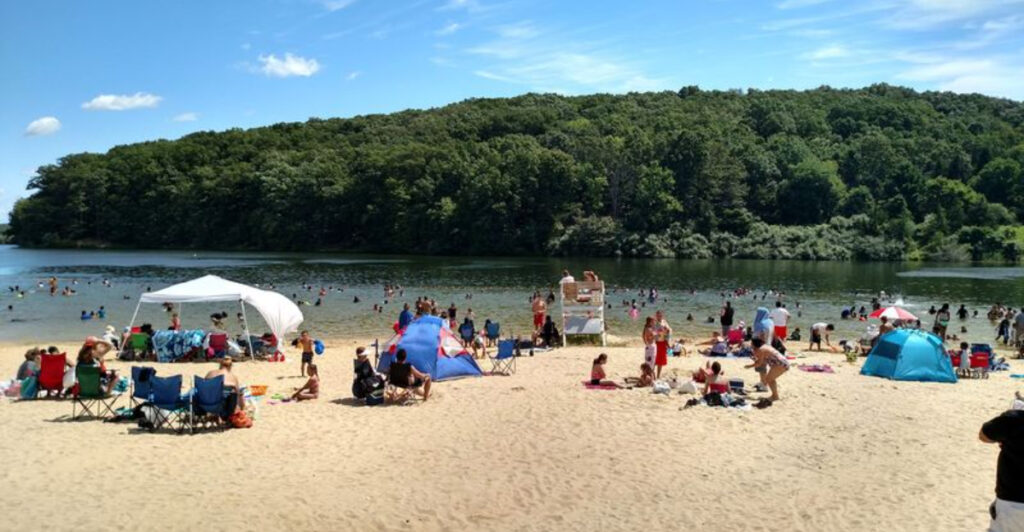
The water at Atsion Lake is the color of strong iced tea. In Hopewell, swimmers float above a stone quarry more than 40 feet deep.
Up north, a chilly, stream-fed pool hides beside a forest as if someone carved it out for locals who know exactly where to turn. New Jersey’s best summer swimming is not limited to the Shore—or accompanied by boardwalk crowds, parking battles, and sand hiding in places sand should never be.
Across the state, glacial lakes, quiet reservoirs, and old-fashioned swimming clubs offer a refreshingly different escape. Some come with mountain views and hiking trails; others add floating obstacle courses, diving boards, and snack stands straight out of childhood.
Most operate seasonally, and several permit swimming only while lifeguards are present, so checking the day’s schedule before leaving is always smart. Pack a towel, arrive early, and try not to tell absolutely everyone.
1. Lake Wawayanda – Wawayanda State Park
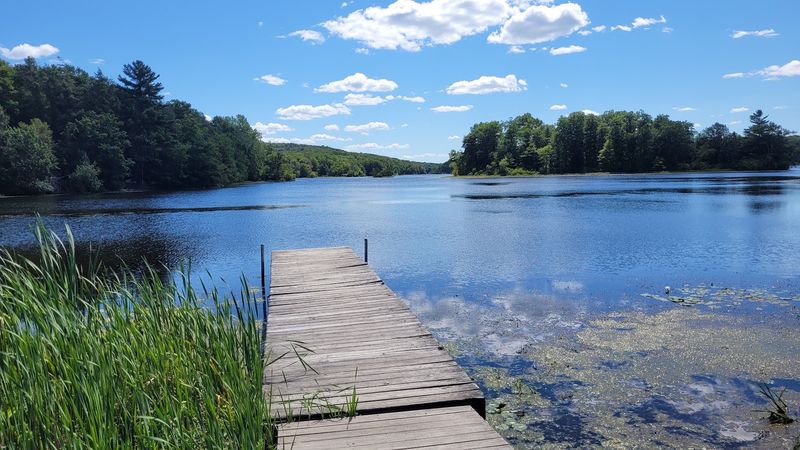
The first thing you notice is how completely the forest wraps around the water. Hemlocks, hardwoods, and the rolling Bearfort Mountains give Lake Wawayanda the look of a northern wilderness retreat, despite its location in Passaic County.
The lake’s broad, calm surface reflects all that greenery, and the developed beach occupies only a small portion of the shoreline. Come here when you want more than a quick swim.
The sandy beach has a designated lifeguarded area, while picnic tables and grills make it easy to settle in for lunch. Paddlers can explore beyond the ropes, and anglers come for bass, trout, pickerel, and landlocked salmon.
More than 60 miles of park trails surround the lake, including a stretch of the Appalachian Trail, so an easy morning hike followed by a cold swim is the winning itinerary. The park has changing areas, restrooms, and showers near the beach, sparing you the soggy ride home.
Swimming is permitted only when lifeguards are on duty, and approved life jackets are the only flotation devices allowed in the designated area. Summer weekends can fill the parking lots surprisingly early, especially during a heat wave.
Aim for the morning, claim a shady picnic spot, and enjoy the rare New Jersey pleasure of hearing more birds than engines.
2. Swartswood Lake – Swartswood State Park
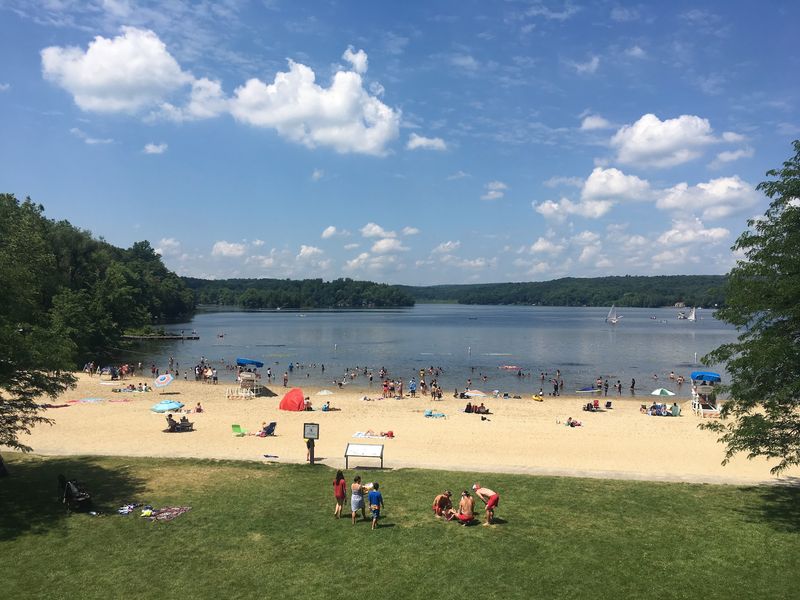
Long before New Jersey had a state park system, families were already escaping to this glacial lake in Sussex County. The state purchased the surrounding land in 1914, and Swartswood later became New Jersey’s first state park.
More than a century on, it still has the unhurried character of a place that never needed to reinvent itself. Gas-powered motorboats and jet skis are absent from the 519-acre lake.
Only electric motors are permitted, leaving the water to sailboats, canoes, kayaks, and the occasional ripple from a jumping fish. That quieter boating policy is a big part of the appeal: swimmers can look across the lake without watching speedboats carve it into pieces.
The beach area includes a designated swimming zone, restrooms, changing facilities, showers, and a concession building. Pack a picnic if you plan to stay awhile, then walk the Duck Pond Multi-Use Trail or tackle the more demanding Grist Mill Trail after swimming.
The latter passes remnants connected to the area’s old milling history. Getting here involves rural roads rather than a quick highway exit, which helps keep Swartswood feeling removed from the usual summer rush.
Lifeguard coverage determines when swimming is permitted, and the schedule may vary by day. Check before driving out, then arrive early enough to watch the lake wake up before the afternoon crowd discovers it.
3. Lake Marcia – High Point State Park
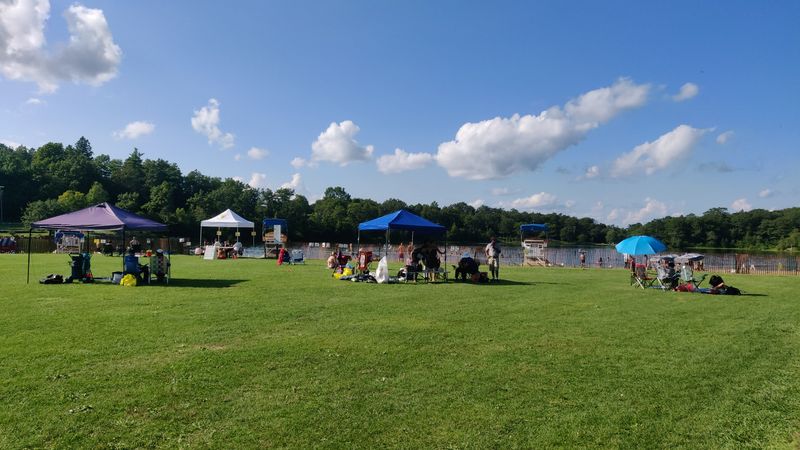
A swim feels considerably more satisfying when it comes with bragging rights. Lake Marcia sits near New Jersey’s highest elevation, beneath the ridgeline crowned by the 220-foot High Point Monument.
The spring-fed water remains bracing even in midsummer, making that first step beyond the shallows a reliable cure for sticky August weather. The 20-acre lake is modest compared with several others on this list, but its setting does the heavy lifting.
Forested slopes rise around the beach, and the surrounding park opens onto views extending into New York and Pennsylvania. For the full experience, swim first and then follow the Monument Trail—or reverse the order if you prefer to make the water your reward.
A bathhouse and changing facilities are located near the swimming area, and seasonal concessions may be available. Flotation rules are strict: rafts, tubes, and inflatable toys stay home, while U.S.
Coast Guard-approved life jackets are permitted. As at other state park beaches, swimming is allowed only inside the designated area while lifeguards are working.
High Point attracts leaf-peepers in fall, but summer mornings have their own charm. Mist sometimes hangs above the lake before the sand warms, and the mountain air can feel noticeably cooler than it does at lower elevations.
Parking can reach capacity on prime weekends, so treat an early arrival as part of the plan rather than an optional display of ambition.
4. Lake Absegami – Bass River State Forest
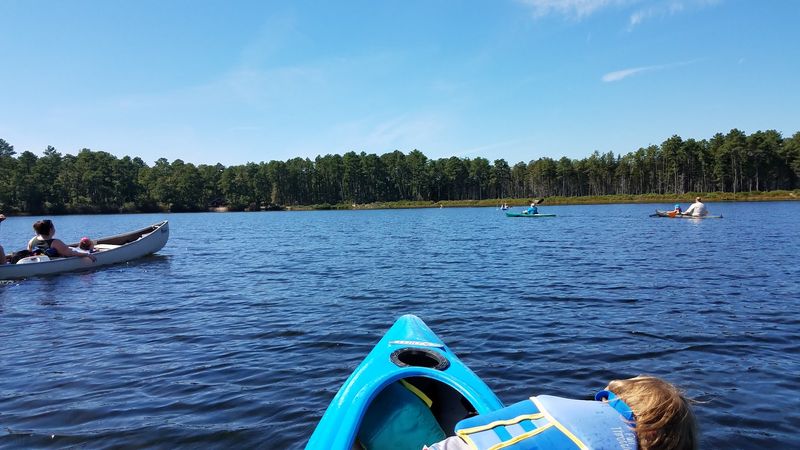
South Jersey’s cedar water can surprise first-time swimmers. The reddish-brown tint at Lake Absegami comes from natural tannins released by vegetation, not mud or pollution.
Once you wade in, the color becomes part of the fun, particularly when sunlight turns the shallows a warm shade of amber. The Civilian Conservation Corps created the 67-acre lake during the 1930s, building a recreational centerpiece for Bass River State Forest.
Today, its sandy beach, pine-scented air, and gently sloping swimming area make it especially well suited to families. Restrooms, changing rooms, outdoor showers, picnic tables, and grills are clustered close enough that nobody has to haul lunch halfway through the woods.
To see what makes the forest unusual, walk the short trail through the Absegami Natural Area. It protects a rare patch of old-growth Atlantic white cedars, including trees that escaped the extensive logging once common across the Pinelands.
Cabins and campsites also make this one of the easiest swimming trips to stretch into a full weekend. The day-use area remains open from dawn to dusk, but swimming follows the seasonal lifeguard schedule and is allowed only when guards are present.
Bring approved life jackets instead of inflatable loungers, and check current water conditions before setting out. The lake is most peaceful shortly after opening, when the beach is nearly empty and the pines still cast long shadows over the tea-colored water.
5. Atsion Lake – Wharton State Forest
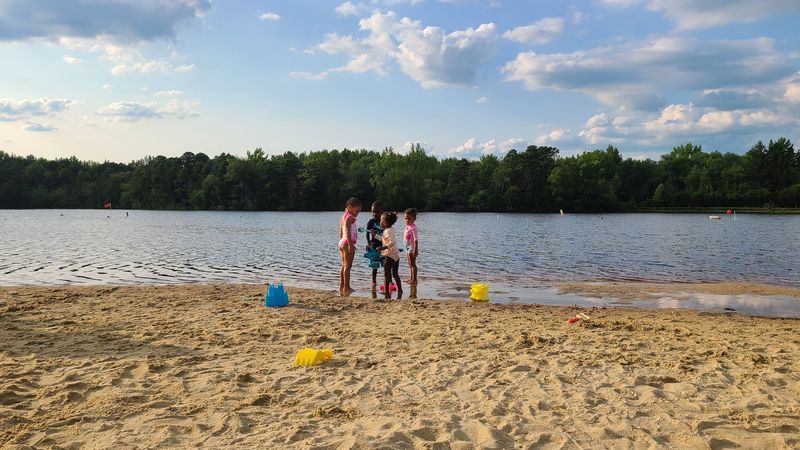
White bathing suits enter Atsion Lake at their own risk. The same cedar tannins that give the water its striking copper color may leave pale fabric looking slightly less pale.
That is a small price for swimming in one of the Pine Barrens’ most distinctive landscapes. Set along Route 206 in Wharton State Forest, the recreation area combines an easygoing beach day with a surprising amount of history.
The lake has shallow and deeper swimming sections, while the beach complex provides changing rooms, restrooms, showers, first aid, and a seasonal concession. Picnic tables, charcoal grills, and an accessible playground sit nearby.
Canoe and kayak rentals offer another way to enjoy the water outside the designated swimming zone. Save time for the restored Atsion Mansion across the road.
Built in 1826 for ironmaster Samuel Richards, the Greek Revival house recalls the period when this quiet forest supported iron furnaces, mills, and company settlements. Weekend tours turn a swim-and-picnic outing into something more memorable without demanding a major detour.
Atsion is popular enough that “hidden” becomes a flexible term by noon on a hot Saturday. Arrive when the gates open if you want a good parking spot and first choice of picnic tables.
Swimming is permitted only during posted hours with lifeguards on duty. Tubes and recreational floats are prohibited in the swimming area; only approved life jackets make the cut.
6. Round Valley Reservoir – Round Valley Recreation Area
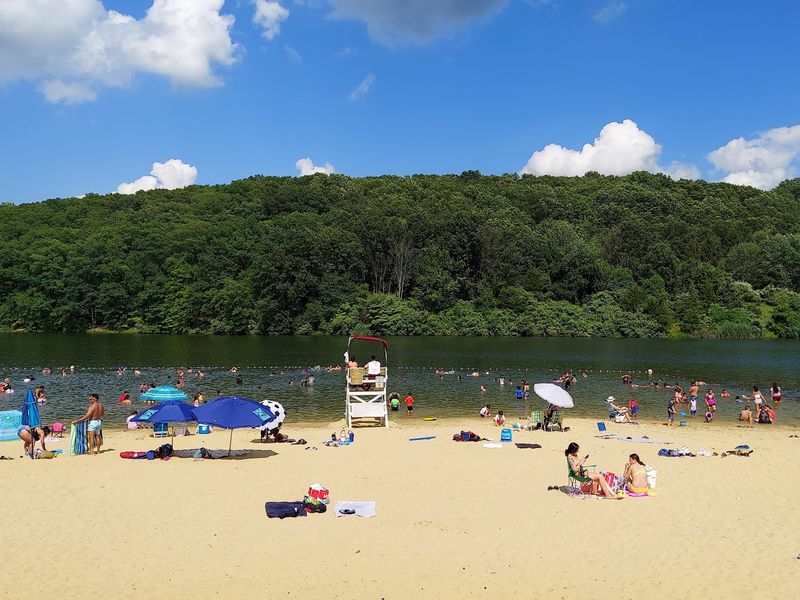
That startling blue water is not a camera trick. Round Valley Reservoir reaches depths of roughly 180 feet, and its clarity has earned it an almost mythical reputation among New Jersey swimmers and scuba divers.
From the shore, the wooded slopes of Cushetunk Mountain make the enormous reservoir appear more like an Adirondack lake than a water-supply facility in Hunterdon County. Swimmers do not enter the open reservoir itself.
The recreation area has a separate, lifeguarded swimming impoundment with a sandy beach and gradually deepening water. That protected setup provides a calmer experience than the reservoir’s main body, where winds can change quickly.
The beach complex includes changing rooms, showers, restrooms, first aid, and seasonal concessions. Away from the sand, trails climb through oak forest and open onto broad water views.
The Cushetunk Trail supplies a serious workout, while shorter walks suit visitors who would rather save their energy for swimming. Round Valley also holds New Jersey’s only state-park wilderness campground.
Reaching its secluded sites requires a three- to six-mile hike or a boat, so overnighting here is an adventure rather than car camping with prettier scenery. The recreation area is a magnet on clear summer weekends, and parking can fill early.
Check the lifeguard schedule because swimming is allowed only when the designated beach is staffed. Pack shade, plenty of water, and shoes for the hot ground; the reservoir may look tropical, but the beach offers no palm trees to hide beneath.
7. Hooks Creek Lake – Cheesequake State Park
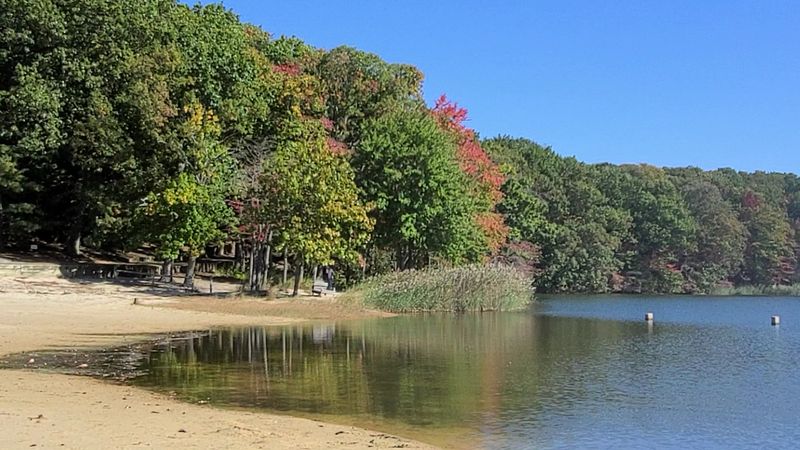
Few exits off the Garden State Parkway lead this quickly into an ecological identity crisis. Cheesequake State Park lies where northern hardwood forest, coastal wetlands, and Pine Barrens habitats overlap.
Walk one trail and the scenery seems to change its mind every few minutes. Hooks Creek Lake occupies the park’s relaxed center.
Its small beach and shallow swimming area feel manageable, making it a friendly choice for families and anyone who prefers a low-key dip to an open-water expedition. Lifeguards supervise the designated zone on scheduled summer days, and the beach complex includes restrooms, changing areas, first aid, and seasonal refreshments.
Once everyone has dried off, take the boardwalks and trails through cedar swamp, salt marsh, and upland woods. The three-and-a-half-mile Yellow Trail shows off the park’s varied terrain, while shorter paths work better with sandy-footed children.
Crabbing is another local favorite in designated parts of the park, although a New Jersey marine recreation registration may be required depending on the equipment used. Its location in Middlesex County makes Cheesequake unusually convenient for a freshwater escape, which also means arriving late on a scorching weekend is a gamble.
Check the swimming schedule before leaving and get there early. Bring a proper life jacket if needed, since ordinary pool floats are not allowed. Then enjoy the pleasing absurdity of feeling deep in the woods while the Parkway remains only minutes away.
8. Lake Hopatcong – Hopatcong State Park
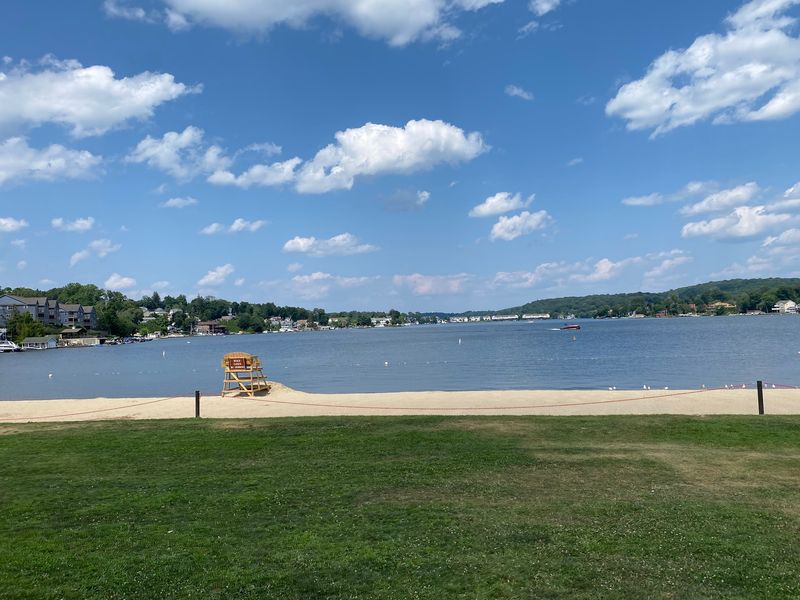
Steamships once carried vacationers across Lake Hopatcong to grand hotels and amusement parks. The lake’s resort era peaked more than a century ago, but New Jersey’s largest lake still knows how to stage a classic summer day.
Hopatcong State Park occupies the lake’s southwestern shore in Landing, where a sandy, lifeguarded beach provides straightforward public access. The swimming zone is separated from the busy boating channels, so visitors can enjoy the water without joining the flotilla of pontoons and powerboats farther offshore.
Restrooms, changing facilities, picnic areas, grills, a playground, and playing fields make it easy to stay from late morning through dinner. This is the social lake on the list.
Even when the beach is calm, boat traffic in the distance and the sweep of homes along the shoreline give the place the unmistakable energy of an established summer community.
The Lake Hopatcong Historical Museum, housed in a former lock tender’s home within the park, adds context to the canals, railroads, and resorts that shaped the area.
Swimming is restricted to posted times when lifeguards are present, and temporary water-quality advisories can affect access. Check conditions before leaving home.
Weekend parking disappears quickly, especially when the forecast crosses 90 degrees. An early start leaves time to swim, grill lunch, and watch the lake shift from glassy morning blue to full midsummer bustle.
9. Darlington Lake – Darlington County Park
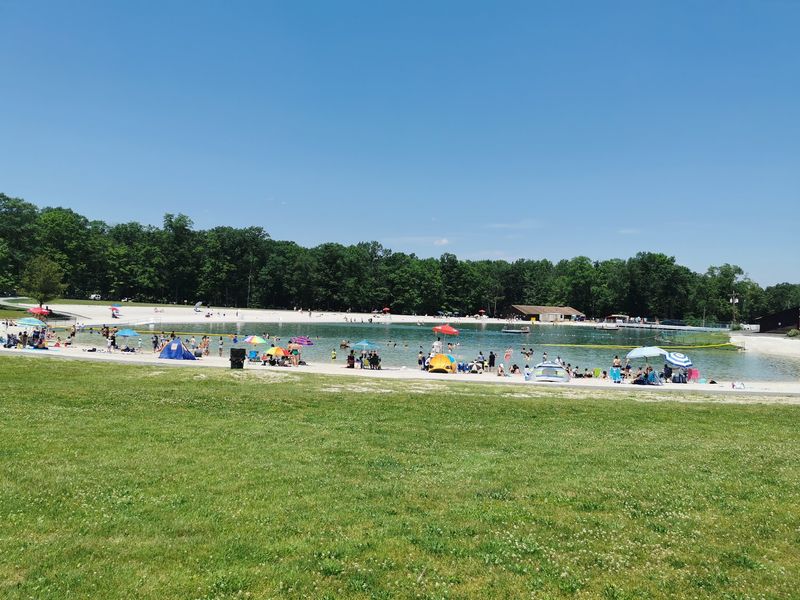
White sand at the foot of the Ramapo Mountains sounds like a geographic mix-up, yet that is precisely the scene at Darlington County Park. Bergen County’s warm-weather playground spreads across 178 wooded acres in Mahwah, with three lakes tucked among lawns, picnic groves, and athletic facilities.
Two lakes are used for swimming, while the third is reserved for fishing. The regular swimming beach works for visitors who simply want to float and cool off.
The upper lake is where restraint goes missing: its Wibit Splash Zone is a floating obstacle course built for climbing, balancing, sliding, and falling into the water with very little dignity. Separate sessions and height requirements apply, so check the rules before promising children unlimited aquatic chaos.
Beyond the lakes, the park has playgrounds, basketball courts, tennis and handball courts, open lawns, and wooded picnic areas. Admission is charged during swimming season, with discounted rates for Bergen County residents.
Splash Zone access costs extra, and ticket procedures may differ between weekdays and weekends. The gates draw lines on hot days, so arrive before the swimming areas open and keep proof of county residency handy if claiming the local rate.
Lifeguards supervise the beaches during operating hours, but algae or water-quality concerns can occasionally cause short-notice closures. Confirm the day’s status first, then prepare for a beach day that somehow comes with mountain views and no Parkway trip to the Shore.
10. Sunrise Lake – Lewis Morris County Park
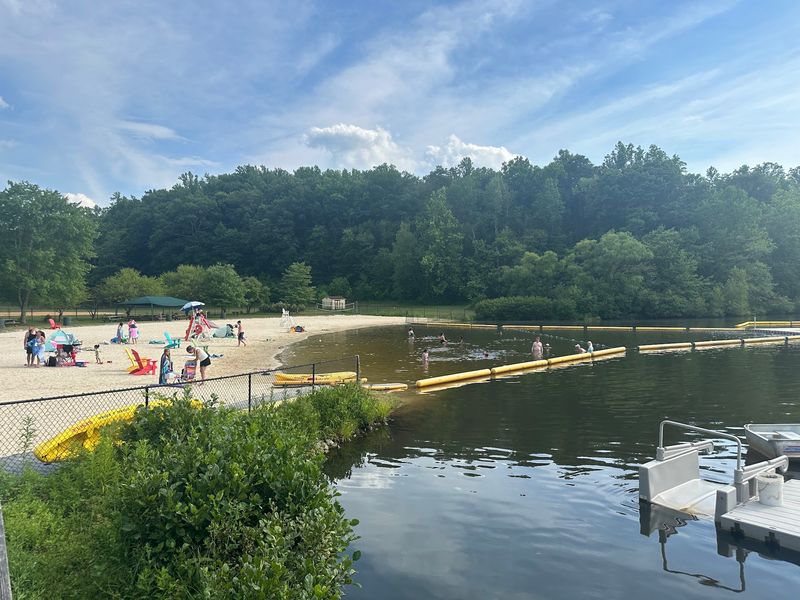
A giant inflatable obstacle course bobs in the middle of the water, daring children—and overconfident adults—to cross without an unscheduled swim. The Wibit is Sunrise Lake’s attention-grabber, but it is hardly the only reason this Morris Township beach club stays busy all summer.
The lake sits inside Lewis Morris County Park, a wooded 2,200-acre escape just outside Morristown. Along with the Wibit, visitors get a sandy beach, designated swimming areas, Zoom Floom water slides, volleyball, and paddleboat or kayak rentals.
The result falls somewhere between an old-fashioned county swimming hole and a compact water park, without the endless pavement and towering fiberglass tubes. Families can easily spend the entire day here, though the surrounding park deserves some attention too.
Miles of hiking and mountain-biking trails wind through the hills, and reservable picnic areas allow groups to turn a beach visit into a proper summer gathering. Parking is available near the lake, but spaces go quickly on weekends.
The beach club generally operates from Memorial Day weekend through Labor Day, with admission fees and hours that vary by day. Some attractions carry age, height, or swim-test requirements, so review those details before arrival rather than negotiating at the water’s edge.
Buy passes in advance when available and show up early. By midday, the sandcastle construction is serious, the Wibit wipeouts are plentiful, and every shady patch of grass has found an owner.
11. Highlands Natural Swimming Pool – Ringwood
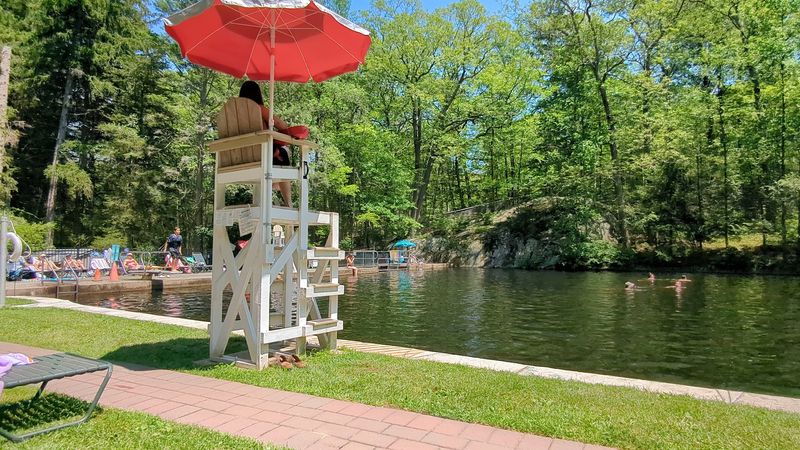
No chlorine cloud follows you out of this pool. Fresh stream water flows in from the surrounding Wyanokie Highlands, sustaining a natural swimming environment where tiny fish, frogs, and other aquatic residents may make an appearance.
The bottom is stone and earth rather than bright blue tile, which is exactly the point. Community members carved the Olympic-sized pool into a wooded hillside in the 1930s as part of Camp Midvale, a progressive retreat known for welcoming a diverse membership.
That independent spirit remains. The nonprofit pool feels homespun and pleasantly unconventional, with grassy lounging areas, picnic tables, volleyball, ping-pong, and forest rising on every side.
Water temperatures tend to stay refreshingly cool. Depths range from a shallow children’s section to areas suitable for stronger swimmers, and swim tests or supervision rules may apply.
Pack lunch, a blanket, and water shoes if sensitive feet object to a natural bottom. Day passes allow nonmembers to visit during the summer season, although operating days and admission rates should be confirmed in advance.
The pool stands beside Norvin Green State Forest and the New Weis Center, putting excellent hiking within easy reach. Ambitious visitors can climb before swimming; sensible ones can claim a shady spot and admire the hills from below.
Either way, the sudden quiet after turning onto Snake Den Road makes Ringwood feel much farther from North Jersey traffic than it really is.
12. Quarry Swim Club – Hopewell
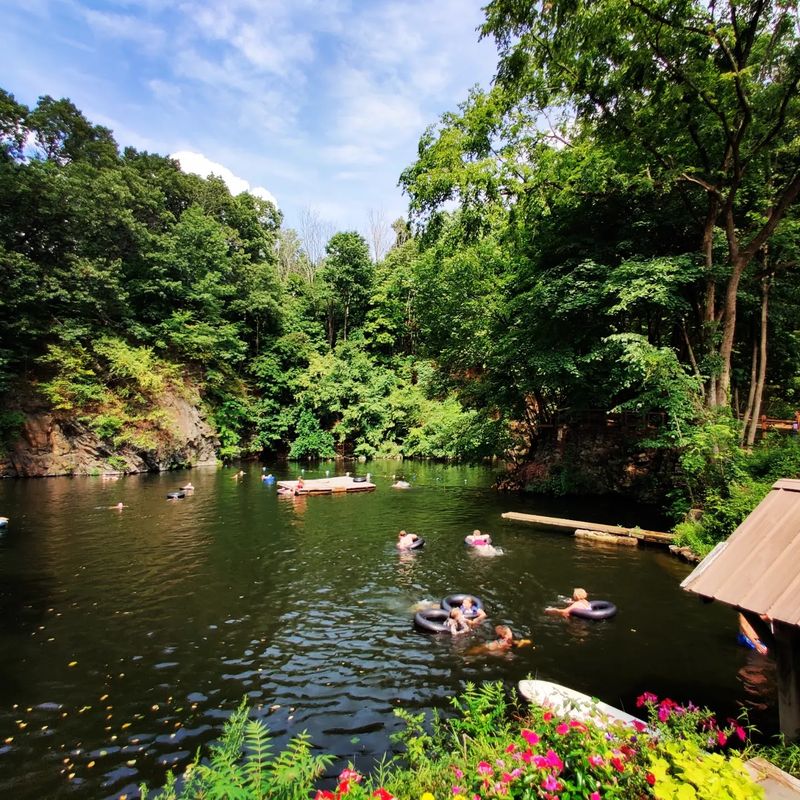
The diving boards tell you immediately that this is no ordinary neighborhood pool. Beneath them lies a flooded stone quarry more than 40 feet deep, its blue-green water framed by rock walls and mature trees.
It is dramatic without trying to be—and wonderfully cold when July turns Mercer County into an oven. Stone was extracted here beginning in the 1890s for use on local roads.
After quarrying ended around 1920, the pit filled with water and evolved into a local swimming spot. The Quarry Swim Club was incorporated in 1928, beginning a new chapter that included swimming lessons, water carnivals, and generations of summer regulars.
Today, the nonprofit Hopewell Quarry welcomes day visitors as well as season-pass holders. Anchored floating docks and diving boards occupy the deep quarry, while a separate, conventional pool gives younger or less confident swimmers somewhere easier to enter.
Because the main swimming hole has no shallow end, children under 13 must pass a swim test before using it. Lifeguards supervise the water, but the depth deserves respect.
Picnic tables, grills, volleyball, changing facilities, and a snack bar round out the experience. Capacity is limited, so reserving a day pass online is the smart move, especially on weekends.
Saturday mornings also feature an adults-only swim during the 2026 season. Come prepared to stay for hours; once you are floating between the old quarry walls, an ordinary chlorinated pool feels like a very poor substitute.