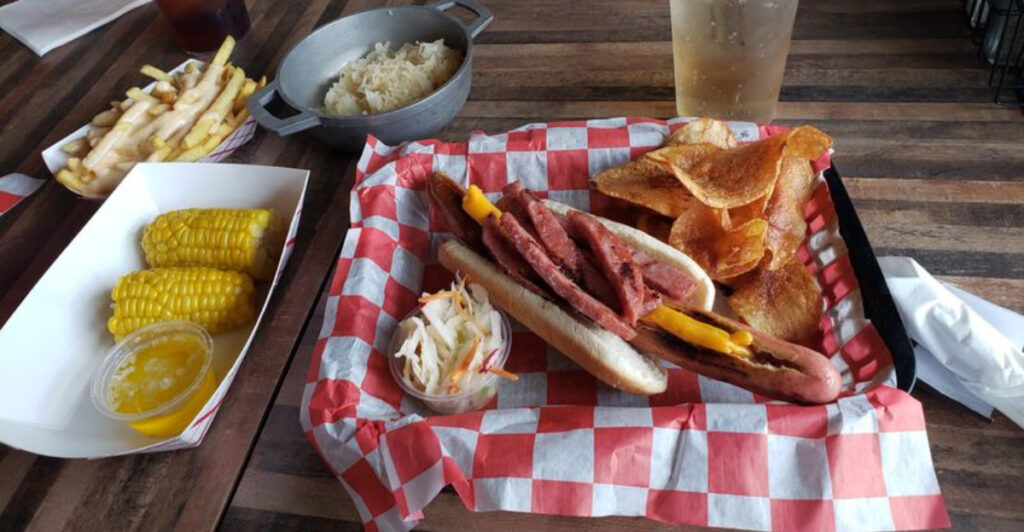
A hot dog splits open in bubbling oil. Mustard disappears beneath the cheese on a tomato pie.
Somewhere on the Atlantic City Boardwalk, tomato sauce spirals across mozzarella in a pattern that generations of vacationers can recognize from several feet away. New Jersey’s most memorable restaurant dishes rarely arrive without baggage—and that is a compliment.
They carry family recipes, neighborhood rivalries, happy accidents, secret sauces, old buildings, and enough fiercely defended tradition to turn a casual lunch into a history lesson. Some were created to feed card players or factory workers.
Others became famous because musicians, boxers, or late-night Shore crowds could not stop ordering them. These are not precious plates that require a lengthy explanation from a server.
They are sliders, subs, wings, pizza, and wonderfully messy hot dogs, usually served with more confidence than ceremony. Come hungry, keep a few napkins within reach, and never underestimate a dish that has survived decades of changing tastes.
1. Rutt’s Hut – Clifton
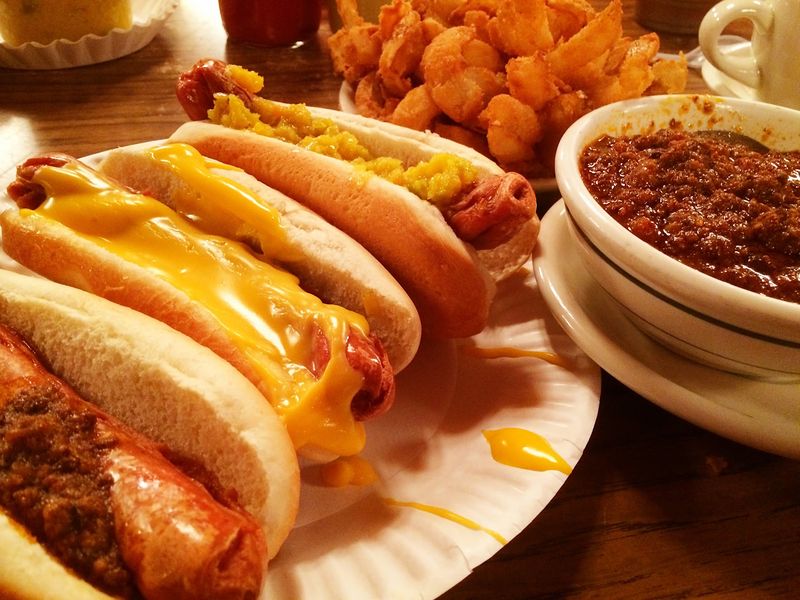
Long before “wellness” took over restaurant menus, somebody in Clifton dropped a hot dog into hot fat and waited until its casing tore open. The result became the Ripper, the gloriously craggy signature of Rutt’s Hut.
This roadside institution has occupied its River Road spot since 1928, and the ordering vocabulary now sounds almost like a private language. An “In-and-Outer” gets only a quick swim in the fryer.
A Ripper stays down until the skin splits. A Weller goes darker, while a Cremator is pushed to the brink.
First-timers should begin with the Ripper, which lands in the sweet spot between juicy and crisp. Add the house relish, a pale, tangy mixture with mustard, cabbage, and pickle flavors that belongs here as naturally as ketchup does not.
The building offers both a stand-up counter room and a sit-down tavern, but the counter delivers the purest version of the experience: short orders, paper plates, steam rising from the fryer, and customers debating doneness like seasoned technicians.
Fries, onion rings, and birch beer round out the meal without stealing attention from the main event.
This is inexpensive, wonderfully informal food, so skip any thoughts of reservations or leisurely tableside service. The Ripper’s story is really one of controlled overcooking—a kitchen mishap elsewhere, perhaps, but in Clifton, an art form with nearly a century of practice behind it.
2. Jimmy Buff’s – West Orange
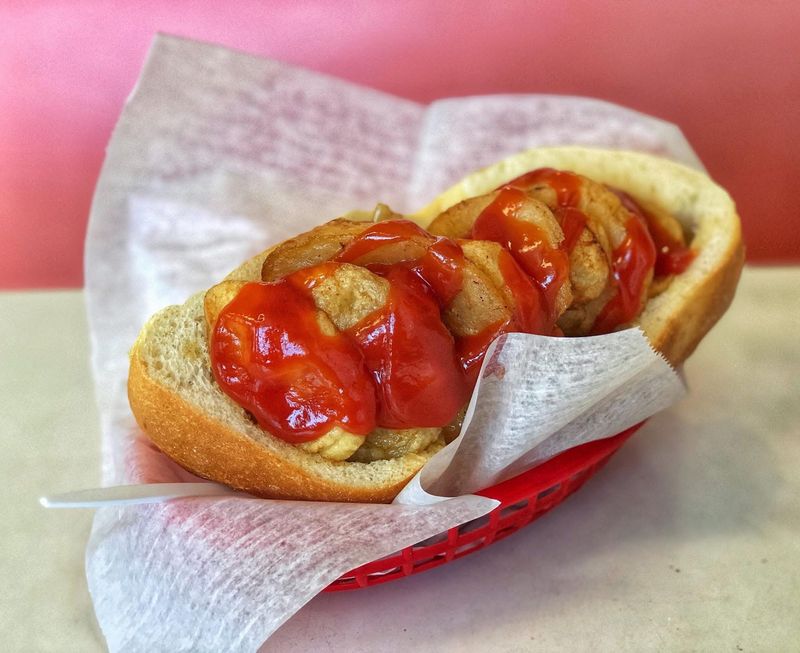
The Italian hot dog began as the answer to a wonderfully practical question: What should Mary Racioppi feed her husband and his card-playing friends? In the 1930s, she filled round pizza bread with fried hot dogs, peppers, onions, potatoes, and mustard in the family’s Newark home.
Her husband, James “Jimmy Buff” Racioppi, recognized that the hefty sandwich deserved a wider audience, and a North Jersey original was born. The surviving West Orange shop still serves that idea in magnificently overstuffed form.
Order a double and half a round loaf arrives packed with two hot dogs and enough fried vegetables and potatoes to test the bread’s engineering. Sausage can replace the dogs, but the classic version tells the clearest story.
Each bite moves between salty meat, soft onions, sweet peppers, crisp-edged potatoes, mustard, and chewy pizza bread. It is less like eating a dressed hot dog than tackling an entire cookout folded into a portable container.
The room is decidedly no-frills, and that is exactly right; this sandwich was built for hungry card players, not white tablecloths. Bring an appetite and accept that tidy eating is unlikely.
Jimmy Buff’s remains a family tradition rather than merely a restaurant brand, keeping alive a dish that spread from one Newark kitchen to hot dog stands across the region. Plenty have copied the format, but this is where the family story still comes with the sandwich.
3. Belmont Tavern – Belleville
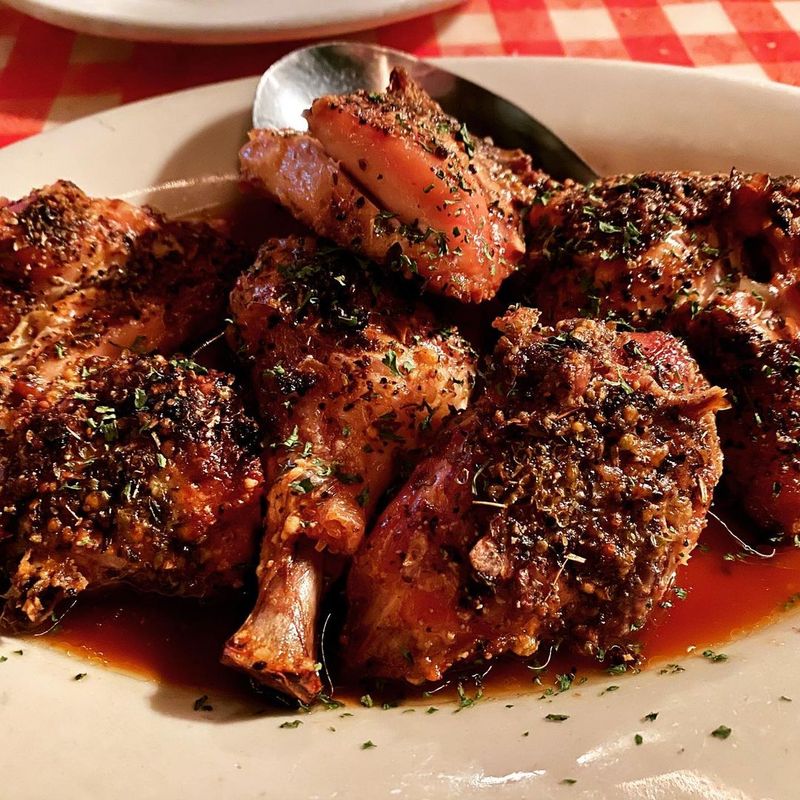
A blast of vinegar announces Stretch’s Chicken Savoy before the platter has settled onto the table. The dish is dark, garlicky, sharply aromatic, and inseparable from the Belmont Tavern, where Charles “Stretch” Verdicchio began serving it in the late 1960s.
Bone-in chicken is roasted until the skin turns deeply browned and crisp, then finished with red wine vinegar and a closely guarded mixture of herbs, cheese, oil, and seasoning. The vinegar cuts through the richness with a jolt that makes the next piece seem mandatory.
North Jersey restaurants have produced countless “Savoy-style” chickens since, but the Belmont original remains the reference point. Its surroundings are nearly as memorable as its flavor.
Red chairs, framed photographs, a compact bar, and a dining room seemingly immune to design trends make dinner feel like joining a long-running neighborhood scene halfway through the movie.
Portions lend themselves to sharing, and Chicken Savoy pairs naturally with another house specialty, Shrimp Beeps, served in a spicy red sauce named for a friend of the kitchen.
Cavatelli with pot cheese provides a softer counterpoint to all that garlic and vinegar. The restaurant traditionally operates without reservations, and cash is the safest way to arrive prepared.
Go early if waiting at the bar is not part of your plan. Stretch’s creation proves that a signature dish need not be complicated; it only needs a bold idea, disciplined execution, and a family willing to protect the secret.
4. White Manna – Hackensack
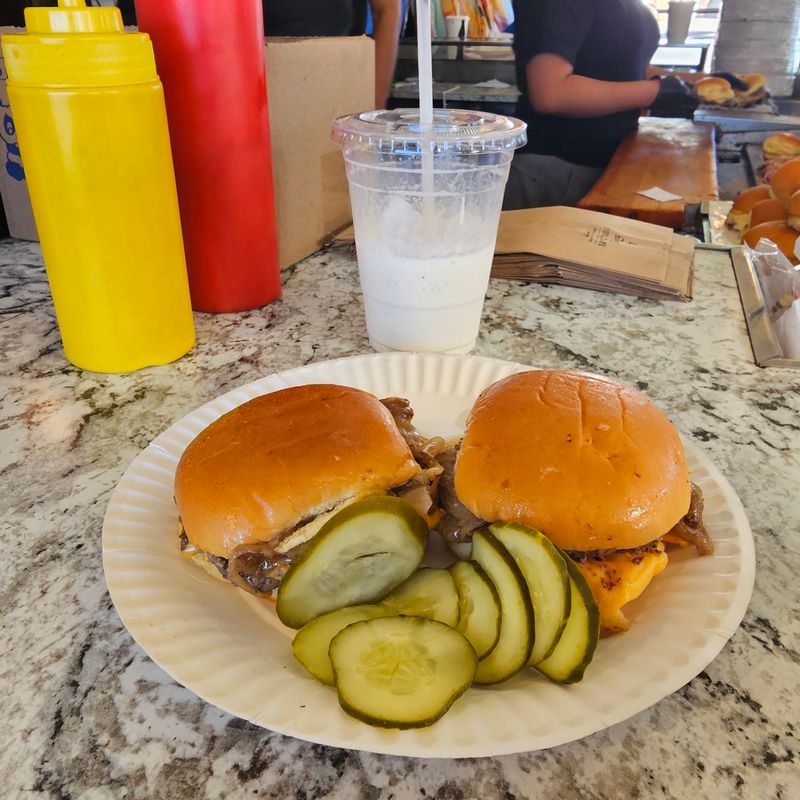
The little hamburger stand looks almost too small to contain its own history. White Manna’s rounded metal structure traces its lineage to a diner displayed at the 1939 New York World’s Fair, where streamlined design and rapid food preparation offered visitors a glimpse of tomorrow.
After the fair, the concept found a permanent home in New Jersey, and the Hackensack location has been turning out tiny onion-laden burgers since 1946. Watching them cook is half the attraction.
Small balls of fresh beef hit the griddle, get pressed thin, and meet a snowy pile of sliced onions. Cheese and soft potato rolls are stacked on top, allowing the steam to work upward through every layer.
The finished slider is tender, beefy, sweet with onions, and small enough to make ordering only one feel deeply unserious. Three is a reasonable opening position; four leaves less room for regret.
Add fries and a shake if the line has made you especially hungry. Seating wraps tightly around the cooking area, so every flip, press, and bun placement happens in full view.
During busy periods, customers squeeze together while bags of burgers move rapidly across the counter. There is no decorative nostalgia here because the building never had to recreate its past—it simply kept operating.
Come outside peak lunch hours for an easier seat, bring patience if you visit on a weekend, and expect the scent of grilled onions to follow you home like a souvenir.
5. Donkey’s Place – Camden
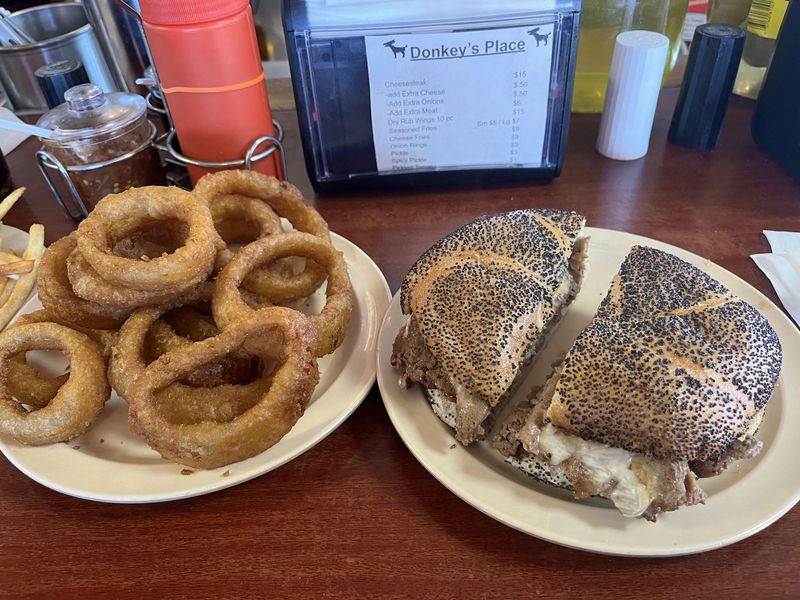
Forget the long roll. Camden’s defining cheesesteak arrives on a round, poppy-seeded Kaiser roll, and Donkey’s Place has been resisting Philadelphia’s preferred geometry since the 1940s.
The tavern was opened by Olympic heavyweight boxer Leon “Donkey” Lucas, whose broad frame and boxing nickname gave the place its identity. His sandwich eventually became even more famous: chopped steak, plenty of fried onions, and melted American cheese tucked into a sturdy round roll that soaks up the juices without surrendering.
The shape changes the eating experience. Instead of progressing neatly from one end to the other, you get a thick center loaded with beef and onions, followed by a crisp, sauce-soaked edge that may be the best part.
Hot pepper relish is the smart addition, lending enough acid and heat to balance the richness. Inside, the curved bar, wood paneling, boxing photographs, and neighborhood-tavern proportions make it clear that little energy has been spent chasing fashion.
Regulars may be drinking a beer beside someone making a special trip solely for the sandwich, and both look equally at home. Parking around the Camden location requires a little attention, and the room can fill quickly at lunch, so arrive early when possible.
Donkey’s Place offers something more interesting than a regional imitation: a cheesesteak with its own architecture, created by a local fighter and preserved by the family that inherited his wonderfully stubborn approach.
6. Papa’s Tomato Pies – Robbinsville
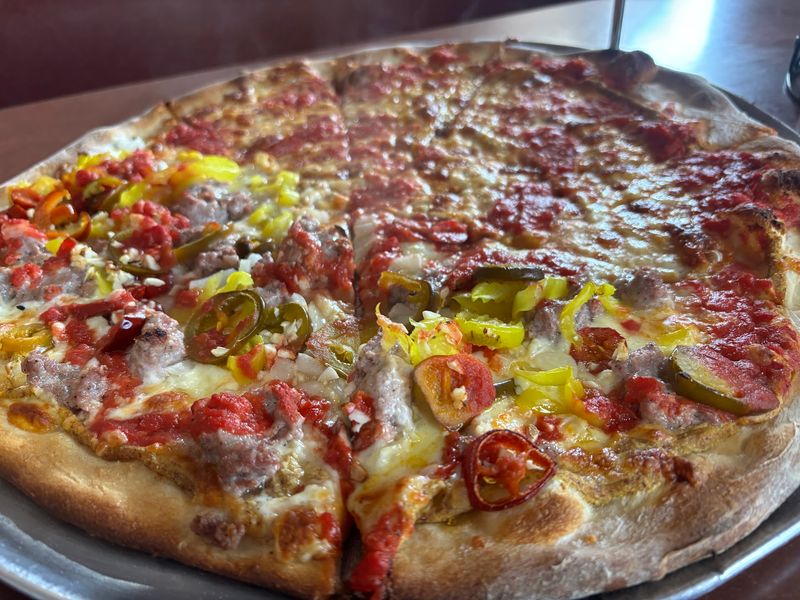
Spreading mustard on pizza dough sounds like a prank until the first bite. At Papa’s Tomato Pies in Robbinsville, a thin layer of spicy brown mustard goes beneath the cheese and crushed tomatoes, creating a tangy bass note rather than an obvious hot-dog flavor.
The mustard pie has become the restaurant’s cult order, but it sits within an even bigger story. Giuseppe “Joe” Papa began working in a Trenton pizzeria as a teenager after arriving from Naples, then opened his own shop in 1912 at just 17 years old.
More than a century and several generations later, the family still makes Trenton-style tomato pies, placing cheese and toppings on the dough before spooning tomatoes over them. That reversed order lets the fruit stay bright while the crust cooks crisp underneath.
Sausage is an excellent addition to the mustard pie, its savory richness playing against the sharp spread and sweet tomato. Purists can order a plain tomato pie to appreciate the style without distractions.
Although Papa’s moved from Trenton to Robbinsville in 2013, the dining room remains grounded in family continuity rather than faux vintage decoration. This is a sit-down pizzeria, so a whole pie and an unhurried meal make more sense than hunting for a quick slice.
Weekend evenings can be busy, and giving the kitchen time to bake the crust properly pays off. One odd-sounding ingredient turned Papa’s long history into a dish that still surprises newcomers—no small achievement after more than 100 years.
7. De Lorenzo’s Tomato Pies – Robbinsville
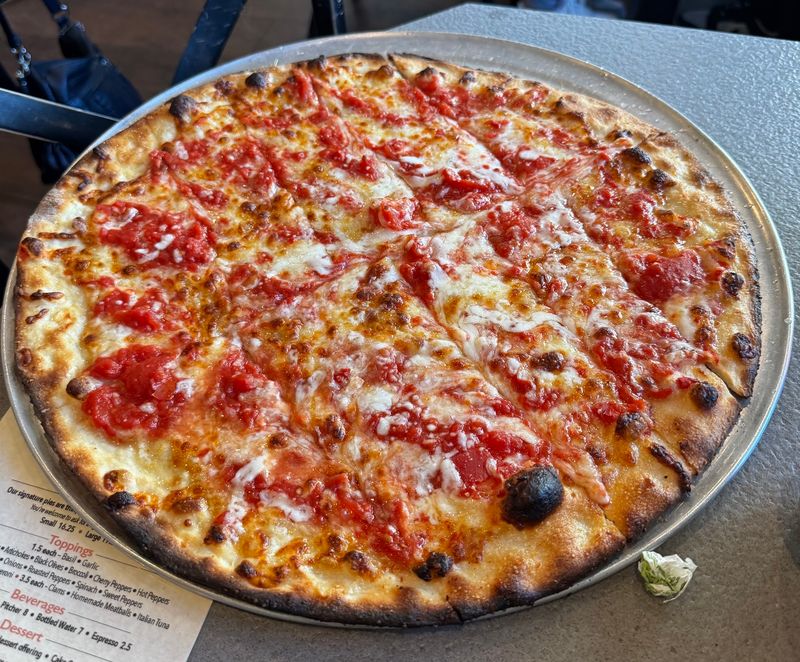
Some pizza traditions are written in recipes; others are encoded in the way a pie is cut. At De Lorenzo’s, a steak knife carves the thin tomato pie into irregular pieces, producing narrow points, broad corners, and inevitable negotiations over who gets which slice.
Alexander “Chick” De Lorenzo and his wife, Sophie, opened their Hudson Street shop in Trenton in 1947. The famously spare original dining room became a destination despite having no telephone and, for many years, no public restroom.
Customers came for one thing: crisp pies with cheese placed directly on the dough and crushed tomatoes scattered over the top. The original Trenton location closed when the older generation retired, but grandson Sam Amico had already carried the tradition to Robbinsville.
A plain pie provides the best introduction. Its crust is thin, dry, and blistered at the edges, while the tomatoes remain vivid rather than disappearing under a blanket of cheese.
Sausage, pepperoni, mushrooms, and anchovies are available, but restraint suits this pizza. Do not expect a floppy slice or an overload of toppings; the pleasure lies in char, crunch, tomato, and those unpredictable hand-cut pieces.
The Robbinsville restaurant is more spacious than the old Hudson Street room, yet the pie retains its Trenton identity. De Lorenzo’s and nearby Papa’s have inspired generations of friendly allegiance, with families choosing sides as faithfully as sports fans.
Trying both is the diplomatic solution—and a very good reason to arrive in Robbinsville hungry.
8. Maruca’s Tomato Pies – Seaside Heights
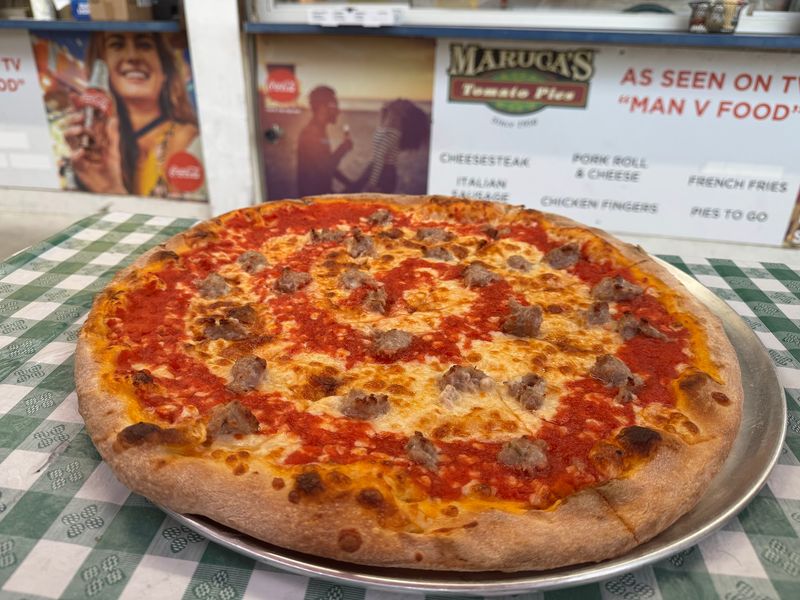
One glance at the red spiral crossing a blanket of melted cheese, and longtime Shore visitors know exactly whose pizza has arrived. Maruca’s signature swirl is more than decoration; it reverses the usual visual order of a pie and preserves the tomato-forward character the family brought from Trenton.
Brothers Anthony, Pasquale, Joseph, and Dominick Maruca entered the pizza business in 1950, opening in Trenton before taking their tomato pies to the Seaside Heights Boardwalk later that year.
That move joined a Central Jersey pizza tradition with the rituals of a Shore vacation, where a slice eaten within earshot of arcade bells somehow tastes different from one carried home in a box.
The classic order is a plain pie or slice, allowing the slightly sweet tomato sauce, cheese, and thin crust to do the talking. Pepperoni works beautifully, especially where its curled edges meet the streaks of sauce, but piling on too many toppings hides the feature that makes the pizza unmistakable.
Maruca’s now operates within JR’s Ocean Bar & Grill on the boardwalk, making it possible to sit with a drink and a full pie rather than balancing a paper plate while walking. Summer brings the full Seaside bustle; the off-season is quieter, though operating days and hours can vary.
The dish’s story lives in that swirl: four brothers, a move from Trenton to the ocean, and more than seven decades of families measuring summer in slices.
9. White House Subs – Atlantic City
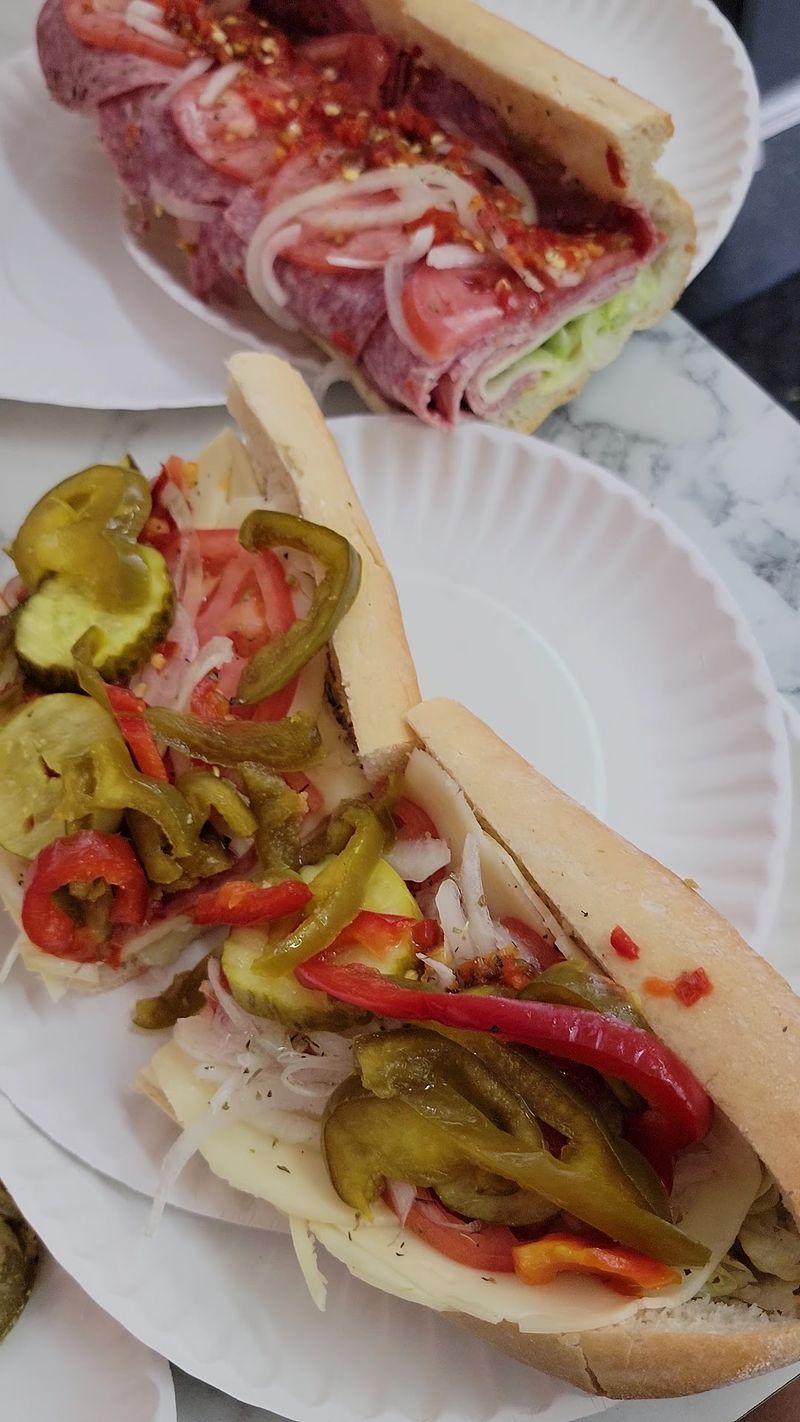
When the Beatles played Atlantic City in 1964, the story goes, a mammoth White House sub was delivered to the band. Their visit became part of restaurant folklore, but they were hardly the only famous customers.
Photographs of entertainers, athletes, and politicians cover the walls of the original Arctic Avenue shop, each one adding another chapter to a sandwich counter that opened in 1946. The Italian sub remains the essential order.
Salami, ham, capicola, and provolone are packed into a crusty Atlantic City roll with lettuce, tomato, onion, oil, oregano, and hot peppers if requested. That bread matters enormously: firm enough to hold a generous filling, yet tender once the oil and meat settle into it.
A whole sub is famously large, so a half is enough for many diners and splitting one leaves room to consider a cheesesteak. The White House Special adds extra meat for anyone who views moderation as an administrative error.
Expect close quarters, fast-moving staff, paper-wrapped sandwiches, and a line that may extend beyond the door during busy weekends. The original location carries the deepest sense of history, right down to the celebrity wall and narrow counter, while a second outpost operates inside the Hard Rock.
Parking near Arctic Avenue can take effort, but turnover is generally brisk. The famous names make entertaining wall décor; the real story is that ordinary customers have kept returning for the same oversized sandwich for generations.
10. The Hot Grill – Clifton
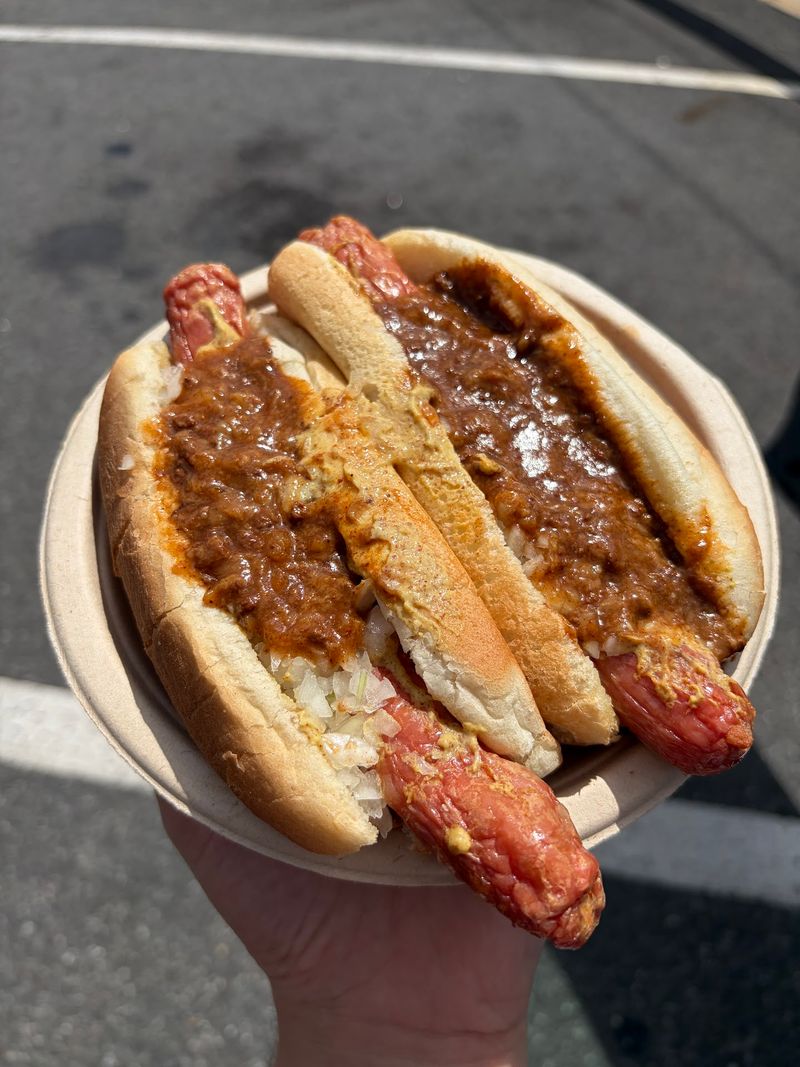
“All the way” is not a motivational slogan in this corner of Clifton. It is an order, delivered in two quick words, for a deep-fried Texas weiner topped with mustard, chopped onions, and a secret chili sauce.
The Hot Grill opened across from Nash Park on Friday, October 13, 1961, with four partners, a small building, and 20 counter stools. Long lines forced repeated expansions, but the essential formula never needed fixing.
Its custom beef-and-pork dog develops a taut exterior in the fryer, while the fine-textured chili sauce brings warm spice rather than bowl-of-chili heaviness. Mustard supplies sharpness and raw onion adds the necessary crunch.
First-timers should order two all the way, because one disappears suspiciously fast, then add fries with cheese and gravy for a full tour of North Jersey late-night logic. Orders are traditionally called out in clipped bursts, and watching the counter crew translate them into rows of dressed dogs provides its own floor show.
The dining room is larger than the original stand, yet the red-and-white, quick-service energy remains intact. It stays open late, particularly on weekends, making it useful when most respectable dinner plans have ended.
Families appear during the day; after dark, the crowd tilts toward shift workers, night owls, and people correcting an urgent chili-dog deficiency. The signature dish tells a straightforward success story: four partners chose one local specialty, developed a fiercely protected sauce, and built a Clifton landmark one “all the way” at a time.
11. Max’s Bar & Grill – Long Branch
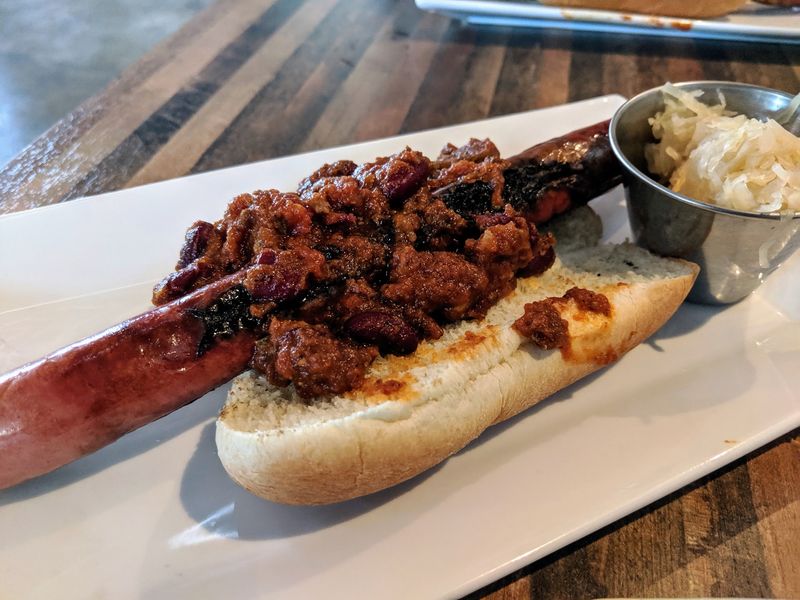
A foot-long hot dog arriving beside the Jersey Shore needs very little introduction, yet the one at Max’s carries close to a century of family history. The business traces its roots to 1928, when Max and Celia Maybaum began serving hot dogs in Long Branch.
Locations and generations changed, but the long, griddled dog remained the reason people remembered the name. Today’s Max’s Bar & Grill keeps that legacy going in a room that feels more like a neighborhood tavern than an old roadside stand.
The signature hot dog has a natural-casing snap and enough surface area to support nearly any topping strategy. Start simply with mustard and sauerkraut, or choose chili and onions when neatness is no longer a priority.
The Jersey Shore Slaw Dog adds coleslaw for coolness and crunch, while fries and onion rings complete the classic order. Because this is now a full bar and grill, diners who do not share the hot dog obsession can turn to burgers, wings, seafood, or sandwiches without feeling stranded.
Still, ordering around the namesake item misses the point. The appeal lies in eating a straightforward boardwalk-era food that has outlasted changing buildings and dining fashions.
There is indoor seating, bar space, and a more relaxed pace than at a walk-up counter, making Max’s easy to visit with a group. Check the entertainment schedule if you prefer dinner without live music.
That unusually long dog is not simply a novelty—it is the edible thread connecting present-day Long Branch to 1928.
12. The Chicken or the Egg – Beach Haven
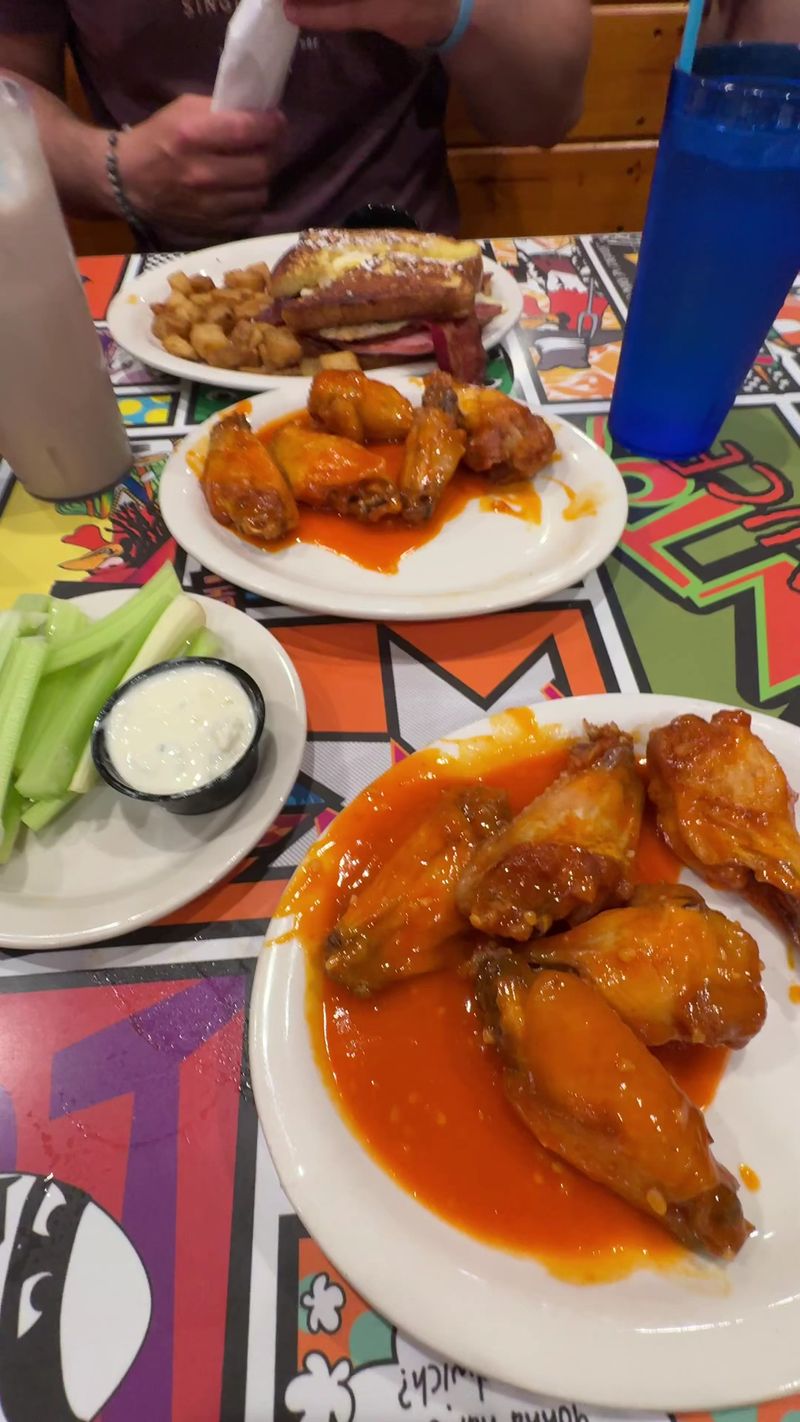
At two in the morning on Long Beach Island, subtlety has left the building. Plates of wings hit the tables, servers move through crowds of sunburned night owls, and somebody is learning that the word “Ludicrous” was not chosen casually.
The Chicken or the Egg—universally shortened to Chegg—opened in Beach Haven in 1991 and grew into a round-the-clock summer ritual. Its wings come with a broad ladder of sauces, but Ludicrous sits at the top, delivering the sort of chile heat that turns dinner into a public test of judgment.
The dish’s story is tied less to one inventor than to decades of Shore bravado: vacationers challenging friends, regulars returning to prove something, and late-night tables discovering that confidence is not a cooling agent.
For actual flavor without quite as much punishment, the Bee Sting sauce balances sweetness and heat, while garlic Parmesan and traditional buffalo options keep the experience comfortably civilized.
Wings are meaty, generously sauced, and best paired with fries, celery, and more blue cheese than you think you need. The menu also covers breakfast, burgers, pancakes, and oversized comfort food, reflecting a restaurant designed to answer nearly any craving at nearly any hour.
Summer waits can be substantial, particularly after the bars empty, so earlier dinners are easier for families. Off-season hours deserve a quick check before driving over.
Chegg belongs on this list because its signature wings have become a Beach Haven rite of passage—one measured in sauce-stained fingers, competitive storytelling, and the occasional tear.