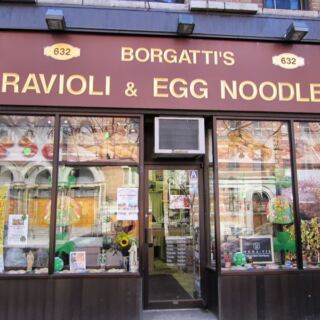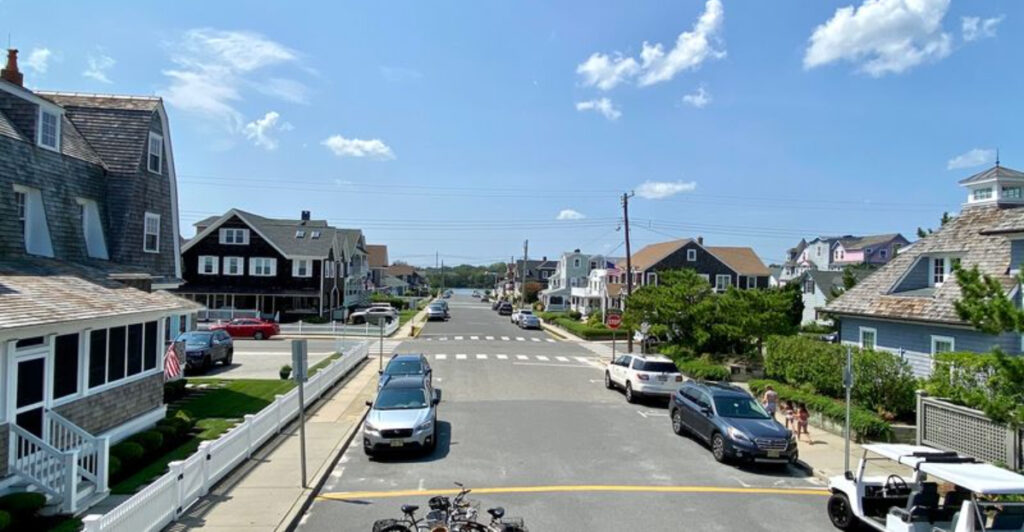
A hand-painted sign, a two-lane road, a bakery box balanced on someone’s passenger seat, and suddenly New Jersey feels much smaller than its reputation. Not boardwalk-small, with arcade noise and funnel cake lines.
The better kind of small, where the person at the counter knows who gets the seeded roll, where a “downtown” can mean three blocks and a serious amount of civic pride, and where the best parking spot is usually the one under the sycamore tree. These are the places locals talk about carefully.
Not because they are unfriendly, but because they have watched what happens when a quiet town gets flattened into a weekend checklist. The towns below are worth visiting, absolutely.
Just bring good manners, skip the megaphone energy, and understand the assignment: look around, spend a little, slow down, and don’t ruin the thing you came to see.
1. Walpack
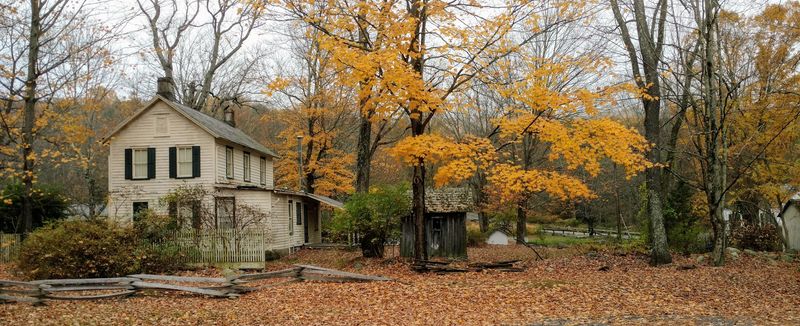
A church, a few old buildings, and the kind of silence that makes you lower your voice without knowing why: that is the magic trick in Walpack. This Sussex County pocket feels less like a town trying to impress you and more like a place that has survived being almost erased.
Much of the surrounding landscape sits within the Delaware Water Gap National Recreation Area, which is why the roads seem to slip so quickly from “New Jersey” into woods, fields, ridge lines, and old stonework.
Walpack Center was once a busy community, and today the Rosenkrans House serves as a small museum maintained by the Walpack Historical Society.
Nearby, Van Campen Inn began as a farmhouse and later became one of the Colonial-era “Yaugh” houses that sheltered travelers.
Volunteers staff these historic sites on select summer Sundays when schedules allow, and the one-mile Military Road Trail connects Van Campen Inn and Walpack Center for anyone who wants a walk with actual atmosphere, not just steps counted on a phone.
Come for the old roads, the Delaware Water Gap scenery, and the feeling that you found a page New Jersey forgot to tear out. Bring snacks, gas up before you go, and do not expect a polished visitor district. That is the point.
2. Mantoloking
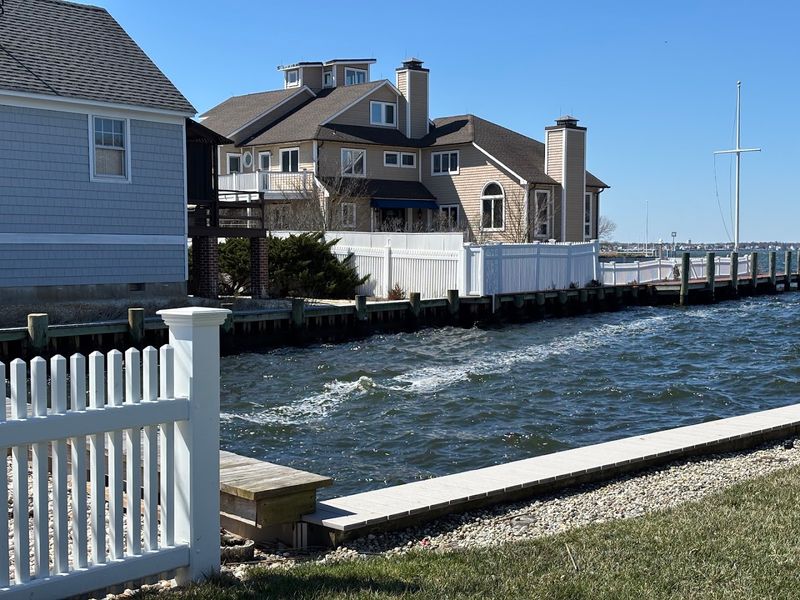
The first thing you notice is what is missing: no neon strip, no big beach-club bravado, no boardwalk trying to sell you fried dough at every tenth step. Mantoloking is shore life with the volume turned down, a narrow, high-priced, fiercely residential stretch where ocean and bay keep close company.
The borough’s history is tied to Frederick W. Downer, who began buying land in the area around 1875, and the name Mantoloking came into use in 1881.
The original Mantoloking Bridge followed in 1884, helping shape the community’s early development. Locals value it because it does not perform for outsiders.
You do not come here for a packed itinerary. You come for a quiet beach morning, a bike ride past shingled houses, or a slow drive that reminds you the Jersey Shore is not one single personality.
There is old-money restraint here, but also a very clear message: behave like a guest. Pack a coffee from nearby Bay Head or Point Pleasant, keep the beach setup modest, and do not treat the side streets like a sightseeing loop.
Mantoloking is best enjoyed as a pause, not a conquest. The reward is simple: dune grass moving in the wind, sailboats across the bay, and a beach town that still knows how to whisper.
3. Frenchtown
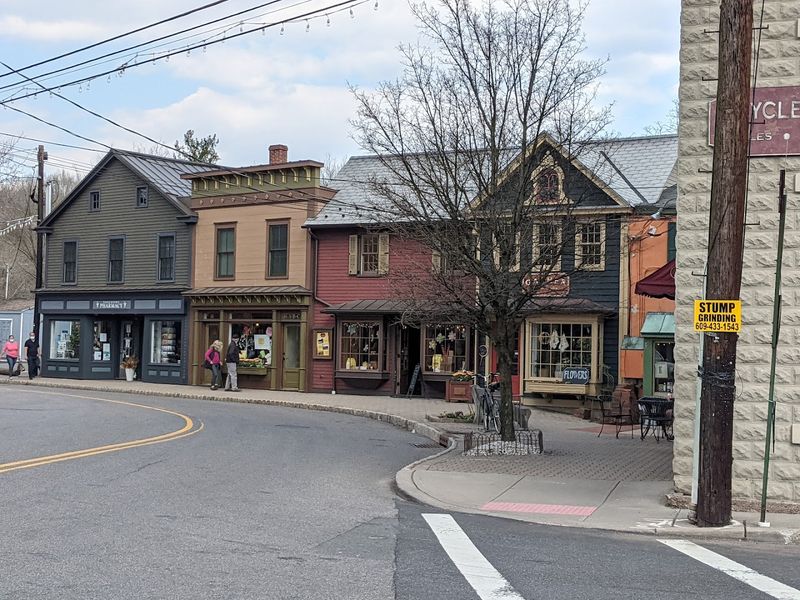
The bridge does half the flirting before you even park. Cross into Frenchtown by the Delaware River and you get steel trusses, water views, a compact downtown, and that immediate urge to cancel whatever you were supposed to do later.
This Hunterdon County river town has just enough going on to fill a day without tipping into overbuilt. The D&R Canal Towpath route can start in Frenchtown, with parking available near Front and Bridge Streets, and the Frenchtown-to-Lambertville stretch runs about 15 miles each way along the river and canal.
That makes the town especially good for the visitor who likes to earn lunch. Start with coffee or breakfast near Bridge Street, browse the independent shops, then walk toward the river and let the town set the pace.
The Uhlerstown-Frenchtown Bridge also recently came through a major 2025–2026 rehabilitation, including repairs, repainting, improved lighting, and a widened pedestrian walkway.
Frenchtown’s charm is that it has texture: cyclists in dusty shoes, antique browsers pretending they are “just looking,” locals who know which tables get the best afternoon light.
It is artsy without being precious, outdoorsy without requiring technical gear, and small enough that one careless crowd can change the mood. Go gently.
4. Cranbury
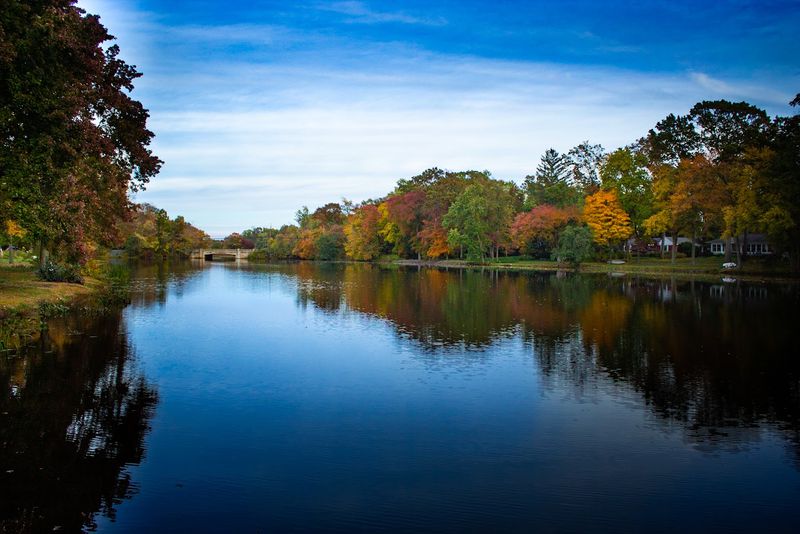
A town with this much polish usually starts charging admission in spirit, if not at the curb. Cranbury somehow resists that.
Main Street feels composed rather than staged: old houses, tidy storefronts, mature trees, and the quiet confidence of a place that knows its own worth.
Most of the village was added to the New Jersey Register of Historic Places in 1979 and the National Register of Historic Places in 1980, with its nomination describing Cranbury as the best-preserved 19th-century village in Middlesex County.
That is not brochure talk when you are actually walking it. The architecture does the heavy lifting.
The trick is to slow down enough to notice porches, rooflines, old brick, and the way the commercial strip still feels connected to the residential streets around it. Stop for lunch or dinner at the Cranbury Inn if you want the full old-New-Jersey mood, then give yourself time to wander without turning it into a photo sprint.
Cranbury’s historic character is also tied to the farmland around it; the township notes more than 2,000 acres of permanently preserved farmland, plus hundreds of acres of open space. That green edge matters.
It keeps the town from feeling swallowed by Central Jersey sprawl, and locals know exactly how rare that is.
5. Strathmere
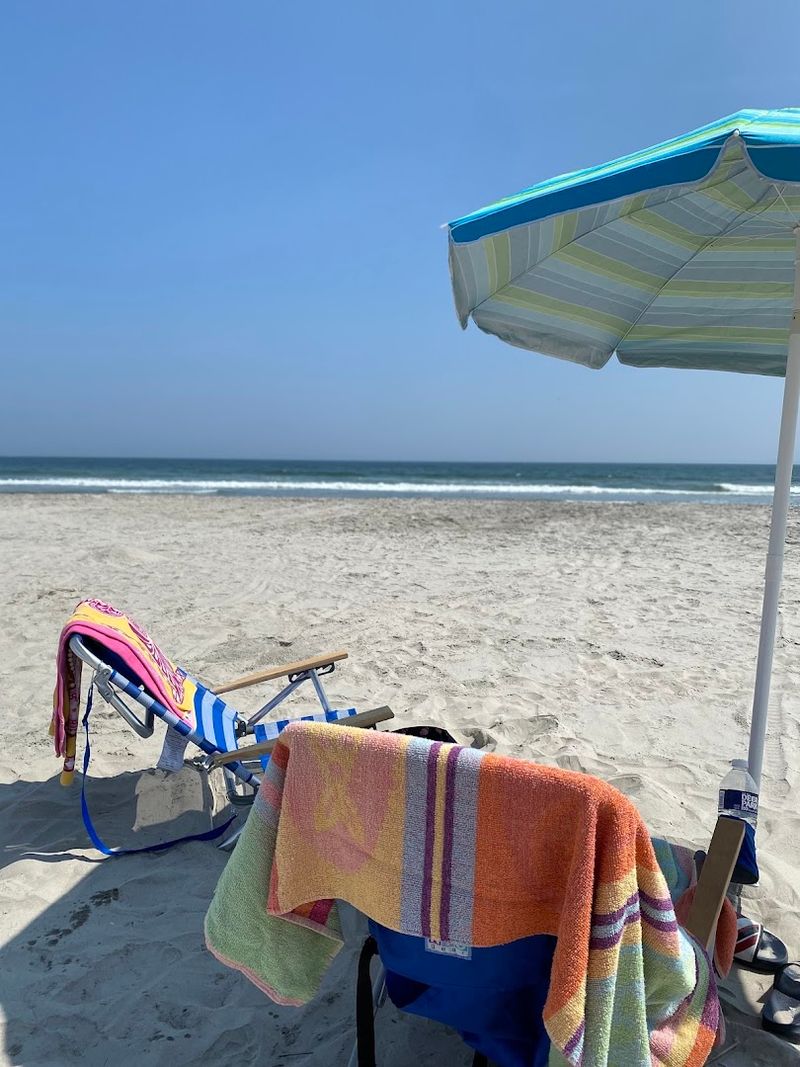
Salt air hits differently when there is no boardwalk soundtrack attached. Strathmere sits in Cape May County with one foot in beach-town tradition and the other in “please don’t tell everyone.” It is the kind of Shore place where a towel, a sandwich, and a book still count as a complete plan.
Part of its appeal is practical: Strathmere, which is part of Upper Township, does not require beach tags, making it one of the Shore’s increasingly rare free-beach holdouts. That does not mean it should be treated like a free-for-all.
The beaches are guarded through Upper Township Beach Patrol on changing seasonal schedules, with lifeguard headquarters located in Strathmere, so check coverage before swimming. The northern edge near Corson’s Inlet is where the town’s wilder side shows.
Corson’s Inlet State Park was established in 1969 to preserve one of the last undeveloped oceanfront tracts in New Jersey, with dunes, estuaries, and wildlife habitat all packed into a landscape that feels wonderfully unmanicured.
Grab seafood nearby, walk at low tide, watch the boats cut through the inlet, and do not arrive expecting amusement rides. Strathmere’s whole personality is “simple summer,” and locals would very much like to keep it that way.
6. Hopewell
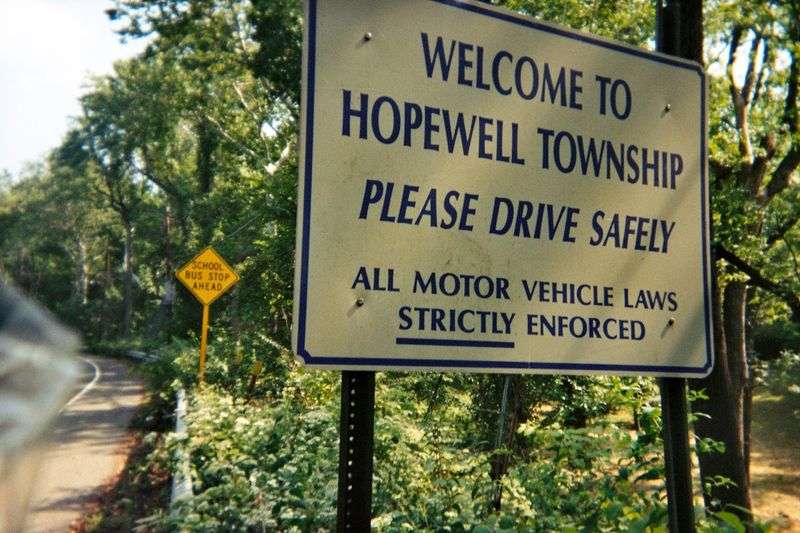
You can tell a town is serious about staying itself when the antique center is not a gimmick but a fully believable afternoon plan. Hopewell Borough has that low-key Mercer County charm that sneaks up on people who thought they were just cutting through.
Broad Street is the spine: restaurants, shops, old homes, and enough architectural character to make even a quick errand feel like a detour worth taking. Food is a big part of the draw.
Hopewell Fare brings multiple food concepts under one roof with a focus on local and sustainable sourcing, while The Peasant Grill has been serving comfort food in town since 2007.
Then there is the Tomato Factory Antiques & Design Center, a two-floor, 18,000-square-foot stop with more than 20 independent dealers selling vintage furniture, jewelry, art, ceramics, lighting, and collectibles.
That alone can eat an hour if you have even a mild weakness for old mirrors or strange lamps. Hopewell also has one of those preserved railroad-station landmarks that gives the town a real visual anchor; the 1876 Second Empire station is a recognized historic site and has received preservation support over the years.
Come hungry, park once, walk slowly, and do not underestimate the bread.
7. Allentown
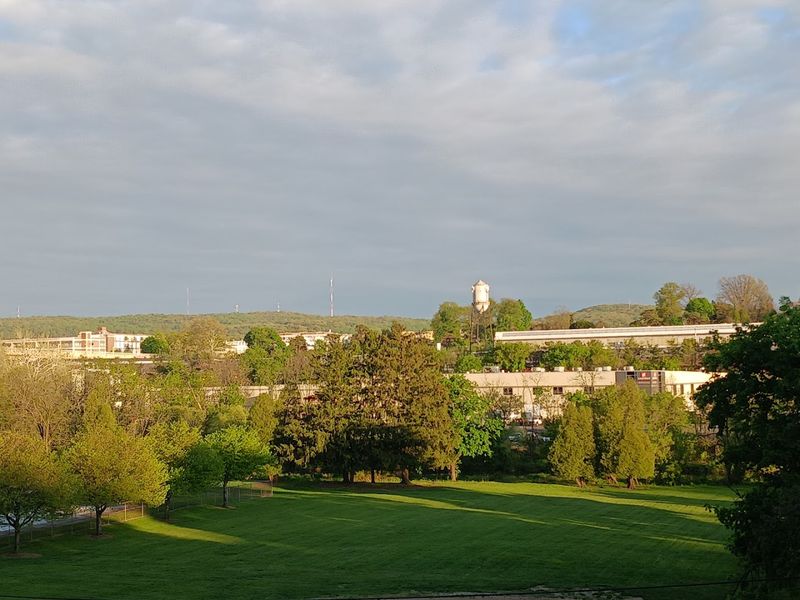
The mill pond is doing a lot of emotional work here. Allentown, the Monmouth County one, not the Pennsylvania one, gathers itself around Main Street, the Old Mill, and the feeling that a Saturday can still be pleasantly unoptimized.
The borough grew around a mill built by Nathan Allen in the early 1700s, and by the end of the 18th century it had more than two dozen commercial enterprises within the village boundaries. That history still makes sense when you see the town today.
The Old Mill remains the obvious starting point, now home to specialty shops, studios, and farm-to-table dining in a landmark building tied to Monmouth County trade and craft traditions. Wander from there into the small boutiques, look for something handmade rather than mass-produced, and leave time for a pond-side pause.
This is also a good town for people who like their day trips gentle: a little shopping, a little lunch, a little poking around, no need to build a spreadsheet. Nearby parks and Connines Pond add room for picnicking and fishing, and wineries and breweries sit within easy reach outside the village center.
Allentown works because it has not confused charm with spectacle. It is not trying to be huge. Please do not encourage it.
8. Stillwater
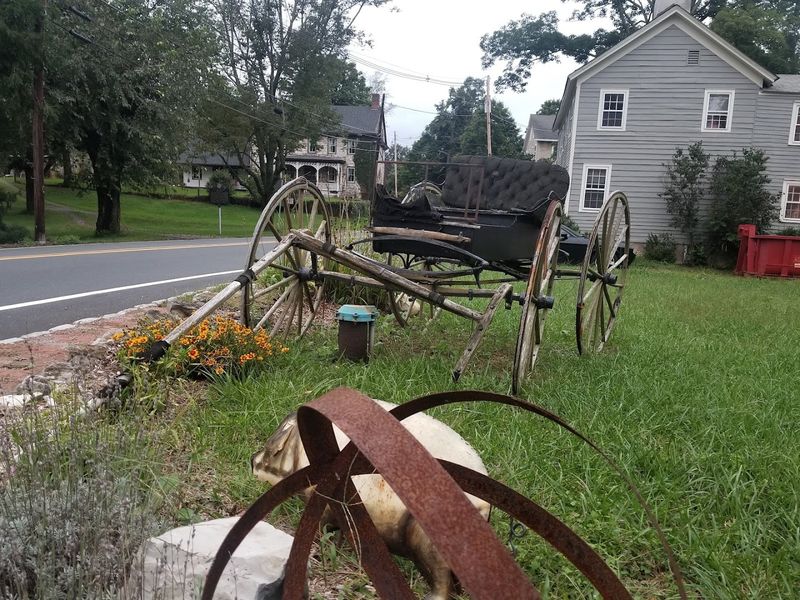
Morning fog over a Sussex County field can make even a practical person believe in keeping secrets. Stillwater is not a boutique downtown pretending to be rural; it is rural, with villages, lakes, forests, farmland, and the Kittatinny Mountains quietly setting the background.
The township covers 29 square miles and includes the villages of Stillwater, Middleville, and Swartswood, along with lake communities such as Crandon, Plymouth, and Paulinskill Lakes. Its history runs deep.
European settlement began in 1741, and Stillwater became its own township in 1824. The historical society notes that despite development pressures, its villages have kept much of their rural character through preserved structures and conservation of the surrounding natural environment.
That is the reason locals guard it. This is not a place to rush in for one “cute” storefront and leave.
Go for a drive, stop at the Historical Society of Stillwater Township if your timing lines up, and take the slower roads where old stone, pasture, and water still hold the scene together.
The society’s home at 900 Main Street is open June through October on the first Sunday of the month from 2 to 4 p.m., or by appointment, with parking available across the street at the Presbyterian Church. Bring curiosity, not noise.
9. Haddonfield
A giant dinosaur in a polished downtown should feel absurd. In Haddonfield, it feels exactly right.
This Camden County borough has Revolutionary-era history, excellent shopping, serious restaurants, and one of New Jersey’s strangest bragging rights: Hadrosaurus foulkii, the dinosaur associated with the town, was uncovered here in the 19th century, and a sculpture now stands on Hadrosaurus Lane as a downtown landmark.
That little bit of weirdness keeps Haddonfield from becoming too buttoned-up.
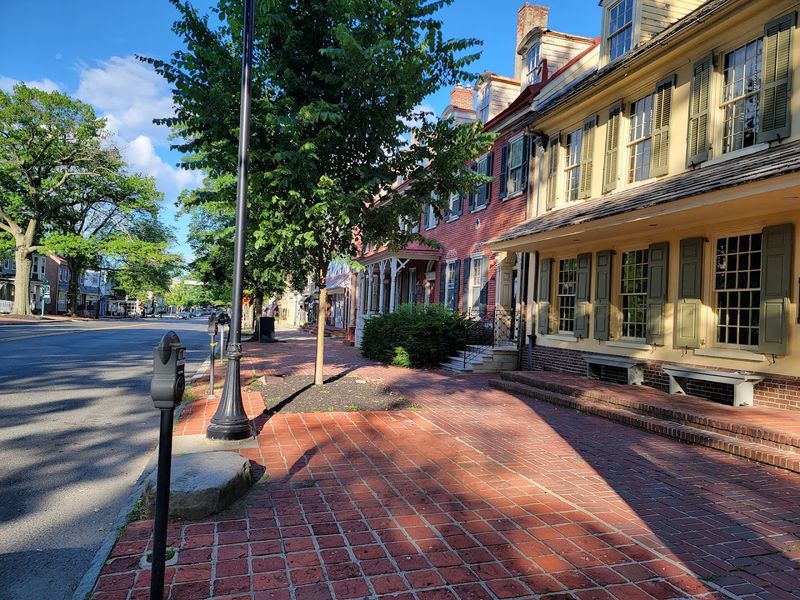
Kings Highway is the main stroll, lined with independent shops, coffee stops, galleries, and restaurants that make the town an easy Philadelphia-area day trip without the chaos of a bigger destination.
Haddonfield also has weightier history at the Indian King Tavern, a Revolutionary War-era site visited by both American and British forces and tied to New Jersey’s political history during the war.
The move here is to mix the polished and the peculiar: say hello to Haddy, browse a bookstore or gift shop, then settle into dinner at one of the BYO restaurants that make the town feel quietly indulgent. Haddonfield is hardly unknown, but locals still resist the idea of it becoming a churn-and-burn attraction.
It rewards people who linger, spend locally, and pay attention past the pretty storefronts.
10. Alloway
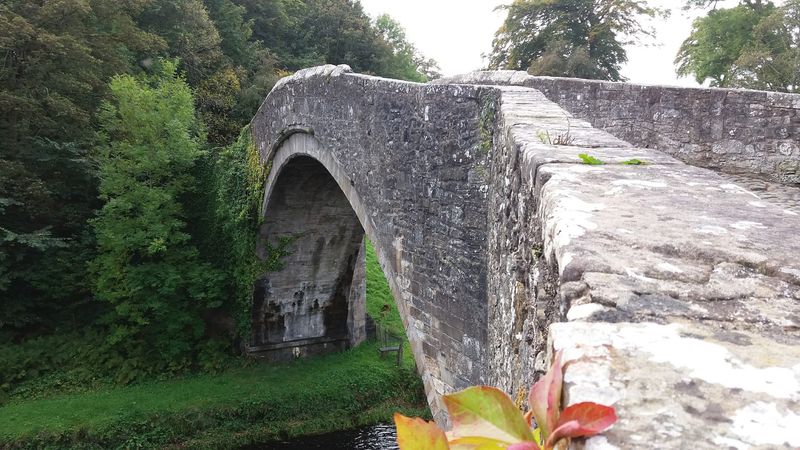
The lake is the giveaway. Alloway does not announce itself with a fancy main drag, but that 157-acre sheet of water gives the Salem County township a center of gravity locals understand immediately.
Alloway Lake reopened to the public in 2009 after an eight-year dam and spillway replacement, and public access at 26 East Canal Street includes parking, picnic tables, a dock, and a small boat ramp. Only non-powered watercraft or electric trolling motors are allowed, and fishing is catch-and-release.
That tells you a lot about the town’s pace. Bring a kayak, bring patience, bring the kind of lunch that tastes better eaten outside.
Alloway also has old South Jersey history baked into it. The township’s museum and history room sits on the second floor of the municipal building and is typically open the last Saturday of each month from 9 a.m. to noon.
Nearby wetlands and creek landscapes add another layer for birders and quiet-road wanderers; the Alloway Creek Watershed area includes thousands of acres of wetland and upland edge in Salem County. This is not a polished weekend village with matching signage.
It is humbler than that, and better for it: water, fields, old stories, and room to hear yourself think.
11. Bay Head
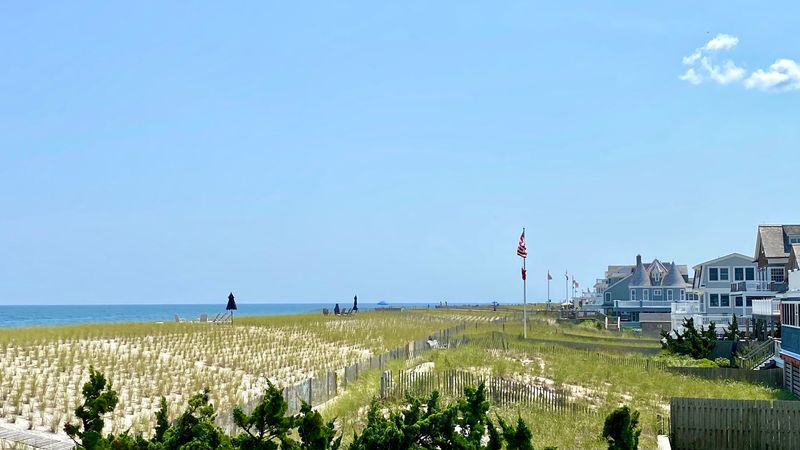
The bakery line may be the closest thing Bay Head has to a morning parade. This Ocean County shore town is refined but not flashy, with a downtown that feels built for linen shirts, sandy sandals, and people who know exactly what they are buying before they walk in.
Main and Bridge Avenues hold more than 40 specialty shops and dining options, which gives Bay Head enough retail life to fill a leisurely afternoon without turning it into a mall by the sea.
The local business directory reads like a town that still favors small-scale browsing: art galleries, clothing shops, bookstores, home stores, beach gear, coffee, bakeries, and a handful of restaurants.
Start with Mueller’s Bakery if you are smart, then drift toward the shops before the beach crowd settles in. The beaches are public, but they are operated by the Bay Head Improvement Association rather than the borough government, a setup that adds to the town’s particular local rhythm.
For 2026, beach badges are required through Labor Day, with daily, full-season, and half-season options available through the VIPLY app beginning May 1. Bay Head is beautiful in a controlled, careful way.
Locals are not wrong to worry about too much attention. One viral summer could make quiet feel very far away.
12. Sea Girt
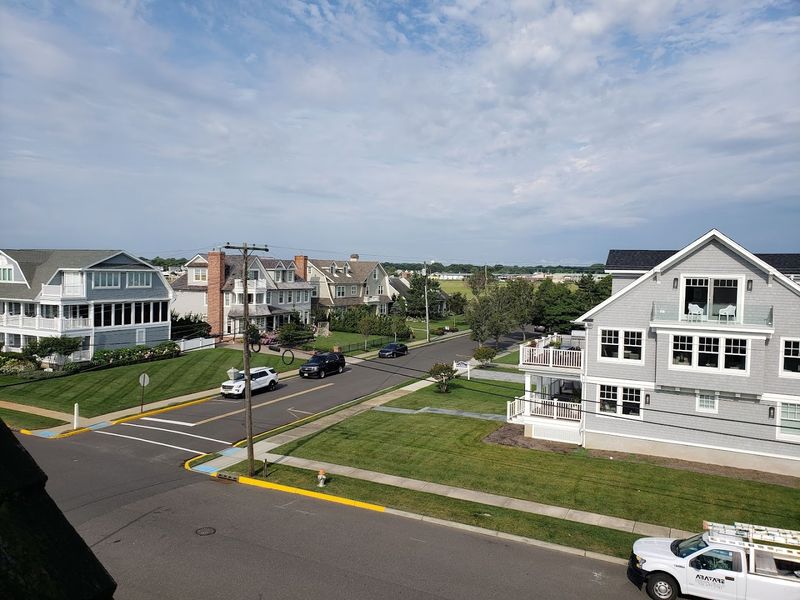
The boardwalk begins with a lighthouse, which is a strong opening argument. Sea Girt is one of those Shore towns that understands restraint: clean beach, handsome homes, a modest commercial footprint, and a boardwalk that invites walking rather than performing.
The borough says its beaches and boardwalk are open year-round, and the boardwalk starts at the historic Sea Girt Lighthouse before running south along the oceanfront. That lighthouse gives the town more than a pretty landmark.
First lit on December 10, 1896, Sea Girt Lighthouse helped fill a navigational blind spot between Navesink and Barnegat, and its beacon could be seen 15 miles at sea. It was also the last live-in lighthouse built on the Atlantic Coast, with the tower integrated into the living quarters.
Tours generally run on Sunday afternoons during the season, with holiday closures noted by the lighthouse. After that, walk the boards, keep lunch simple, and let Sea Girt be what it is: not a thrill ride, not a resort pitch, not a place begging for attention.
It is a well-kept shore town with old coastal bones, and the locals’ secret hope is easy to understand. Too many people discovering calm tends to make it disappear.
Share this story