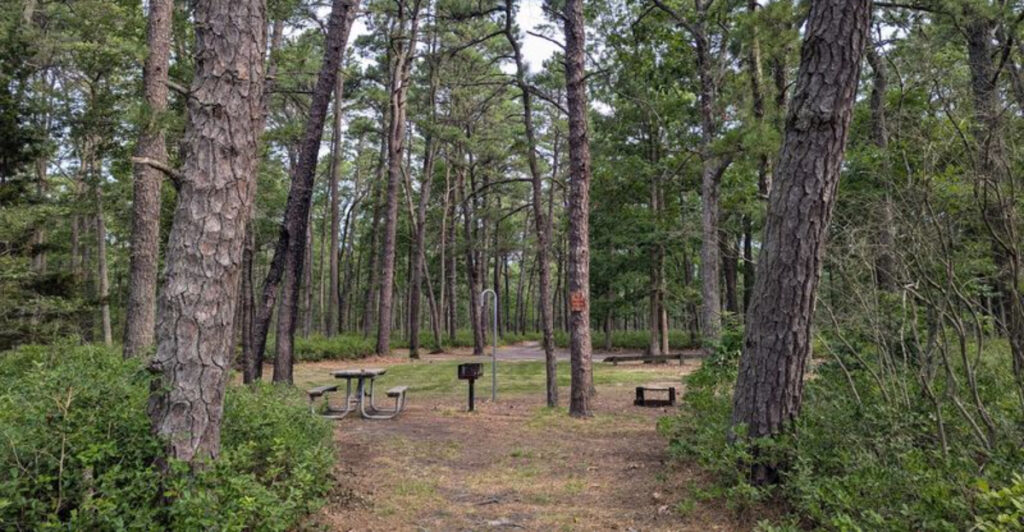
There is a particular moment on a good New Jersey trail when the traffic noise disappears, the pines close in, and your phone suddenly feels like the least interesting thing in your pocket. The best part is that you do not need to scramble over boulders or grind up a mountain to get there.
Some of the state’s quietest walks follow sandy Pine Barrens paths, old cranberry bog roads, cedar swamps, river bluffs, and boardwalks that carry you straight into wetlands. A few are barely a mile long.
Others give you several hours in the woods without asking much more than comfortable shoes and a little patience.
These 12 trails deliver the satisfying illusion that you have wandered much farther from civilization than you actually have, with manageable terrain that leaves plenty of energy for looking around instead of staring at your feet.
1. Whispering Pines Trail – Wharton State Forest
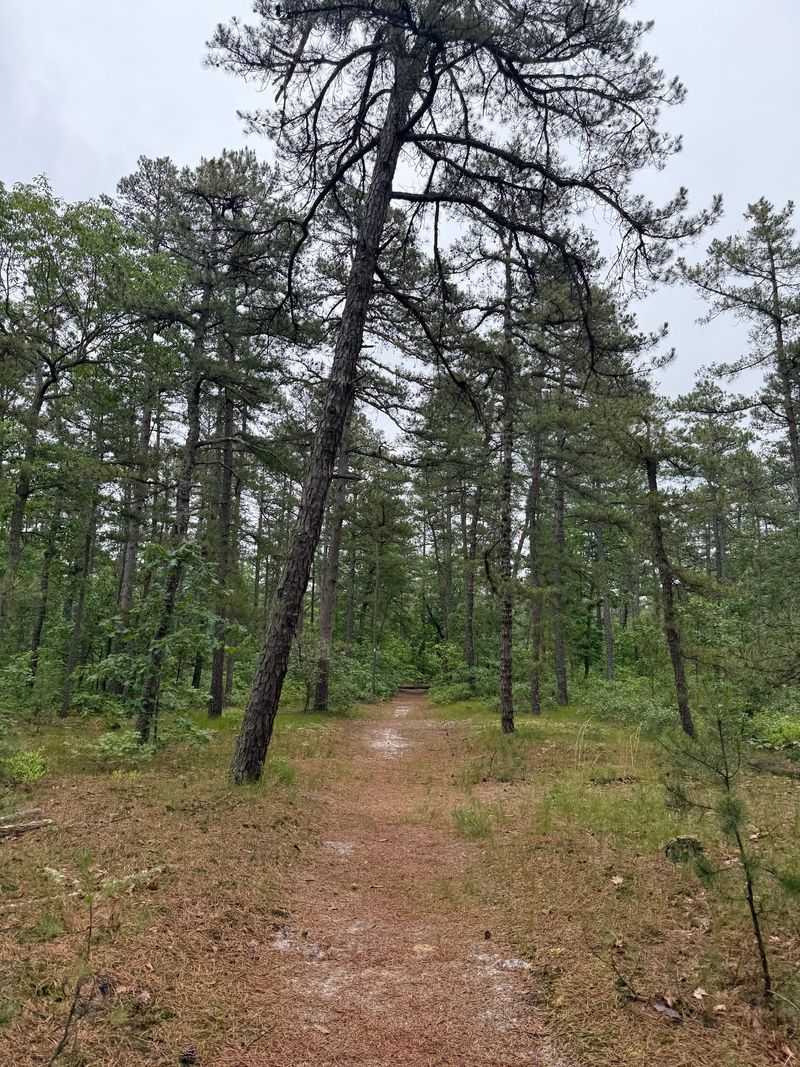
A few minutes beyond the access point, this corner of Wharton State Forest starts doing its disappearing act.
Houses and busy roads feel strangely far away, replaced by sandy ground, pitch pines, dark cedar wetlands, and the kind of long, straight forest views that make the Pine Barrens seem much larger than New Jersey should reasonably be able to contain.
Whispering Pines is a 3.9-mile hiking loop rated easy, and the terrain is exactly what many casual hikers want: natural sandy soil and old roads rather than rocky climbs or steep grades.
The trail passes Atlantic white cedar swamps and abandoned cranberry bogs, giving the walk more variety than the name’s wall-to-wall-pine image suggests.
It is especially good on cool fall or winter days, when the understory thins and the forest feels even quieter. Parking is available near the junction of Route 532 and Patty Bowker Road in Tabernacle, and hikers reach the loop via the Atlantic White Cedar Trail or Irick’s Causeway Road.
Bring bug spray in warmer months, and do not mistake flat for foolproof; Pine Barrens intersections can look remarkably similar. Still, for a trail that feels wonderfully out of the way, the actual walking is refreshingly straightforward.
2. Batsto White Trail – Wharton State Forest
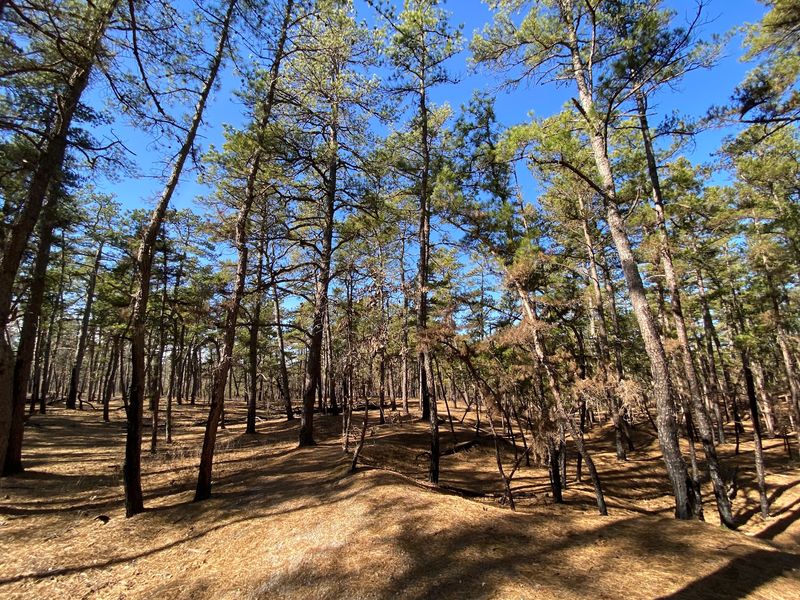
Start near Batsto Village, where historic buildings and a paved parking lot hardly suggest that a few miles of quiet woods are waiting just beyond them. The four-mile White Trail quickly trades the village setting for upland pine-oak forest, sandy trail, and a gradual descent toward the Batsto River.
From there, it swings south beside an Atlantic white cedar swamp, one of those classic Pine Barrens landscapes where the ground darkens, the vegetation thickens, and every rustle suddenly sounds more interesting.
Beaver activity can sometimes be spotted near the wet areas, while Pine Barrens treefrogs add an unexpectedly loud soundtrack during the right season.
The state rates the trail moderate, but that label is more about natural surfaces and distance than punishing elevation; hikers accustomed to a few miles of walking should find it quite manageable.
The trailhead sits at the northeast corner of the paved Batsto Village parking area, which also makes this one particularly easy to combine with a stroll around the historic site before or after the hike.
Go early and the woods can feel remarkably empty. You get enough mileage to settle into a rhythm, but not so much that the outing turns into an all-day commitment.
3. Cranberry Trail – Brendan T. Byrne State Forest
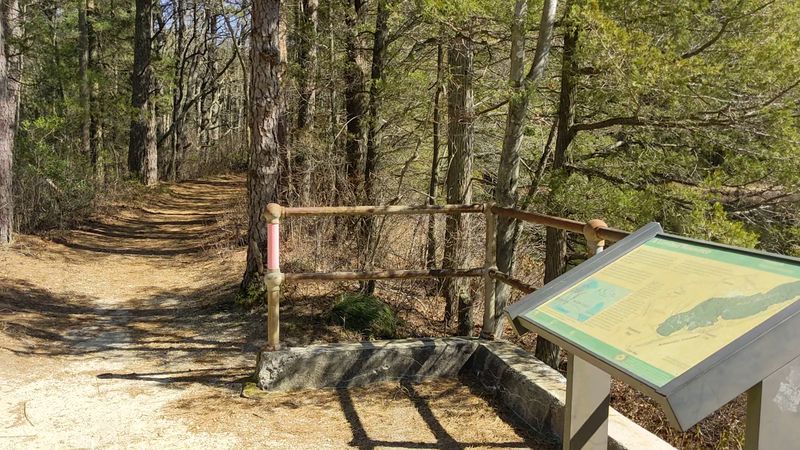
For anyone who wants Pine Barrens solitude without Pine Barrens punishment, the Cranberry Trail is an easy recommendation. The route runs for roughly three miles through Brendan T.
Byrne State Forest, a spread of pine-oak woods, lowlands, cedar swamp habitat, and old cranberry country that can feel much farther from Route 72 than it actually is.
The trail is unusually accommodating for a forest route: the state specifically identifies it as wheelchair accessible, so the walking is considerably gentler than the single-track routes elsewhere in the park.
That makes it a smart choice for mixed-ability groups or hikers who care more about quiet scenery than earning bragging rights through elevation gain. What keeps the walk interesting is the landscape itself.
The forest shifts subtly as you move, with dry pine stretches giving way to wetter pockets and hints of the area’s long cranberry-growing history. Brendan T.
Byrne has more than 25 miles of marked trails, so the Cranberry Trail can also serve as an introduction before you tackle longer loops another day. There is no entrance fee, and the forest generally has a low-key, lightly developed feel once you leave the main facilities behind.
This is not a hike built around one dramatic overlook. Its payoff is an hour or two of uninterrupted woods.
4. Pakim Pond Loop – Brendan T. Byrne State Forest
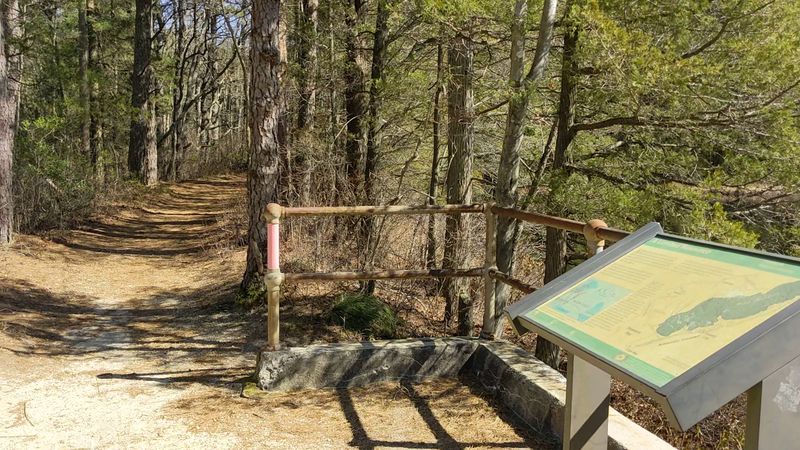
The trick here is scale: at just 0.65 miles, this trail is short enough to sound almost too easy, yet it manages to pack in a surprisingly convincing taste of the Pine Barrens.
The route begins near a small pavilion at Pakim Pond and loops back toward the parking area, taking roughly 40 minutes if you stop at the marked interpretive points instead of marching straight through.
There are 10 numbered stops along the way, but this never feels like homework. The trail passes through several Pine Barrens habitats, and the area around the pond has a history tied to cranberry cultivation.
Keep an eye on the wetter ground for the tiny carnivorous plants that make these ecosystems far stranger than they first appear. This is an especially good pick for families, first-time hikers, or anyone who wants the sensation of being deep in South Jersey without committing half a day to it.
The park itself recommends the Pakim Pond area for short, easy hiking on wide paths, and the pond gives the route a natural focal point before and after the walk. Bring insect repellent once temperatures rise, then take your time.
A trail this short does not need to be rushed, particularly when the whole point is noticing what is growing at your feet.
5. Absegami Trail – Bass River State Forest
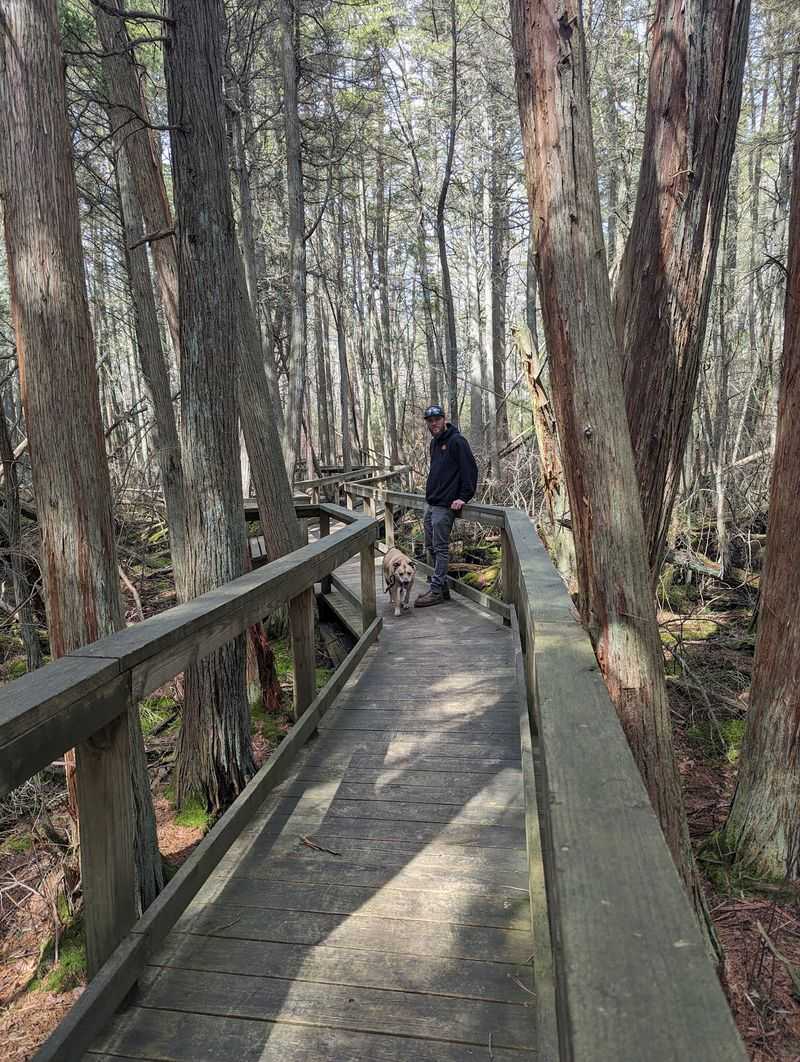
Boardwalks change the mood of a hike. One minute you are walking through familiar pine and oak woods; the next, the path lifts over dark wet ground and carries you directly into an Atlantic white cedar swamp.
That transition is the reason the Absegami Trail earns a spot here. The self-guided route is only about half a mile long, with a wooden footbridge, benches, and close views of the Lake Absegami Natural Area.
Red maple, swamp magnolia, cedar, and wetland plants crowd the edges, while the boardwalk provides a good vantage point for spotting carnivorous plants and looking into the Faulkinburg Branch.
There is practically no physical intimidation factor: Bass River State Forest describes its local trails as easy walking, and this one is designed as a short nature trail rather than a workout.
The trail starts from the second parking lot near the Lake Absegami beach area, so navigation is simple. The setting carries some history, too.
Bass River became New Jersey’s first state forest in 1905, and the Civilian Conservation Corps later shaped much of the recreation infrastructure here, including Lake Absegami itself. Come when the park is quiet, and this tiny loop feels like a hidden passage into the wetter, stranger side of the Pine Barrens.
6. Cedar Swamp Trail – High Point State Park
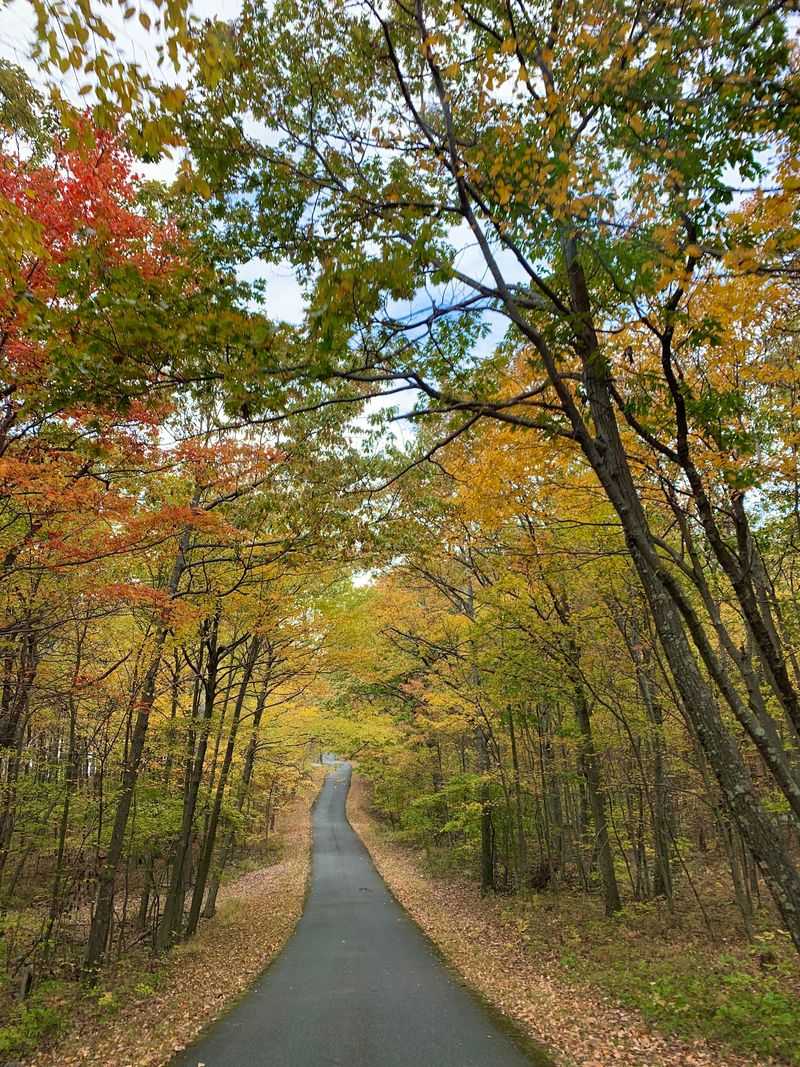
High Point usually makes hikers think of ridge views, the Appalachian Trail, and the state’s highest elevations. The Cedar Swamp Trail pulls a neat switch by heading toward a bog instead.
Hidden within the Dryden Kuser Natural Area is an Atlantic white cedar wetland at unusually high elevation, the sort of habitat more commonly associated with New Jersey’s coastal plain. The easy loop runs roughly two miles and stays mostly flat, using a mix of paved sections, gravel, and boardwalk.
It follows an old access road into the natural area before circling the bog, where dense forest opens onto a boardwalk crossing that feels wonderfully removed from the busier portions of the park.
This is a trail for looking closely rather than looking far: unusual plants, wetland textures, and the sharp contrast between mountain forest and cedar bog provide the appeal.
Park at the Cedar Swamp Picnic Area and look for the yellow gate at the end of the road. Heavy rain can leave portions muddy, so waterproof shoes are a sensible choice even though the grade itself is gentle.
It is one of the rare northern New Jersey hikes where you can get a distinctive mountain ecosystem without paying for it with a long climb.
7. Red Trail – Franklin Parker Preserve
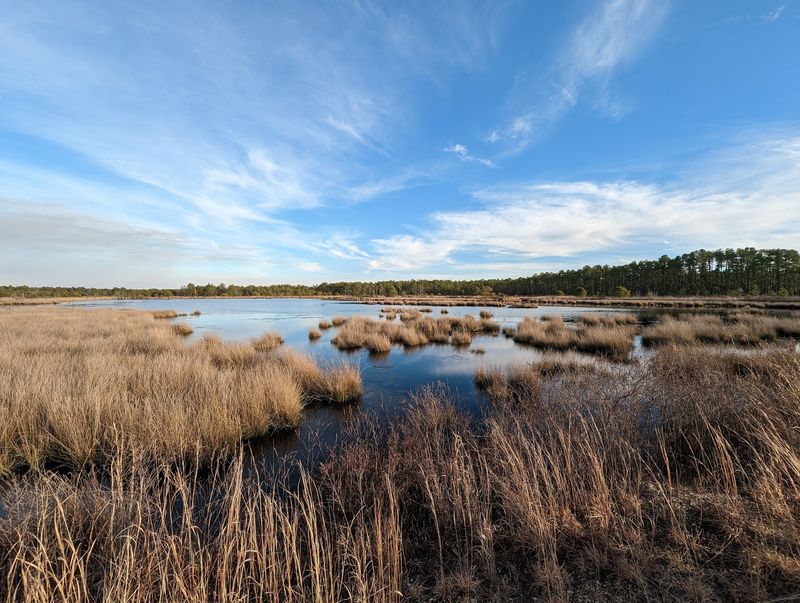
The old cranberry-farm geometry gives Franklin Parker Preserve a look unlike almost anywhere else in the state. Straight sandy roads, broad former bogs, shallow water, cedar swamp, and pine forest spread across a preserve covering about 16 square miles, enough space to make even a well-marked route feel properly remote.
The Red Trail is roughly six miles, so this is the longest outing on the list, but distance is the main challenge rather than elevation. Most of the walking is over sand through generally gentle terrain, with the scenery changing between woods, wetlands, and open bog landscapes.
Franklin Parker was once a commercial cranberry farm before becoming protected land, and those old agricultural lines remain visible throughout the preserve. The result is a hike that feels both wild and oddly orderly at the same time.
Give yourself a few hours, carry more water than you think you need, and keep the trail map handy; in the Pine Barrens, a dozen sandy intersections can develop a family resemblance very quickly.
The preserve now has nearly 21 miles of cleared and blazed trails, so the Red Trail also works as a solid introduction to a place worth returning to.
Few moderate walks in New Jersey create this much separation from the everyday world without asking you to climb anything substantial.
8. Swamp Trail to North End Trail – Estell Manor Park
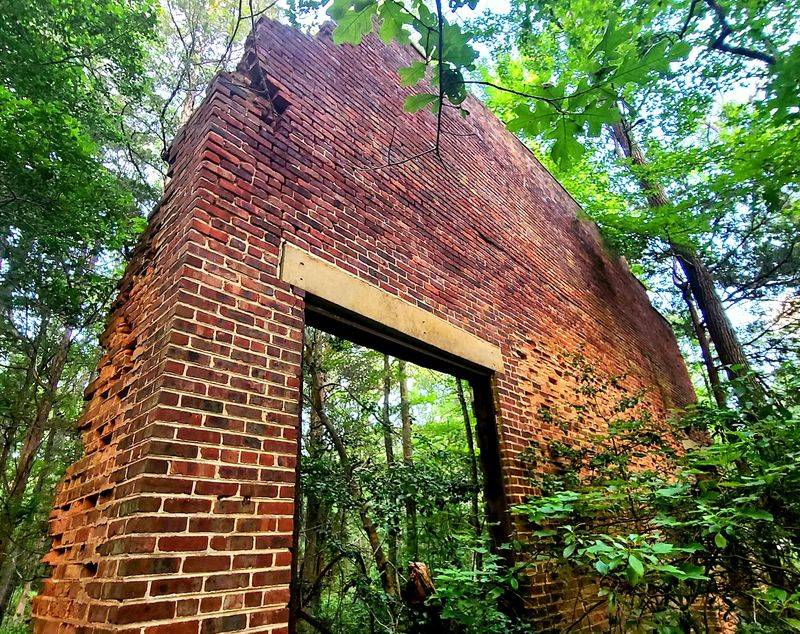
Here, the easiest walking surface also leads into some of the park’s wildest scenery. The Swamp Trail Boardwalk stretches for 1.8 miles on an elevated wooden path, carrying visitors over streams, through cedar swamp, and across coastal forest without asking anyone to slog through mud or pick a careful route around roots.
It is fully accessible and begins directly behind the Nature Center, continuing all the way to Artesian Well Road. Along the way, two short bump-outs lead toward views of the South River, while scattered ruins from the former Bethlehem Loading Company add a strange industrial layer to the woods.
During World War I, this area was part of a massive munitions operation; today, trees and wetlands have reclaimed the scene so thoroughly that pieces of the past can appear almost without warning. That contrast gives the walk more personality than a standard nature boardwalk.
Bikes and horses are not permitted, which helps keep the pace pedestrian and pleasantly unhurried. If you want more mileage, an extension connects toward the Oak Ridge Trail, but there is no need to turn this into a project.
The boardwalk itself offers nearly everything this list promises: quiet woods, water, history, and a sense of isolation with virtually none of the usual trail difficulty.
9. Maurice River Bluffs Loop – Maurice River Bluffs Preserve
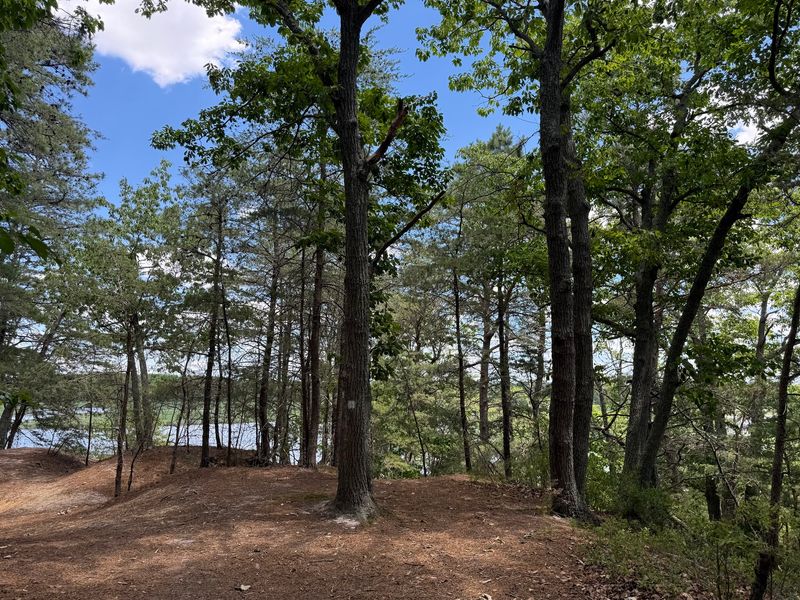
Southern New Jersey does not hand out many bluff views, which makes the wooded slopes above the Maurice River feel like somebody slipped a piece of hillier country into Cumberland County.
A short combination of the preserve’s Blue, Red, and White trails creates an outing of roughly 2.5 to three miles, enough to reach river views, forested slopes, bridges, and remnants of the property’s working past without tackling every trail in the preserve.
The terrain has more personality than a typical Pine Barrens walk, but the main trails average flat to nearly flat; expect a few brief hills and stair sections rather than sustained climbing. The reward is the river.
The Maurice is a major wildlife corridor, and the preserve provides habitat for migrating songbirds, osprey, and bald eagles. A floating dock and several viewpoints make natural places to stop instead of treating the hike like a race.
The property also carries traces of earlier sand mining and agricultural use, with old structural remains still visible from the trails. Trail work and accessibility improvements have been underway in parts of the preserve, so pay attention to posted markers when choosing your route.
This is the pick for hikers who want just enough elevation to make things interesting, but not enough to spend the afternoon questioning their life choices.
10. Parvin Lake Trail – Parvin State Park
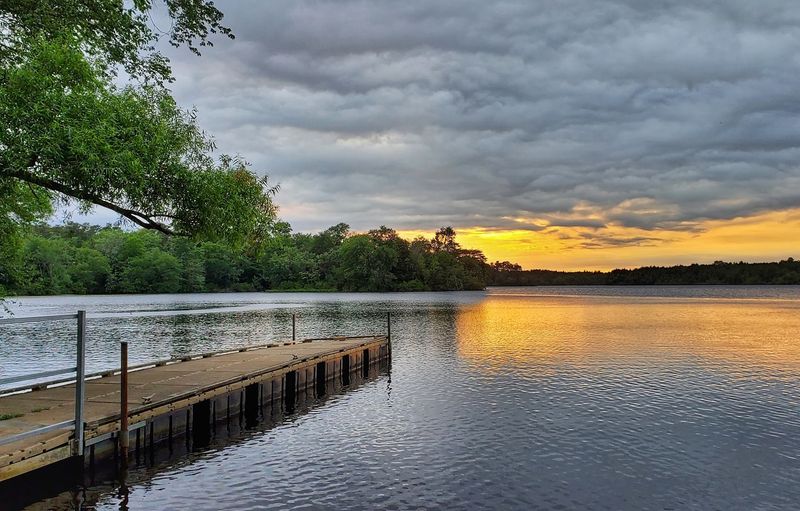
Water keeps showing up beside you on this three-mile loop, which is exactly why Parvin Lake Trail feels longer and quieter than the mileage suggests.
The easy route follows the perimeter of Parvin Lake on mostly flat terrain, beginning with gravel along the eastern shoreline before crossing small bridges and slipping between the lake, campground areas, and the Muddy Run creek basin.
The route occasionally brushes against developed sections of the park, but then the water or woods take over again and the place feels surprisingly secluded.
About three-quarters of a mile west of the Parvin Grove day-use area, the trail passes the site of a Civilian Conservation Corps camp that operated from 1933 to 1941, adding a bit of history without requiring a separate detour.
Parvin sits on the edge of the Pine Barrens, so its landscape mixes familiar pine and oak with hardwood swamp and flowering plants that can make spring particularly rewarding. Start at the Parvin Grove day-use area and choose either direction around the lake; there is no complicated route-finding puzzle to solve.
This is a great “just go for a walk” trail: long enough to clear your head, flat enough to stay conversational, and varied enough that three miles do not feel repetitive.
11. Lake Nummy Loop – Belleplain State Forest
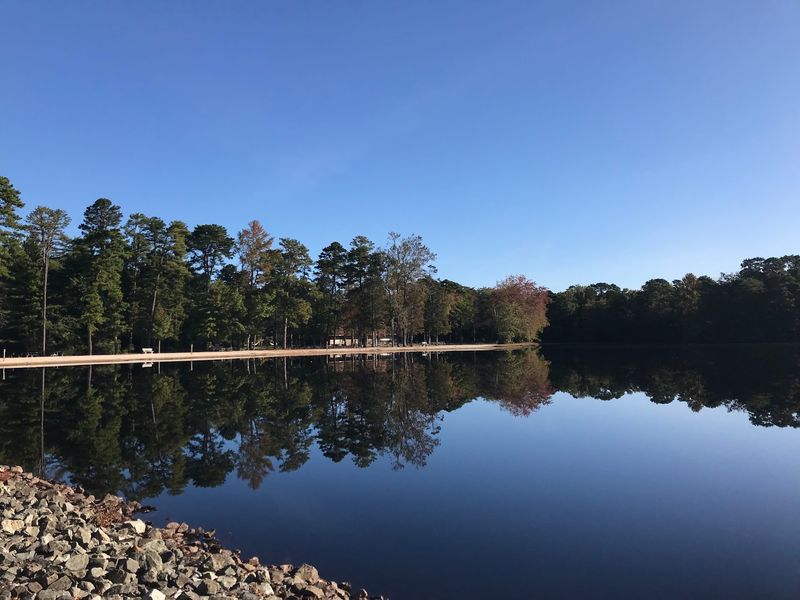
One lap is all it takes for Lake Nummy to make Belleplain State Forest feel like a proper getaway. The loop is about 1.4 miles, with virtually no elevation gain, so the attraction is not athletic achievement; it is the simple pleasure of keeping water in view while the surrounding forest shuts out most signs of the outside world.
Lake Nummy itself began as Meisle Cranberry Bog before Civilian Conservation Corps crews transformed it into a recreation lake during the 1930s. That history fits neatly into Belleplain, where the CCC also built roads, bridges, dams, and other infrastructure that helped shape the forest visitors see today.
The surrounding state forest contains an unusually broad range of habitats, including Atlantic white cedar swamp, hardwood swamp, oak-hickory forest, and salt marsh farther afield. Birders know the area especially well during spring migration.
The lake area becomes busier when swimming and camping are in full swing, so early mornings or cooler-season visits are better for the secluded feeling this list is after. The loop itself is short enough for nearly any casual walker and easy to pair with a picnic or another nearby trail.
Think of it as a small, satisfying dose of Belleplain rather than an expedition.
12. Wildlife Observation Center Trail North – Great Swamp National Wildlife Refuge
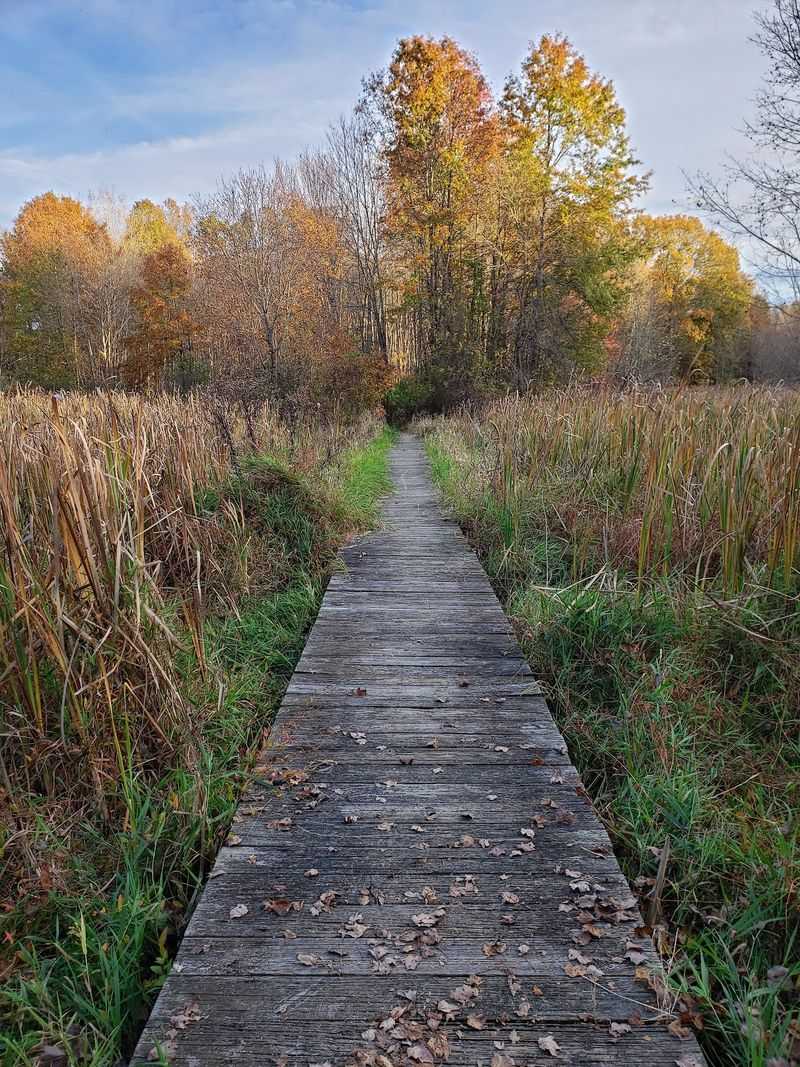
Twenty-six miles from Times Square, wooden boardwalks lead into wetlands where turtles, frogs, waterfowl, and the occasional muskrat have much more relevance than whatever is happening on the nearest highway. That improbable contrast is the magic of Great Swamp National Wildlife Refuge.
The Wildlife Observation Center’s North Trail is only about 0.76 miles and rated easy, but it connects into a larger boardwalk-and-trail area with wildlife blinds and wetland viewpoints. The walking is gentle; the challenge is resisting the urge to stop every few minutes because something moved in the reeds.
The refuge protects roughly 12 square miles of wetlands, forest, grassland, ponds, and streams, creating one of northern New Jersey’s best quick escapes into genuine wildlife habitat. Early morning and late afternoon are particularly good times to visit, when animals are more active and the boardwalk is quieter.
Pets are not allowed on refuge hiking trails or the Wildlife Observation Center boardwalks, a restriction that helps reduce disturbance to wildlife. Restrooms and an informational kiosk are available at the observation center, making this one of the simplest outings on the list to plan.
It feels wild, yet there is no difficult climb, tricky footing, or lengthy approach standing between the parking lot and the swamp.