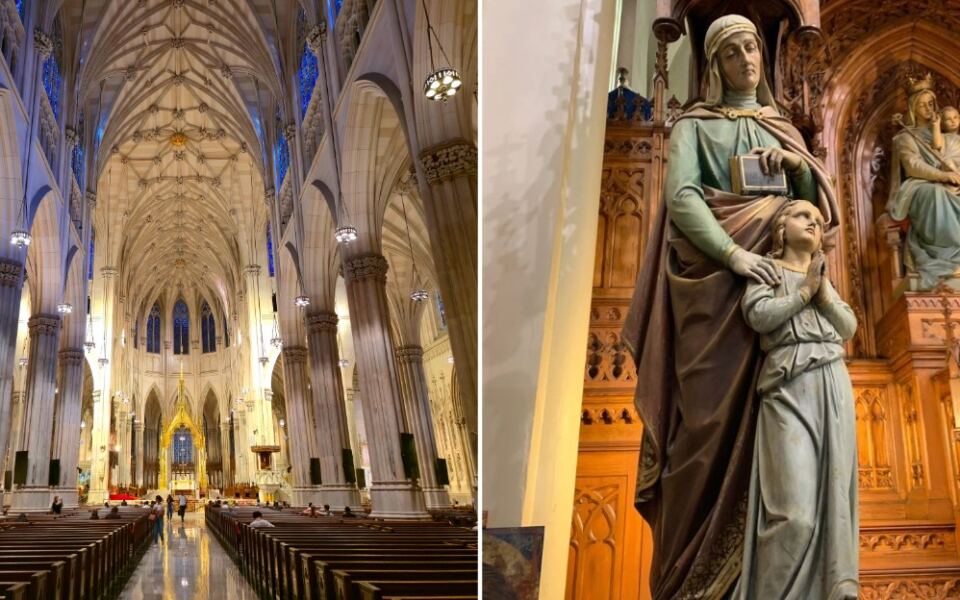
Gargoyles in the Midwest? One church in Ohio actually has them, plus a flying buttress, which is rare for its city. I did a double take when I learned that.
The surprises keep stacking up. Another church filled its sanctuary with carved oak altars and pews shipped from Munich, Germany. A third has stained glass by Louis Comfort Tiffany glowing beside a busy downtown square.
Then there’s a whole rural region nicknamed the Land of the Cross-Tipped Churches. Steeples topped with crosses rise over farm country, and the effect feels more like an old-world postcard than a Midwest drive.
I love that many of these buildings were raised by immigrants who missed home. They carried memories of Europe in their heads and built them in stone, brick, and glass. Each one on this list still holds services today.
Each one offers a little piece of European architectural history without leaving Ohio.
1. St. Stephen Roman Catholic Church
Gargoyles on Cleveland’s West Side? Yes, and this church is one of the few in the city with them, plus a flying buttress to match.
German immigrants founded the parish in 1869. Work on the building started in 1873, and it was finished and consecrated in 1881.
The style is High Victorian Gothic, built from Amherst sandstone in the shape of a cross. Decorative buttresses, pointed arches, and vaulted aisles pull your eyes upward almost by force.
The sandstone gives the walls a solid, earthy look. Paired with those arches, it’s the kind of facade you’d expect on a postcard from Bavaria.
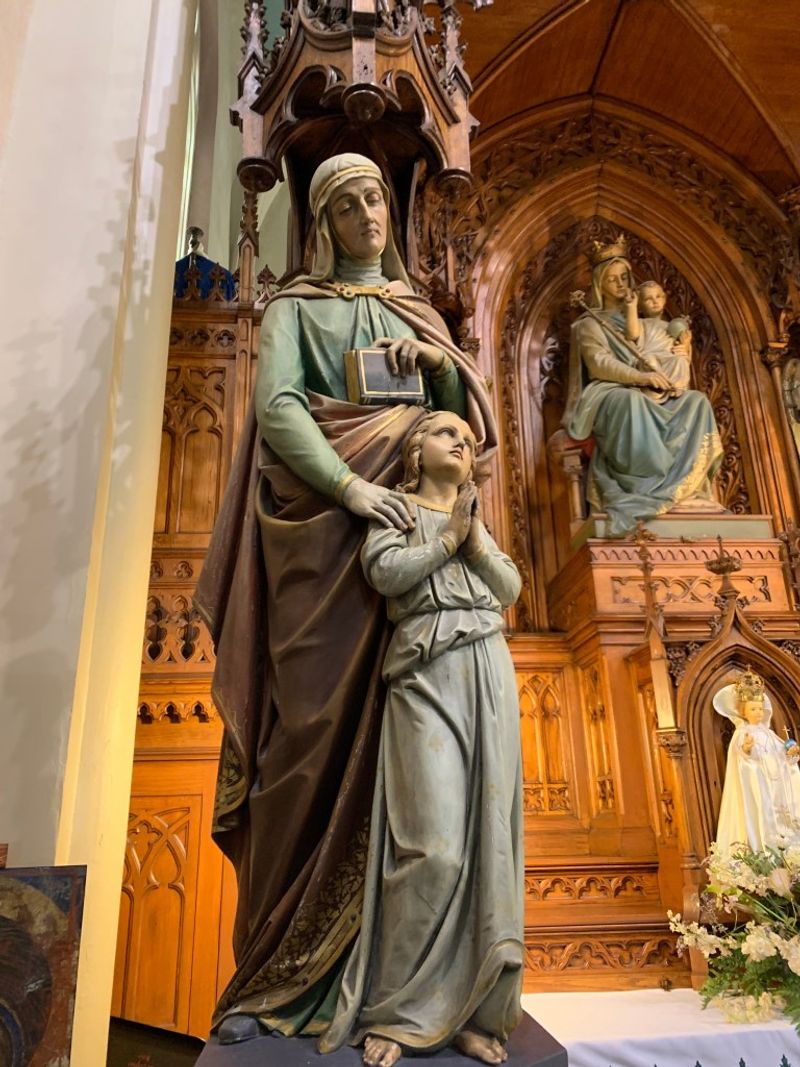
Now for the showstopper inside. Carved oak altars, pulpits, and pews came from Munich, Germany, and were installed in 1893.
Think about that trip for a second. Heavy, detailed woodwork crossed an ocean in the 1800s, then landed in a Cleveland neighborhood.
Cruciform churches follow the shape of a cross when seen from above. Here, that layout helps the long aisles and side spaces feel balanced and grand.
The parish still honors its roots in a big way. Along with regular Sunday and daily Masses, it offers German Masses and Tridentine Latin Masses.
That mix makes a visit feel like a small step back in time. Hearing German in a room full of Munich carvings could make you forget which continent you’re on.
Plan ahead if you want to look around. Since it’s an active parish, check the Mass schedule first so you can admire the woodwork respectfully.
Bring a camera with a good zoom for the exterior. Those gargoyles don’t come down for close-ups, after all.
Address: 1930 W. 54th St., Cleveland, OH 44102
2. Holy Angels Catholic Church
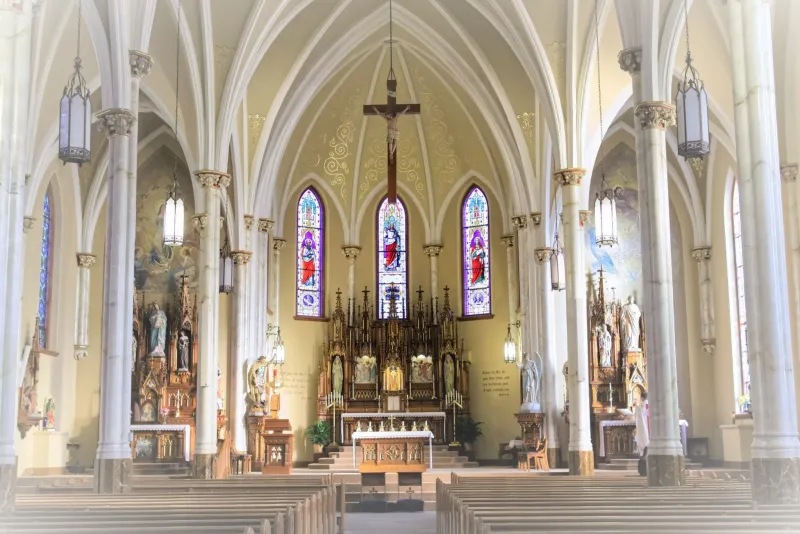
Some buildings earn a nickname, and Sandusky calls this one its mother church. That title comes with serious history behind it.
Holy Angels is the oldest surviving church building in the Catholic Diocese of Toledo. It also holds that honor for Erie County, which is impressive for a lakeside region full of old structures.
The cornerstone went down on October 13, 1841. By Christmas of 1845, the building was complete, steeple and bell included.
Four years might sound slow today. Back then, though, stone churches rose by hand, one heavy block at a time.
The design is stone Gothic Revival. Pointed arches, sturdy buttresses, and a tall steeple give it that old-world outline people travel overseas to photograph.
Gothic Revival was a style that borrowed from medieval European churches. Builders in the 1800s loved it because it looked timeless and serious.
Here, the stone does a lot of the talking. It gives the church a weathered, rooted look that fits its long story in Ohio.
You’re also close to plenty of other reasons to visit Sandusky. Pairing a church stop with a lakefront afternoon makes for an easy, well-rounded day trip.
Remember that this is an active parish first and a landmark second. Check the Mass times before you go, and keep your visit quiet if services are happening.
History fans will appreciate the timeline most. Standing outside a building whose cornerstone dates to 1841 is a pretty humbling way to spend five minutes.
Look up at that steeple before you leave. It has been calling people to church since the 1840s, and it still knows how to make an entrance.
Address: 428 Tiffin Ave, Sandusky, OH 44870
3. Emmanuel’s Evangelical Lutheran Church
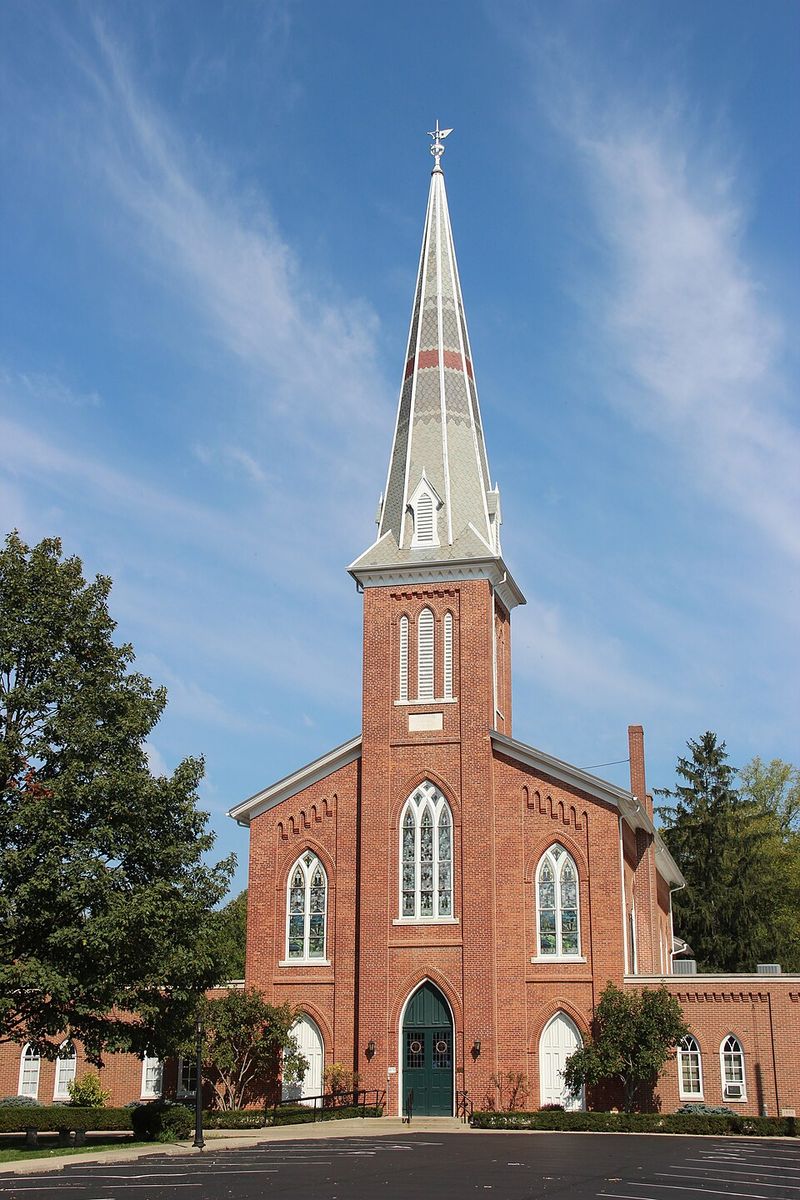
A town called Germantown with a church that looks plucked from a German village? Sometimes the names really do match the scenery.
Emmanuel’s Evangelical Lutheran Church has roots going back to 1809. That’s a congregation that has been gathering for more than two centuries.
The current building went up in 1867. It’s a Gothic Revival design, built from brick instead of stone.
Brick gives it a softer, small-town charm. It feels less like a fortress and more like the heart of a community.
The front is the part to study. A gable-front facade holds three arched entrances, each paired with large stained-glass windows.
Right in the middle, a central steeple rises above the doors. The symmetry is so tidy it almost looks drawn with a ruler.
The congregation is known for keeping its artwork, stained glass, and craftsmanship in great shape. Over 150 years of care shows in the details.
That kind of upkeep doesn’t happen by accident. It takes generations of people deciding that a building is worth protecting.
Germantown sits in southwest Ohio, close enough to Dayton for an easy side trip. You can slip a quick church stop into a day of exploring smaller towns.
Photographers, take note of the light. Stained glass looks different from outside than inside, so timing your visit around a service or event could reward you.
As always, this is an active church. Respect worship times, and you’ll get to enjoy a slice of 1867 that still feels very much alive.
Address: 30 W. Warren St., Germantown, OH 45327
4. St. Aloysius Catholic Church
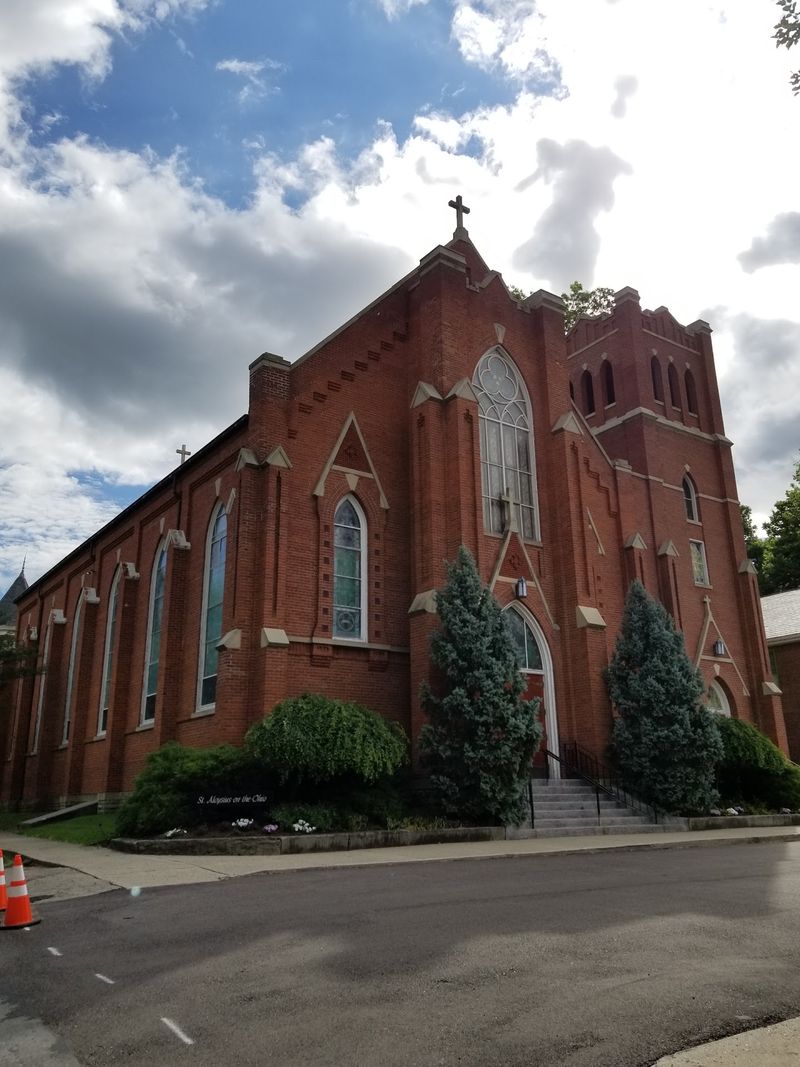
Trendsetters don’t always live in big cities. In a tiny Mercer County community, this church started a look that defined an entire region.
St. Aloysius was the first in the area to use the cross-tipped tower model. That style became so common nearby that people now call the region the Land of the Cross-Tipped Churches.
The church sits in Carthagena, an unincorporated community. Its mailing address says Celina, so don’t let that confuse your GPS.
Construction ran from 1875 to 1878. It was consecrated in 1878, which means the parish waited a few years for its big moment.
Anton DeCurtins designed the building. He gave it a Gothic Revival style meant to echo older European churches.
Brick walls stand on a stone foundation. Pointed arches and a tall tower give it the kind of silhouette you’d expect in the European countryside.
The tower is the real star. A white wooden belfry sits near the top, finished with a pointed spire.
Against wide-open farm country, that spire feels dramatic. You can almost picture travelers spotting it from far away and steering toward it.
Step inside and the story continues. Frescoes were added to the interior in 1923, bringing color and art to the space.
Want to make a day of it? The cross-tipped churches region is great for a slow drive, with steeples popping up across the landscape.
Start here, since this is where the trend began. Then go hunting for the rest, and see how many crosses you can spot before lunch.
Address: 6036 State Route 274, Celina, OH 45822
5. The Historic Church of St. Patrick
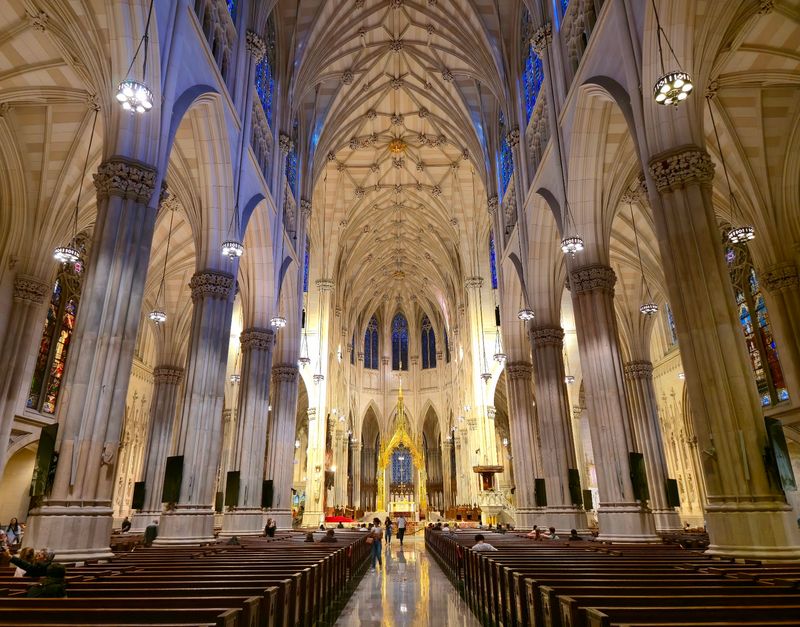
Blue sandstone sounds like something from a fairy tale. In Toledo, it’s the material behind one of the most admired Gothic churches in the country.
The Historic Church of St. Patrick is built from Amherst blue sandstone. It was dedicated on April 13, 1901.
The parish itself is older, founded in 1862. So the congregation spent decades growing before this showpiece arrived.
The church is often praised as one of the finest examples of Gothic architecture in the United States. That’s big talk, and the building backs it up.
Inside, ten red granite columns line the space. Red granite against the cool tones of the stone outside makes for a striking contrast.
Columns like these do more than look pretty. They help carry the weight of a large Gothic interior, letting the room feel tall and open.
The steeple has its own comeback story. The original 240-foot steeple was damaged by fire in 1980.
It has since been rebuilt. That’s the kind of determination that keeps a landmark standing for future generations.
The church joined the National Register of Historic Places in 1972. That listing recognizes its importance to the story of Toledo and Ohio.
Planning a visit? Check the parish schedule first, since it’s an active church with regular worship.
Give yourself time to walk around the outside. Sandstone changes with the light, so the walls can look different from one hour to the next.
Address: 130 Avondale Avenue, Toledo, OH 43604
6. The Basilica of Saint John the Baptist
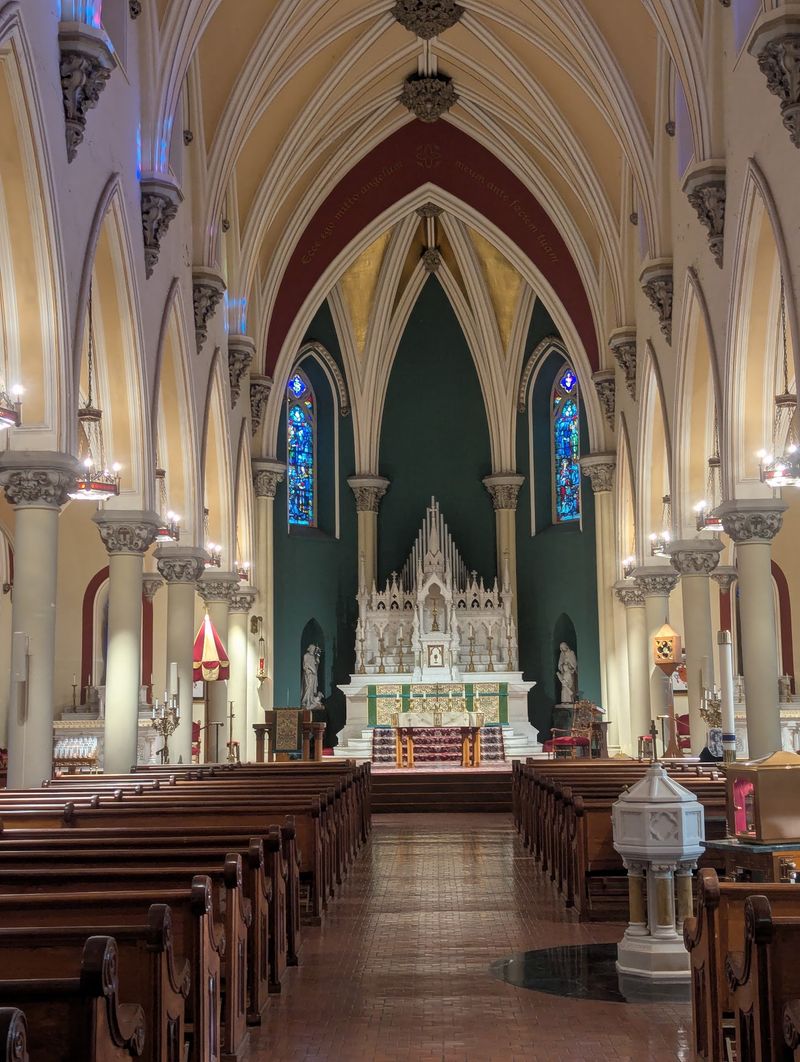
The architect behind New York’s famous St. Patrick’s Cathedral also left his mark on Canton. James Renwick Jr. designed this church, and it shows.
The parish dates to 1823. It’s the oldest Catholic parish in northeastern Ohio, which gives it serious bragging rights.
The current building went up between 1870 and 1871. It’s described as a pure Gothic design, with the soaring lines that style is famous for.
Only about a year to build it? That’s fast for a church of this caliber.
In 2012, the church was raised to the rank of minor basilica. That’s a special honor from the Catholic Church, given to churches of notable history and importance.
Inside, the details stack up quickly. A marble altar was consecrated in 1897.
The Stations of the Cross are made of Bavarian terra cotta. They were put in place in 1896, adding a European touch straight from Germany.
Music lovers, this one’s for you. The basilica holds a seventy-nine rank pipe organ, and that’s a big instrument.
Ranks are sets of pipes that create different sounds. More ranks means more musical color, so imagine how that fills a Gothic space.
Canton fans often think of football first. A stop here shows a quieter, older side of the city.
It’s an active worship site, so plan around Mass times. Then sit for a moment and let Renwick’s design do its thing.
Address: 627 McKinley Avenue NW, Canton, OH 44703
7. Cathedral of St. John the Evangelist
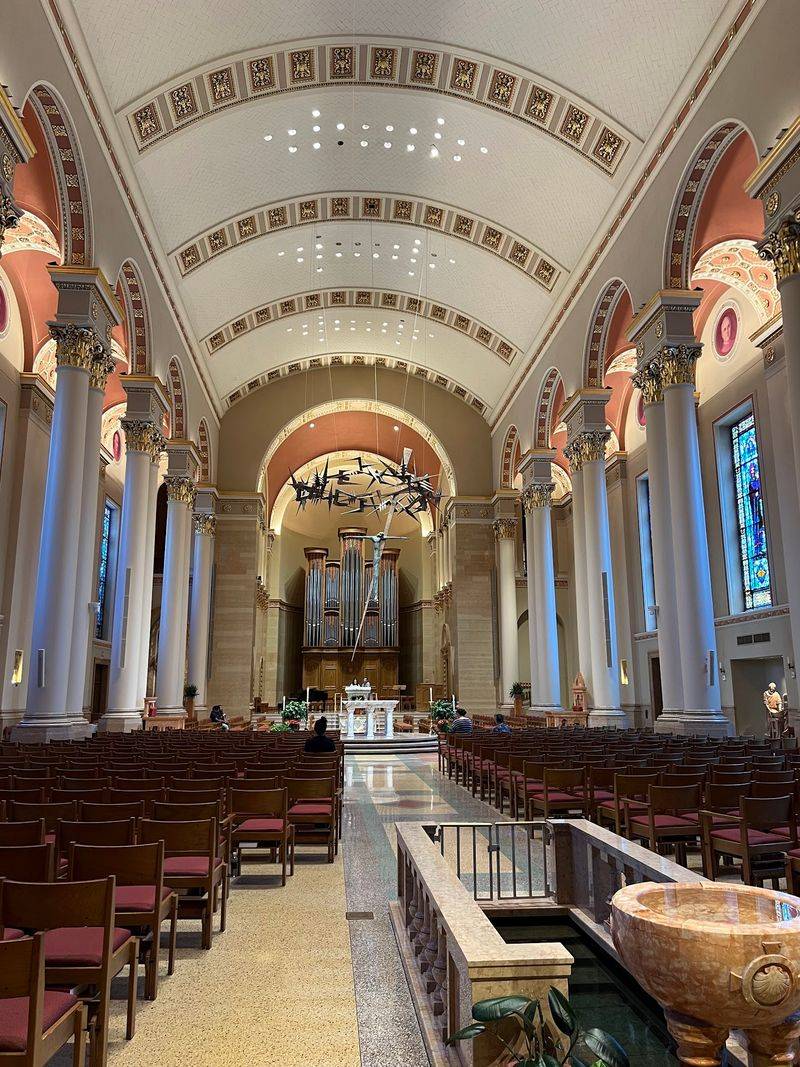
An altar from France sits in the middle of downtown Cleveland. Not many cities can say that about their main cathedral.
The Cathedral of St. John the Evangelist serves as the mother church for the Diocese of Cleveland. It was completed and consecrated in 1852.
Irish architect Patrick Keely created the original design. His style here is called Ornamental Gothic, and the name fits.
Keely designed a huge number of churches in America. Seeing one of his works in person is a treat for architecture fans.
Outside, buttresses and pinnacles follow classic Gothic tradition. Those pointy tops make the building look like it’s reaching for the sky.
The steeple and spire weren’t part of the first version. They were added during renovations in 1874.
Inside, columns line the space. Delicate stained-glass windows and a stucco finish add to the elegant look.
Then there’s that French altar. It’s a reminder of how far churches went to bring European beauty to American cities.
Location makes this an easy stop. If you’re exploring downtown, you can fit a visit between museums, lunch, and a lakefront stroll.
Keep in mind that a cathedral is a busy place. Masses, special services, and diocesan events happen here, so check ahead.
Bring a little patience and a quiet voice. The reward is a slice of old-world Gothic style right in the center of Cleveland.
Address: 1007 Superior Avenue, Cleveland, OH 44115
8. Old Stone Church
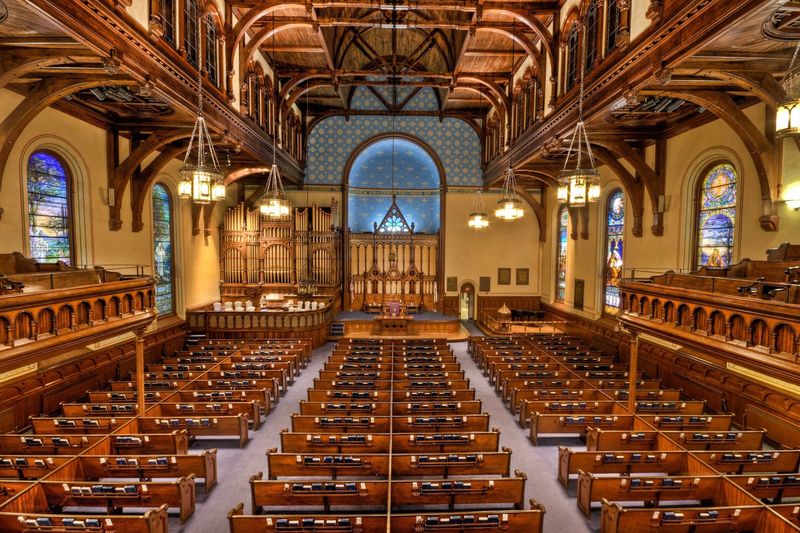
Sometimes a nickname sticks for a reason. Its sandstone walls darkened over the years, and people started calling it the Old Stone Church.
The official name is The First Presbyterian Society. Still, good luck finding anyone who uses that in casual chat.
It’s the oldest building on Cleveland’s Public Square. It also ranks as the second oldest church in the city.
The current building was dedicated in 1855. It follows the Romanesque Revival style, with rounded shapes and a solid, sturdy feel.
Romanesque style comes from medieval Europe, before Gothic took over. So this church nods to an even older chapter of European history.
Local sandstone makes up the walls. That darkened stone stands out boldly among the modern towers around the square.
The windows are the real treasure. One by John LaFarge dates to 1885.
Louis Comfort Tiffany created four more, dated 1885, 1915, and 1930. Seeing Tiffany glass in its intended setting beats seeing it behind a museum rope.
The steeple has a modern twist. A replica of the original was added in 1999 during a major renovation.
Here’s a practical perk. The church offers tours, so you can learn the stories behind those famous windows.
Sunday worship continues too. Whether you come for faith or art, this downtown landmark in Ohio has a lot to share.
Address: 91 Public Square, Cleveland, OH 44113
9. Trinity Cathedral
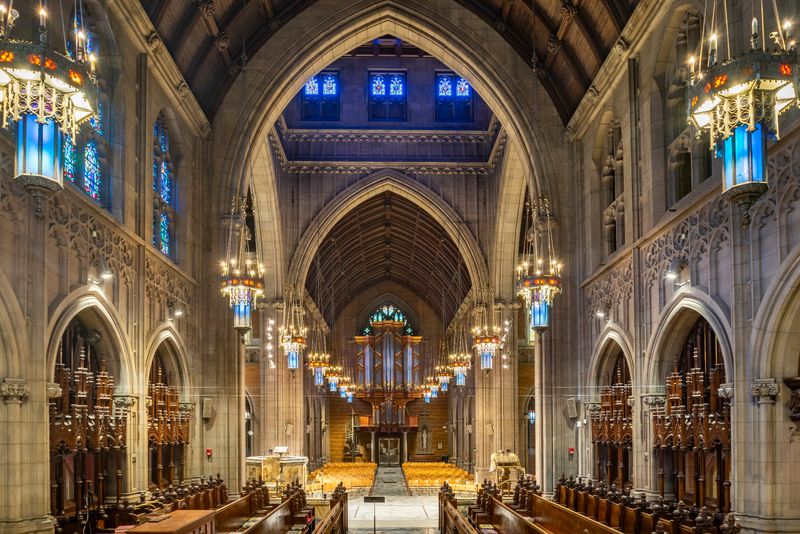
A parable in stone is a lofty way to describe a building. Trinity Cathedral wears that title, and the design earns it.
It’s the Episcopal cathedral for the Diocese of Ohio. It sits on Euclid Avenue in Cleveland.
Charles F. Schweinfurth designed it in an English Gothic style. More precisely, it’s Perpendicular-style American Gothic Revival.
Perpendicular Gothic is a very English look. Think strong vertical lines and big windows, like the old churches of England.
Construction ran from 1901 to 1907. Builders used Indiana limestone, which gives the walls a pale, polished appearance.
The layout follows a cross shape. It includes a nave, chapels, and a parish house.
The parable in stone idea reflects a union of earthly and heavenly hopes. It’s a poetic goal for a building, and kind of a lovely one.
Stained-glass windows and chandeliers stand out inside. They add color and sparkle to all that stone.
This place isn’t only about Sunday mornings. Trinity also works as a center for arts and music.
That makes it a great pick if you love concerts in historic spaces. A Gothic room can make even a simple performance feel huge.
Check the cathedral’s event calendar before you go. You might catch music echoing off that limestone, which sounds like a fine afternoon.
Address: 2230 Euclid Avenue, Cleveland, OH 44115
10. St. Joseph Cathedral
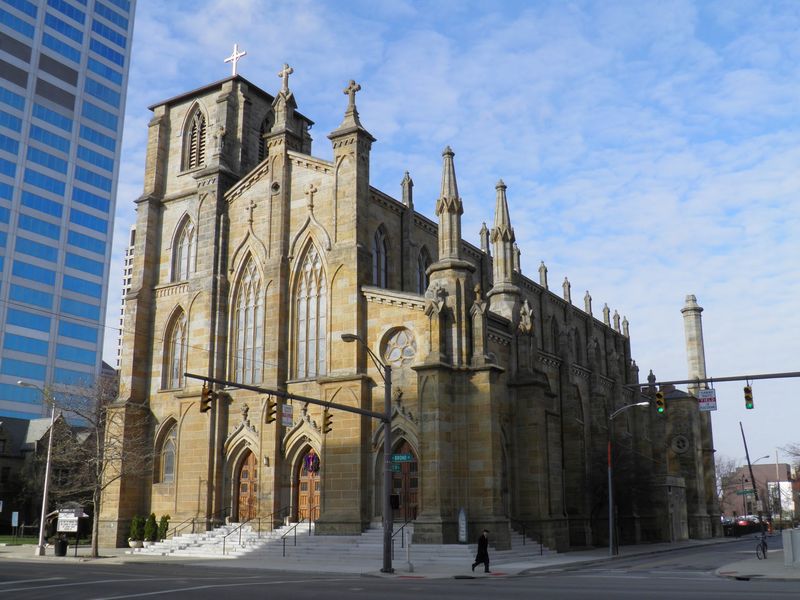
Aged stone can play tricks on your eyes. In downtown Columbus, it makes this cathedral look like a medieval building far older than it is.
St. Joseph Cathedral is the seat of the Catholic Diocese of Columbus. Construction began in 1866 and wrapped up in 1878.
That’s twelve years of work. Big Gothic Revival cathedrals took patience, and this one clearly got it.
The stone came from close by. Builders used ashlar stone quarried in Licking and Fairfield counties.
Ashlar means stone cut into neat, squared blocks. It gives walls a clean, carefully fitted look.
The front has three entrances flanked by two towers. That balanced face feels very much like a European cathedral.
Inside, the ceiling is a highlight. The cathedral features groined arches made of painted plaster, designed to match the appearance of the sandstone walls.
The plaster finish gives the ceiling the look of stone while creating an impressive Gothic interior. It’s worth a look up.
Stained-glass windows show the Twelve Apostles. Spotting each one can turn your visit into a fun little search.
The cathedral stays busy with daily and Sunday Masses. It also offers confession and Eucharistic adoration.
Since it’s on East Broad Street, it pairs well with a downtown Columbus walk. Just plan around services, and give that stone ceiling the attention it deserves.
Address: 212 E. Broad St., Columbus, OH 43215
11. St. Augustine Catholic Church
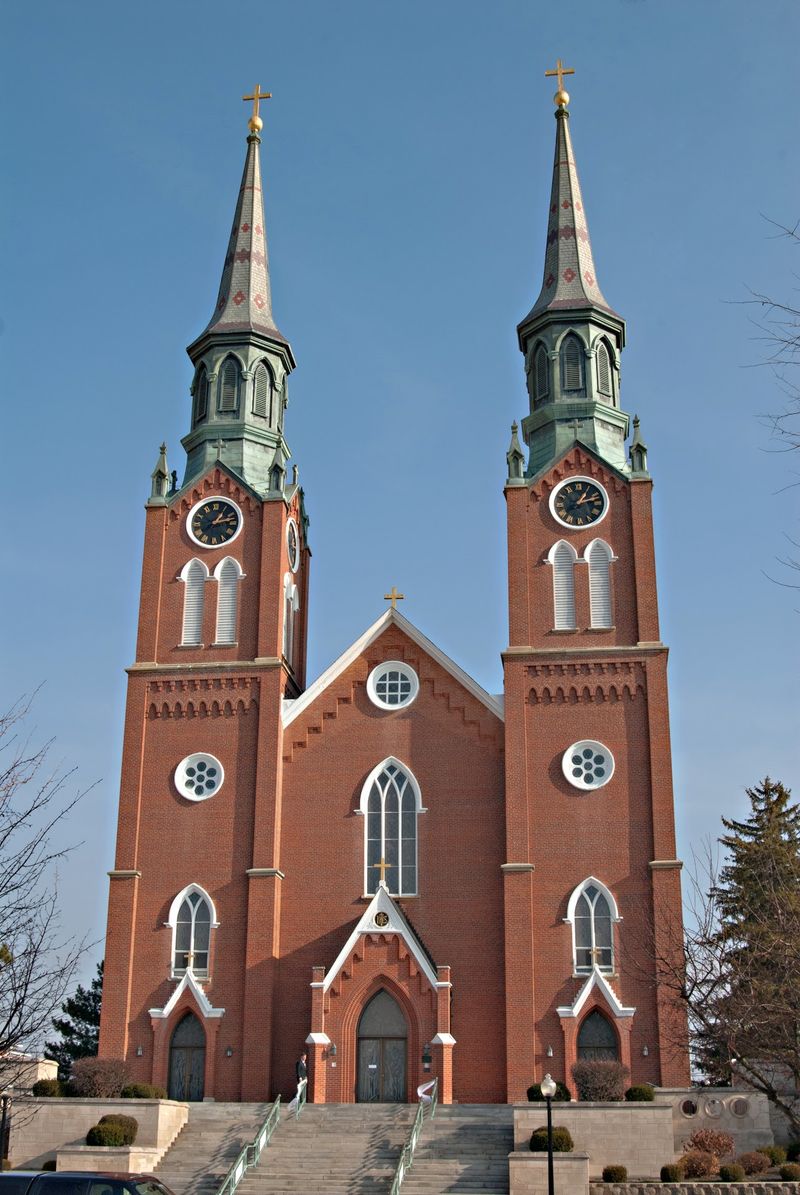
Twin towers above a small village make quite a statement. In Minster, they announce one of the anchors of the Land of the Cross-Tipped Churches.
St. Augustine Catholic Church was first built in 1848. Its twin Gothic towers came later, designed by Anton Goehr.
The original church was built in a neoclassical style, while its later twin towers introduced a striking Gothic Revival look. Pointed shapes and upward lines give it a classic European profile.
Its history runs deep in the region. St. Augustine is one of three mother churches for the Society of the Precious Blood.
That role helped shape Catholic life across this corner of western Ohio. Many nearby parishes trace part of their story back to places like this.
Inside, the ceiling steals the show. Frescoes show scenes from the life of Christ and a vision of Heaven.
Stained-glass windows add even more color. Between the walls and the ceiling, you may want a few extra minutes to take it in.
The church joined the National Register of Historic Places in 1979. That’s official recognition of its importance.
The parish keeps a full schedule. Daily and Sunday Masses, adoration, and confession all continue here.
Minster makes an easy stop on a cross-tipped church road trip. St. Aloysius in Carthagena isn’t far, so you can compare styles in one outing.
Look up first, then look around. Those frescoes are the kind of art people fly to Europe to see.
Address: 48 North Hanover Street, Minster, OH 45865
12. St. Stephen Church
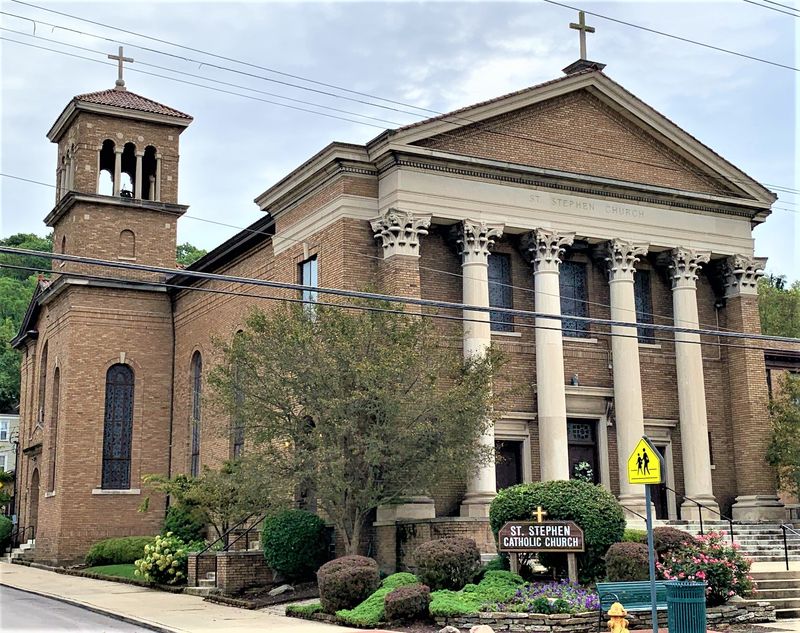
Munich keeps showing up in Ohio churches, and Hamilton has its own share. The stained-glass windows here came from Zettler Studios of Munich, Germany.
The parish story starts in 1830. German settlers founded Saint Stephen Parish, the oldest Catholic parish in Butler County.
Today the building is home to Saint Julie Billiart Catholic Parish. That parish formed in 1989 when several local congregations merged.
So the name on the sign may surprise you. The history inside, though, still points straight back to those early German families.
The church sits in Hamilton’s German Village Historic District. Fitting, right?
Out front, you’ll see a Tudor Gothic facade from 1912. It’s a slightly different flavor of Gothic, with an English twist.
The interior was redesigned in 1893 into a cross shape. That change created the layout visitors see now.
Inside, pointed arches and ribbed vaults lead your eyes upward. Ribbed vaults use crossing stone-like ribs to frame the ceiling sections.
Then come those Zettler windows. Munich studios were famous for rich color and detailed figures, so give yourself time to study them.
Next door, the rectory dates to 1870. It’s part of the same historic district story.
Wander the neighborhood after your visit to soak up more of Hamilton’s German roots. It’s a fitting finale for any tour of Ohio’s European-style churches.
Address: 224 Dayton St., Hamilton, OH 45011
Share this story