A snow leopard watches from a shady ledge in Cape May Court House, a 77-foot waterfall thunders through Paterson, and an Egyptian mummy rests upstairs on a Rutgers campus—all without anyone asking you to buy a ticket. New Jersey’s best free attractions are not watered-down diversions designed to fill an hour.
They include serious art collections, working farms, wildlife centers, historic lighthouses, and museums packed with objects that could swallow an entire afternoon. Some are supported by counties or universities; others depend on donations, so dropping a few dollars in the box is always a kind move.
Still, admission itself costs nothing, making these spots especially useful when a family outing threatens to become an expensive production.
From orchids and owls to shipwrecks and mastodon bones, the following 13 attractions deliver the exhibits, scenery, and memorable surprises of places that normally come with a substantial cover charge.
1. Cape May County Park and Zoo – Cape May Court House
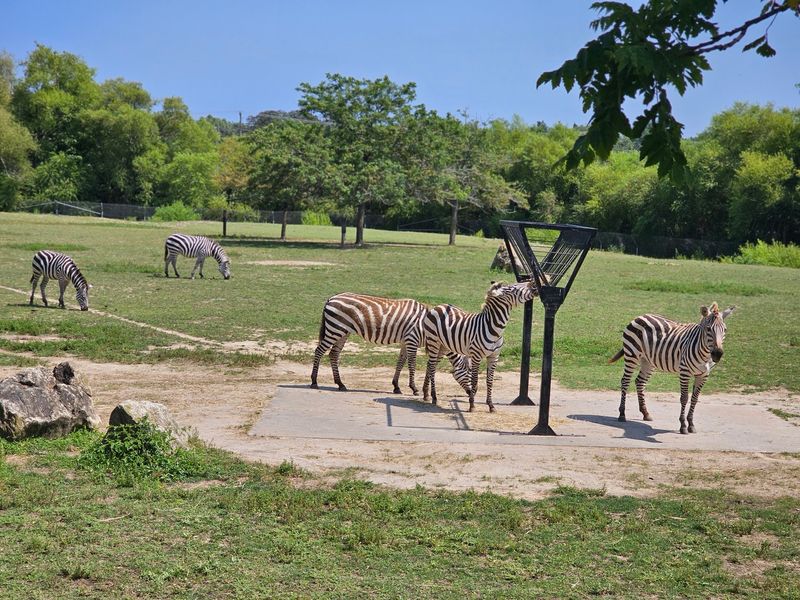
A lion, giraffe, or red panda sighting usually comes with a sizable family admission bill. At this wooded zoo in Cape May Court House, both admission and parking are free, which feels almost suspicious once you see how much ground there is to cover.
The collection includes hundreds of animals representing species from around the world, with big cats, primates, reptiles, birds, and hoofed animals spread across a pleasant, walkable setting. The African savanna area is a standout, offering long views of animals moving through spacious habitats rather than pacing behind a single pane of glass.
Younger visitors tend to set the pace, but adults will appreciate the shaded paths and gardenlike landscaping. The surrounding county park adds playgrounds, ponds, picnic areas, walking and biking paths, and a disc golf course, so it is easy to turn a zoo visit into a full day.
Pack lunch and eat outside the zoo gates, since outside food is not permitted within the animal area. The zoo opens daily except Christmas, with shorter hours during the colder months.
Arriving near opening time is smart during summer and on holiday weekends, when the free parking lots fill quickly. Donations are welcome, and after seeing how polished the place is, reaching for a few dollars feels entirely reasonable.
2. Princeton University Art Museum – Princeton
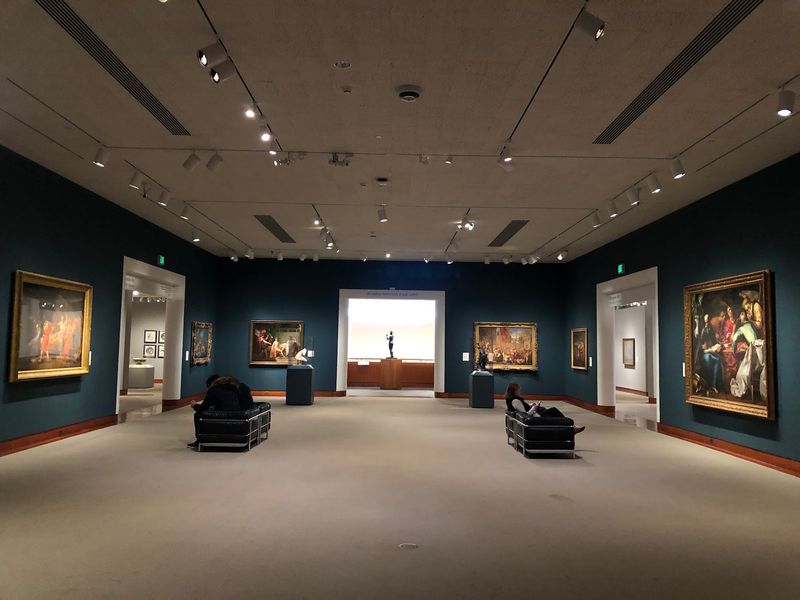
Walk through one of the entrances at the heart of Princeton’s campus and you land in a 146,000-square-foot museum containing art from five millennia. That would be impressive at any price; here, general admission is free.
The building, opened in 2025, nearly doubled the institution’s previous space and arranged nine connected pavilions around broad interior passageways called artwalks. Those routes make the museum feel less like a hushed maze and more like an open cultural crossroads.
Its collection exceeds 117,000 works, stretching from ancient Mediterranean objects and Asian art to European paintings, photography, contemporary installations, and art from the Americas.
Visitors can encounter Roman mosaics underfoot, monumental commissions built into the architecture, and intimate objects displayed at a scale that rewards close looking.
The curators often place pieces from different periods and regions in conversation, creating connections that are easy to follow without an art-history degree. Free highlights tours offer a helpful overview and generally require no registration.
Since the museum sits directly on campus, leave time to walk past Princeton’s stone buildings and outdoor sculptures afterward. It is open throughout the week, with evening hours on Thursdays and Fridays.
Downtown parking can require patience, but the tradeoff is access to one of New Jersey’s most ambitious cultural institutions for the price of opening the door.
3. New Jersey State Museum – Trenton
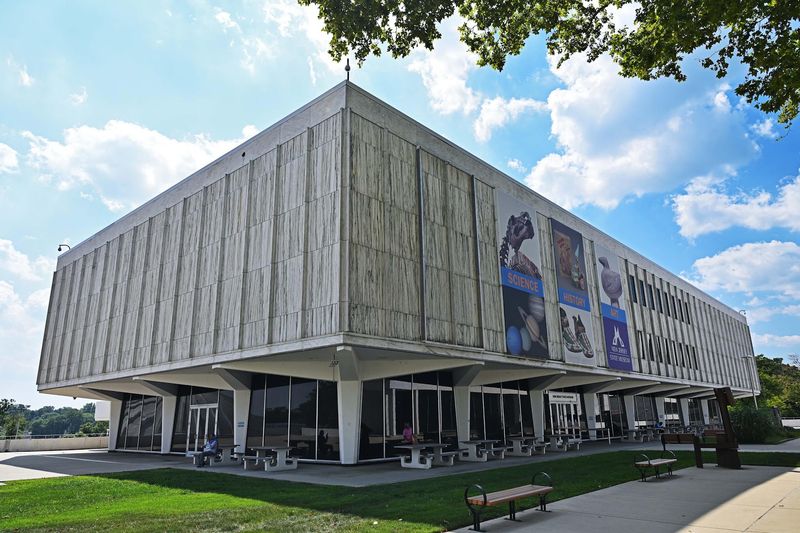
Where else can you move from a mastodon skeleton to Native American artifacts and then finish among paintings without leaving the building? Trenton’s state museum brings natural history, archaeology, cultural history, and fine art together under one roof, backed by a collection of more than two million objects.
General admission is free, and the range makes the museum particularly good for groups whose interests rarely overlap. Dinosaur fossils and the mounted Hadrosaurus draw children toward the natural-history galleries, while archaeological objects trace thousands of years of life in the region.
Elsewhere, changing art exhibitions give the visit a different texture, with historic and contemporary work sharing space rather than competing for attention. The result is substantial but manageable: large enough to justify a dedicated outing, yet not so enormous that everyone fades before the final gallery.
The museum occupies a prime spot beside the State House complex, making it easy to pair with a walk through Trenton’s government district. It is open Tuesday through Sunday, and weekend visitors can often find free parking in nearby state lots or along West State Street.
The planetarium charges separately, so budget for that if a sky show is part of the plan. Even without it, the galleries offer several hours of exploring and one of the clearest introductions to New Jersey’s deep, complicated history.
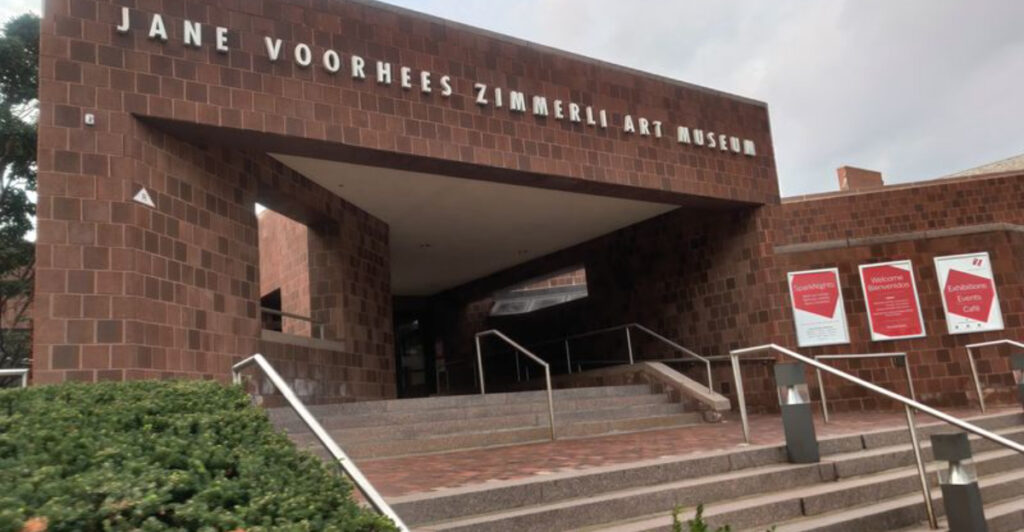
4. Zimmerli Art Museum – New Brunswick
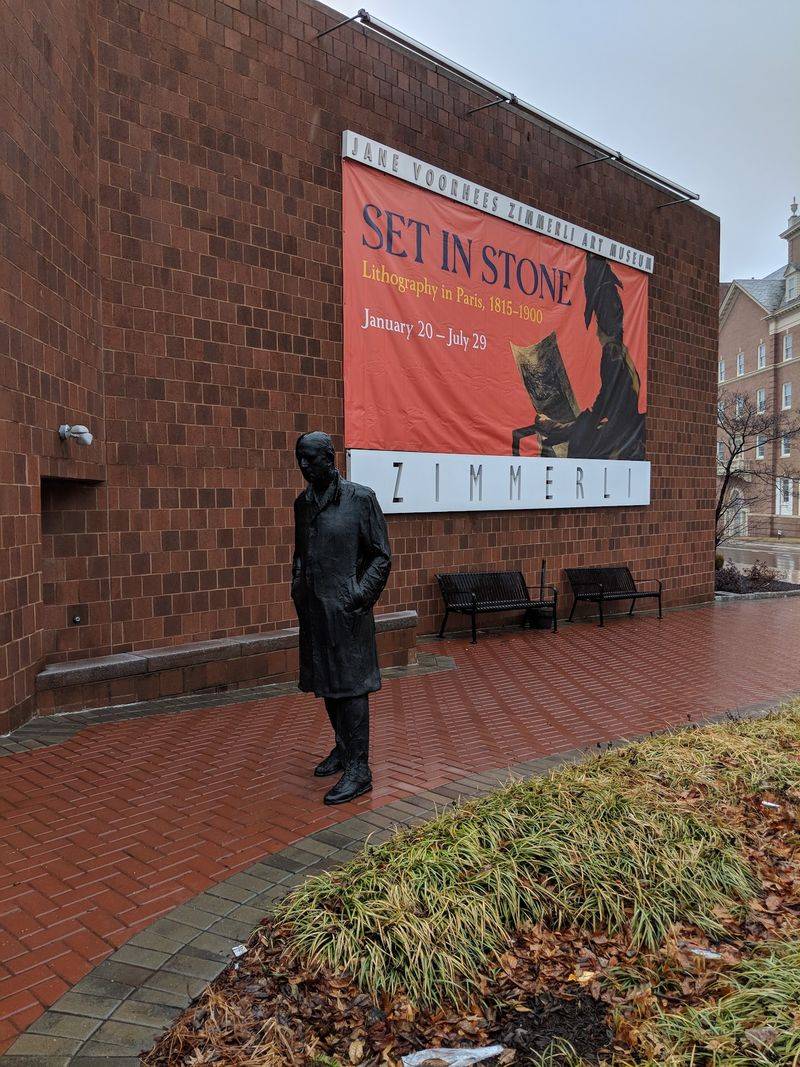
One gallery may contain bold American prints; another can transport you into the unofficial art circles of the Soviet Union. That unexpected breadth is the pleasure of the Zimmerli, Rutgers University’s art museum in downtown New Brunswick.
Admission is free to everyone, not just students, and the collection is far more extensive than its campus setting might suggest. The museum is particularly celebrated for Russian and Soviet nonconformist art, created by artists who worked beyond officially approved cultural systems.
Those pieces can be witty, defiant, strange, and politically charged, rewarding visitors who slow down long enough to read the wall labels. The Zimmerli also holds notable collections of works on paper, European art, American art, photography, and original illustrations for children’s books.
Exhibitions rotate, giving regular visitors a reason to return rather than treating the place as a one-and-done stop. Galleries feel calm and approachable, with enough room to linger without blocking traffic or feeling hurried along.
The museum generally opens Wednesday through Sunday and closes in August, so check the seasonal calendar before making the trip. Metered spaces and city garages are the usual parking options, though the New Brunswick train station is within walking distance.
Come when you want serious art without museum fatigue: two thoughtful hours here can feel richer than an entire day spent racing through a larger institution.
5. Duke Farms – Hillsborough
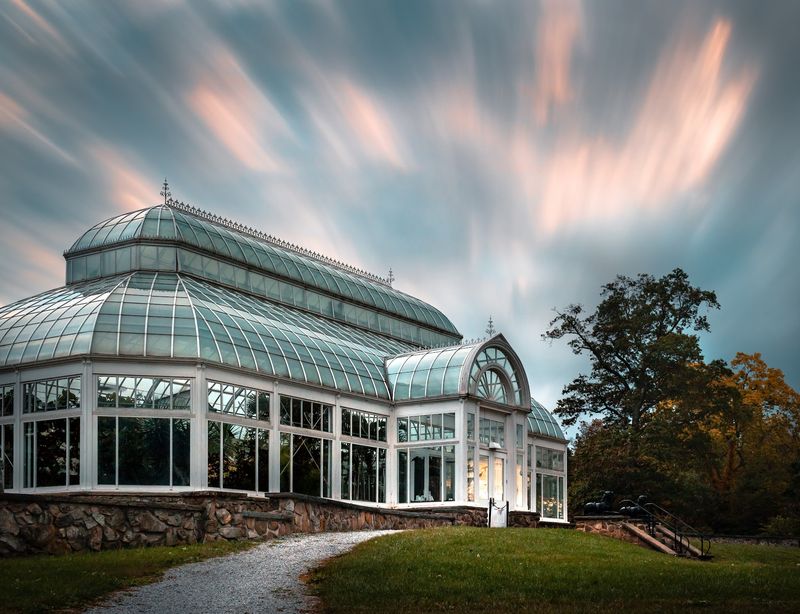
The first clue that this is no ordinary public garden is the old farm barn, built for thoroughbred racehorses and later transformed into a modern visitor center. Beyond it stretch miles of paved lanes and trails crossing meadows, woodlands, lakes, restored habitats, and pieces of the former Doris Duke estate.
Admission is free, and the scale creates the feeling of entering a private country domain that has somehow been handed over for the day. Walking and cycling are the best ways to explore, though distances can be longer than they appear on the map.
Make the Orchid Range a priority. Its historic greenhouses hold an ever-changing display drawn from thousands of tropical and subtropical orchids, including descendants of the influential Phalaenopsis Doris hybrid developed here.
Outside, birders can head toward observation platforms, while casual wanderers may prefer the meditation garden, champion trees, and ruins scattered around the property. Nature, rather than preserved mansion rooms, is the main event.
Duke Farms operates on a limited weekly schedule, and vehicles need advance parking passes on Saturdays, so a little planning prevents disappointment. Comfortable shoes and water matter, especially if you intend to venture well beyond the Farm Barn.
The café provides a convenient stop, but bringing your own snack gives you more freedom to disappear down whichever tree-lined path looks most interesting.
6. Paterson Great Falls National Historical Park – Paterson
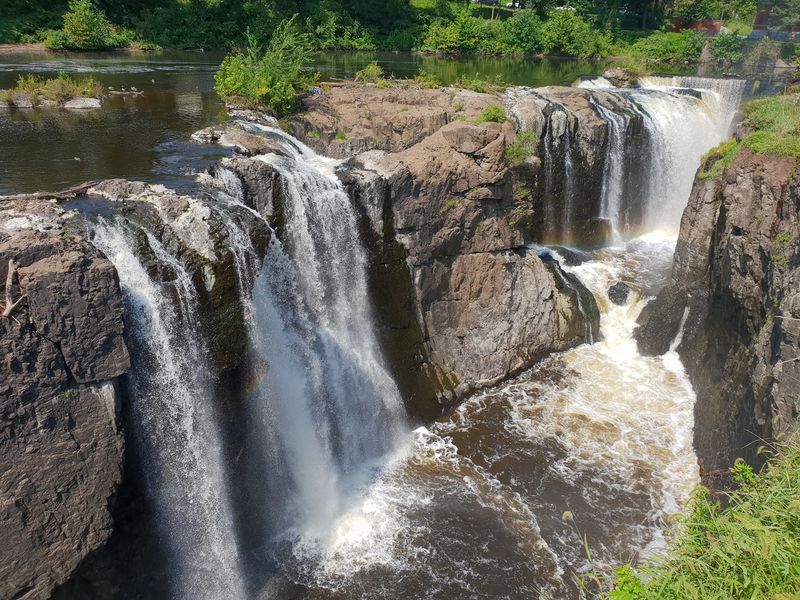
Long before the overlook comes into view, the river announces itself. Water surges toward a 77-foot drop, crashes into the rocky gorge, and throws mist into the air beside brick mills and city streets.
Paterson Great Falls is both a natural spectacle and the force behind one of America’s earliest planned industrial cities. Alexander Hamilton saw the Passaic River’s power as a foundation for manufacturing, and Paterson grew around industries producing textiles, locomotives, silk, and other goods.
Today, the national historical park connects that story through overlooks, interpretive signs, mill remnants, and views from both sides of the gorge. The pedestrian bridge offers the most dramatic perspective when open, while Overlook Park provides the classic straight-on view.
Water volume changes with weather, so a visit after heavy rain can be especially thunderous. There is no entrance fee, although nearby municipal garages may charge for parking.
The park is primarily outdoors and currently has limited visitor facilities, making daylight hours and decent weather the best combination. Pair the falls with the nearby Paterson Museum if its schedule aligns; the old industrial district makes much more sense once you understand the machines and workers behind it.
This is not a manicured scenic pull-off. It is loud, urban, historically layered, and powerful enough to make the surrounding city feel built around a living engine.
7. Howell Living History Farm – Hopewell Township
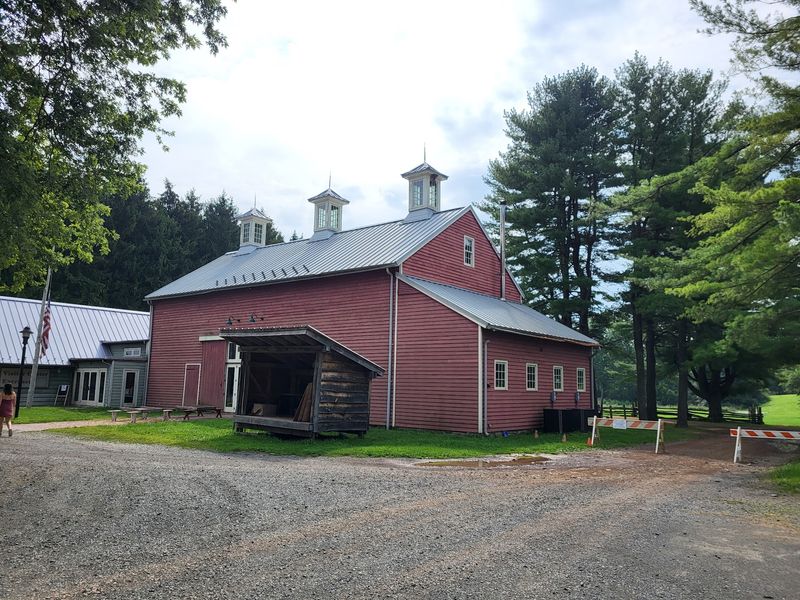
Listen closely near the barnyard and you may hear a blacksmith’s hammer, a team of workhorses, or the clatter of equipment doing an actual farm job. Howell operates as a working farm set roughly between 1890 and 1910, not as a collection of props waiting behind ropes.
Depending on the season, visitors might watch sheep shearing, corn planting, ice harvesting, maple sugaring, wheat threshing, or preparations for the fields. Staff members and interpreters explain what they are doing while continuing the work, giving the place an easy, unscripted rhythm.
Children can see where food and materials came from before supermarkets and delivery apps made the process invisible, while adults often become absorbed in the antique tools and ingenuity required to run a farm without modern machinery.
Admission and parking are free, though certain special activities, including the seasonal corn maze, carry a fee.
Saturday programs tend to offer the liveliest experience, but ordinary weekdays can be rewarding if you prefer a quieter look around. The farm is open Tuesday through Saturday and closes on county holidays.
Visitors sign in at the center before heading toward the historic barnyard and fields. Leave pets and picnic plans at home, as neither dogs nor picnicking is permitted.
Mud-friendly shoes are a wise choice; this is a real farm, and the ground does not adjust itself for anyone’s clean sneakers.
8. The Raptor Trust – Millington
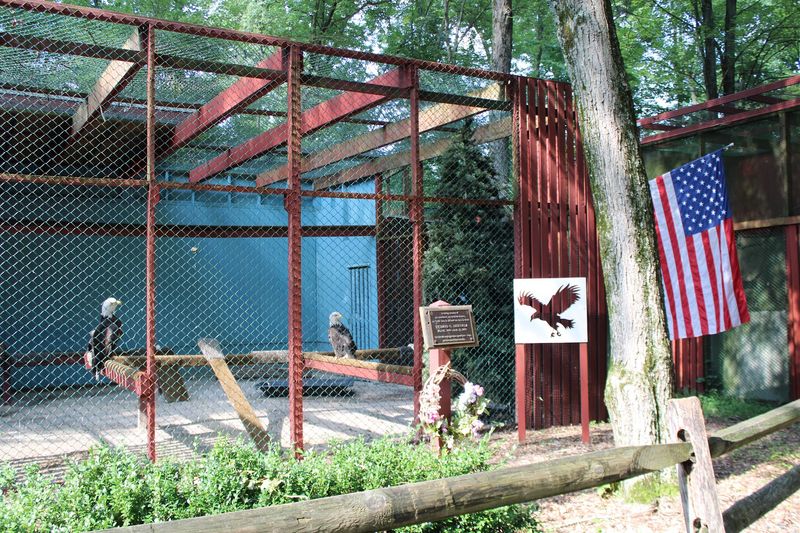
An owl turns its head without seeming to move anything else. A few enclosures later, a bald eagle fixes you with the sort of stare that ends the conversation.
Those close encounters give the self-guided Aviary Trail at this Millington bird-rehabilitation center its quiet intensity. Around 50 permanent resident birds live here because injuries or other limitations prevent their return to the wild.
Hawks, falcons, eagles, owls, and vultures occupy roomy outdoor aviaries connected by gravel paths, with signs explaining their species and stories. Admission is free, although donations directly support the organization’s work caring for injured and orphaned wild birds.
This is not a conventional zoo, and that distinction shapes the visit. The active infirmary and rehabilitation spaces remain private so recovering patients can avoid human stress, while the public trail focuses on birds that cannot be released.
Walk slowly, keep voices low, and watch for small movements—an owl blinking from the shadows or a hawk spreading its wings can be more memorable than a staged presentation. The grounds are near the Great Swamp National Wildlife Refuge, making the center a natural addition to a day of birding or hiking.
Hours vary seasonally, and winter ice can close the paths after storms. Dogs are not allowed, even in the parking area.
Staff-led programs may cost extra, but the free trail provides a thoughtful, up-close experience on its own.
9. Rutgers Geology Museum – New Brunswick
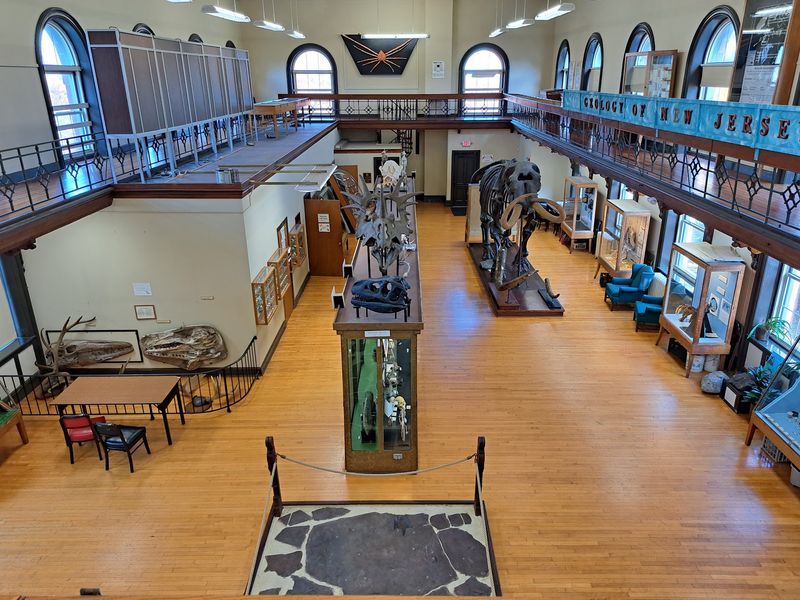
A mastodon dominates the room, minerals flash inside glass cases, and an Egyptian mummy adds an unexpected detour from New Jersey bedrock. Housed in historic Geology Hall on Rutgers University’s Old Queens campus, this compact museum delivers the charming density of an old-school cabinet of curiosities.
Its exhibits cover fossils, dinosaurs, rocks, minerals, meteorites, and the geological forces that shaped the state. The mastodon, discovered in Salem County, anchors the collection and offers a startling reminder that enormous Ice Age mammals once moved across the region.
Dinosaur tracks and fossils keep younger visitors hunting from case to case, while fluorescent minerals reveal colors that ordinary daylight keeps hidden. Free scavenger hunts turn the single main gallery into a manageable challenge for children without overwhelming them.
Admission is always free, but the limited schedule requires planning. The museum generally opens Tuesday through Friday during the academic year, with only select Saturday dates and reduced summer access; it closes in August.
Metered street parking and nearby garages are available, and some Rutgers lots become accessible on weekends. The New Brunswick train station is also a short walk away.
Because the museum occupies the second floor of a university building, finding the entrance feels like uncovering a campus secret. Allow about an hour, or longer if someone in your group insists on identifying every sparkling specimen—and there is usually one.
10. Trailside Nature and Science Center – Mountainside
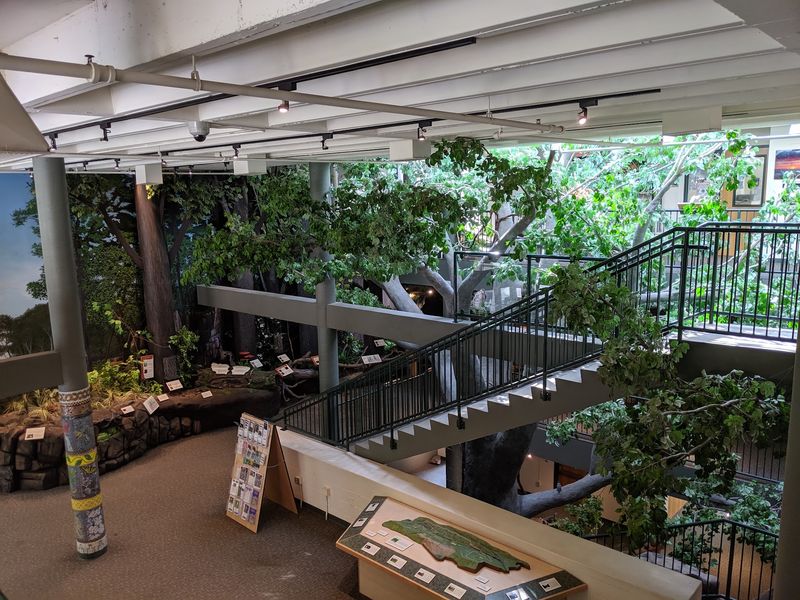
A 34-foot model of an American beech tree rises through the atrium, immediately turning an indoor nature lesson into something closer to a woodland stage set. Set within the 2,065-acre Watchung Reservation, Trailside combines 4,500 square feet of interactive exhibits with more than 13 miles of trails just outside its doors.
Displays explore the plants, animals, geology, and human history of the reservation, giving children plenty to touch, open, examine, and discuss. The building also includes a discovery room and spaces used for live-animal presentations, workshops, and seasonal programs.
General admission is free, though certain scheduled activities require registration and a fee. What makes Trailside especially useful is the easy indoor-outdoor combination.
Spend an hour with the exhibits, then take a walk to see how many of the museum’s lessons appear in the surrounding forest. Families can keep the outing short or extend it with Lake Surprise, picnic areas, playgrounds, and the nearby Deserted Village of Feltville.
The center typically opens Tuesday through Sunday, with free parking in its own lot. Weekday mornings are quieter, while weekends bring more families and trail traffic.
Rain does not ruin the plan, either; the exhibits provide enough shelter and substance to justify the drive. It is polished enough to feel like a small science museum, yet relaxed enough that muddy boots and excited questions fit right in.
11. Cohanzick Zoo – Bridgeton
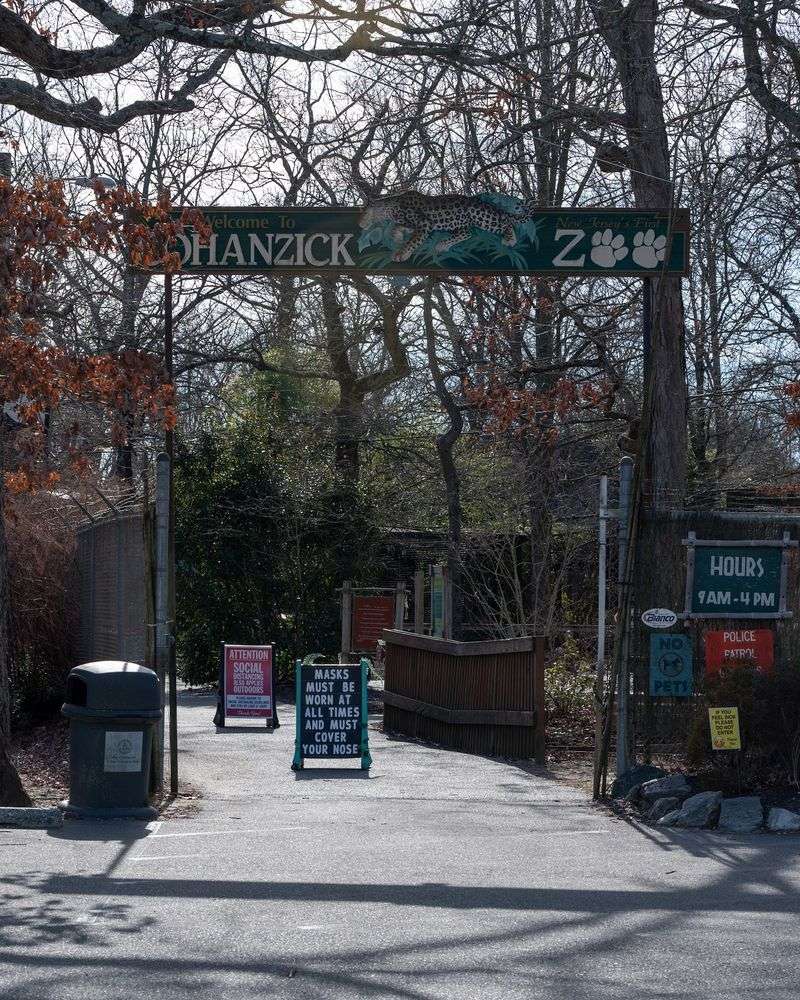
Bridgeton has hosted animals in its sprawling city park since the 1930s, giving this modest zoo a claim as New Jersey’s oldest. The place retains the neighborly scale of a community attraction while housing species that are anything but ordinary.
Tigers are the headline residents, joined by bears, monkeys, reptiles, birds, and other animals arranged along stroller-friendly paths. You will not need an entire day to see everything, and that is part of the appeal.
Cohanzick is easy to navigate, rarely exhausting, and small enough that children can revisit a favorite enclosure without triggering a cross-zoo expedition. Admission and adjacent parking are free, with donations encouraged to support animal care.
The surrounding Bridgeton City Park adds picnic groves, walking space, and a splash park, making it simple to build a low-cost family afternoon around the visit. Outside food is allowed, particularly useful because the zoo does not maintain full-time concessions, but feeding the animals is strictly prohibited.
It opens daily with longer spring and summer hours, although severe weather and certain holidays can alter the schedule. The pathways accommodate wheelchairs and strollers, but rental equipment is not available.
Come expecting a friendly local institution rather than a giant metropolitan zoo, and you may be surprised by how much it delivers without turnstiles, complicated pricing tiers, or a long march back to the car.
12. Twin Lights State Historic Site – Highlands
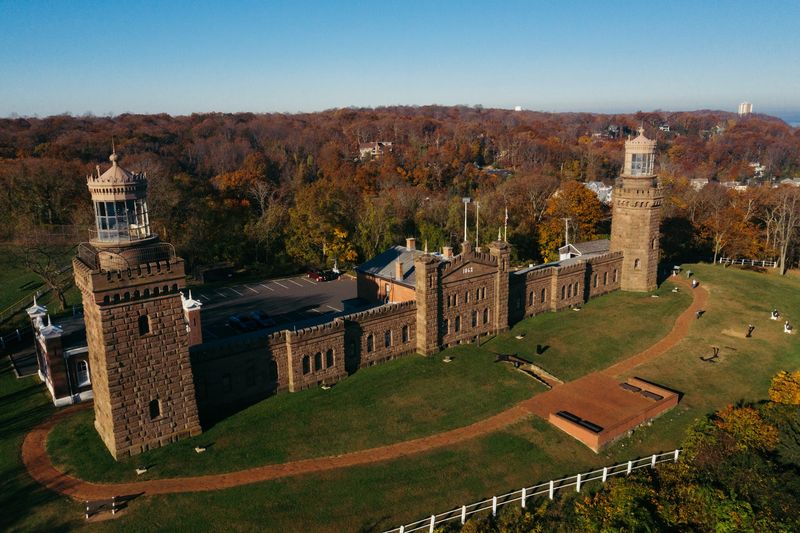
Two brownstone towers stand above the Highlands like the gateposts to New York Harbor, yet they are not identical twins. That asymmetry is only the first curiosity at this extraordinary 1862 lighthouse complex overlooking Sandy Hook Bay, the Atlantic, and the Manhattan skyline.
Twin Lights occupies one of the highest coastal points in New Jersey, a strategic perch that helped mariners navigate the approaches to the harbor. The station was also a proving ground for lighthouse technology, including powerful electric illumination and radio experiments.
Inside the museum, lenses, lamps, navigational equipment, and exhibits explain how keepers maintained a beacon before automation made the job considerably less dramatic. Climbing opportunities depend on staffing, weather, and current access conditions, but even a ground-level visit pays off in broad water views and the castle-like exterior of the main building.
Admission to the historic site is free, and there is parking near the museum. Wind can be strong on the hill even when the waterfront below feels mild, so bring an extra layer outside summer.
Allow time to walk the grounds rather than rushing directly indoors; the geography explains why the station mattered. Nearby Hartshorne Woods Park and the restaurants of Highlands make easy additions.
Few free stops combine engineering, maritime history, architecture, and a skyline view this neatly.
13. New Jersey Maritime Museum – Beach Haven
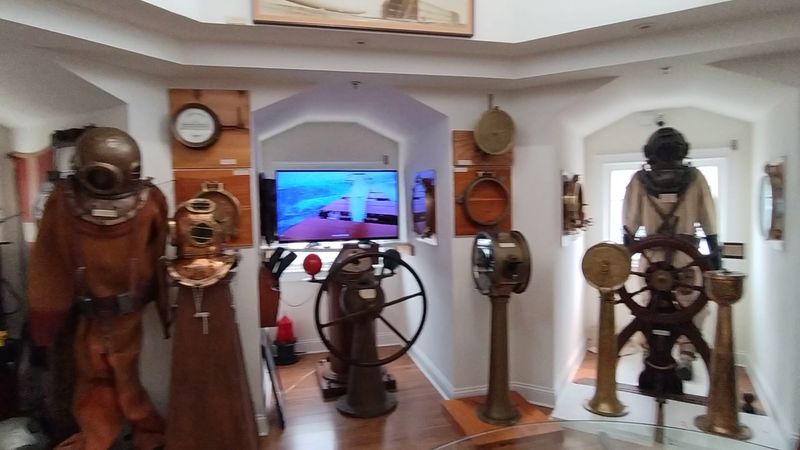
The walls and cases in this Beach Haven museum are crowded in the best possible way: ship models, diving equipment, old photographs, recovered objects, navigation gear, and reminders of vessels that never reached port.
Its collection tackles New Jersey’s relationship with the sea from several angles, but shipwreck history supplies much of the drama.
Exhibits document wrecks along the famously treacherous coastline, including disasters that shaped lifesaving practices and left artifacts on the ocean floor.
Commercial fishing, pleasure boating, wartime activity, and the development of Long Beach Island also receive attention, creating a fuller picture than a roomful of anchors and captain’s wheels.
One of the most compelling subjects is the Morro Castle, the ocean liner destroyed by fire off the Jersey coast in 1934. Photographs and objects bring the catastrophe uncomfortably close.
Admission is free, with donations welcomed to help preserve the collection. The museum opens daily during June, July, and August, then generally shifts to Friday-through-Sunday hours from September through May.
It sits near the bay in Beach Haven, where seasonal traffic and parking can test anyone’s patience, so mornings are the gentlest time to arrive in summer. Save this stop for a hot, rainy, or windy shore day—or visit deliberately.
The depth of the collection makes it much more than a backup plan when the beach refuses to cooperate.