A bank vault is a wonderfully dramatic place to guard a bag of coffee beans.
Across New Jersey, old buildings are finding second lives that are far more caffeinated than their first: tellers’ windows have given way to espresso counters, a Mobil service station now fuels people instead of cars, and an enormous former research laboratory has become an indoor neighborhood with a bakery tucked inside.
These are not cafés that merely hung a few vintage signs and called it character. Their rooms still carry clues from earlier chapters—brick walls, industrial ceilings, broad porches, railway architecture, and even a pottery kiln that has become a seating nook.
The result is a collection of coffee stops where the setting gives you a reason to linger after the last sip. From Hoboken to Allentown, these 13 shops prove that adaptive reuse can be practical, beautiful, and occasionally a little strange.
In other words, exactly what a memorable New Jersey coffee run should be.
1. Forum Coffee – Hoboken
The limestone exterior at Washington and 14th streets looks far more serious than the drinks being served inside. Forum Coffee’s uptown Hoboken location occupies part of the old Hoboken Trust Company building, a 1903 landmark that later spent years as the home of a local newspaper.
The building’s tall windows, pale stone, and prominent corner position still announce “financial institution,” even though the morning traffic now arrives for espresso rather than deposits. Forum brings a playful menu to that grand setting.
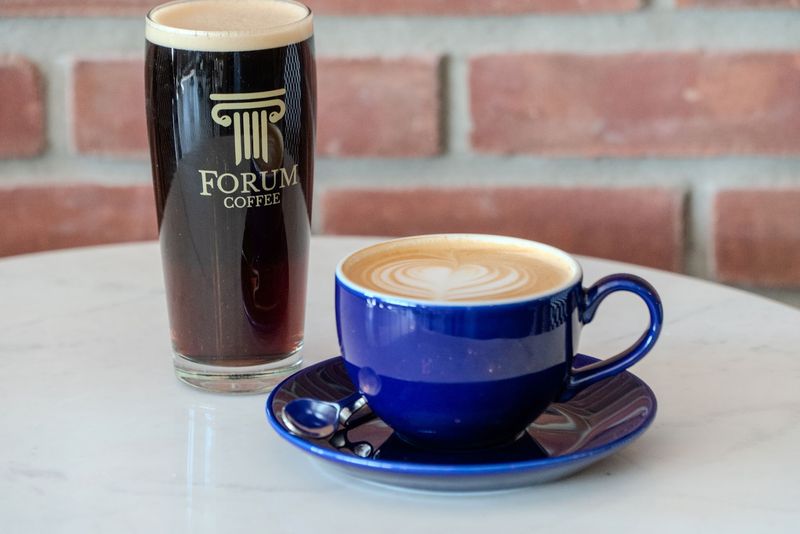
Along with well-made standards, the shop is known for sweeter creations such as crème brûlée coffee, colorful matcha drinks, protein freezes, and other beverages that are perfectly comfortable being photographed before anyone takes a sip.
The contrast works: ornate old-bank bones meet a young, energetic coffee counter.
Outdoor tables wrap around the corner, giving uptown residents a handy place to pause on one of Hoboken’s busiest residential stretches. Space inside is shared with a fitness studio, so this is more of a polished stop-and-chat café than an all-day laptop bunker.
Come early, order whatever seasonal drink sounds most excessive, and take a moment to look up at the façade. Plenty of coffee shops promise rich flavor; not many come with more than a century of Hoboken history built into the walls.
2. Boonton Coffee Co. – Boonton
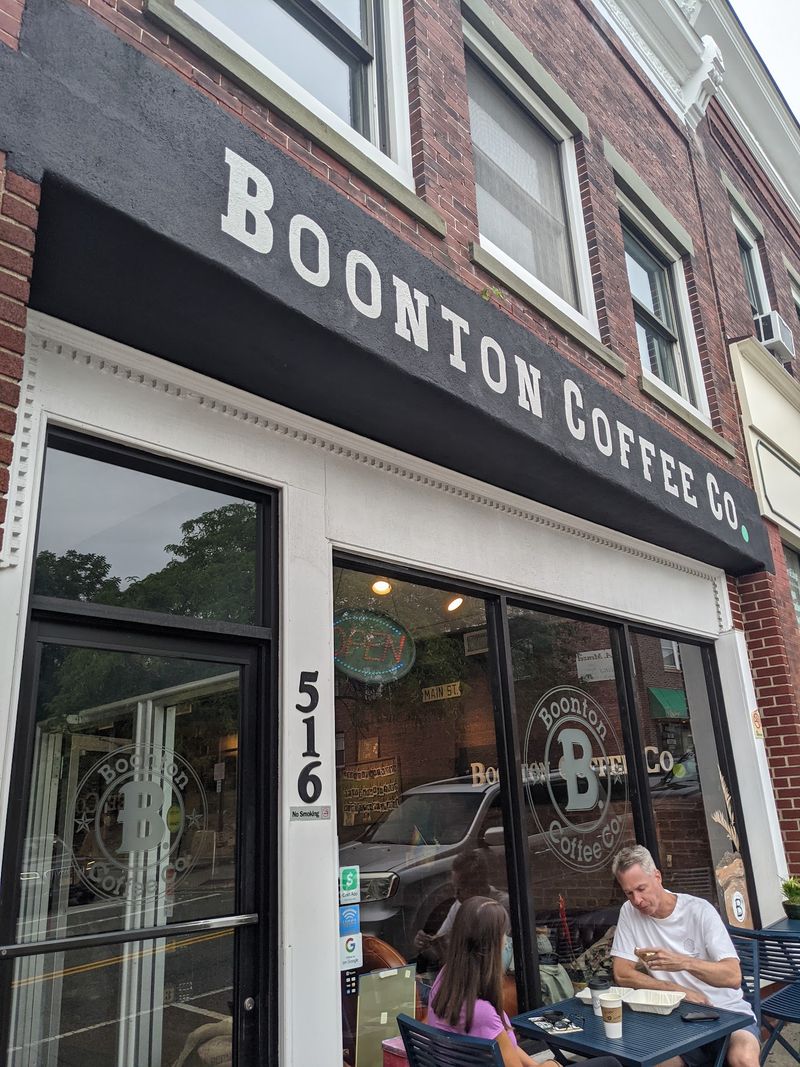
Main Street in Boonton rises steeply enough to make a cappuccino feel earned. Near the top, Boonton Coffee Co. fits neatly into the downtown’s collection of brick storefronts and old commercial buildings, bringing fresh purpose to a space shaped by the town’s working past.
Inside, the mood is relaxed rather than precious: exposed architectural details, local art, bags of beans, and the low hum of regulars settling into their usual corners. Coffee is roasted in small batches, so a straightforward drip or pour-over is the best way to understand the place.
Espresso drinks are dependable, while rotating seasonal lattes give anyone with a sweeter streak something more playful to consider. Pair the cup with a pastry, then claim a window seat and watch Main Street carry on outside.
The shop has the useful versatility of a true neighborhood café. It works for a quick pre-work stop, a slow conversation, or a break during an afternoon spent browsing Boonton’s antique shops and galleries.
Street parking can require a lap during busy periods, but the walk only adds to the experience; this is a downtown meant to be explored on foot. What earns the shop a place here is the way it complements its setting.
It does not try to polish away Boonton’s age. It lets the old-building texture remain visible and fills it with the most modern kind of town ritual: excellent coffee and no particular hurry.
3. Bean Vault Coffee – Bordentown
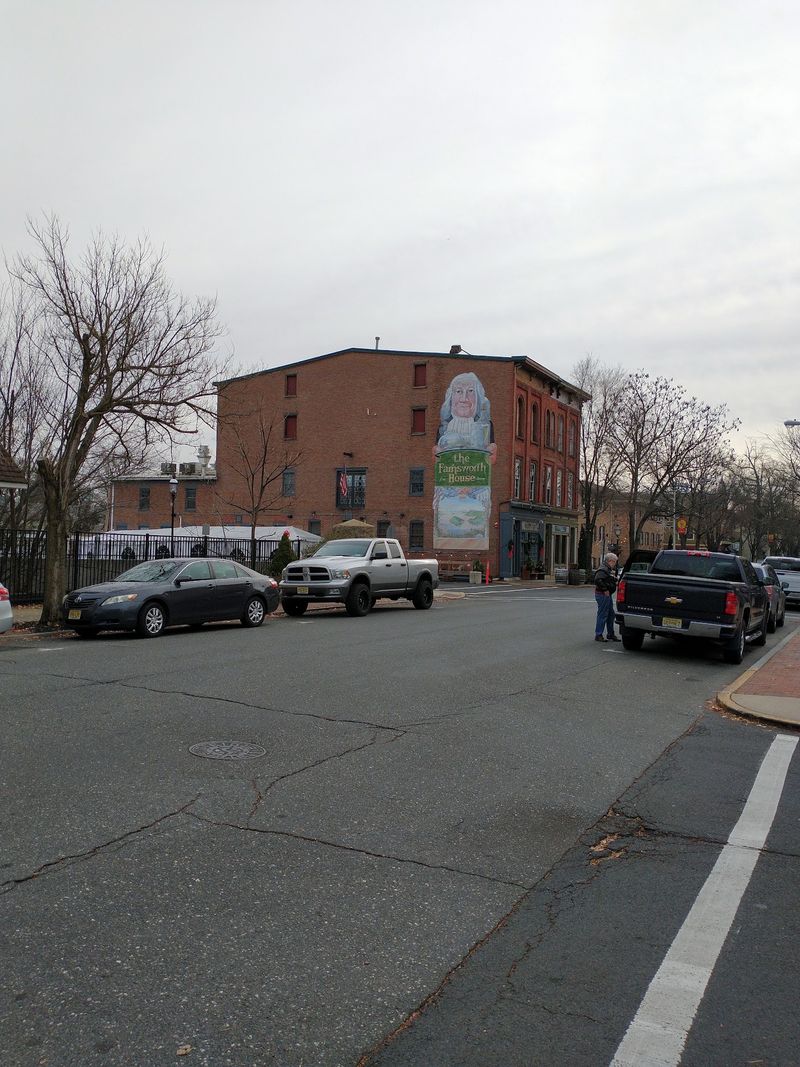
There is no mystery about the name once you step inside. Bean Vault Coffee occupies a former bank in Bordentown, and the old vault remains the room’s star feature—a hulking reminder that this cozy café once handled a very different kind of daily withdrawal.
Today, the currency is cold brew, cappuccino, and conversation. The shop’s narrow downtown setting, warm finishes, and preserved architectural details give it an intimate feel that suits Bordentown’s walkable core.
Start with an espresso drink if you want to keep things classic, or look for one of the flavored lattes and seasonal specials when plain coffee sounds a little too responsible. Breakfast sandwiches and baked goods make it easy to turn a quick caffeine stop into a proper morning break.
The vault itself is worth inspecting, but the café avoids becoming a one-prop novelty. Regulars treat it as a practical neighborhood stop, and that everyday use is what makes the conversion feel successful.
Tables can fill at popular weekend hours, so arrive earlier if you want time to linger. Afterward, Farnsworth Avenue’s restaurants, small shops, and historic streets are right outside.
A former bank could easily feel cold or imposing, yet this one has been softened without losing its identity. The thick walls and old fixtures now frame one of the friendliest transactions in town: handing over a few dollars and walking away with something warm.
4. Sunday Motor Co. – Madison
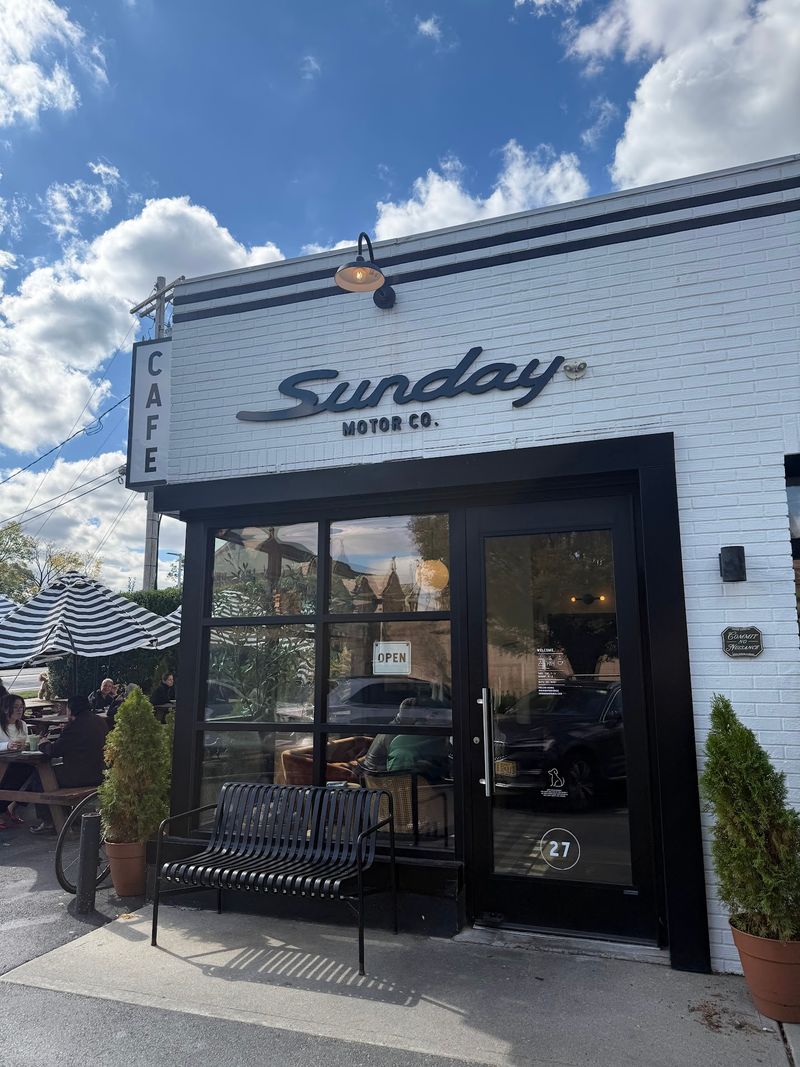
A vintage Mobil sign still stands outside 27 Kings Road, but nobody is checking the oil anymore. Sunday Motor Co. turned a 1950s service station in Madison into a bright café where garage doors, automotive graphics, and the building’s open work-bay proportions remain part of the experience.
It is one of the state’s sharpest examples of reuse because the old purpose has not been hidden; it has simply been given a much better breakfast menu. The 16-hour cold brew is an excellent place to start, while the Café Limon—cold brew with lemonade and tonic—offers a surprising warm-weather detour.
Food is more ambitious than the service-station setting might suggest. The breakfast burrito packs soft-scrambled eggs, sausage, avocado, salsa verde, and crispy potatoes into one very effective package, while chili eggs and lemon ricotta toast reward a slower visit.
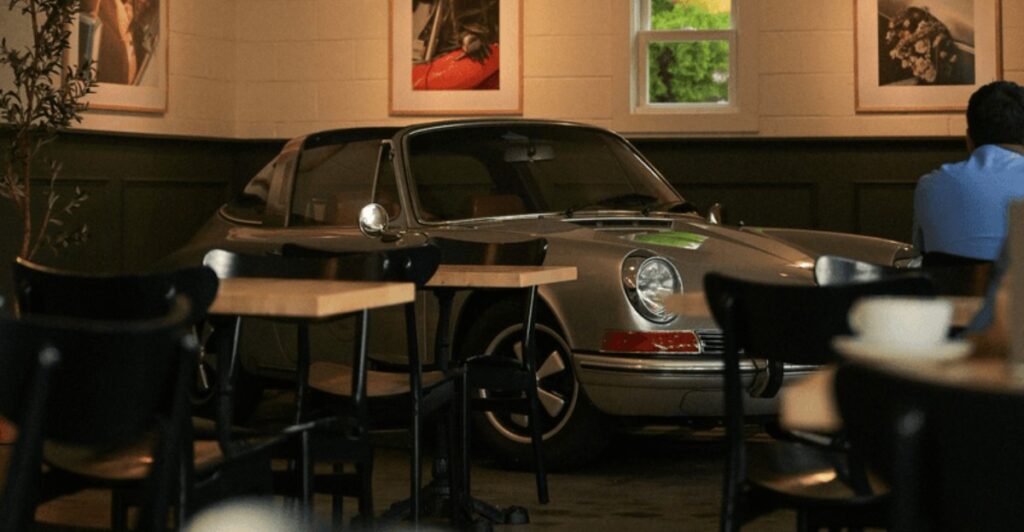
On certain mornings, the parking lot becomes an informal display of vintage and high-end cars, but you do not need to know a Porsche 911 from a parking ticket to enjoy yourself. The café works just as well for parents, cyclists, and Madison regulars.
Seating gets competitive when the car crowd arrives, and hours can vary by day, so check before making a special trip. The payoff is a coffee stop with a real sense of place—one where the building’s old life is still parked in plain sight.
5. Café 1903 – Collingswood
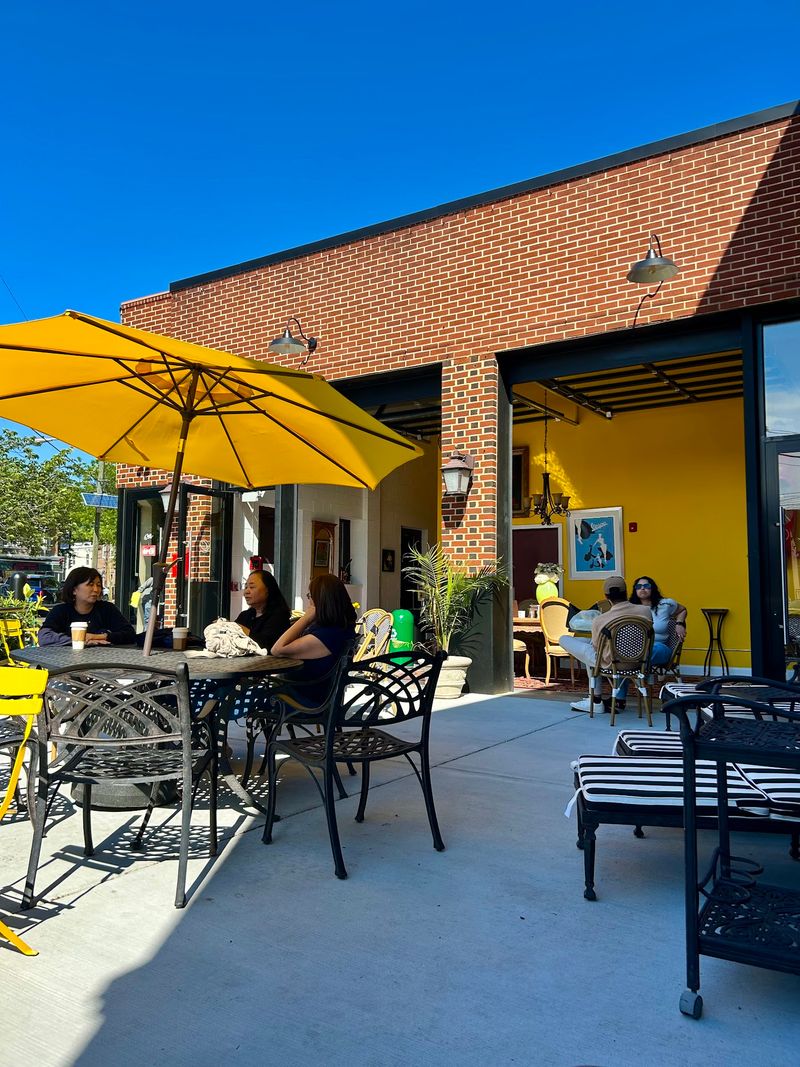
For decades, Collingswood’s firefighters answered calls from this Haddon Avenue building. Now the restored former firehouse sends out espresso, pastries, and Italian café energy instead.
Café 1903 takes its name from the building’s early-20th-century roots and occupies the first phase of a larger redevelopment, retaining the handsome brickwork and civic presence that made the old station recognizable.
The interior leans European, with a proper espresso bar, lounge seating, and a polished look that feels more grown-up than the average grab-and-go counter.
Order a cappuccino or macchiato to match the Italian inspiration, then add a pastry and settle in long enough to appreciate the transformation.
The patio extends the café into the surrounding neighborhood and has also hosted evening sessions with music and zero-proof drinks, giving the property a second shift after the daytime coffee crowd thins.
That flexibility feels right for Collingswood, where people routinely park once and spend hours moving between restaurants and independent shops. The café is still one of the newer names in town, so menus and programming may evolve; check current hours before heading over.
Even so, the appeal of the space is immediate. Firehouses are designed around urgency, alarms, and rapid departures.
This one now encourages exactly the opposite: sit down, let the espresso cool for a minute, and stay awhile.
6. Alkemy Coffee Co. – Flemington
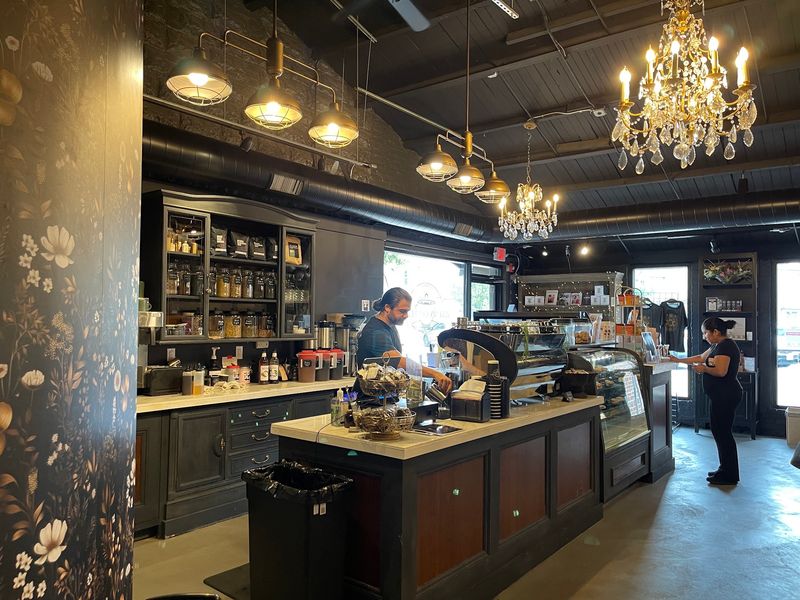
Most cafés would be thrilled to uncover an old brick wall. Alkemy Coffee Co. has an original pottery kiln.
Set inside Flemington’s historic Stangl pottery factory, the roastery turns one of the property’s massive industrial relics into a snug seating area, making it possible to drink coffee in the very structure once used to fire ceramics.
The rest of the room continues that conversation between old and new: factory-scale architecture surrounds an electric coffee roaster, botanical accents, and drinks built with the precision of a small laboratory.
House-roasted coffee deserves the first order, whether as a pour-over or a simple espresso. Alkemy also specializes in herbal and botanical beverages, so anyone who usually treats the non-coffee side of a menu as an afterthought will have plenty to explore.
Vegan and gluten-free baked goods broaden the options without making the case feel like a compromise shelf. Open-mic events, roasting classes, and other gatherings give the old factory a lively modern role, while Stangl Road’s galleries and businesses make the café an easy anchor for a longer Flemington outing.
Friday and Saturday hours often stretch later than a typical coffee shop, useful for visitors who are not naturally functional before noon. The kiln may be the detail everyone remembers, but the best part of Alkemy is that the building is still a place of production.
It once made pottery; now it makes roasted coffee, creative drinks, and a strong argument for keeping industrial history useful.
7. Back in Time Café – Bradley Beach
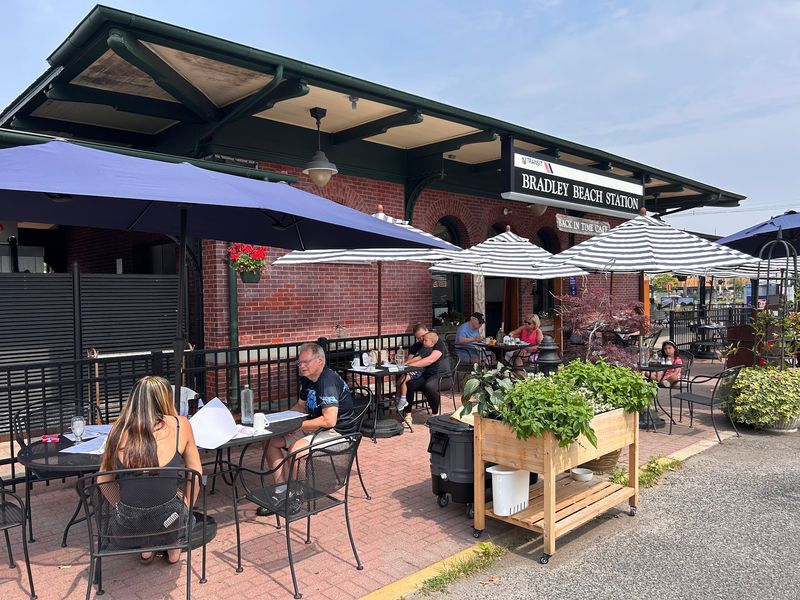
The train may arrive before your French toast does, and that is part of the charm. Back in Time Café operates inside Bradley Beach’s historic railway station, turning a working piece of Shore transportation history into an easygoing breakfast and lunch stop.
Commuters pass through with coffee in hand while locals settle at outdoor tables, producing the kind of overlap that newly built cafés rarely manage. The menu is comforting and unfussy.
Potato pancakes, quiche, omelets, and breakfast sandwiches are reliable choices, while the Irish cream or Nutella French toast handles mornings that call for something unapologetically sweet.
A cup of coffee is never treated like a side note, but this is as much a neighborhood breakfast room as it is a caffeine destination.
The station setting gives even a simple meal a sense of motion: trains pull in, dogs appear beside patio tables, and beach traffic drifts through town a few blocks away. Service is daytime-focused, and the café commonly closes in the afternoon, so save it for breakfast or lunch rather than an evening coffee.
Parking is generally easier away from peak summer weekends, though arriving by rail is the most fitting option of all. Plenty of businesses borrow railway décor; Back in Time does not need to.
The tracks are real, the station is still doing its original job, and your omelet comes with a front-row seat to the daily timetable.
8. Booskerdoo Coffee & Baking Co. at Bell Works – Holmdel
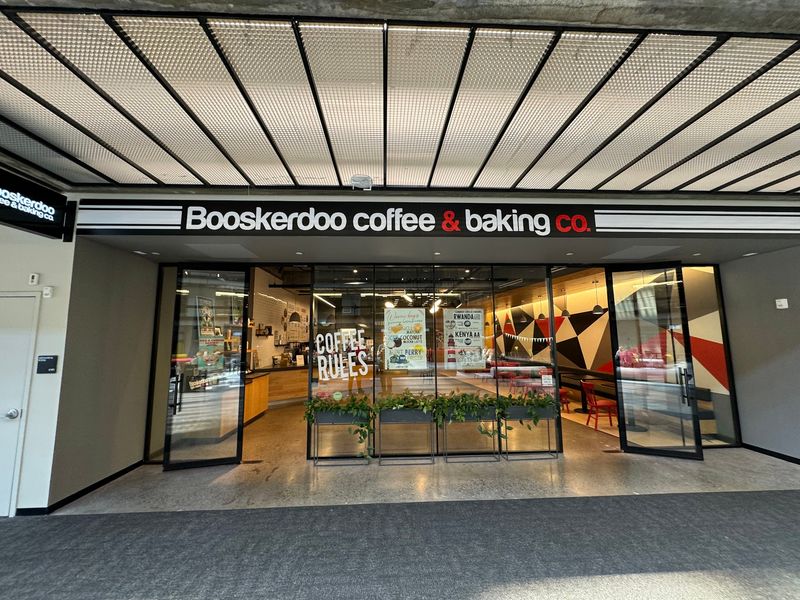
One of the most important research buildings of the 20th century now contains a very good malt cold brew. Booskerdoo’s Holmdel café sits inside Bell Works, the enormous former Bell Labs complex designed by Eero Saarinen and reinvented as a mixed-use “metroburb.”
The mirrored exterior and soaring central atrium make a coffee run feel almost cinematic.
This is not a tiny shop occupying the whole landmark; it is a compact counter within a vast adaptive-reuse project, and that scale is precisely the fun. Grab an organic cold brew, cappuccino, or the malt cold brew for something richer.
The Jersey Diner blend is a fitting bag of beans to take home, while the breakfast sandwich and house-baked pastries cover the practical side of the visit. Seating near the counter is limited, but Bell Works supplies acres of alternatives, from atrium tables to outdoor spaces.
That makes Booskerdoo especially useful for a meeting, a remote-work session, or a break while exploring the building’s shops and public areas. Weekdays bring office traffic; weekends tend to feel more leisurely and offer better opportunities to wander.
Look up often. The symmetry, glass, and long interior sightlines are as much a part of the outing as the drink.
Bell Labs once concentrated some of the brightest minds in technology here. The current version runs on a different fuel, and Booskerdoo pours it by the cup.
9. Black Swan Espresso at Hahne & Co. – Newark
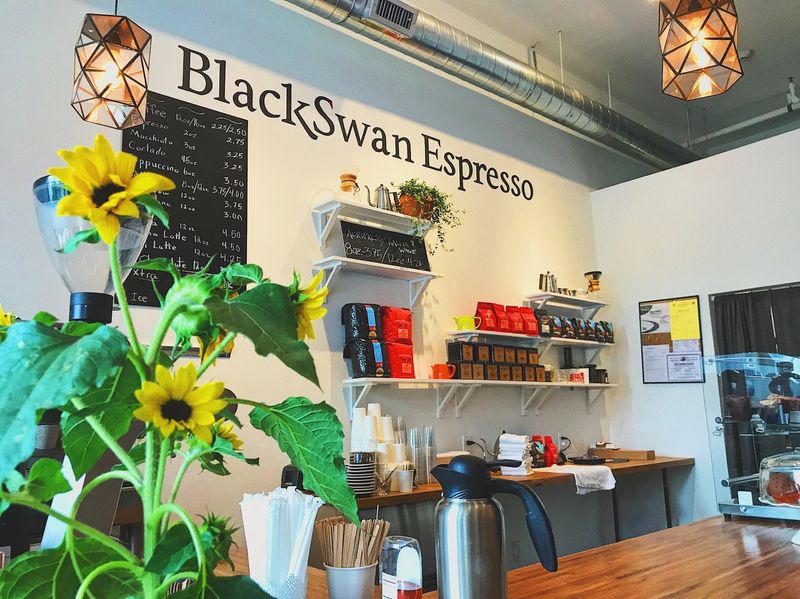
Newark’s old Hahne & Company department store was built for spectacle: big windows, tall ceilings, and the sort of downtown presence meant to pull shoppers through the doors.
After years of vacancy, the landmark reopened as a mixed-use complex, and Black Swan Espresso brings daily life back to its ground floor.
The café’s clean, modern counter sits comfortably against the building’s restored industrial-commercial bones, creating a useful pause point near Rutgers–Newark, NJPAC, and downtown offices. Serious coffee drinkers should keep the order simple.
A cortado shows off the espresso without burying it, while the Brick City house blend makes a satisfying drip cup with chocolate-forward depth. Cold brew and nitro cover hot days; chai, matcha, and turmeric lattes make the menu welcoming to the coffee-averse friend who somehow joined a coffee crawl.
Muffins and brownies are available when the cup needs company, but the drinks remain the main event. The downtown location makes Black Swan particularly handy before a performance or between stops, and public transportation is far easier than hunting for curbside parking at a busy hour.
What gives this branch an edge is the setting’s layered comeback story. A department store once used this building to showcase clothing and home goods.
Today, apartments, classrooms, retail, and coffee share the address, proving that a landmark can change purpose without becoming a museum piece.
10. Grover’s Mill Coffeehouse – West Windsor
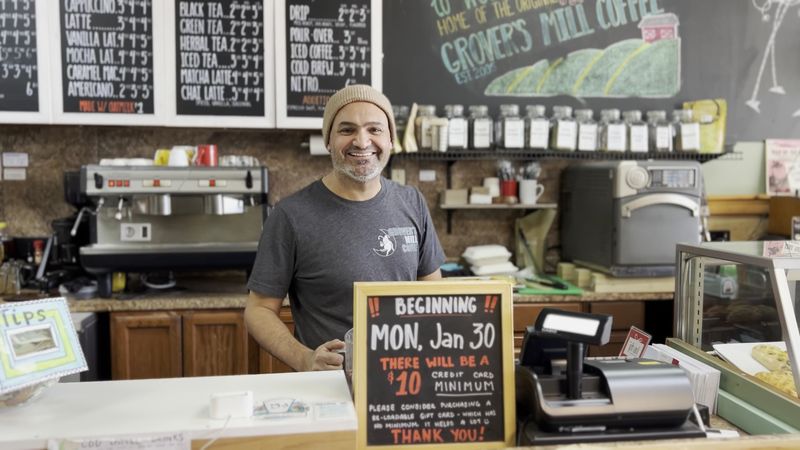
Alien figures, vintage radio imagery, and bags of beans share the room at this West Windsor original.
Grover’s Mill Coffeehouse has transformed an ordinary commercial space into a lively tribute to the 1938 “War of the Worlds” broadcast, which famously placed its fictional Martian landing in this corner of New Jersey.
The reuse here is more imaginative than architectural: instead of allowing an anonymous storefront to remain anonymous, the owners built a local-history clubhouse around one of the strangest stories ever attached to the town.
Weekly small-batch roasting gives the coffee real credibility beneath the flying-saucer fun.
Try a pour-over of the featured single origin, or choose an Ethiopia Yirgacheffe when available for a cup with floral, berry, and citrus notes.
Lattes, teas, pastries, and light food make the shop approachable even if your interest in radio history ends at “aliens, apparently.” Memorabilia rewards a slow look around, and live events strengthen the community-room feeling.
The location has more space and easier parking than many downtown cafés, making it a practical meeting point for groups. Before leaving, continue the theme with a quick trip to nearby Van Nest Park, where a monument marks the fictional landing site.
No, this is not a centuries-old mill converted into a coffee bar. It is something more playfully New Jersey: a familiar building repurposed as a café, roastery, and small monument to the night the Garden State became the center of an imaginary interplanetary crisis.
11. Scout’s Coffee Bar + Mercantile – High Bridge
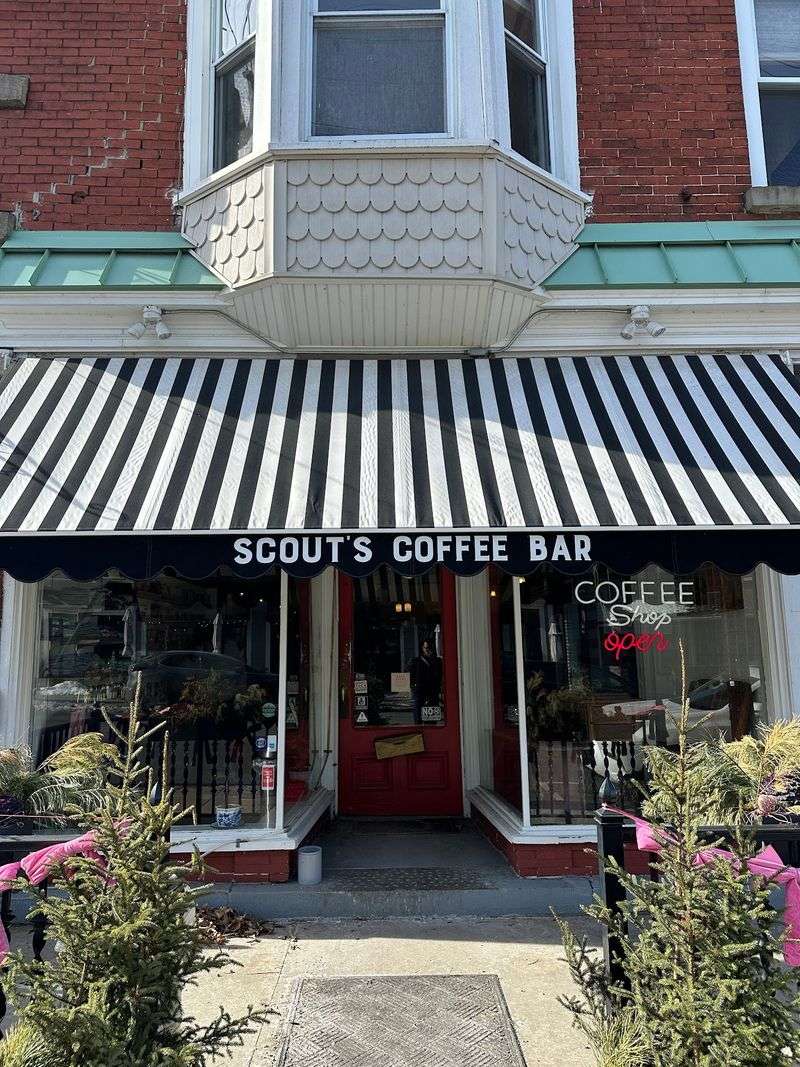
Look above the pastry case and the building begins to tell on itself. Century-old tin ceilings and timeworn walls give Scout’s Coffee Bar + Mercantile the kind of texture that cannot be ordered from a design catalog.
Local artist Nicole Poko opened the High Bridge shop in 2016, shaping the old Main Street space into a deliberately unhurried gathering place filled with dried flowers, poetry, gifts, and small visual surprises. The operation has grown without losing that handmade spirit.
Pastries are produced in a compact basement bakery, and coffee is now roasted in-house. A cappuccino or cortado lets the baristas’ training show, while bags such as Mabel’s Blend make good souvenirs for anyone who wants the Scout’s experience at home.
Do not ignore the baked goods; the rotating selection is part of the reason a quick stop tends to lengthen. The adjoining Parlor adds dining and event space and hosts community gatherings, including storytelling and social nights.
Cyclists and walkers arrive from the nearby Columbia Trail, mixing with regulars who treat the café as High Bridge’s living room. Main Street parking is usually manageable, though weekend trail traffic can make the shop busy.
Scout’s belongs on this list because it demonstrates how an old commercial interior can be adapted gently. The ceilings stayed, the irregularities stayed, and the building gained a bakery, roaster, mercantile, and event room without being scrubbed into blandness.
12. The Coffee Potter – Long Valley
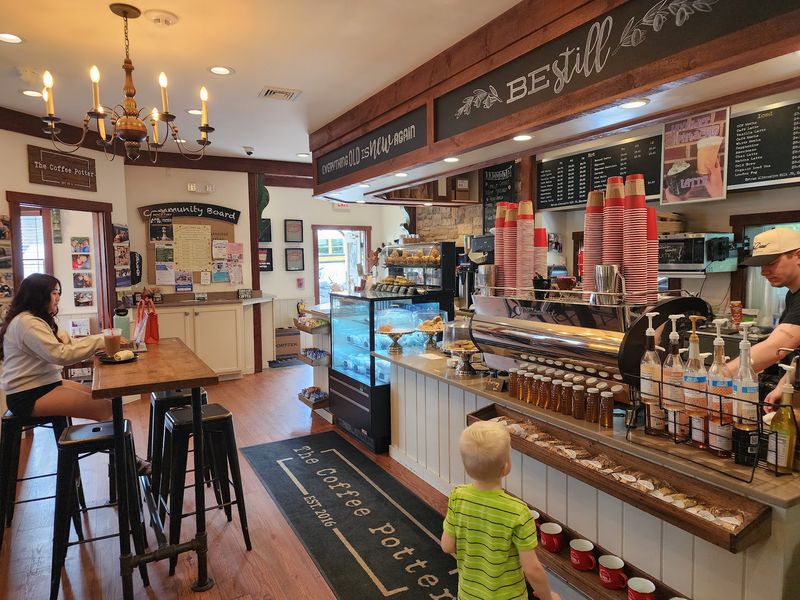
Before it dispensed lattes, the red-brick building at 24 Schooley’s Mountain Road dispensed mail, financial services, and municipal paperwork. Built in 1958 as the Long Valley Post Office, it later served as a bank and the Washington Township tax assessor’s office before sitting vacant.
Its 2016 revival as The Coffee Potter returned the address to its original role as a community crossroads—only now the line leads to espresso and baked goods.
The drive-through window is a welcome practical feature, especially on cold mornings, but going inside better reveals the building’s sturdy midcentury character.
The menu ranges from classic coffee and espresso drinks to flavored seasonal creations, smoothies, and teas. Pair the cup with a breakfast sandwich, scone, muffin, or whatever has just emerged from the bakery case.
There are even “pupucinos” for passengers who have been extremely patient in the car. The café is family-run and feels calibrated to local routines rather than destination theatrics.
People stop before work, after school drop-off, or on the way toward the trails and farm roads surrounding Long Valley. Parking is straightforward, and the drive-through makes this one of the easiest stops on the list when time is tight.
Still, it is worth slowing down. A post office, bank, government office, and coffeehouse may sound like unrelated uses, but all four depend on the same thing: people showing up, exchanging something, and leaving a little more connected than before.
13. Queen City Coffee Roasters – Plainfield
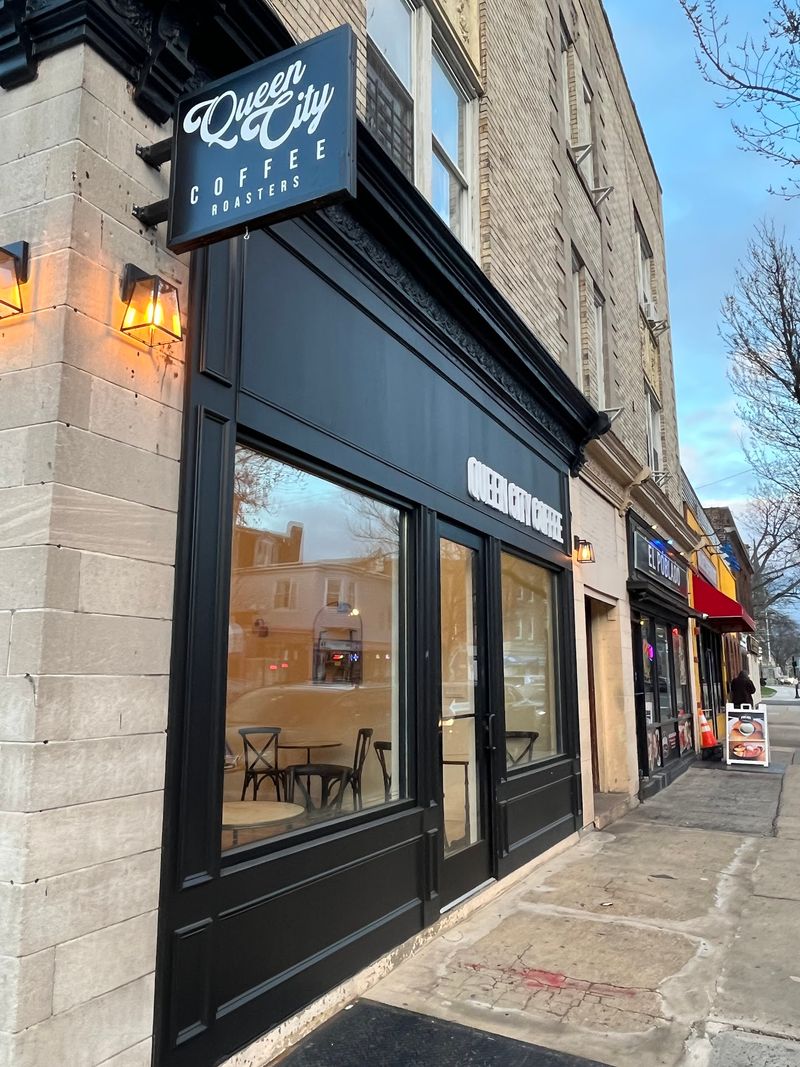
Downtown Plainfield’s older commercial buildings were made to work hard, and the Court Place storefront occupied by Queen City Coffee Roasters is doing exactly that again.
Exposed brick, high ceilings, rotating artwork, and a crisp modern coffee bar have turned the space into a community-focused café near the train station.
The shop’s name comes from Plainfield’s “Queen City” nickname, but the connection runs deeper than branding. The owners roast coffee locally, display work by area artists without taking a sales commission, and use events to make the room useful beyond the morning rush.
The Spanish latte is an inviting first order, combining espresso, condensed milk, and cinnamon into something sweet but still recognizably coffee. Purists can choose a pour-over or rotating single-origin bean, with coffees sourced from regions such as Colombia, Ecuador, and Ethiopia.
Non-coffee options have included colorful house creations alongside chai, matcha, and hot chocolate, while pastries and weekend collaborations bring in other New Jersey makers. This is a good place to open a laptop, meet a friend, or begin a walking look at Plainfield’s downtown architecture.
Transit is convenient, and nearby street parking can vary with the time of day. Queen City shows what small-scale adaptive reuse can accomplish without a famous vault or massive factory.
One revived storefront becomes a roastery showcase, an art wall, an event space, and a reliable third place—four jobs from a room that might otherwise have remained quiet.
Share this story