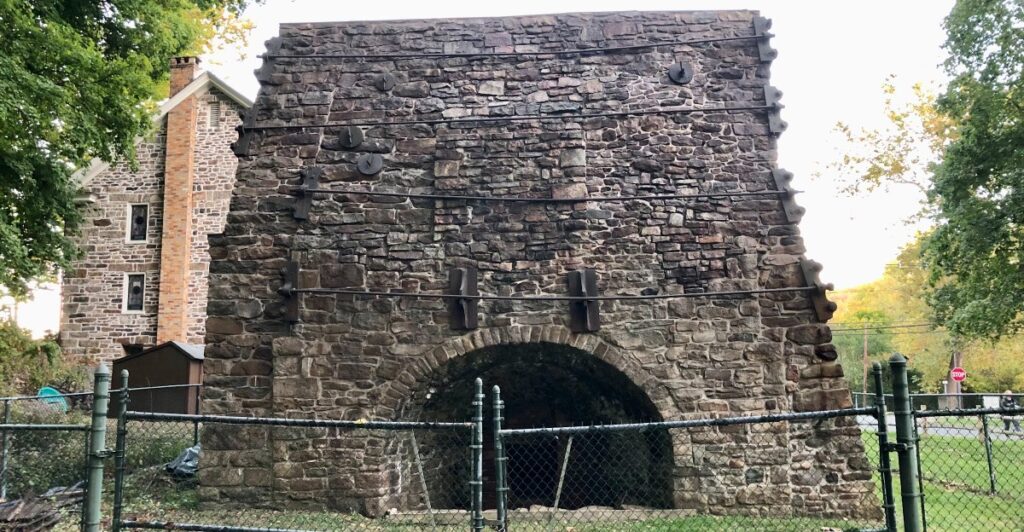
The stone furnace beside an Oxford church looks quiet enough now. No molten iron, no fuel deliveries, no crew keeping a hungry fire alive.
Yet this surviving structure belongs to a story that began in 1741, decades before the United States existed, and helped shape an entire community around iron. Here in Warren County, ore beneath the surrounding hills became the starting point for a business that grew far beyond a single furnace.
Mines, mills, manufacturing operations, and homes followed, giving Oxford an industrial identity that can still be traced today. There is also a handsome ironmaster’s residence nearby, because the people running this enterprise weren’t exactly living above the shop.
What makes a visit interesting is that contrast between the modest town you see and the enormous effort it once took to keep everything moving. Those weathered stones have considerably more to say than their quiet setting suggests.
Oxford’s Ironmaking Story Began With a Furnace in 1741
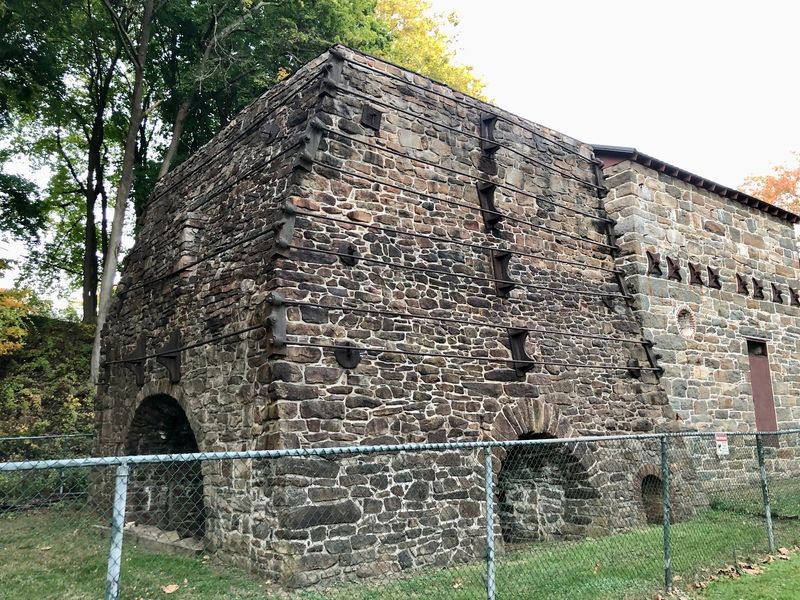
March 9, 1743, was the day the operation delivered its first iron. That is an important distinction when you’re looking at the familiar 1741 date associated with this site.
Construction started in 1741; production came afterward. Even an ambitious colonial business needed time to turn land, materials, and plans into something capable of smelting ore.
Jonathan Robeson oversaw the furnace’s construction and early operation, while the Shippen family supplied another central part of its ownership story. Joseph Shippen Jr. inherited the furnace tract in 1741, and the venture brought together Philadelphia business interests and the mineral resources of northwestern New Jersey.
The location was practical. Iron deposits in the surrounding hills gave the enterprise access to its essential raw material.
Rather than treating the furnace as an isolated old building, picture it as the central piece of a much larger undertaking. Ore had to reach the works, fuel had to be prepared and supplied, and finished iron needed buyers.
The first product was pig iron, the crude material produced by smelting ore and used for further manufacturing. Its name comes from the traditional arrangement of casting channels, which resembled piglets feeding from a sow.
Industrial history occasionally supplies its own surprisingly farmyard vocabulary. The furnace was New Jersey’s third colonial iron furnace, placing Oxford among the colony’s early ironmaking centers.
Standing beside the remains, the dates become more than numbers on a sign. This business was established while New Jersey was still a British colony, and its owners were making decisions about resources, production, and profit long before anyone could describe their enterprise as part of American industry.
The town’s later growth began with that very concrete challenge of getting the first furnace working.
Local Ore Helped Build an Entire Company Town
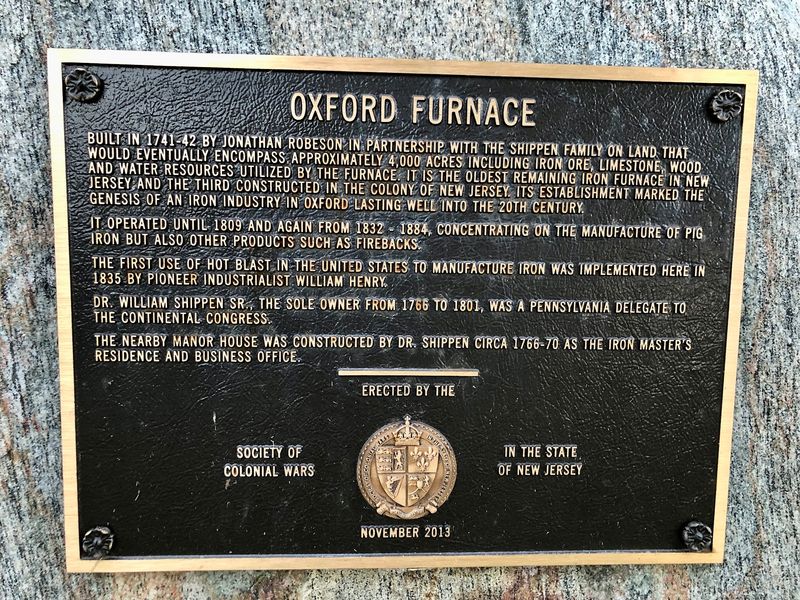
A furnace needs workers, and workers need somewhere to live. Follow that simple relationship outward and the scale of Oxford’s transformation starts to make sense.
Ironmaking brought demands for labor, transportation, supplies, and supporting businesses. What began around one production site developed into a company town whose history extended well beyond the original stack.
The surrounding mines were essential to that growth. Oxford’s early furnace was built near deposits of mined iron ore, distinguishing it from earlier New Jersey operations associated with bog iron.
Having useful material nearby gave the enterprise a strong reason to remain rooted here, even as ownership and technology changed. Over time, the community’s industrial activity included foundries, rolling mills, and other ironworking operations.
These performed different jobs within the broader business of turning raw material into usable goods. A blast furnace was one part of the process, rather than a machine that magically produced every finished item associated with the town.
That distinction helps explain why Oxford became an industrial center instead of simply a settlement with an interesting furnace. Its buildings, businesses, and daily routines developed around a network of related work.
Iron products associated with the enterprise included practical household essentials such as stoves, pots, nails, and fireplace firebacks. A fireback is an iron plate placed at the back of a fireplace, helping protect the masonry and radiate heat.
These were objects people used, rather than curiosities destined for museum cases. The Oxford Industrial Historic District preserves the broader setting of that manufacturing community.
Looking beyond the furnace gives the story room to breathe. Homes and streets belong in the picture alongside mines and mills, because an industrial town was also a place where families made lives around the work that sustained it.
A Hot Blast Breakthrough Changed How Iron Was Made
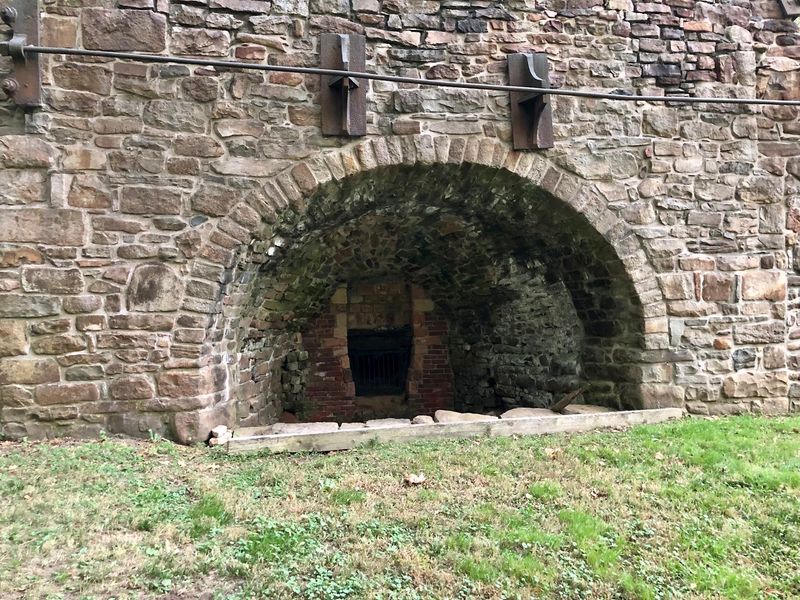
Sometimes the major breakthrough is something as straightforward as warming the air first. In ironmaking, that adjustment had serious consequences.
A blast furnace depends on a supply of air to support combustion and generate the heat needed to process its charge of ore, fuel, and flux. Introducing heated air changed how effectively that system could operate.
The technique became known as hot blast, and Oxford holds an important place in its early American development. William Henry carried out pioneering work here in the 1830s; the county’s historical account identifies May 24, 1835, with his successful hot blast achievement.
The surviving structure therefore represents more than an early business that happened to last. It also marks a place where industrial methods were tested and improved.
That gives the stones another layer of interest. The furnace wasn’t simply repeating the same process from its colonial beginnings until its final shutdown.
Its operators adapted it as new possibilities emerged. Think of the difference between owning a useful machine and finding a way to make that machine work more efficiently.
Across an industrial operation, a change in fuel use or production could affect costs, output, and the ability to keep competing. Those pressures existed here just as surely as they do in factories today.
Oxford’s history also included a transition from charcoal to anthracite coal, another important adaptation in its long working life. Fuel choice shaped the operation’s needs and connected it to a changing industrial economy.
You don’t need to arrive knowing furnace terminology to appreciate any of this. The useful question is how a business founded in the eighteenth century managed to keep evolving into the nineteenth.
Here, part of the answer involved owners and managers willing to change what happened inside the furnace, rather than relying entirely on the fact that it had worked before.
Shippen Manor Reveals the Lives Behind the Ironworks
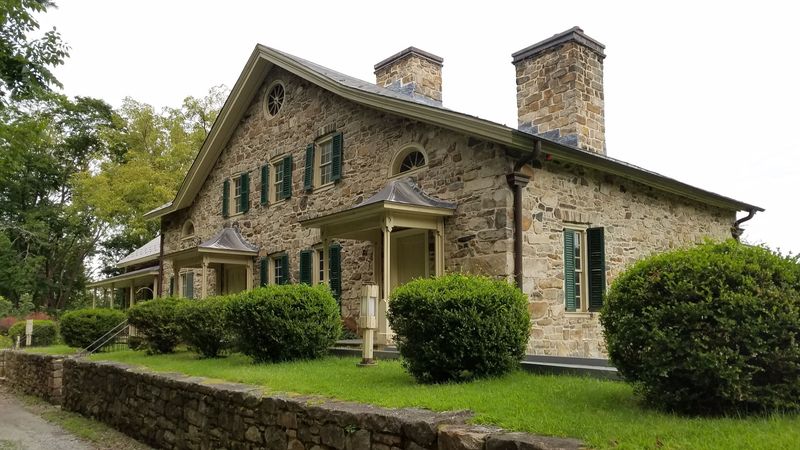
Up the hillside, a substantial stone house supplies the human side of all that machinery. Shippen Manor stands at 8 Belvidere Avenue, overlooking the community whose fortunes were closely tied to the furnace.
Built around 1754, it served for more than a century as the residence of the ironmaster or furnace owner. Put the two sites together and you get a much clearer picture of Oxford’s early hierarchy.
One place produced iron; the other housed people responsible for the enterprise. The Shippen family’s connections reached beyond this corner of Warren County, and the manor’s history reflects the succession of owners and residents associated with the works.
Later chapters included use as a boarding house and private residence, giving the building a life that continued as its original role changed. That makes it useful to resist imagining the house frozen at a single moment in the 1750s.
Buildings adapt along with the communities around them. Rooms acquire different occupants, ownership changes, and a residence connected to industrial authority can eventually serve a very different purpose.
Today, the restored manor helps interpret those overlapping histories. It also gives a visit a welcome change of scale.
After thinking about ore, fuel, and production, you can consider where people lived and how closely their domestic world sat beside their business interests. The furnace and manor belong to the same story, but they reveal different parts of it.
The house’s elevated position is especially telling when viewed in relation to the town below. You can understand the connection without needing an elaborate reconstruction of colonial life.
For planning purposes, remember that the museum is a seasonal attraction and that interior access should be checked before a visit. Seeing the furnace exterior and touring the manor are different experiences, and the latter depends on the museum’s opening schedule.
The Furnace Kept Working Until 1884
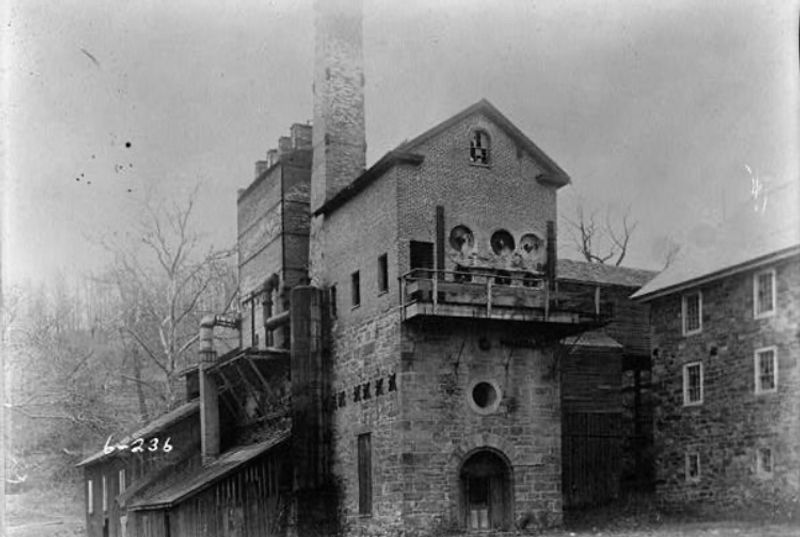
By the time the last blast ended, the original enterprise belonged to a very different world from the one that had created it. The furnace was finally blown out in 1884, more than 140 years after its first iron production.
Its working history included interruptions, so that span should not be mistaken for uninterrupted operation. Still, the longevity is remarkable.
A colonial furnace had survived into an age of railroads and expanding industrial networks. Keeping an operation useful for that long required more than sturdy stonework.
Changes in fuel and production methods helped Oxford continue working as ironmaking developed around it. Its history is a reminder that old industrial sites often contain several generations of technology, even when visitors see one surviving structure.
Eventually, however, the original furnace’s working life ended. Oxford’s wider industrial history continued beyond that moment, so 1884 marks the closure of this furnace rather than a neat ending for every mine and manufacturing business in town.
That distinction matters. Communities rarely move from busy to quiet in a single afternoon, and different parts of an industrial economy can decline or change at different times.
The surviving stack now tells its story without the activity that once made its purpose obvious. Preservation has been necessary to keep that physical evidence standing.
Beginning in 2001, a four-year stabilization project addressed the furnace, supported by a $315,000 New Jersey Historic Trust grant and additional county funding. It is easy to overlook that later effort when admiring an old structure.
Survival sometimes means deliberate intervention, skilled repair, and public investment. The stones carry the history of the original operation, but their continued presence also reflects people deciding that Oxford’s industrial past deserved to remain visible.
Without that work, the town would have fewer physical clues to explain how much once happened here.
Exploring the Stone Remains of Oxford’s Industrial Past Today
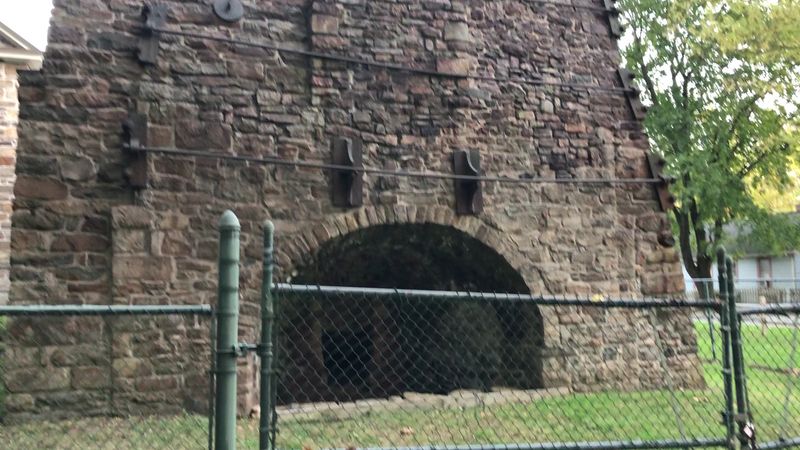
Washington Avenue and Cinder Street put you beside one of Oxford’s most recognizable reminders of its ironmaking years. The furnace stands next to the Oxford United Methodist Church, an everyday setting that makes the encounter more interesting.
This is industrial history embedded in a living town, with familiar streets and buildings around it. Visitors can view the furnace exterior; it is not an attraction where you wander inside the stack.
That makes the experience fairly straightforward. Look at the surviving masonry, consider the openings and the structure’s purpose, and give yourself time to connect what remains with the work it once performed.
An interpretive panel installed in 2022 adds historical context at the site. The furnace is close enough to Shippen Manor to make the two a sensible pairing, although museum opening dates matter if you want to include an interior visit.
The manor sits roughly a quarter mile from the Route 31 and Wall Street intersection, making this a convenient historical stop without an elaborate approach through the countryside. The most rewarding way to understand the setting is to expand your attention beyond the stack.
Oxford’s broader historic district preserves evidence of the community that developed around industry. The streets help put the furnace back into context, while the manor explains another part of the relationship between work, ownership, and town life.
There is no need to turn the visit into a hunt for a dramatic ruin around every corner. The interest lies in recognizing how an ordinary-looking place can retain the outline of an extraordinary working past.
At the furnace, the contrast is especially clear.
The machinery is quiet, the production has ended, and the stonework remains beside a church, still marking the place around which a town learned to make its living. visitnj.org
Share this story