
Some of New Jersey’s best views do not announce themselves with much drama. One minute you are driving past diners, pine woods, beach traffic, or a quiet country road, and the next you are standing above a river bend, staring across three states, or looking at the Manhattan skyline like someone placed it there for effect.
That is the fun of chasing high-up spots in New Jersey: the payoff can be wildly out of proportion to the effort. A short paved walk can lead to a Revolutionary War lookout.
A lighthouse climb can turn the Shore into a giant map. A rocky summit can make the Delaware Water Gap look almost staged.
These 15 fire towers, overlooks, lighthouses, and high points show off the state from its best angles, whether you want a real hike, a quick scenic stop, or a view that makes everyone pull out their phone.
1. High Point Monument

At 1,803 feet above sea level, this is New Jersey’s literal top spot, and it knows how to make an entrance. The tall obelisk at High Point State Park rises over the Kittatinny Ridge in Sussex County, creating one of those rare places where you can stand in New Jersey and look out toward New York and Pennsylvania without having to squint too hard.
The monument itself honors New Jersey veterans, which gives the summit a little more weight than your average scenic stop. Still, the mood is not overly formal.
People come here with picnic blankets, cameras, hiking shoes, and that satisfied look everyone gets when the view turns out to be even better than expected. You can drive close to the monument, making this one of the more accessible big-view spots in the state, or build a fuller day around the park’s trails, Lake Marcia, and forested picnic areas.
Fall is the obvious crowd-pleaser, when the ridges look painted in layers of red and gold, but winter can be stunning if the roads are clear and the air is sharp. Bring a jacket even if it feels mild at lower elevations.
Up here, the wind likes to remind you that New Jersey has mountains, too.
2. State Line Lookout
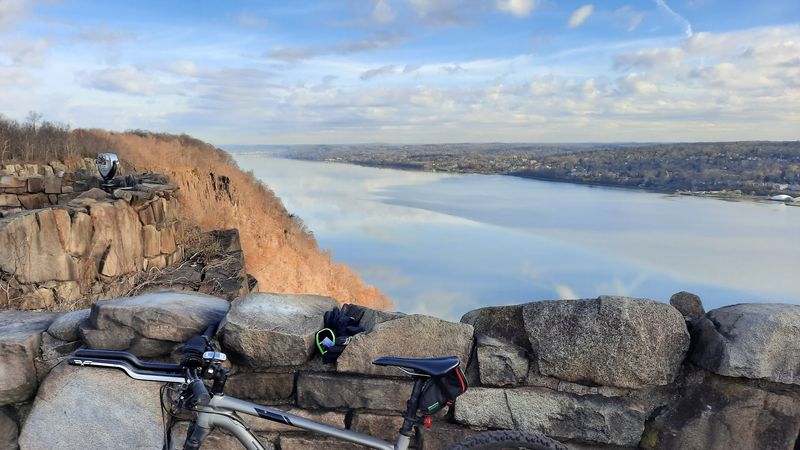
Stand at the edge of the Palisades here and the Hudson River suddenly looks less like a border and more like a stage. State Line Lookout in Alpine sits high above the river, with New York spread out across the water and the cliffs dropping away below.
It is one of the best payoff-to-effort views in North Jersey because you do not need to complete a major hike to enjoy it. There is parking nearby, a cafe and restrooms on-site, and several trail options if you decide the quick scenic stop needs to become more of an outing.
The overlook is especially good for people who like their views with a little motion: boats on the Hudson, birds riding the air currents, cyclists grinding up nearby roads, and hikers drifting in and out of the woods. Raptors are often part of the show, especially during migration, when hawks can appear over the cliffs like they were booked for the occasion.
The vibe is dramatic but practical, which is a very New Jersey combination. You can come for 20 minutes, take in the sweep of river and rock, and leave feeling like you got away with something.
Or you can linger, walk the trails, and let the Palisades make their case slowly.
3. Sunrise Mountain Overlook
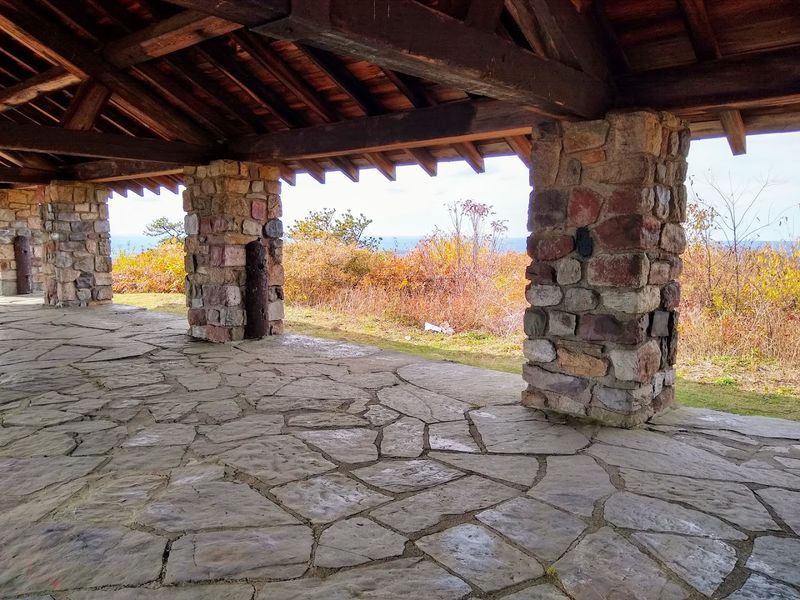
The stone pavilion near the top feels like the sort of place where you should speak a little softer, even if nobody tells you to. Sunrise Mountain Overlook sits in Stokes State Forest along the Kittatinny Ridge, and it delivers exactly the kind of wide, layered view that makes an early wake-up call feel less unreasonable.
True to its name, sunrise is the showstopper here, when the first light spills over the ridges and fields and the whole scene starts to glow before the day has fully begun. You do not have to be there at dawn to enjoy it, though.
The overlook is beautiful throughout the day, with a view that changes depending on cloud cover, season, and how clear the air feels. The Appalachian Trail passes through the area, so hikers can fold the overlook into a longer route, while more casual visitors can keep things simpler if seasonal access allows.
Stokes State Forest itself is a classic North Jersey woods destination, with trails, campsites, streams, and enough quiet corners to make you forget how close civilization really is. The best way to visit is unhurried.
Bring coffee, a snack, and shoes that can handle uneven ground. Sunrise Mountain is not flashy.
It is better than flashy. It is calm, spacious, and quietly impressive.
4. Culver Fire Tower
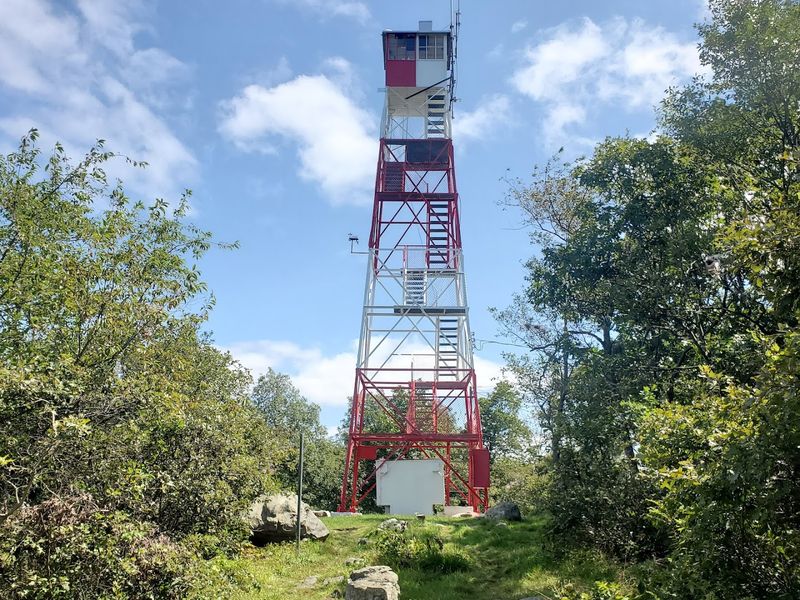
The trail to Culver Fire Tower has just enough rock and climb to make the view feel earned, but not so much that it turns into a misery contest. Set in Stokes State Forest, the tower area is a favorite among hikers who want a ridge walk with a real destination at the end.
The route often connects with the Appalachian Trail, which gives the outing that satisfying “I’m on a famous footpath” feeling, even if you are only out for a few hours. What makes Culver especially interesting is that it is not just a scenic prop.
New Jersey’s fire towers have long been part of the state’s wildfire detection system, and many still serve a serious purpose when conditions are dry. That working-history angle gives the place extra character.
You are not just hiking to a view; you are hiking to a piece of practical mountain infrastructure. Access to active fire towers can vary, so visitors should respect posted signs and not assume the tower itself is open for climbing.
Even from the surrounding ridge, though, the scenery is worth the trip. Expect forest, wind, rock, and broad Kittatinny views that open up after stretches of shaded trail.
It is a good pick for hikers who want something a little rugged, a little historic, and very North Jersey.
5. Catfish Fire Tower
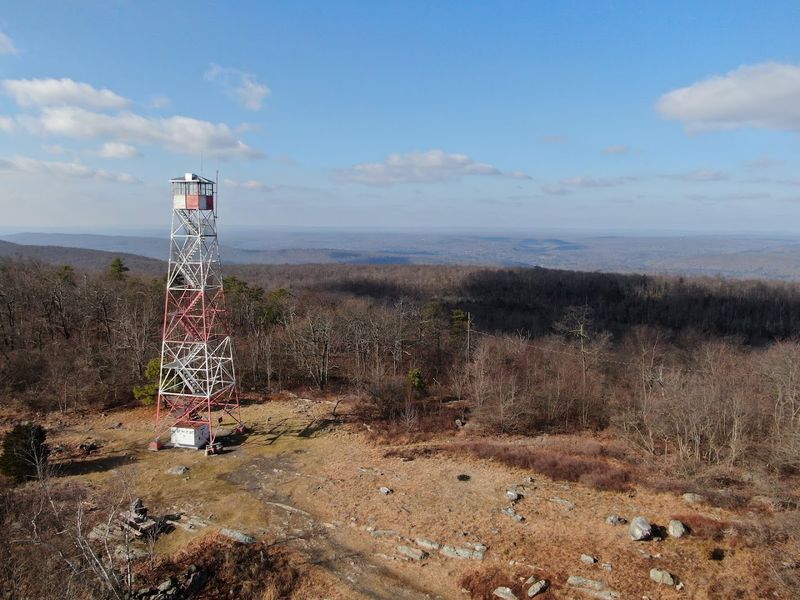
With a name like Catfish Fire Tower, you might expect something low and marshy, but this Warren County lookout has other plans. Perched on Catfish Mountain along the Appalachian Trail, it sits in the Delaware Water Gap region and feels like the kind of place you reach because you actually meant it.
The hike is part of the appeal. This is not a polished roadside overlook with a neat railing and a quick turnaround.
It is a woods-and-ridge experience, with rocky footing, stretches of quiet forest, and the steady sense that the view is waiting somewhere ahead. The tower has roots in early twentieth-century wildfire watch efforts, and that history gives it a sturdy, no-nonsense personality.
It was built to see far, and that is exactly what makes it so appealing to hikers now. Depending on conditions and regulations, tower access may be restricted, so the smart move is to treat the structure respectfully and enjoy the surrounding summit area for what it is: a high, memorable perch in one of New Jersey’s most scenic corners.
The view can feel especially satisfying because it arrives after effort. You have to walk, climb, and pay attention to the trail. Then the landscape opens, and suddenly the funny name makes perfect sense as a destination worth remembering.
6. Mount Tammany
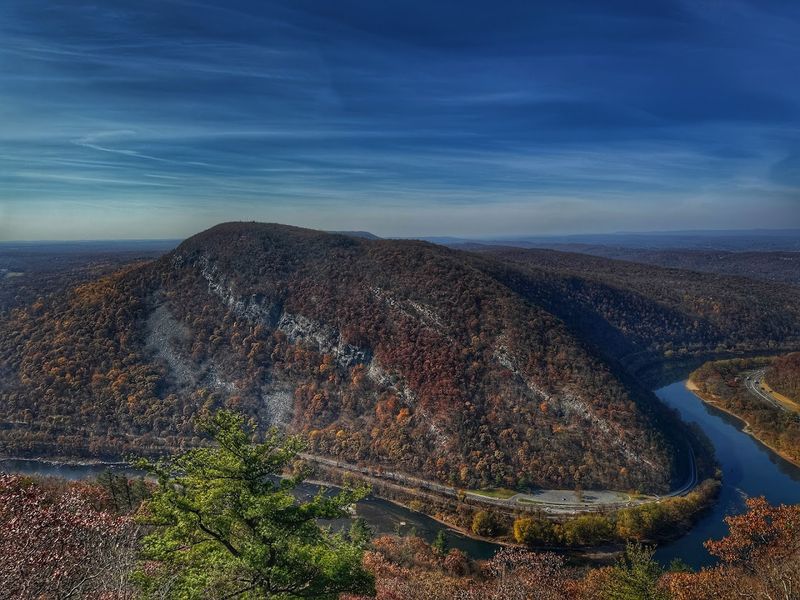
The first real overlook on Mount Tammany has a habit of turning tired hikers into instant photographers. After a steep, rocky climb, the Delaware Water Gap opens below, with the river cutting between New Jersey and Pennsylvania and Mount Minsi rising across the water like it is posing for the picture.
This is one of the state’s signature hikes, and it absolutely earns that reputation. It is beautiful, popular, and more demanding than some first-timers expect.
The Red Dot Trail is the classic route up, known for its rocky terrain and sharp elevation gain, while many hikers descend by the Blue Dot Trail to make a loop. Good shoes are not optional unless you enjoy regretting things.
Water is also a must, especially in warm weather. Weekends can be crowded, and parking near the trailhead can fill early, so morning is your friend here.
Still, even with the crowds, Mount Tammany feels special because the view is so unmistakably grand. It is not a small peek through trees or a distant skyline on a hazy day.
It is the Delaware Water Gap laid out below you in full, dramatic form. The climb makes you work, but the summit is generous.
It gives back every bit of effort with interest.
7. Wyanokie High Point
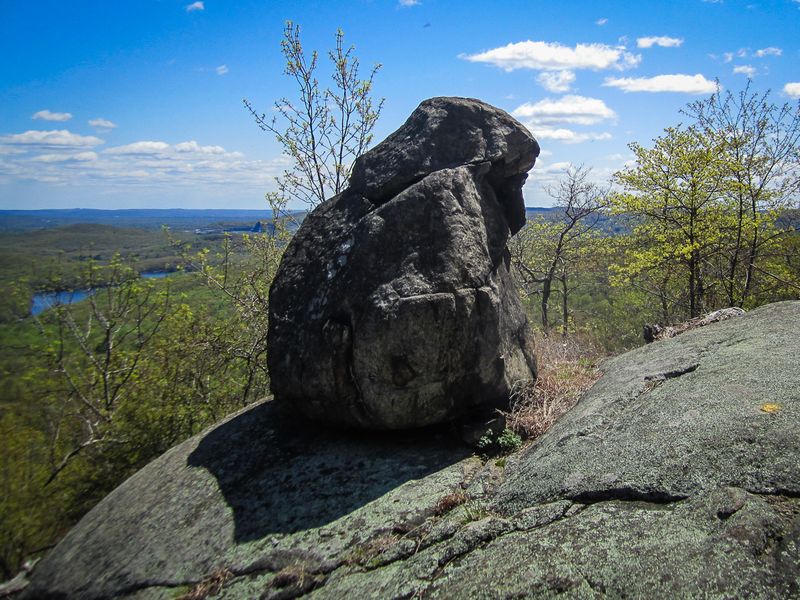
Rugged, rocky, and a little wild around the edges, Wyanokie High Point is the kind of hike that reminds you North Jersey has real backcountry personality. Located in Norvin Green State Forest, this summit offers views over the Wanaque Reservoir, surrounding ridges, and, on clear days, even the distant New York City skyline.
The fun here is not only the final lookout. The whole area is packed with trail options, waterfalls, rock slabs, stream crossings, and enough intersections to keep you honest.
This is not the place to wander in without a route in mind, because the trail network can get confusing if you are just following vibes. But for hikers who like a little adventure, that is part of the charm.
You can pair Wyanokie High Point with Chikahoki Falls, Otter Hole, or nearby viewpoints, turning the outing into a compact but satisfying tour of North Jersey terrain. The summit itself feels less manicured than many scenic spots, which makes the view hit differently.
You are standing on exposed rock, looking over water and forest, with suburban New Jersey somewhere beyond the frame but not dominating the moment. It is a great choice when you want something tougher than a stroll, quieter than the most famous hikes, and scenic enough to justify muddy boots.
8. Washington Rock State Park
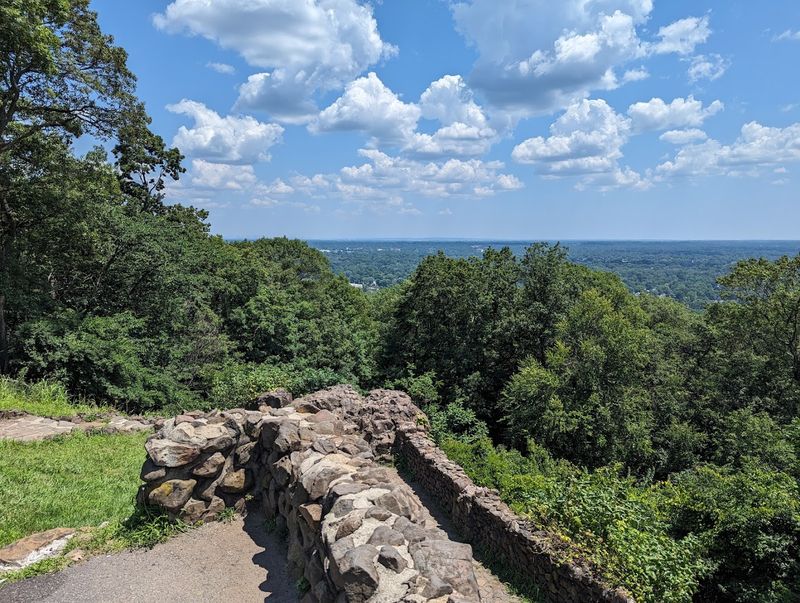
History does a lot of heavy lifting at Washington Rock, but the view holds up on its own. This small park in Green Brook Township sits on Watchung Mountain, where George Washington is said to have watched British troop movements across the valley during the Revolutionary War.
That backstory could easily be the whole attraction, but the overlook itself is what makes people linger. From the rock outcropping, the land opens in a broad sweep, and on a clear day you can see toward the New York City skyline.
The best part is how easy it is. You do not need a long hike, a complicated parking plan, or half a day of commitment.
This is a quick scenic stop with a surprisingly big payoff, perfect for a picnic, a history-minded detour, or a “wait, this is right here?” moment. The park is small, so do not expect miles of trails or a wilderness escape.
Think of it more as a well-placed balcony over central New Jersey, with just enough Revolutionary War atmosphere to make the view feel meaningful. It is especially nice in crisp weather, when visibility improves and the story behind the lookout becomes easier to imagine.
Washington Rock proves a place does not need to be huge to feel important.
9. Goat Hill Overlook
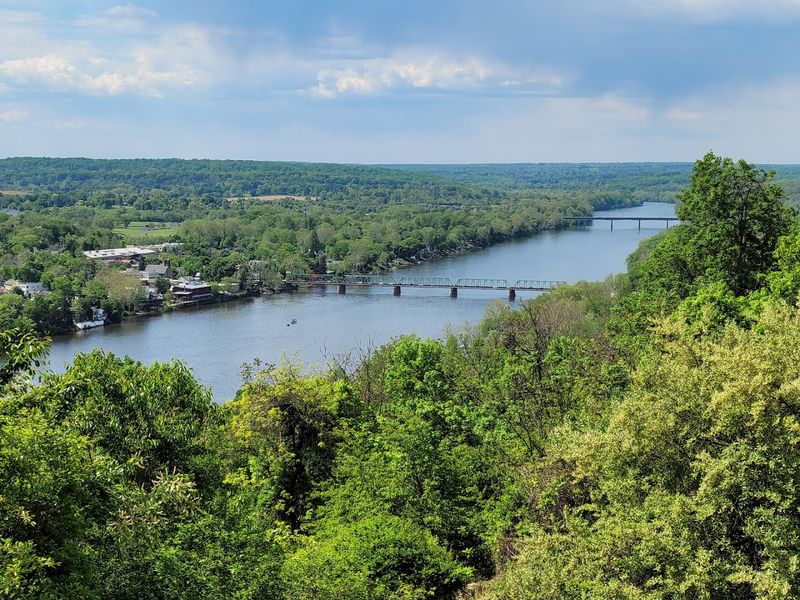
The Delaware River looks especially charming from Goat Hill Overlook, where Lambertville and New Hope sit below like they agreed to be picturesque for the afternoon. This scenic spot near Lambertville gives you a broad view of the river, the bridges, the rooftops, and the wooded hills around them, all without requiring a punishing hike.
There is still some uphill walking, so wear shoes that make sense, but the payoff comes quickly enough that it works for families, casual hikers, and visitors who want scenery without turning the day into a full expedition. Goat Hill is also one of those overlooks that pairs perfectly with a town day.
You can browse Lambertville, cross into New Hope, eat something excellent, and then head up for a view that puts the whole area into perspective. The Revolutionary War history of the surrounding Delaware River corridor adds another layer, but the overlook does not rely on plaques to be interesting.
It has an easy, local-favorite feel, like a place someone tells you about after deciding you are worthy of the tip. Go in the fall for color, in spring for fresh green, or near sunset if you want the river to catch the light.
Just give yourself enough time to enjoy it without rushing back downhill.
10. Mount Mitchill Scenic Overlook
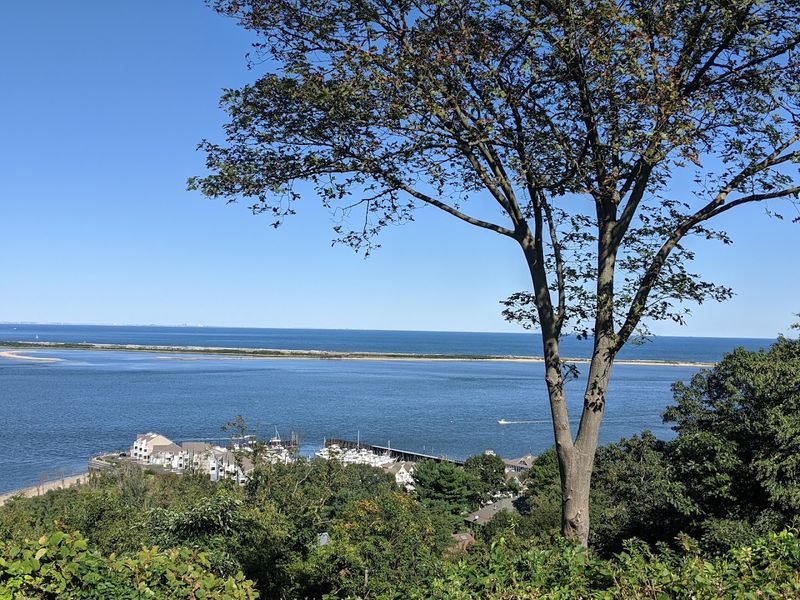
For a coastal view, Mount Mitchill feels almost suspiciously high. Set in Atlantic Highlands, this overlook sits above Sandy Hook Bay and offers sweeping views of the water, Sandy Hook, Raritan Bay, and the New York City skyline.
It is one of the easiest big-view stops in New Jersey, with parking, open grounds, and no strenuous climb required. That accessibility makes it popular, but the space rarely feels like just another roadside viewpoint.
The Monmouth County 9/11 Memorial is located here, giving the overlook a quiet, reflective tone that balances the excitement of the skyline view. People come for photos, but many end up walking more slowly than they planned.
The scene changes constantly depending on haze, light, boat traffic, and weather over the bay. On a clear day, the skyline looks crisp and close; on a moodier day, it fades into the horizon in a way that feels almost cinematic.
Mount Mitchill is also easy to combine with Sandy Hook, Highlands, Atlantic Highlands, or the nearby Twin Lights Historic Site, making it a smart stop on a Shore day that does not revolve entirely around sand. Check seasonal hours before going, especially if you are aiming for sunset.
The view is lovely, but the gates still keep their own schedule.
11. Twin Lights Historic Site
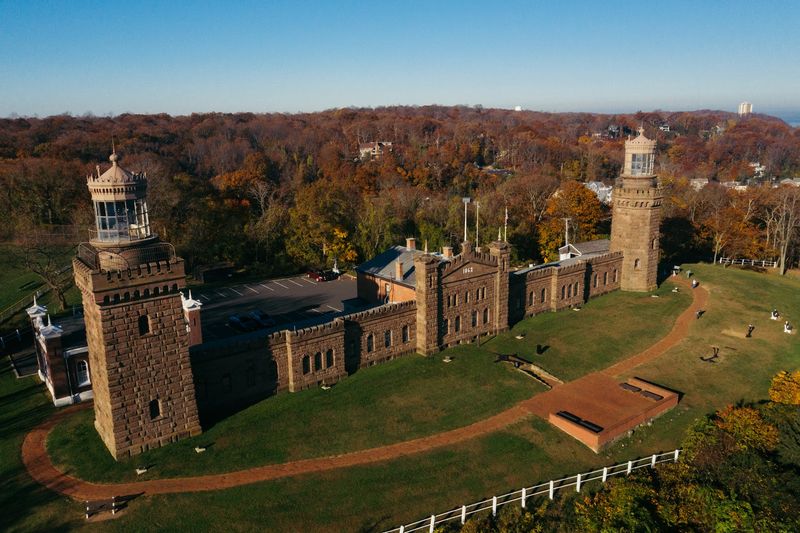
The twin towers above Highlands bring together lighthouse history, coastal drama, and one of the best skyline-and-ocean views in the state. Twin Lights Historic Site sits high on the Navesink Highlands, overlooking Sandy Hook, the Atlantic, and the New York City skyline.
It is the kind of place where the building itself is nearly as interesting as the view, with its castle-like profile, maritime exhibits, and long connection to navigation along the coast. Unlike a simple overlook, Twin Lights gives visitors a full sense of place.
You can wander the grounds, learn about lighthouse technology, and then step into a view that explains exactly why this spot mattered. The perspective is different from nearby Mount Mitchill, even though the two are close enough to pair in one outing.
Here, the experience feels more historic and architectural, with stone walls, tower stairs, and ocean air doing half the storytelling. It is a strong pick for visitors who like scenery but also want something to explore.
The view toward Sandy Hook is especially rewarding because the narrow spit of land makes more sense from above, stretching between bay and ocean like a natural pointer. Bring a camera, but also give yourself time to look without it.
Twin Lights is not just a backdrop. It is part of the story.
12. Barnegat Lighthouse
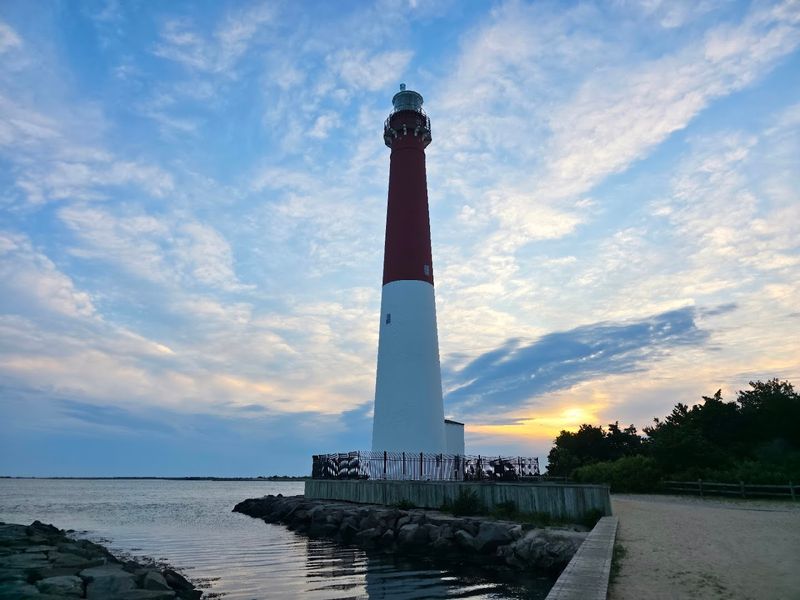
Climbing Barnegat Lighthouse is basically a Shore rite of passage with 217 steps and a very good final answer. Known affectionately as Old Barney, this lighthouse stands at the northern tip of Long Beach Island, where Barnegat Bay, the inlet, and the Atlantic all meet in a swirl of water, sand, boats, and wind.
The view from the top is different from New Jersey’s mountain overlooks because everything is flatter, brighter, and constantly moving. Instead of ridges, you get channels.
Instead of valleys, you get marsh, surf, jetties, and the long geometry of the barrier island. The climb is steady but manageable for many visitors, and anyone who skips the stairs can still enjoy the park grounds, water views, fishing areas, and interpretive center.
Summer brings the full Long Beach Island energy, with beach traffic, families, and that unmistakable salt-air buzz. Off-season visits can be even better if you like your lighthouses with a little mood and breathing room.
The wind can be serious, so dress accordingly, especially outside of summer. What makes Barnegat Lighthouse worth including is not just its height or history.
It is the way the top turns the Shore into a map. Suddenly, the inlet, bay, beach, and ocean all click into place.
13. Apple Pie Hill Fire Tower
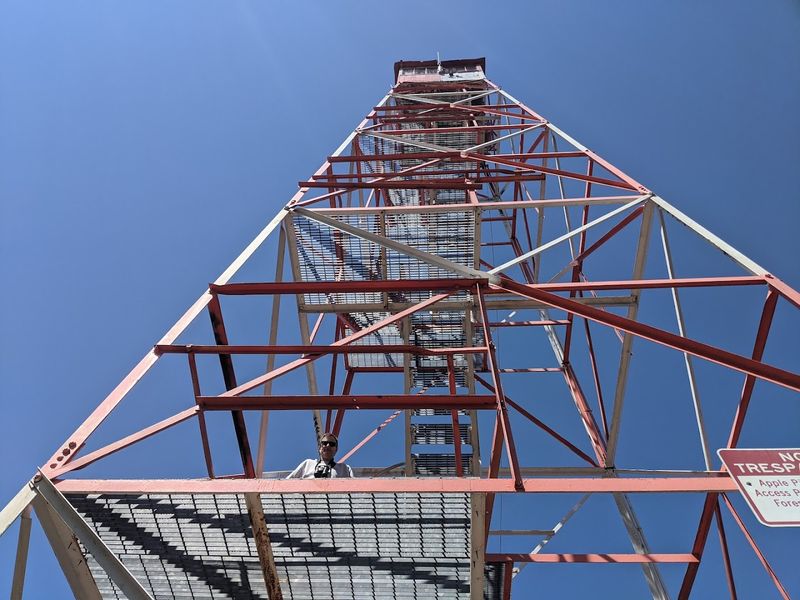
The Pine Barrens are sneakier than people give them credit for, and Apple Pie Hill proves it. Rising from Wharton State Forest, this high point and fire tower destination gives visitors a rare above-the-pines perspective on one of New Jersey’s most distinctive landscapes.
The surrounding woods can feel endless at ground level, all sandy roads, pitch pines, scrub oak, cedar water, and quiet. From higher up, the Pine Barrens become something else entirely: a vast, textured sweep of green and brown that stretches toward the horizon.
The hike in is part of the experience, often linked with the Batona Trail and the Carranza Memorial area, and it has a very different personality from the rocky climbs of North Jersey. Here, the ground is sandy, the forest feels remote, and the scenery works by atmosphere rather than obvious drama.
The tower itself has been subject to access restrictions at times, so check current conditions and respect posted rules before counting on a climb. New Jersey’s fire towers are working pieces of wildfire-detection infrastructure, not just scenic playground equipment.
Even when tower access is limited, Apple Pie Hill still belongs on this list because it offers something no coastal overlook or mountain summit can quite match: the Pine Barrens seen from above, quiet and strange and much bigger than expected.
14. Budd Lake Fire Tower / 95-Mile Lookout Tower
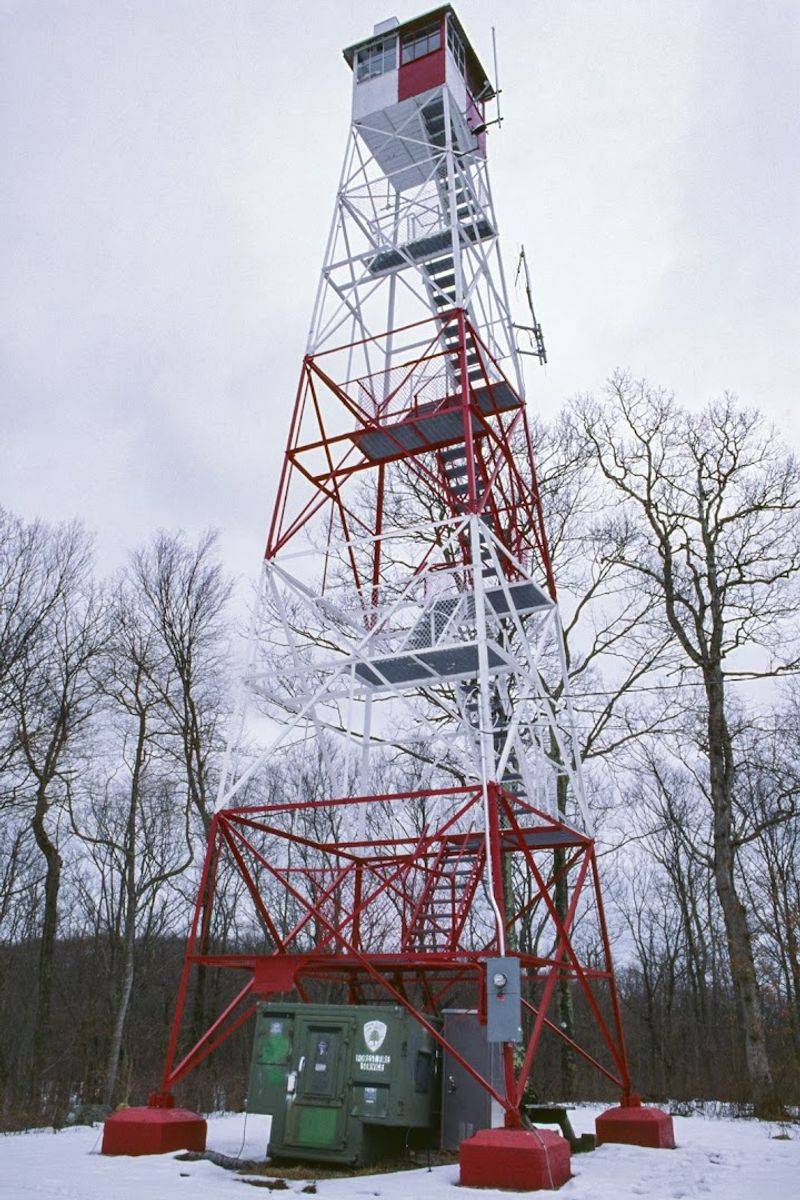
There is a wonderfully old-road-map quality to the Budd Lake Fire Tower, also known as the 95-Mile Lookout Tower. The name comes from its location near Mile 95 of the old state turnpike, close to Budd Lake, New Jersey’s largest natural lake.
That bit of history gives the place a personality before you even arrive. This is not a polished tourist attraction with a gift shop, a tidy viewing deck, and a line for selfies.
It is a working fire-lookout site with deep roots in New Jersey’s forest protection system, and that practical purpose is exactly what makes it interesting. The tower dates back to the early twentieth century, when seeing far across the landscape could make all the difference in spotting smoke before a fire spread.
Visitors should be careful and respectful here, since active fire towers may have access limits and are not always open for climbing. Still, the site is worth knowing about for anyone interested in New Jersey’s less-obvious high points.
The surrounding Budd Lake area adds to the appeal, giving the lookout a mix of lake-country calm, local history, and utilitarian charm. It is a great inclusion for readers who like views with a little grit and mystery, the kind of place that feels discovered rather than packaged.
15. Cape May Lighthouse
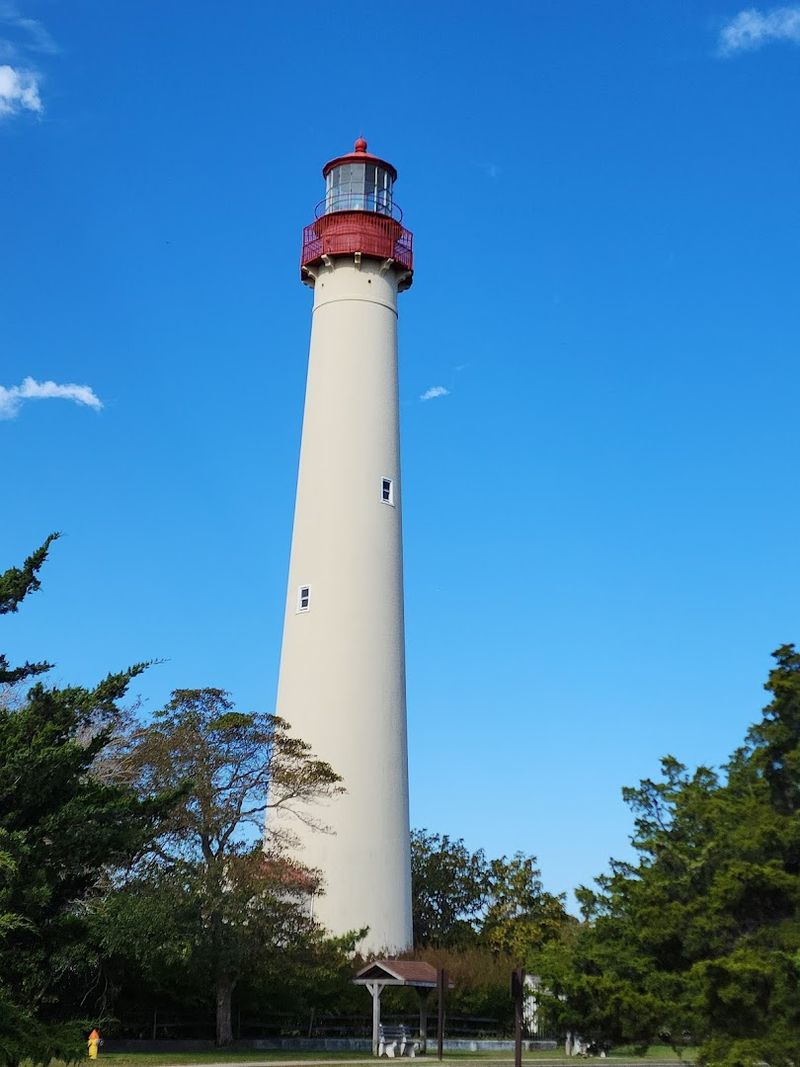
The spiral climb inside Cape May Lighthouse makes you work just enough to appreciate the breeze at the top. Built in 1859 and rising 157 feet, this lighthouse anchors Cape May Point State Park with the kind of presence that makes people stop and look up before deciding whether they are ready for the stairs.
There are 199 steps to the top, and the reward is one of the most satisfying views in South Jersey. From above, the Cape May peninsula finally makes sense.
You can see the Atlantic Ocean, Delaware Bay, dunes, marsh, ponds, trails, and the low sweep of land that gives this corner of the state its end-of-the-road magic. The surrounding state park adds a lot to the visit, especially for birders, walkers, and anyone who wants a quieter counterpoint to downtown Cape May’s Victorian charm.
This is an easy outing to turn into a full day: climb the lighthouse, walk the trails, watch for birds, then head into town for food and porch-lined streets. Mornings can be calmer, while sunset brings the drama.
Either way, do not treat the lighthouse as just another Shore landmark. From the top, Cape May stops being just pretty and becomes understandable, with water on both sides and sky doing most of the decorating.