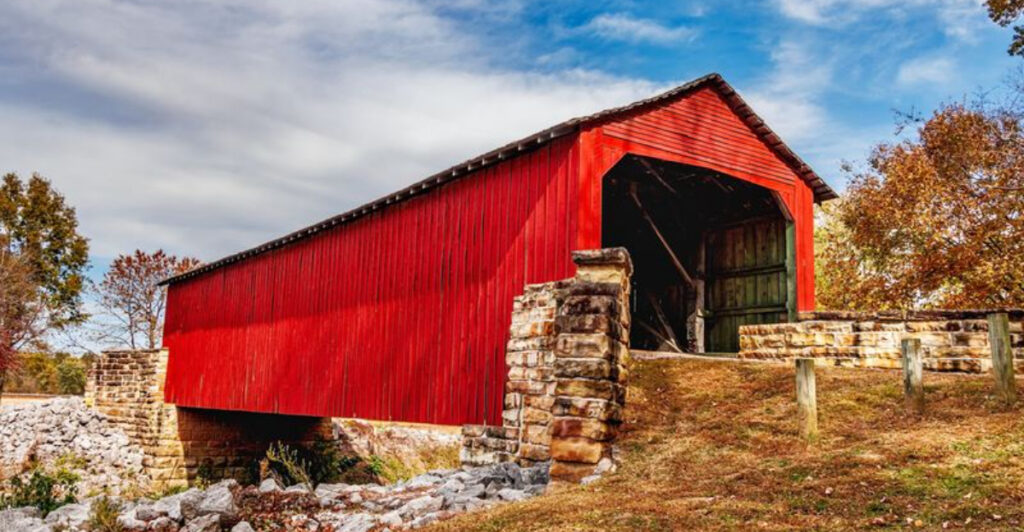
Illinois’ historic covered bridges offer a fascinating glimpse into the state’s past, preserving the craftsmanship and rural charm of a time when wooden crossings connected farming communities across the countryside. From beautifully restored 19th-century landmarks to faithful reconstructions that celebrate Illinois’ transportation heritage, these scenic bridges span peaceful creeks, parklands, and quiet backroads that are perfect for a leisurely drive.
Along the way, you’ll discover picturesque settings, local history, and some of the state’s most photogenic hidden gems. These 7 covered bridges prove that Illinois still has plenty of timeless places waiting to be explored.
1. Historic Cumberland County Covered Bridge (Toledo)
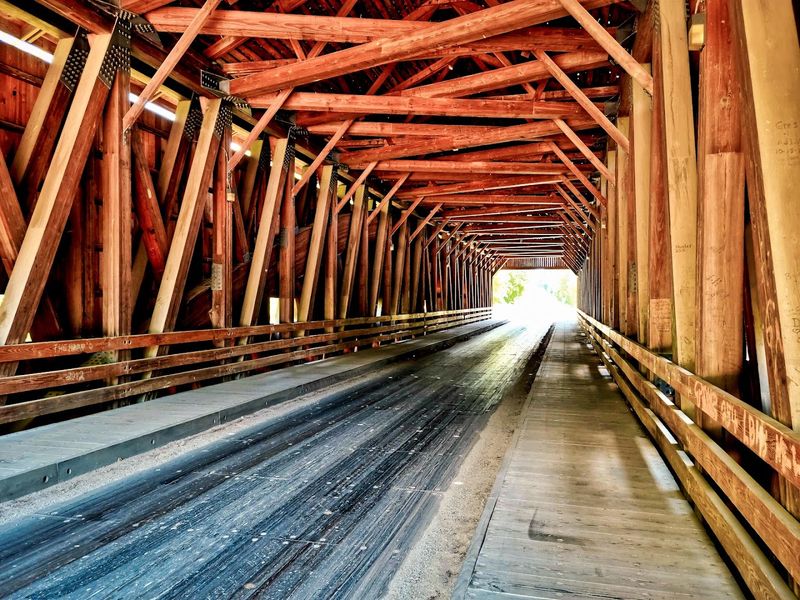
Set inside Lincoln Log Cabin State Historic Site, the Historic Cumberland County Covered Bridge delivers a big first impression. The bridge stretches across the Embarras River with a scale that stands out immediately, yet the rural setting keeps the mood quiet and grounded.
You can drive through it, then slow down and take the pedestrian walkway for a better look at the timber framing and the gentle river below.
Although completed in 2000, this bridge was built as a faithful replacement for an earlier local covered bridge, so the experience still leans strongly into history. It is widely recognized as the longest covered bridge in Illinois, and that length gives the crossing real presence instead of novelty-stop energy.
From inside, the filtered light, repeating beams, and long view toward the exit create a striking corridor effect that photographers love.
The surrounding historic site adds depth to the stop. Instead of visiting one structure and leaving five minutes later, you can pair the bridge with trails, open landscape, and the living-history character of the grounds nearby.
That combination makes this destination especially good for travelers who want more than a roadside picture and prefer a place with room to linger.
Timing matters here. Early morning brings softer light and fewer distractions, while late afternoon gives the wood warmer tones and makes the riverbank especially scenic.
If you want an Illinois covered bridge that offers classic looks, easy access, and enough surrounding space to turn a quick stop into a relaxed outing, this one belongs near the top of your list.
2. Historic Sugar Creek Covered Bridge (Glenarm)
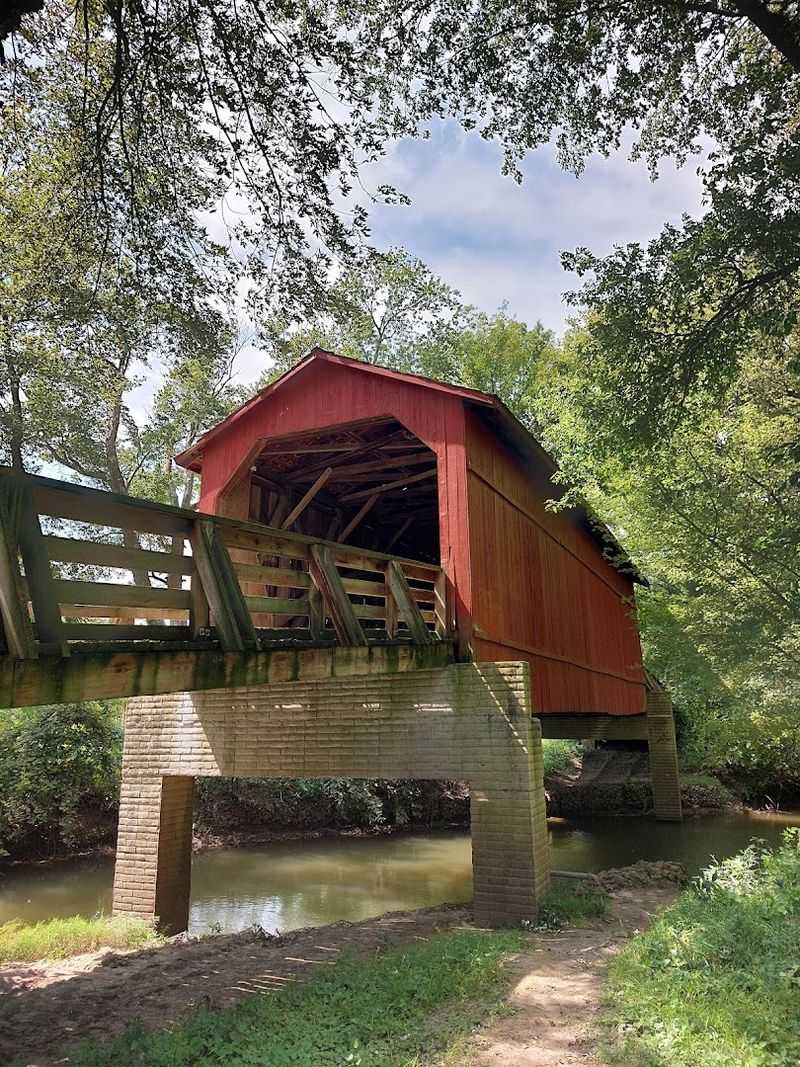
Near Glenarm, the Historic Sugar Creek Covered Bridge sits in a state historic site that encourages you to slow your pace almost immediately.
This is not a bridge you rush through in a car, because it is reserved for pedestrians and framed by green space that rewards a longer stop. The result is a more relaxed visit, where the bridge becomes part of an afternoon rather than a quick checkmark.
It is one of Illinois’ oldest surviving covered bridges, and that history comes through in the proportions, the weathered wood, and the simple confidence of the structure. You notice the classic timber construction first, then the way the bridge settles into its setting without trying to dominate it.
That balance makes it especially appealing for photos, since the surrounding trees and open lawn give you multiple clear angles.
The site around the bridge helps shape the experience. Picnic areas, creekside views, and enough room to wander make this a smart stop for families, couples, and anyone building a low-key day trip around central Illinois.
Instead of dramatic crowds or commercial buildup, you get quiet details: shade on the grass, shifting light on the boards, and a clear sense that this place works best when you let it unfold slowly.
Bring a camera, but do not just aim for the obvious straight-on shot. Walk the site, step back, and look for the bridge framed by trees or reflected in calmer water nearby.
Sugar Creek Covered Bridge has the kind of visual rhythm that rewards patience, and that makes it one of the most satisfying historic bridge stops in the state.
3. Mary’s River Covered Bridge (Chester)
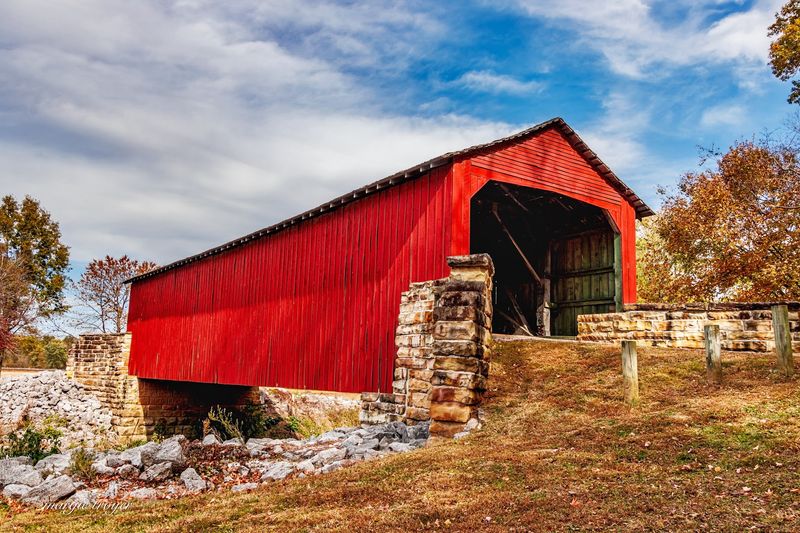
Just outside Chester, Mary’s River Covered Bridge brings serious historical weight without needing a flashy setting. Built in 1854, it stands as the only surviving historic covered bridge in southern Illinois, and that alone gives the visit a different kind of gravitas.
The bridge now rests in a peaceful park, where open space and quiet surroundings let the structure command your full attention.
This bridge once served an important toll road leading toward the Mississippi River, so it was part of movement, trade, and everyday travel long before modern highways rearranged the region. Today, the pace is much slower, which gives you time to notice the sturdy Burr truss design and the practical craftsmanship behind it.
The woodwork, proportions, and enclosed passage create the sort of visual drama that does not need embellishment.
One of the best parts of visiting is how easily the bridge shifts your sense of scale. Cars, schedules, and everyday noise seem less important when you are standing next to a structure tied to mid-19th-century transportation.
You are not looking at a decorative replica or a themed attraction, but at a landmark that still carries the marks of long use and careful preservation.
Plan to walk the area rather than treating the bridge like a windshield stop. Different angles reveal more of the truss work, and the park setting gives you enough room to appreciate the bridge as both engineering and landscape feature.
For anyone tracing Illinois history through surviving structures, Mary’s River Covered Bridge is one of the most compelling places to start.
4. Captain Swift Covered Bridge (Princeton)
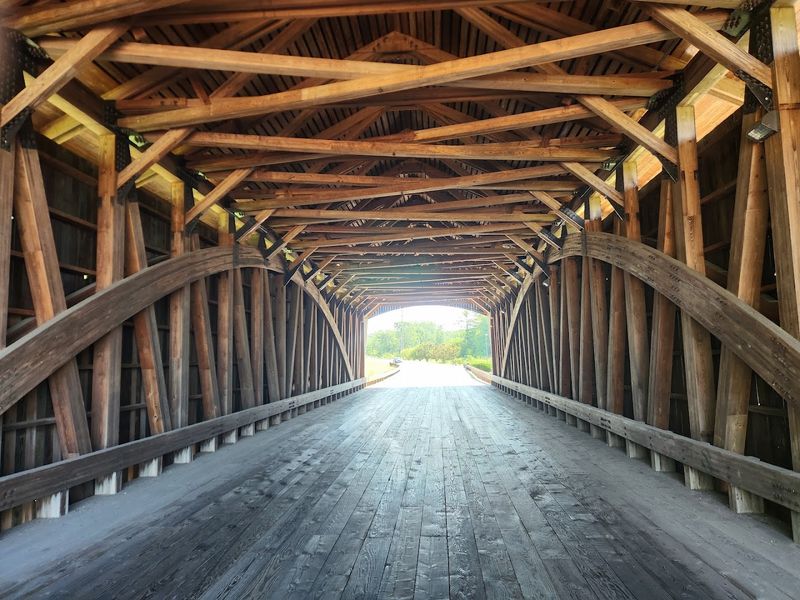
West of Princeton, Captain Swift Covered Bridge proves that newer does not have to mean bland. Completed in 2007, it takes clear inspiration from classic American wooden bridge design and delivers the kind of scenic crossing that road trippers immediately notice.
The setting over Bureau Creek, paired with open countryside, gives the bridge room to breathe and keeps the view clean. Its standout claim is simple and memorable: this is the only two-lane covered bridge in Illinois.
That feature changes the visual impact, because the bridge reads as substantial rather than quaint, with enough width to feel impressive even before you learn anything about it.
Drive through, then circle back on foot if possible, because the exterior lines and creekside perspective are just as rewarding as the passage inside.
This stop works especially well as part of a broader Bureau County outing. The nearby historic Red Covered Bridge gives you a nice contrast, so you can compare an homage to traditional design with another well-known local crossing in the same general area.
For travelers who like building a route with multiple stops instead of one destination, that pairing is a real advantage.
The bridge also photographs well in changing weather. Under bright sun, the geometry of the siding and roofline stands out sharply, while overcast skies bring out the texture of the wood and the softer greens around the creek.
Captain Swift may not be a 19th-century survivor, but it brings strong visual appeal, easy access, and enough personality to earn a place on any Illinois covered bridge list.
5. Historic Thompson Mill Covered Bridge (Cowden)
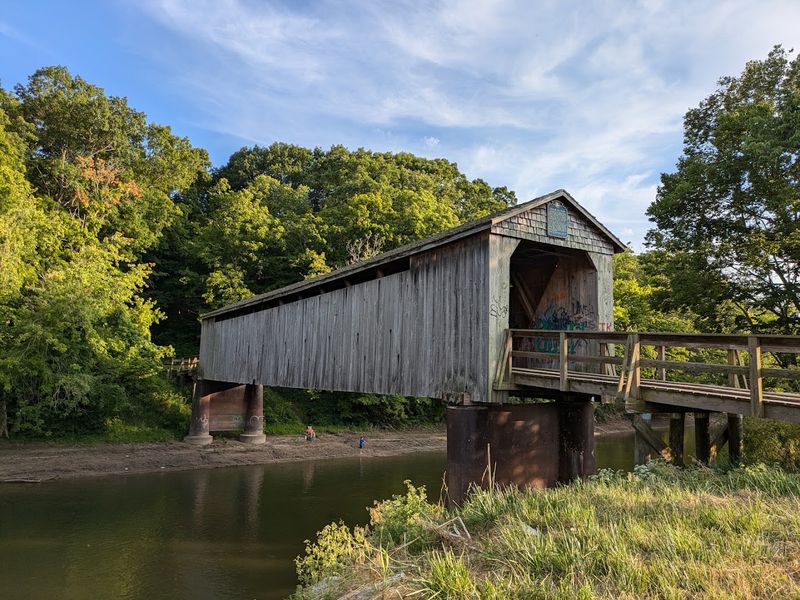
Near Cowden, the Historic Thompson Mill Covered Bridge has a wonderfully narrow profile that gives it instant character. Dating to 1868, it is one of Illinois’ surviving historic covered bridges and is noted as the narrowest in the state.
That slim shape is not a gimmick, either – it sharpens your sense of the bridge as a working piece of 19th-century engineering built for a different era.
The bridge crosses the Kaskaskia River and is now open to pedestrians, which makes the visit more intimate than a drive-through experience.
Without traffic to compete with, you can focus on the Howe truss structure, the joinery, and the compact proportions that set this bridge apart from larger spans elsewhere in Illinois. Every step reveals another small detail, from the rhythm of the interior framing to the changing light on the boards.
Its countryside location strengthens the appeal. You are not arriving in the middle of a busy commercial district or a heavily programmed attraction, but in a quieter landscape where the bridge remains the clear focal point.
That setting suits the structure well, because its charm comes from craftsmanship and context rather than spectacle.
Give yourself time to approach from more than one side if conditions allow. The exterior view over the river, followed by a slow walk through the covered interior, creates a fuller sense of how this bridge was built and why it still matters.
Thompson Mill Covered Bridge is an excellent reminder that smaller scale can produce the strongest impression, especially when preservation and setting work together this naturally.
6. Historic Robert Parker Covered Bridge (Long Grove)
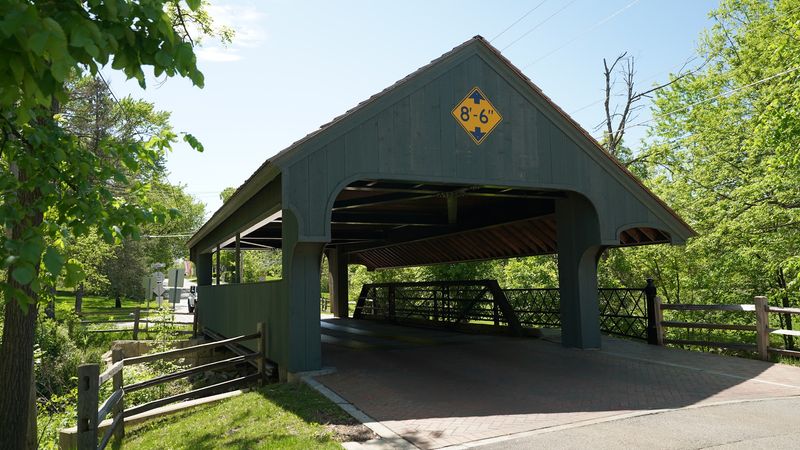
In Long Grove, the Historic Robert Parker Covered Bridge works as both landmark and introduction. It sits at the gateway to the village’s downtown, so your first impression of the area is tied directly to this recognizable wooden span.
That placement gives the bridge unusual energy compared with more isolated rural examples, because here it becomes part of the rhythm of shopping, festivals, and seasonal events.
The underlying bridge dates to 1906, while the wooden cover was added in the 1970s to protect it. That layered history gives the site its own distinct story, combining an earlier structure with a later design choice that has since become inseparable from Long Grove’s identity.
Instead of treating the cover as an afterthought, most visitors experience the bridge exactly as the village intends: as an emblem of place.
This is also one of the easiest covered bridge stops to pair with food, browsing, and a walkable downtown. You can admire the bridge, take photos, and then roll directly into the rest of the village without needing to relocate your whole day.
Seasonal decorations and community events often add visual texture, which means the bridge can look noticeably different from one visit to the next.
For the best experience, do not isolate the bridge from its surroundings. Stand back far enough to include storefronts, streetscape details, or festival color when available, because that context explains why this bridge has become such a recognizable northern Illinois image.
Robert Parker Covered Bridge may differ from the state’s older rural spans, but its mix of history, function, and local identity gives it lasting appeal.
7. Historic Oquawka Wagon Covered Bridge (Gladstone)
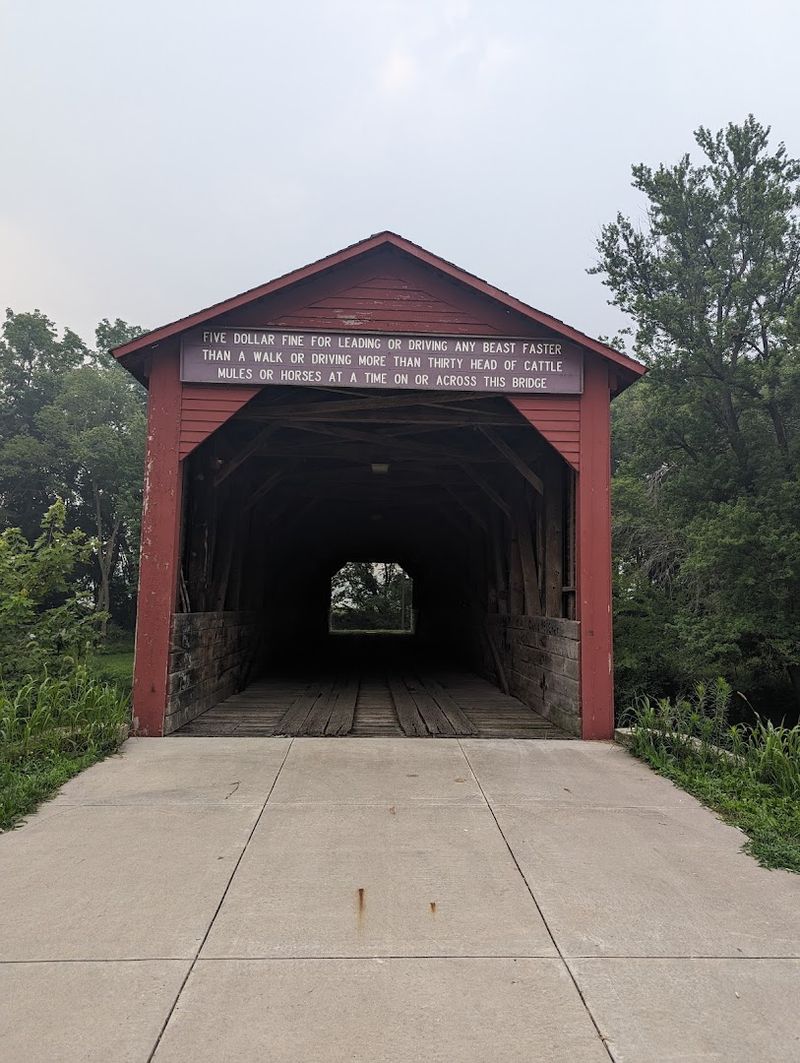
Near Gladstone, the Historic Oquawka Wagon Covered Bridge delivers the kind of scene that makes you pause before crossing. Built in 1866 and listed on the National Register of Historic Places, it stands as one of Illinois’ oldest covered bridges with real 19th-century roots.
Today it serves pedestrians within a quiet park, which gives visitors a calmer, closer encounter with the structure. The restored Burr truss construction is the star here, and the bridge rewards slow looking. From the outside, the form is clean and balanced against Henderson Creek and the surrounding trees.
Inside, the timber framework creates a repeating pattern of lines and shadows that turns a short walk into a much richer visual experience.
The park setting adds practical appeal without overwhelming the bridge itself. Picnic areas and peaceful creek views make this an easy stop for travelers who want a break from the road, and the extra space means you can linger instead of snapping one photo and moving on.
Because the bridge is set within a quieter landscape, the details stand out more clearly: the aging wood, the geometry of the truss, and the modest scale of the crossing.
Try visiting when the light is low and warm, when the wood picks up deeper color and the creekside setting softens around it.
Oquawka Wagon Covered Bridge offers one of the strongest combinations of history, restoration, and accessibility in the state, making it an especially satisfying destination for anyone tracing Illinois through its surviving bridges rather than through highway exits and downtown skylines.
Share this story