Some of Indiana’s most memorable destinations aren’t defined by big attractions but by the feeling that time moves a little differently once you arrive. Tucked among rolling farmland, winding rivers, and quiet back roads, these villages preserve historic architecture, locally owned shops, artisan traditions, and welcoming main streets that have changed remarkably little over the decades.
Whether you’re browsing antique stores, exploring restored landmarks, enjoying homemade treats, or simply soaking in the slower pace, each community offers an authentic glimpse into Indiana’s past. These 9 villages prove that some of the state’s richest experiences are found where history remains part of everyday life.
1. Metamora
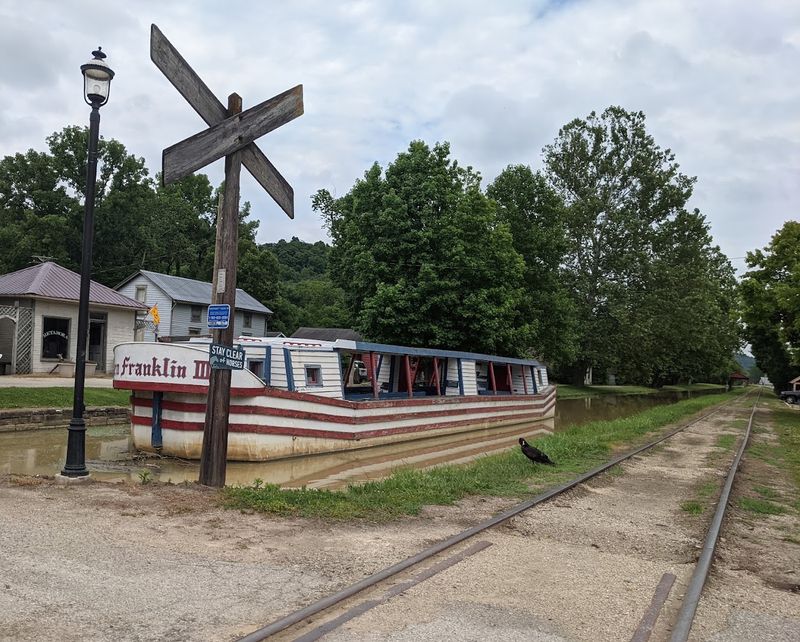
Metamora delivers the strongest canal-era mood in Indiana without needing much imagination from you. The streets are lined with preserved nineteenth-century storefronts, and nearly every view pulls your eye toward weathered wood, old brick, and slow-moving water.
It is the kind of place where a simple walk between shops can feel pleasantly disconnected from modern pace. The canal is the center of the experience, and the famous wooden covered aqueduct gives the village a striking visual signature.
Seeing that structure beside the water makes the setting stand apart from other historic districts that rely mostly on architecture alone. Here, engineering, commerce, and daily life from another era seem to share the same frame.
You can browse artisan stores, watch the grist mill, and linger near the canal long enough to notice the village settle into its own rhythm.
The Whitewater Valley Railroad adds another layer of period character, especially when rail sounds drift through an otherwise quiet day. Even with changes to state operations at the historic site, the village itself remains active and inviting.
That continued life matters because Metamora does not read like a sealed museum piece. Local businesses still open their doors, visitors still arrive looking for old Indiana, and restoration efforts suggest the story is continuing rather than ending.
The result is a place with real texture, not just historical labels. For travelers chasing a village that seems suspended between preservation and everyday use, Metamora lands near the top of the list.
It offers craft shops without losing grit, scenery without looking polished beyond recognition, and history that is easy to notice without a guide in hand. Spend an afternoon here and the usual markers of time start to feel strangely irrelevant.
2. Shipshewana
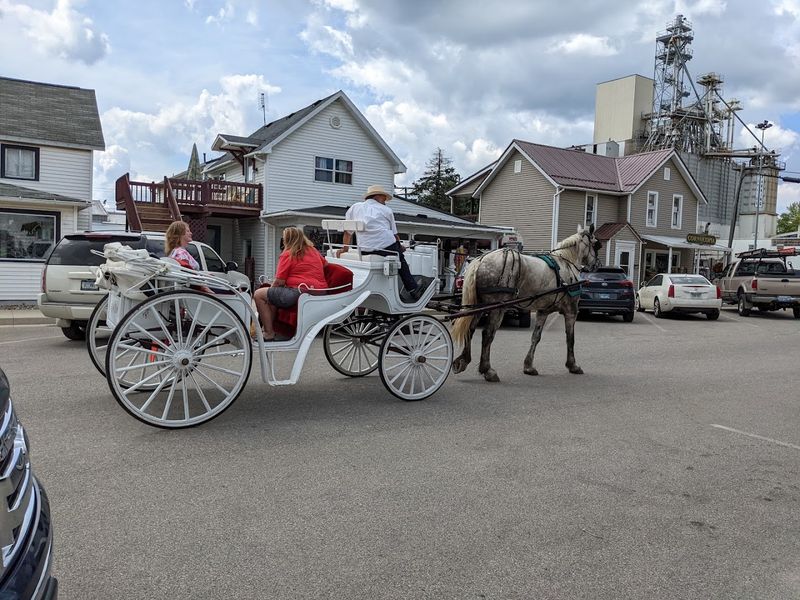
Shipshewana runs on a different tempo, and that is obvious before you even park the car. Horse-drawn buggies share the roads, farms spread beyond the commercial strip, and storefronts focus on useful handmade goods instead of quick novelty.
The village gives you a close look at a tradition-minded way of life that still shapes the day from morning to evening.
The local shopping scene helps tell that story. Furniture makers, quilt sellers, bakeries, and small specialty stores put craftsmanship front and center, so browsing here feels more grounded than rushed.
You are not just scanning shelves for souvenirs; you are seeing the kinds of items that connect labor, skill, and household life.
The famous flea market adds energy, but the setting never loses its practical, old-school backbone. One minute you might be walking past rows of vendors, and the next you are noticing simple farm fields and buggies moving at their own steady pace.
That contrast keeps Shipshewana interesting because it mixes a busy visitor draw with a culture that does not appear designed around tourists.
Food is part of the appeal too, especially when bakeries and longstanding local restaurants enter the picture. A meal here can feel refreshingly straightforward, with hearty dishes, pies, and baked goods that fit the broader village character.
Even the busiest corners tend to feel tied to routine, family, and work rather than trend chasing. Shipshewana stands out because tradition is not a decorative layer applied for effect. It is visible on the roads, in the products for sale, and in the surrounding landscape that frames the village.
If you want an Indiana destination where craftsmanship and custom still shape everyday scenes, this one makes a very convincing case.
3. Madison
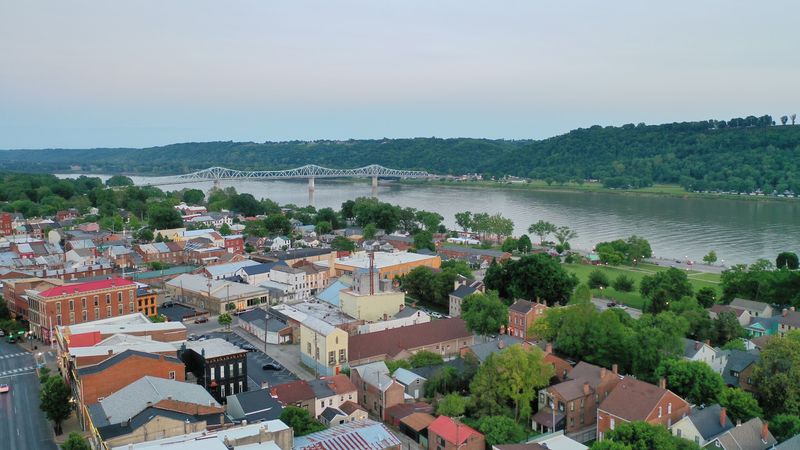
Madison has the kind of downtown that makes you slow down block after block just to keep looking up. Architectural detail is everywhere, from restrained Federal lines to Greek Revival forms and ornate Italianate facades that give the streets real depth.
Pair that with the Ohio River, and the town gains a scenic edge that many historic places never manage to match.
The scale matters here. More than a handful of preserved buildings, Madison offers an extended historic district that keeps the visual story going for a long stretch, so the experience feels immersive instead of fragmented.
You are not bouncing between isolated landmarks; you are moving through an older urban fabric that still holds together remarkably well.
Lanier Mansion, antique stores, churches, and riverfront spaces all contribute different textures without competing for attention. One corner might read stately and formal, while the next feels commercial, residential, or quietly civic.
That variety keeps the town from turning into a single-note architecture lesson. Madison also works because it remains easy to navigate on foot. You can wander into shops, pass handsome rows of historic buildings, then drift toward the water for a wider view that resets the whole scene.
The river does not just decorate the town; it helps explain why this place developed with such confidence in the first place.
Among Indiana communities with early-nineteenth-century roots, Madison offers one of the most complete visual experiences. It looks substantial, lived-in, and deeply connected to its past without appearing frozen behind ropes.
For anyone drawn to brick, ironwork, storefront windows, and long streets that still carry the outline of another century, Madison delivers a rich and memorable walk.
4. Vevay
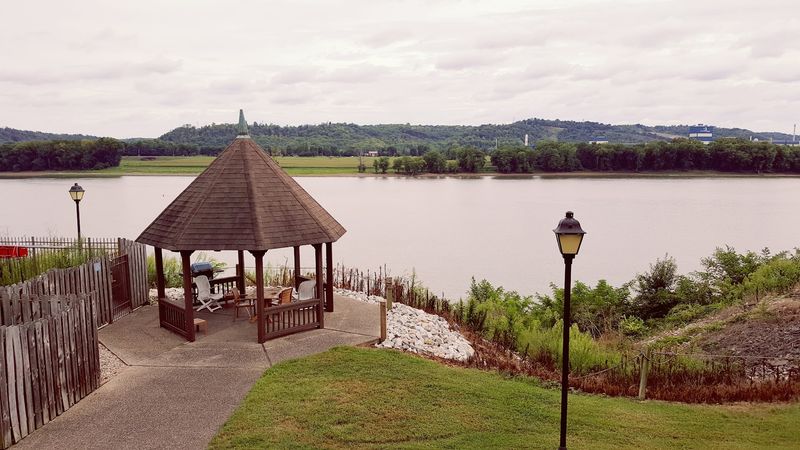
Vevay brings a different flavor to Indiana history, and the Swiss heritage gives the village its own distinct character. Instead of blending into a standard river town template, it carries traces of immigrant identity through architecture, local memory, and long-running traditions.
That difference comes through quickly when you start walking its quieter streets. The setting along the Ohio River adds another layer, but Vevay is strongest when you focus on the details close at hand.
Historic homes, older civic buildings, and street views with a slightly tucked-away quality make the village feel more intimate than some larger destinations. It has presence without needing a dramatic scale.
References to early winemaking help set Vevay apart from elsewhere in the state. Even if you arrive knowing little about that history, the story adds texture to the village and helps explain why the community developed such a distinct identity.
It is one of those places where local heritage is specific enough to stay memorable after the trip ends. A stop at the Switzerland County Historical Museum can deepen the visit, especially if you want context for the buildings and river setting around you.
After that, the best move is often simple wandering. Antebellum homes, quiet blocks, and open views near the river encourage a slower pace that suits the town.
If your timing lines up with the Swiss Wine Festival, the heritage becomes even more visible in public life. Even outside festival days, though, Vevay keeps its old-world personality in view through its built landscape and community story.
It is a compact place, but not a slight one, and that combination makes it especially appealing for travelers who prefer depth over spectacle.
5. Corydon
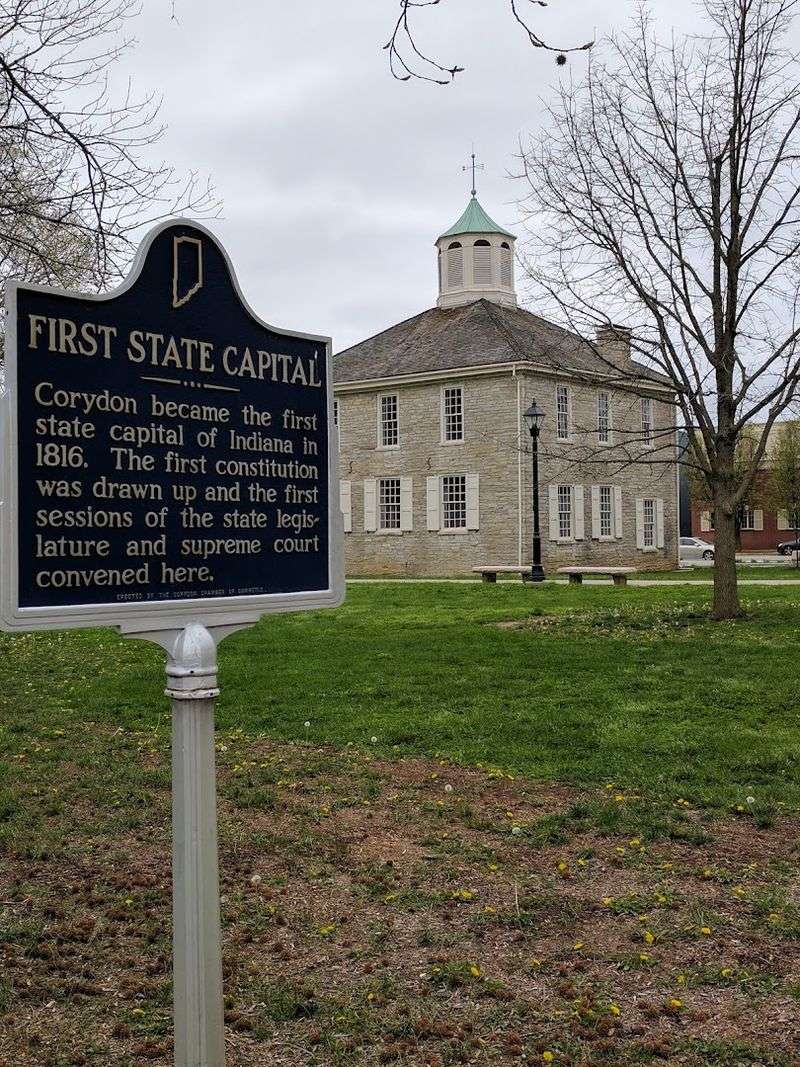
Corydon carries the weight of Indiana beginnings in a way few places can match. As the state’s first capital, it places foundational history right in the middle of an approachable village setting instead of hiding it behind distant monuments.
You can read the town through its landmarks almost as easily as through any sign or exhibit. The original State Capitol Building is the obvious focal point, but it is far from the whole story.
The Constitution Elm memorial, Governor’s Headquarters, and the courthouse square work together to create a strong sense of early nineteenth-century civic life. Walking between them gives the visit a natural sequence, almost like moving through chapters.
What keeps Corydon from feeling overly formal is the mix of working shops and hands-on local culture around those landmarks. Artisan businesses fit comfortably into the historic setting, and glassblowing demonstrations add movement, heat, and craft to a place already rich with context.
That contrast between government history and everyday making gives the town more personality than a purely commemorative site.
The square itself helps a lot. Historic buildings frame public space in a way that still feels legible and inviting, so you are never far from the visual cues that make Corydon special.
It is easy to imagine how residents and visitors would have gathered, traded news, and handled the business of a young state here.
Corydon succeeds because it treats history as part of the town’s ongoing character, not just its headline. The important sites are clear, the setting remains attractive, and the local shops keep the experience from becoming stiff or overly academic.
For anyone interested in Indiana’s earliest chapter, this village offers a rare chance to stand close to where that story first took shape.
6. Oldenburg
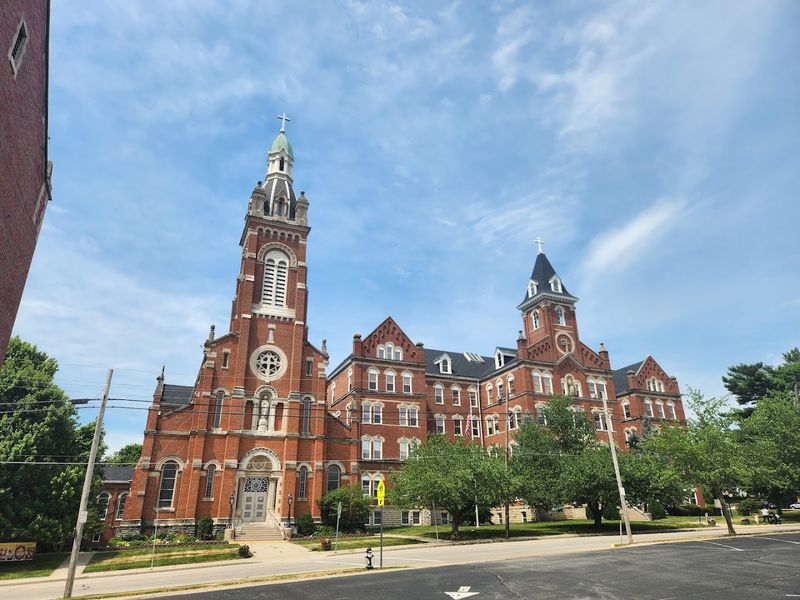
Oldenburg makes a strong first impression because the skyline rises in church spires instead of office buildings or water towers. That nickname, the Village of Spires, fits once you see how thoroughly religious architecture shapes the streetscape.
The village’s German Catholic roots are not tucked into a museum display; they are written across nearly every block.
Brick streets, historic homes, and carefully kept buildings give Oldenburg a compact but unusually cohesive look. There is a visual consistency here that many older towns have lost over time.
Even short walks reveal craftsmanship in masonry, proportions, and decorative details that point back to nineteenth-century settlement.
The European influence is part of the draw, yet the village does not come off like a stage set borrowing from somewhere else. Its churches, homes, and public spaces feel integrated, as if the whole place developed with a shared sense of form and purpose.
That makes the setting satisfying whether you are focused on architecture, heritage, or simply a good main-street stroll.
Food adds another angle. A meal centered on German fare fits naturally here, reinforcing the cultural thread that runs through the village rather than distracting from it.
Combined with the built environment, that culinary note helps the visit feel rounded and place-specific. Oldenburg is especially appealing for travelers who notice how much identity can survive in small details.
Street surfaces, rooflines, church towers, and long-held traditions all contribute to a village that remains strikingly coherent.
It is not loud about its history, and that restraint is part of the appeal. Instead of overexplaining itself, Oldenburg simply lets the buildings and the streets do most of the talking.
7. Zionsville
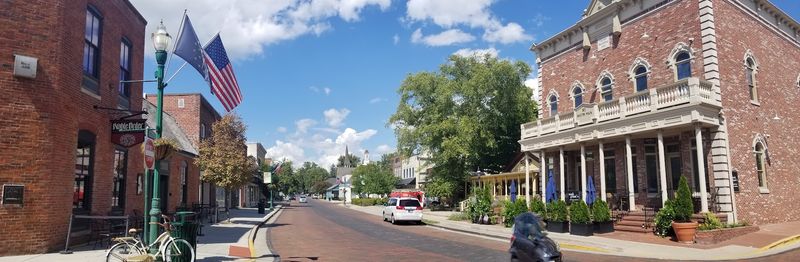
Zionsville proves that proximity to a major city does not have to erase village character. Just minutes from Indianapolis, it still presents a downtown anchored by brick paving, preserved storefronts, and a scale that encourages strolling rather than rushing through.
The shift from metro momentum to small-town texture happens faster than you might expect. Main Street does most of the heavy lifting, and it does it well.
The brick surface changes the entire visual rhythm of the corridor, making even ordinary storefront views look more rooted and deliberate.
Independent boutiques and restored commercial buildings keep the district active without sanding away its historic edge.
The appeal here comes from balance. Zionsville is polished, but not sterile, and it remains easier to enjoy because history is folded into daily use instead of being separated into a single preserved pocket.
Shops, cultural stops, and well-kept homes all contribute to a village scene that feels stable and continuous. The SullivanMunce Cultural Center adds context for anyone wanting a closer look at local art and history.
After that, simply wandering residential streets can be just as rewarding, especially where mature trees and maintained older houses extend the historic mood beyond the commercial core.
It is a place where the edges of downtown matter almost as much as the center. For travelers who like their historic districts tidy but still human-scaled, Zionsville lands in a sweet spot.
You get charm without kitsch, access without chaos, and plenty of visual cues that link the present to an earlier Midwest town pattern.
That combination makes it one of Indiana’s easiest time-shift experiences, especially when you want old character without leaving modern convenience completely behind.
8. New Harmony
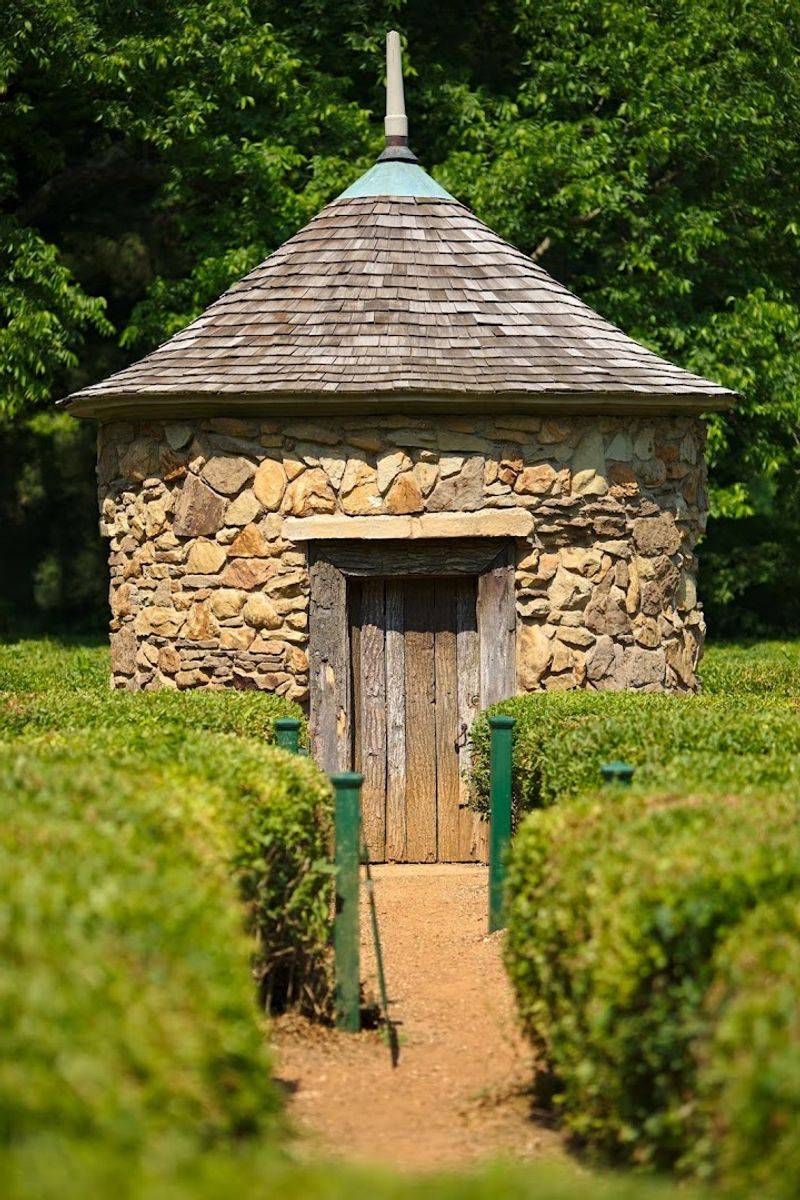
New Harmony stands apart immediately because its story is bigger than a single era or architectural style. The village carries the layered legacy of the Harmonists and Robert Owen, so the experience blends religion, social experiment, design, and community planning in one compact place.
That unusual background gives every street and garden a little extra intellectual charge. Unlike busier historic towns, New Harmony often reads as quiet and reflective.
Preserved buildings are part of the appeal, but so are the open spaces, walking paths, and carefully arranged public areas that create room to think.
You are not only looking at history here; you are moving through ideas that once tried to reshape everyday life. The Roofless Church and Harmonist Labyrinth add strong visual anchors without overwhelming the village’s calmer mood.
They invite lingering rather than quick box-checking, and they make the destination memorable in a way that standard landmark lists rarely do. Art galleries and small cultural spaces deepen that effect by tying past idealism to present creativity.
New Harmony’s historic structures are important, yet the village is just as compelling because of how intentionally it is laid out. The landscape feels considered, almost conversational, as if buildings, trees, gardens, and paths are meant to interact.
That design quality gives the place uncommon coherence. Indiana’s oldest continuously operating library adds one more reason to take the village seriously as a center of thought as well as preservation. Few towns manage to feel this peaceful while also carrying such dense historical meaning.
New Harmony will not hit you with noise or spectacle. Instead, it draws you in through order, ideas, and a setting where the past still seems engaged in a quiet debate with the present.
9. Nashville, Indiana
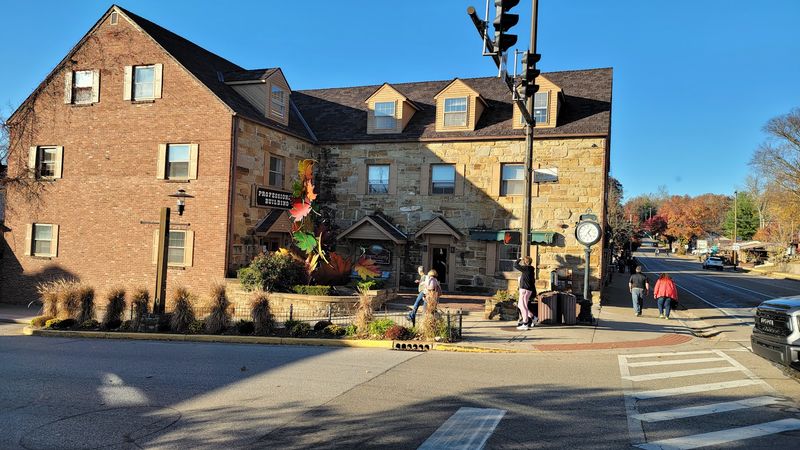
Nashville brings a creative twist to the idea of an old Indiana village. Historic storefronts line the downtown, but the real energy comes from the long-running presence of painters, potters, woodworkers, musicians, and other makers who have shaped the place for generations.
That artistic backbone gives the town a character that is lively without feeling new or manufactured. The Brown County Art Colony helped set the tone early, and you can still sense that legacy in galleries, studios, and shop windows across town.
Instead of chain retail repetition, the streets lean toward handmade work, local style, and businesses with individual personality. That makes wandering downtown more interesting because nearly every stop offers a slightly different voice.
Old-fashioned candy shops and rustic inns keep the village rooted in a classic small-town travel mood, but Nashville avoids becoming a one-note nostalgia piece.
The arts scene keeps it moving, adding color and unpredictability to the historic frame. One storefront may be all wood carvings, the next filled with paintings, pottery, or live music drifting out the door.
Just beyond downtown, Brown County State Park expands the sense of stepping into another time. Stone structures built by the Civilian Conservation Corps, along with broad forest views, bring a rugged historic dimension that complements the village center.
The transition from creative main street to wooded parkland feels natural rather than abrupt. Nashville works so well because it joins preservation with production.
Buildings from the past remain useful, crafts are still made and sold, and the surrounding landscape reinforces the older tempo instead of competing with it.
If you want a village where history wears paint on its sleeves, smells faintly of candy and pine, and still has room for working artists, Nashville makes a strong final stop.
Share this story