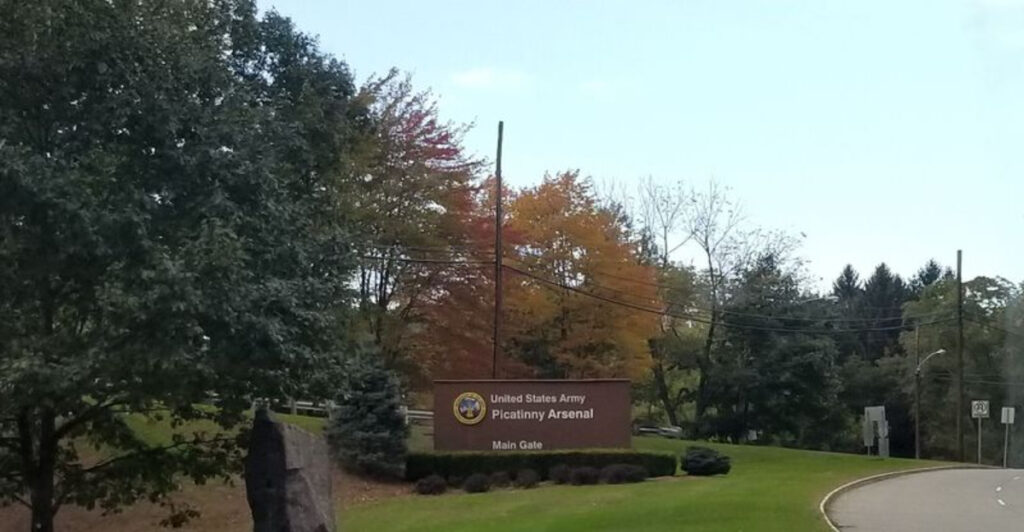
Drivers passing through Rockaway Township on Route 15 encounter a curious reminder that this corner of Morris County is unlike anywhere else in New Jersey.
Beyond the guarded entrance and rows of trees lies Picatinny Arsenal, a sprawling military installation whose story reaches from Revolutionary War ironworks to modern weapons laboratories.
The federal government officially established the site in 1880, yet its industrial roots stretch back much further.
Since then, Picatinny has stored gunpowder, manufactured artillery shells around the clock, survived one of America’s most devastating ammunition explosions, and produced an accessory-mounting system recognized around the world.
Today, thousands of engineers, scientists, and support employees work on technology that rarely becomes visible outside military circles. That creates a striking contrast with the surrounding community, where wooded hills, reservoirs, suburban neighborhoods, and shopping centers fill the landscape.
Behind the fences, however, more than two centuries of American industry and military innovation continue to unfold on the same historic ground.
Picatinny Arsenal Has Anchored Rockaway Township Since 1880
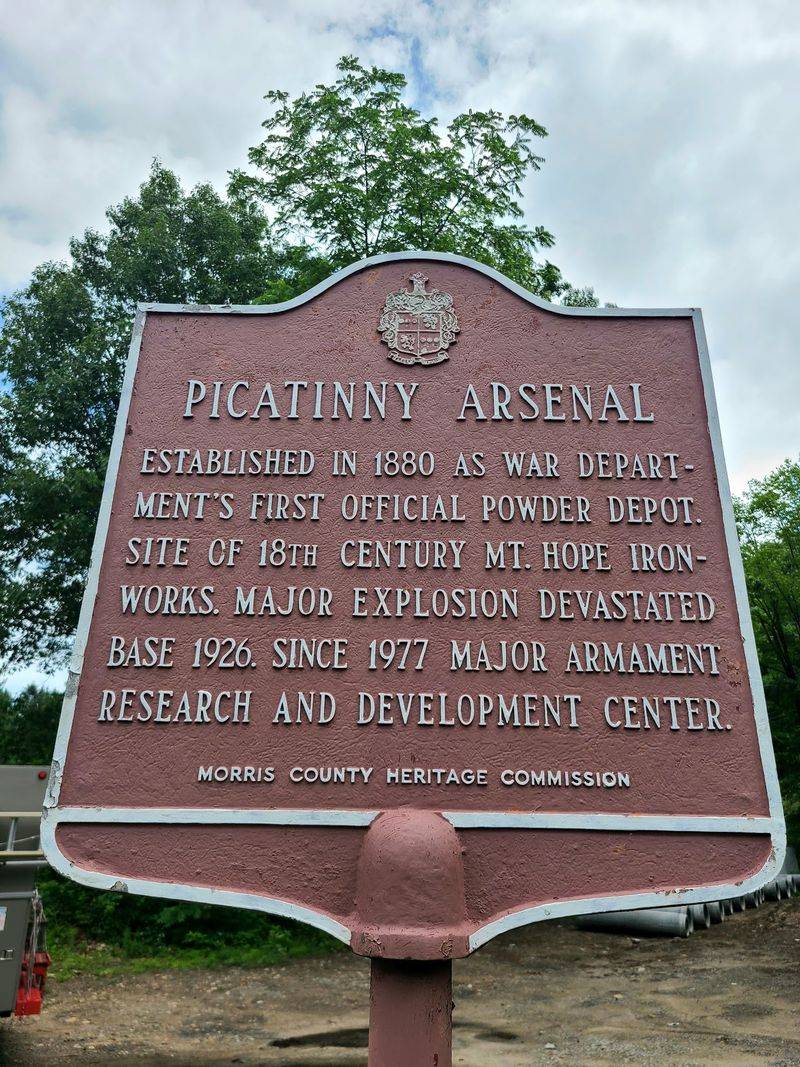
The federal government’s first purchase for the future arsenal was anything but modest. In June 1880, George E.
Righter sold 1,195.8 acres surrounding Lake Picatinny to the United States for $35,874. Additional transactions soon expanded the government property to more than 1,866 acres, bringing the initial land bill to $62,750.
On September 6 of that year, the War Department formally created the Dover Powder Depot. Just four days later, officials renamed it the Picatinny Powder Depot, borrowing a name already associated with the lake and surrounding area.
Location mattered enormously when choosing a place to store explosives. Rockaway Township’s hills created natural barriers that could help contain accidental blasts, while its relative isolation kept large quantities of powder away from heavily populated areas.
Rail connections also made it possible to move fuel, raw materials, equipment, and ammunition through northern New Jersey. Picatinny eventually maintained as many as 49 miles of narrow- and standard-gauge railroad track within the installation.
Its responsibilities grew steadily. The depot became Picatinny Arsenal in 1907, the same year the Army established its first powder factory there.
A weaponry sciences school followed in 1911, giving officers specialized instruction in the increasingly technical world of ammunition and explosives. During World War I, testing and control laboratories appeared on the grounds, and an experimental plant began designing artillery ammunition in 1919.
By 1921, Picatinny was responsible for experimental work involving fuzes, the mechanisms that initiate a munition’s explosion. The installation continued expanding until it reached roughly 6,400 acres.
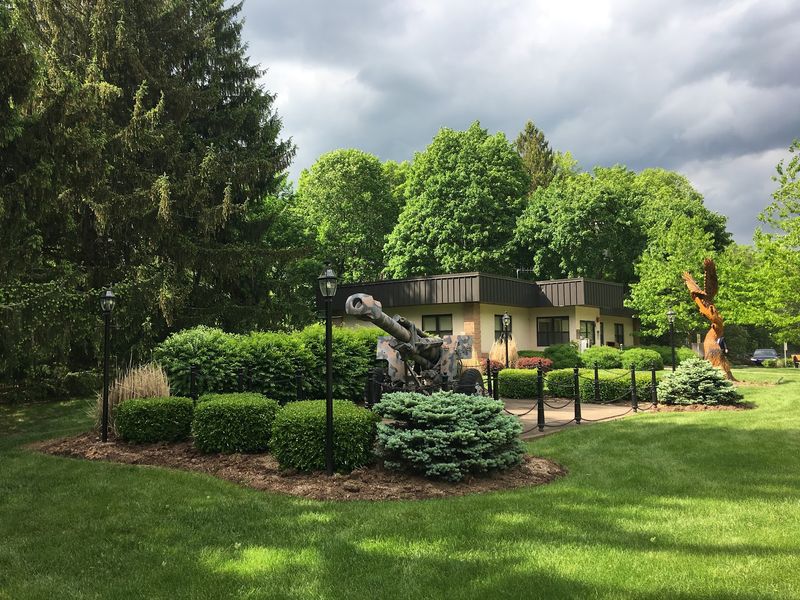
Its historic Cannon Gates, assembled in the 1880s using upright 8-inch Columbiad cannons, still serve as a memorable symbol of the post. For Rockaway Township, Picatinny became much more than a fenced military property.
It provided generations of local jobs, shaped nearby roads and neighborhoods, and placed this otherwise quiet Morris County community on the national defense map.
Colonial Ironworks Gave the Site Its Industrial Roots
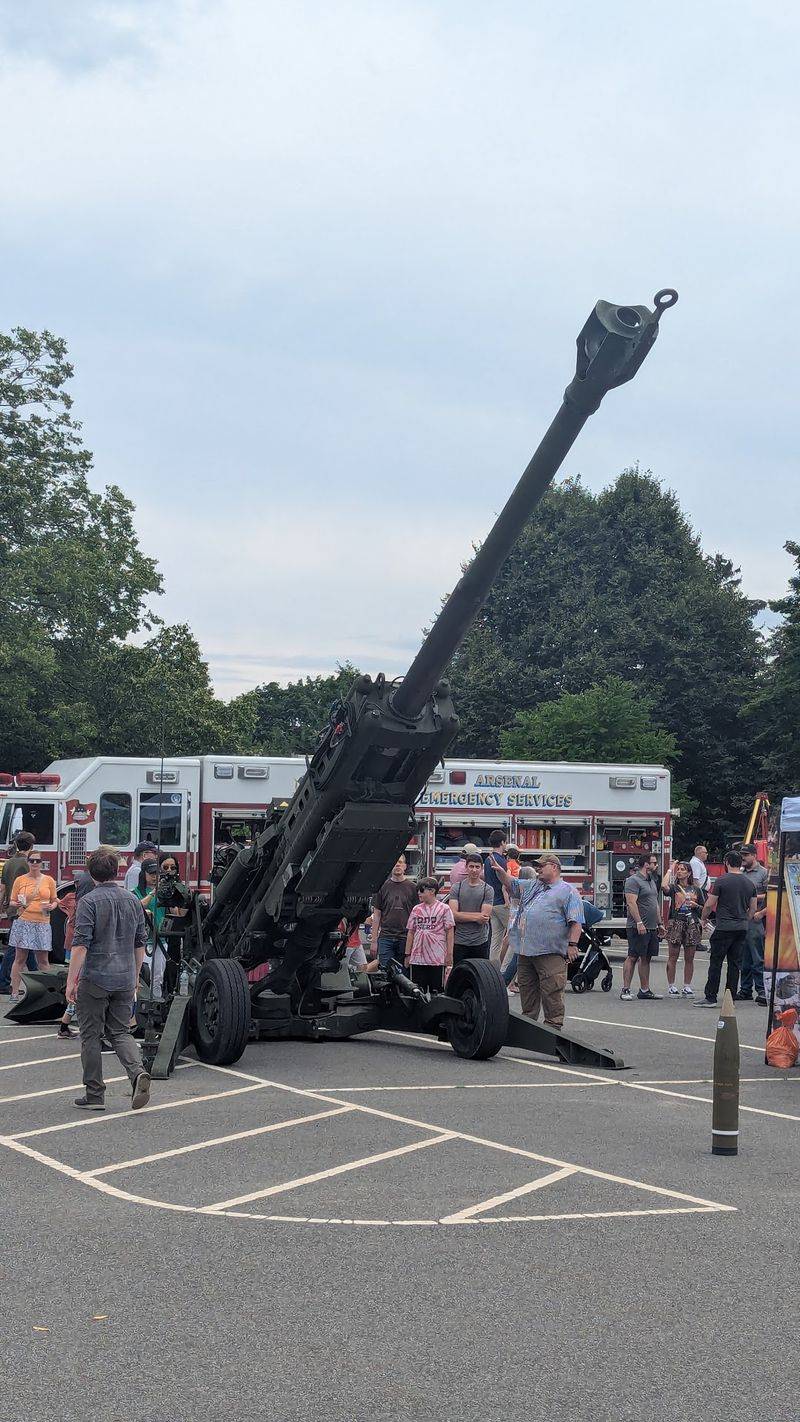
Long before laboratories occupied the property, the clang of ironworking echoed through this valley. The Middle Forge was operating here by the middle of the 18th century as part of the Mount Hope iron industry, which drew on Morris County’s rich ore deposits, forests, and waterways.
The region had nearly everything an ironmaster needed, including ore for smelting, timber that could be converted into charcoal, and streams capable of powering heavy machinery. During the American Revolution, local ironworks helped support George Washington’s army with desperately needed materials and munitions.
Morris County was already an industrial engine decades before anyone imagined a federal arsenal at Picatinny. The Middle Forge transformed rough iron into more useful forms, preparing it for the skilled hands that made tools, hardware, and military supplies.
That work established a connection between the land and national defense more than a century before the War Department arrived. When the federal government purchased the property in 1880, remnants of the old forge remained.
Historic tools and part of a massive forge hammer were reportedly found at the site, tangible evidence that the valley’s manufacturing story did not begin with gunpowder magazines. Those pieces were later incorporated into a monument near Building 151.
Flanked by Civil War-era cannons, the memorial connects three distinct chapters of American history in one compact space. Another quiet survivor is the Walton Burial Ground, a family cemetery preserved inside the installation.
It recalls the farmers, ironworkers, and families who lived here before military buildings spread across the valley. Even the name Middle Forge Tract continued appearing in records connected to Picatinny’s earliest federal land purchases.
That continuity makes the arsenal unusual. Its mission has changed dramatically, but the property has been associated with metalworking, military supply, and technical problem-solving for roughly 250 years.
Colonial workers shaped iron with water-powered hammers, while today’s engineers use advanced manufacturing, computer modeling, and precision testing. The tools could hardly be more different, yet the basic idea remains familiar.
This Morris County valley is still a place where raw materials and clever thinking become equipment intended for national defense.
World War II Turned the Arsenal Into a Round-the-Clock Operation
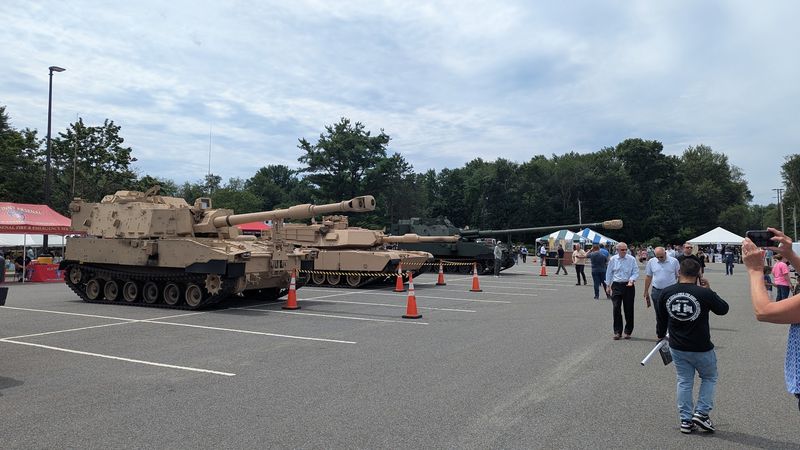
By the early 1940s, the pace inside Picatinny bore little resemblance to ordinary life beyond its gates. The United States needed bombs and artillery shells in staggering quantities, and the arsenal was one of the relatively few government installations equipped to manufacture them.
Employment climbed to approximately 18,000 people, while three shifts kept production moving 24 hours a day. When one crew went home, another stepped in, and the machinery continued running.
An expansion in 1941 brought additional property between the Cannon Gates and what became the main entrance near Route 15. That purchase included Spicertown, a small farming settlement in Rockaway Township.
Several houses acquired during the expansion survived and were later used as military residences, leaving an unusual pocket of local domestic history within a major defense installation. Picatinny’s wartime contribution involved far more than loading standard ammunition.
Engineers developed a delay fuze used in skip bombing, an attack method in which aircraft released bombs at low altitude so they would skip across water toward ships or other targets. The arsenal also worked on specialized bombs designed for attacks against dams and oil facilities.
Production methods created or refined at Picatinny could then be transferred to private manufacturers, helping factories elsewhere increase their own output. The human scale of the operation is difficult to miss.
Thousands of workers handled demanding jobs while operating under wartime pressure and strict safety requirements. The installation functioned like a self-contained industrial city, complete with production buildings, warehouses, laboratories, transportation lines, emergency services, and its own internal rail network.
Bombs and large-caliber artillery shells moved through a landscape that had been farmland within living memory. Picatinny did not simply return to its old routine after 1945.
With mass production no longer dominating every shift, the arsenal refocused on research and development. Its wartime experience had proved that the facility could solve urgent technical problems as well as manufacture ammunition.
That reputation carried into the Korean War, when Picatinny contributed an improved bazooka and an illuminating rifle grenade, and later into Vietnam, when it developed a family of 40mm ammunition for grenade launchers and helicopter gunships.
The Lake Denmark Explosion Changed Military Safety Standards

A summer thunderstorm turned catastrophic on July 10, 1926. Lightning struck the Lake Denmark Naval Ammunition Depot, which occupied property beside Picatinny, and ignited a chain of fires and explosions that continued into the following day.
Approximately 2.5 million pounds of explosives detonated, destroying scores of buildings and killing 19 people. The blasts were so powerful that windows shattered miles from the installation and the shock was reported far beyond Morris County.
Lake Denmark had begun operating after the Army transferred 315 acres near the lake to the Navy in 1891. That created the unusual arrangement of Army and Navy ammunition facilities sharing the same valley.
Both benefited from the area’s protective hills and limited development, but the neighboring storage areas also placed enormous quantities of explosive material within reach of the same disaster. Once lightning ignited one storehouse, exploding shells and burning debris helped carry the destruction from building to building.
People in surrounding communities fled as the sky flashed and the ground shook. Debris landed well outside the depot, while smoke and fire made it difficult to determine when the danger had passed.
The incident became one of the worst accidental explosions associated with a United States military ammunition facility. Investigators concluded that the catastrophe was not simply an unavoidable act of nature.
The arrangement of the storage buildings, the quantity of explosives concentrated in individual locations, inadequate lightning protection, and insufficient separation between magazines all magnified the damage. The tragedy helped force major changes in the way military explosives were stored.
Newer magazines were spaced farther apart, surrounded by protective earthen barriers, and equipped with stronger lightning safeguards. Limits on how much material could be kept in one place also reduced the chance that a single accident would trigger another chain reaction of the same scale.
The Navy rebuilt Lake Denmark, but the property eventually returned to Army control in 1960. Memorials at Picatinny preserve the names and sacrifices connected with the explosion.
A century later, the disaster remains a somber part of Rockaway Township history and a reminder that modern ammunition safety rules were shaped by hard lessons learned in this New Jersey valley.
The Picatinny Rail Became an Innovation Used Around the World
One of the arsenal’s most recognizable inventions is small enough to hold in one hand. The Picatinny rail is the ridged mounting platform commonly seen on military rifles, where it provides a standard attachment point for scopes, night-vision equipment, lights, lasers, grips, and other accessories.
Its clean, practical design solved a problem that had frustrated soldiers, armorers, and manufacturers for years. Before the rail became standard, mounting systems varied between weapons and accessories.
A scope designed for one setup might require special rings, custom machining, or an entirely different bracket before it could be used on another. The lack of consistency made replacement and field modifications unnecessarily complicated.
In the early 1990s, mechanical designer Gary Houts worked with a Picatinny team to refine the dimensions of an existing commercial rail concept and make it reliable enough for military standardization. The design looks simple, but that simplicity depends on exact measurements.
Evenly spaced transverse slots allow accessories to lock into position and resist the movement caused by recoil. Standardized angles, widths, and tolerances mean a compatible accessory can be moved between weapons without requiring a fresh mounting system every time.
Picatinny engineers used measurements from multiple rail products, developed a consistent geometry, and tested the design to ensure equipment would fit as intended. The result was adopted in 1995 as MIL-STD-1913.
Its official designation is a mouthful, so the location where it was perfected supplied the name everyone remembered. Picatinny rail soon became common language within the defense industry.
Its influence spread well beyond a single rifle or branch of service. Variations of the rail appeared on machine guns, grenade launchers, shotguns, and other equipment, while law enforcement agencies, competitive shooters, hunters, and civilian manufacturers embraced the same basic standard.
Newer attachment systems have since entered the market, but the Picatinny rail remains widely used. For an installation associated with enormous shells and advanced explosives, this modest strip of precisely machined metal may be its most publicly recognizable contribution.
Plenty of people have handled one without realizing its name points directly back to Rockaway Township.
Cutting-Edge Weapons Research Keeps the Historic Arsenal Relevant Today
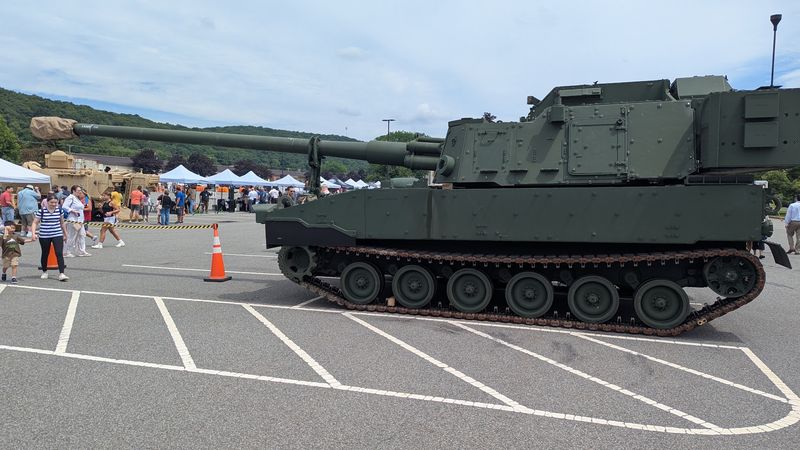
The old forge hammer and wartime rail lines belong to Picatinny’s past, but the installation is hardly frozen there. It now serves as the Army’s Joint Center of Excellence for Guns and Ammunition and is home to the U.S.
Army Combat Capabilities Development Command Armaments Center. More than 3,700 civilian engineers, scientists, and support personnel work across the broader Armaments Center organization, conducting research and guiding weapons technology from early concepts through testing, production, and long-term support.
Modern work covers a remarkable range of specialties. Teams study explosives, propellants, artillery, small arms, fire-control systems, advanced manufacturing, counter-drone defenses, and ways to make weapons more accurate and reliable.
Some projects involve dramatic hardware, but others focus on less visible improvements such as safer materials, lighter components, better software, or production methods that save time without sacrificing performance.
The arsenal’s employees were recognized in 69 United States patents between 2021 and 2025, a useful measure of how much original engineering still emerges from the site.
Recent efforts show how quickly the mission continues to evolve. Picatinny specialists have worked on automated fire-control technology capable of engaging drones while a vehicle is moving.
They have also developed the Picatinny Common Lethality Integration Kit, known as CLIK, an attempt to create a standardized interface for pairing payloads with uncrewed aircraft.
The concept follows the same practical logic that made the Picatinny rail successful by establishing a dependable standard so different pieces of equipment can work together safely.
That work unfolds on land where Revolutionary-era ironworkers once operated a forge and where wartime crews filled bombs on three shifts. Historic monuments, former village houses, laboratories, test areas, offices, and traces of old railroad infrastructure now share the same roughly 6,400-acre installation.
Few places illustrate changing military technology so clearly. Picatinny began as a powder depot, grew into a manufacturing powerhouse, and reinvented itself as a research center without leaving Rockaway Township.
Nearly 250 years after iron was first worked on the property and more than 140 years after the federal arsenal was established, invention remains the thread holding every era together.