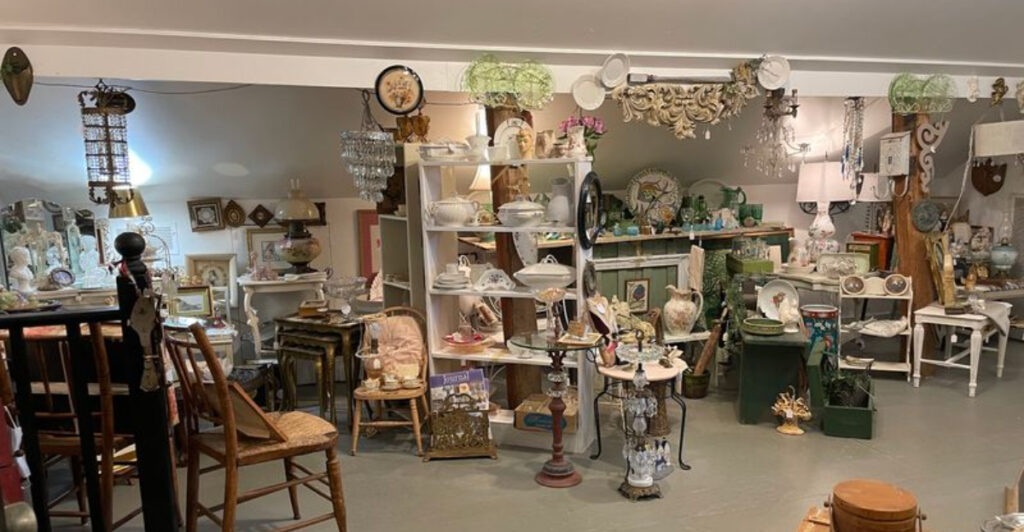
A hulking red gristmill from the 1840s stands just off Route 15 in Lafayette, and these days it is grinding out something very different from flour. Inside, roughly 23,000 square feet are devoted to antiques, collectibles, furniture, art, jewelry, toys, and assorted objects whose original purposes may require a little detective work.
This is the Lafayette Mill Antiques Center, where around 55 dealers fill the historic complex with enough vintage finds to turn a quick browse into a serious afternoon commitment. The main mill rises three floors, and the inventory changes often enough that even repeat visitors have reasons to slow down and look again.
One booth may resemble a tidy old dining room; the next might have advertising signs, delicate china, vintage lighting, or an object you have not seen since your grandparents’ house. It is big, wonderfully unpredictable, and exactly the sort of North Jersey place where curiosity tends to get rewarded.
Step Inside the Lafayette Mill Antiques Center
The building has been here far longer than the antiques business occupying it. Lafayette Mill Antiques Center operates inside an authentic 1840s gristmill at 12 Morris Farm Road in Lafayette Township, a small Sussex County community whose historic village grew around milling and industry along the Paulins Kill.
That history matters once you walk inside. Instead of shopping in a modern warehouse dressed up to look rustic, you are moving through a building that actually belongs to the era many antique collectors are trying to preserve.
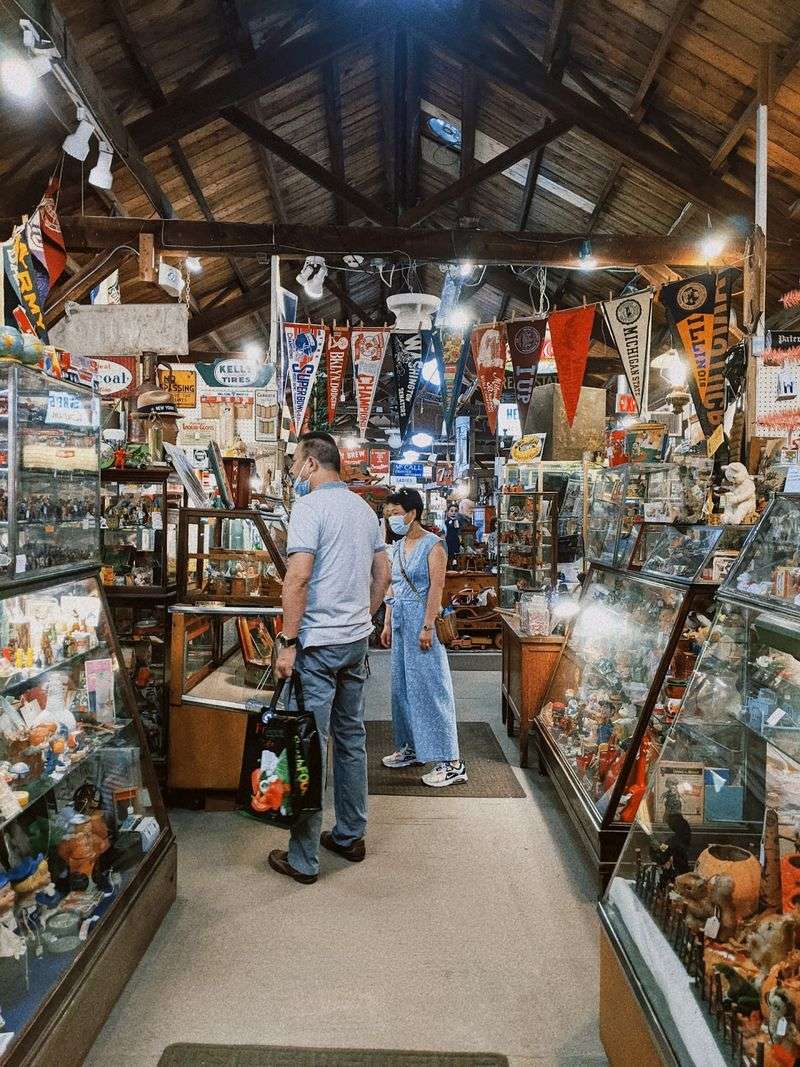
Old timber, the scale of the mill, and the arrangement of the rooms give the merchandise an unusually fitting backdrop. The center describes its displays as room-like settings, which is useful when you are looking at furniture or home décor and trying to picture how it might work outside an antique shop.
A chest, lamp, mirror, and painting grouped together make more sense than the same objects stacked along a warehouse wall. The scale is the other immediate surprise.
The center covers roughly 23,000 square feet and brings together about 55 dealers, so no single aesthetic takes over the building. One dealer might lean toward formal furniture and fine art, while another has folk pieces, old toys, advertising, jewelry, china, or sporting collectibles.
Merchandise is juried and changes frequently, meaning the selection is meant to stay more curated than a simple accumulation of secondhand goods. Even the practical details feel refreshingly sensible for a building this old: the mill is heated and air-conditioned, and there is on-site parking.
You get the visual character of a nineteenth-century gristmill without having to browse in nineteenth-century indoor temperatures.
Three Floors of Treasures Waiting to Be Discovered
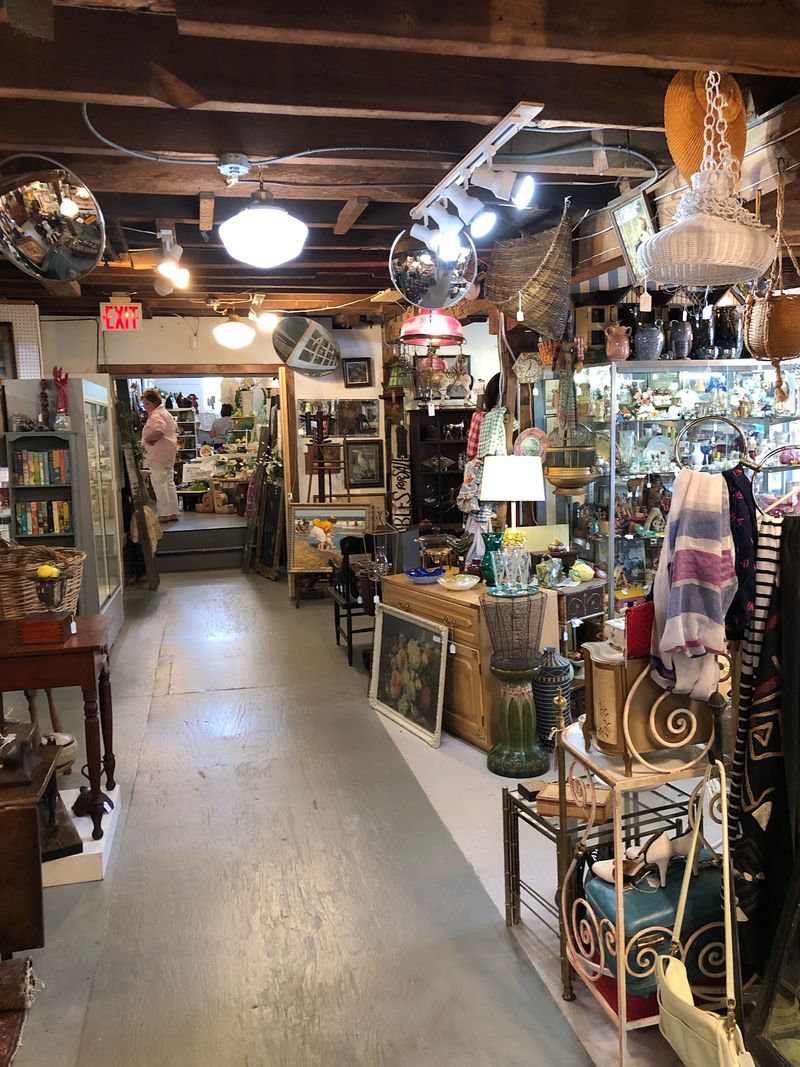
Start climbing and the scale of the place becomes much clearer. The main mill stretches across three floors, with independent dealers creating distinct spaces rather than one endlessly repeated retail display.
You can pass substantial wooden furniture and find yourself studying a case of jewelry a few minutes later, then turn again and run into old lighting, artwork, dolls, china, advertising pieces, or sporting collectibles. That variety is what keeps the size from becoming monotonous.
There is no single “antique store look” repeated from floor to floor. The inventory jumps between decades, materials, purposes, and price points, and the dealers arrange their own collections with different specialties in mind.
Furniture ranges from folk pieces to more formal styles, while smaller objects make it possible to enjoy the hunt even if fitting an antique sideboard into your car is not part of the day’s plan.
Fine art and decorative objects share space with toys and collectibles, so couples or families who have completely different definitions of “interesting old stuff” do not necessarily have to split up.
The larger Historic Lafayette complex adds even more ground to cover beyond the main three-story mill, with the antique operation spread among attached and standalone buildings.
The result feels less like walking one predictable loop and more like moving through a collection of small shops that happen to occupy the same historic setting.
That is worth remembering before deciding you can “just pop in for 20 minutes.” Twenty minutes here is enough time to establish that you should have allowed considerably more than 20 minutes.
Every Corner Holds Something You Never Expected
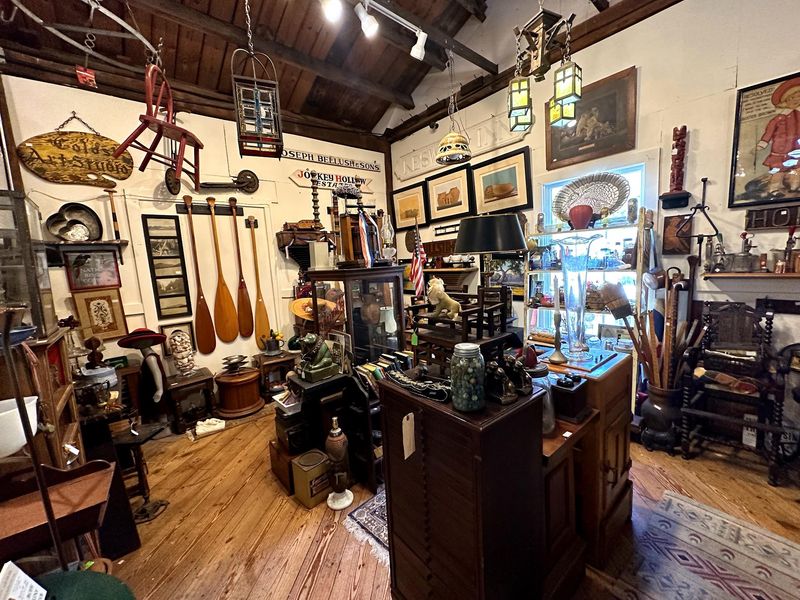
Antique shopping gets interesting when the item that stops you is not the item you came looking for. Maybe you arrived thinking about a small table and instead find yourself inspecting an old advertising sign.
Maybe it is a piece of china in a pattern you recognize from childhood, a vintage toy, an unusual lamp, or a piece of sporting memorabilia tied to a team your father followed. Lafayette Mill works particularly well for that kind of browsing because its dealers cover such a wide range of categories.
The center specifically lists furniture, fine art, lighting, toys, dolls, advertising, china, jewelry, and sporting collectibles among its specialties, while Lafayette’s local tourism information also points to dishes, housewares, art, and postcards.
Small objects sit alongside pieces substantial enough to anchor an entire room, which means the experience does not depend on being a serious collector with a shopping list.
Plenty of the fun comes from noticing how ordinary life has changed. An old kitchen tool can look almost unrecognizable next to its modern equivalent.
A heavy piece of furniture can make today’s flat-pack shelves seem temporary by comparison. Vintage advertising preserves brand names and graphic styles that disappeared decades ago.
Even a stack of old postcards can turn into a miniature record of places, handwriting, postage, and travel habits. Because individual dealers curate separate spaces, the transitions can be abrupt in the best way.
You can go from polished silver to old toys without much warning. That unpredictability is the point. The best find may be something you would never have thought to type into a search bar because, until it was sitting directly in front of you, you had no idea you wanted it.
Vintage Finds Bring Decades of History Back to Life
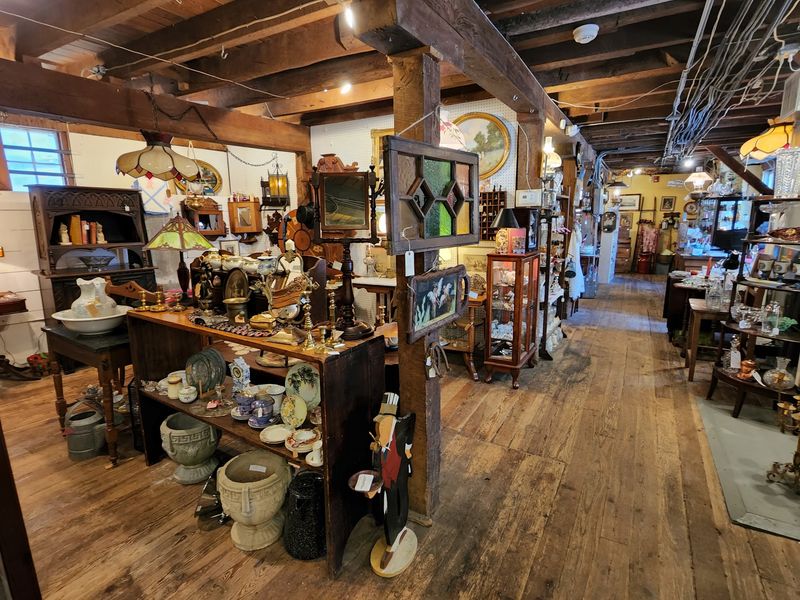
Lafayette is a particularly good place for old objects because the surrounding village has its own long memory. The historic community developed around the mill seat on the Paulins Kill, and many buildings in the area date from the nineteenth and early twentieth centuries.
Lafayette’s historic district preserves architecture associated with styles including Greek Revival, Gothic Revival, Second Empire, Queen Anne, Colonial Revival, and Craftsman. In other words, you are not shopping for pieces of the past inside a place that has no connection to it.
The mill and its surroundings provide real local context for the furniture, household objects, artwork, and decorative pieces on display. Consider an eighteenth- or nineteenth-century primitive piece in a conventional retail store and it is simply merchandise.
See something similar inside an old mill complex, near buildings that have stood through generations of Sussex County life, and it is easier to appreciate why these objects survived in the first place. The nearby Carriage House pushes that idea even further.
Located in an original 1836 building associated with the Lafayette Mill, it specializes in eighteenth- and nineteenth-century antiques, including primitives and period furniture.
Back in the main center, the range stretches well beyond those early periods, so the experience becomes a loose walk through changing American tastes.
Formal furniture gives way to more familiar twentieth-century collectibles; delicate china sits near advertising pieces and childhood toys. Nothing is arranged as a museum timeline, which is part of the charm.
History appears in the messy way people actually inherit it: one generation’s useful household object beside another generation’s decoration, souvenir, hobby, or prized possession.
You Could Spend Hours Here and Still Miss Something
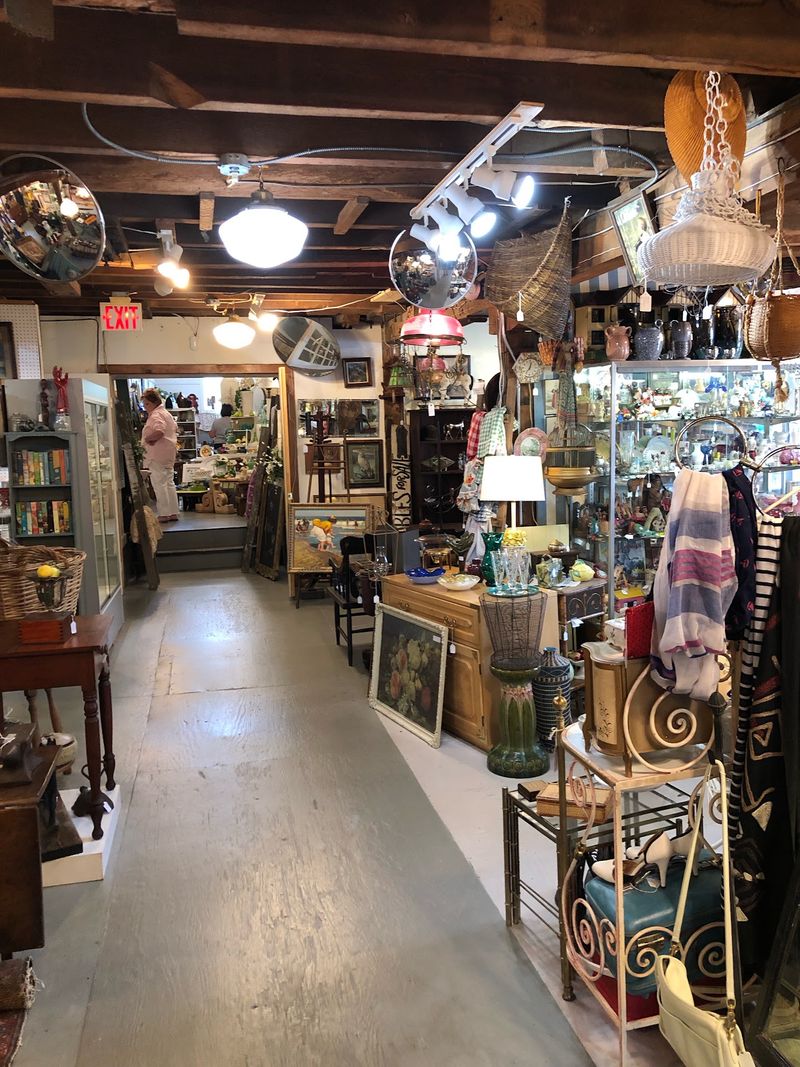
There is a very specific moment during a visit here when confidence starts to fade. You think you have covered most of the building, then notice a staircase, doorway, dealer space, or display you somehow walked past earlier.
With three floors in the main mill and dozens of dealers across the larger complex, doubling back is almost inevitable. It is also not a bad strategy.
Antique inventory rewards a second look because the first pass tends to be dominated by the obvious pieces: large furniture, bright artwork, sparkling glass, or anything hanging dramatically overhead. The smaller finds reveal themselves once you slow down.
That makes Lafayette Mill better treated as an afternoon browse than an errand. There is enough variety to entertain people who collect seriously, but you do not need to know the difference between Federal and Victorian furniture to have fun here.
Look at labels. Open your eyes to the less glamorous shelves. Check the cases. If something catches your attention, take a closer look before assuming you will remember exactly where it was later.
With approximately 55 dealers, “I’ll come back to it” can turn into an unplanned scavenger hunt. The selection is also changed frequently, according to the center, so completing the building once does not permanently solve the problem.
A later visit can produce a different assortment. And when three floors begin to win the endurance contest, the historic complex includes Millside Café, a breakfast-and-lunch spot near the antique shops.
Having somewhere nearby to sit down over coffee or lunch is a small detail until you realize you have been comparing old lamps for two hours and still have another floor to investigate.
This New Jersey Antique Destination Is Worth the Drive
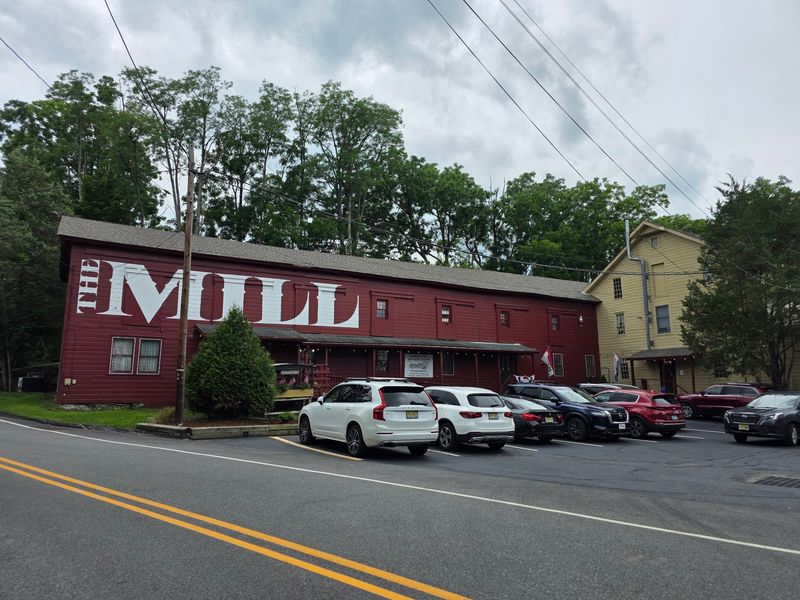
The useful thing about Lafayette Mill is that the trip does not require elaborate planning. The center sits at 12 Morris Farm Road, just off Route 15 in Lafayette, in the northwestern corner of New Jersey.
Current posted hours are 10 a.m. to 5 p.m. Thursday through Sunday, with the center also opening on holiday Mondays; it is closed on New Year’s Day, Easter, Thanksgiving, and Christmas.
There is ample on-site parking, which becomes especially important if your “small souvenir” somehow turns into a chair or cabinet. The mill is also heated and air-conditioned, so antiquing here is not limited to crisp fall Saturdays when an old gristmill happens to be at its photogenic best.
Lafayette itself gives you reasons not to rush home afterward. Historic Lafayette sits around the crossroads of Route 15 and Morris Farm Road and includes locally owned specialty shops, boutiques, home décor stores, vintage businesses, and the Millside Café alongside the antiques operation.
This is Sussex County rather than one of New Jersey’s busier downtown shopping districts, and the pace fits the activity. You can wander without trying to turn the day into an itinerary with six timed stops.
The mill supplies enough to look at on its own. More importantly, its size does not erase the pleasure that makes antiquing worthwhile in the first place: spotting one odd, beautiful, useful, or completely unnecessary object among thousands of others and realizing nobody else in the building seems quite as delighted by it as you are.
In a 23,000-square-foot gristmill filled with decades of other people’s belongings, those little discoveries are what make all three floors worth exploring.