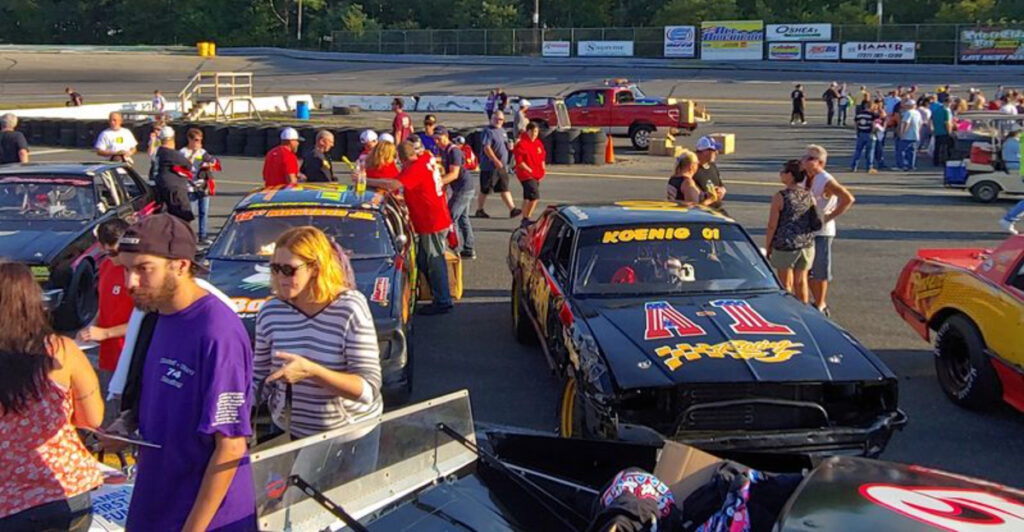
Wall Stadium Speedway is one of those New Jersey places that still feels alive with local tradition. Near the Jersey Shore, it keeps short track racing in front of real fans, real families, and real community pride.
That matters because small racetracks are disappearing in many places, taking a big piece of local culture with them. At Wall, the noise, history, and hometown energy still make race night feel special.
Why Saturday Nights Still Belong to Wall Stadium Speedway
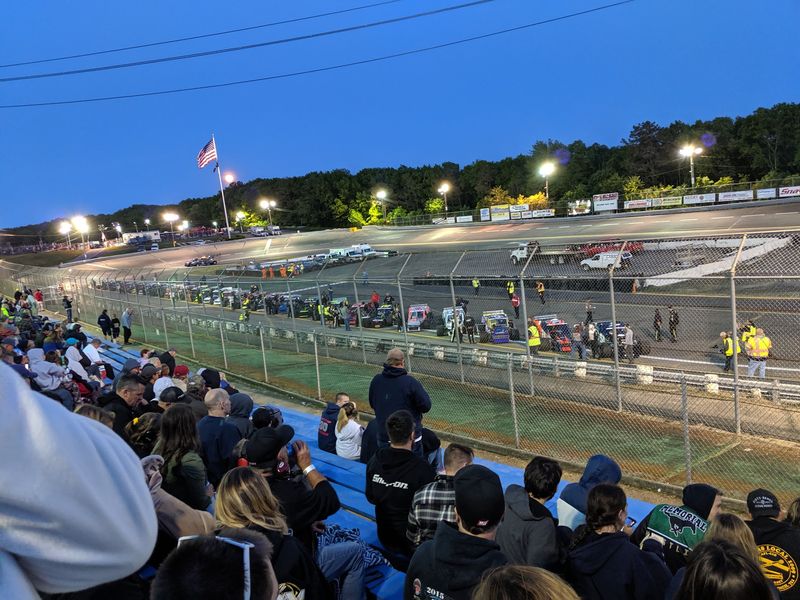
By late afternoon, Route 34 starts giving away what kind of evening this is going to be. Race trailers roll toward the track, the pit area gets busy, and fans begin filling the grandstands before the first serious laps are turned.
Wall Stadium sits at 1803 Highway 34 South in Wall Township, roughly a mile north of Garden State Parkway Exit 98 and Interstate 195 Exit 35B, which makes it an easy landmark for generations of Monmouth and Ocean County race fans. The 2026 calendar still looks reassuringly old-school.
Most of the action lands on Saturday nights, with weekly cards mixing Sportsman cars, Factory Stocks, Asphalt 4-Cylinders, Wall S/K Modifieds, Legends and TQ Midgets depending on the date. For an August 15 program, for example, the pits were scheduled to open at 2 p.m., spectator gates at 4 p.m. and racing at 6 p.m.
Other nights follow slightly different schedules, particularly when a bigger feature is on the card. That variety matters.
You are not waiting all evening for one main event while everything else feels like filler. A Wall program can shift from relatively familiar-looking stock cars to tiny TQ Midgets and wickedly quick Modifieds, each class creating its own kind of chaos on the same small oval.
The crowd is close enough to follow individual cars without staring at a giant video screen, and close enough that hearing protection is a sensible idea, especially for kids. Rain can scramble the schedule, as several 2026 dates have already shown, but that almost adds to the short-track rhythm.
There is no sterile, perfectly controlled spectacle here. Saturday night racing still feels like something the community gathers around rather than something simply delivered to it.
The Decades of Racing History Behind This Jersey Shore Track
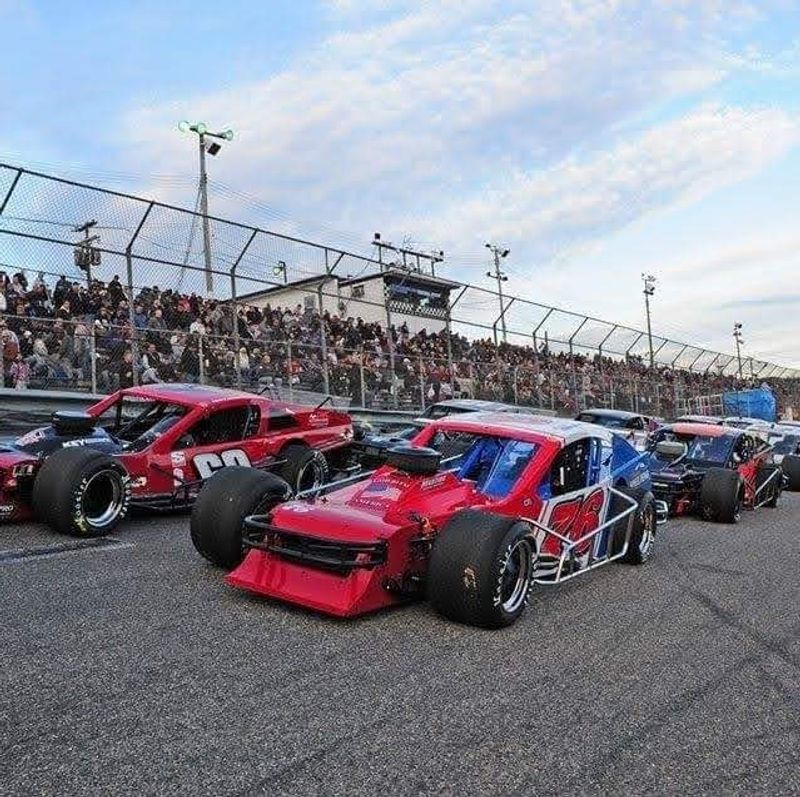
Wall Stadium started with a gravel pit and a couple who thought stock car racing might have a future. In the late 1940s, fans around the Jersey Shore were already watching primitive stock cars run on an oval carved into a sand pit near the present track.
Tom and Jennie Nicol saw the crowds, visited nearby Long Branch Stadium and decided to build something permanent. Tom used his contracting connections to construct the speedway during the winter of 1949 and spring of 1950.
Racing began on Memorial Day weekend in 1950, with Frankie Schneider winning the first event. Schneider would later become the 1952 NASCAR National Modified champion and a NASCAR Cup Series race winner.
Jennie Nicol became the longtime promoter, an unusually prominent position for a woman in American motorsports at the time. NASCAR sanctioning arrived in 1951, only a year after the gates opened.
In July 1958, Wall even hosted a NASCAR Cup Series race, a 100-mile event won by Jim Reed in a 1957 Chevrolet. The names that followed could fill a local racing encyclopedia.
Richie Evans, Charlie Jarzombek, Tony Siscone, Jimmy Spencer, Ray Evernham, John Blewett III, Jimmy Blewett and members of the Truex family have all competed here. Martin Truex Jr. would eventually become a NASCAR Cup Series champion, while Evernham became one of the sport’s most celebrated crew chiefs.
The story has not been tidy. The Nicol family sold the property in 2002, different promoters came and went, and Wall briefly closed in 2008 before returning for a full season in 2009.
Through all of that, one tradition kept looming over the calendar. The Turkey Derby, launched in 1974, became the Thanksgiving-weekend finale that generations of Modified fans now associate with the place.
History at Wall is not sealed behind glass. It still pulls onto the track and takes the green.
What Makes Wall Stadium’s Tight Asphalt Oval So Exciting
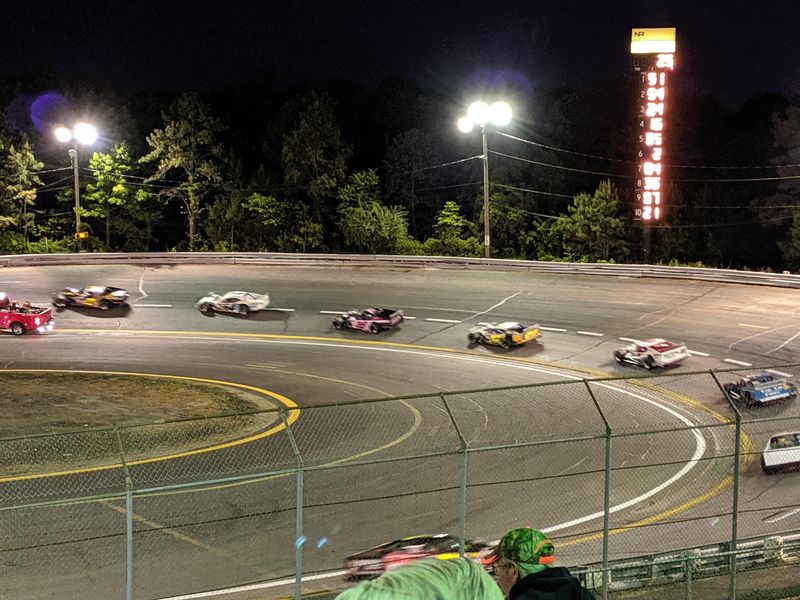
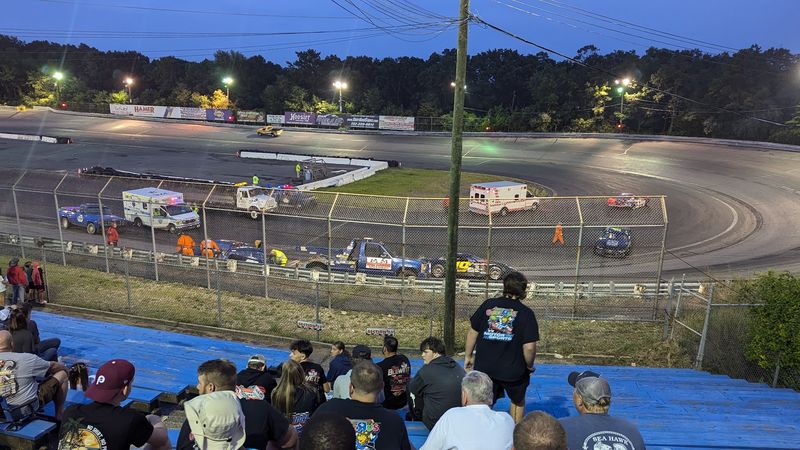
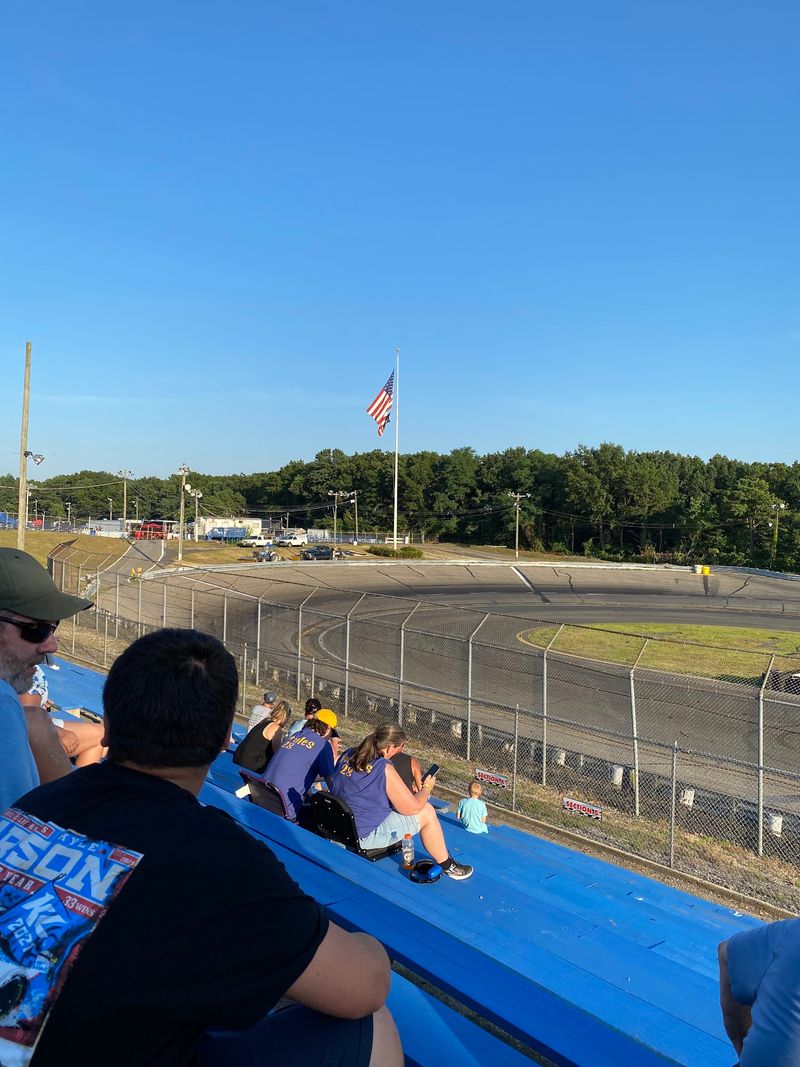
One-third of a mile does not leave much room for second thoughts. Wall Stadium’s asphalt oval is tiny by major-league racing standards, but the corners rise to roughly 30 degrees of banking, giving drivers enough grip and momentum to carry startling speed around a track where the next turn arrives almost immediately.
Depending on how the banking is measured, track descriptions have put the corners around 30 to 32 degrees. Either way, nobody is confusing this place with a flat parking-lot oval.
Ray Evernham, who raced at Wall before building his NASCAR career, has compared the layout to a miniature Bristol Motor Speedway. His description gets at the basic appeal.
Take the intensity of a high-banked short track, shrink the lap to a third of a mile, and put Modifieds on it that can run at roughly 120 mph. There simply is not much time for the field to spread out and behave itself.
That changes the kind of racing fans see. Drivers have to manage traffic almost constantly.
A small hesitation can cost several positions. Restarts bunch everyone together again, and the difference between a clean pass and a bent race car can be measured in inches.
Local knowledge matters, too. Jimmy Blewett once explained that drivers who can win consistently at places such as Wall have a good chance of succeeding elsewhere because the track demands precision and confidence.
He would know. The Howell racer grew up watching races here before collecting championships and dozens of victories of his own. For spectators, the compact layout has another advantage. The whole race develops right in front of you.
You can watch one battle coming off a corner while another pair of cars is already setting up a pass a few seconds away. That is the old short-track trick Wall still performs beautifully.
It takes a relatively small patch of pavement and makes it feel like there is never quite enough of it for everybody.
The Cars and Local Drivers Keeping Short Track Racing Alive
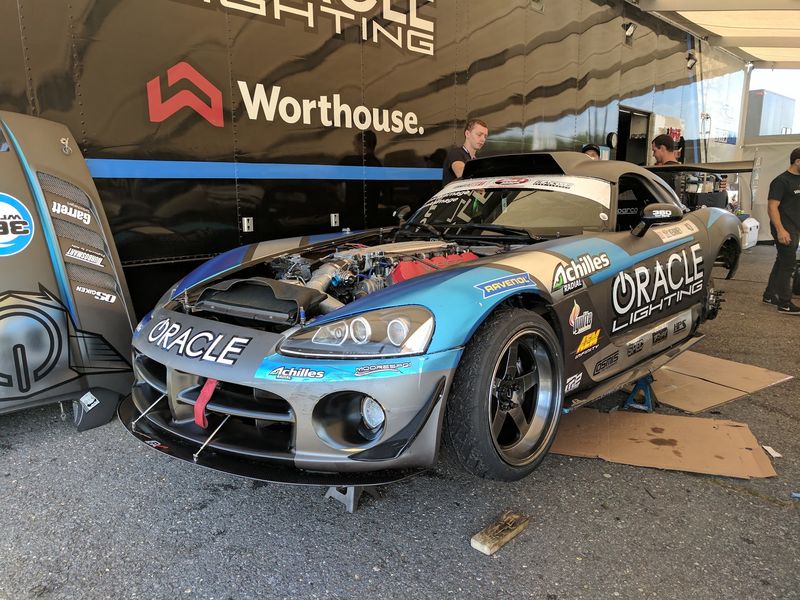
Take a look at the 2026 standings and you will notice something before you even get to the points totals.
Howell. Jackson. Waretown. Toms River. Brick. Wall. Freehold.
The hometown column reads almost like somebody started listing exits along a drive through Central Jersey. That is the part of Wall Stadium racing that television can never quite duplicate.
Many of these drivers are not anonymous professionals appearing for one weekend. They are local competitors whose families, shops, crews and supporters are tied directly to the communities surrounding the speedway.
As of August 8, Howell’s Kevin Davison led the Sportsman standings with 385 points. Chris Lane of Waretown sat atop the Factory Stocks with 389, while Woodbridge driver Kyle Taraska led the TQ Midgets with 500.
Michael Alcaro of Newton had built a sizable advantage in Legends after winning five times. In the Wall S/K Modified standings last updated August 1, Jackson racers Steven Reed and Blake Barney were tied at 356 points, with James Blewett and Jimmy Blewett of Howell close behind.
The Blewett name alone explains plenty about how racing gets passed down here. Jimmy grew up at the speedway and has spent decades winning on its high banks.
On August 1, 2026, he started 13th and came through the field to win the Modified Hall of Fame 100, the 89th Modified victory of his career. Then there is James Blewett, part of the next generation, who was winning at Wall only weeks after graduating from high school.
Ryan Kuhlthau of Brick and Neil Rutt III of Toms River split the Sportsman Twin 25-lap features on August 8. That mixture is exactly what keeps a weekly track healthy. Veterans provide the history. Young drivers create the next chapter.
Factory Stocks and 4-Cylinders offer a different route into competition, while Modifieds remain the headline machines. The names change, the classes evolve, but Saturday night still depends on local people deciding that racing is worth the time, money, scraped knuckles and very long evenings.
Old-School Racing Meets a New Era at Wall Stadium
The most noticeable sign of Wall Stadium’s 2026 reset was literally a sign. The weathered marker along Highway 34 was replaced in March, and the new version carried three important words across the top — “Welcome back NASCAR.”
The speedway rejoined the NASCAR Local Racing Series for 2026, ending a stretch that had lasted since 2007 without participation in NASCAR’s weekly local program.
New co-promoters Pete Maletto and Fred Archer stepped in after the previous lease holders, who had operated the facility from 2011 through 2025, chose not to return. Maletto and Archer signed a multi-year lease and immediately started working through the less glamorous jobs that matter at a 76-year-old racetrack.
Paint went onto aging surfaces. The pit area received attention. The concession stand was refreshed. Fans even gained the ability to order food and drinks through an app and pick them up at the stand.
None of that sounds revolutionary, which is precisely the point. Wall does not need to become a miniature version of a giant speedway with acres of corporate hospitality.
It needs bathrooms, concessions, grandstands and race-night operations that feel cared for while the actual racing remains recognizably Wall. The 2026 schedule balances both sides nicely.
The 66th Garden State Classic ran as a 125-lap Modified event in June, while the rescheduled John Blewett III Memorial 176 was placed on August 29 with $7,600 going to the winner.
Championship Night is set for October 10, followed by Turkey Derby activities in November, including a 125-lap Wall Modified feature on November 27 and a 150-lap Tour Modified race on November 28.
Bringing NASCAR sanctioning back gives the track a useful connection to the wider sport. Freshening the facility makes it easier to welcome another generation. Neither requires turning down the volume or replacing the thing people came to see in the first place.
Why Generations of New Jersey Families Keep Coming Back
Earl Krause first attended Wall Stadium as a fan in 1960. Two decades later, he began working there as an announcer.
That kind of timeline would sound remarkable almost anywhere else; at a track built around family names and Saturday rituals, it makes perfect sense. The Bohn family offers another example.
Parker Bohn won at Wall. His son Eddie won there, too. Then Danny Bohn followed them onto the same high-banked oval, eventually collecting track championships and a Turkey Derby victory of his own. The Blewetts have an equally deep connection.
Jimmy Blewett remembers being a kid in the stands before becoming one of Wall’s most successful drivers, while his late brother John won the track’s first NASCAR Whelen Modified Tour event in 2003. Even the current schedule makes room for that memory.
The John Blewett III Memorial remains one of Wall’s major Modified races, while Hall of Fame events bring former competitors back into a place where many fans still recognize them without needing an introduction.
More than 40 figures from the track’s past were scheduled for a meet-and-greet during a 2026 Hall of Fame celebration, including Tony Siscone, Charlie Kremer III, Eddie Bohn and Lenny Boyd.
That continuity is probably Wall Stadium’s greatest advantage in an era when old local racetracks can disappear surprisingly quickly. People do not return only because the Modifieds are fast, although they certainly are.
They return because somebody remembers sitting in these stands with a parent, because a familiar surname is painted above the door of another race car, or because Thanksgiving weekend does not feel complete without the Turkey Derby.
That event has been part of the calendar since 1974 and is scheduled to close another season in 2026. Wall has fresh paint, a revived NASCAR connection and a new group guiding it forward. Underneath all of that, the basic inheritance remains intact.
Another Saturday arrives, another generation climbs into the grandstands, and the high banks get loud again.