A 77-foot waterfall crashes through the middle of Paterson, a pine forest larger than many national parks spreads across South Jersey, and Thomas Edison’s laboratory still looks as if the inventor might return after lunch. New Jersey packs an absurd amount of scenery and history into a state famous for turnpike exits.
Its 11 National Park Service sites include Revolutionary War camps, protected rivers, Atlantic beaches, mountain trails, and one small island that changed millions of lives. Some are traditional parks with visitor centers and ranger programs.
Others are long-distance trails or sprawling reserves that require a little more planning—and reward it. You can climb above Sussex County, paddle through tea-colored Pinelands water, tour an immigration landmark, or stand beside machinery that helped usher in the modern world.
Consider this your starting point for exploring all 11, one day trip, muddy pair of boots, or delightfully nerdy history stop at a time.
1. Appalachian National Scenic Trail
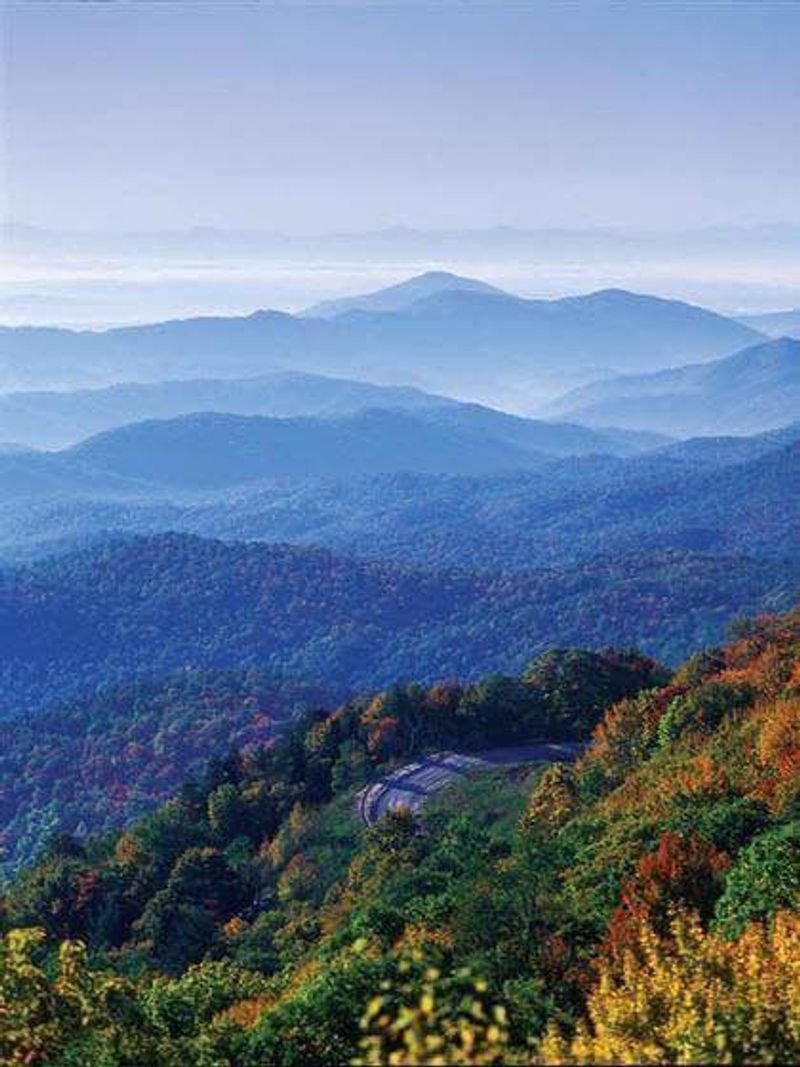
White blazes lead hikers through roughly 72 miles of New Jersey, and this stretch of the Appalachian Trail refuses to be treated as a warm-up. It crosses rocky ridgelines, quiet wetlands, dense hardwood forest, and some of the highest ground in the state.
Even committed Jerseyans are sometimes surprised by how remote the landscape feels once the road noise disappears. For a memorable day hike, head to the Stairway to Heaven near Vernon.
The route begins gently on the Pochuck Boardwalk, passing fields, suspension bridges, and marshland before climbing sharply toward Pinwheel Vista. The final ascent is rocky and steep enough to earn the trail’s dramatic name, but the wide view over the valley makes a convincing payoff.
Farther west, the trail passes through High Point State Park, where a short detour leads toward the monument and a panorama spanning New Jersey, New York, and Pennsylvania. Sunfish Pond, a glacial lake above the Delaware Water Gap, is another classic destination.
The trail is open year-round, but spring mud, summer humidity, and winter ice can completely change the difficulty. Wear real hiking shoes, bring more water than seems necessary, and download a map before leaving reliable service.
Popular access lots near Vernon and the Water Gap can fill early on weekends. Start before breakfast and you will get cooler temperatures, easier parking, and a better chance of hearing birds instead of someone else’s playlist.
2. Delaware Water Gap National Recreation Area
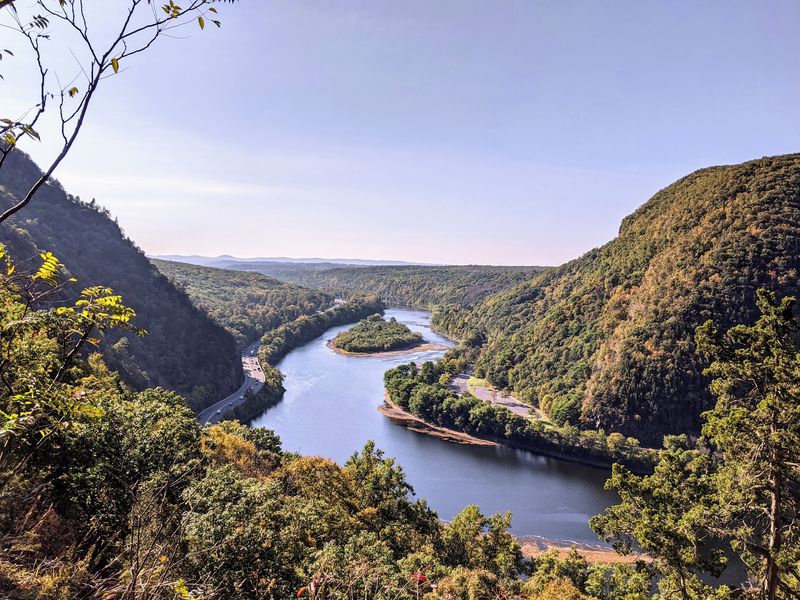
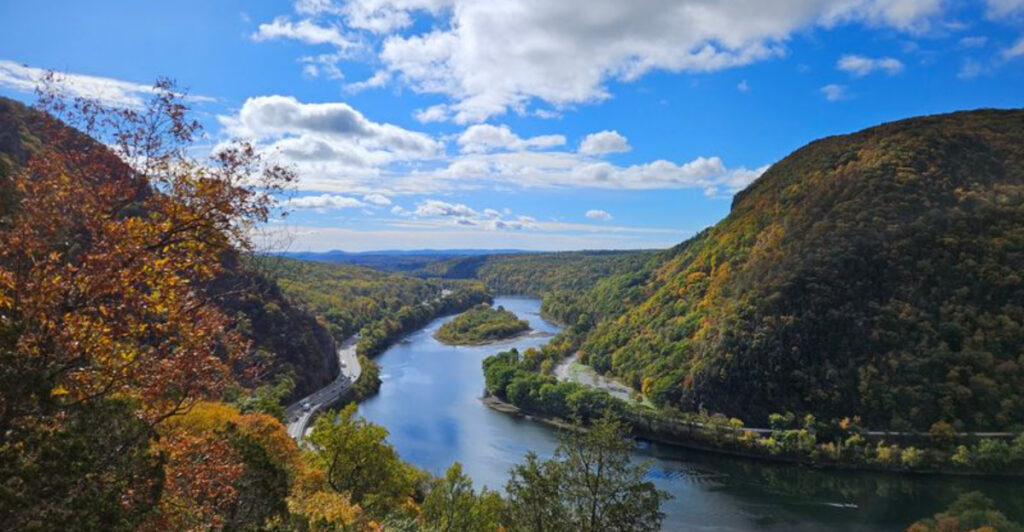
New Jersey and Pennsylvania share this 70,000-acre recreation area, but the Garden State side has enough trails, river access, and mountain scenery to fill several weekends. The centerpiece is a dramatic notch where the Delaware River cuts between Kittatinny Mountain and Blue Mountain.
Stand at Kittatinny Point and the geography lesson becomes immediately obvious. Mount Tammany is the headline hike.
Its steep Red Dot Trail climbs over boulders to one of New Jersey’s best-known overlooks, with the river curling below and Mount Minsi rising across the gap. Take the Blue Dot Trail back for a loop rather than punishing your knees on the same rocky descent.
This is not a casual stroll: bring water, allow several hours, and arrive early because the parking area can fill quickly on fair-weather weekends. There is plenty here for people who would rather paddle than climb.
Roughly 40 miles of river run through the recreation area, with mostly gentle current and occasional Class I rapids. Local outfitters can arrange canoe and kayak rentals, while designated beaches and picnic areas offer an easier day near the water.
Millbrook Village adds a dose of 19th-century history with preserved buildings and periodic demonstrations. Most outdoor areas operate from dawn to dusk, and conditions or closures can change after storms.
Check before leaving home, especially if your plan depends on a particular road, waterfall trail, or river launch.
3. Ellis Island
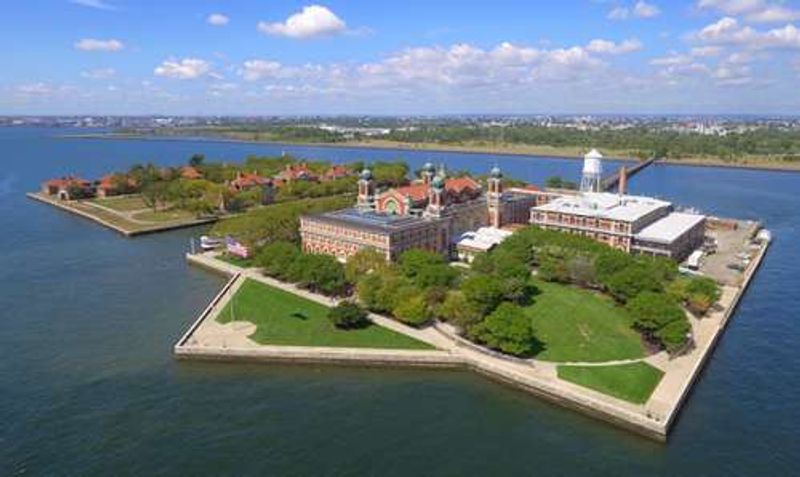
The Registry Room can quiet even a packed tour group. Sunlight pours through its tall arched windows, footsteps echo across the tile, and suddenly the scale of the place takes over.
Nearly 12 million immigrants were processed at Ellis Island between 1892 and 1954, and countless American family stories still pass through this one enormous room. The National Museum of Immigration occupies the restored Main Building and deserves more than a hurried lap between ferry stops.
Exhibits follow newcomers through medical inspections, legal questioning, detention, and the uncertain process of entering a new country. Personal objects, photographs, ship records, and oral histories keep the story grounded in individual lives rather than giant numbers.
The Peopling of America galleries widen the timeline, examining migration before Ellis Island opened and after it closed. Outside, the Wall of Honor and views across New York Harbor provide room to decompress.
Ellis Island has no general admission charge, but the only public access is by authorized ferry, and that ticket does cost money. New Jersey visitors can depart from Liberty State Park in Jersey City, where parking is far simpler than navigating Lower Manhattan.
Book an early ferry online, allow time for airport-style security screening, and plan several hours if you are also visiting Liberty Island. Food is available, though bringing water and a small snack is sensible.
Wear comfortable shoes; this museum has a way of turning “just one more gallery” into an entire afternoon.
4. Gateway National Recreation Area
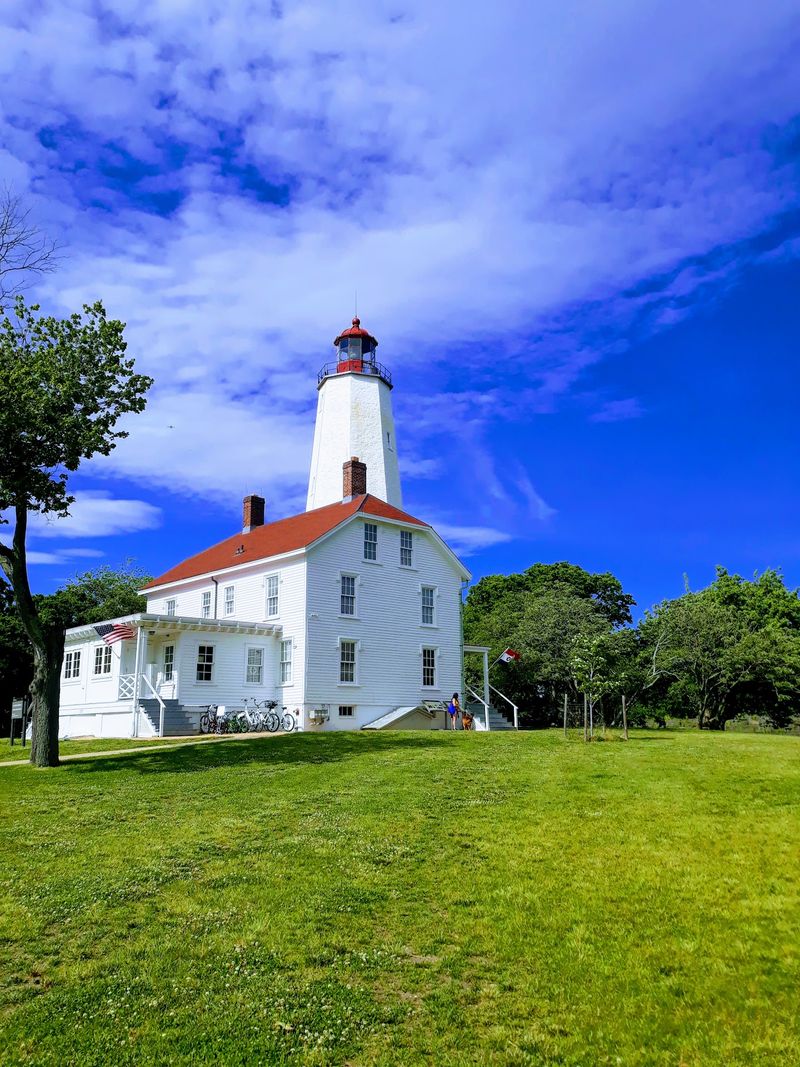
Salt air, old artillery batteries, and the oldest operating lighthouse in the country all share one narrow peninsula at Sandy Hook.
This New Jersey section of Gateway National Recreation Area stretches between the Atlantic Ocean and Sandy Hook Bay, offering swimming, fishing, birding, cycling, and enough military history to rescue a cloudy beach day.
Most summer visitors come for the ocean beaches, but stopping there misses half the fun. Follow the multiuse path through maritime forest to Fort Hancock, where rows of former officers’ homes face the bay.
The district once guarded New York Harbor, and its aging batteries, parade grounds, and Nike missile history give the landscape an unexpectedly cinematic edge. Sandy Hook Lighthouse dates to 1764; ranger-led tours are typically offered on a first-come basis when staffing permits.
The observation deck at North Beach is a good place to scan for migrating birds, while bayside areas catch warm evening light over the Manhattan skyline. The park is generally open from 6 a.m. to 9 p.m.
Beach parking costs $20 per day during the summer fee season, and payment is cashless. Fort Hancock parking remains free.
On hot weekends, lots can reach capacity, so arrive early or wait until late afternoon when the beach begins to empty. Bring everything you need and plan to carry everything back out—the park follows a carry-in, carry-out trash policy.
Cyclists should watch for wind; the ride out can feel suspiciously easier than the ride back.
5. Great Egg Harbor National Scenic and Recreational River
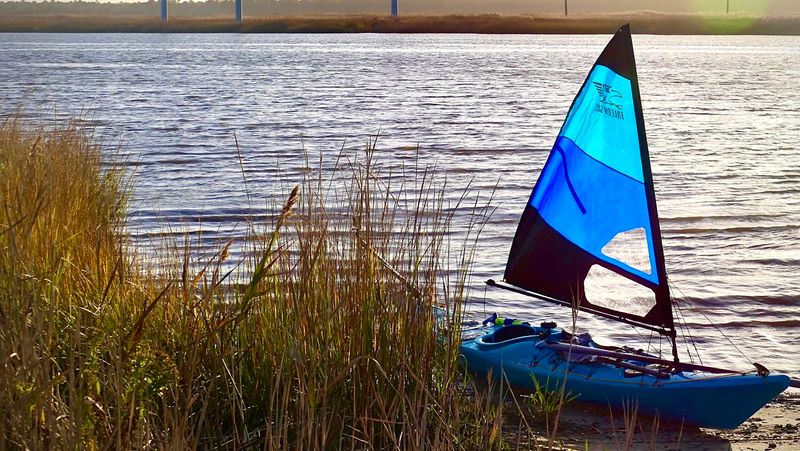
The water here often looks like strong iced tea, stained amber by tannins from cedar roots and fallen leaves. That color is part of the Great Egg Harbor River’s character, not a sign that something has gone wrong.
Flowing through the Pinelands toward Great Egg Harbor Bay, the river system protects more than 100 miles of waterways and some of South Jersey’s most peaceful paddling country. A canoe or kayak is the best seat in the house.
Upper sections and tributaries twist beneath pitch pines, Atlantic white cedars, and low branches that demand the occasional duck. Farther downstream, the river widens and tidal influence becomes more noticeable.
Wildlife is the running entertainment: watch for herons, kingfishers, turtles, beavers, and bald eagles. Anglers, birders, campers, and stargazers also have plenty of room to work with.
Unlike a conventional national park, this river does not have one entrance gate, central visitor center, or universal schedule. The National Park Service works with counties, municipalities, and state agencies, so access rules vary by launch and recreation area.
Choose your put-in and take-out before leaving, confirm water conditions, and never assume a downstream landing will be obvious from the river. A properly fitted life jacket is essential, even on calm stretches.
Beginners may prefer an outfitter that supplies equipment and transportation. Pack water, insect repellent, and a dry bag; phones have an uncanny ability to find the deepest part of a canoe.
6. Lower Delaware National Wild and Scenic River
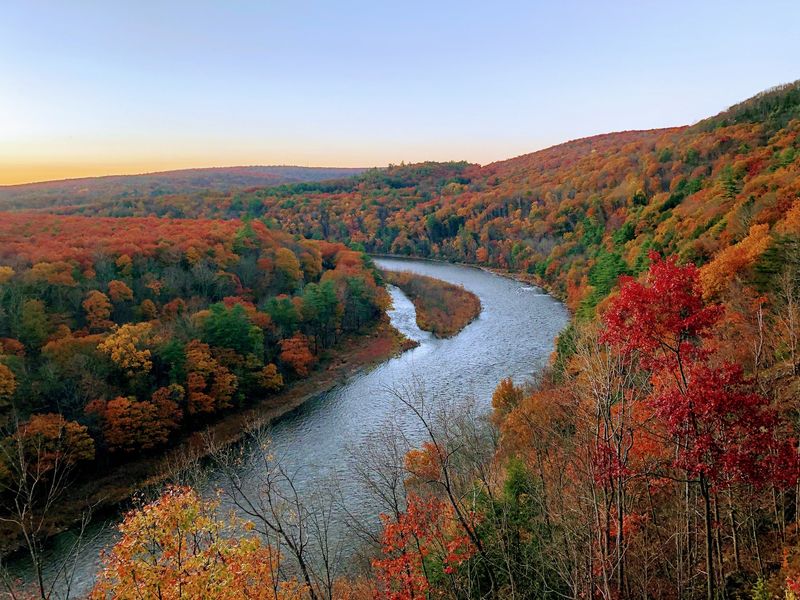
There are stretches of the Delaware where wooded islands divide the current, stone houses appear above the bank, and the loudest interruption is a passing freight train.
The Lower Delaware National Wild and Scenic River protects selected segments of this landscape along the New Jersey–Pennsylvania border, preserving a free-flowing river surrounded by farms, historic villages, canals, and forest.
Bulls Island Recreation Area makes a useful base for exploring the New Jersey side. From there, visitors can walk or cycle beside the old Delaware and Raritan Canal, cross the pedestrian bridge toward Lumberville, or launch a paddling trip when conditions are appropriate.
Frenchtown and Stockton are natural stops for lunch, coffee, and a walk through compact downtowns that still feel closely tied to the river. Scenic driving works well here, too, especially when autumn color reaches the hills above Route 29.
The designation can be confusing because this is not one enclosed park with a staffed entrance. Public access comes through a patchwork of state parks, canal paths, boat launches, and municipal properties.
Parking regulations and operating hours depend on the specific location, so decide where you are going rather than simply entering the river’s name into a navigation app. Paddlers should check the current, weather, and launch conditions before setting out; a broad, calm-looking river still carries real force.
For an easy first visit, pair a canal towpath walk with time in Frenchtown. You will understand the river without having to get your socks wet.
7. Morristown National Historical Park
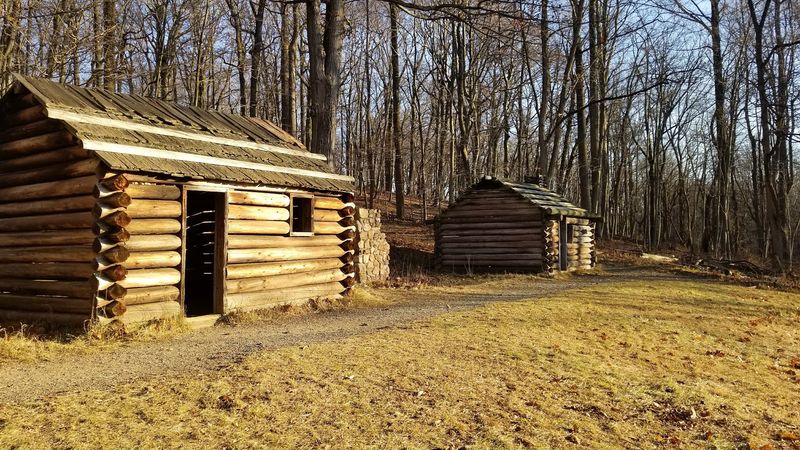
During the winter of 1779–1780, George Washington’s army endured deep snow, relentless cold, food shortages, and a level of misery that makes modern complaints about Jersey winters sound flimsy.
Morristown National Historical Park preserves the places where that ordeal unfolded, spread across several distinct sites rather than contained behind a single entrance.
Begin at Jockey Hollow, where reconstructed soldier huts show how cramped military life could be. Walking trails cross the same rolling terrain where thousands of Continental troops camped, and the Wick House offers a civilian perspective on an army occupying local farmland.
In town, Washington’s Headquarters Museum introduces the encampment before guided tours of the Ford Mansion, where Washington and his staff lived and worked. Fort Nonsense, perched above Morristown, adds a quick overlook and the remains of an earlier defensive position.
The grounds are free and generally open from sunrise to sunset. Park buildings usually operate Thursday through Monday, while the Ford Mansion can be entered only on a guided tour.
Free tour passes are distributed at the museum on a first-come basis, so go there early if the mansion is your priority. Because the units sit several miles apart, driving is the easiest way to connect them.
Give Jockey Hollow the largest share of your time; its trails and hut sites make the winter encampment tangible in a way display cases cannot. Visit on a cold day if you want the history to land with considerably more force.
8. New Jersey Pinelands National Reserve
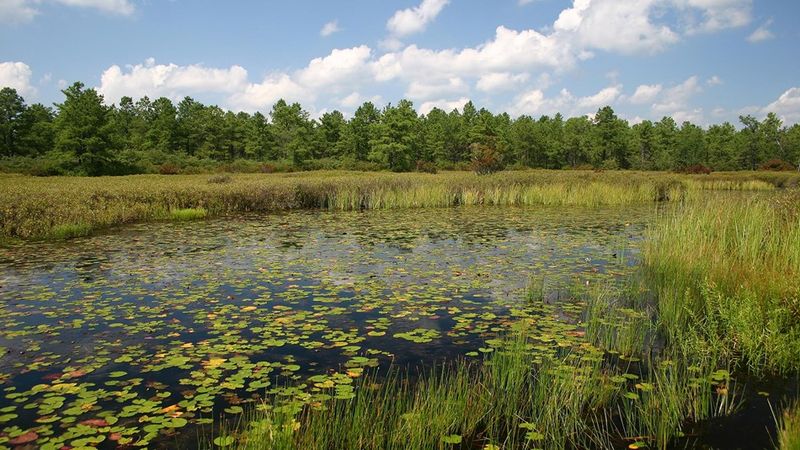
Drive into the Pine Barrens after dark and the state seems to shed its streetlights all at once. The roads narrow, pitch pines crowd the shoulders, and familiar suburban New Jersey gives way to more than one million acres of forest, wetlands, farms, and small communities.
Established in 1978 as the country’s first national reserve, the Pinelands covers portions of seven counties and operates on an entirely different scale from the state’s compact historical parks. Batsto Village is the smartest introduction.
This preserved ironmaking and glassmaking settlement in Wharton State Forest includes historic homes, industrial remnants, a sawmill, and the imposing Batsto Mansion. From there, trails lead into classic Pine Barrens habitat.
Paddlers can explore the Batsto, Mullica, or Wading rivers, where cedar water winds through tight, shaded corridors. Serious walkers can tackle sections of the roughly 50-mile Batona Trail, which links Brendan T.
Byrne, Wharton, and Bass River state forests. The reserve is a living region, not a fenced attraction, so planning matters.
State forests, wildlife areas, villages, and private land all exist within its boundaries. Stick to marked public routes, confirm camping or launch reservations, and do not trust every sandy road suggested by a navigation app—deep sugar sand can trap an ordinary car surprisingly fast.
Ticks and mosquitoes are enthusiastic locals, so bring repellent and check yourself afterward. Stay until sunset if possible. The open sky, cedar-dark water, and steady chorus of insects reveal a side of New Jersey that many residents never meet.
9. Paterson Great Falls National Historical Park
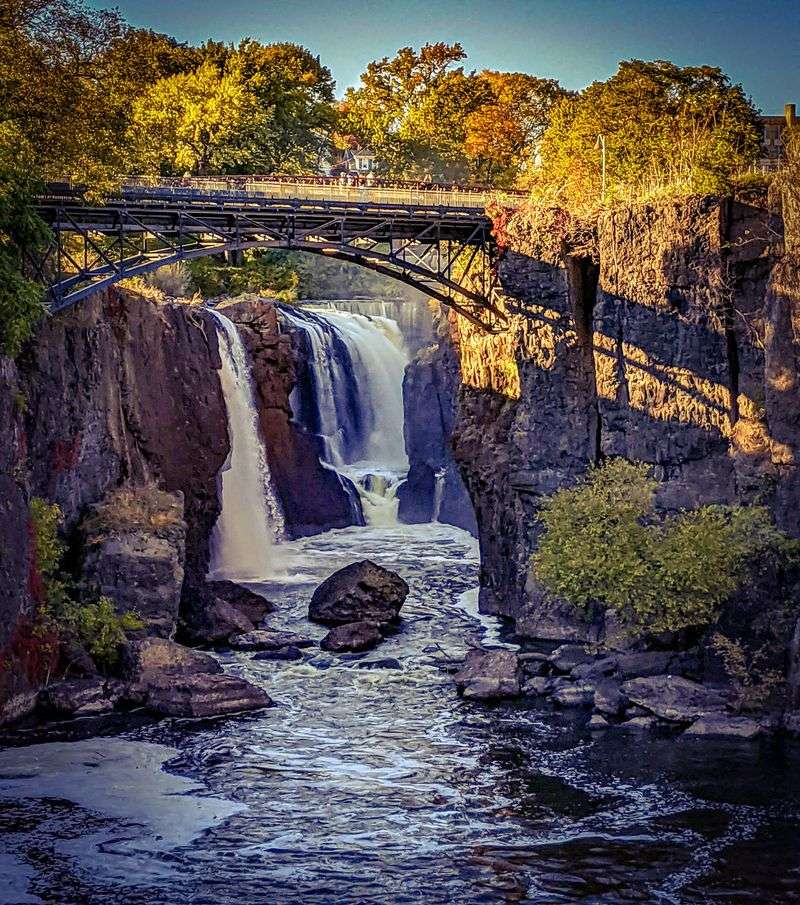
You hear the falls before you fully see them. The Passaic River drops 77 feet into a basalt gorge, sending up spray and a heavy rumble that competes with the surrounding city.
This is no wilderness waterfall tucked miles from pavement. It sits in Paterson, surrounded by brick mills, bridges, streets, and the remains of an industrial system that helped build the United States.
Alexander Hamilton backed the creation of Paterson in 1792 as America’s first planned industrial city, with water from the falls powering mills and factories. Silk, locomotives, firearms, paper, and aircraft engines all came out of this manufacturing center.
Start at Overlook Park for the broadest view, then walk toward Mary Ellen Kramer Park and the historic mill district. The raceway system is easy to overlook, but it is the key to understanding how the river’s force was redirected to run machinery.
Nearby Hinchliffe Stadium, a surviving Negro Leagues ballpark, adds another major chapter to the neighborhood’s story. The park grounds are accessible daily, with daylight hours providing the best and safest visit.
Admission is free, and the main overlook lot offers convenient parking, though spaces can be limited. At present, there is no regular indoor visitor center or public restroom at the park, so plan accordingly.
Water volume changes with rainfall; after wet weather, the falls can be thunderous. Allow at least an hour, more if a ranger walk is available.
This is one park where the surrounding city is not background scenery—it is the entire point.
10. Thomas Edison National Historical Park
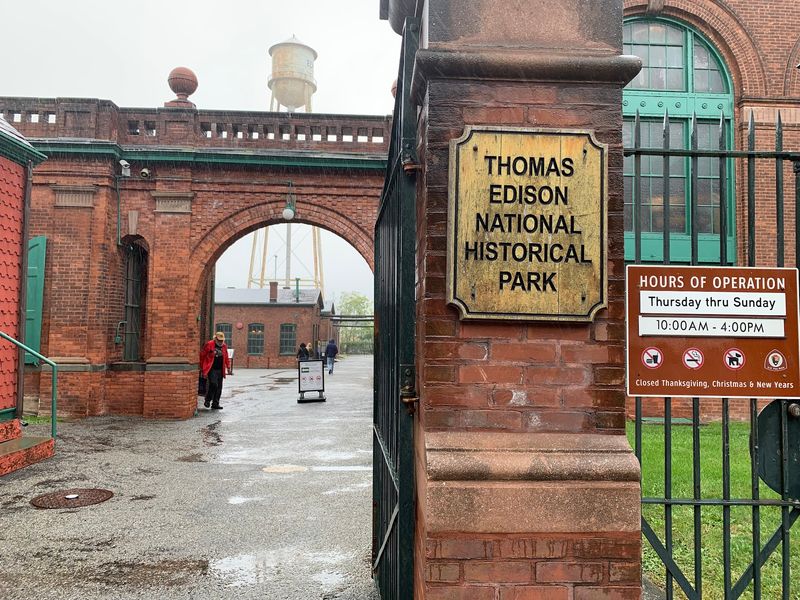
Belts loop overhead, machine tools stand shoulder to shoulder, and rows of dark wooden cabinets hold the raw materials of nonstop experimentation. Thomas Edison’s West Orange laboratory complex does not feel like a polished tribute assembled after the fact.
It feels like a working research campus that someone paused, locked, and handed over to the future. Edison developed and refined technologies here involving recorded sound, motion pictures, batteries, and electrical systems.
The Main Laboratory Building is the essential stop, with machine shops, a music room, Edison’s library, and workspaces packed with original equipment. Do not rush the upper floors; small details, from chemical bottles to handwritten labels, explain the scale of the operation better than a list of famous inventions.
Outside, the courtyard includes a replica of the Black Maria, Edison’s unusual early motion-picture studio. Glenmont, the Edison family’s Queen Anne-style estate inside gated Llewellyn Park, reveals the private half of the story.
Access rules are specific: visitors must first check in at the Laboratory Complex and obtain a grounds pass, even when they already have a house-tour ticket. House tours and access to certain buildings depend on staffing and can be limited, making advance planning worthwhile.
Begin at the visitor center at 211 Main Street in West Orange and allow at least two hours for the laboratories alone. History buffs can easily spend longer.
The park works best when you linger, read the labels, and appreciate just how much trial and error hides behind the word “genius.”
11. Washington-Rochambeau Revolutionary Route National Historic Trail
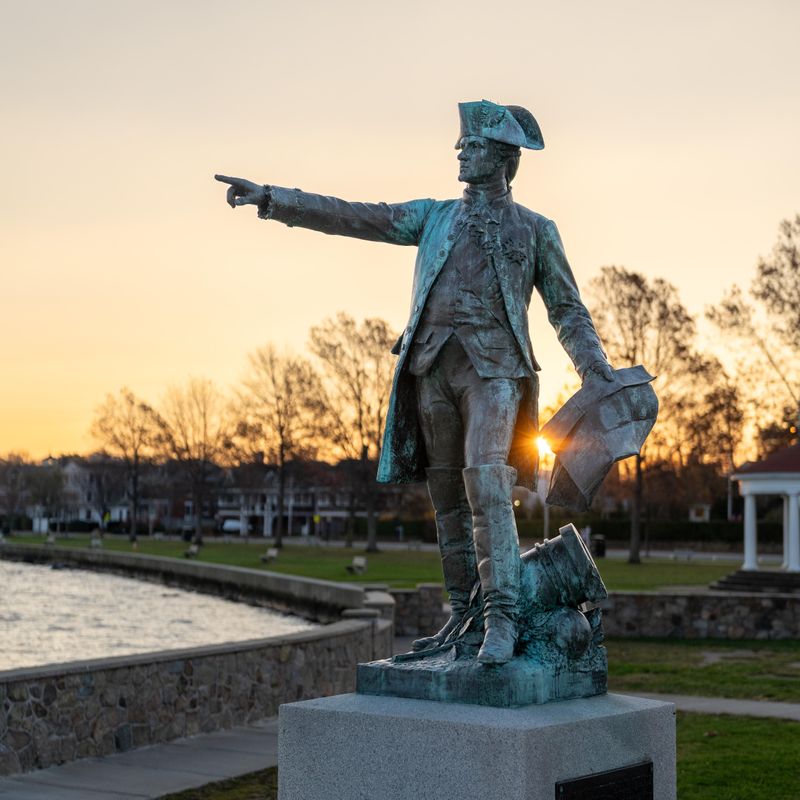
In August 1781, thousands of American and French troops moved through New Jersey while trying to keep their real destination from the British. Their 680-mile march ultimately led to Yorktown, where the allied victory effectively decided the Revolutionary War.
The Washington-Rochambeau route traces that campaign across nine states and Washington, D.C., turning ordinary New Jersey roads and towns into pieces of a much larger military maneuver. This is not a continuous hiking path with trailheads and campsites.
It is a historical route linking communities, encampment areas, roads, and preserved landmarks. In New Jersey, the allied armies passed through places including Paramus, Morristown, Princeton, and Trenton.
A practical way to experience the route is to build a history-driven road trip around surviving sites. Historic New Bridge Landing offers an early stop in Bergen County, while Jockey Hollow and the Ford Mansion connect the march to Morristown’s larger Revolutionary story.
Farther south, Princeton Battlefield, Rockingham, the Old Barracks in Trenton, and Washington Crossing State Park add context to the campaign and the war that preceded it. Because different organizations manage these locations, there is no single schedule, admission policy, or parking arrangement.
Pick two or three stops for one day and confirm their individual hours before leaving. An interactive route map is more useful than looking for continuous trail markers, which can be easy to miss from a moving car.
The reward is seeing New Jersey as Washington and Rochambeau used it: not merely as territory to cross, but as the crucial corridor between the Hudson and victory.