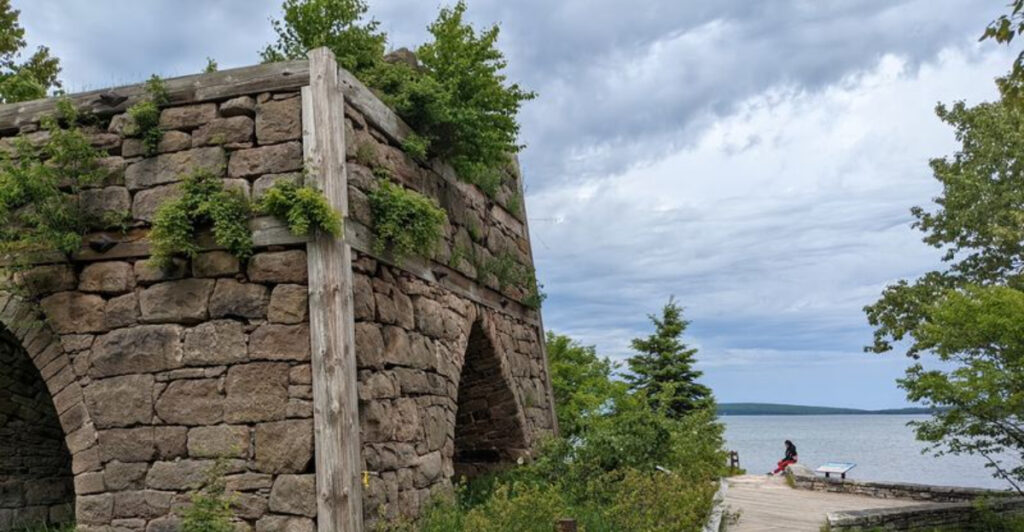
A roofless castle watches over Ramapo Lake. Graffiti-covered factory walls rise from the Pine Barrens.
Near the shore, concrete batteries built to stop enemy warships now sit empty beside beach traffic and circling gulls. New Jersey has a habit of placing its strangest historical remains where nobody expects them: behind suburban neighborhoods, along wooded trails, and just beyond roads traveled every day.
These sites are more than photogenic piles of stone. They tell stories of ironmasters, canal engineers, factory towns, military planners, and wealthy families whose ambitious projects eventually surrendered to fire, changing industries, or plain old bad luck.
Some require a proper hike, while others can be reached with little more than a short walk from the car. Conditions and access can change, so check current park notices, respect barriers, and keep off unstable walls.
Bring sturdy shoes, a charged phone, and enough curiosity to appreciate what the Garden State has left standing.
1. Van Slyke Castle Ruins
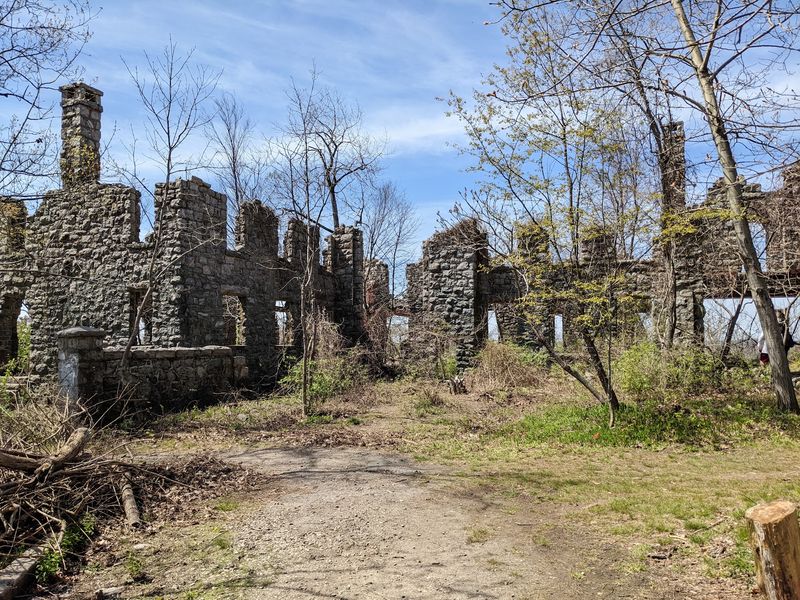
The reward arrives near the top of Ramapo Mountain: thick stone walls, empty windows, and a wide view over Ramapo Lake. Commonly called Van Slyke Castle, the estate was originally known as Foxcroft and was constructed in the early 1900s.
Ruth Coles eventually occupied it with her second husband, Warren Van Slyke, whose name became attached to the property. After Coles died, the mansion sat vacant, and a 1959 fire reduced it to the dramatic shell hikers see today.
Getting there is half the fun. The Castle Loop in Ramapo Mountain State Forest passes the lake before climbing over rocky ground to the ruins.
Once there, visitors can pick out former rooms and peer through window openings that now frame trees, water, and distant ridgelines.
The estate’s remains extend beyond the main house: a stone water tower and the outline of an old swimming pool make the place feel less like one abandoned building and more like a vanished mountaintop world.
Plan on a moderate hike of roughly four miles if completing the loop, wear shoes with good traction, and download a trail map before leaving home. Skyline Drive parking fills quickly on pleasant weekends, making an early start the smartest move.
Stay on marked public routes, since private residences and restricted property remain nearby.
2. Harrisville Ruins
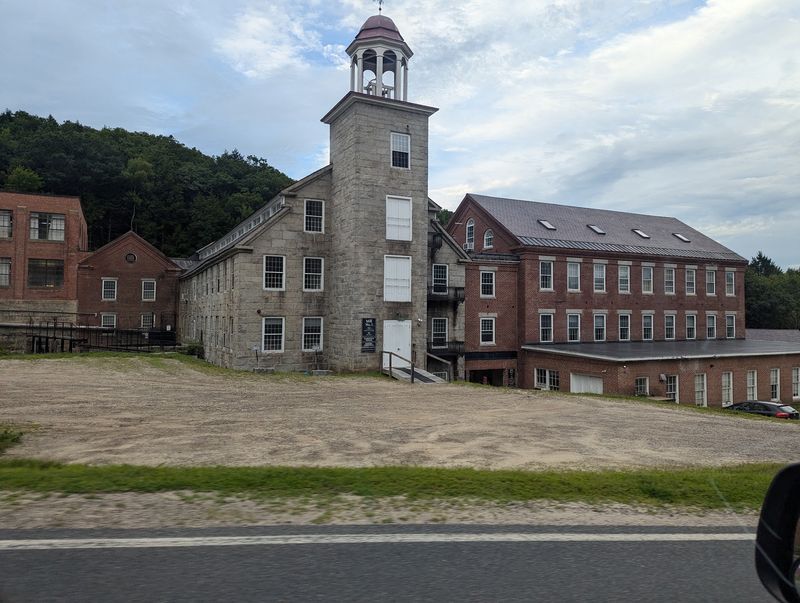
Drive through Wharton State Forest too quickly and Harrisville can look like little more than a weathered stone wall beside the road. Stop and look longer, though, and the scale of this former industrial settlement begins to emerge.
The community started as McCartyville, where William McCarty established a paper mill in the 1830s. It later became Harrisville under the Harris family, whose operation produced paper using waterpower from the Oswego River.
Workers’ homes, a store, and other buildings once surrounded the mill, creating a small company village in the middle of the Pines. The business outlasted many nearby ironworks but eventually declined, and a major fire in the early 20th century helped finish the job.
Today, broad masonry openings and heavy stone foundations sit among pitch pines and sandy ground. Rather than offering a polished historical reconstruction, Harrisville asks visitors to do some mental rebuilding.
Stand back from the walls and imagine belts turning, water moving through the mill, and workers arriving from homes that have almost entirely disappeared. The ruins lie along Route 679 in Wharton State Forest, but road and shoulder conditions deserve attention.
Park only where it is clearly permitted, avoid blocking gates, and do not climb on the masonry. Pair the stop with nearby Batsto Village if you want to compare an unrestored ghost town with one of New Jersey’s best-preserved industrial communities.
3. Brooksbrae Terracotta Brick Factory
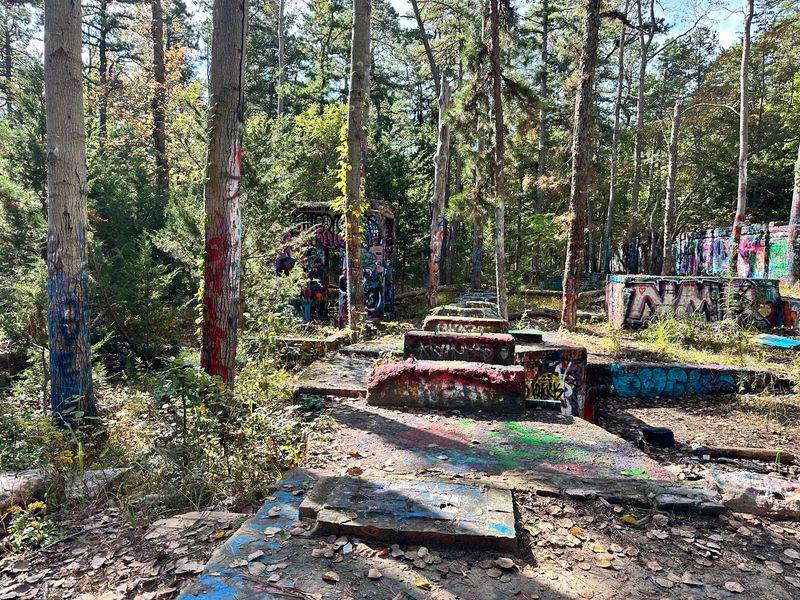
Color hits first at Brooksbrae. Nearly every surviving wall has been covered in layered graffiti, turning an unfinished industrial complex into an ever-changing woodland gallery.
The factory was built in the early 1900s near a railroad line in Manchester Township, where investors hoped to turn local clay into bricks and terracotta products. The operation never became the success its backers imagined.
Financial and legal troubles stalled the venture, and fire and decades of exposure eventually left behind the long brick shell seen today. That failed beginning gives Brooksbrae an unusual character: it is less a ruin of something worn out by years of production than a monument to a plan that never properly got moving.
Arched openings, roofless corridors, and trees growing beside masonry make it one of the Pine Barrens’ most visually distinctive historic sites. Visit in full daylight, when the artwork and structural details are easiest to see and the sandy approach is simpler to follow.
There are no visitor facilities, formal exhibits, or staff waiting at the ruins, and mobile service can be unreliable. Just as importantly, access rules and surrounding land conditions can change.
Confirm the current legal route before setting out, obey every posted sign, and never cross active or restricted railroad property. Once there, admire the building from stable ground.
Loose bricks, hidden debris, and weakened walls make climbing inside openings a lousy gamble for one more photograph.
4. Long Pond Ironworks
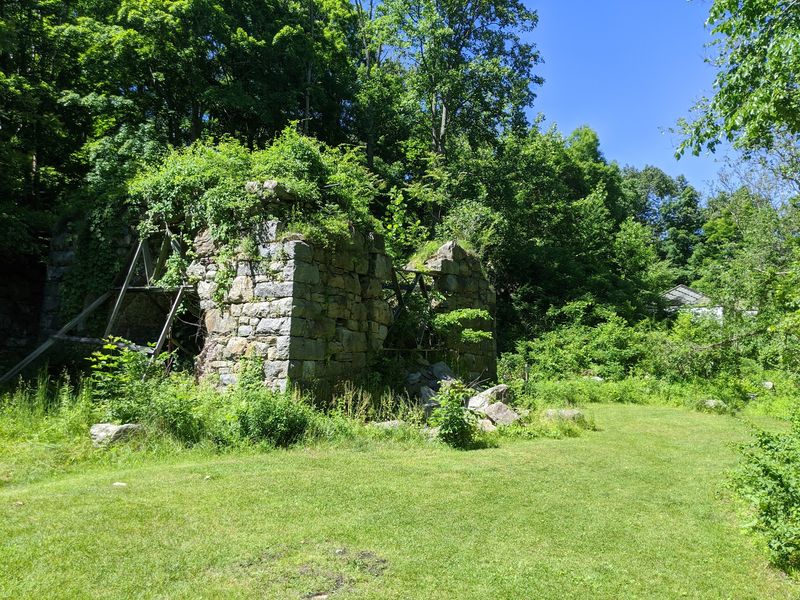
At Long Pond, the ruins do not stand alone. Furnace remains, waterwheels, stone houses, workers’ foundations, and old roadways spread through the woods near the Wanaque Reservoir, forming one of the state’s most complete early industrial landscapes.
German entrepreneur Peter Hasenclever founded the ironworks in 1766, choosing the location for its waterpower, forests, and access to iron ore. Over the next century, the operation produced iron goods under several owners and supported a community with homes, shops, a school, a church, and farms.
Its furnaces eventually fell silent, but enough survived to make the place wonderfully readable. Follow the paths through the historic district and you can trace how water was directed to power machinery, see the massive furnace stack, and compare workers’ dwellings with buildings used by managers.
Interpretive signs help turn piles of stone into an understandable production system, so this is a good choice for visitors who enjoy ruins but prefer a little context with their crumbling masonry. The historic area is part of Long Pond Ironworks State Park in West Milford, and admission to the grounds is generally free.
Museum access and guided programs may be limited to scheduled dates, so check ahead if those matter to you. Trails can become muddy, buggy, or icy depending on the season.
Give yourself at least an hour for the core ruins and longer if you want to continue onto the surrounding trail network.
5. Bethlehem Baptist Church Ruins
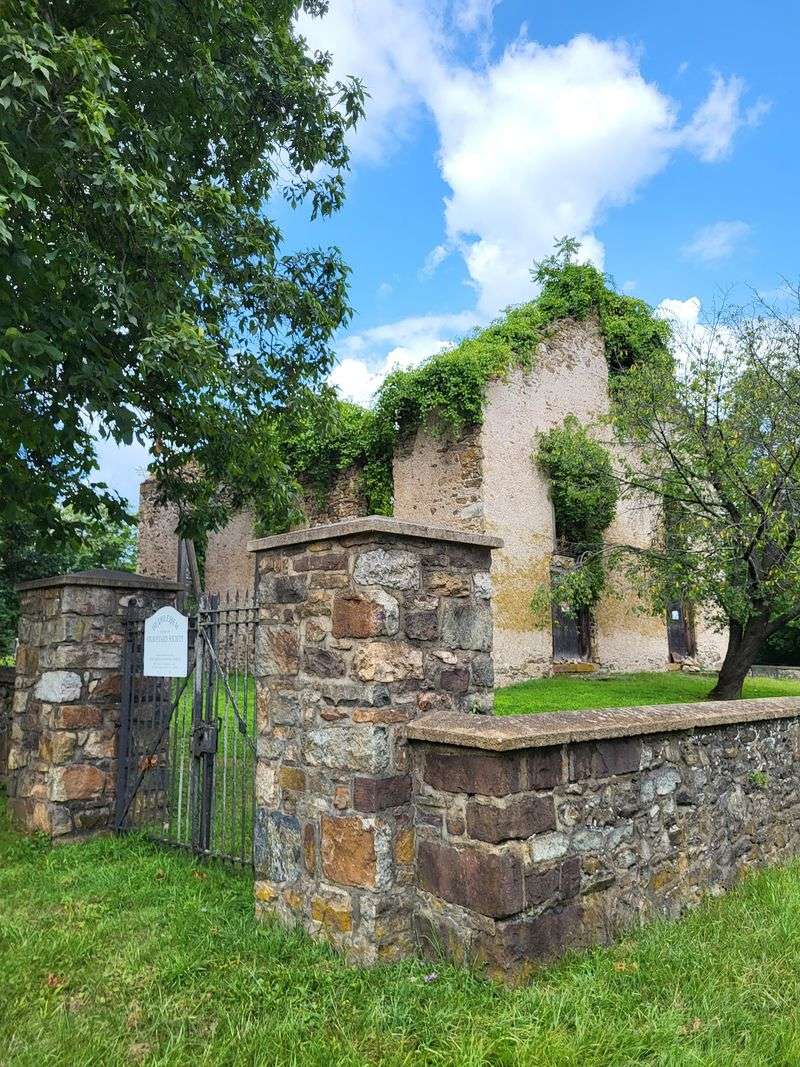
Cars rush along Interstate 78 while empty stone windows stare into a quiet Hunterdon County cemetery nearby. That collision of modern traffic and 19th-century stillness is what makes the former Bethlehem Baptist Church so memorable.
The congregation formed in 1837 and erected its church that same year along what was then the Brunswick-Easton Turnpike. Services ended in 1906, and the abandoned building gradually lost its roof and interior.
What remains is a compact stone shell with tall openings, weathered masonry, and an adjoining burial ground. It does not have the acreage or elaborate trail system of other places on this list.
Its appeal comes from the opposite direction: one small structure, stripped down to its strongest bones, surviving beside a highway that did not exist when worshippers first gathered there. Look for the historical marker near Baptist Church Road in the Pattenburg section of Union Township.
Because this is a cemetery and not an adventure playground, visit with extra restraint. Do not move stones, climb walls, or treat graves as photo props.
Parking is limited and the roads near the site can be awkward, so pull over only in a safe, legal space and avoid impeding local traffic. Access to the church enclosure may be restricted; if a gate is closed or signs prohibit entry, appreciate the ruins from the public roadside.
A cloudy autumn day suits the place beautifully, but respectful behavior matters in every season.
6. Weymouth Furnace Ruins
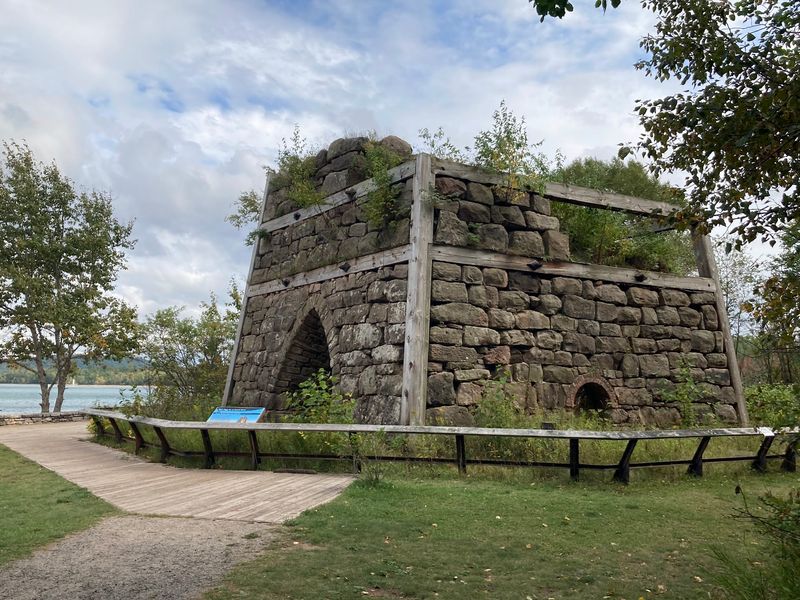
Water still rushes past the place where fire once did the important work. Beside the Great Egg Harbor River, the stone remains of Weymouth Furnace recall a South Jersey iron operation that began around the start of the 19th century.
The furnace used local bog iron, charcoal made from Pine Barrens timber, and river power to produce iron goods. Its output reportedly included munitions during the War of 1812, linking this peaceful riverside spot to a far louder chapter of American history.
After ironmaking declined, later owners used the property for paper production, but that enterprise also disappeared. The furnace base and related masonry now sit within Weymouth Furnace Park near Mays Landing.
The setting makes this one of the easiest ruins to turn into a relaxed afternoon: inspect the stonework, follow the riverbank, then settle at a picnic table rather than immediately heading back to the car. Kayakers and canoeists also use the river, although water conditions can change quickly and should be checked before launching.
The park generally provides parking, picnic space, and seasonal restrooms, making it friendlier to families than remote Pine Barrens sites with no amenities. Wear shoes that can handle damp ground, especially after rain.
The river may look gentle from shore, but currents and submerged obstacles deserve respect. Most of all, resist climbing the furnace walls.
The best view comes from stepping back and seeing how naturally the ruins now fit into the landscape that once supplied the operation.
7. Split Rock Furnace
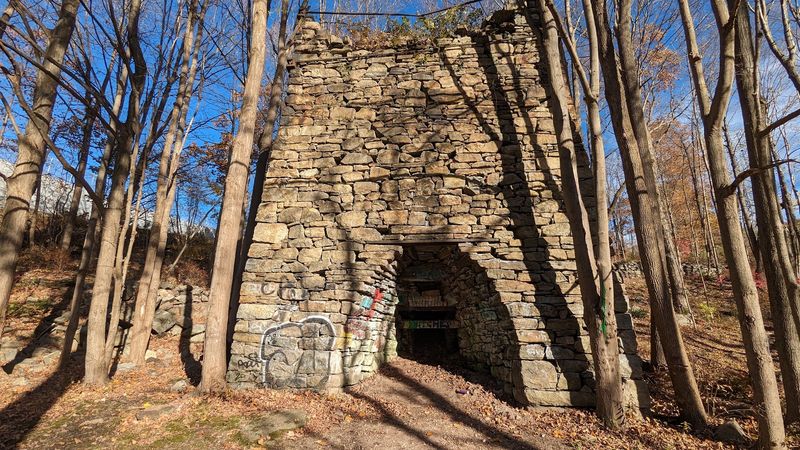
A tall stone stack beside a narrow reservoir road looks almost too substantial to be abandoned. Built in 1862 by Andrew B.
Cobb, Split Rock Furnace arrived during the Civil War, when demand for iron and ammunition made even a remote Morris County site commercially promising.
Earlier ironworking had already taken place in the area, but Cobb’s furnace became the centerpiece of a larger complex that included support buildings and a small settlement.
It was among the last charcoal-fueled blast furnaces constructed in New Jersey. The business did not last forever, yet the main furnace stack survived with an imposing amount of its masonry intact.
That vertical shape distinguishes Split Rock from the low foundations found at many former ironworks. It is easy to understand what the structure did: ore, charcoal, and limestone went in near the top, while intense heat produced molten iron below.
The furnace stands near Splitrock Reservoir in Rockaway Township, where the rough, narrow access road can be more challenging than the actual stop. Drive slowly, watch for oncoming vehicles, and do not assume every roadside patch is legal parking.
The surrounding watershed includes protected and restricted land, so stay in clearly permitted public areas and heed all barriers. There are no dependable facilities at the furnace, and cell reception may be spotty.
Combine the visit with a reservoir outing only if you have checked current access rules. Even viewed from a respectful distance, the stone stack delivers the full effect.
8. Deserted Village of Feltville
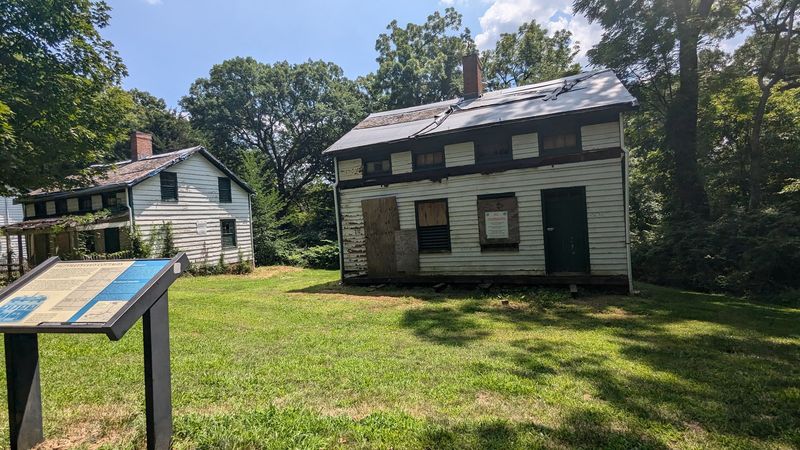
“Deserted” requires a small asterisk here. Several buildings remain standing, preservation work continues, and a few structures have modern uses—but that makes Feltville more interesting, not less.
David Felt created the village in the 1840s around a factory that produced stationery and bound books. Workers lived in purpose-built homes and had access to a store, school, and church, all under the watch of the paternalistic owner nicknamed “King David.”
After Felt sold the property in 1860, successive businesses struggled.
The village later found an unlikely second life as Glenside Park, a summer resort where city families escaped for fresh air, carriage rides, and dances. That chapter ended in 1916 as automobiles made more distant vacations practical.
Today, the old village road passes cottages with deep porches, the restored Church/Store, Masker’s Barn, archaeological remains, and a small cemetery. Interpretive panels make the roughly one-mile self-guided route easy to follow, while adjoining Watchung Reservation trails can extend the day.
The grounds are generally open daily from dawn to dusk, and parking is available off Glenside Avenue in Berkeley Heights. Some buildings are closed except during programs, and certain houses may be occupied.
Stay off weak porches and enter only spaces clearly open to visitors. Feltville works especially well for mixed groups: history fans get a layered company-town story, while everyone else gets an easy woodland walk that does not require expedition-level planning.
9. Sandy Hook’s Abandoned Military Batteries
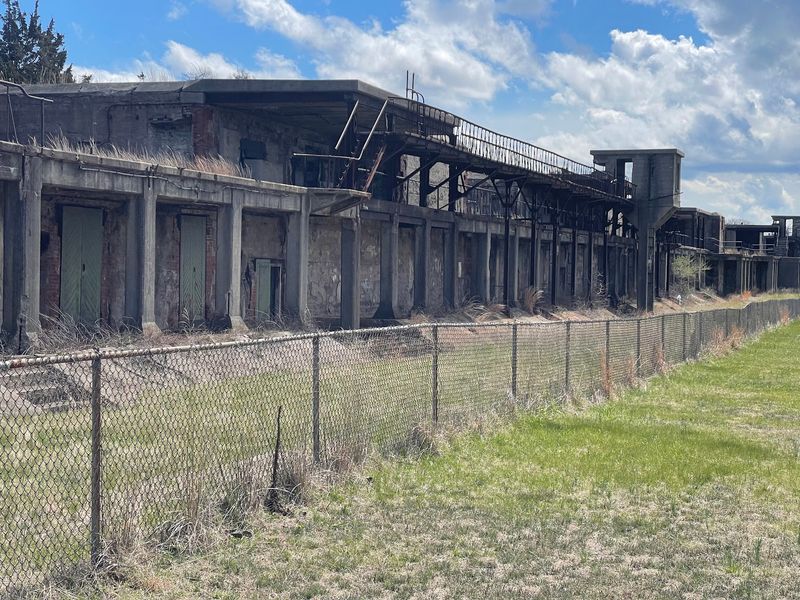
Sunbathers, cyclists, and fishermen share Sandy Hook with enough concrete fortifications to make the peninsula resemble a half-buried battleship.
The military began developing Fort Hancock in the late 1800s to protect New York Harbor, installing enormous coastal guns and continually updating the defenses as weapons technology changed.
Battery Potter used a pioneering hydraulic lift system, while later batteries concealed guns behind thick concrete and earth. During the Cold War, Nike missiles took over the defensive job.
None of the weapons ever fired on an enemy from Sandy Hook, but the batteries still communicate the scale of the threat planners imagined.
Many exteriors can be seen while walking or biking around the Fort Hancock district, where dark openings and massive walls contrast sharply with nearby beaches and elegant officers’ homes.
Interiors are normally locked unless opened for a ranger-led program or special event, and closed doors should stay closed. Sandy Hook is open daily from 6 a.m. to 9 p.m.
Fort Hancock parking is free, although seasonal beach parking fees apply in designated beach lots from Memorial Day weekend through Labor Day. Bring water and sun protection; shade can be scarce, and distances across the peninsula add up quickly.
A bicycle is arguably the best way to connect the batteries, lighthouse, parade grounds, and waterfront without repeatedly moving the car. Check current closures before visiting, since preservation work and wildlife protections can alter access.
10. Morris Canal Inclined Plane 9 West Ruins
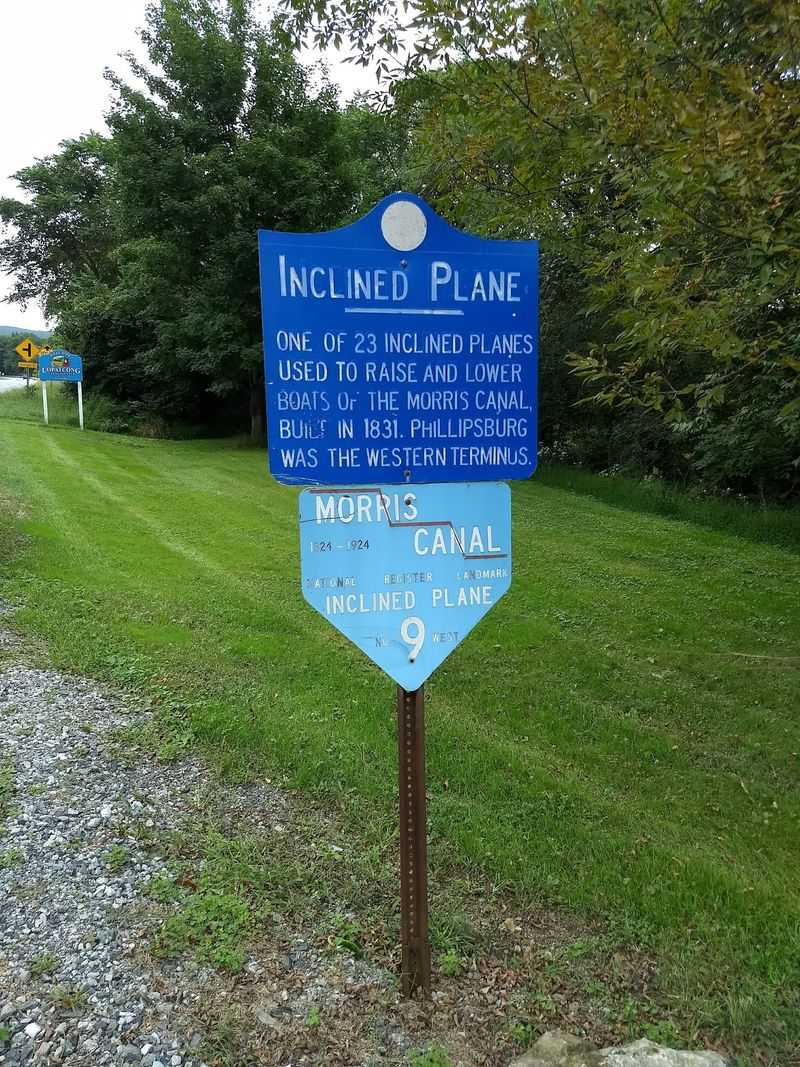
Imagine hauling a canal boat weighing well over 100 tons up a hill without unloading it. Plane 9 West accomplished exactly that, using a water-powered mechanism, cables, rails, and a wheeled cradle to lift boats between different elevations of the Morris Canal.
The canal opened across northern New Jersey in the 1830s and became an engineering marvel, climbing more than 900 feet between the Delaware and Hudson rivers through a system of locks and inclined planes. Near Stewartsville, Plane 9 West preserves an unusually rich cluster of canal remains.
Visitors can see portions of the inclined plane, the turbine chamber, canal prism, tailrace, stone sleepers that once supported rails, bridge masonry, and buildings associated with the workers who operated the machinery. The appeal is mechanical rather than monumental.
Each fragment answers part of the question, “How did they possibly make this work?” The Jim and Mary Lee Morris Canal Museum helps assemble those pieces through artifacts, models, and interpretation.
Grounds and museum access may depend on scheduled openings or special events, so verify arrangements before making a dedicated trip.
The site is along County Route 519 near Stewartsville; use designated parking rather than stopping along the busy roadway. Wear sturdy shoes and expect uneven ground around the outdoor remains.
Give the machinery some imagination, and an apparently quiet hillside becomes one of the cleverest transportation systems New Jersey ever built.