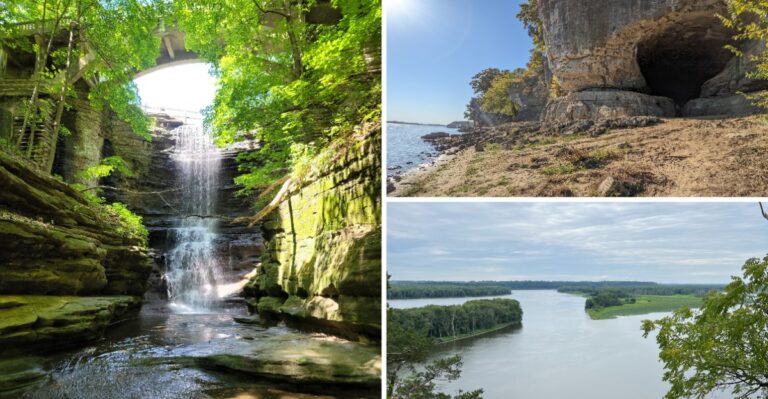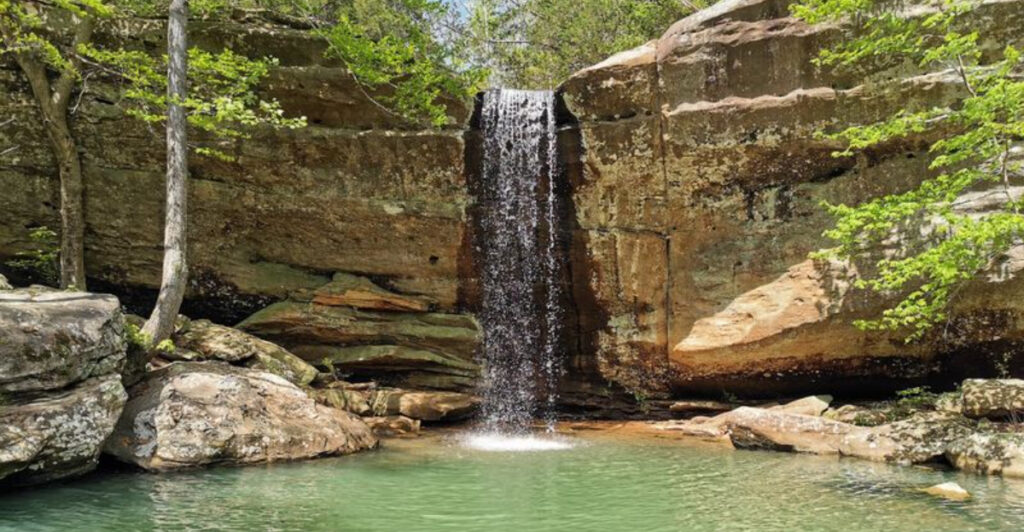
Rain can transform an ordinary Illinois trail into something spectacular. Across the state, seasonal waterfalls tumble through sandstone canyons, wooded ravines, and rugged forests, creating hiking destinations that feel surprisingly wild for the Midwest.
Starved Rock and Ferne Clyffe deliver dramatic rock formations and cascading water, while southern Illinois hides even more scenic falls among the forests of Shawnee. Some hikes make an easy morning outing, while others reward adventurous walkers with longer trails and rougher terrain. Pack sturdy shoes, check recent conditions, and bring your camera. These 8 waterfall hikes offer a refreshing way to spend your next Illinois weekend outdoors.
1. French Canyon Falls Trail
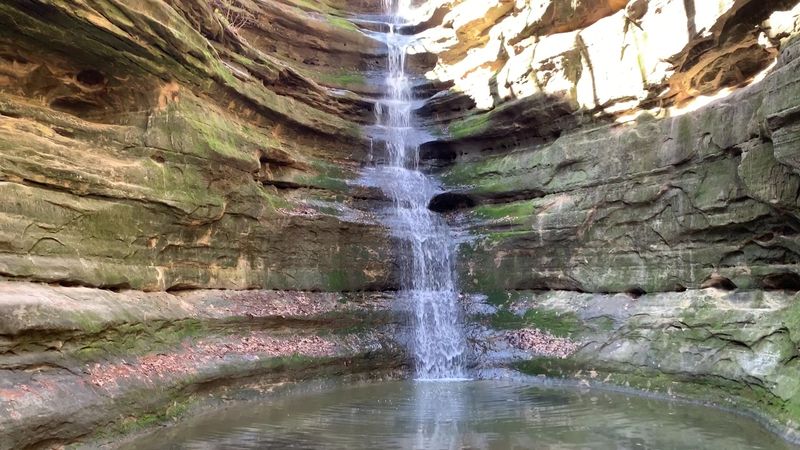
Quiet excitement builds on this trail long before the waterfall comes into view. French Canyon has a tight, dramatic shape, so every turn pulls attention toward the rock walls, the shady floor, and the sound of water when conditions are right.
After wet weather, the final stretch becomes the main event, with a seasonal fall pouring down between tall sandstone sides.
Getting there is part of the fun, especially for hikers who like a route that changes character as they go. One section may feel wooded and open, then the canyon narrows and the light shifts, making the walls look taller and cooler.
Good shoes matter here because damp stone, packed dirt, and steps can all get slick, especially after rain. Spring is often the showiest season, but a rainy summer week can also give the waterfall extra life. Early mornings usually bring a calmer pace, which helps if avoiding crowded trail photos is a goal.
A lightweight rain jacket is smart even on bright days because canyon spray and dripping rock can leave sleeves damp fast.
Families often like this hike because the payoff arrives without a full-day effort, though younger kids may need a hand on stairs or uneven ground.
Bringing water is still a good idea, since shaded trails can trick people into forgetting how much they are walking. Phones and cameras both get a workout here, so a small zip bag helps protect them from mist.
French Canyon works best with flexible expectations. The waterfall is seasonal, not guaranteed, and that is part of the appeal.
On a drier day, the canyon still offers towering stone, twisting roots, and a close, enclosed look at Starved Rock scenery that stands out from wider overlook trails nearby.
2. St. Louis Canyon Falls Trail
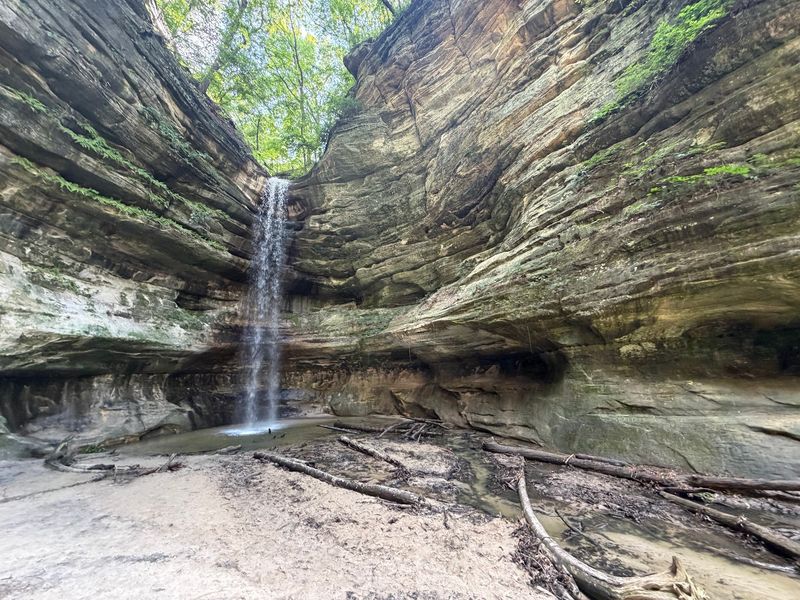
Few Illinois waterfall walks deliver such a strong finish so quickly. St. Louis Canyon draws plenty of attention because the route ends beneath a tall sandstone overhang where seasonal water drops into a broad, bowl-like space.
When the flow is active, the scene has real scale, and the rock walls help every splash sound louder. The path leading in keeps things interesting without feeling overly complicated for most visitors.
Trees provide shade, the canyon walls begin to rise, and then the setting tightens around the trail in a way that builds suspense. That gradual reveal makes the waterfall look even bigger when hikers finally step into the open area below it.
Wet weather improves the odds of a strong cascade, but it also changes the trail underfoot. Mud, slick patches, and shallow puddles are common, so sturdy footwear beats casual sneakers here.
Anyone bringing children should slow down near the wettest rock, where excitement can easily outrun balance. Photographers usually have the best luck by arriving early or visiting on a gray day, since softer light shows more texture in the canyon walls.
A bright afternoon can still be beautiful, yet deep shadows and bright openings sometimes make phone photos tricky. Keeping a small cloth in a pocket helps wipe water spots off a lens.
Plenty of hikers pair this trail with another nearby Starved Rock canyon, which makes for a fuller day without turning the outing into an exhausting march.
Snacks and water are worth packing even for a shorter route, since time disappears fast when people stop for pictures and linger at the end. St. Louis Canyon is popular for a reason, and a strong recent rain makes its finale especially memorable.
3. Wildcat Canyon Falls Trail
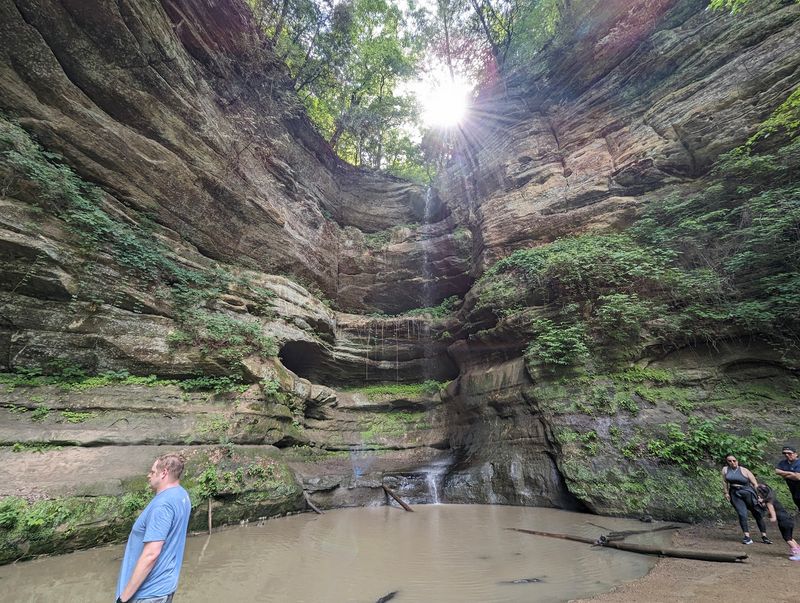
Wildcat Canyon has a bolder mood than some of the easier waterfall stops nearby. The trail mixes woods, elevation changes, and canyon scenery in a way that feels a little more adventurous, especially when the seasonal waterfall is running.
Steep sandstone walls frame the destination, giving the whole route a stronger sense of depth and scale. Reaching the canyon often involves a bit more effort, which is exactly why many hikers remember it so well.
There is enough variety along the way to keep things from feeling repetitive, with forest sections, stairs, and shifting views as the landscape closes in.
That combination makes it a satisfying pick for people who want more than a quick walk to a photo spot. Rain is the secret ingredient here, but it also raises the challenge.
Mud can collect on slopes, and steps may hold water, so taking time on descents is a smart move. Trekking poles are not necessary for everyone, yet some hikers appreciate the extra stability when the ground turns soft.
Because the canyon can hold moisture and cooler air, the area may stay damp longer than expected after a storm. Packing an extra pair of socks in the car is a small move that often pays off.
A light snack helps too, especially for groups pairing this trail with overlooks or nearby canyons in the same park.
Wildcat Canyon fits hikers who enjoy a stronger workout with a scenic payoff at the end. It is still approachable for many visitors, but the route asks for more attention than the shortest waterfall trails.
When the falls are active and the canyon walls are darkened by recent rain, the setting has a rugged look that makes this one of Starved Rock’s standout weekend choices.
4. Waterfall Trail
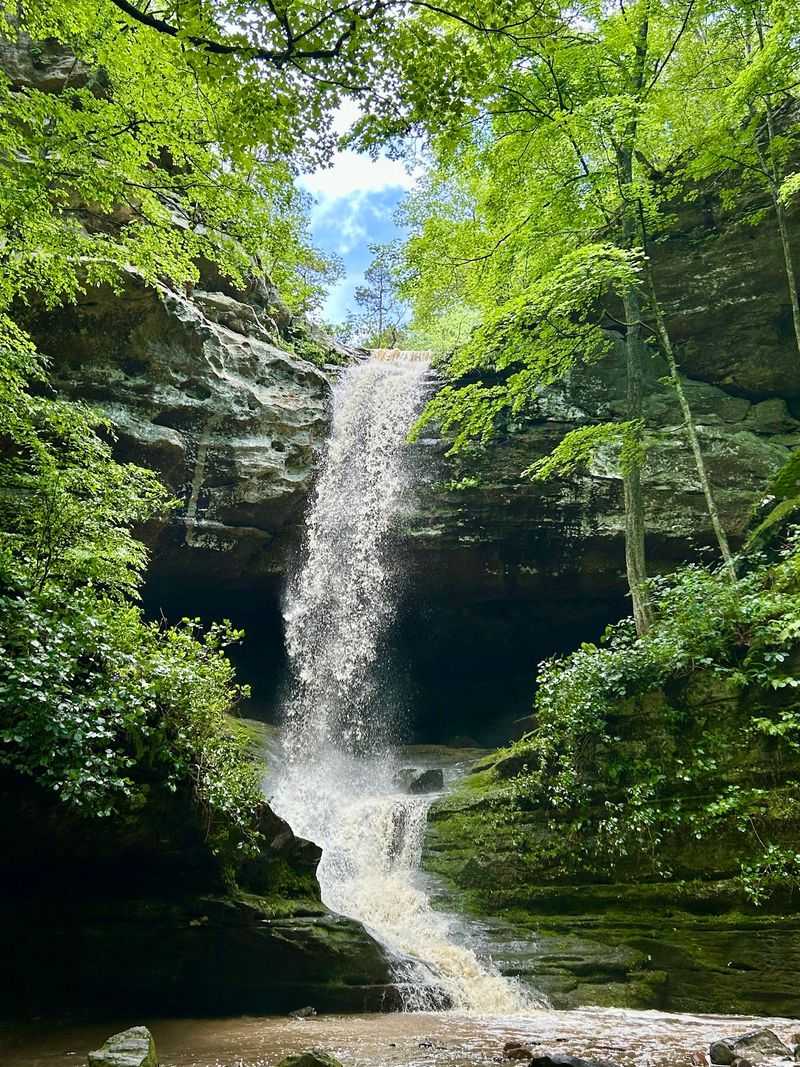
Southern Illinois knows how to put on a green, shady show, and Waterfall Trail at Ferne Clyffe proves it fast. The route is relatively short, but the canyon setting gives it strong personality, especially when recent rain sends water spilling over the rocky bluff at the end.
Ferns, tree cover, and damp stone help the whole walk feel cool and sheltered. This is a solid choice for families, casual hikers, or anyone wanting a scenic stop without planning a major trek.
The shorter distance means more time to notice the details, like rock textures, little stream sections, and changing light under the trees. Kids often enjoy the enclosed canyon feel because every bend seems to promise another surprise.
Timing matters with this waterfall. It is seasonal, so visiting after wet weather gives the best chance for a satisfying view, while dry stretches can leave the bluff quieter. Even then, the canyon itself still carries the outing with its thick shade and rugged walls.
Footing can vary depending on rain, leaves, and shallow water along parts of the trail. Shoes with grip help more than people expect, especially when stepping on smooth rock near damp areas.
Bringing bug spray in warm months is also a smart call, since shaded southern woods can be lively after rain. Because the hike is shorter, many visitors fold it into a larger day of exploring Ferne Clyffe State Park.
That makes it useful for mixed-age groups, where some want an easy highlight and others want to keep wandering afterward.
Waterfall Trail is not about huge mileage or a punishing climb. It is about a quick dip into a lush canyon scene that can look especially striking when the bluff is streaked with fresh, falling water.
5. Jackson Falls Trail
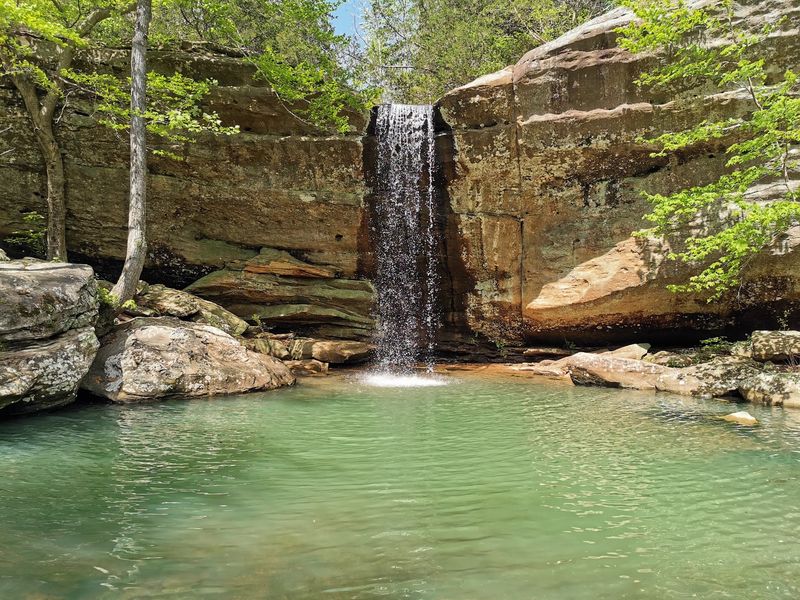
Jackson Falls brings a wilder edge to the weekend hiking list. Known for sandstone cliffs and a strong rock-climbing presence, the area also rewards hikers with seasonal waterfalls that appear along the bluffs after enough rain.
Instead of one neat, simple reveal, the landscape offers scattered rocky features, wooded paths, and a more rugged sense of discovery.
This is the place for hikers who do not mind uneven ground and a less polished trail experience. Tree roots, rocky sections, and changing terrain ask for attention, but they also give the outing its energy.
Around the cliffs, the scenery shifts quickly from forest shade to open rock, which makes the area visually interesting even before any water shows up.
Rain improves the waterfall possibilities, though it can also make navigation and footing tougher. Muddy patches and slick stone are common, so sturdy shoes are the minimum, not a luxury.
A downloaded map can help too, since rugged recreation areas are more enjoyable when nobody is standing around guessing which way to go.
The climbing history here adds extra character. Even hikers who are not climbers may spot ropes, chalky rock sections, or people working on routes, which gives the outing a different rhythm than a standard state park trail.
That mix of recreation styles makes Jackson Falls feel busy in an active, outdoorsy way rather than calm and polished.
Anyone visiting should pack water, move carefully, and leave extra time for exploring side views without rushing. Conditions change a lot depending on rainfall, so flexibility is part of the plan.
On a good wet-weather weekend, Jackson Falls offers cliffs, forest, and temporary cascades in one rough-edged package, making it a strong pick for hikers who like their scenery with a little grit and adventure.
6. Burden Falls Trail
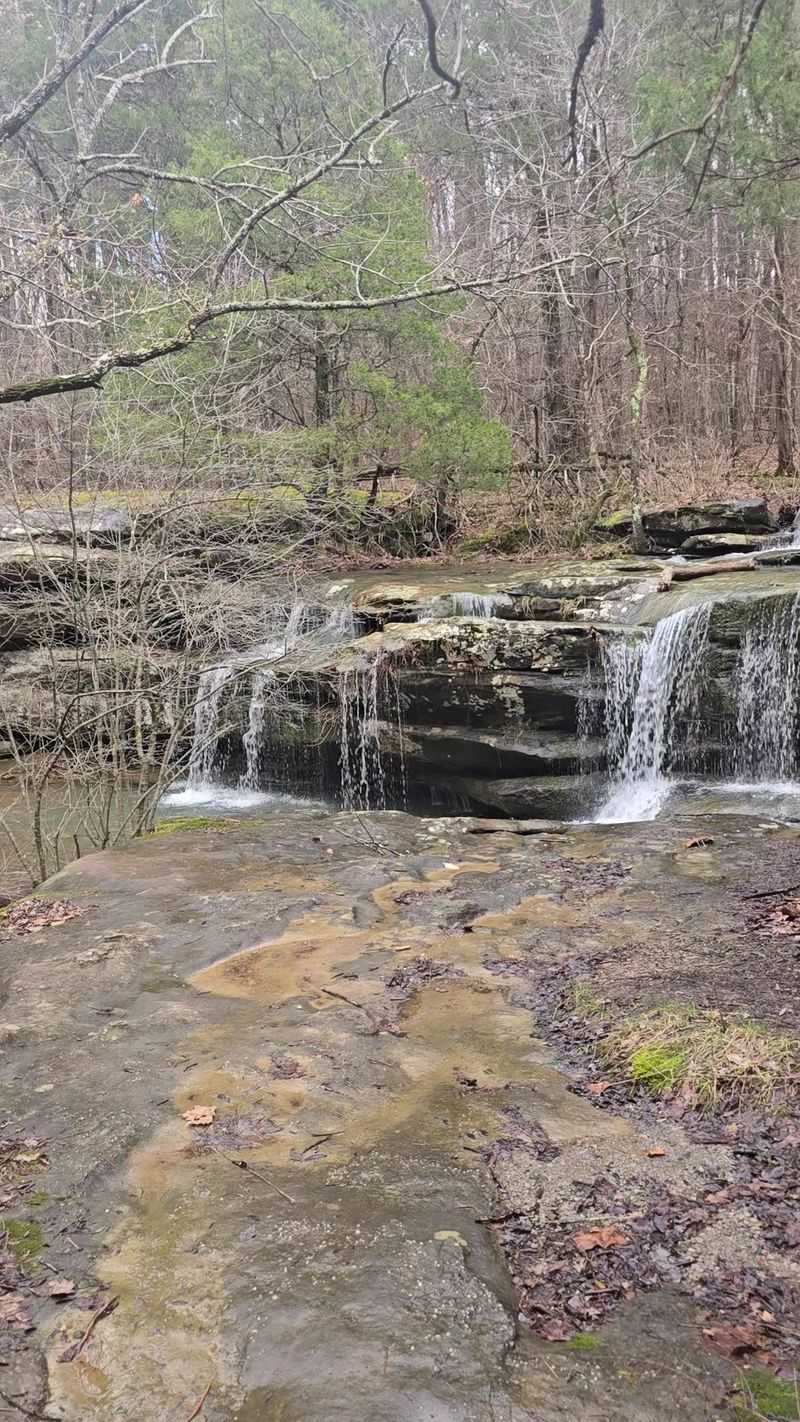
Burden Falls gets attention quickly because the hike is short and the waterfall setting is strong. Burden Creek drops over rocky ledges in a way that looks broad, layered, and nicely framed by surrounding forest.
After rain, the scene can be especially lively, with more movement, more sound, and darker stone that sharpens the whole view.
For visitors who want a waterfall without a long march, this area makes a practical weekend stop. The trail access is easier than many rugged southern Illinois outings, which helps mixed groups enjoy it together.
Even with a shorter approach, it still helps to move carefully near wet areas, since slick rock and muddy edges can surprise people who arrive in a hurry.
One good strategy is to treat this as a slower visit rather than a fast in-and-out errand. Spending a few extra minutes listening to the water, scanning the ledges, and looking at the creek below often makes the stop feel richer.
A recent storm can turn the falls into a much fuller display, while dry weather brings a quieter version of the same landscape.
Because this is a popular scenic spot, early arrival usually means easier parking and a calmer experience. That matters on weekends, especially in spring and after rainy stretches when waterfall photos start calling everyone’s name.
A small towel in the car is useful too, since damp ground and muddy hems are common souvenirs. Burden Falls works well as either a main destination for a relaxed day or one stop in a longer southern Illinois loop. The appeal comes from the contrast between the easy access and the dramatic creek-and-ledges setting.
It is a simple plan with a strong payoff, and when conditions line up, the water adds enough motion and sound to make the whole forest corner stand out.
7. Boulder Falls Area Trails
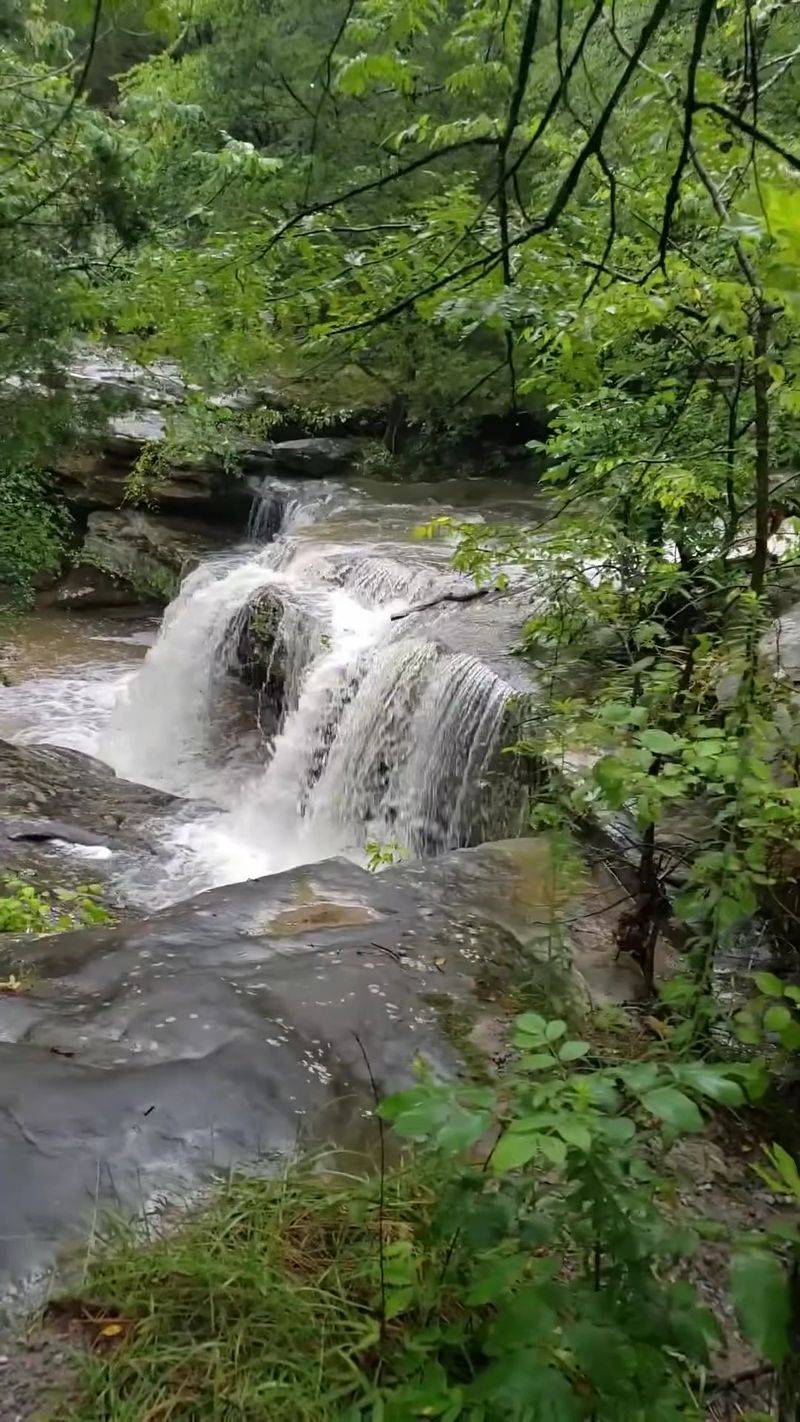
Bell Smith Springs does not play small, and the Boulder Falls area proves it. Trails wind through giant sandstone blocks, bluff lines, clear water, and seasonal cascades, creating a landscape that looks almost puzzle-built.
Hikers get more than one focal point here, so the fun comes from exploring the terrain as much as chasing a single waterfall view.
The route network has a more adventurous personality than a basic out-and-back trail. Massive boulders break up sightlines, stream crossings add variety, and the ground can change from smooth path to rocky footing in a hurry.
Because of that, this area suits hikers who enjoy paying attention to where they step and taking time to look around corners.
Recent rain often improves the cascades, but it also makes the whole place more demanding. Wet rock can turn slick, shallow water may spread wider across crossings, and muddy spots can linger in shaded sections.
Shoes with solid grip are a big help, and an extra pair left in the car is rarely a bad idea. There is also a playful side to this landscape. Kids, teens, and adults who like scrambling over big stones or peeking between rock formations often find plenty to talk about here.
At the same time, caution matters because uneven surfaces and drop-offs deserve respect, especially when people get distracted by photo opportunities.
A paper map or downloaded trail info can make the visit smoother, since the network encourages wandering. That is part of the appeal, but it helps to know the general loop or turnaround plan before setting off.
Boulder Falls area trails offer one of the most distinctive hiking environments in Shawnee National Forest, blending boulders, bluffs, streams, and temporary falls into a weekend outing that feels lively from start to finish.
8. Rocky Glen Waterfall Trail
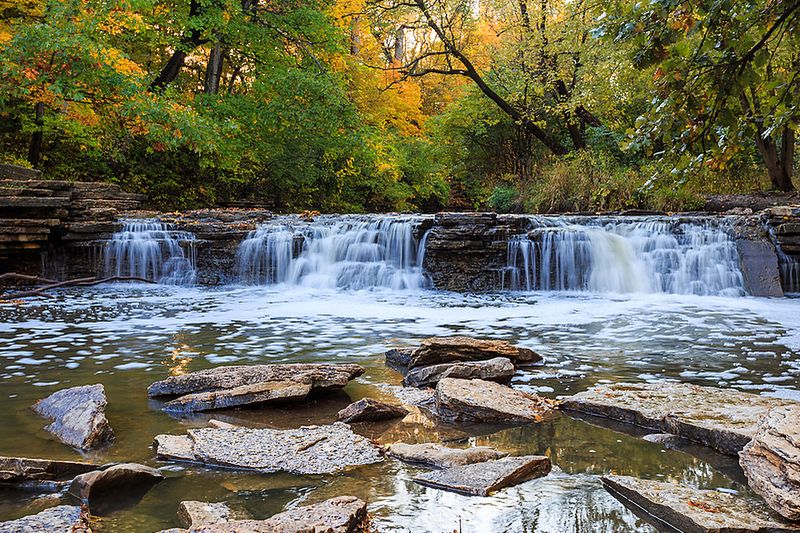
Not every waterfall stop has to be deep in the southern hills or tucked inside a canyon. Rocky Glen Waterfall gives northeast Illinois hikers an easy-to-reach option inside the larger Waterfall Glen trail system, where woods and rocky terrain create a pleasant break from nearby suburbia.
The waterfall itself is man-made, but the setting still delivers a scenic pause on a longer walk. The big advantage here is flexibility. Some visitors make Rocky Glen the main destination, while others build it into a bigger loop through the preserve’s broad network of trails.
That makes the area useful for casual walkers, runners, and hikers who want control over distance without giving up a clear landmark to aim for.
Because the preserve is expansive, it helps to check a map before heading out. A route that looks short on paper can feel longer once turns, side paths, and photo stops start adding up.
Water and comfortable walking shoes are still important, especially on warmer weekends when exposed stretches can feel less shaded than expected.
The waterfall has a different character from seasonal canyon drops. Rather than chasing recent rainfall and hoping for the best, visitors can focus more on the overall walk, the wooded sections, and the rocky touches around the cascade.
That reliability makes it a good pick for people who simply want a pleasant outing with a waterfall feature in the mix.
Weekends can be busy, so earlier hours often bring quieter trails and easier parking. The preserve is popular with all kinds of outdoor users, which means shared-trail awareness goes a long way.
Rocky Glen Waterfall Trail may not offer towering sandstone walls or a backcountry feel, but it succeeds as an accessible, satisfying hike where a well-known cascade adds a memorable stop inside one of the Chicago area’s largest preserves.
Share this story