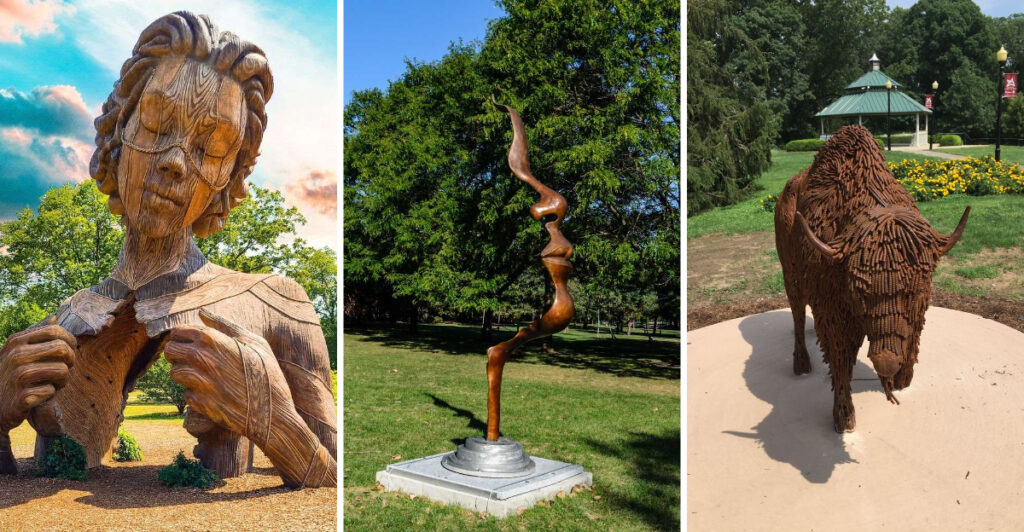
A giant steel form rising from prairie grass or an abstract figure appearing around a wooded bend can completely change the rhythm of a walk. Illinois is dotted with sculpture gardens where artwork shares space with riverbanks, university campuses, native landscapes, and neighborhood paths.
Instead of viewing each piece beneath gallery lights, visitors can watch sunlight, weather, and changing seasons become part of the experience. Some collections feel carefully curated, while others reward accidental discovery. These 9 outdoor art spaces invite you to wander without rushing, notice details from every angle, and see familiar Illinois landscapes through a more creative lens.
1. Schaumburg Sculpture Park (Schaumburg)
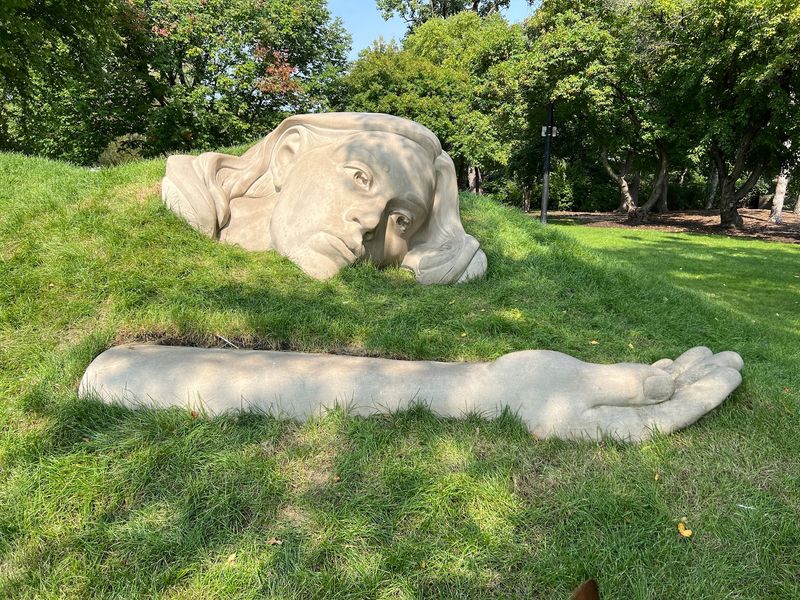
A regular park walk gets a clever twist here, because art shows up where you least expect it. One minute there is a broad lawn and a paved path, and the next there is a bold metal form rising out of the grass like a surprise clue in a scavenger hunt.
That sense of discovery gives Schaumburg Sculpture Park its spark. The layout helps a lot. Sculptures are spread across open spaces instead of packed tightly together, so each piece has room to stand out.
Visitors can slow down, circle a work from different angles, then look back and notice how the shape changes against trees, sky, or nearby plantings.
Families, casual walkers, and art fans can all enjoy the park in different ways. Younger kids often respond first to scale, color, and funny shapes, while adults may spend more time reading titles or comparing materials.
Even without knowing much about contemporary art, it is easy to react honestly to what catches the eye. Comfort matters too, and this park keeps things easy. Wear walking shoes, bring water on warm days, and give yourself enough time to wander without rushing.
A slower pace works best because the fun comes from spotting pieces gradually instead of racing from one sculpture to another.
Photos can be especially good in early morning or late afternoon, when light creates stronger shadows across the lawns. On a cloudy day, metal and stone surfaces often show more texture, which can make close-up shots more interesting.
Try taking one wide photo that shows a sculpture in the landscape, then another that focuses on details like edges, curves, or weathered surfaces.
For anyone curious about outdoor art but not eager for a formal museum visit, this is an easy place to start. The setting keeps the mood relaxed, and the artwork gives every lap around the park a fresh reason to look up.
2. Wandell Sculpture Garden (Urbana)
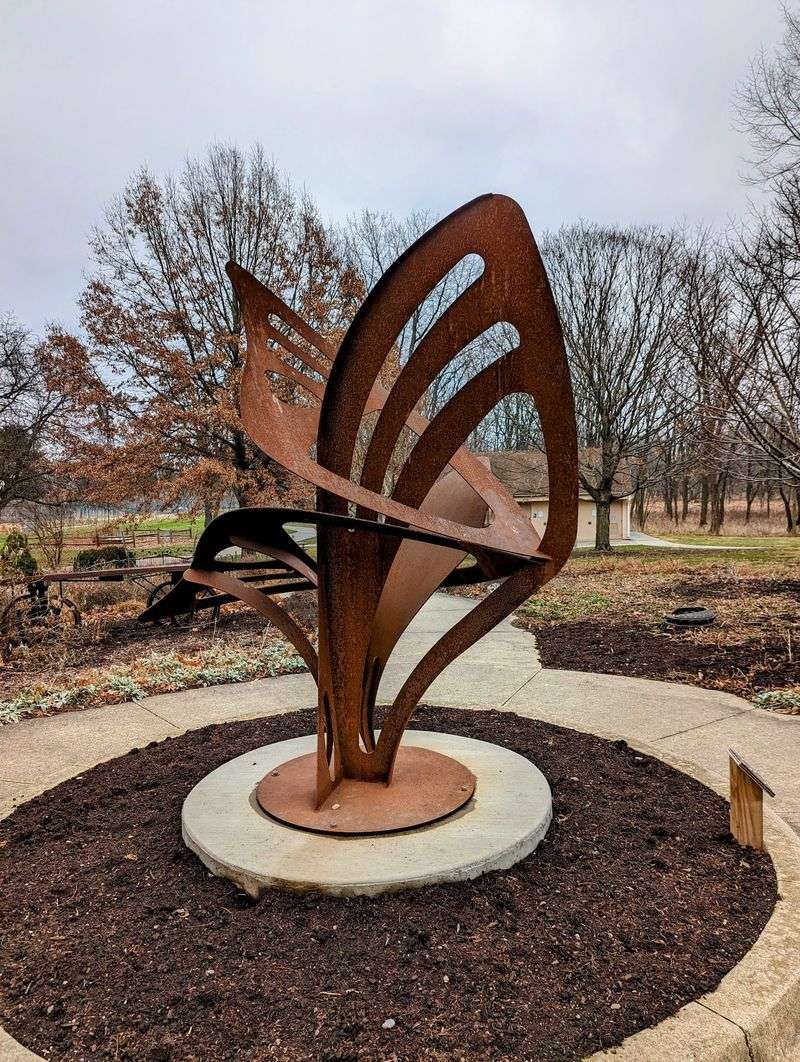
Quiet arrives quickly in this corner of Urbana. With prairie views, winding paths, and artwork tucked into the landscape, Wandell Sculpture Garden offers a kind of outdoor art experience that asks visitors to slow down and notice small shifts in mood, space, and texture. It is easy to forget that city streets are not far away.
The setting inside Meadowbrook Park gives the garden much of its character. Sculptures share space with grasses, trees, and open sky, so the art never feels cut off from nature.
A piece can seem playful near a bend in the trail, then appear more serious when seen again beside winter branches or tall summer growth.
That changing backdrop makes repeat visits appealing. Different seasons can alter how a sculpture reads, especially in a prairie environment where color and height are always moving.
Even wind becomes part of the scene, adding motion to the grasses around still objects. Visitors do not need a plan, but a few simple ideas help. Start with one loop and resist the urge to rush toward every visible piece at once.
Let the paths guide the outing, and pause at spots where the art and landscape seem to balance each other naturally.
This garden also works well for people who prefer reflection over crowds. A notebook, camera, or even a short sketch session can fit naturally into the visit.
Because the artwork is outdoors, there is less pressure to react in a certain way, which makes it easier for younger visitors and first-time art watchers to form their own opinions.
Good walking shoes are a smart pick, especially after rain. Bring water, check the weather, and allow time to sit for a while rather than treating the place as a quick stop.
Wandell Sculpture Garden rewards patience, and the more carefully you look, the more the prairie and the artwork begin to speak to each other.
3. Skokie Northshore Sculpture Park (Skokie)
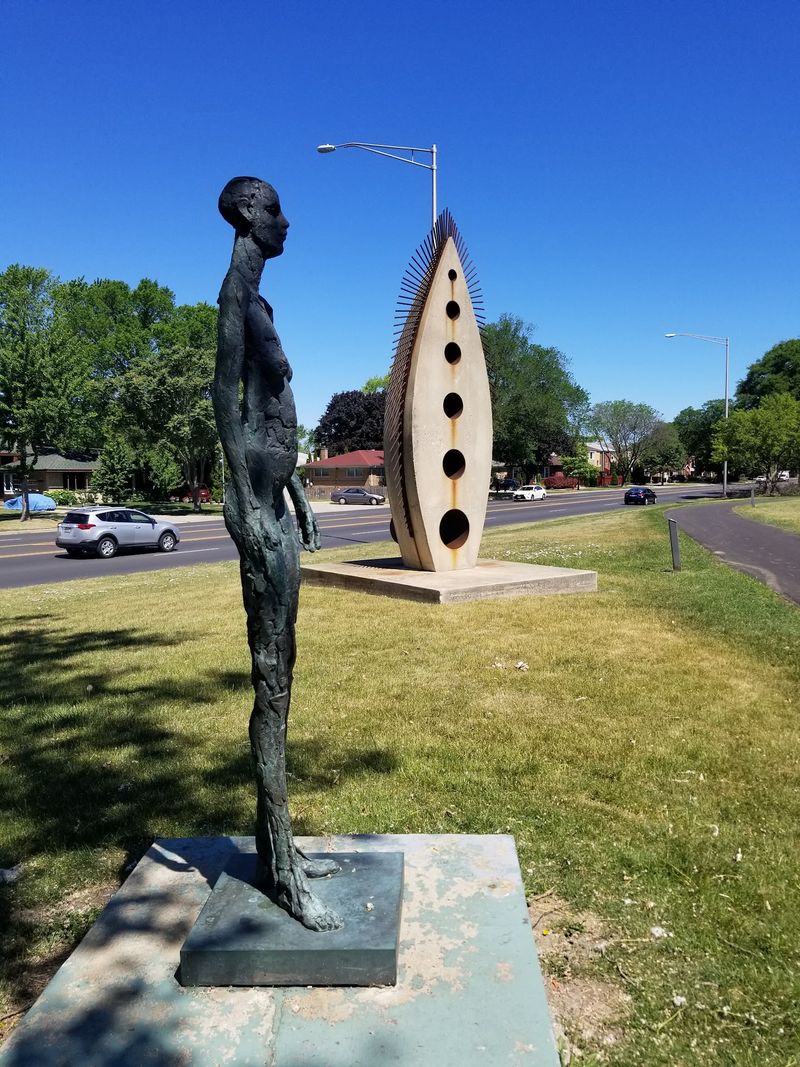
Along a busy roadway, art is probably the last thing many drivers expect to notice. That contrast is part of the appeal at Skokie Northshore Sculpture Park, where large contemporary works line a green stretch beside McCormick Boulevard and turn an ordinary corridor into an open-air gallery.
The long, linear layout changes how people experience sculpture. Instead of entering through one main gate and moving through a contained garden, visitors travel beside the works as the park unfolds piece by piece.
Some sculptures announce themselves from a distance, while others become more interesting only after a closer look from the walking path.
Scale matters here. Bigger pieces hold their own against traffic, open lawns, and broad skies, so the park often delivers a strong first impression.
At the same time, details still reward slower viewing, especially where shadows, cutouts, welded joints, or polished surfaces reveal the hand of the artist.
Because the setting includes trails, the park suits several kinds of outings. A quick stroll works, but so does a longer walk or bike ride with frequent stops. That flexibility makes it easy to visit without turning the day into a big production.
One useful tip is to pay attention to sightlines. A sculpture that seems simple head-on may look completely different from the side, especially if it uses negative space or stacked forms.
Children often enjoy this part most, because moving around the piece becomes a game of seeing how shapes change.
Timing can shape the visit too. Early evening light often sharpens outlines and adds contrast between metal, grass, and trees.
On cooler days, the park can feel especially inviting for a longer walk. Skokie Northshore Sculpture Park proves that public art does not need a dramatic setting to make an impact. Sometimes a roadside strip with ambition and imagination is more than enough.
4. Nathan Manilow Sculpture Park (University Park)
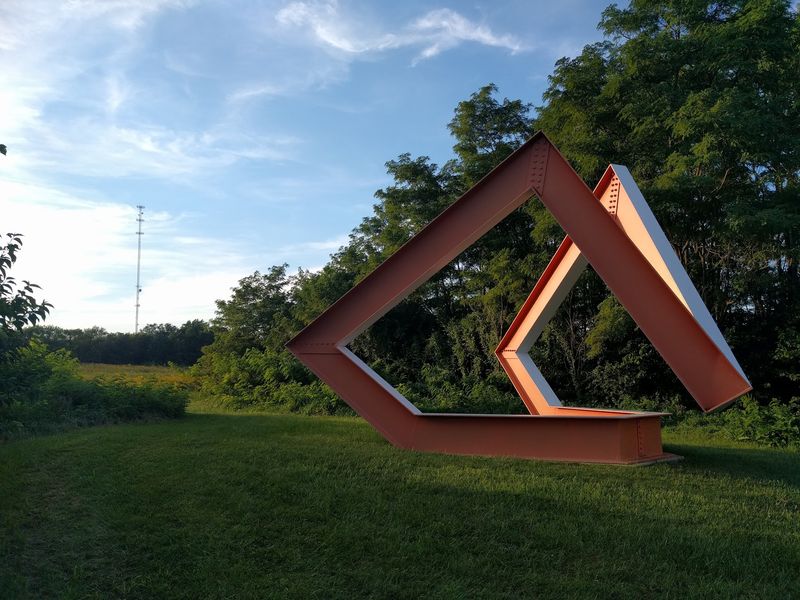
Big land changes the way sculpture reads, and few places show that better than Nathan Manilow Sculpture Park. Spread across the grounds of Governors State University, the park pairs monumental artworks with prairie space and wide skies, giving many pieces a bold, almost cinematic presence.
Here, distance becomes part of the viewing experience. A sculpture seen from far across a field may first register as a silhouette, then slowly reveal its shape, material, and scale as you approach. That gradual reveal can be more exciting than seeing everything up close right away.
The open setting also helps visitors notice how artists handle mass and proportion. Large works do not feel crowded, and even very strong forms have enough breathing room to interact with clouds, grasses, and changing light.
On breezy days, the surrounding landscape adds movement and contrast to the stillness of metal or stone. Because the park sits on university grounds, it can be especially appealing for people who like art with a thoughtful edge. The works often invite questions rather than quick answers.
That makes this a good place to walk with a friend, compare reactions, and see how two people can stand in front of the same sculpture and notice completely different things.
Comfort is part of planning. The site is expansive, so wear shoes meant for steady walking and bring water if the weather is warm.
A map, if available on-site or online, can help shape a route, but leaving room for detours is wise. Some of the best moments come from seeing a piece unexpectedly framed by open land.
Photography fans should try both close studies and very wide shots. The contrast between a monumental sculpture and a huge Midwestern sky can create memorable images without much effort.
Nathan Manilow Sculpture Park offers a refreshing reminder that outdoor art can be intellectual, approachable, and visually striking all at once.
5. Goldman-Kuenz Sculpture Park at Cedarhurst (Mt. Vernon)
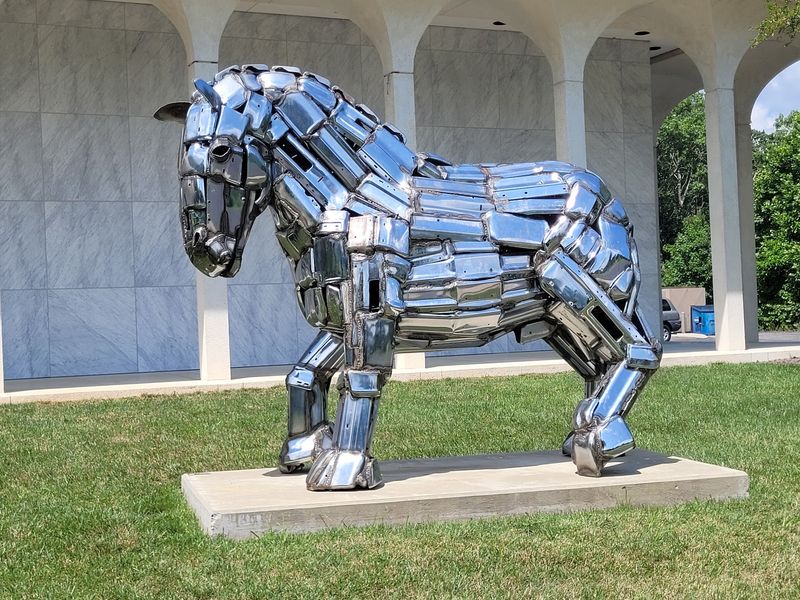
Garden design and contemporary art make a sharp team at Goldman-Kuenz Sculpture Park at Cedarhurst. Set around the Cedarhurst Center for the Arts in Mt.
Vernon, the grounds mix curated landscaping, mature trees, and outdoor sculpture in a way that keeps the eye moving from one texture to another.
Unlike parks that lean heavily on open prairie or long trails, this setting has a more composed rhythm. Lawns, planted areas, and pathways help shape the visit, so each sculpture arrives with a slightly different frame.
One piece may stand against dense greenery, while another gets extra drama from a more open patch of sky. That variety helps the collection feel eclectic without becoming chaotic. Contemporary works can look crisp and geometric in one corner, then playful or reflective in another.
Seasonal changes probably add even more character, since blooming gardens, fall color, bare branches, and summer shade can all affect the mood around the art.
Visitors who enjoy both art and landscaping may find this park especially rewarding. It is a good place to look closely at how placement changes meaning.
A sculpture near a formal garden bed can appear more refined, while the same work in a wilder patch might read as more experimental or energetic.
For a smooth visit, move at an unhurried pace and take time to view each piece from several distances. Benches or resting spots, when available, can help you sit with a work long enough to notice details that do not stand out right away. Keep a phone or small camera handy, since this is the kind of place where composition often appears naturally.
Pairing the sculpture grounds with time inside the arts center can make the outing even richer, but the outdoor portion stands strongly on its own. Goldman-Kuenz Sculpture Park offers a polished yet welcoming way to enjoy art beyond gallery walls, with nature acting as both backdrop and design partner.
6. Scovill Sculpture Park (Decatur)
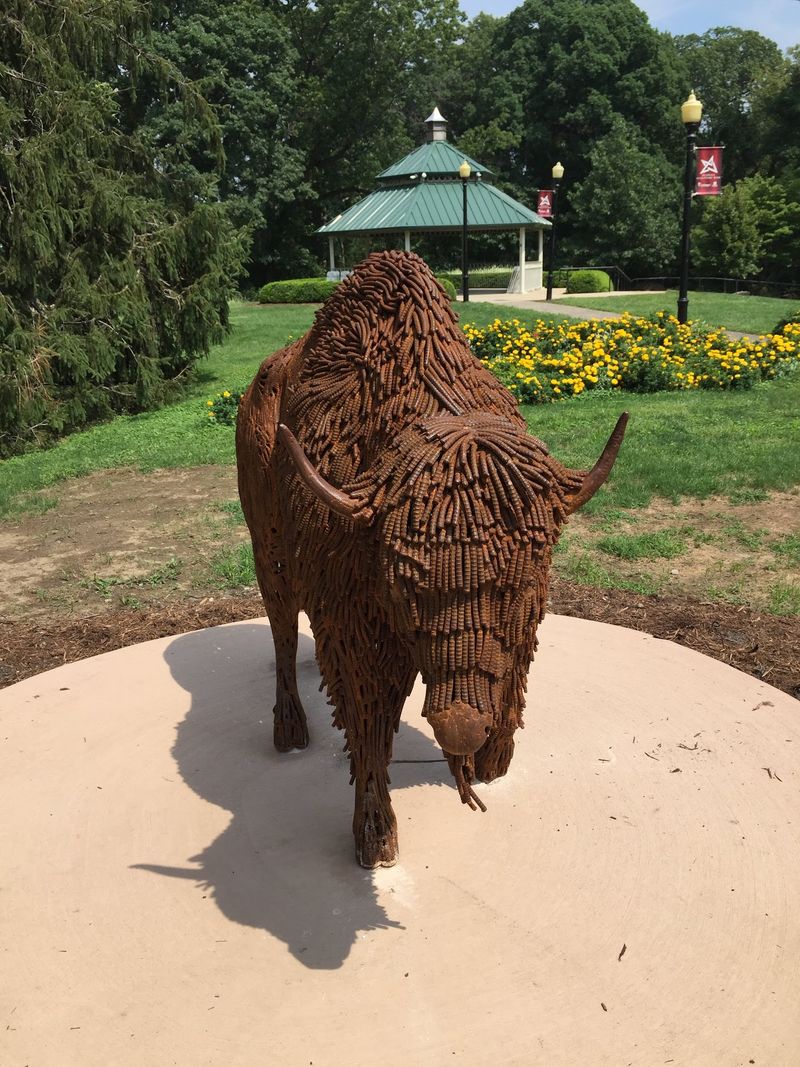
Not every sculpture park needs grand scale to leave an impression. Scovill Sculpture Park in Decatur takes a more relaxed route, pairing outdoor art with an easy park setting where visitors can wander, pause, and let the works sneak up on them in a natural way.
The mix of whimsical and more serious pieces gives the park a lively personality. Some sculptures may invite a smile right away because of their shape, subject, or playful energy.
Others ask for a longer look and may shift in meaning depending on where you stand or what details you notice first.
That balance makes the park approachable for a wide range of visitors. Kids can respond to unusual forms without needing a long explanation, while adults can spend time thinking about materials, ideas, and placement.
Outdoor art often works best when it removes pressure, and this park seems built for that kind of low-key encounter.
Because the setting is easygoing, Scovill can fit into a normal day rather than requiring a full itinerary. It works well for a short detour, a quiet afternoon walk, or a simple break from indoor routines.
That convenience is part of its charm, especially for people who want culture without formality. To get more out of the visit, try changing your pace.
Walk one section slowly and study a few works up close, then continue at a normal speed and notice which sculptures still pull your attention from farther away. That contrast can reveal a lot about scale, silhouette, and visual impact.
A shaded bench, a camera, and a little extra time can go a long way here. Since the park setting is comfortable, many visitors may find themselves lingering longer than expected.
Scovill Sculpture Park shows how public art can brighten an everyday landscape, offering moments of humor, curiosity, and reflection without demanding any special background to enjoy it.
7. Morton Arboretum (Lisle)
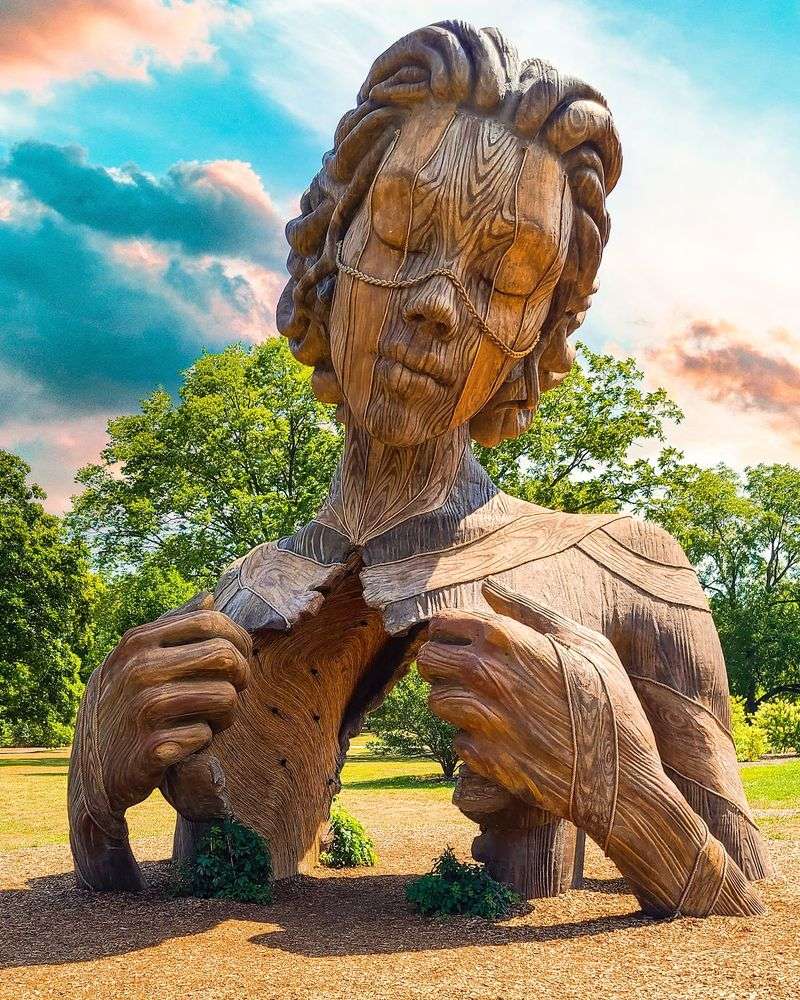
Trees may be the main draw at Morton Arboretum, but outdoor sculpture adds another layer of surprise to the experience. Large-scale installations placed among forests, meadows, and trails can shift a familiar nature walk into something more immersive, where art appears as part of the journey instead of a separate destination.
The size of the landscape gives curators plenty of room to think creatively. A sculpture can rise between trunks, stand at the edge of a meadow, or appear near a bend in the path where visitors encounter it almost by accident.
That kind of placement encourages alert walking, because the next memorable view may be just ahead. Art changes the way people look at trees, and trees change the way people look at art. Texture, bark color, leaf canopy, and seasonal light all influence the mood around each installation.
In spring and summer, greenery can soften a piece, while colder months may sharpen its outline and make its structure easier to study.
Because the arboretum covers a large area, planning matters more here than at smaller sculpture spots. Check maps, wear supportive shoes, and decide whether the day is focused on art, plants, or a balanced mix of both.
A flexible route usually works best, since you may want extra time when a certain work catches your attention. Families can turn the visit into an observation game by comparing natural shapes with sculpted ones.
Adults who enjoy photography will find endless material in the contrast between organic forms and manufactured surfaces. Even a simple phone camera can capture strong images when scale, light, and foliage line up well.
Morton Arboretum stands out because the sculptures are not dropped into nature as decoration alone. They interact with the setting in ways that can feel thoughtful, surprising, and occasionally dramatic, making each trail a chance to notice both art and landscape more carefully.
8. West Street Sculpture Park (Galena)
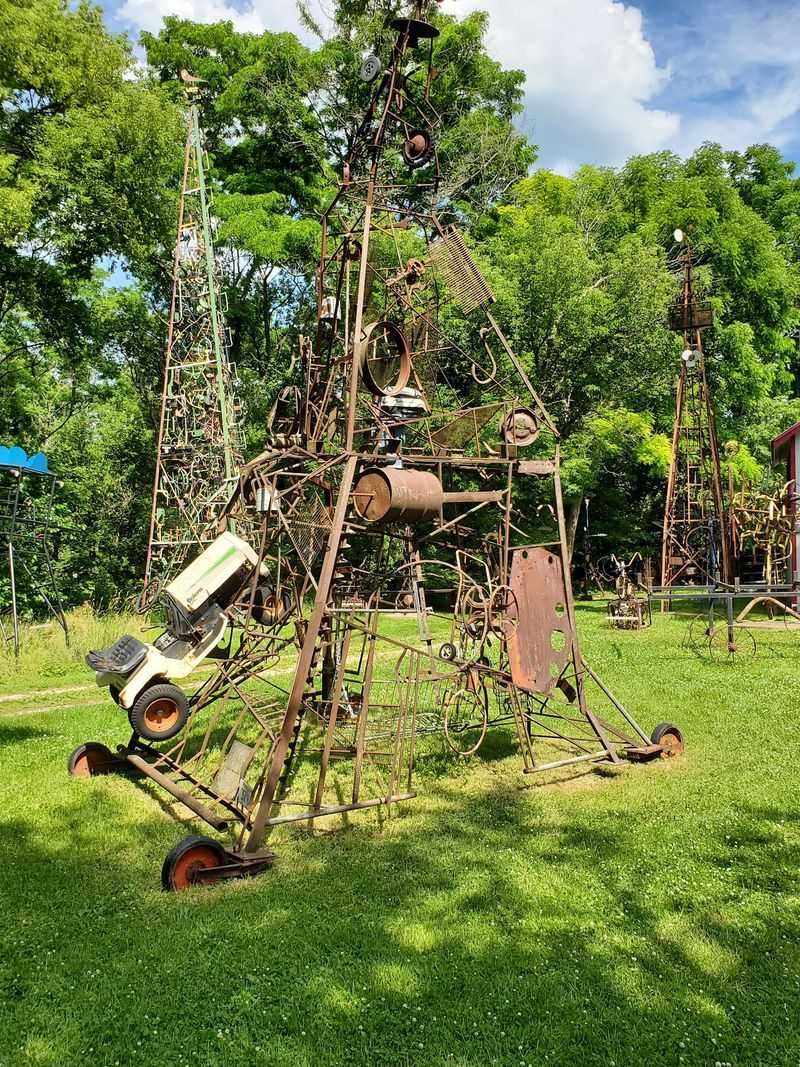
Galena is known for history, brick buildings, and hillside views, so contemporary sculpture can come as a real curveball. That is exactly why West Street Sculpture Park stands out.
Tucked into the town’s hilly setting, it offers an intimate outdoor space where modern works meet a place better known for its 19th-century character.
The contrast is the first thing many visitors may notice. Sharp lines, abstract forms, or inventive materials can look especially striking when the broader town nearby carries such a strong sense of the past.
Instead of clashing, the difference can make both sides more interesting, giving visitors a wider picture of Galena than postcards usually show.
Smaller scale also works in the park’s favor. Rather than overwhelming the landscape, the sculptures invite close attention and slower movement.
That can make the experience feel more personal, almost like finding a thoughtful side note tucked into a well-known story.
Because the setting is intimate, details matter. Shadows on uneven ground, changes in elevation, and partial views through trees can all affect how a piece appears.
A sculpture seen uphill may seem formal and distant, then become playful or puzzling once you are standing beside it.
Visitors exploring Galena for a day should consider this park a useful change of pace between shops, historic sites, and scenic overlooks. It provides a quieter kind of sightseeing and can be especially appealing for travelers who enjoy seeing how art settles into unexpected corners of a town.
Good walking shoes are smart, since hills can shape the visit. Take time to look back as you move through the space. In a hillside setting, reverse views can be just as interesting as first impressions.
West Street Sculpture Park adds a contemporary note to Galena without trying to compete with the town’s history, and that balance is exactly what makes the stop memorable.
9. Ronan Park Sculpture Park & Healing Garden (Chicago)
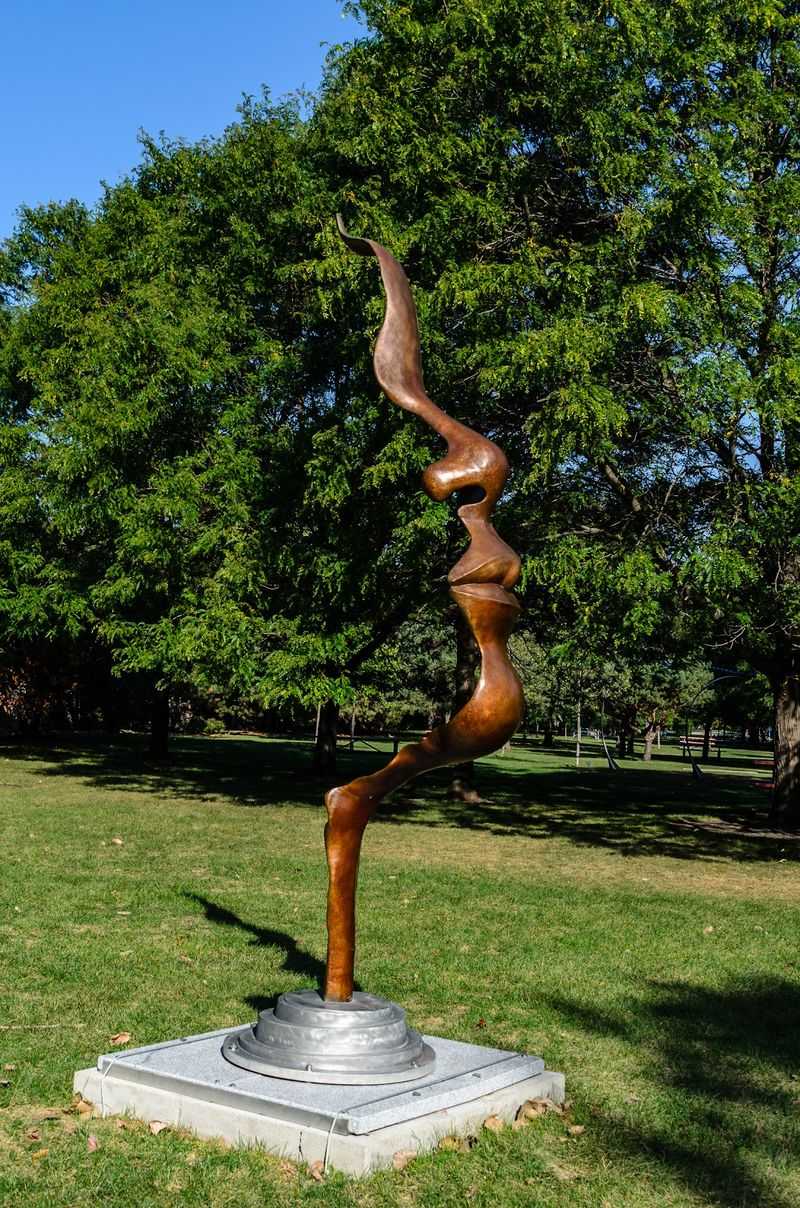
Along the river in Albany Park, public art and green space come together with a strong community focus. Ronan Park Sculpture Park and Healing Garden offers more than a pleasant walk, connecting sculptures with themes of multiculturalism, healing, peace, and unity in a setting shaped by paths, habitat, and neighborhood life.
That mission gives the site a different energy from many sculpture gardens centered mainly on visual impact. Here, the works can encourage reflection on shared experience, memory, and belonging while still functioning as outdoor art in a public park.
The riverside location adds another layer, bringing moving water, birds, and native plantings into the experience. The Chicago Park District confirms that the sculpture park and healing garden remain part of Ronan Park, and Chicago Sculpture International currently identifies several works still installed there.
That makes it smart to arrive with curiosity and a flexible mindset, since public spaces can change over time. Instead of expecting a fixed museum arrangement, visitors may appreciate the park more by noticing how art lives within an active neighborhood landscape.
Walking slowly is especially useful here. Look for how sculptures relate to paths, gathering areas, and naturalized sections rather than treating each piece as a stand-alone object.
The themes behind the work may come through more clearly when viewed in connection with the surrounding space and the people using it.
This is also a good stop for visitors who care about the social side of public art. The setting suggests that sculpture can support conversation, remembrance, and community identity, not only visual pleasure.
Bring comfortable shoes, allow time to explore the riverside environment, and stay open to quiet details. Ronan Park Sculpture Park and Healing Garden may not advertise itself loudly, but its mix of art, ecology, and civic purpose gives it a distinct place in Chicago’s outdoor art landscape.
Share this story