A cheese cart rolling between tables is not something you expect to see on a quiet block in Merchantville, but Restaurant 1793 is not especially interested in doing the expected. The 1,000-square-foot spot at 7 E.
Park Avenue opened in April 2026 with just a couple dozen seats, a chef-led tasting menu, and the sort of details more commonly associated with a night across the river in Philadelphia.
There are handmade pastas, tableside cheese, caviar, loose-leaf tea pairings, and zero-proof cocktails, yet none of it comes wrapped in white-tablecloth formality.
Restaurant 1793 is a BYOB, the wooden tables are left uncovered, and showing up without dressing for a special occasion is perfectly acceptable. The result is a restaurant that takes the cooking seriously while refusing to make dinner feel like a test you forgot to study for.
Meet the Chef Behind Restaurant 1793
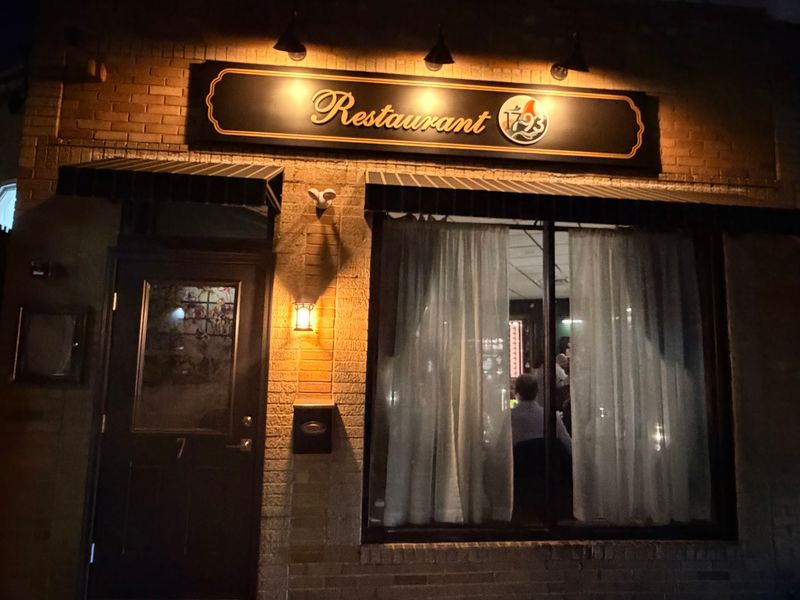
Chris Bennett did not take the most predictable route into a fine-dining kitchen. Before becoming a chef, he worked in carpentry, a background that feels particularly fitting once you learn how involved he was in shaping Restaurant 1793 itself.
Bennett envisioned the Merchantville dining room with dark woods, leather seating, bookshelves, and the feel of an upscale library rather than a formal banquet room. He eventually traded building materials for kitchen tools and attended the Institute of Culinary Education in Manhattan, where he trained in classical technique.
From there, his résumé moved through some serious Philadelphia-area kitchens. Bennett worked at the Union League of Philadelphia under Executive Chef Denny Santiago and later joined June BYOB in nearby Collingswood, working under chef Richard Cusack before striking out on his own.
Restaurant 1793 is a family operation, too. Bennett founded the restaurant with his wife, Victoria Bennett, who handles business and brand operations and brings her own hospitality experience from front-of-house and restaurant-management roles on Long Beach Island.
That partnership helps explain why the restaurant does not treat service as an afterthought. Chris is focused on precise cooking and the progression of the meal, while Victoria’s side of the operation emphasizes a guest experience that feels polished without becoming stiff.
The restaurant occupies the former Park Place space in downtown Merchantville and officially opened on April 10, 2026, giving Bennett a stage of his own only a few miles from the Collingswood kitchens where he had most recently worked.
His cooking still shows the discipline of classical training, but the goal here is not to recreate an old-school French dining room. It is to take those techniques and use them in a format that makes sense for South Jersey right now.
A Tasting Menu Built Around the Seasons
The easiest way to understand dinner at Restaurant 1793 is to forget about scanning three pages of entrées and debating whether someone at the table should order the chicken. The kitchen runs on tasting menus, with both four- and six-course versions currently offered.
The longer format follows a deliberate progression of two appetizers, a pasta course, two mains, and dessert, while the shorter option pares the meal down to an appetizer, pasta, main, and dessert. More importantly, Bennett does not lock those courses into one permanent lineup.
The menu is designed to turn over roughly every six weeks, giving the kitchen about two distinct menus within a season and some freedom to react when an ingredient looks better on paper than it does coming off the farm. Produce is sourced from a small local farm whenever conditions allow, so seasonality here is more than swapping pumpkin onto the menu in October.
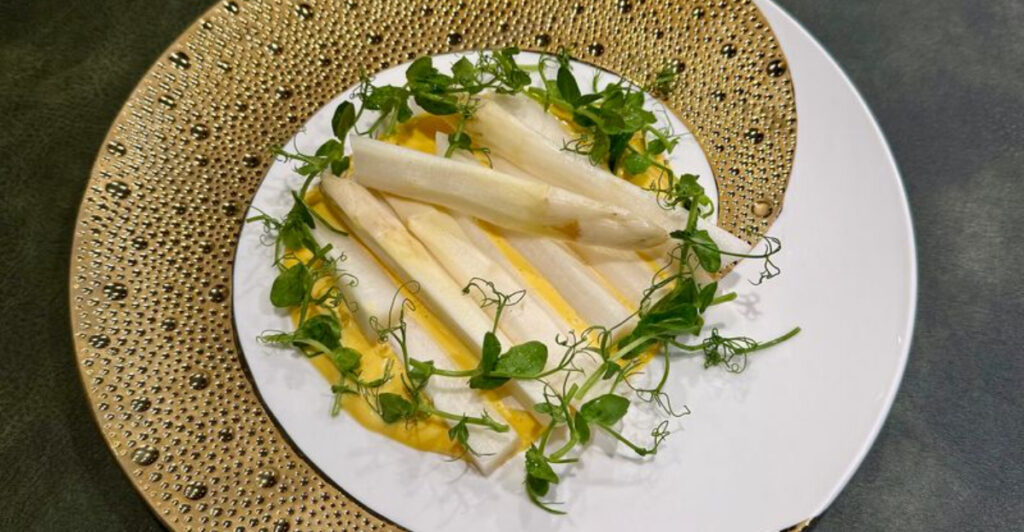
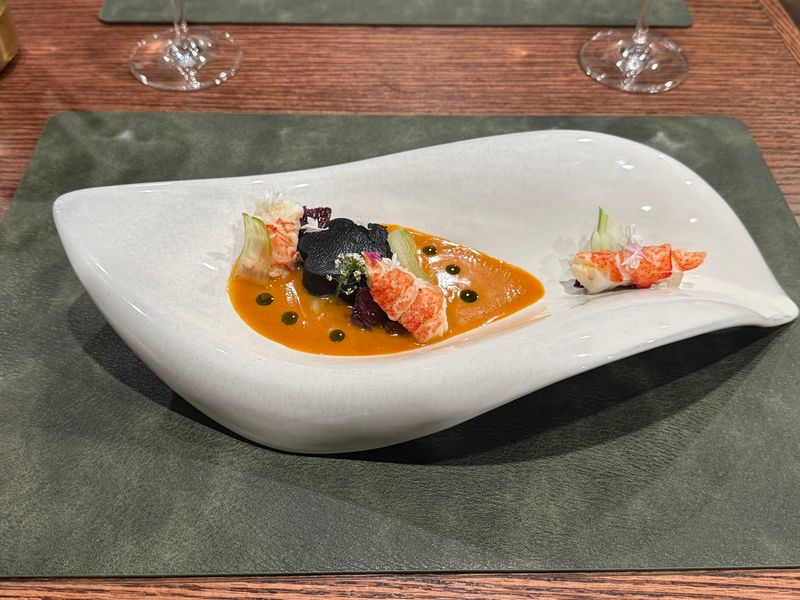
The opening six-course menu, priced at $115 at launch, gives a good sense of Bennett’s style. It moved from a panna cotta with black truffle, poached lobster, blood orange, asparagus, and chilled lobster bisque to foie gras torchon prepared with Grand Marnier and red wine and served with walnut and apple cider.
Spinach tortellini brought together ricotta, mussels, rock shrimp, and chili oil, while later courses included potato-crusted Loch Duart salmon with saffron fumet and honey-glazed duck breast paired with confit leg, carrot, cipollini onion, and mushroom. That exact lineup has already moved on, which is really the point.
Current menus can pull in fresh seafood, homemade pasta, duck, Wagyu, caviar, and whatever regional ingredients make sense at the moment. It is structured fine dining without the museum-display problem of dishes hanging around long after their best season has passed.
Everything Starts Fresh in the Kitchen
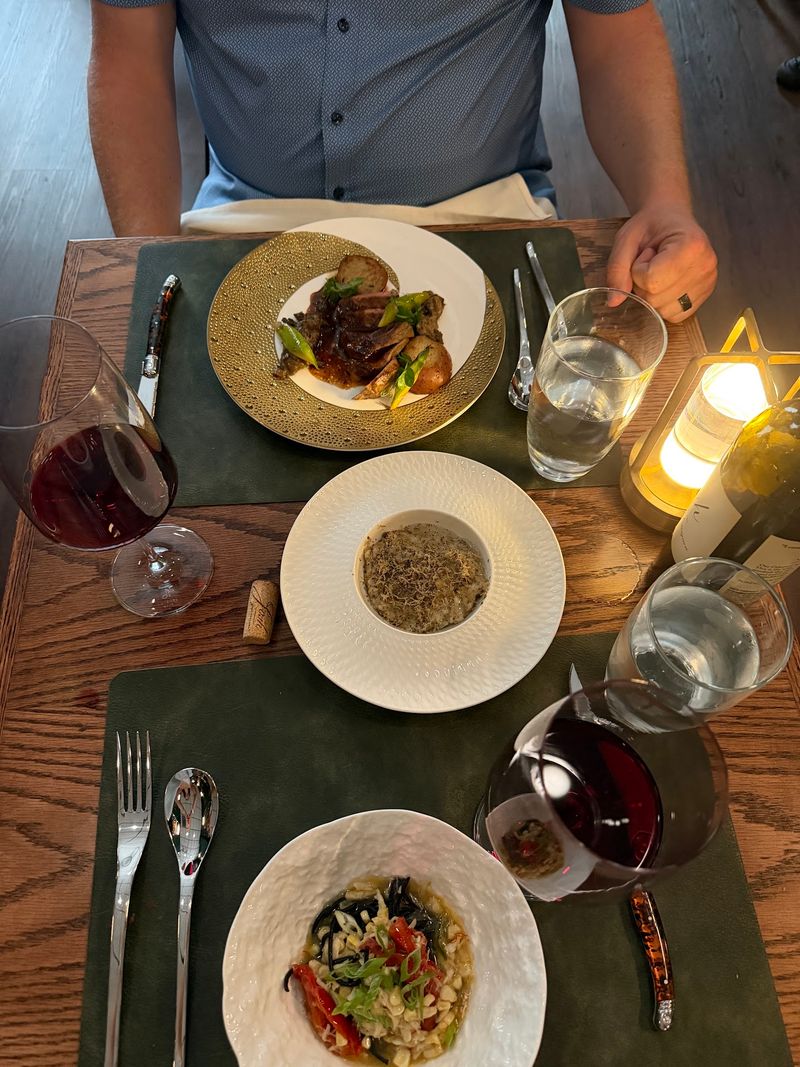
There is a useful test for how seriously a restaurant takes a tasting menu: look at the bread and pasta. Those are two places where shortcuts are easy, and Restaurant 1793 makes both in-house.
The kitchen prepares its own pasta along with the focaccia served at the table and gluten-free cornbread, an unusually broad commitment for a dining room this small. That approach matters because a tasting menu leaves very little room for filler.
When dinner consists of four or six carefully paced courses, there is nowhere for a forgettable plate to hide between a giant appetizer and a pile of fries. Even the supporting pieces have to pull their weight.
During Merchantville’s summer Restaurant Week, for example, the bread course featured focaccia with a golden exterior and soft center served with salted butter, while an amuse-bouche paired espresso-rubbed cheese with walnuts and lavender. Later dishes included fluke crudo, foie gras, Coho salmon with carrot-ginger purée, teriyaki glaze and leeks, and New York strip.
Those dishes were part of a limited event menu rather than a permanent list, but they show how Bennett builds plates around a few clearly defined flavors instead of loading them with decorative extras. The kitchen’s small scale helps here.
Restaurant 1793 has only about 24 seats, and the tasting-menu setup allows the team to work with a tighter ingredient list and prepare for a known number of diners instead of trying to support dozens of à la carte choices. Bennett has also said that ingredients are not meant to linger around waiting for an order several days later.
That philosophy fits the restaurant’s roughly six-week menu cycle: make the pasta, bake the bread, work with what is in good condition now, then change course when the season does. It is a lot of behind-the-scenes effort for food that is supposed to look effortless when the plate finally lands on the table.
The Cheese Cart Adds Something Unexpected
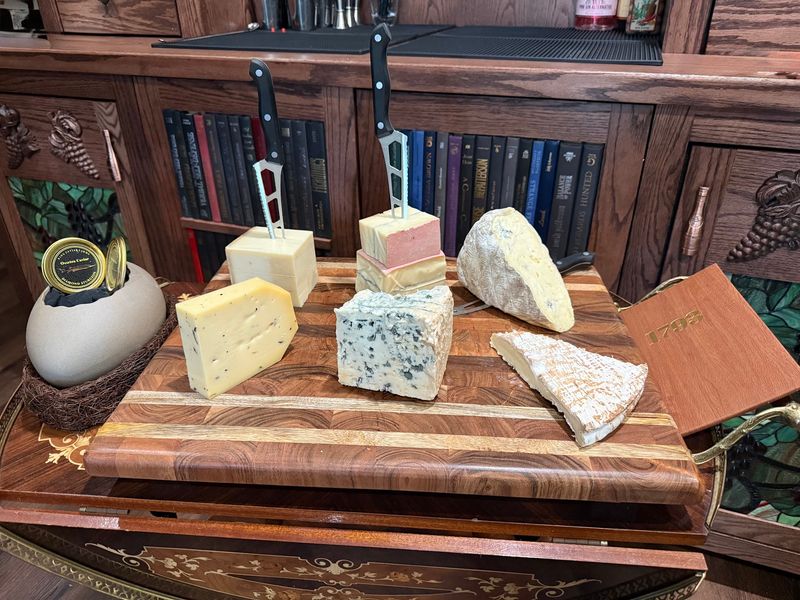
Somewhere between the main courses and dessert, dinner can suddenly involve a cart loaded with French cheese. This is where Restaurant 1793 gets a little playful.
The tableside cheese cart has featured six imported cheeses at a time, presented as an optional supplemental course with accompaniments such as berries, honey, and other seasonal additions.
Instead of receiving a predetermined cheese plate from the kitchen, guests get the old-school pleasure of seeing the selections arrive at the table and hearing what is actually on the cart that evening.
It is a small bit of theater, but useful theater — particularly if you are the kind of person who would happily substitute cheese for dessert. The idea has since grown beyond an add-on to the tasting menu.
Restaurant 1793 now offers a separate Cheese & Caviar Experience by reservation, built around imported cheeses and premium caviar from King Caviar Farms. That Swedesboro connection gives one of the meal’s most luxurious ingredients a distinctly South Jersey address.
Caviar service has been presented with classic partners including crepes, crème fraîche, and chives, keeping the focus on the roe instead of trying to reinvent every component on the plate.
The standalone cheese-and-caviar experience is limited and must be arranged in advance; current reservation information gives it a 90-minute window.
That makes it an interesting alternative for someone who wants the Restaurant 1793 treatment without committing to the full tasting-menu progression, which can stretch to roughly two and a half hours. The cart also says a lot about Bennett’s larger approach.
There is plenty of technique happening in the kitchen, but dinner is not designed to be six solemn plates delivered in silence. Sometimes the most memorable part of a fancy meal is having a cart of cheese roll up to your table and realizing that, yes, choosing several is completely reasonable.
Tea and Zero-Proof Cocktails Complete the Experience
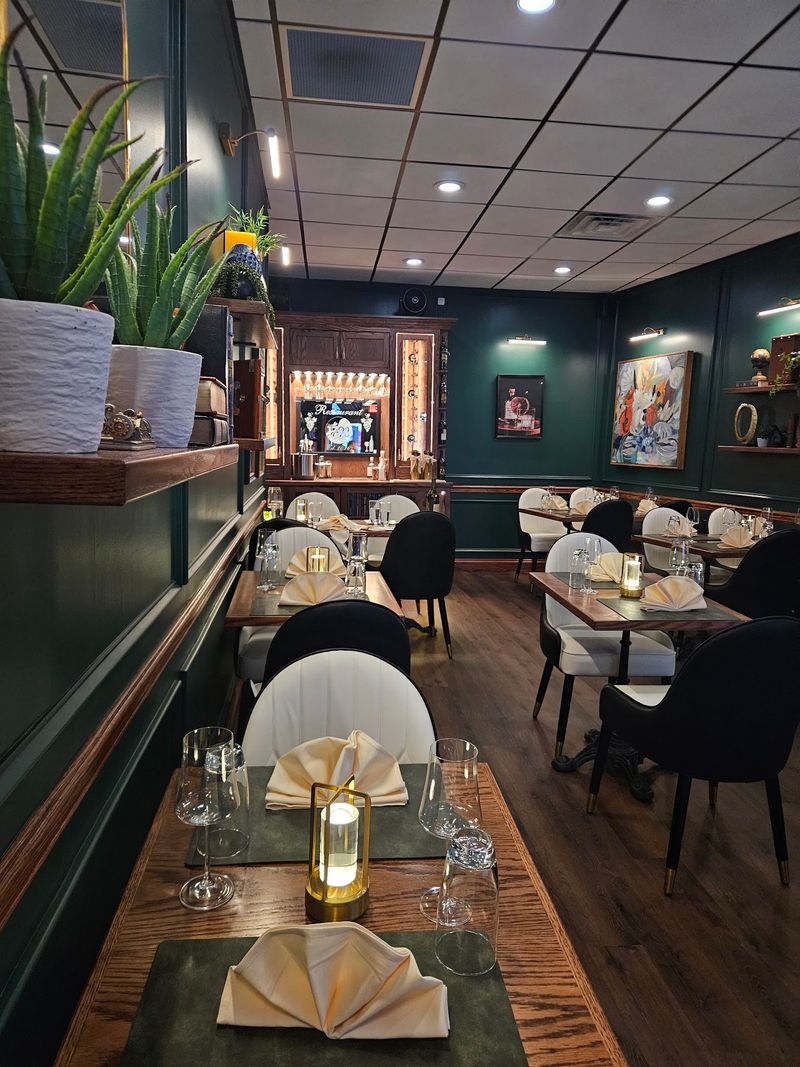
Being a BYOB usually means one thing in South Jersey: remember to stop for a bottle before dinner. Restaurant 1793 keeps that option but gives diners who are skipping alcohol considerably more to work with than sparkling water and a lemon wedge.
The beverage program has included six zero-proof cocktails along with a collection of eight loose-leaf teas, and the tea is treated less like an after-dinner extra and more like an actual pairing option.
A curated tea progression can accompany the tasting menu course by course, giving the kitchen another way to match acidity, aromatics, sweetness, or richness without relying on wine.
That becomes particularly interesting with a menu that can move from delicate seafood into handmade pasta, duck, Wagyu, cheese, and dessert in the same sitting. Tea has enough range to change with those dishes rather than simply occupying a mug beside them.
The restaurant also offers coffee service, while the current zero-proof program is positioned as a permanent part of the experience rather than a consolation prize for the designated driver.
That detail helps Restaurant 1793 feel more modern than some traditional fine-dining rooms, where beverage pairings can still seem built around the assumption that everyone wants several glasses of alcohol.
Guests who do want wine can still bring their own bottle, one of the practical advantages of the restaurant’s BYOB setup. Guests who do not can participate in the pairing ritual rather than watching everyone else get the interesting glassware.
It is another example of the restaurant taking a familiar fine-dining convention and loosening the rules around it.
The food may arrive in a carefully planned sequence, but how you drink alongside it is much more flexible — bring a favorite bottle, explore the zero-proof menu, work through the teas, or mix approaches as the courses change.
Fine Dining Without the Stuffy Atmosphere
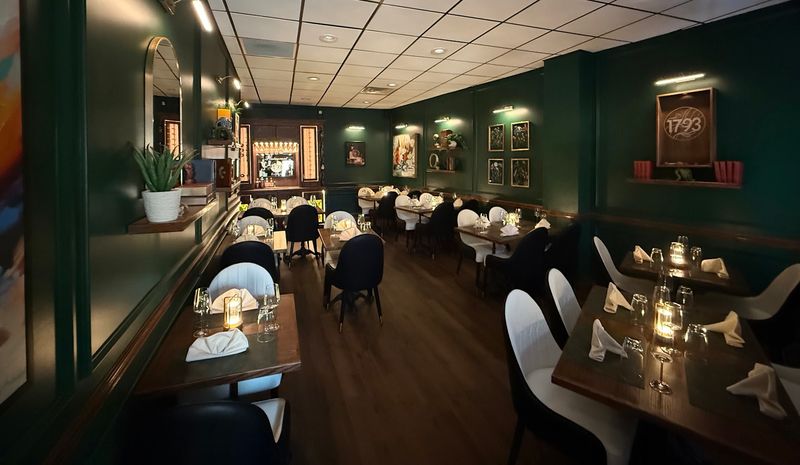
For all the black truffle, foie gras, caviar, and tableside cheese, one of the most telling details at Restaurant 1793 may be what is missing: white tablecloths. The roughly 24-seat room uses bare handcrafted wooden tables, deep green tones, leather seating, shelves of books, subdued lighting, and an interior inspired by a private library.
Jazz has provided the soundtrack during service, and the scale of the room keeps it from feeling like an anonymous special-occasion restaurant. Bennett’s former life as a carpenter makes the emphasis on wood and physical details feel especially appropriate.
More important, the restaurant does not pair those surroundings with a dress-code attitude. Bennett’s stated idea from the beginning was that someone walking through downtown Merchantville should be able to come in for a high-end meal even if they are not dressed as though they have reservations in Manhattan.
The service still follows fine-dining rhythms, and guests should expect dinner to move slowly rather than operate like a quick weeknight stop.
The full tasting experience can last up to about two and a half hours, and advance notice is requested for allergies or dietary restrictions because the tightly planned menu limits the kitchen’s ability to improvise major changes once service begins.
Restaurant 1793 currently accepts seatings Wednesday through Saturday from 5 to 9 p.m. at 7 E. Park Avenue, right in downtown Merchantville.
It is a very specific kind of night out: small room, long meal, ambitious cooking, your own bottle if you want one, and no expectation that you need to perform the part of a fine-dining customer. In a restaurant doing this much careful work, that absence of ceremony may be one of its smartest choices.