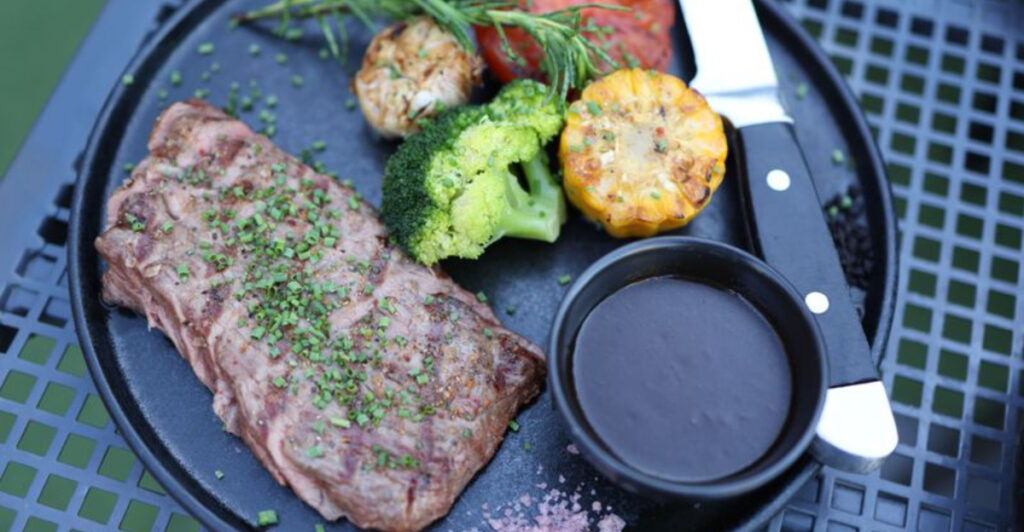
A 24-ounce Delmonico that still comes in under $40. A steak in Carlstadt that hits the table sizzling under a coating of house sauce.
A remote Sussex County inn where you can cut into prime rib while deer wander across the lawn outside. New Jersey’s old-school steakhouse scene has plenty of personality, and thankfully, nobody seems interested in sanding off the quirks.
Some of these places date back generations; others are younger restaurants that have earned their place by treating beef with the seriousness it deserves.
You’ll find charcoal hearths, salad bars that stubbornly refuse to disappear, dry-aging programs, historic dining rooms, unapologetically enormous portions, and enough creamed spinach to make vegetables feel mildly irresponsible.
Whether you want white-tablecloth Atlantic City history or a giant steak in a neighborhood tavern, these ten restaurants prove there’s no single Jersey way to do steak—and that’s exactly the fun of it.
1. Steve’s Sizzling Steaks
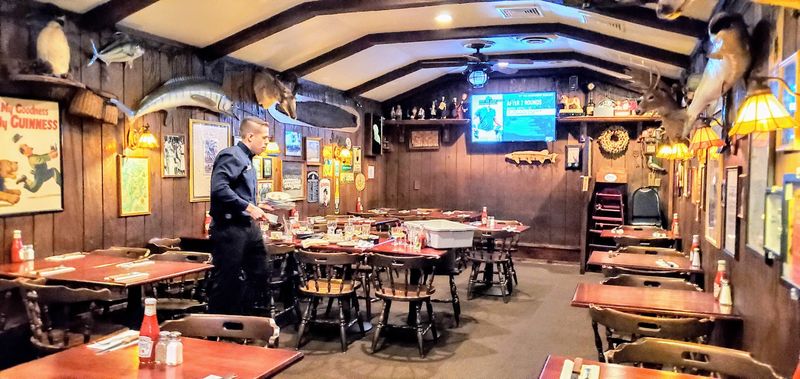
The first thing to know here is right there in the name: dinner is supposed to make some noise. Steve’s has been serving steaks in Carlstadt since 1936, and its signature approach is refreshingly uninterested in steakhouse minimalism.
The sizzling entrées are seasoned with the restaurant’s house sauce and come with a garden salad, steak fries, and signature mushrooms. Even the menu acknowledges that the sauce can be a little much for salt-sensitive diners, so purists can simply ask for their steak without it.
That small detail tells you a lot about Steve’s—it knows exactly what it is and has no need to reinvent itself. The 22-ounce bone-in cowboy ribeye is the order for anyone who believes marbling is the point, while the 16-ounce Certified Angus Prime New York strip gives you a firmer, beefier bite.
There’s also a hefty 22-ounce T-bone, plus filet mignon and filet tips if you prefer something more tender. Prices are considerably less intimidating than at many polished metropolitan steakhouses, with several substantial cuts sitting around the $50-to-$65 mark.
The location on Route 17 South is practical rather than picturesque, but that almost makes the experience better. You are not coming for scenery. You are coming because somebody said, “Trust me, get the sizzling steak.”
2. The Clinton House
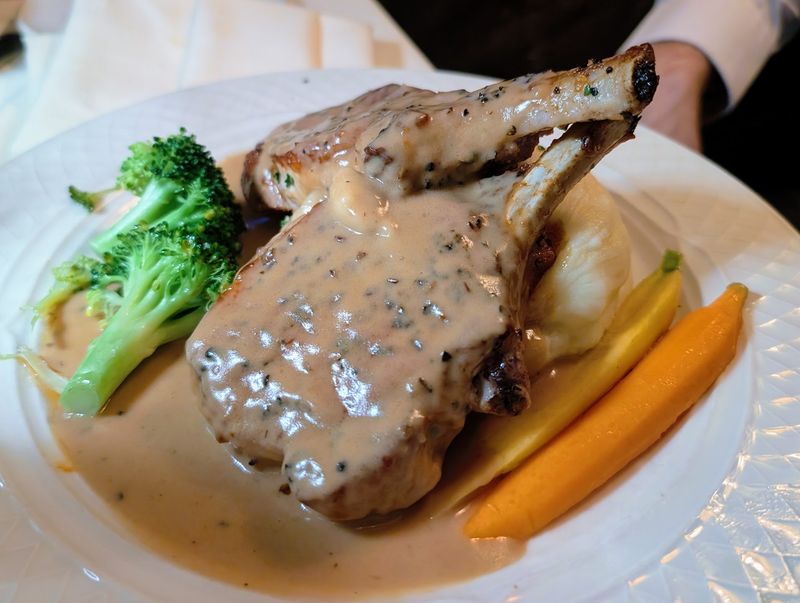
You can order a dry-aged New York strip in plenty of places. It feels a little different when the dining room is part of an inn whose hospitality story stretches back to 1743.
The Clinton House occupies the sweet spot between historic destination and serious steak dinner, making it particularly good for the night when you want something more memorable than the nearest chain restaurant.
The current steak lineup gets straight to business: a 12-ounce prime New York strip, a 16-ounce strip dry-aged for 28 days, center-cut filet mignon, and a 22-ounce prime bone-in ribeye finished with balsamic glaze and pickled red onion.
The dry-aged strip is the move if you want the concentrated, slightly funky depth that makes dry aging worth paying for; the ribeye is for anyone whose steak philosophy begins and ends with fat equals flavor.
The rest of the menu gives a group room to wander, with oysters, seafood towers, lobster bisque, French onion soup, and a prime-rib French dip among the alternatives.
This is a splurge compared with some of the old-school taverns on this list, with the largest steaks pushing well beyond everyday-dinner territory. Make it part of an evening in downtown Clinton rather than a quick meal, settle into the historic setting, and give yourself enough time to linger over a cocktail or bottle of wine.
3. The Walpack Inn
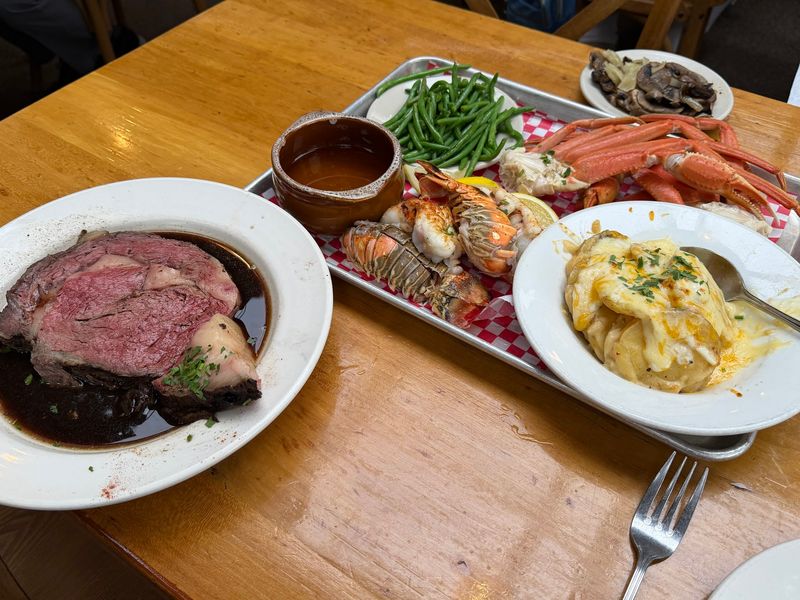
Dinner starts before you reach the table. The drive into Walpack takes you into the Delaware Water Gap National Recreation Area, where the landscape gets quieter, the roads feel farther removed from suburban New Jersey, and eventually a rustic inn appears in the valley.
Inside, massive beams and a stone fireplace give the place the feel of a mountain lodge; in the Greenhouse dining room, broad windows look toward the Walpack Valley, where deer are known to graze around dusk. Then comes the brown bread.
Do not treat it as filler. It has been one of the inn’s signatures since the 1960s.
For steak, the most distinctive order is the 16-ounce teriyaki ribeye, a house favorite dating to the mid-’60s. It sounds almost retro because it is—and that is precisely why you should try it.
Traditionalists should target Friday, when the inn serves a 14-ounce slow-cooked prime rib special in limited quantities. Entrées include access to the unlimited salad bar, another gloriously old-school touch that suits the place perfectly.
One important planning detail: Walpack is currently open only Friday through Sunday, so this is a dinner you plan rather than stumble into. Book ahead, arrive before dark if you want the full valley view, and leave enough room for the black raspberry ice cream pie.
4. The Pub
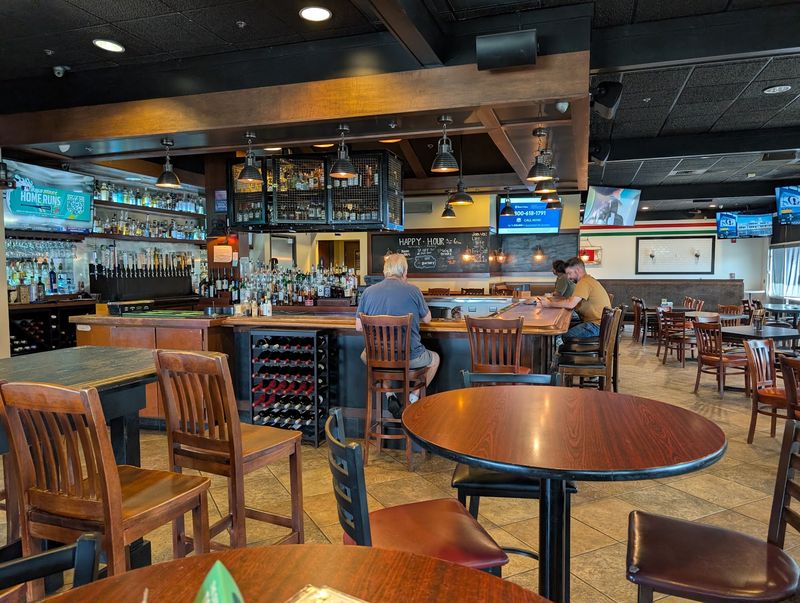
Forget infrared broilers for a minute. The centerpiece of this Pennsauken institution is a gigantic open charcoal hearth, the sort of cooking setup that makes you understand why generations of South Jersey families have kept coming back since The Pub opened in 1951.
Steaks cooked over charcoal pick up a flavor that is difficult to fake with modern equipment, and that open-hearth identity remains central to the restaurant. Prime rib is another longstanding favorite, joined by filet mignon, ribs, seafood, and other throwback steakhouse staples.
Better still, dinner entrées come with the restaurant’s large salad bar and a choice of potato. If your ideal steak dinner includes building an aggressively overfilled salad plate before a huge piece of beef shows up, you have found your people.
The Tudor-style building and cavernous dining room add to the sense that you have entered a restaurant from another era, but in the best possible way—this is not a faux-retro dining room assembled by a design firm last year. It has history behind it.
There is one crucial bit of timing to know right now: as of August 2026, The Pub is temporarily closed for a vacation break and is scheduled to reopen Friday, September 18. Once those doors reopen, go hungry, make a reservation if you have a larger group, and order something that has spent time over that charcoal hearth.
5. The Library II
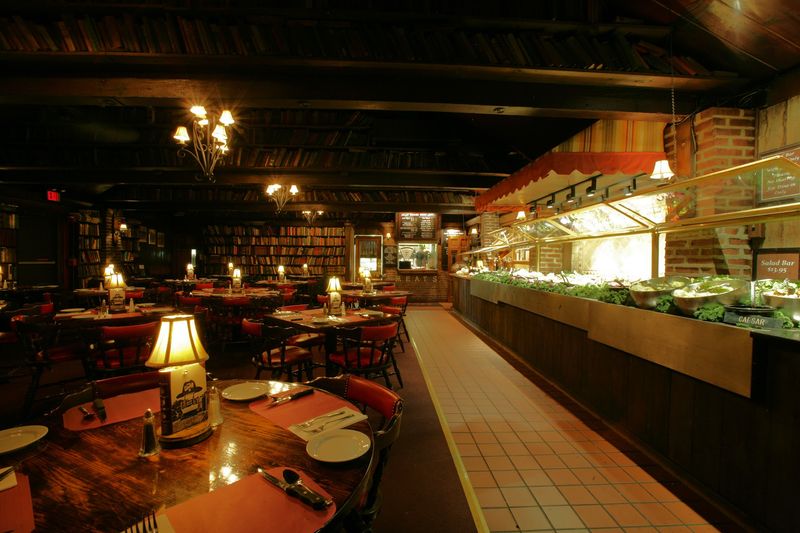
At most steakhouses, you choose a cut from a printed menu. At The Library II, the more memorable move is heading to the chef’s window, where you can see the steaks and have your cut trimmed before it heads to the kitchen.
That ritual has helped give this Voorhees institution its identity since it became The Library II in 1972, though the building’s restaurant history reaches back to 1947. The menu offers plenty of room for appetite-based decision-making: filet mignon ranges from 8 to 16 ounces, New York strip from 12 to 16 ounces, and prime rib comes in Queen and King portions.
If you are having trouble deciding, that chef-at-the-window interaction is part of the fun rather than a test you forgot to study for. Then there is the salad bar, another defining feature and one that turns dinner into a pleasantly old-fashioned production.
It is stocked beyond a token bowl of lettuce, with vegetables, fruit, artisan breads, and cheeses forming part of the experience. Steaks mostly fall into the mid-$40s through $70s depending on size, making this a proper night-out steakhouse without requiring you to order the least expensive thing on the menu out of self-preservation.
Come for the steak-selection ritual, embrace the salad bar, and resist any urge to rush through dinner. The Library II works because it still treats the whole evening as an occasion.
6. Knife & Fork Inn
Some steakhouse histories begin with a family recipe. This one includes illegal Prohibition-era drinking, gambling rooms, political power brokers, and federal agents smashing up a bar.
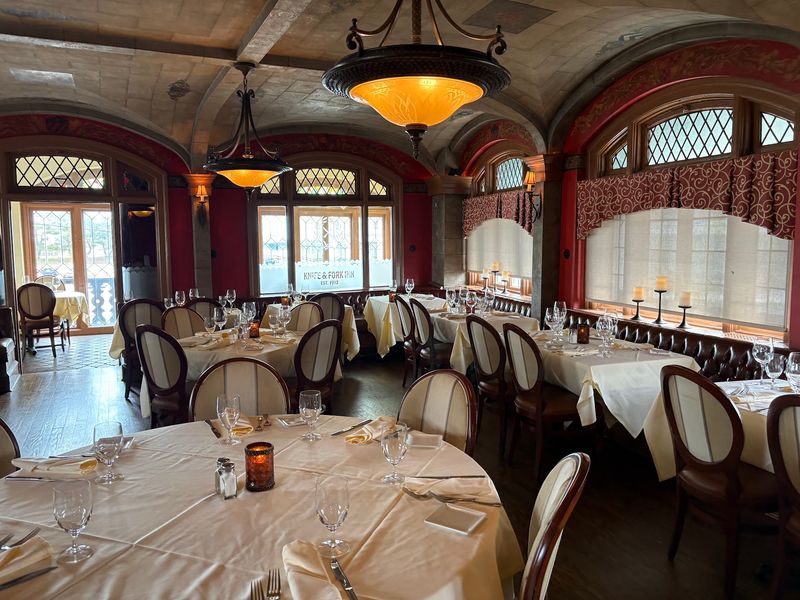
The Knife & Fork Inn opened in Atlantic City in 1912 as an exclusive men’s drinking and dining club, later became a public restaurant, and eventually underwent a major restoration that brought back its early-20th-century drama.
Today, mahogany woodwork, hand-painted ceilings, chandeliers, a sweeping staircase, and ocean views make dinner feel suitably cinematic before anyone even mentions steak.
Fortunately, the kitchen has enough substance to match the building. The current meat lineup includes sirloins, 8- and 12-ounce filet mignon, an 18-ounce grass-fed bone-in cowboy steak, and a 24-ounce porterhouse.
If you want to lean all the way into the occasion, add béarnaise, au poivre, or the Oscar treatment with jumbo lump crabmeat and asparagus. The restaurant sits at the meeting point of Atlantic, Pacific, and Albany avenues, so it fits easily into an Atlantic City night without requiring a casino dining room.
Dress smart-casual rather than boardwalk casual; beachwear is specifically discouraged. One practical note for anyone with mobility concerns: this is a multi-level historic building without an elevator, although the restaurant asks guests who need accommodations to call ahead.
Come for the beef, but give yourself permission to stare at the building, too.
7. Arthur’s Tavern
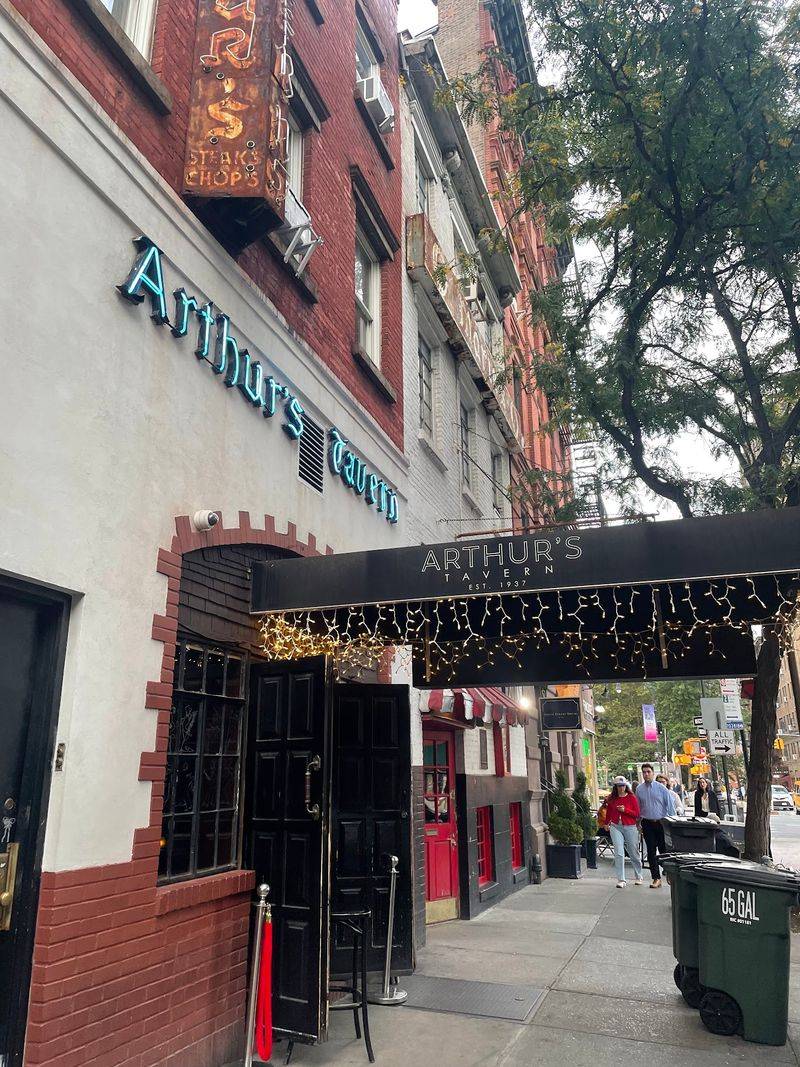
Here is the number that gets meat lovers’ attention: 24 ounces. Arthur’s signature Delmonico is a serious slab of beef, and its current price sits just under $40—an increasingly rare sight in a world where a steakhouse dinner can require minor financial planning.
That combination of size, straightforward cooking, and relative value is exactly why Arthur’s has such a loyal following in Morris Plains. Nothing about the menu tries to turn steak into a complicated composition.
Alongside the 24-ounce house steak, you’ll find a 10-ounce center-cut filet mignon, a 16-ounce bone-in cowboy ribeye, and a 14-ounce New York strip. Want mushrooms or onions?
Order mushrooms or onions. Want creamed spinach, mashed potatoes, or Arthur’s potatoes with cheddar and bacon? They are right there. This is tavern steakhouse logic at its finest.
Even the alternatives—baby back ribs, burgers, a French dip, cheesesteak—read like the menu was built for people who showed up genuinely hungry rather than looking for a tasting menu. Arthur’s is also one of the easier places on this list to turn into a casual weeknight steak run.
It opens in the afternoon, serves until 9 p.m., and doesn’t require the ceremonial pacing of a formal steakhouse. If your priorities are a big steak, a sensible bill, and no unnecessary performance around either one, this Morris Plains standby gets the assignment exactly right.
8. The River Palm Terrace
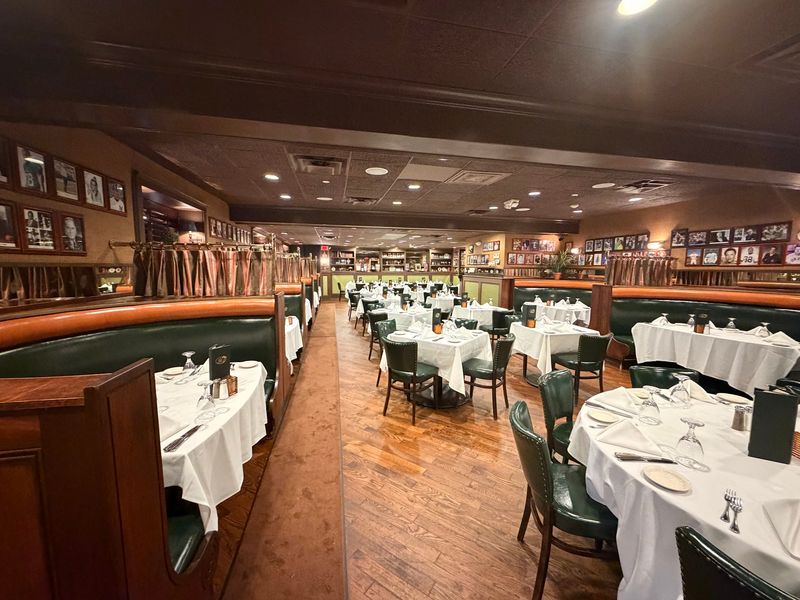
There is an important difference between a steak that is simply big and a steak that has been given time to become interesting. The River Palm Terrace in Edgewater leans hard into dry-aged prime beef, which is why the 16-ounce dry-aged New York shell steak makes such a good introduction.
Its concentrated flavor has enough personality that you do not need to bury it under extras, although the menu happily supplies steakhouse sides if restraint is not on the agenda. For two people ready to commit, the dry-aged porterhouse for two is the centerpiece order; solo diners can tackle a dry-aged T-bone, butcher-cut filet mignon, or petite filet.
This is the classic upscale steakhouse model—main cuts are the focus, potatoes and vegetables are ordered separately, and a proper raw-bar selection can turn dinner into a much longer affair. Start with colossal shrimp cocktail or oysters, add an iceberg wedge with applewood bacon, and suddenly “just getting steak” has become a full evening.
The Edgewater location on River Road also makes it an easy special-occasion choice for Bergen County diners, with the George Washington Bridge only minutes away. Lunch and dinner are both served, and reservations are the sensible play when you want a prime-time table.
River Palm has been around for roughly four decades, and it still feels designed for the person who wants steakhouse tradition with the quality dial turned up rather than reinvented.
9. The Park Steakhouse
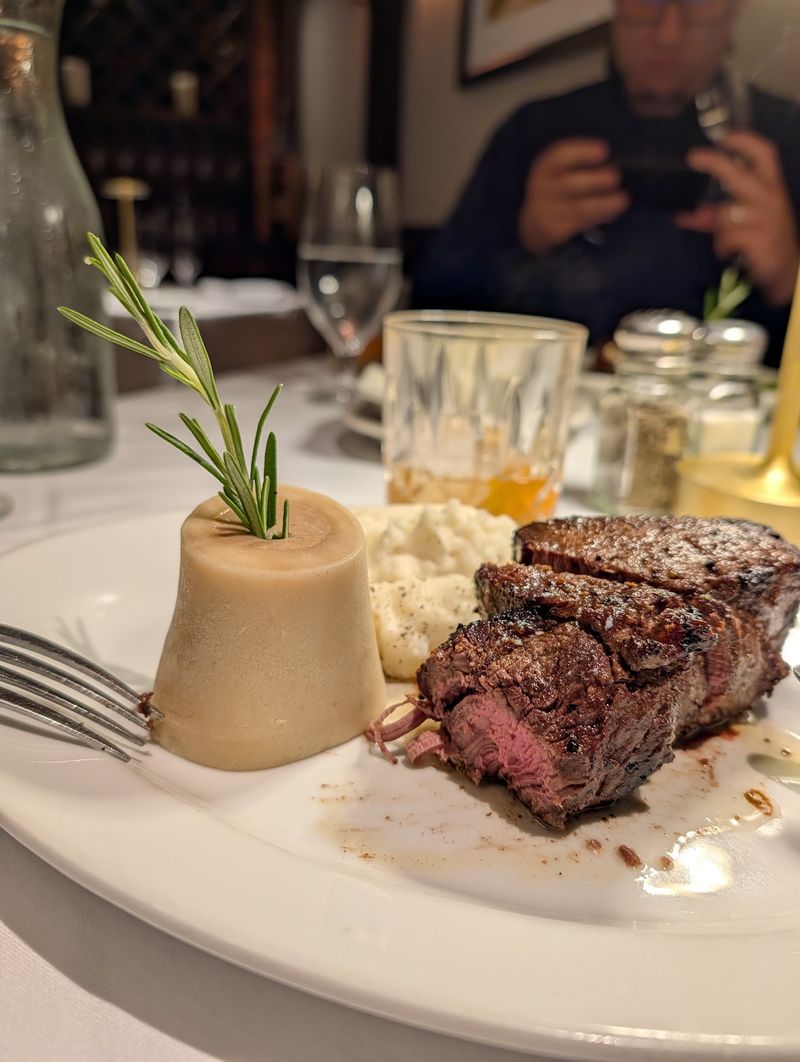
If some entries on this list proudly live in the past, The Park Steakhouse shows what happens when the classic steakhouse gets cleaned up without losing its appetite.
Established in Park Ridge in 1992 and run by chef-owner John Halligan and his team, the restaurant builds its beef program around naturally aged Certified Black Angus, with steaks aged at least 21 days.
The cut that best captures the place is the in-house dry-aged 16-ounce New York sirloin, though the 22-ounce cowboy ribeye is hard to ignore. Bringing a fellow carnivore?
The 44-ounce porterhouse for two turns dinner into a joint project. Every steak gets black garlic butter, and sauces such as béarnaise, au poivre, port wine, and horseradish cream let you customize without getting gimmicky.
The side dishes strike the same balance between familiar and slightly upgraded: creamed spinach gets Gruyère, mac and cheese can be loaded with lobster or crab, and even the fries can pick up truffle and Parmesan.
The room follows suit, with stacked stone, walnut, leather, and wine-barrel details creating something warmer than the dark-paneled steakhouse stereotype.
This is one of the pricier stops on the list, especially if you start adding seafood and sides, so treat it as the celebration dinner it wants to be. Dinner is served Tuesday through Sunday, making Monday the one night not to make the drive to Park Ridge.
10. Sweet Waters Steak House
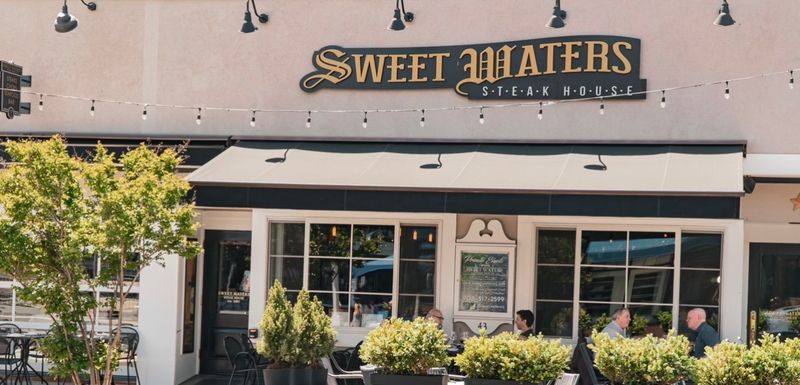
Sometimes the smartest steakhouse order begins with soup. At Sweet Waters in downtown Westfield, that means the French onion soup—crostini, Gruyère, deeply comforting, and a fitting opener for a restaurant that favors coziness over steakhouse swagger.
The family-owned restaurant has been around since 2001 and feels built for date nights, anniversaries, and those dinners when you want something polished without spending the evening whispering. In colder months, a crackling fireplace adds to the appeal; when the weather cooperates, there is al fresco dining instead.
Beef remains the reason to come. Filet mignon is offered in multiple sizes, while New York strip gives diners a beefier option, and the broader menu has included boneless ribeye and a porterhouse for two.
At lunch, you can even downshift to a filet mignon sandwich with sautéed onions, mushrooms, and hand-cut fries if a full steak feels excessive at midday.
The sides stay happily traditional—baked potatoes, creamed spinach, sautéed mushrooms, mac and cheese—while martinis and a boutique wine list keep the grown-up-steakhouse mood intact.
Sweet Waters is also unusually easy to work into the day because it serves both lunch and dinner through most of the week. In a downtown packed with reasons to linger, this is the place to book when your evening requires a good steak but not a giant dose of ceremony.