A mine tunnel glowing electric green and red under ultraviolet light. The cracked roads of a long-dead safari park disappearing into North Jersey woods.
A 36-room mansion sitting in the Pine Barrens, surrounded by the remains of a town that once made cannonballs. None of these requires crossing a state line.
New Jersey packs an absurd amount of strange, beautiful, and unexpectedly fascinating stuff into a relatively small footprint, yet plenty of it remains invisible to people who have lived here for decades. Some places hide behind ordinary suburban roads; others get overshadowed by bigger names nearby.
A few are simply odd enough that nobody believes they exist until they see them. So skip the obvious boardwalk stops for a minute.
From rescued eagles and miniature mountains to a deserted mill village and one of America’s most extraordinary Hindu temples, these 15 places prove there is still plenty of Jersey left to discover.
1. Sterling Hill Mining Museum – Ogdensburg
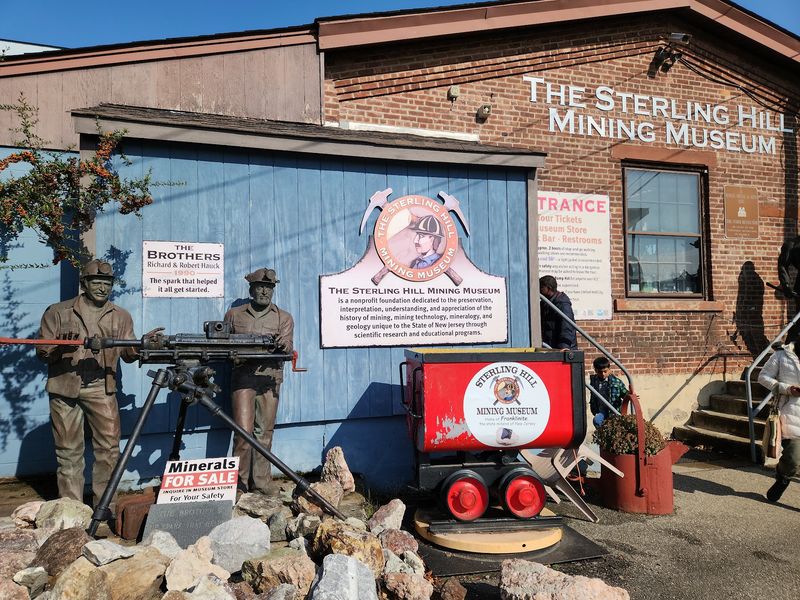
The best part of this Ogdensburg mine happens when the lights change. Under ultraviolet illumination, exposed ore in the Rainbow Tunnel suddenly burns bright green and red, with willemite producing the green and calcite the red.
It looks like someone gave a cave a neon makeover, except the colors come straight from the rocks. Sterling Hill was once one of the world’s important zinc mines, and today the former industrial site is part geology lesson, part mining museum, and part underground adventure.
Guided visits head into the mine along a mostly level route, passing old equipment and displays that explain how miners drilled, blasted, and hauled ore from the earth. The museum also holds an enormous collection of fluorescent minerals, including specimens tied to the famously unusual geology around Sterling Hill and nearby Franklin.
Leave the heavy winter coat at home, but bring a sweatshirt even in July: the mine stays around 56 degrees year-round. A standard tour takes roughly two hours, so this is more substantial than a quick roadside stop.
Rock collecting and mineral sluicing are also offered at certain times, giving younger visitors a chance to leave with something besides photos. The public-tour schedule changes seasonally, making this one place where checking the day’s schedule before driving to Ogdensburg is genuinely worth the extra minute.
2. Jungle Habitat – West Milford
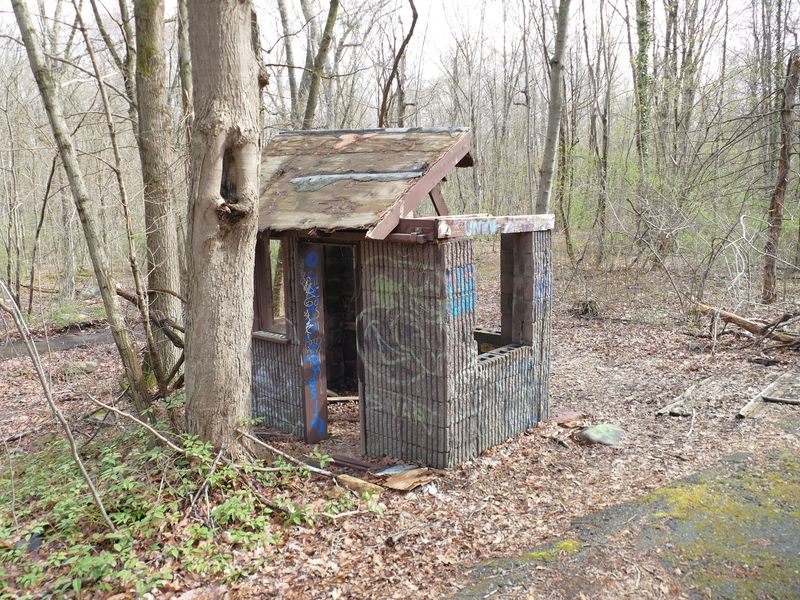
Imagine pedaling through thick woods and suddenly realizing the cracked pavement beneath your tires once carried station wagons past lions, elephants, and baboons. That is the wonderfully strange appeal of Jungle Habitat.
Warner Bros. opened the West Milford safari park in 1972, drawing millions of visitors before shutting it down just four years later. At its peak, roughly 1,500 animals lived here, including a famously large population of lions.
The animals are long gone, despite decades of local legends suggesting otherwise, but pieces of the old attraction remain scattered across the property. Former roads, crumbling curbs, concrete foundations, overgrown enclosures, and other remnants now sit among forest that has spent half a century reclaiming the place.
Today, the site is far more appealing to hikers, mountain bikers, photographers, and anyone with a weakness for abandoned-history weirdness than it is to theme-park nostalgists alone. The trail network can feel maze-like, and the terrain ranges from old pavement to rocky, root-covered paths, so sturdy shoes are smarter than casual sneakers.
Mountain bikers especially know the area for its technical riding. Give yourself time to wander rather than expecting one dramatic ruin at the end.
Jungle Habitat works because evidence of the past keeps appearing gradually: a road that goes nowhere, a strange slab in the trees, another clue that this quiet patch of West Milford was once anything but quiet.
3. New Jersey Botanical Garden at Skylands – Ringwood
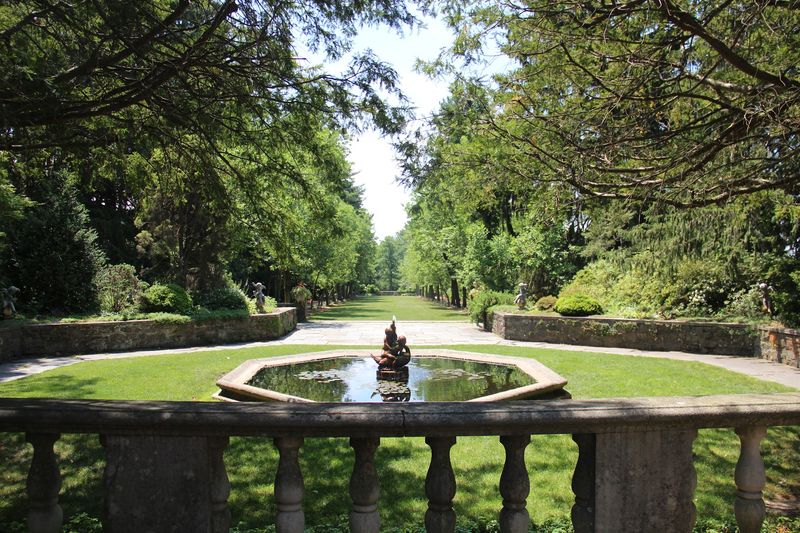
Go in spring and the lilacs may steal the show; return a few months later and an entirely different corner of the property can be the reason you linger.
The New Jersey Botanical Garden at Skylands covers far more ground than many first-time visitors expect, with formal beds, wooded paths, specimen trees, and gardens devoted to everything from azaleas and hostas to annuals and peonies.
Magnolia Walk, the Pinetum, Perennial Garden, Crabapple Allée, and Wildflower Garden make it easy to spend a couple of hours roaming without repeating much scenery. Then there is Skylands Manor, the Tudor Revival mansion anchoring the grounds.
Architect John Russell Pope, who later designed major Washington landmarks including the National Gallery of Art, gave the 1920s house weathered stone and an intentionally old-world appearance. The botanical garden itself is free, which makes this one of the better low-cost outings in North Jersey.
Ringwood State Park does charge a vehicle fee on summer weekends, while weekday garden visits are generally an easier bet for both parking and thinner crowds. Manor tours are offered only on selected dates and cost extra, so treat one as a bonus rather than the whole reason to come.
Photographers should note that professional shoots require permits. Everyone else can simply pick a path, follow whatever happens to be blooming, and wonder how such an elaborate estate ended up hiding in the Ramapo Mountains.
4. The Raptor Trust – Millington
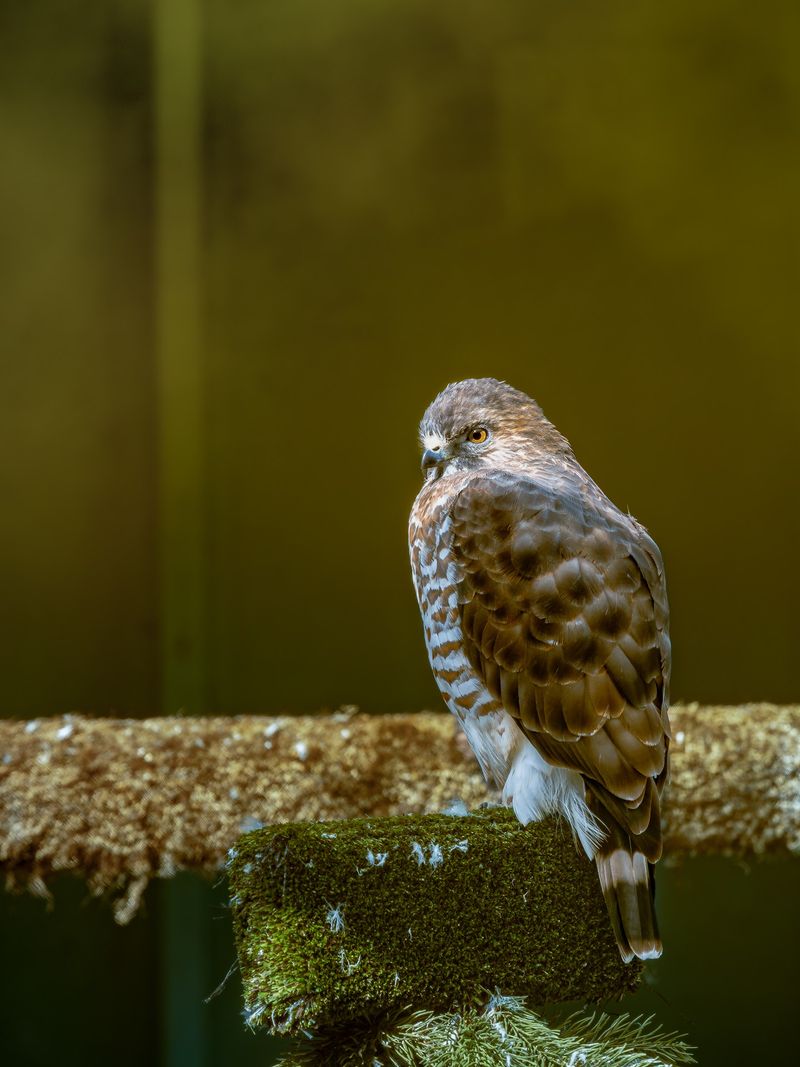
An owl staring back from ten feet away has a way of making everyone lower their voice. That instinct serves visitors well at The Raptor Trust, where the goal is not entertainment but the rehabilitation and protection of wild birds.
Set beside the Great Swamp area in Millington, the center treats injured and orphaned birds while providing permanent homes for some that cannot safely return to the wild. Roughly 50 resident birds can usually be seen along the public aviary trail, including hawks, falcons, eagles, and several kinds of owls.
Because these are not performing animals, the visit feels completely different from walking through a conventional zoo. You move quietly along gravel paths, stopping at outdoor aviaries and reading the stories of birds whose injuries made release impossible.
Rehabilitation patients stay away from public view so they remain as wild and unstressed as possible. Admission to the self-guided trail is free, although donations help support the medical and rehabilitation work.
The center is generally open every day, with longer hours between Memorial Day and Labor Day, but icy winter conditions can force temporary closures. Dogs are not allowed, including in the parking area.
Pair the visit with nearby Great Swamp if you want a longer nature day, but don’t rush through the aviaries. Give the birds a minute, and the place has a funny way of making you pay closer attention to every hawk you spot from the highway afterward.
5. Greenwood Gardens – Short Hills
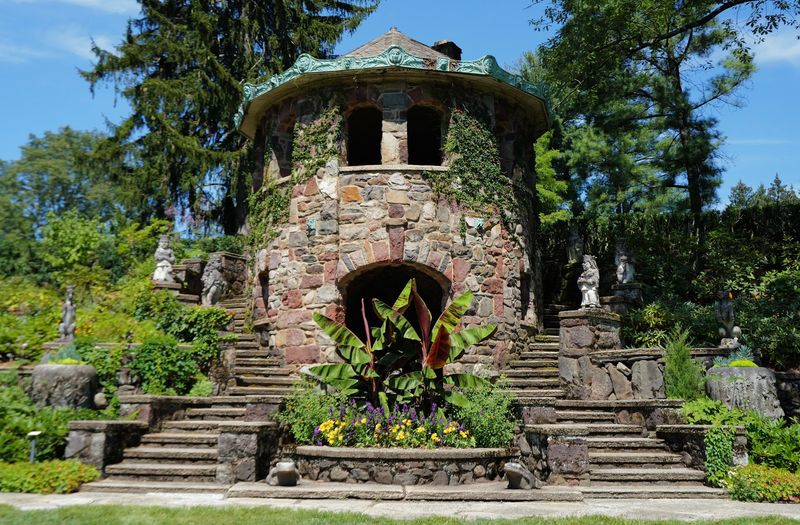
One minute you are driving through Short Hills; the next you are looking down a stone staircase framed by old trees, fountains, terraces, and architectural details that seem wildly out of place in suburban Essex County.
Greenwood Gardens began as a private estate and now preserves 28 acres of formal gardens surrounded by more than 2,000 acres of protected parkland.
Its appeal comes from the details. There are grottoes half-hidden under greenery, Arts and Crafts-style structures, pools, garden walls, sculptural elements, meadows, and woodland paths that make the property feel much larger than it is.
This is less about racing from one floral display to another and more about slowly discovering what sits around the next bend. The gardens are seasonal, typically welcoming visitors from May into early November, and current visiting days are concentrated on Fridays through Sundays.
Advance tickets are the smart move because entry can fill up; adult admission is modest enough for a half-day outing, and parking is included. Wear shoes that can handle stone steps and uneven paths.
Much of the historic landscape is not stroller- or wheelchair-friendly, although the main terrace and certain facilities are accessible. Bring lunch if you like—there is a designated area where visitors can eat their own food—but don’t plan on spreading out a picnic blanket in the formal gardens.
Greenwood rewards a slower pace, preferably with your phone staying in your pocket for at least part of it.
6. Deserted Village of Feltville – Berkeley Heights
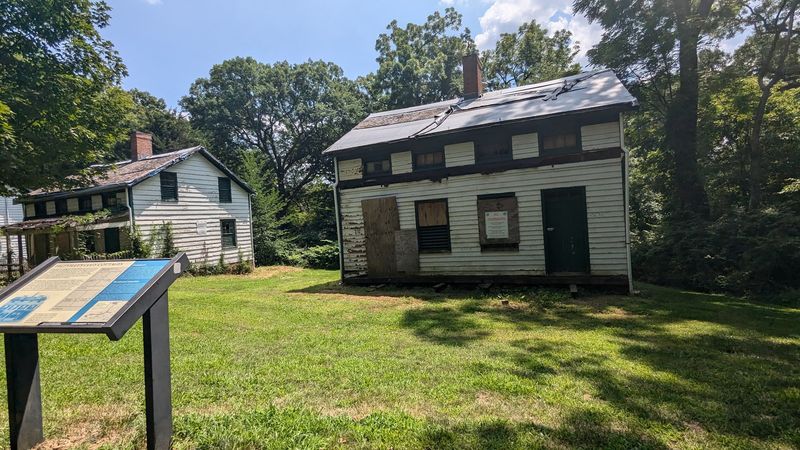
The name sounds like the setup for a ghost story, and the weathered buildings among the trees certainly do their part. The real history of Feltville, though, is stranger and more interesting than any haunted-house tale.
In 1845, businessman David Felt bought hundreds of acres in what is now Watchung Reservation and established a mill community around his printing operation.
By 1850, about 175 people lived here, with workers’ housing, a store, school, and other services forming what was intended to be a comparatively well-planned industrial village.
Felt left in 1860, later businesses failed, and the settlement earned its “deserted” nickname. Then came another twist: in 1882, it was reinvented as Glenside Park, a summer resort where city residents came for horseback riding, tennis, dances, and country air.
That lasted until 1916. Today, surviving cottages, the restored Church/Store, Masker’s Barn, old foundations, and a cemetery form one of New Jersey’s most unusual walking tours.
The self-guided route is roughly a mile, and the surrounding Watchung trails make it easy to turn the outing into a longer hike. Grounds are free and open from dawn to dusk.
Respect the old structures: several porches are fragile, and visitors are asked to stay off them except where specifically permitted. Go on a quiet weekday and the lack of crowds makes the layered history feel even more pronounced.
7. Thomas Edison National Historical Park – West Orange
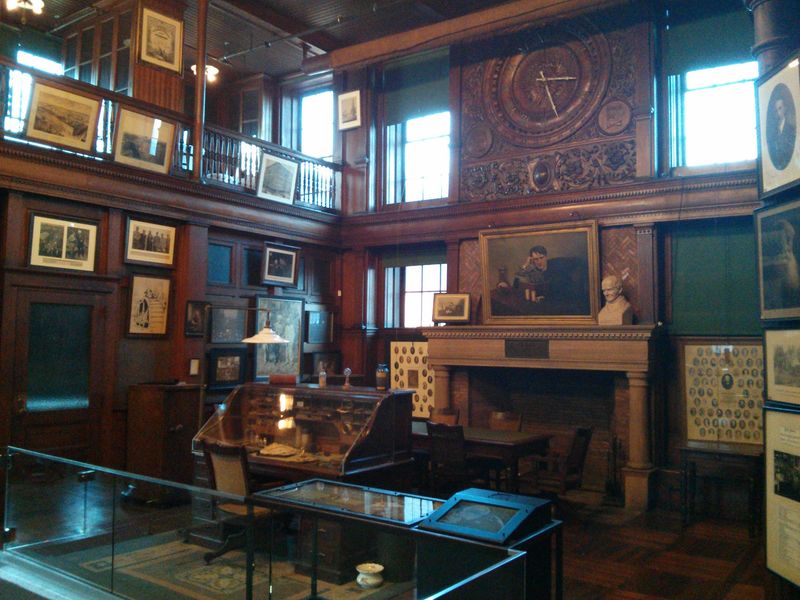
Forget the tidy image of a lone inventor having a lightbulb moment at a workbench. Thomas Edison’s West Orange complex looks much more like what it actually was: an industrial research operation packed with machinery, workshops, laboratories, chemicals, prototypes, and people trying to turn ideas into products.
The enormous Main Laboratory Building is the centerpiece, with Edison’s library, machine shops, music room, and workspaces preserved in remarkable detail.
Nearby buildings reveal the chemistry and manufacturing behind experiments involving recorded sound, motion pictures, batteries, and other technologies associated with Edison’s later career.
It is the clutter that makes the place good. Shelves, tools, jars, belts, pipes, and equipment make invention look less like magic and more like relentless trial and error.
A second part of the park, Glenmont, was Edison’s family estate inside nearby Llewellyn Park. House tours are limited and popular, and advance reservations are strongly recommended when they are available; every visit begins at the Laboratory Complex before heading to the estate.
The park charges an entrance fee, and operating days shift seasonally, so check before going rather than assuming it follows standard National Park hours. Budget at least a couple of hours for the laboratories alone.
Even visitors who have no special interest in Edison tend to leave with a better appreciation for how noisy, physical, and surprisingly messy the business of invention once was.
8. Cathedral Basilica of the Sacred Heart – Newark
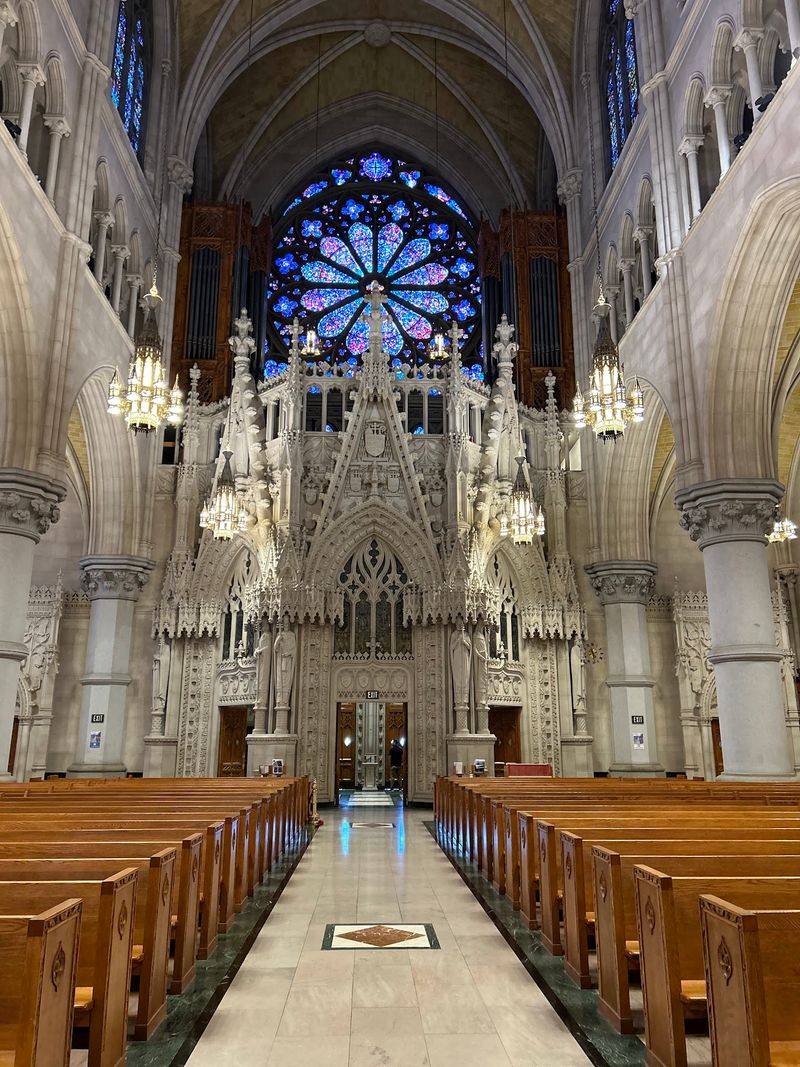
Look up as soon as you enter. The scale only really makes sense when your eyes follow the columns toward the vaulted ceiling and then keep moving to stained glass, carved stone, and the huge interior stretching ahead.
Newark’s Cathedral Basilica of the Sacred Heart sits beside Branch Brook Park on one of the city’s highest points, yet plenty of New Jerseyans have driven within a few miles of it without ever walking inside.
Construction began in the late 1890s, and the cathedral was not dedicated until 1954, a long timeline that helps explain the extraordinary level of craftsmanship throughout the building.
Its French Gothic design covers roughly 45,000 square feet, and the structure is longer and taller than St. Patrick’s Cathedral in Manhattan. That comparison gets attention, but the smaller features are what keep you looking: elaborate wood and stone carving, marble, stained glass, side chapels, and the long sightline down the nave.
This remains an active Catholic cathedral rather than a museum, so visit with the same respect you would bring to any place of worship. Public visiting hours are offered throughout the week outside services and private events, with entry generally through the Ridge Street rectory when Mass is not underway.
Saturdays can be complicated by weddings, making a quick call ahead worthwhile. A first-Sunday tour is one of the best ways to catch details you might otherwise walk straight past.
9. Teaneck Creek Conservancy – Teaneck
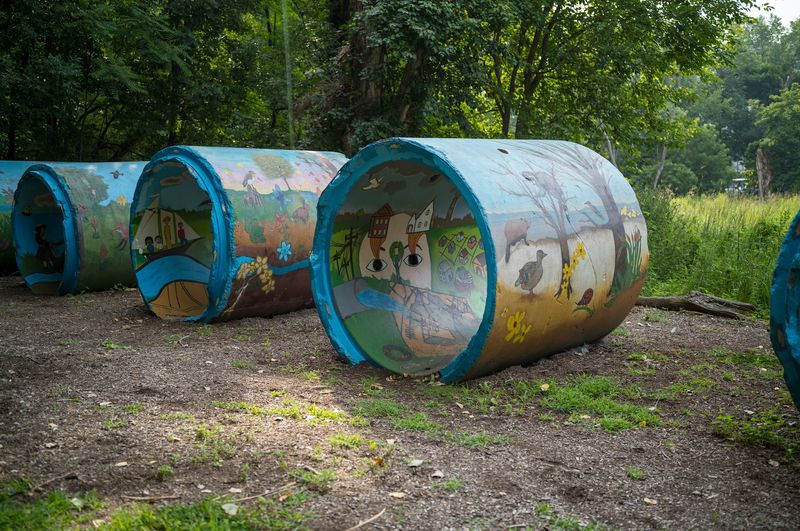
Concrete rubble should not be this interesting. At Teaneck Creek, slabs left from decades of dumping and highway construction have been reworked into art, trail markers, and reminders of what this 46-acre property used to be.
The land served as a staging area during construction around Routes 80 and 95 and later became an unofficial dumping ground, with tires, appliances, asphalt, and other debris accumulating in the woods.
Community volunteers, artists, environmentalists, and Bergen County eventually helped turn that damaged landscape into a public park with more than a mile of trails.
A major habitat project has since restored and created roughly 20 acres of freshwater wetlands, bringing birds and other wildlife back into a surprisingly urban corner of Bergen County. The permanent Eco-Art installations are what distinguish a walk here from a standard nature loop.
Pieces such as the Turtle Peace Labyrinth and Migration Mileposts use reclaimed material and the site’s own troubled history as part of the landscape rather than pretending it never happened. Trails are free and open from dawn to dusk every day.
Leashed dogs are welcome, but bicycles are not, and there are no public bathrooms on site, so plan accordingly. This isn’t a place for dramatic mountain overlooks or a strenuous hike.
It is better than that in a different way: a compact example of how an abused patch of land can be given an entirely different future.
10. Northlandz – Flemington
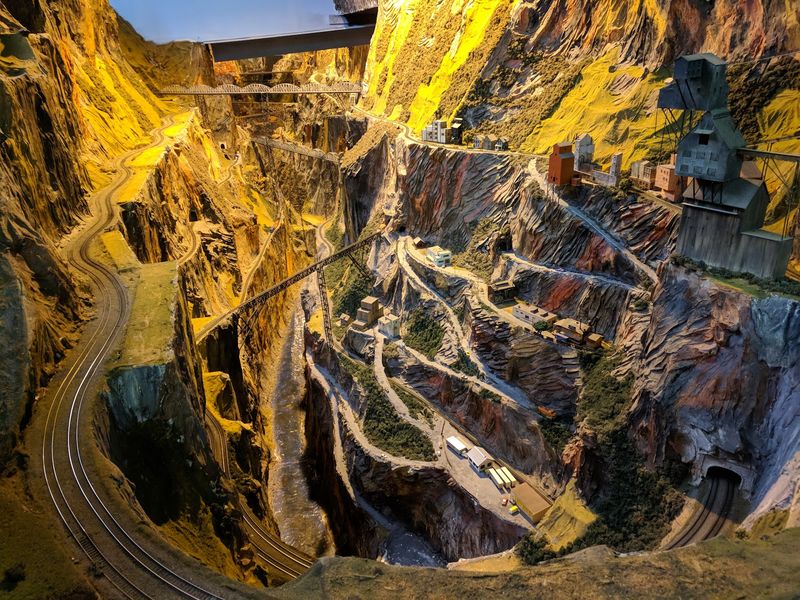
A train disappears into a tunnel, crosses a bridge hundreds of feet farther along the display, and then becomes almost impossible to track through the miniature cities, mountains, canyons, factories, and tiny human dramas filling the room. Northlandz operates at a scale that makes the phrase “model railroad” sound hilariously inadequate.
Creator Bruce Williams Zaccagnino began with a home layout before expanding his obsession into the Flemington attraction that opened in the 1990s. The numbers are ridiculous: around eight miles of track, more than 100 trains, hundreds of bridges, more than 200 tunnels, and miniature canyons reaching roughly 35 feet high.
But counting things misses half the fun. Look closely and you start noticing absurd little scenes built into the landscape—workers, towns, accidents, houses perched in impossible places, strange architectural experiments, and visual jokes that reward anyone willing to stop rather than march through.
This is one of those rare attractions where adults without children can have just as much fun as families, especially if they appreciate handmade oddities and ambitious personal projects. Northlandz is indoors and currently opens daily, making it a useful rainy-day option when an outdoor plan collapses.
Give yourself a couple of hours instead of squeezing it between errands. There is simply too much going on at eye level, above your head, and down in the miniature valleys to rush the place without missing its best details.
11. BAPS Swaminarayan Akshardham – Robbinsville
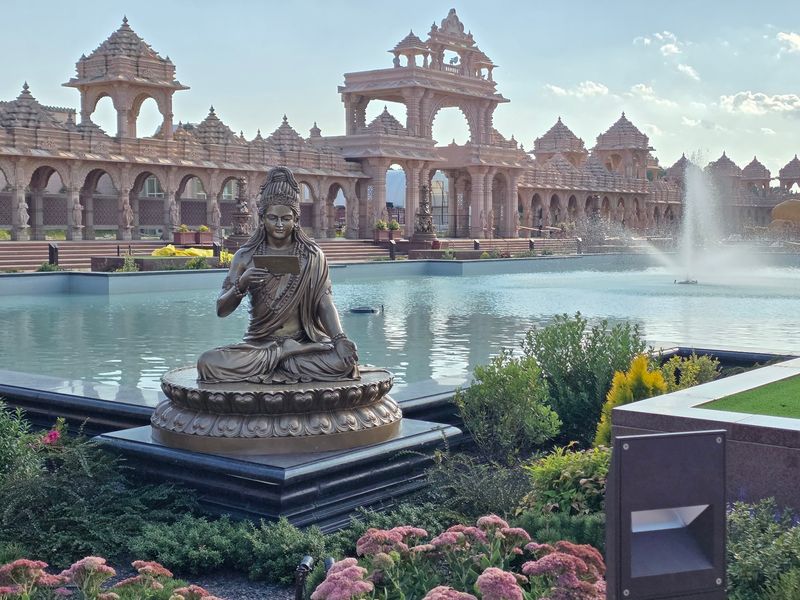
The first surprise is the scale. The second is realizing how much of that scale is covered in carving.
BAPS Swaminarayan Akshardham in Robbinsville stretches across a vast campus, with its monumental Hindu mandir rising in intricately worked stone that rewards close inspection as much as a wide-angle view.
Completed after more than a decade of work, the complex was built with the help of thousands of volunteers and incorporates stone sourced from around the world.
Its design includes thousands of statues and carved figures, multiple shrines and spires, and an enormous traditional stone dome. Outside, the Brahma Kund stepwell adds another striking space, incorporating water gathered from hundreds of bodies of water around the world.
Visitors do not need to be Hindu to come, but this is first and foremost a sacred place, not an architectural theme park. Dress accordingly: shoulders, chest, back, and knees should be covered, and footwear must be removed before entering the Mahamandir.
Entry is free, although registration requirements apply on certain busy weekends, holidays, and festival dates. The campus is closed on Tuesdays and otherwise generally operates from morning into early evening.
Allow about two hours if you want to explore without racing through. There is also an on-site café, which makes lingering easy. The strangest part may be the drive home, when ordinary central Jersey roads suddenly feel very ordinary indeed.
12. Howell Living History Farm – Hopewell Township
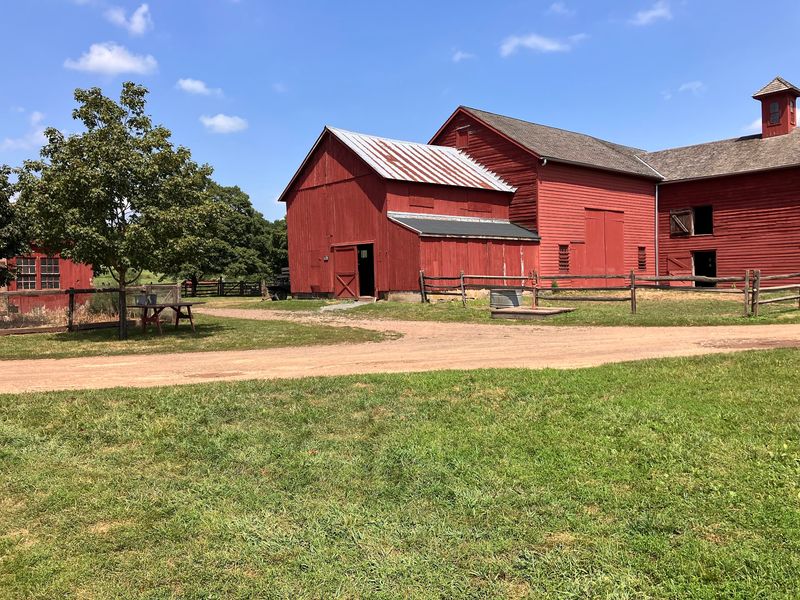
On the right Saturday, you might find horses pulling a plow, sheep losing their winter fleece, maple sap boiling into syrup, or farmers using equipment that predates the tractor. Howell Living History Farm does not treat agricultural history as something meant to sit behind glass.
The Hopewell Township property operates as a working farm based around methods used in the region from roughly 1890 to 1910, which means the chores depend on weather, crops, animals, and the season rather than a fixed performance schedule. That unpredictability is part of the appeal.
Winter can bring ice harvesting and maple sugaring; spring means plowing, planting, lambing, and sheep shearing; warmer months add haying, wheat harvests, animal chores, and occasional carriage or workhorse programs.
The farm raises crops and livestock using period-appropriate equipment, including plenty of horse power in the literal sense.
Admission and parking are free for ordinary visits, although certain special programs such as the corn maze carry a fee. Current regular hours are Tuesday through Saturday, 10 a.m. to 4 p.m., and visitors check in at the Visitor Center before heading toward the historic farmstead.
Most of the bigger demonstrations happen on Saturdays, so that is the day to choose if your schedule allows. Skip the pristine shoes. A living farm smells, sounds, and occasionally splatters exactly the way a farm should—and that is why this place works.
13. WheatonArts – Millville
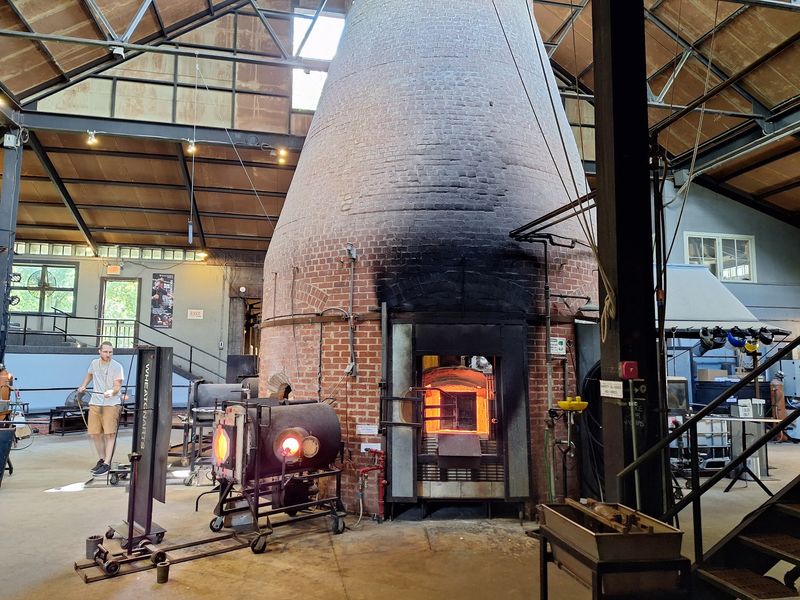
You hear the furnace before you fully understand what the artist is doing. Then a glowing blob of molten glass comes out on the end of a pipe, gets rolled, reheated, stretched, cut, and coaxed into something precise enough to make the whole process look unfairly easy.
Watching glassmaking is the essential WheatonArts experience. Millville and the surrounding part of South Jersey have deep ties to American glass production, thanks partly to the region’s natural resources, and this 45-acre arts campus gives that history a present tense.
The Museum of American Glass holds a collection numbering in the tens of thousands, ranging from early bottles and practical household pieces to contemporary studio glass that looks nothing like the stuff in your kitchen cabinets. Don’t spend the whole visit behind museum doors, though.
Glassblowing, flameworking, and pottery demonstrations put working artists within view, while the Down Jersey Folklife Center, shops, pond, and nature trail give you reasons to wander between sessions. WheatonArts operates seasonally, currently opening Thursday through Sunday from April through December.
Paid admission covers the museum and artist studios; on ordinary non-event days, visitors who only want to browse the grounds and museum stores can do that without buying a ticket. Check the demonstration schedule when you arrive and build the visit around it.
Static glass is beautiful. Watching someone control a material hot enough to glow orange is much harder to forget.
14. Batsto Village – Hammonton
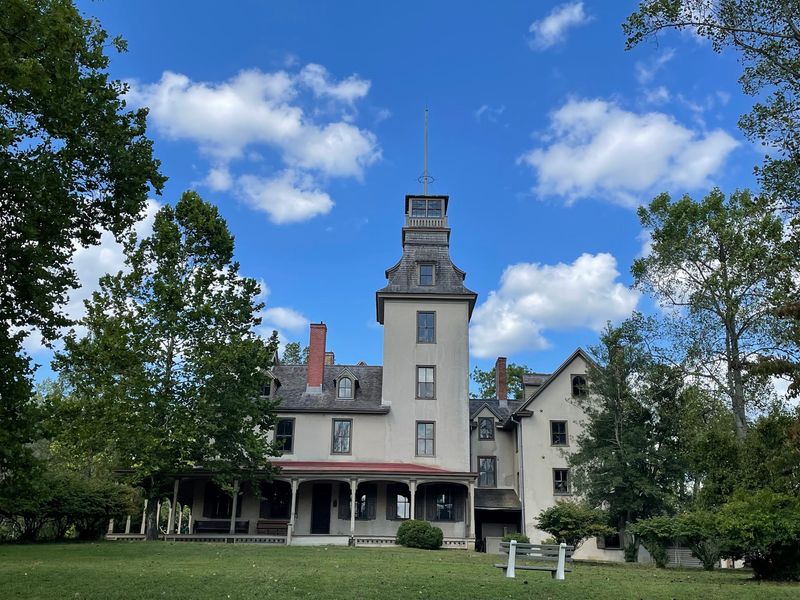
A post office, sawmill, workers’ homes, barns, and a sprawling Victorian mansion sit together in the Pine Barrens as if everyone simply walked away and forgot to build a modern town around them.
Batsto Village began as an ironmaking community in the 18th century, using the region’s natural resources to produce iron goods that included supplies for the Continental Army during the Revolutionary War.
The local economy later shifted toward glass, agriculture, and milling, and industrialist Joseph Wharton eventually acquired the property. More than 30 historic buildings survive today, giving Batsto something many historic sites lack: enough structures to make the place feel like a community rather than a single preserved house.
The 36-room Batsto Mansion naturally gets most of the attention, but don’t skip the 19th-century post office or the water-powered sawmill. Guided mansion tours are offered throughout the year, while the village itself can be explored independently.
Grounds remain open from dawn to dusk, and the Visitor Center is generally open during daytime hours. On summer weekends, Wharton State Forest charges a small vehicle entrance fee, with a lower rate for New Jersey residents.
Once you finish the historic loop, the surrounding forest offers hiking and other outdoor options. Batsto is especially good in fall, when the muted buildings, sandy roads, dark water, and changing Pine Barrens foliage make the entire village look almost suspiciously well art-directed.
15. Twin Lights Historic Site – Highlands
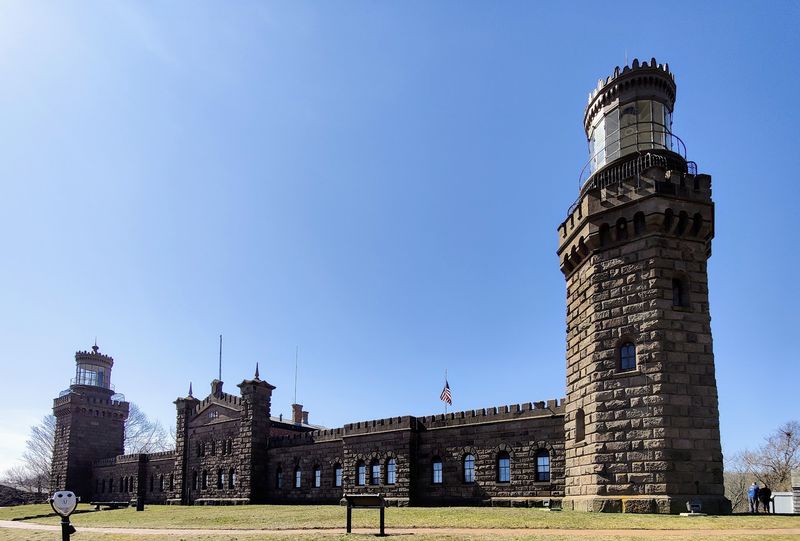
Climb the tower and New Jersey rearranges itself below you. Sandy Hook stretches into the water, the Atlantic opens beyond it, boats move through the approaches to New York Harbor, and on a clear day the Manhattan skyline sits in the distance.
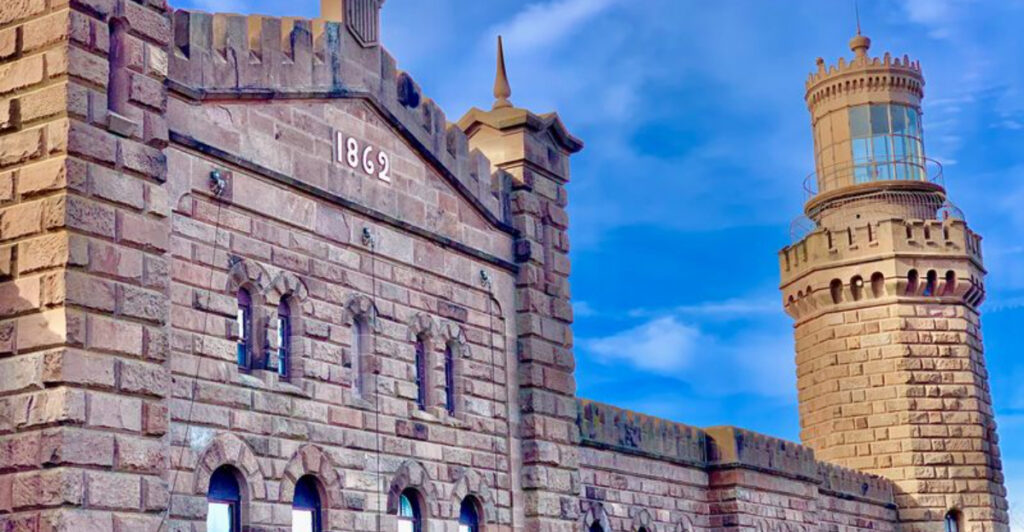
Twin Lights has occupied this strategic perch above Highlands in one form or another since 1828, while the distinctive present complex dates to 1862. The mismatched towers are not an architectural accident anyone has convincingly explained, which only adds to the site’s personality.
Its history extends far beyond guiding ships. The earlier station became the first place in the United States to test Fresnel lighthouse lenses in 1841, and Guglielmo Marconi later used the Highlands for pioneering wireless transmissions during the 1899 America’s Cup era.
Inside the museum, exhibits connect navigation, optics, communications, and the people who operated the lights. The grounds are open year-round and admission to the museum and exterior areas is free.
During the main climbing season, a small ticket fee gets you into both towers, with roughly 64 or 65 steps depending on which one you tackle. The climb is short enough to tempt almost anyone and steep enough to make the view feel earned.
Go on a crisp, clear day if you can. Plenty of Jersey overlooks are beautiful, but very few let you stand inside a piece of maritime history while looking straight toward one of the busiest harbors on Earth.