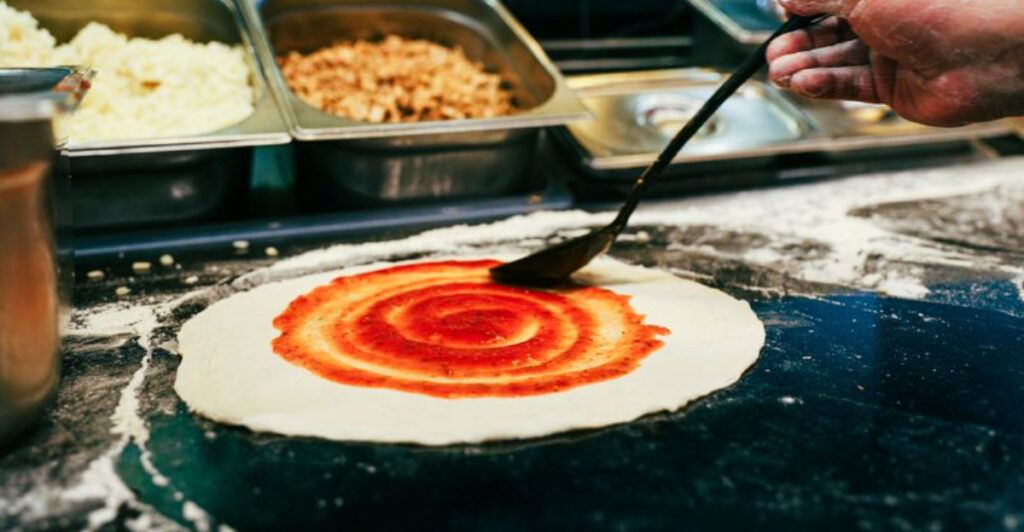
There is a particular kind of Jersey pizza order that tells you exactly where a person’s loyalties lie: “extra sauce.” Around here, that request is not an afterthought. At the right pizzeria, the tomato is every bit as important as the crust, cheese, oven, and argument over whether the pie should be cut into six slices or eight.
Some places spoon the sauce over the cheese in proper Trenton tomato-pie fashion. Others paint it into a boardwalk spiral, simmer a house red sauce that shows up everywhere from meatballs to mozzarella sticks, or use just enough bright tomato to keep a cracker-thin bar pie from becoming one-note.
The restaurants below span generations, pizza styles, and nearly the entire state, but they share one useful trait: the sauce refuses to disappear into the background. If you are the person who steals the sauciest corner, asks for marinara on the side, or judges a slice by its tomato-to-cheese ratio, start here.
1. Razza – Jersey City
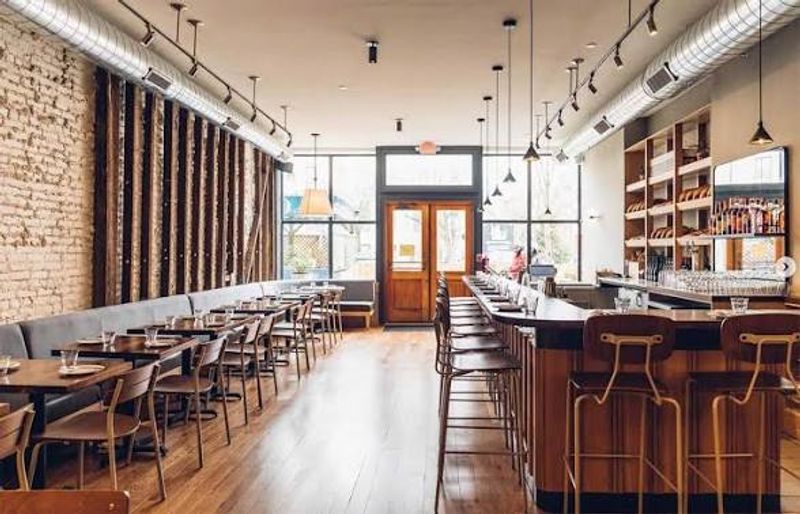
A cheese-free pizza is a pretty effective test of tomato confidence, and the La Rossa at this Jersey City favorite passes it without blinking. Crushed tomatoes, garlic, and basil have nowhere to hide, which is precisely why it belongs near the top of a sauce-focused pizza crawl.
Razza also serves a tomato pie built around red and yellow tomato sauces with aged Parmigiano-Reggiano, while the Margherita keeps things more familiar with tomato sauce, handmade fresh mozzarella, basil, sea salt, and olive oil. The point is not that every pie is aggressively saucy.
It is that the tomato tastes considered rather than automatic. Razza’s wood-fired pizzas are compact enough that ordering two different styles for the table makes sense, especially if one is tomato-forward and the other brings sausage, mushrooms, or guanciale into the mix.
The room on Grove Street feels more like a serious neighborhood restaurant than a fluorescent slice shop, so this is a good choice when pizza night also needs cocktails, wine, and an actual sit-down dinner. The menu changes with seasonality and availability, which means the exact tomato combinations can shift.
Outdoor seating works differently from the dining room and is geared toward takeout customers, so check the setup before building an evening around patio seats. For sauce obsessives, though, the simplest move remains the best one: order a pie where the tomato gets center stage and see how little else it needs.
2. De Lorenzo’s Tomato Pies – Robbinsville
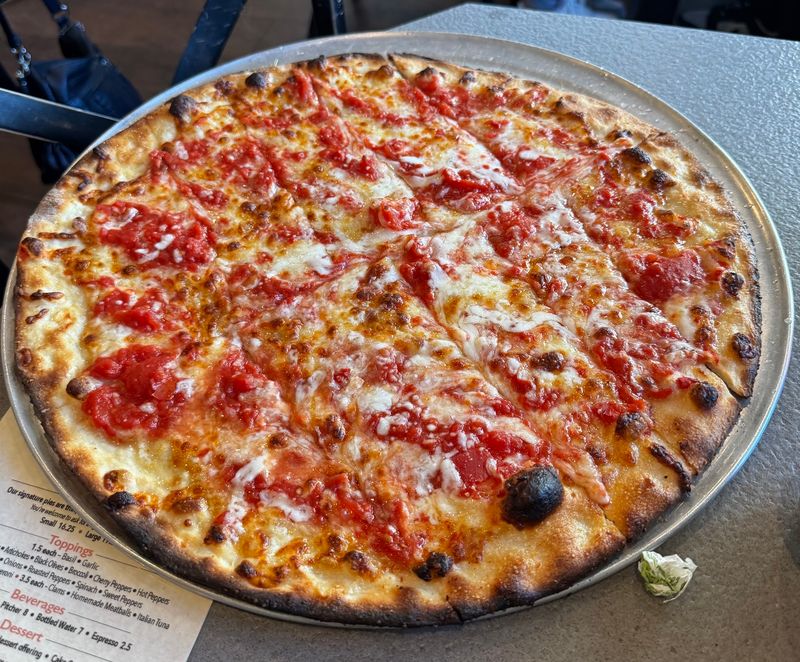
The first clue is right there in the name: this is a tomato-pie place, not a pizzeria trying to make its sauce sound important after the fact. De Lorenzo’s traces its roots to Trenton’s Chambersburg neighborhood, where Alexander “Chick” De Lorenzo opened his own shop in 1947.
The original Hudson Street location is gone, but the family tradition continues in Robbinsville, and the essential architecture of the pie still puts tomato in the spotlight. In the classic Trenton style, cheese goes down before the tomato, leaving the red sauce exposed on top instead of sealing it beneath a blanket of mozzarella.
That small reversal changes the entire bite. You notice the acidity and sweetness of the tomato immediately, followed by cheese and a thin, crisp base.
Start with a plain tomato pie before getting ambitious. Sausage is a natural second round because it brings richness without burying the sauce, and ordering extra tomato is perfectly reasonable if your priorities match the title of this list.
The Robbinsville dining room is polished compared with the famously spare old Trenton location, but the food still feels rooted in a specific local tradition rather than reinvented for nostalgia.
One planning note matters: De Lorenzo’s closes on Mondays and splits lunch and dinner service on several weekdays, so arriving whenever the craving hits can backfire. Tomato-pie people know better. They plan around the pie.
3. Papa’s Tomato Pies – Robbinsville
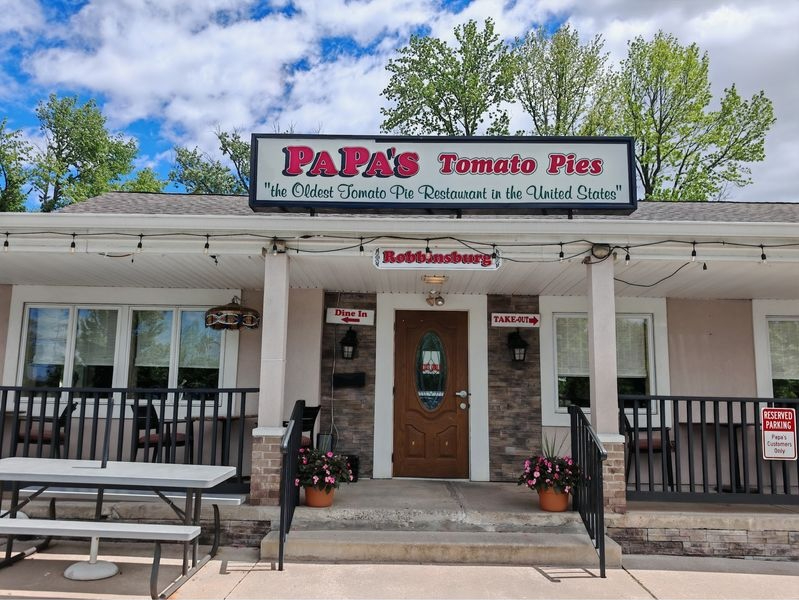
There are old pizza restaurants, and then there is a place that can casually put “Est. 1912” on the sign and still be run as a family business. Papa’s carries more than a century of Trenton tomato-pie history into its current Robbinsville home, but the order that tends to start conversations is the mustard pie.
A thin layer of spicy brown mustard goes directly onto the dough before the cheese and tomato, creating a sharp, tangy undercurrent that sounds strange for about ten seconds and then becomes one of those regional foods you suddenly want everyone to try.
If mustard on pizza feels like too much commitment, the plain tomato pie is the proper introduction.
The sauce sits up top in the Trenton tradition, so you get that bright tomato hit before the cheese can dominate the slice. Papa’s normally cooks its pies well-done, with a little char, which is exactly what you want against a moist topping of sauce.
The room is casual and family-friendly, and unlike a destination restaurant where the meal turns into a production, this still works as an easy weeknight pizza stop. It is also open seven days a week, a useful advantage if you are comparing Robbinsville’s legendary tomato-pie camps in person.
Order a plain pie and a mustard pie for the table. One shows why this local style has lasted; the other shows why New Jersey pizza traditions are much more interesting than arguing about thin crust versus thick.
4. Star Tavern – Orange
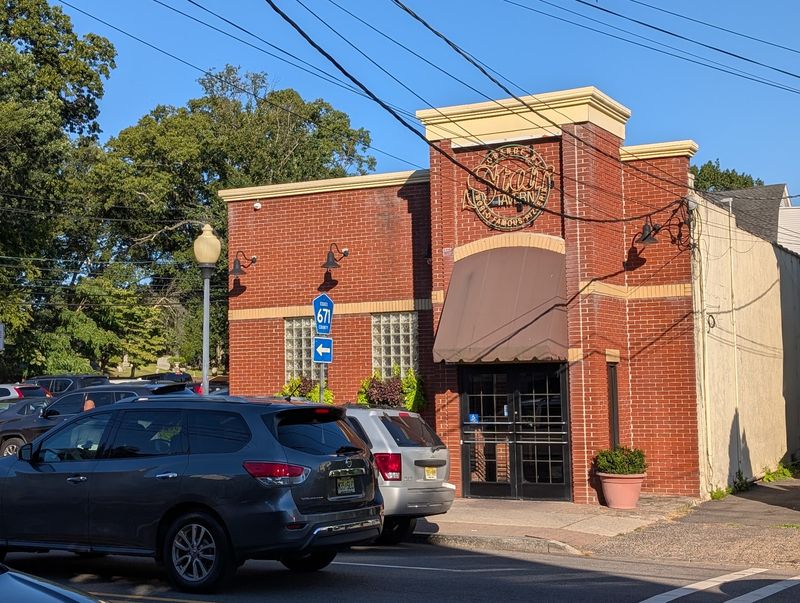
You know a bar pie has the proportions right when adding another topping feels almost unnecessary. At this Orange institution, the thin crust, cheese, and tomato work as a tight little unit: crisp underneath, saucy enough to stay lively, and cut into pieces that disappear faster than anyone at the table expects.
Star Tavern has been serving its style of thin-crust pizza since 1945, and the room still behaves like a neighborhood tavern rather than a pizza attraction polished for visitors. The kitchen is visible, the pace can get noisy, and booths and bar seats fill with families who have been ordering the same pies for decades.
Start plain if this is your first visit. The lack of doughy bulk makes the tomato much easier to taste than it would be on a heavier slice, and the browned cheese at the edges gives the sauce something salty to push against.
Sausage, pepperoni, or hot peppers are sensible upgrades on a second pie, but loading everything onto one crust misses the point. There is a full Italian-American menu too, including mussels marinara and fried calamari with marinara, so committed red-sauce people do not have to leave pizza to get another fix.
Parking can require a little patience at busy times, and weekends predictably draw a crowd. The solution is simple: go hungry, order more than one pie, and accept that “we’ll just have a slice” is not a realistic plan here.
5. Patsy’s Tavern & Restaurant
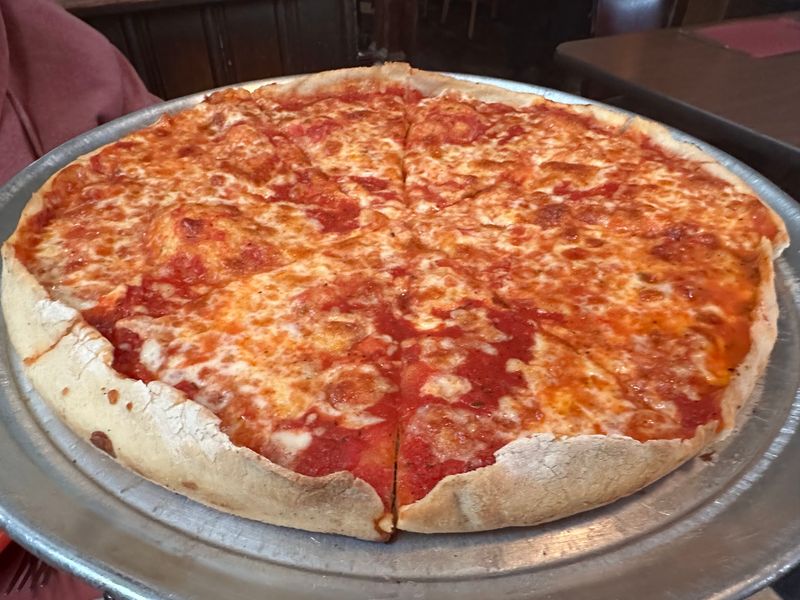
The oven is older than almost everyone eating in front of it. Patsy’s has baked pizza in its original 1931 brick ovens for generations, and the Paterson restaurant has wisely resisted turning that history into a theme-park version of itself.
The antique interior remains part of the experience, as does a menu filled with the kind of Italian-American standards that make tomato sauce feel less like a condiment than a food group. The famous brick-oven pizza is thin and crisp, with enough structure to carry sauce without sagging.
A mozzarella pie is where to begin; add sausage, fresh garlic, or hot peppers only after you have tried the basic combination. The house tomato sauce also runs through pasta, ravioli, lasagna, baked ziti, and Parmigiana dishes, which means ordering extra marinara here hardly feels eccentric.
More than anything, Patsy’s is for people who like restaurants that still have quirks. Hours are more limited than at a modern all-day pizzeria, with dinner service doing most of the work and lunch offered only on certain weekdays.
The restaurant’s menu also warns that credit cards are not accepted, so bringing cash saves an awkward post-pizza scramble. This is not the place to demand slick service systems or endlessly customizable crusts.
Come for the old brick oven, the crispy pie, and the particular satisfaction of eating red-sauce Italian food in a room that has been doing essentially the same job since Herbert Hoover was president.
6. Sciortino’s Harbor Lights – South Amboy
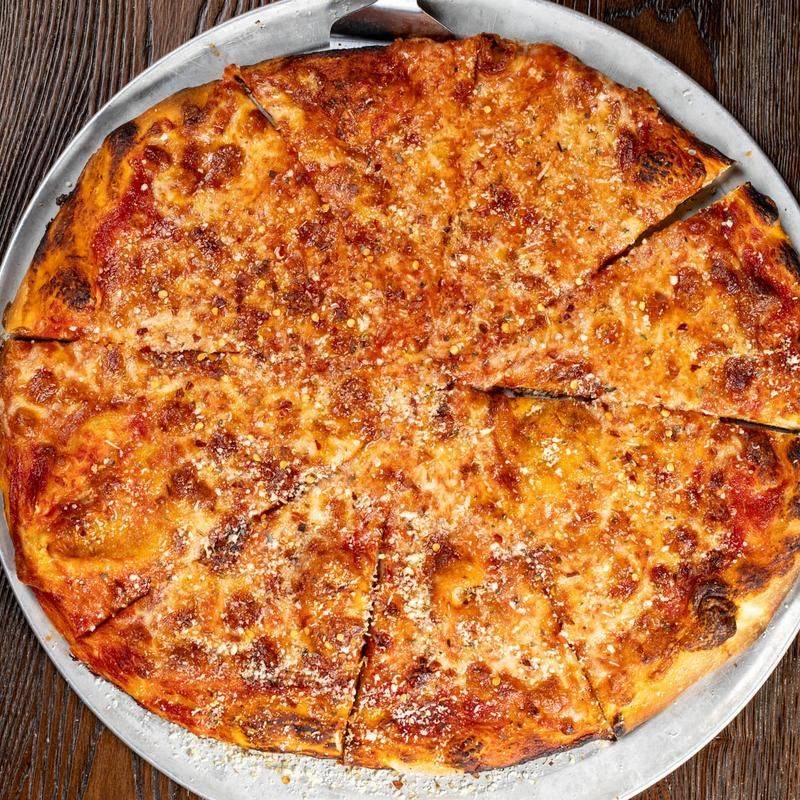
At Sciortino’s, red sauce is not confined to one corner of the menu. It arrives beside chicken fingers, fried ravioli, mozzarella sticks, calamari, and wings; it covers eggplant Parmigiana and shows up with pasta, meatballs, and mussels.
Then there is the pizza sauce, which gets its own role on brick-oven pies. That makes the South Amboy restaurant an especially easy inclusion for anyone whose idea of a successful Italian dinner involves seeing red in the best possible way.
The family history stretches back to the 1930s, and the pizza still uses a distinctive two-step baking method passed through generations. Dough is pressed onto an iron tray and partially baked, then topped and finished directly on the brick oven surface.
The result is a crisp, deeply baked crust with Pecorino Romano and oregano adding salt and fragrance around the tomato. A plain pie is the cleanest way to understand it, though homemade sausage is a strong addition if you want something more substantial.
There is also an “extra sauce” option among the pizza toppings, which tells sauce people everything they need to know about the restaurant’s priorities.
Unlike some historic Jersey pizza landmarks, Sciortino’s is a full sit-down restaurant with a bar and broad menu, so it works well for groups in which one person somehow does not want pizza. It is open daily, making this one of the easier old-school stops to fit into a Central Jersey food run.
7. Maruca’s Tomato Pies – Seaside Heights
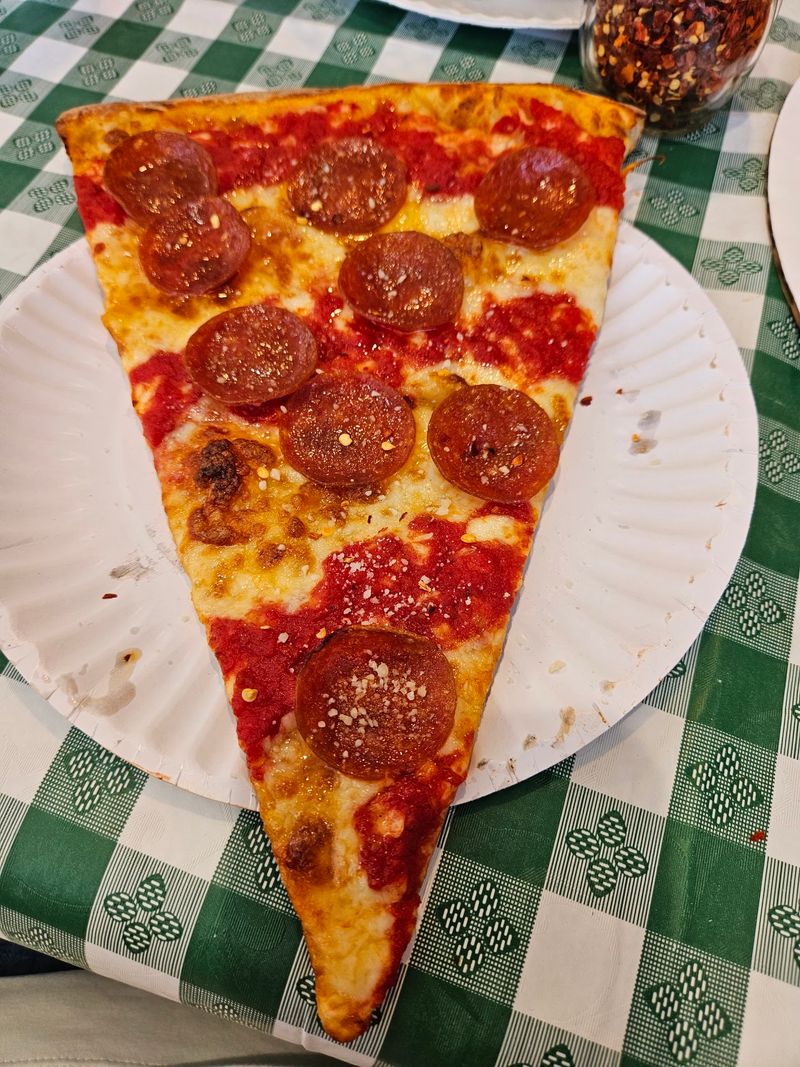
Few pizzas advertise their sauce from twenty feet away. Maruca’s does it with a red spiral.
The signature Seaside Heights tomato pie arrives with cheese melted over the crust and tomato sauce swirled visibly across the top, giving each oversized boardwalk slice a pattern that regulars can identify before taking a bite.
The family began making pizza in 1950 and brought the style to the Jersey Shore that same year, turning a Trenton-inspired tomato pie into something inseparable from summers in Seaside.
There is no reason to overcomplicate the first order. Get the classic tomato pie and pay attention to how the swirl changes the bite from one section to another: some mouthfuls are cheesier, others deliver a stronger hit of tomato, and the thin crust keeps the whole thing from becoming heavy.
This is boardwalk pizza, so the setting matters too. You are eating within range of arcade noise, ocean air, fried-food smells, and people carrying slices roughly the size of steering wheels.
That is part of the charm, not an obstacle to it. Maruca’s operates from the boardwalk at Ocean Terrace, with hours that can vary more in the off-season than they do during summer, so check before making a cold-weather pizza pilgrimage.
In season, however, the formula is practically foolproof: walk the boards, order a giant slice with that unmistakable stripe of red, and try not to drip sauce on your shoes.
8. Pizza-Town USA – Elmwood Park
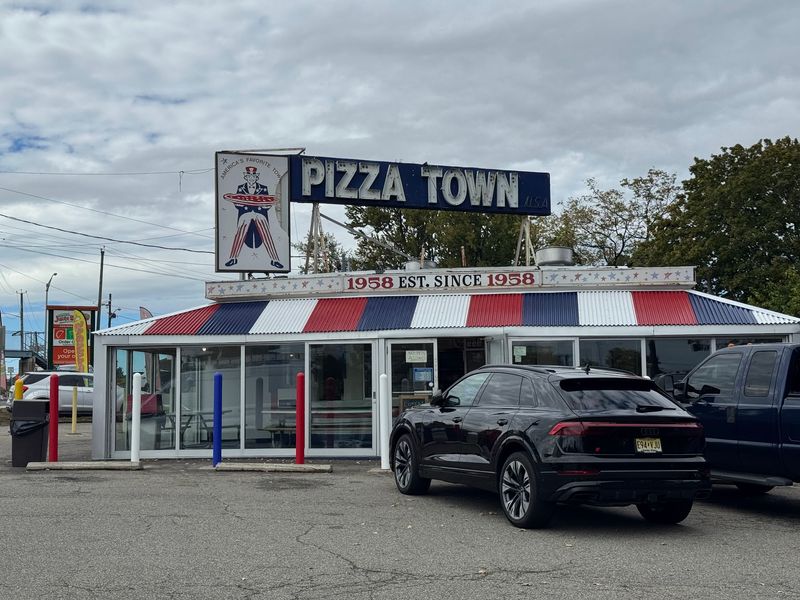
The neon, roadside location, and old-fashioned counter setup make Pizza Town USA look like the kind of place where somebody ought to be leaning against a station wagon in a 1960s postcard. That sense of time travel is part of the appeal.
The Elmwood Park landmark dates to 1958 and has long specialized in straightforward, thin-crust pizza rather than turning every pie into a stunt.
A plain cheese slice is the correct starting point because this is old-school North Jersey pizza at its most direct: crisp base, tomato sauce, melted cheese, fold if you want, repeat immediately.
The Pizza Town Special adds sausage, mushrooms, peppers, meatballs, and extra cheese, but that is a second-visit move if your mission is to see what the sauce is doing. This is also one of those places where zeppoles and a soda feel more natural than an elaborate appetizer order.
The building along Route 46 remains the fun part of the experience; you pull off a busy highway and suddenly find yourself in a pizza joint whose identity predates most modern fast-casual chains by decades.
The restaurant underwent renovations and reopened in 2026, so longtime customers may notice changes around the edges, but the draw is still the same basic ritual: park, grab a pie or a slice, and let tomato, cheese, and crust do the work.
It is casual, relatively inexpensive, and especially useful when the craving demands pizza without ceremony.
9. The Pizza Terminal – Verona
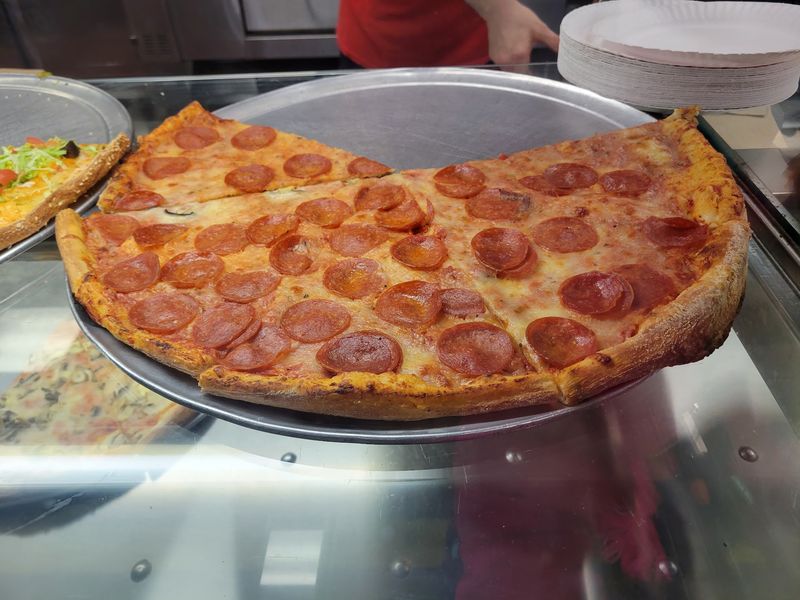
Choosing a pizza here can feel like scrolling through every possible Jersey craving at once.
The Verona menu moves from a straightforward tomato pie to grandma, drunken grandma, mustard pie, penne vodka pizza, Detroit-style options, Sicilian versions, and pan pies without acting as though you must pledge allegiance to only one school.
For sauce fans, that abundance is useful. Start with the tomato pie if you want the red stuff front and center, or go for a drunken grandma when creamy vodka sauce is the craving.
The menu even lets many specialty combinations migrate across different formats, so you can compare how the same flavor idea behaves on a thinner round pie versus a thicker pan base. Despite the giant menu, Pizza Terminal feels more like a neighborhood pizzeria than a concept restaurant trying to prove how inventive it is.
Slices are available, which makes experimentation inexpensive, and the Bloomfield Avenue location is easy to treat as a quick lunch stop rather than a major outing.
If you are feeding a group, the variety becomes the real advantage: one person can stay loyal to plain cheese while someone else orders a tomato pie and another goes straight for vodka sauce.
The smartest sauce-lover strategy is not to chase the most overloaded specialty. Pick a pie where the sauce has room to register. With this many options competing for attention, restraint turns out to be the more interesting order.
10. Angeloni’s – Caldwell
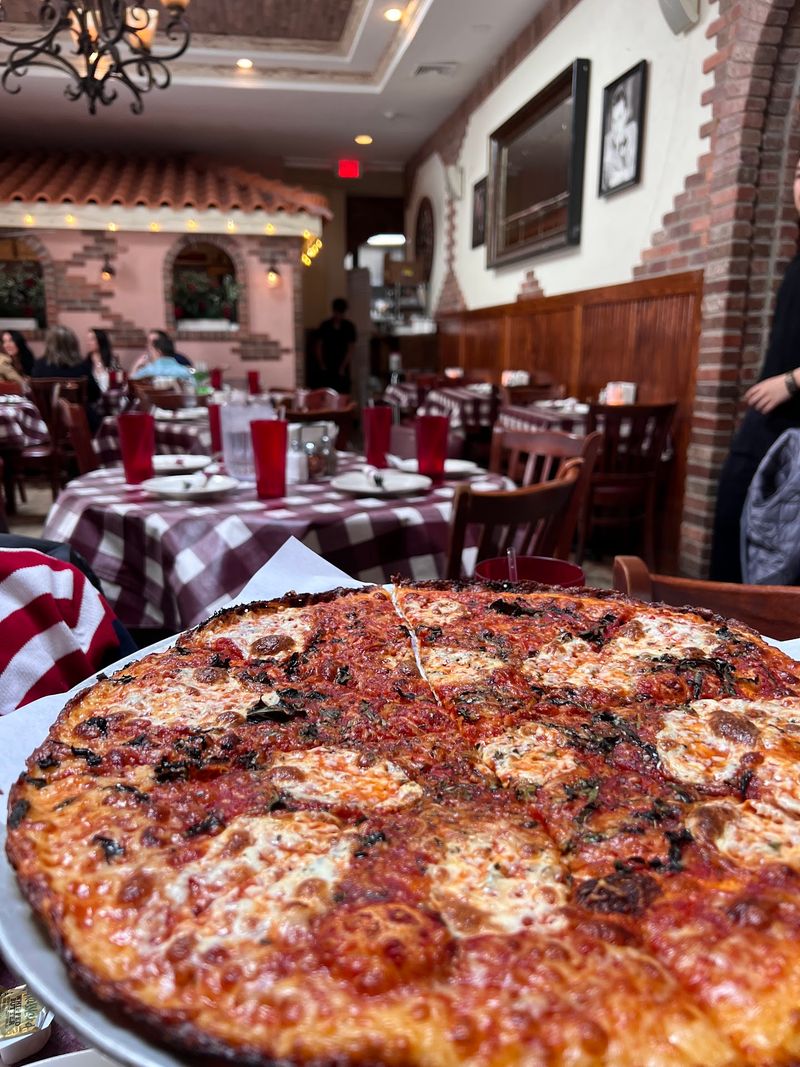
Forget the floppy fold for a minute. Angeloni’s signature Thinny Thin goes in the opposite direction: paper-thin, cooked well-done, essentially crustless at the rim, and finished with cheese crisping all the way to the edge.
With so little dough between you and the toppings, sauce becomes especially noticeable. That is why the simplest pies work so well here.
Grandma Irm’s, built with marinara and mozzarella, is a natural pick for anyone following the red-sauce theme, while the regular Thinny Thin gives you the classic crackly experience that made the Caldwell restaurant a local fixture.
If you want to wander off script, the menu also plays with vodka sauce, including richer specialty combinations that pile on pepperoni, burrata, basil, and honey.
Still, Angeloni’s is at its best when you let that brittle base do what it was designed to do: provide crunch without turning dinner into a bread course.
The restaurant is more substantial than a basic takeout pizzeria, with Italian-American entrées, seafood, pasta, and a dining room where families can settle in rather than hover beside a slice counter.
It is also BYOB, a useful detail if you want a casual dinner without bar prices. The move for first-timers is to order one Thinny Thin and one marinara-forward pie for comparison.
You will quickly understand why crispy-cheese people and sauce people can happily share the same table here.
11. Barcelona’s – Garfield
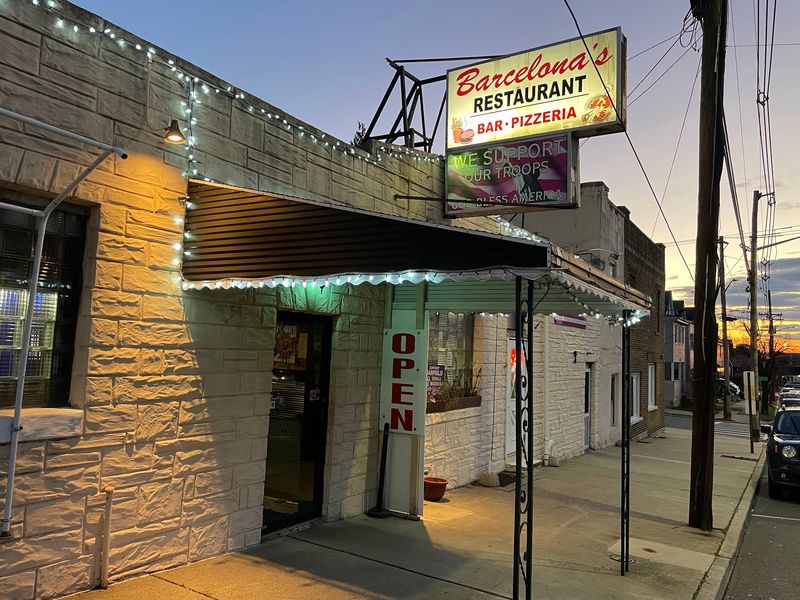
A restaurant does not make it from 1933 to the present by constantly asking what is trending on pizza social media. Barcelona’s has spent generations doing something far less complicated: serving thin-crust pies, hot garlic bread, Italian-American dinners, and drinks from a proper neighborhood bar in Garfield.
The pizza is the reason to come for this list. Its low-profile crust keeps the ratio firmly in sauce-and-cheese territory, and a plain pie gives you the cleanest version of the house style.
Add sausage or peppers if you like, but piling on toppings can overwhelm the delicate base before you have figured out why regulars keep returning. The room reinforces the old-school mood.
This is not a minimalist pizza counter with exposed brick installed last year; it is a family-run restaurant built around repeat customers, a bar, booths, and the sort of menu where somebody at the table can order an Italian entrée while everyone else keeps reaching for another slice.
The famous hot garlic bread is worth adding because saying no to garlic bread at an Italian restaurant this old feels unnecessarily stubborn.
Prices remain approachable compared with many destination pizza spots, so ordering a second pie is easier to justify. One practical wrinkle: Barcelona’s closes on Tuesdays and has historically adjusted Sunday service during summer, so confirm the schedule before driving over.
Once seated, keep the order simple. This is the kind of pizza that rewards familiarity more than experimentation.
12. Ralph’s Pizzeria
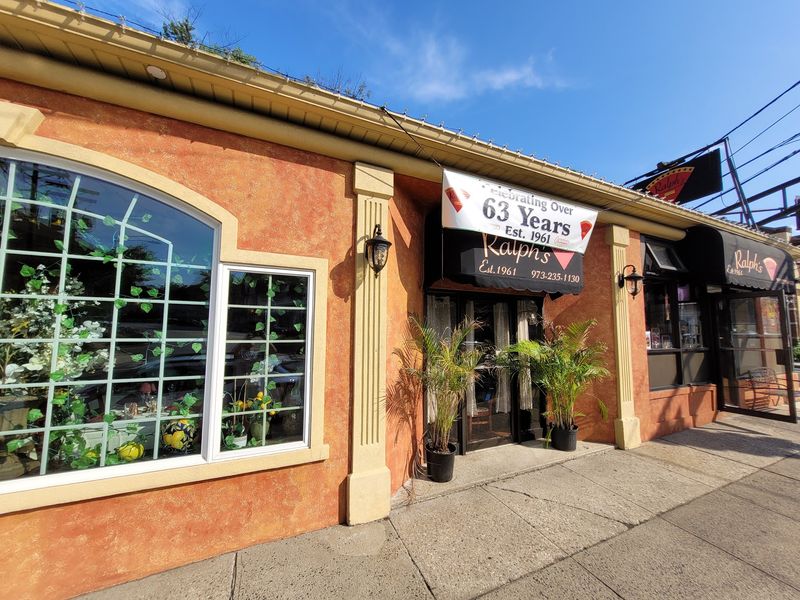
Nutley has had Ralph’s since 1961, which is enough time for a town to develop strong opinions about exactly how a pizza should taste.
The house specialty is thin-crust pizza, and longtime customers tend to talk about the balance: crisp base, plenty of cheese, and a tomato sauce distinctive enough that people notice when comparing Ralph’s with other neighborhood pies.
That makes the plain pizza the useful first order. You are not here to judge how well the kitchen can stack chicken cutlets, ranch dressing, or five cheeses on dough; you are here to find out why a straightforward tomato-and-cheese combination has kept people coming back for decades.
Ralph’s has more range than the pizzeria name suggests, with a full Italian menu and a sit-down dining room alongside the familiar pizza operation. That is handy when half the table wants thin-crust pie and somebody else is lobbying for pasta.
The Franklin Avenue location is BYOB, offers seasonal outdoor dining, and accepts credit cards, so there are fewer old-school logistical surprises than at some historic Jersey pizza joints.
Families are a big part of the crowd, particularly around dinner, and the restaurant feels rooted in Nutley rather than designed as a statewide pizza destination.
That local loyalty is exactly why it belongs here. Sauce does not need to be poured in a spiral or advertised as a secret recipe to build a following.
Sometimes people simply spend sixty-plus years knowing what their neighborhood pie is supposed to taste like.
13. Aquila Pizza Al Forno – Little Falls
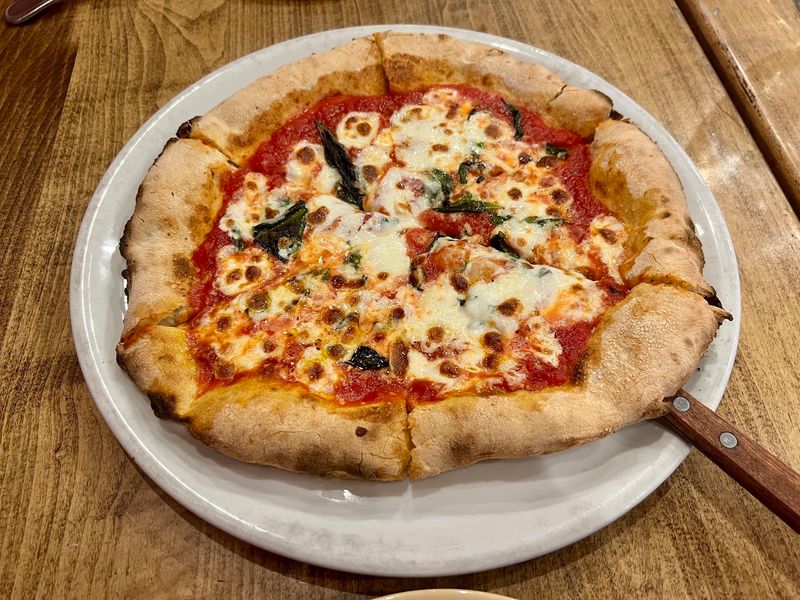
The wood-burning oven announces itself before the toppings do. Aquila’s personal-size pies come out blistered and irregular around the edges, but the Little Falls shop gives tomato enough room to compete with all that char.
The Margherita is the obvious starting point, pairing sauce with fresh mozzarella in a format that lets you taste each component separately. From there, the Filetti and other rotating or seasonal combinations show how the same hot oven can handle brighter, fresher tomato flavors without reducing everything to generic “pizza sauce.”
This is a smaller, more contemporary operation than the century-old taverns elsewhere on this list, having opened in 2015, and that makes it a useful change of pace.
You can sit down, grab takeout, or use the outdoor patio when the weather behaves. Because the pies are personal size, two people can order different pizzas and trade slices instead of negotiating one set of toppings.
Prices generally sit around the high teens to low twenties for a pizza, with a lunch special offering a cheaper entry point during weekday afternoon hours. Aquila also serves meatballs in tomato sauce and eggs in purgatory, so the red-sauce theme can extend beyond the pie without much effort.
One important planning detail: the restaurant is closed Sunday and Monday. Come Tuesday through Saturday, order a tomato-driven pizza before reaching for the more elaborate meat-and-mushroom combinations, and let the wood fire supply the drama.