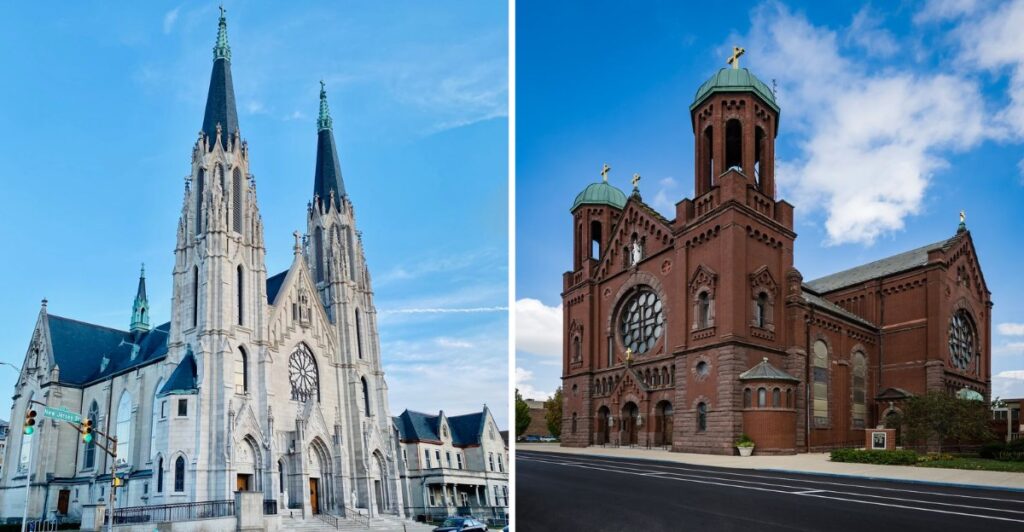
Soaring spires, glowing stained glass, and intricately painted ceilings can make parts of Indiana feel unexpectedly far from the Midwest. Across the state, historic churches reflect architectural traditions brought by communities with roots in Germany, France, Italy, Poland, and elsewhere in Europe.
Some impress with elaborate interiors, while others command attention through stone façades, Gothic arches, and towers visible long before visitors reach the doors. Beyond their beauty, these buildings preserve stories of the people who helped shape Indiana’s towns and cities. These 11 stunning churches offer architecture, history, and craftsmanship impressive enough to inspire a road trip of their own.
1. Cathedral of the Immaculate Conception (Fort Wayne)
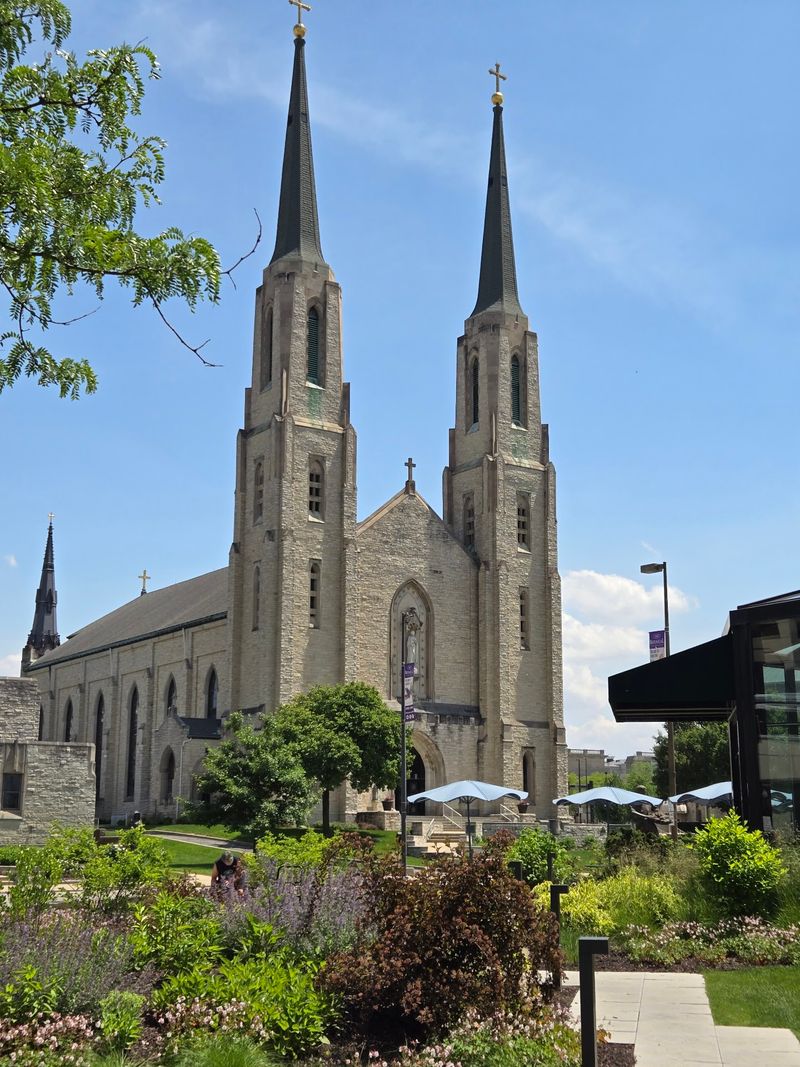
Downtown Fort Wayne has a surprise waiting in plain sight. The Cathedral of the Immaculate Conception rises with the kind of Gothic drama many travelers expect to find in an old European city, not in northern Indiana.
Pointed arches and a tall, elegant profile give the building its first big impression. Step closer, and the details begin to matter even more, especially the way the historic design stands firm among busy streets and modern daily life.
Inside, the sanctuary delivers the strongest Old World character. Stained-glass windows made at Munich’s Royal Bavarian Art Institute bring deep color and a strong sense of craft, while German-made Stations of the Cross add another layer of European influence.
The interior is ornate without feeling cluttered. Eyes naturally travel upward, then across the carved features, decorative surfaces, and carefully arranged sacred art that help the space read as grand, thoughtful, and deeply rooted in tradition.
For visitors, timing can shape the experience. Morning or late afternoon light often gives stained glass its richest look, so a slower visit can reveal details that pass by too quickly during a rushed stop.
It helps to spend a few minutes simply noticing materials. Stone, wood, glass, and metal all play separate roles here, and seeing how they work together makes the building more interesting than a quick photo from the back pew.
Anyone building an Indiana church road trip should put this cathedral high on the list because it combines history, craftsmanship, and strong visual contrast with its urban setting. Fort Wayne offers plenty nearby, but the cathedral is the place that most clearly brings a piece of old Europe into the middle of the city.
2. Christ Church Cathedral (Indianapolis)
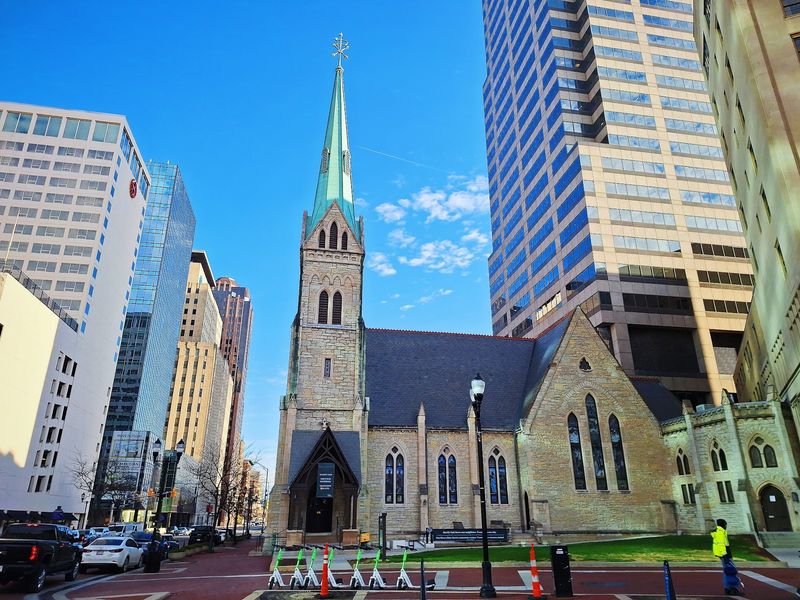
Right in the middle of Monument Circle, Christ Church Cathedral plays a neat visual trick. Glass towers and busy traffic surround it, yet the rough limestone walls and Gothic lines make it seem borrowed from another century and another country.
Designed by Irish-born architect William Tinsley in 1857, the cathedral uses an Early English Gothic style that stays disciplined and clear. Lancet windows, a copper-clad spire, and strong vertical elements shape the exterior without relying on excess decoration.
That restraint is part of the charm. Instead of overwhelming visitors, the building invites closer attention, especially when sunlight hits the stone and brings out texture that newer materials often hide.
Inside, the woodwork deserves real time. Intricate interior details soften the stricter exterior and give the church a handcrafted quality that recalls smaller English cathedrals and parish churches rather than giant continental monuments.
One smart way to experience it is from several distances. Start across the circle to see how the cathedral holds its own among taller buildings, then move closer to notice windows, entry details, and the shift from city noise to interior calm.
Photographers may like overcast weather here because it flatters the stone and keeps outside distractions low. On brighter days, the spire and window shapes stand out more sharply against the sky, which works just as well for a memorable stop.
Christ Church Cathedral earns its place on this list through contrast as much as design. It does not need to dominate downtown to leave an impression. A modest English Gothic spirit, placed at the center of a modern city, gives Indianapolis one of its clearest examples of a church that could be mistaken for a small but distinguished landmark from across the Atlantic.
3. St. Mary’s Catholic Church (Indianapolis)
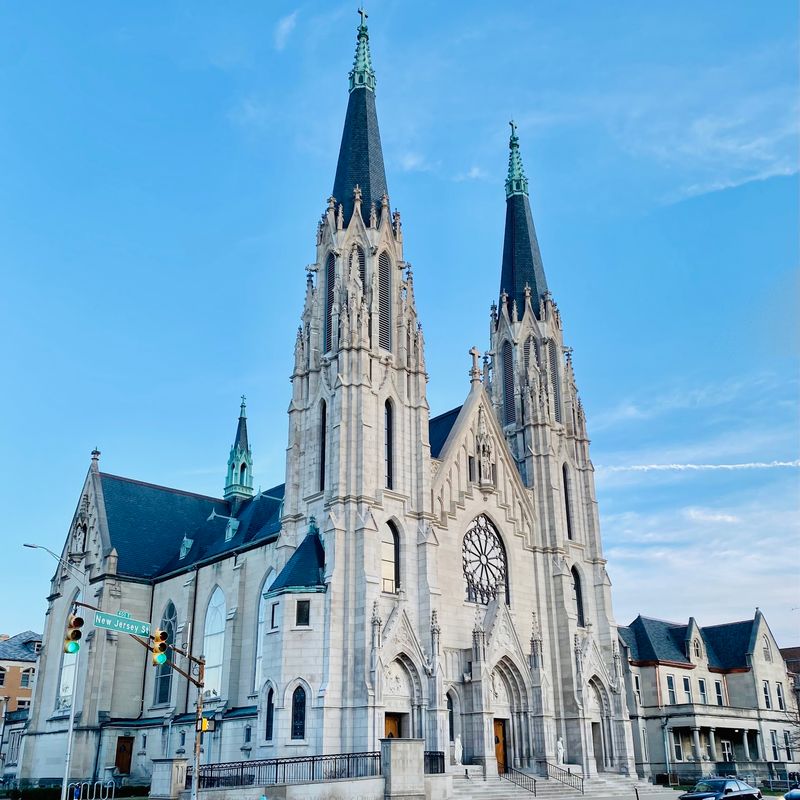
A pair of towers can change a whole skyline, and St. Mary’s proves it. In Indianapolis, this church brings the strong vertical look of German Gothic Revival design to a city better known for government buildings, sports crowds, and wide downtown streets.
Built for the city’s German Catholic community, St. Mary’s carries inspiration linked to major churches in Germany, including Cologne Cathedral. That influence shows up in the pointed arches, layered stonework, and tall interior that pulls your eyes upward almost at once.
The building has a serious presence outside, but the inside is where the scale really lands. Height becomes part of the experience, and the long lines of the nave help create a sense of order and grandeur without needing flashy tricks.
Travelers who enjoy architecture should slow down here and compare exterior and interior details. The facade makes a bold first statement, while the sanctuary reveals how design choices shape mood through proportion, light, and repeated Gothic forms.
Good church visits are often quiet ones, and this is a place that rewards patience. Looking at columns, arches, and decorative stone elements one by one helps the building feel less like a postcard image and more like the result of careful planning.
It also offers a useful reminder about Indianapolis history. Churches like this show how immigrant communities brought pieces of home with them, then turned those memories into lasting local landmarks.
Anyone exploring downtown can pair St. Mary’s with other nearby historic sites, but it stands apart because its European inspiration is so direct and readable. Among Indiana churches with Old World character, this one makes its case quickly through height, texture, and a style that still carries the confidence of the great German models behind it.
4. Basilica of the Sacred Heart (Notre Dame)
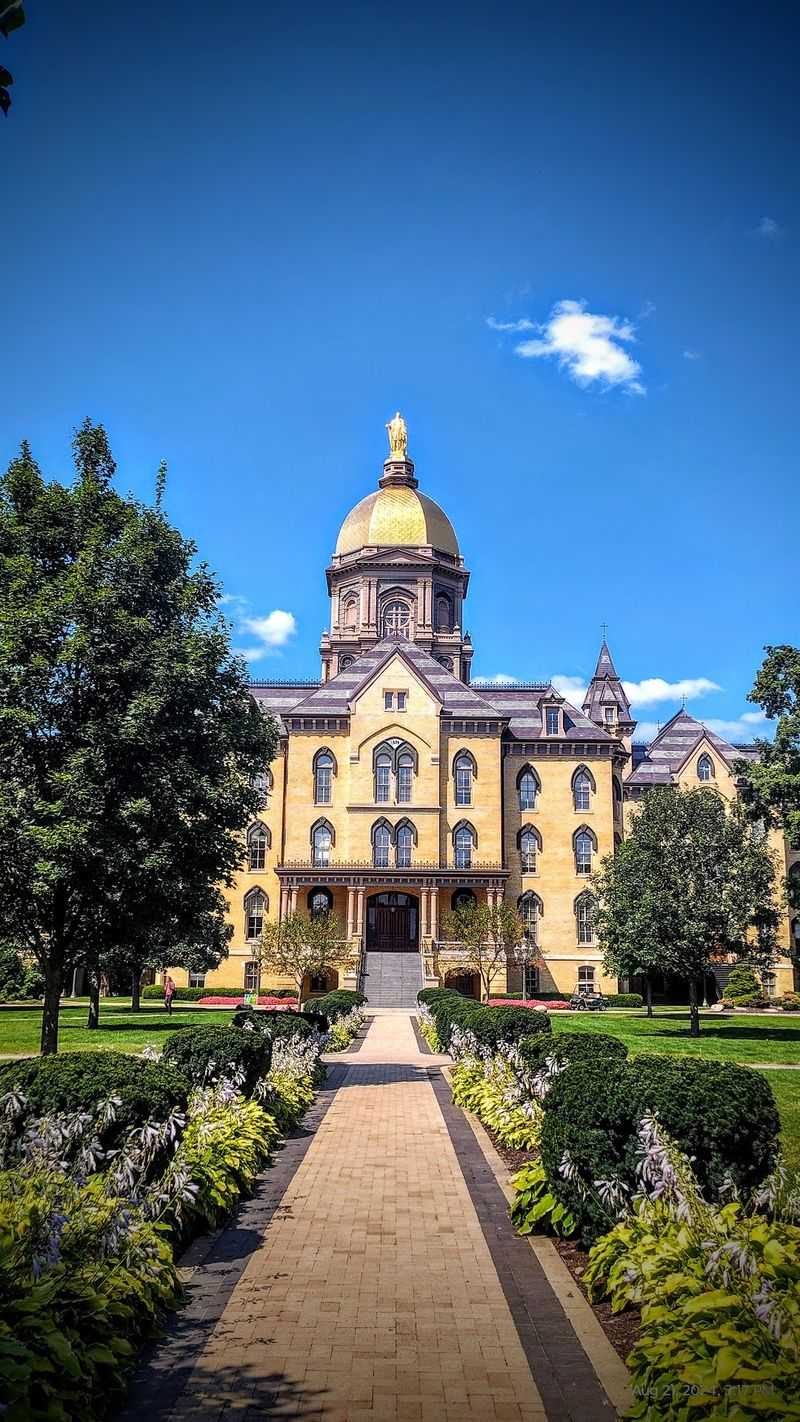
Some buildings aim for grandeur, and the Basilica of the Sacred Heart reaches it with ease. On the Notre Dame campus, this Neo-Gothic church brings together height, color, painted surfaces, and French influence in a way that looks remarkably continental.
The basilica reflects the French tastes of Father Edward Sorin, the university’s founder, and that background matters. An extraordinary collection of 19th-century French stained glass adds both beauty and historical texture, turning windows into one of the church’s biggest draws.
Once inside, the vaulted space takes over. Murals, chapels, and richly layered decoration keep the eye moving, while the towering spire outside sets expectations that the interior comfortably meets.
This is a place where visitors should let the room unfold slowly. Looking too fast means missing painted details, shifts in color, and the way light works across the glass and architectural lines during different hours of the day.
Campus visitors often have full schedules, but setting aside extra time here is a smart move. A short stop gives the basic impression, while a longer one reveals why the church ranks among Indiana’s most convincing European-style sacred spaces.
It also helps to notice scale in pieces. Rather than trying to absorb everything at once, focus on one chapel, one set of windows, or one stretch of the nave, then step back and see how those parts support the larger whole.
Notre Dame has many famous landmarks, yet the basilica remains one of the strongest visual experiences on campus because it combines art, architecture, and historical identity so clearly.
Anyone curious about Indiana churches that channel France more than the Midwest will find a vivid example here, built not around one standout feature alone, but around many elements working together with unusual confidence and depth.
5. Holy Rosary Catholic Church (Indianapolis)
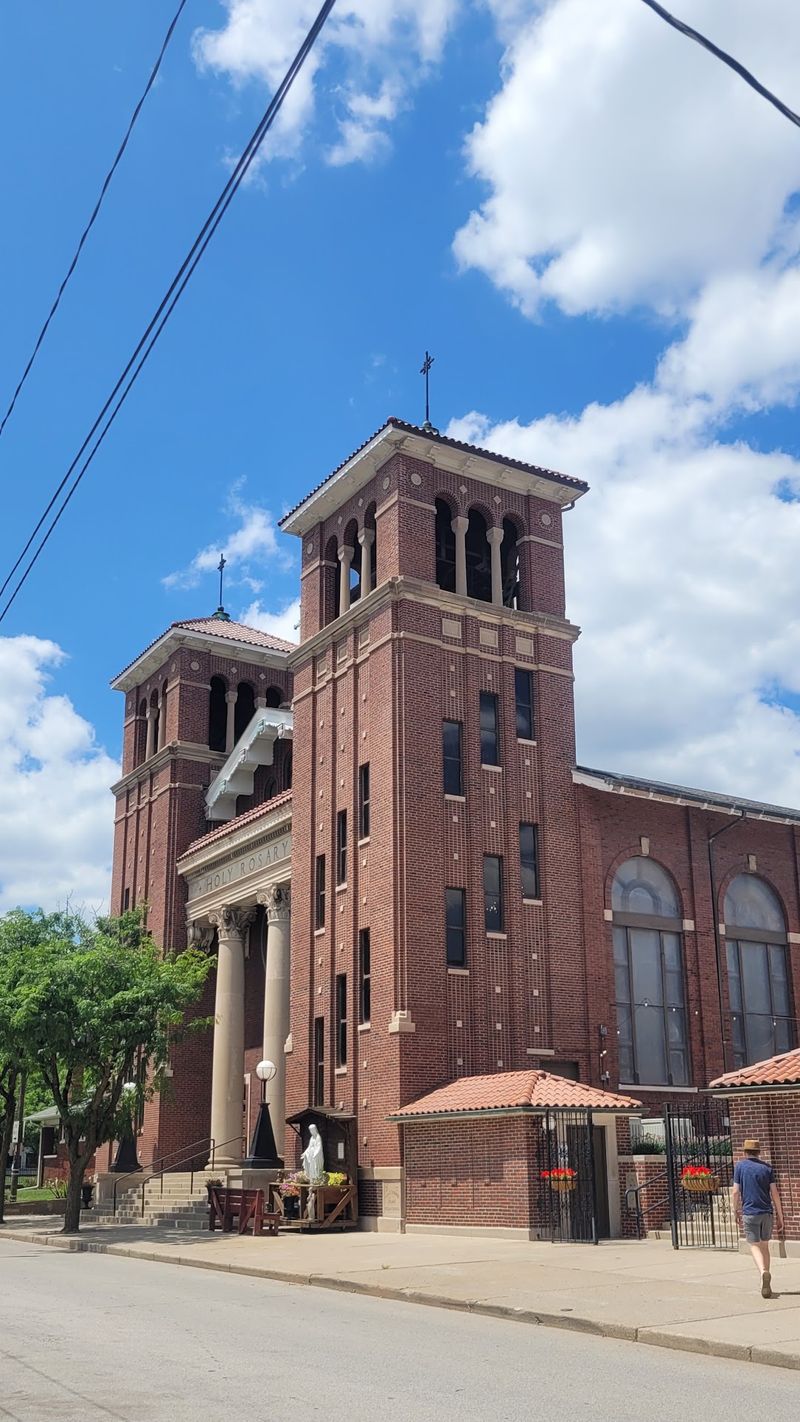
Not every European-looking church in Indiana reaches for Gothic drama. Holy Rosary in Indianapolis takes a different route, using a graceful Renaissance-inspired design that connects more closely to Rome than to the pointed silhouettes seen across much of the state.
Built for the city’s Italian Catholic community, the church was deliberately modeled after San Giorgio in Velabro. That gives it a distinct personality, especially when compared with nearby churches that rely on spires, sharper arches, and vertical tension.
Here, balance does a lot of the work. Indiana limestone columns and pilasters frame the design with order and calm, showing how classic proportions can be just as striking as towering height.
The result is a church that reads differently at first glance. Instead of pushing the eye upward in dramatic fashion, it invites attention to symmetry, surface, and the elegant way each architectural part supports the next.
Visitors who like noticing style differences should place Holy Rosary alongside Indianapolis’s Gothic churches on the same day. Seeing them back to back makes the Italian influence clearer and helps explain why this building stands out in such a memorable way.
It is also a good stop for travelers who enjoy quieter architectural beauty. Columns, pilasters, and façade details may seem subtle from a distance, but they become more impressive when viewed slowly and from several angles.
Indianapolis architecture tells many immigrant stories, and Holy Rosary adds an especially useful chapter. Its design points toward Rome with confidence, offering a refined alternative to the state’s many Gothic landmarks.
For anyone making a list of Indiana churches that seem transported from Europe, this one earns its spot by showing that old-world influence can arrive through harmony, restraint, and Italian elegance rather than through size alone or dramatic ornament at every turn.
6. St. John the Evangelist Catholic Church (Indianapolis)
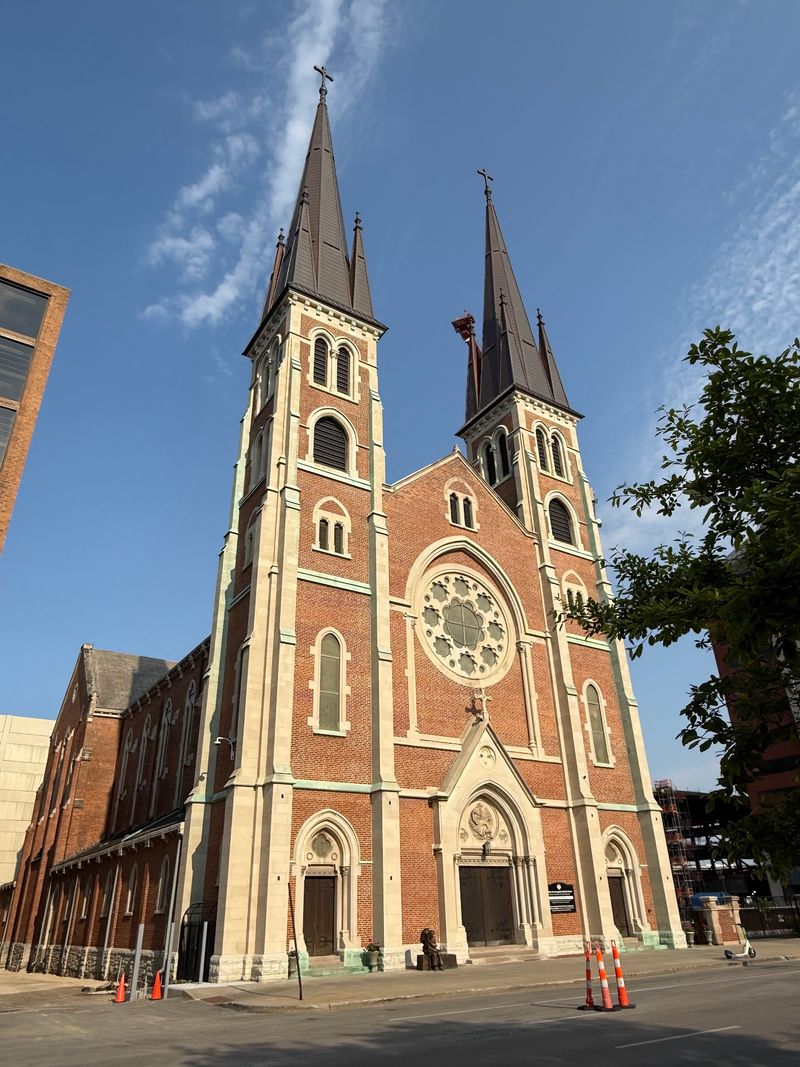
Red brick gives St. John the Evangelist a look all its own, especially in downtown Indianapolis where modern buildings crowd the scene. Then the twin towers and copper spires rise into view, and the whole church starts reading like a strong European silhouette cut into the skyline.
Limestone detailing sharpens the design and keeps the exterior from feeling flat. Gothic-influenced arches and a large rose window add a French cathedral quality that works beautifully against the more businesslike look of the surrounding convention district.
That contrast is one of the church’s biggest strengths. Newer buildings nearby make its historic shape stand out even more, almost like the city accidentally left space for a much older chapter to stay visible.
Visitors do not need deep architectural knowledge to enjoy this one. Start outside with the brick, stone, and spire combination, then pay attention to how the rose window acts like a visual anchor on the façade.
Walking around the block can improve the experience because the towers and roofline shift in interesting ways from different angles. A quick front-facing glance catches the basics, but side views help reveal mass, proportion, and how carefully the church was composed.
Inside, the Gothic influence continues the story built outside. Even without overexplaining every feature, the church makes its case through shape, rhythm, and the way historic materials give the room a more formal, cathedral-like presence.
Among Indianapolis churches, St. John the Evangelist stands out for mixing color, texture, and skyline power so effectively. It does not rely on one dramatic flourish alone.
Instead, red brick, limestone, towers, spires, arches, and the rose window combine into a cohesive whole that suggests France and broader European church traditions while staying rooted in the busy heart of Indiana’s capital city.
7. St. Meinrad Archabbey Church (St. Meinrad)
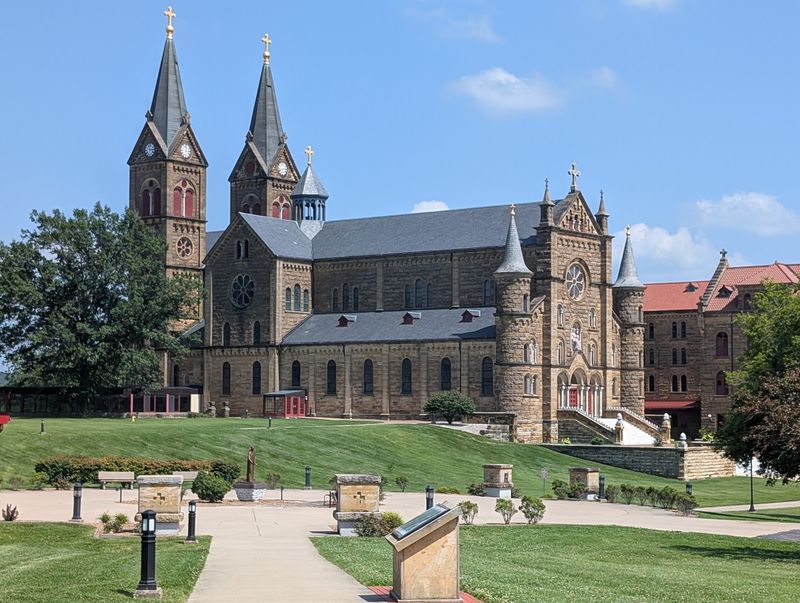
Southern Indiana’s hills are an unexpected setting for a church with such a strong monastic presence. St. Meinrad Archabbey Church brings a European abbey sensibility to the landscape in a way that feels grounded, substantial, and carefully built for lasting use.
Founded by Benedictine monks from Switzerland, the site carries old-world roots from the start. Local sandstone gives the church weight and regional character, while massive Georgia-marble columns add scale and formality once attention shifts to the interior.
Several details deepen the European connection. Stained glass with German ties and an original high altar created in Regensburg, Bavaria, help link the building to traditions that stretch far beyond Indiana.
Unlike churches that make their point through a single flashy façade, this one works through total presence. The architecture, setting, and monastic background all support one another, which gives the church a quieter but very powerful identity.
Visitors should give themselves time to absorb both exterior and surroundings. The rolling terrain helps frame the church, and that broader setting matters because abbey architecture often makes the most sense when seen as part of a larger spiritual and working community.
Inside, look at structure before decoration. Columns, scale, and the placement of sacred features tell much of the story, and the more ornate elements become even more effective once the larger arrangement is clear.
St. Meinrad earns a place on this list not only because it looks European, but because its whole character reflects a European monastic tradition brought to southern Indiana with intention.
Stone, glass, altar design, and landscape work together here. The result is a church that suggests Switzerland, Germany, and Bavaria all at once, yet still belongs naturally to the hills and quiet roads around it.
8. St. Paul’s Evangelical Lutheran Church (Fort Wayne)
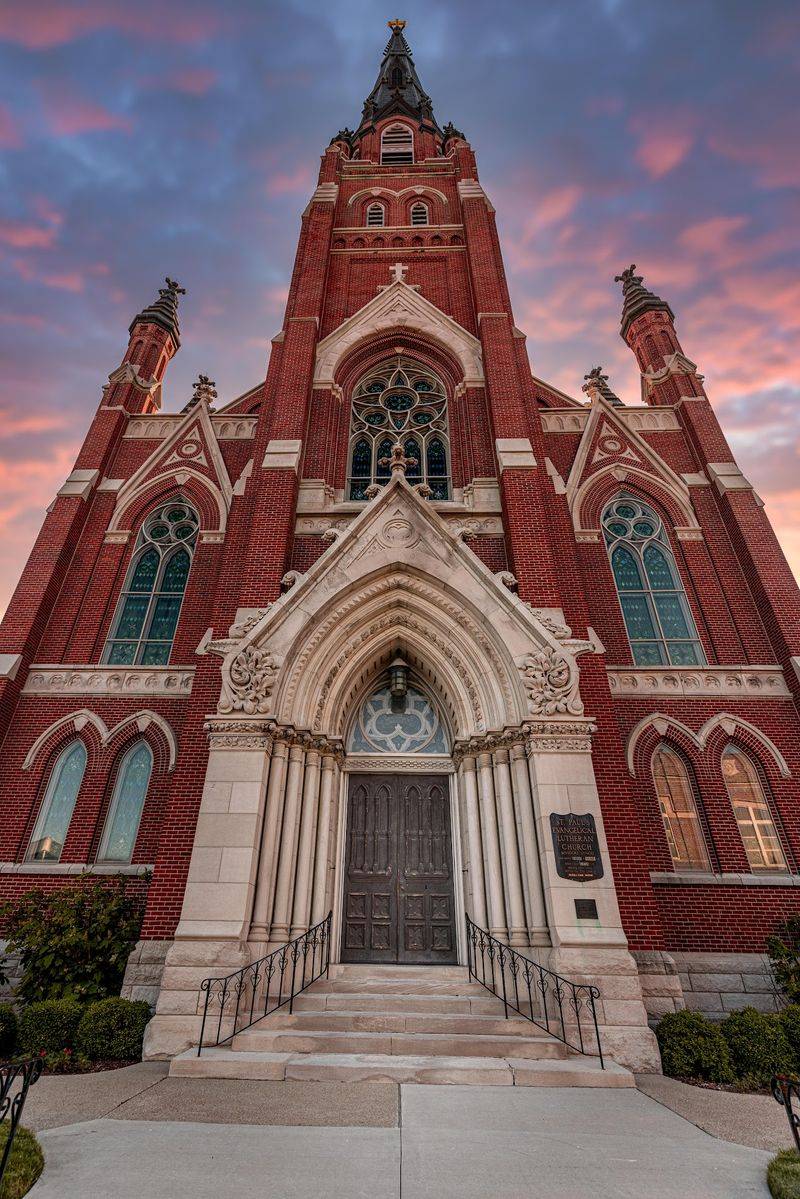
Fort Wayne’s church architecture tells a strong German story, and St. Paul’s Evangelical Lutheran Church is one of its clearest chapters. Its High Victorian Gothic design gives the building a firm, upright look that recalls traditional Protestant churches in Europe.
Pointed arches and strong vertical lines shape the exterior with confidence. The design does not chase delicate prettiness. Instead, it leans into structure, height, and a kind of visual seriousness that suits the church’s heritage well.
The interior carries that same tone in richer form. A high ribbed ceiling, carved woodwork, stained glass, and an elaborate sanctuary create a space that feels carefully ordered and deeply connected to historic worship traditions.
There is a practical lesson for visitors here: pay attention to craftsmanship, not only scale. Ribbing overhead, carved surfaces, and the arrangement around the sanctuary can tell as much about the building’s character as towers or street-level views outside.
This church is also a good reminder that European influence in Indiana did not come from one tradition alone. Catholic landmarks often get more attention, but Lutheran communities also built spaces with strong visual ties to the countries they came from.
For a fuller experience, compare St. Paul’s with Fort Wayne’s cathedral on the same trip. The differences between Lutheran and Catholic interiors, along with shared Gothic language, make both buildings more interesting when seen together rather than separately.
St. Paul’s belongs on this list because it preserves a distinctly German Protestant expression in architectural form. The building has clarity, discipline, and enough decorative richness to reward a slow visit, yet it never loses its structural backbone.
In a state full of notable churches, this one stands apart by showing how European church design could be adapted to Indiana while still holding tight to community memory and liturgical purpose.
9. St. Benedict Catholic Church (Terre Haute)
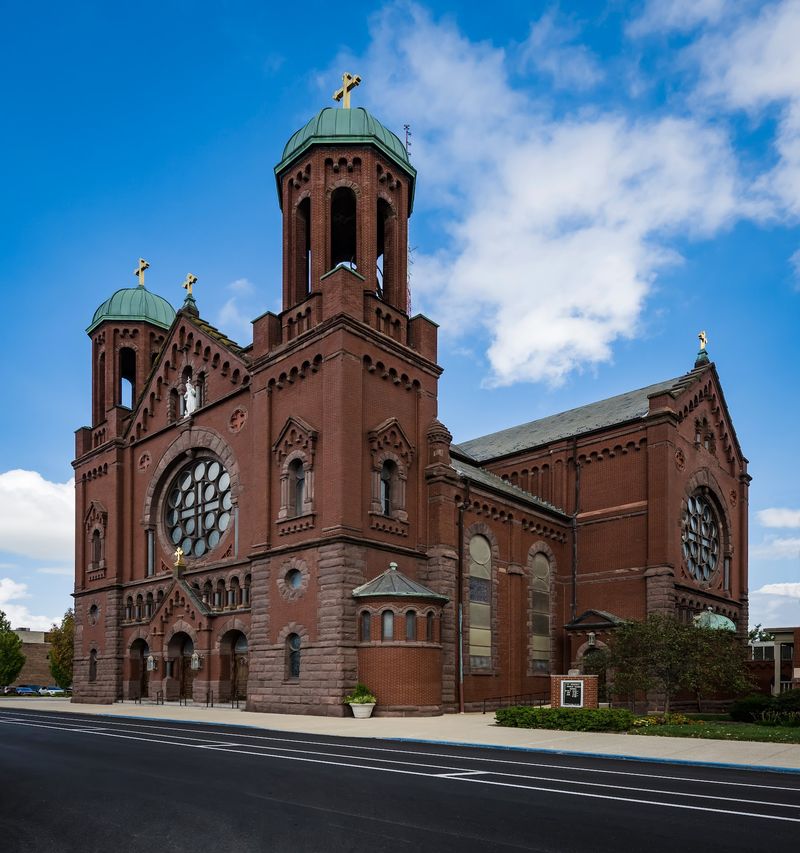
Rounded arches change the mood right away, and St. Benedict in Terre Haute uses them to great effect. While many churches on this list lean Gothic, this Romanesque landmark takes a heavier, more grounded approach that points toward another branch of European church design.
Tall towers and a cruciform plan give the building strong presence before anyone even steps inside. The parish’s German immigrant heritage adds historical context, helping explain why the church carries such a rich and layered old-world visual language.
Then the interior raises the volume. Frescoed walls and ceilings, ornate columns, rose windows, and historic European-made glass create a sanctuary packed with color, texture, and visual movement.
Because there is so much to see, visitors are wise to slow the pace. Looking upward matters here, especially where painted surfaces and ceiling details work together to turn the whole room into part architecture, part artwork.
It helps to notice how Romanesque forms differ from Gothic ones. Rounded arches and heavier mass create a sturdier rhythm, and that gives St. Benedict a separate identity from the sharper, more vertical churches elsewhere in Indiana.
Photographers and architecture fans should spend a little time with the columns and windows. Those two features often show how decoration and structure can complement each other without one overpowering the other.
St. Benedict earns attention because it offers abundance without losing coherence. Every detail, from frescoes to glass, supports a sanctuary that looks rooted in European tradition and immigrant ambition. Terre Haute has many historic sites, but this church stands out by presenting Romanesque design in a bold, memorable way.
Anyone searching for Indiana churches that could pass for major landmarks overseas will find this one especially persuasive once the interior comes into view and the decorative program unfolds piece by piece.
10. St. Adalbert Catholic Church (South Bend)
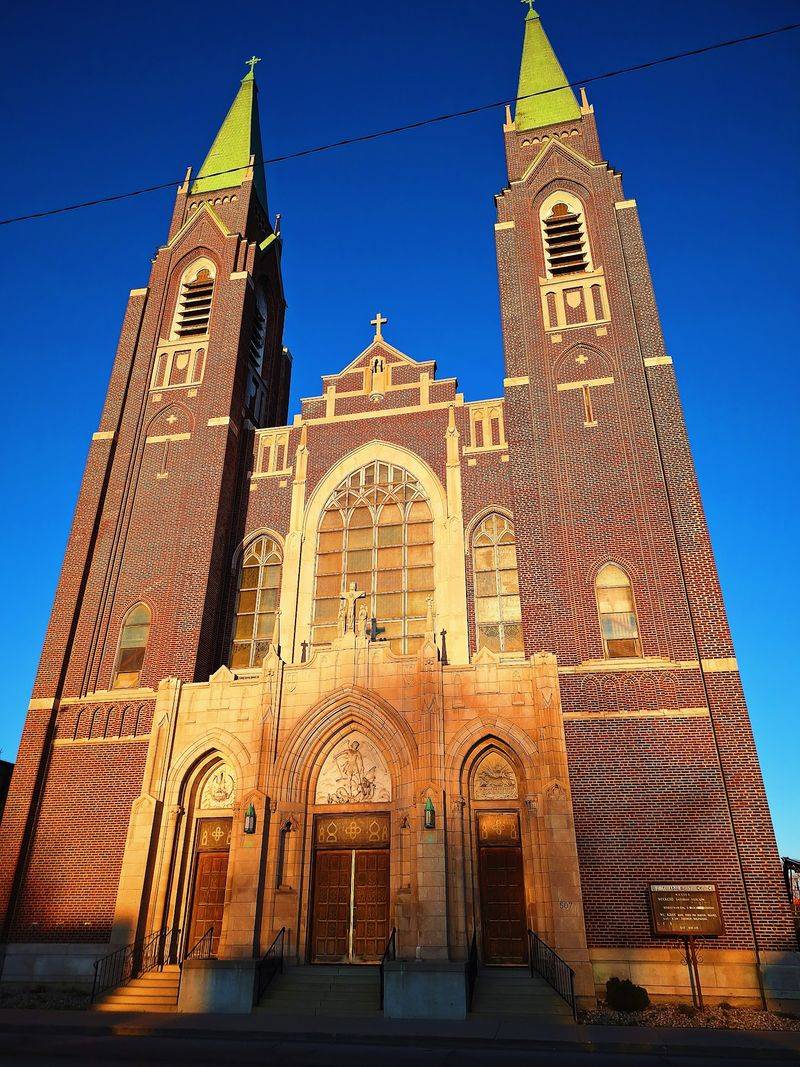
South Bend has a church that arrives with real skyline drama. St. Adalbert, built by the city’s Polish Catholic community, uses a monumental Neo-Gothic style associated with grand Polish Cathedral churches in immigrant neighborhoods across America.
Twin steeples set the tone first. Then pointed stained-glass windows, murals, sculptures, and a soaring cruciform interior expand the impression, giving the church a scale and richness that connect strongly to Poland and Central Europe.
The design carries both civic pride and religious purpose. It reads like the kind of place meant to anchor a neighborhood, not just serve it, and that larger ambition is part of why the building leaves such a lasting impression.
Visitors can appreciate St. Adalbert on several levels. From the street, the steeples and massing establish grandeur, while inside, the artwork and long interior lines reveal how carefully the experience was shaped.
This church also highlights an important Indiana story. Immigrant communities did not simply build functional places to worship. Many created landmark structures that expressed memory, identity, and confidence through architecture on a very public scale.
When touring, take time to compare decorative elements with overall structure. Murals and sculptures naturally draw attention, but the cruciform plan and the height of the interior are just as important in creating the church’s strong European character.
St. Adalbert belongs on this list because it channels a specific tradition with unusual power. Rather than offering a vague old-world look, it reflects the monumental style linked to Polish Catholic communities and Central European visual culture.
South Bend contains many meaningful landmarks, yet this one stands apart through its steeples, interior scale, and decorative depth. Seen in person, it presents one of Indiana’s boldest examples of a church that could easily be mistaken for a major urban sanctuary from abroad.
11. St. Joseph Catholic Church (Jasper)
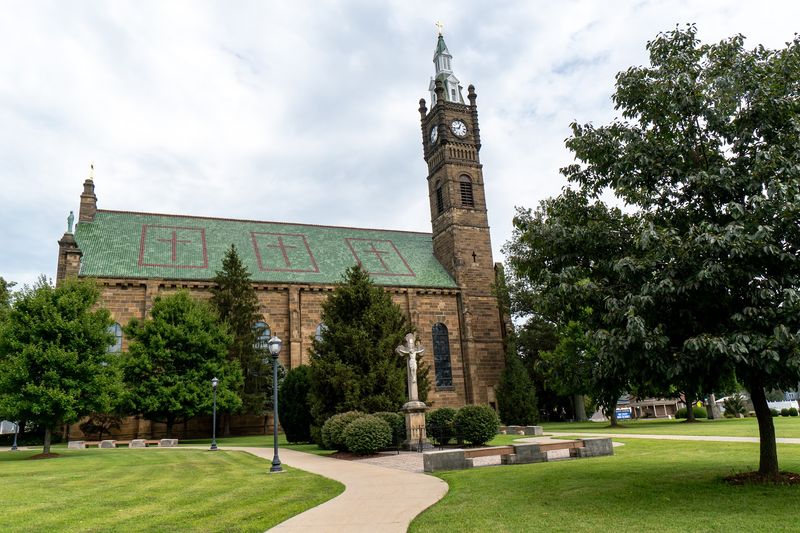
Jasper knows how to make a church tower count. St. Joseph Catholic Church rises with the kind of monumental confidence that can make a small-town setting suddenly resemble a much older place shaped by deep European traditions.
Massive stone construction gives the building immediate authority. Romanesque-inspired details strengthen that impression, adding weight, rhythm, and a sense of permanence that stands out even before the interior enters the picture.
Once inside, rich ornament pushes the church into another category. The visual payoff comes from the combination of scale and decoration, not from one isolated feature, and that balance helps explain why St. Joseph deserves a spot among Indiana’s most Europe-leaning churches.
Jasper’s strong European heritage provides important context here. Buildings like this reflect community identity in a direct way, turning local history into something visible through stone, tower design, and interior finish rather than only through written records.
For visitors, the best approach is to take in the church from a distance first. That allows the tower and full mass of the structure to register properly before closer details begin to compete for attention.
Afterward, interior ornament deserves a slower look. Decorative features often reveal how much care a parish placed into making sacred space feel elevated, formal, and visually memorable for generations.
St. Joseph is a strong closing entry for this list because it shows how European-inspired church design reached well beyond Indiana’s biggest cities. Jasper may be smaller, but the church does not think small.
Stone construction, Romanesque cues, a commanding tower, and a richly adorned interior combine into a landmark that could be mistaken for something far older and farther east.
For travelers exploring southern Indiana, it offers one of the clearest examples of local heritage translated into architecture with real scale and conviction.