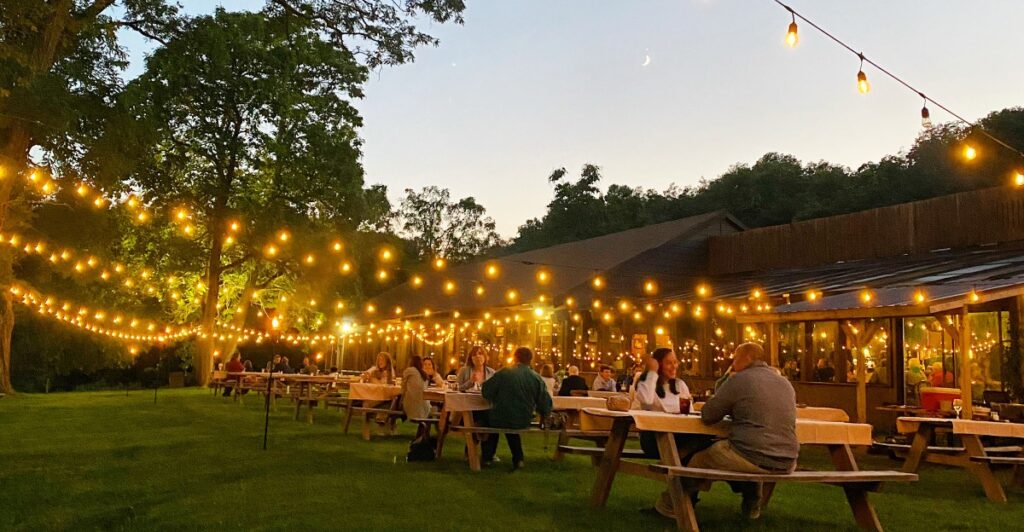
A few minutes before dinner, a small herd of deer wanders onto the lawn outside a wall of glass. Inside, freshly baked brown bread arrives at the table while a stone fireplace crackles nearby.
It sounds like a scene staged for a holiday movie, but this is an ordinary evening at The Walpack Inn. Hidden in Sussex County’s Walpack Valley, the family-run restaurant has welcomed diners since 1949, serving steaks, seafood, homemade desserts, and one proudly old-school salad bar.
Reaching it requires a drive through the Delaware Water Gap National Recreation Area, where traffic lights disappear, and wooded roads replace strip malls. That remoteness is not an inconvenience to rush through.
It is part of the evening. By the time the inn appears at 7 National Park Service Road 615, dinner already feels less like a reservation and more like discovering a place someone trusted you enough to share.
The Winding Road to The Walpack Inn
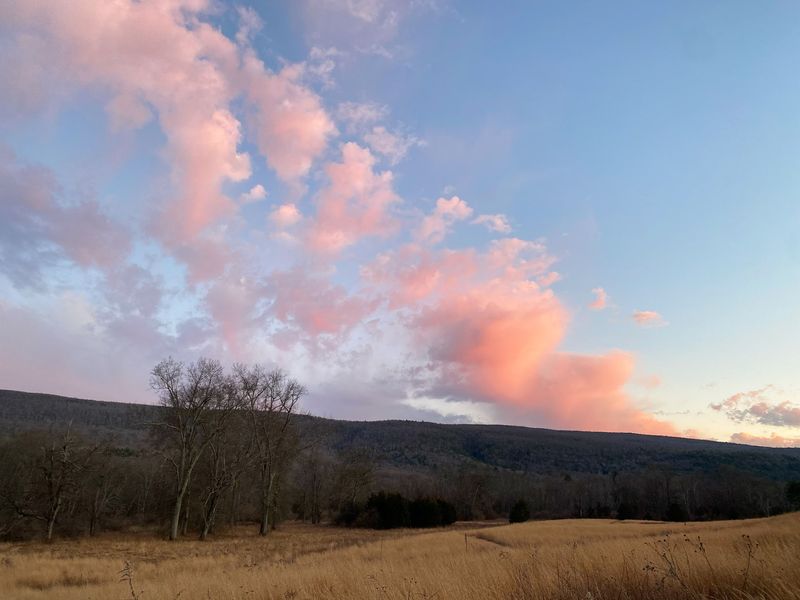
Do not expect a glowing restaurant district or a giant roadside sign announcing that dinner is five minutes away. The approach to The Walpack Inn runs through one of the quietest corners of Sussex County, where the roads narrow, cell service can become unreliable, and the Kittatinny Mountains fill more of the windshield than other cars do.
This is rural New Jersey in the truest sense, not a suburban town with a farm stand near the highway. Walpack Township sits within the Delaware Water Gap National Recreation Area, surrounded by protected forests, fields, streams, and historic roads.
Depending on the direction of travel, the route may pass old stone houses, weathered barns, and stretches of woodland that seem far removed from the New Jersey Turnpike. Downloading directions before leaving is a smart move, especially after dark.
Local road closures and seasonal conditions can also affect the route, so checking conditions before the drive prevents an unexpected detour from becoming the evening’s main event. The restaurant’s remote address is precisely what gives the arrival its payoff.
After miles of trees and open land, a warm wooden building appears against the valley, looking more like a private mountain lodge than a busy dining destination. The inn is open only three days a week, currently from 4 to 8 p.m. on Fridays and Saturdays and from 2 to 7 p.m. on Sundays.
Reservations open two weeks ahead, and booking one is sensible because plenty of other people are willing to make the same drive. Arriving a little early leaves time to settle in at the bar, get a look at the stone fireplace, and enjoy the strange satisfaction of having successfully found dinner in the middle of nowhere.
A Rustic Retreat Hidden in the Delaware Water Gap
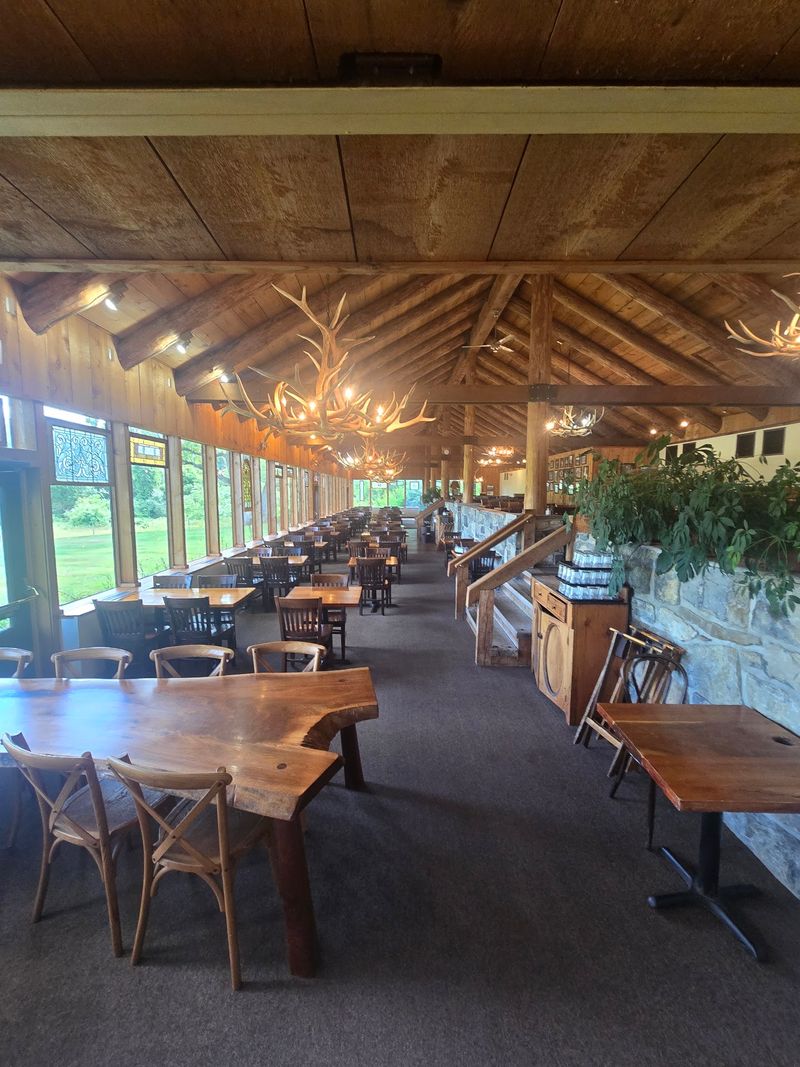
The building carries more history than its polished dining rooms initially reveal. The restaurant began in 1945, when the Lombardi and Zichella families opened a steak-and-spaghetti spot in a stone house along Route 615.
Louise and Adam Heigis took over the kitchen in 1949, bringing a Bergen County family into a very different life in the Walpack Valley. They cooked for locals, fishermen, hunters, and curious visitors who had heard about lobster dinners served with french fries and coleslaw for $1.25.
Their son, Jim Heigis Darco, later returned from hotel and restaurant school and shaped the property into the inn diners know today. His time working and skiing in Aspen influenced the enormous beams, slab-style tables, and mountain-lodge barroom.
He built the stone fireplace himself, introduced the now-famous brown bread, and added the Greenhouse dining room in 1975. Those layers keep the place from feeling like a modern restaurant decorated to look rustic.
The history is genuine, right down to the slightly unusual spelling of its name. Walpack once appeared with two Ls, but a sign painter preferred the balance of one, and the shorter version stuck.
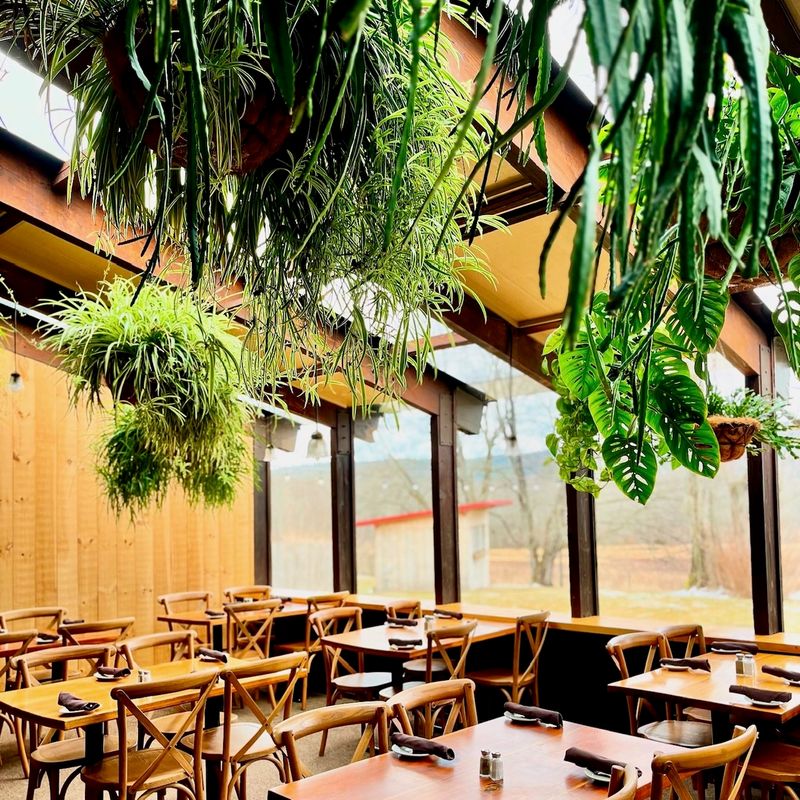
Inside, the details make a stronger impression than any manufactured theme could. Firelight warms the bar during cold weather, timber beams stretch overhead, and the glass-walled dining room opens toward the fields and Kittatinny Ridge.
Louise’s artwork is reproduced on the glass doors of the Wildlife Room, quietly preserving the influence of the woman whose cooking helped establish the inn. The result is comfortable rather than precious.
Guests still arrive in everything from hiking clothes to anniversary-dinner outfits, and neither looks out of place.
Dine With Deer Just Beyond the Windows
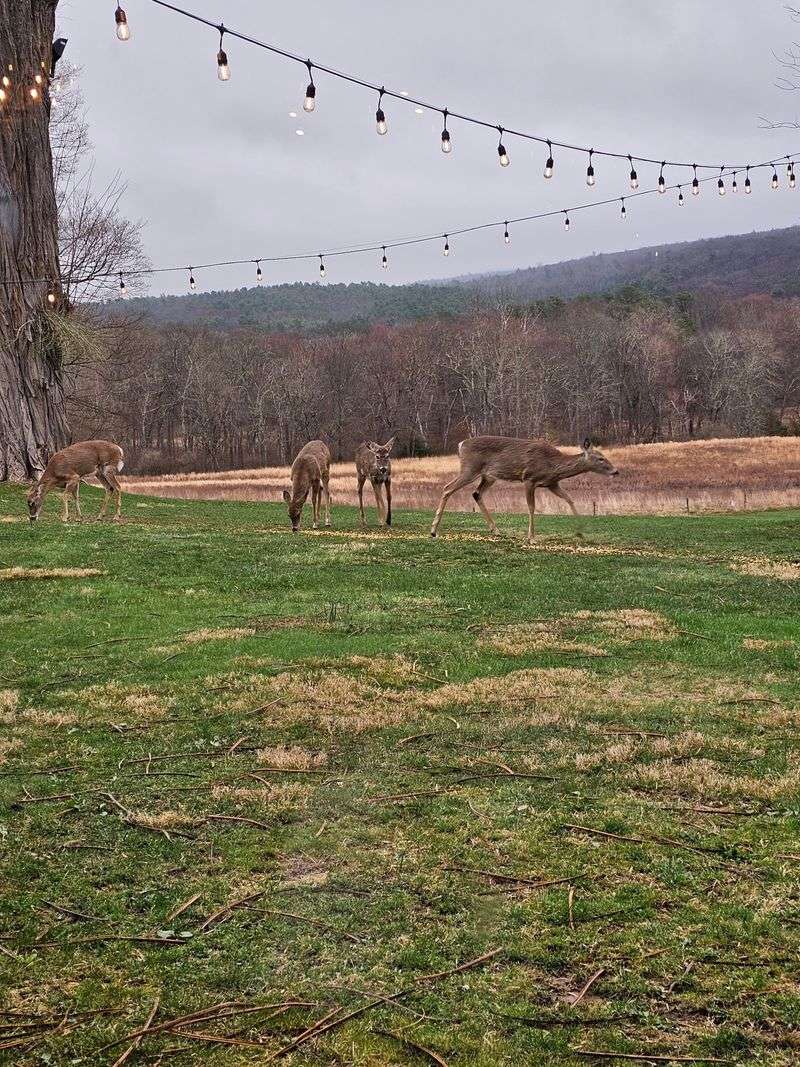
Around dusk, conversation in the Greenhouse dining room often shifts toward the windows. Someone notices movement on the lawn, heads turn, and suddenly several tables are watching deer graze only a short distance from the glass.
The animals are not part of a scheduled show, of course, and no reservation comes with a wildlife guarantee. Still, the broad fields surrounding the inn make sightings common enough to have become part of its identity.
The view works because the 1975 dining-room addition was built directly into the hillside, placing diners at eye level with the meadow and the mountains beyond it. During autumn, the Kittatinny ridge forms a wall of red, copper, and gold.
Snow makes the room feel like a lodge tucked deep in the Adirondacks. Spring brings bright grass and misty evenings, while long summer light keeps the landscape visible well into dinner.
A window table is the obvious prize, but the design allows much of the room to share the scenery. Even without a front-row seat, there is usually a good excuse to look up between courses.
The setting also changes the rhythm of the meal. Phones tend to stay on the table a little less, and nobody seems desperate to rush through an entrée.
That is useful when the menu includes dishes designed for lingering, such as triple-cheese onion soup made with caramelized onions, Port wine, mozzarella, Swiss, and Gruyère. A drink at the bar before dinner extends the experience.
The classic oak bar and large fireplace give early arrivals somewhere inviting to wait, while cocktails such as the Pear Martini, Pomegranate Martini, and bourbon-based Charles in Charge keep the mood playful. Just remember that the return trip follows the same dark country roads.
Enjoy the view, but choose a designated driver.
Prime Rib and Seafood Worth the Journey
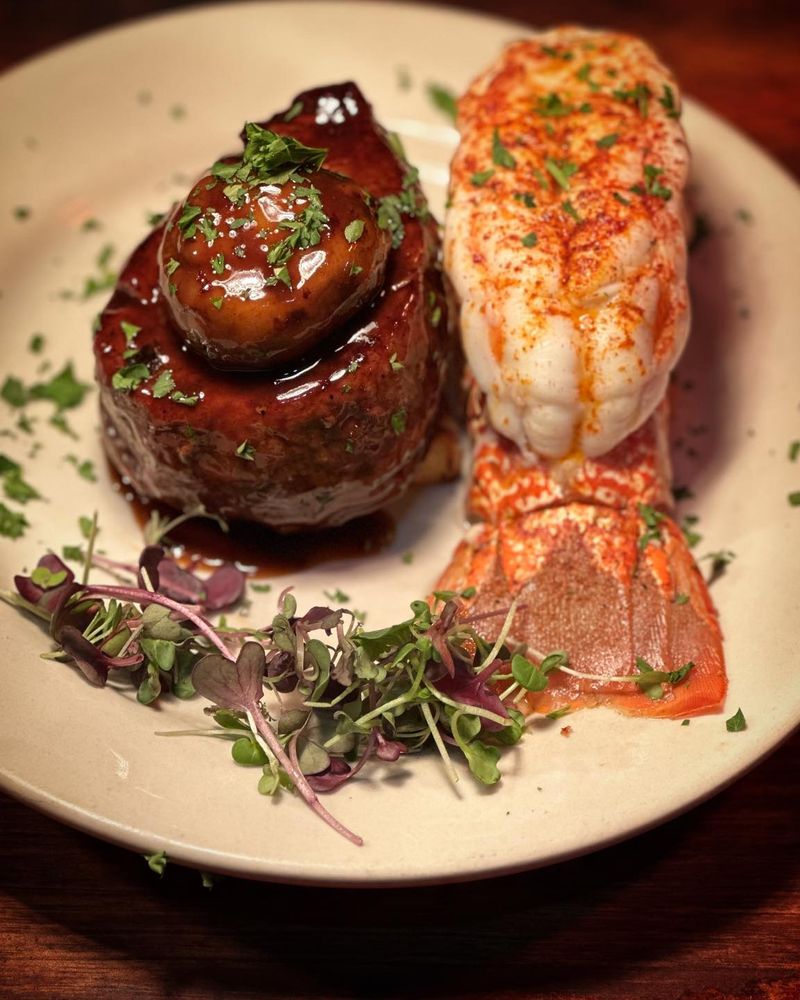
Prime rib has been drawing people into this valley for generations, and the current 14-ounce cut explains the loyalty. Slow-cooked, generously marbled, and served au jus, it costs $49 on the regular menu.
Friday brings one of the inn’s best-known deals, when the same cut is offered for $39 with a side, brown bread, and access to the salad bar. Quantities are limited, making an early Friday reservation especially useful.
The kitchen does not rely on nostalgia alone. A 16-ounce teriyaki ribeye, a house favorite since the mid-1960s, delivers the salty-sweet flavor of the inn’s longtime marinade for $49.
Short ribs arrive in red wine demi-glace with mashed potatoes for $46, while the $74 surf and turf pairs an eight-ounce filet mignon with a South African lobster tail. Seafood diners have equally serious choices.
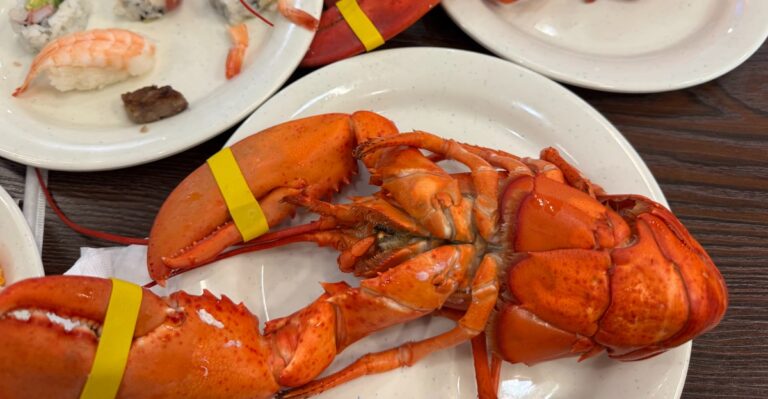
A single cold-water lobster tail is $44, and a double is $73. Ten ounces of broiled sea scallops cost $44 and can be ordered with citrus butter or blackened with Cajun seasoning.
Salmon, priced at $40, comes with a choice of citrus butter, Cajun seasoning, or a Parmesan crust with beurre blanc. Start with the seared crab cake and house remoulade, or order the baked goat cheese with herbs, roasted garlic, olive oil, and flatbread crisps.
Portions lean hearty, so this is not the night to pretend bread does not count. Dessert rewards anyone who plans accordingly.
The black raspberry ice cream pie has the kind of devoted following normally reserved for the entrées, while the homemade cheesecake and rotating seasonal fruit pies keep the family tradition visible at the end of the meal.
Prices and availability may change, but the menu’s personality remains clear—classic American food, substantial portions, and just enough history to make an old favorite feel intentional rather than dated.
The Legendary Salad Bar Locals Still Love
In an era of tiny composed salads and strategically placed microgreens, The Walpack Inn keeps an unlimited salad bar in the middle of the dining room. Better yet, it is included with every entrée at no additional charge.
The tradition dates back decades, and regulars approach it with the focus of people who already know which homemade dressing they want.
The selection begins with chopped romaine and iceberg, then expands into purple cabbage, cherry tomatoes, grated carrots, radishes, red onions, broccoli, cucumbers, banana peppers, beets, and chickpeas.
Sunflower seeds, green olives, croutons, Parmesan, and bacon bits handle the crunchier decisions. Five house-made dressings—garlic, blue cheese, Italian, Russian, and ranch—finish the plate, though combining more than one is a perfectly respectable local strategy.
The appeal is not that the concept is fashionable. It absolutely is not, and that is half the fun.
The salad bar invites diners to build exactly what they want, return for another round, and debate whether a second helping before the prime rib is clever or reckless. It also gives the meal a communal rhythm as people leave the table, inspect one another’s combinations, and come back with plates that reveal surprisingly strong opinions about beets.
Sandwiches and burgers do not automatically include the bar, but it can currently be added for $15. Entrées do, along with the inn’s freshly baked brown bread.
That bread deserves its own warning. Slightly sweet, dark, and fragrant, it has been a signature since Jim introduced it in 1960, and an empty basket has a mysterious habit of being replaced.
Fans can take home boxes of the bread mix, pints of dressing, or seasoned brown-bread croutons from the inn’s market menu. The salad bar may be a throwback, but here it feels less like a relic than a family ritual nobody saw a good reason to change.
Turn Dinner Into an Unforgettable Day Trip
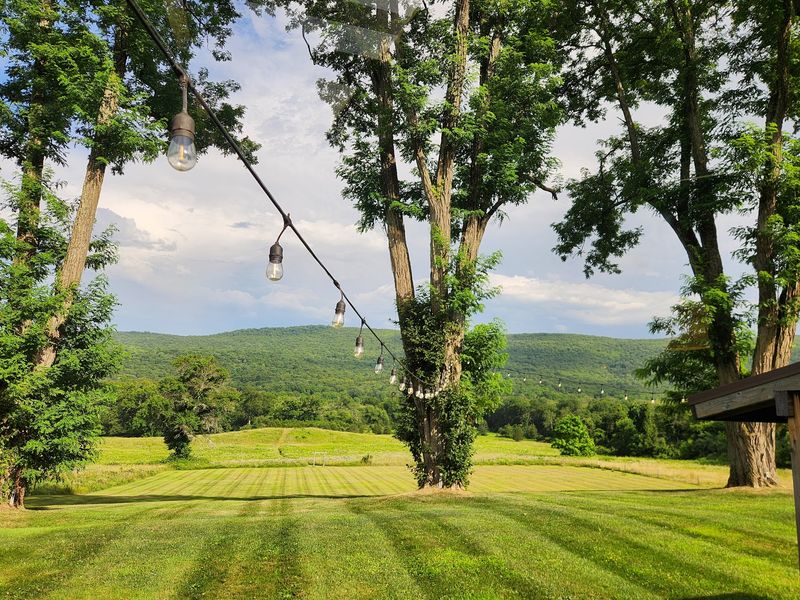
An evening reservation becomes much more satisfying when the drive is treated as the final stop of a full Sussex County outing. The inn sits inside the Delaware Water Gap National Recreation Area, a protected landscape covering roughly 67,000 acres along the Delaware River in New Jersey and Pennsylvania.
That leaves plenty to see before the dining room opens. Walpack Center is a fitting first stop.
Once a busy rural community, it now contains a small cluster of historic buildings, including the Rosenkrans House, which the Walpack Historical Society uses as a museum on select summer Sundays. The one-mile Military Road Trail connects the area with Van Campen Inn, a colonial-era farmhouse that once offered shelter to travelers.
Millbrook Village provides another glimpse of the region’s past. The reconstructed agricultural community represents rural life in the mid-1800s, with houses, barns, workshops, and occasional demonstrations of blacksmithing, weaving, and other period skills.
It is open from dawn to dusk and also serves as a trailhead for several walks. For art rather than history, Peters Valley School of Craft occupies the former village of Bevans and offers seasonal access to grounds filled with studios devoted to ceramics, wood, metal, and other crafts.
The key is to keep the schedule loose. Roads in the recreation area sometimes close because of weather, construction, bridge repairs, or landslide activity, and navigation apps do not always understand the latest changes.
Checking park conditions before leaving can save miles of backtracking. Then aim to reach the restaurant before sunset.
Friday and Saturday dinner begins at 4 p.m., while Sunday service starts at 2 p.m., allowing time to enjoy the fireplace or bar before sitting down. By dessert, the trails are behind you, the deer may be crossing the lawn, and that long drive through the woods feels like the thread tying the entire day together.
Share this story