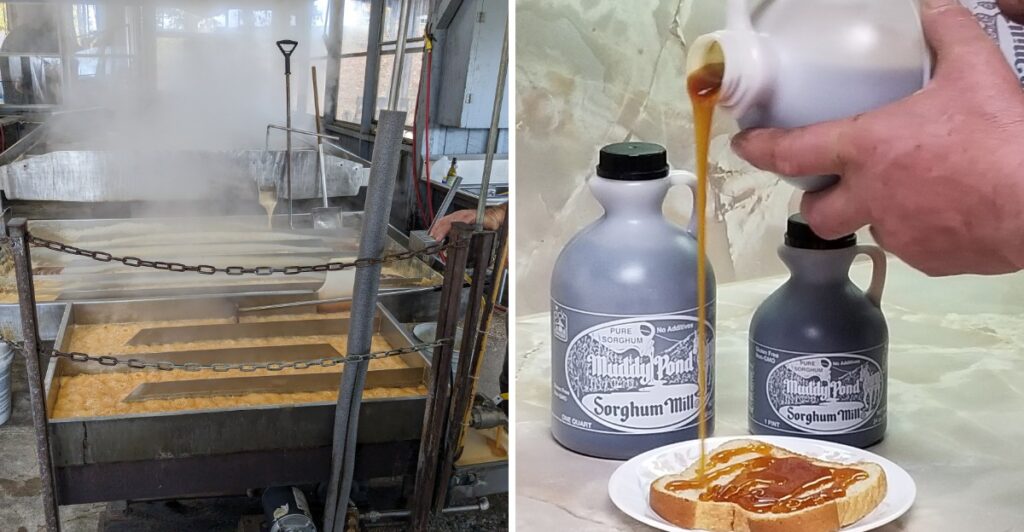
The sweet scent of simmering sorghum fills the air each fall at Muddy Pond Sorghum Mill near Monterey. At this family-run Tennessee operation, an old-fashioned craft continues with the same patience and attention that have defined it for generations. Freshly harvested sorghum cane is pressed to extract its pale green juice, which is poured into a large open pan and cooked over steady heat. As the liquid slowly thickens, skilled hands guide it through each stage until it becomes smooth, richly flavored syrup.
Visitors arriving on scheduled production days can watch the transformation unfold and gain a new appreciation for the work behind every jar. Muddy Pond’s pure sorghum brings a warm sweetness to biscuits, pancakes, baked goods, marinades, and barbecue sauces. More than a roadside purchase, it represents a piece of Tennessee farming heritage that the Guenther family continues to preserve. Watching the syrup being made makes taking a jar home feel even more special.
Sorghum Season Brings Muddy Pond To Life Each Fall
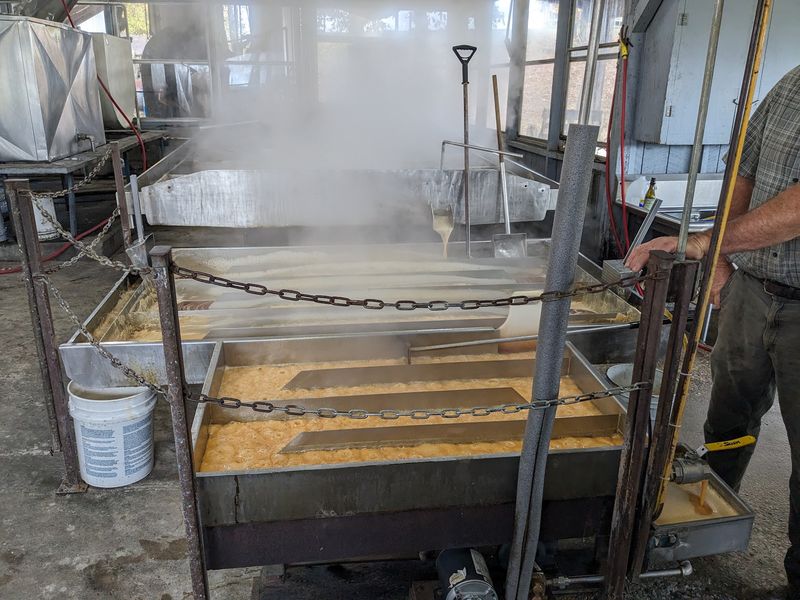
Picture a cool September morning on the Cumberland Plateau. A plume of sweet steam drifts out of a farm building, and the whole valley smells faintly like caramel. That is how you know sorghum season has arrived at Muddy Pond.
For most of the year, this corner of rural Tennessee is calm and quiet. Fields sit green, the roads stay empty, and the farm goes about its normal business. Once the cane is ready, though, everything changes in a hurry.
Fall is the busy season because sorghum cane has to be harvested when its juice is at the right sweetness. Wait too long, and the stalks can dry out or get hit by frost. Cut too early, and the syrup will not taste the way it should. So the farm works hard while the timing is right.
Visitors notice the energy right away. Cane gets hauled in, the mill hums, and the evaporator pan bubbles with juice turning slowly into syrup. Friendly workers move between jobs while still finding time to chat with curious guests.
Plenty of people make this a yearly trip. One longtime fan said they go to the mill every year and always have a fun time. Another visitor mentioned coming back again the same week because one visit was not enough.
Part of the charm is the setting itself. Muddy Pond sits in a peaceful farming community where the pace feels slower and more personal. You will not find flashy rides or loud attractions here, just honest work and good conversation.
Here is a tip for first-timers. Dress in layers, since plateau mornings can feel chilly while the sorghum house stays warm from the cooking fire. Comfortable shoes help too, because you may be walking on grass or gravel.
Bring cash or a card for treats to take home, and leave room in the car for a jar or two. Once you smell that syrup cooking, walking away empty-handed is nearly impossible. Fall at Muddy Pond is short, sweet, and well worth catching.
The Guenther Family Keeps A Tennessee Tradition Going
Some traditions survive because a family simply refuses to let them fade. At Muddy Pond, that family is the Guenthers, and their love for sorghum shows in every detail of the mill.
Mark and Sherry Guenther are names you will hear often from people who visit. Reviews mention Mark by name, praising his warm welcome and his willingness to give tours. One guest wrote that Mark even remembered her mother, who had a connection to sorghum years earlier.
That kind of personal touch is rare today. Many food products come from huge factories where no one knows who made them. Here, you can shake hands with the people who grew the cane and cooked the syrup.
Families like the Guenthers carry knowledge that is hard to learn from a book. Knowing when the cane is ripe, how hot the fire should burn, and when syrup is truly done takes years of practice. Much of that know-how gets passed down by working side by side.
Visitors also notice something else. The family does not just repeat old methods without thinking. One reviewer described seeing new and mind-blowing innovations at the mill, showing that tradition and fresh ideas can live together.
Fun fact for history fans. Sorghum syrup was once a common sweetener across the rural South, especially when white sugar was expensive or hard to find. Small family mills dotted the countryside every fall.
Today, far fewer families still make it. That makes places like Muddy Pond feel extra special, like a living classroom where old skills keep breathing.
If you visit, take a moment to ask questions. Workers here are known for happily sharing details about the operation. One guest noted that the crew was willing to answer any question thrown their way.
You might hear a story about the farm, a tip about cooking with sorghum, or a memory from seasons past. Those conversations often become the best part of the trip. Leaving with syrup is great, but leaving with a story is even better.
Homegrown Sorghum Cane Starts The Syrup-Making Process
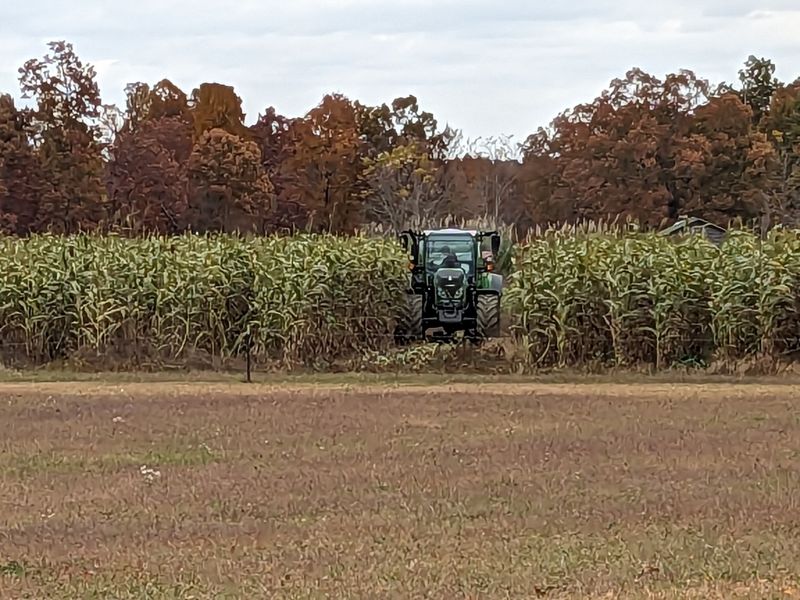
Here is a surprise for many first-time visitors. Sorghum cane looks a lot like corn at a glance, with tall stalks and long leaves, but it is a totally different plant with a much sweeter secret inside.
Everything at Muddy Pond begins in the field. Before any syrup can bubble in a pan, the cane has to grow through the warm months of spring and summer. Sun, rain, and good soil all play a part in how sweet the final product turns out.
Sweet sorghum is the type grown for syrup. Its stalks hold sugary juice, while the top of the plant forms a bushy seed head. When those seed heads change color, farmers know the cane is getting close to harvest time.
Growing your own cane gives a farm more control over quality. You know exactly how the plants were raised and when they were cut. That matters, because fresh cane makes better juice, and better juice makes better syrup.
Harvest is real work. The leaves are stripped, the seed heads are removed, and the stalks are cut and gathered. It can be sweaty, dusty, and slow, but it is the foundation of everything that follows.
Did you know? Sorghum is a tough crop that handles hot, dry weather better than many plants. That toughness helped make it popular with Southern farmers long ago, especially on smaller homesteads.
When you visit during the season, look around for stacks of freshly cut cane. Seeing the raw stalks next to finished jars of syrup helps the whole process click. Kids especially love comparing the long green stalks to the little bottles of amber liquid.
Curious gardeners sometimes ask about growing sorghum at home. It is possible, though turning it into syrup takes equipment and patience. A visit to the mill is a smart way to see whether the hobby sounds fun or exhausting.
Either way, you will gain a new respect for the humble cane. A single field holds months of effort before the first drop of syrup ever appears.
Fresh Cane Is Pressed To Release Its Naturally Sweet Juice
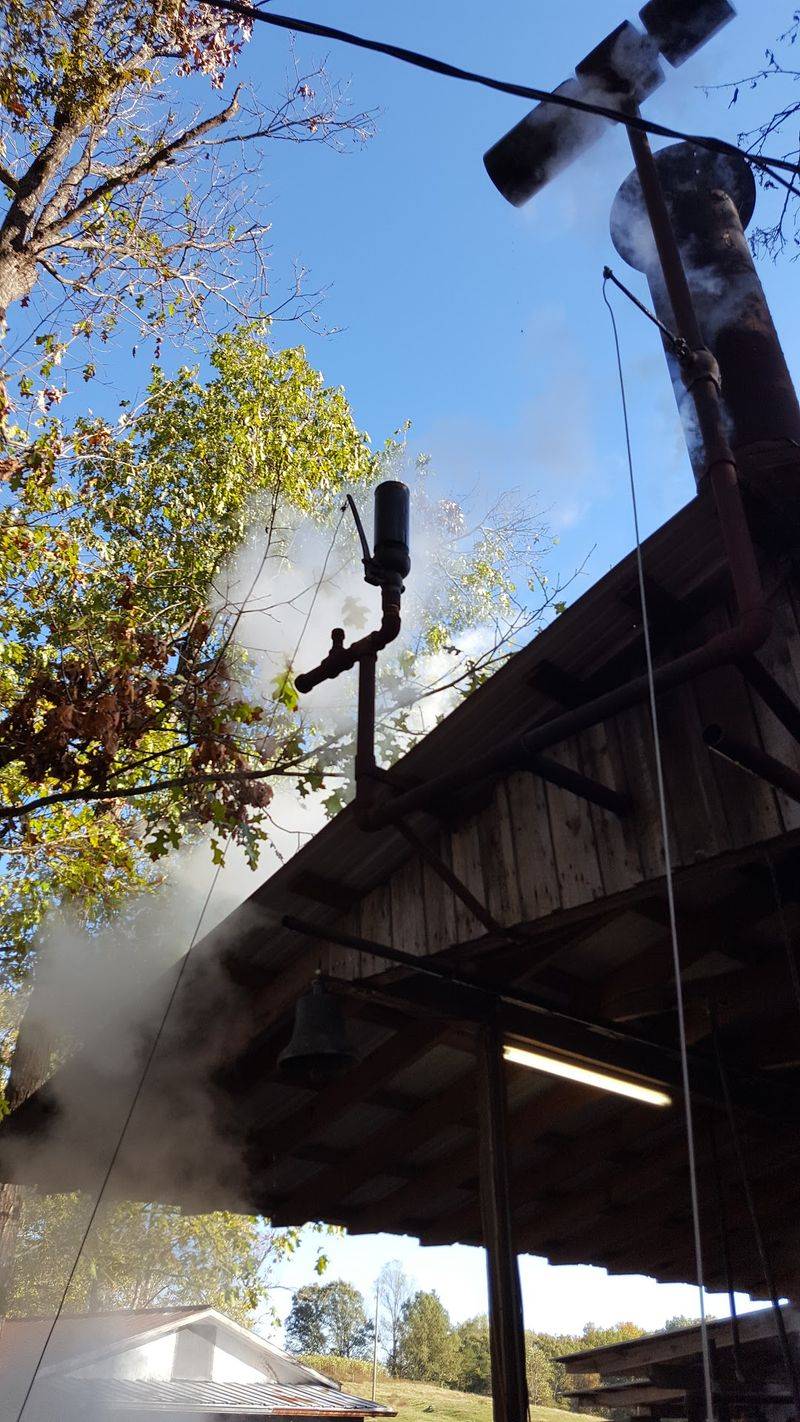
Crunch, squeeze, drip. That simple rhythm is the sound of sweetness being set free at the mill.
After harvest, the cane heads straight to the press. Stalks are fed between heavy rollers that squash them flat. As they pass through, the juice trapped inside runs out and gets collected.
Fresh sorghum juice does not look like syrup at all. It is thin, watery, and usually a light greenish color. Many visitors are shocked that something so pale will eventually become a rich, dark amber.
Speed matters at this stage. Cane juice is best when pressed and cooked soon after cutting. Letting stalks sit too long can affect flavor, so the farm keeps things moving.
Back in the old days, many sorghum presses were powered by a mule or horse walking in a circle. The animal turned a long pole connected to the rollers. It was slow work, but it got the job done on countless Southern farms.
Modern mills often use engines or motors, which saves time and effort. The basic idea, however, has not really changed. Rollers squeeze the cane, juice comes out, and the leftover stalks are set aside.
Those crushed stalks are called pulp or bagasse. Farms sometimes find uses for this leftover material instead of tossing it out. Ask the crew what happens to it, since practices can vary from place to place.
Watching the press is a highlight for younger visitors. It is loud, physical, and easy to understand, making it a great way to explain how food goes from field to table. Hold little hands, though, since moving machinery deserves plenty of respect.
Photographers will enjoy this spot too. The texture of the stalks, the shine of the juice, and the motion of the rollers make for eye-catching pictures. Morning light often looks best.
Just remember to stay in safe viewing areas and follow any directions from workers. They know the equipment well and will happily point out where you can stand for a good look.
The Juice Slowly Thickens Inside A Traditional Evaporator Pan
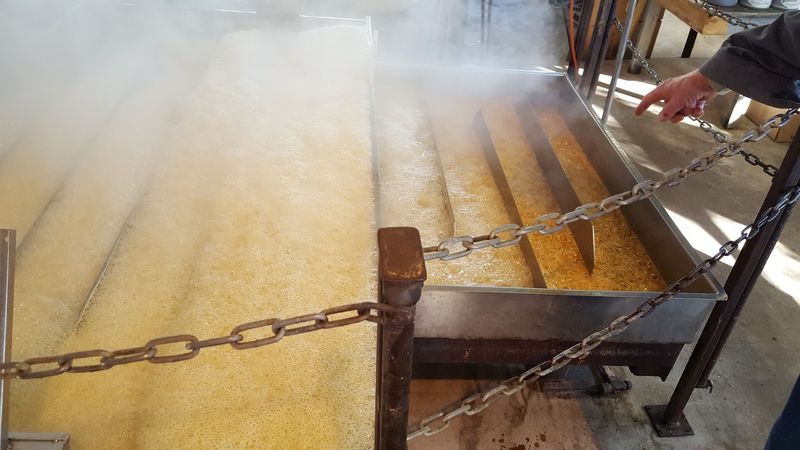
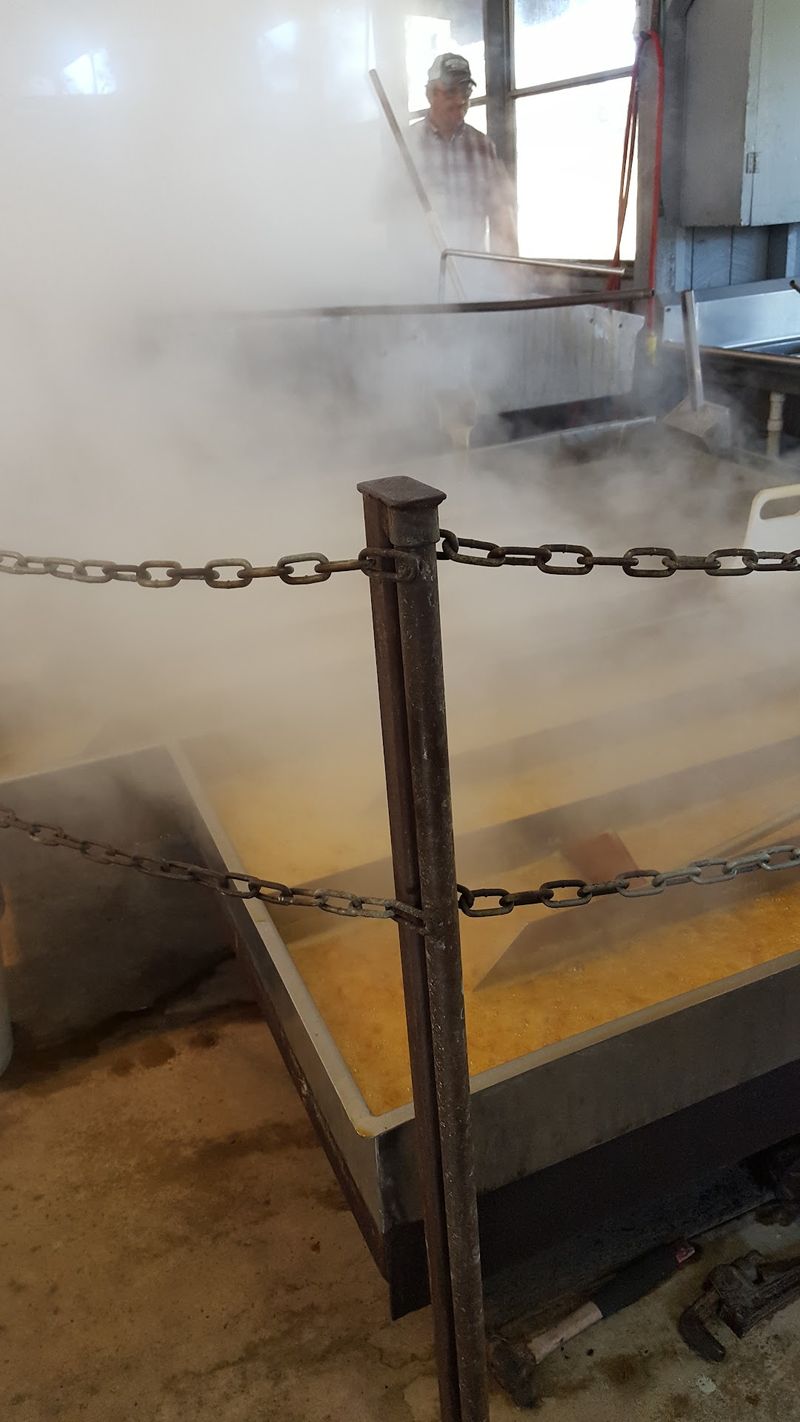
Steam rolls up in thick clouds. Foam forms on the surface, then gets skimmed away. Slowly, almost like magic, thin green juice turns into glossy golden syrup.
Welcome to the heart of the operation, the evaporator pan. It is a long, shallow pan heated from below, and it is where the real craft happens. Open-pan cooking is the classic way sorghum has been made for generations.
The idea is simple, even if doing it well is not. Heat drives water out of the juice as steam. As the water leaves, the natural sugars become more concentrated and the liquid thickens.
Skimming is a big part of the job. Impurities and green foam rise to the top, and workers remove them with long-handled tools. Skipping this step would leave the syrup cloudy and change its taste.
Timing makes or breaks a batch. Cook too little, and the syrup is runny and may not keep well. Cook too long, and it can scorch or become overly thick. Experienced syrup makers judge doneness using a mix of tools, color, and gut instinct.
One visitor shared a lovely memory about this exact moment. Walking into the sorghum house and smelling hot syrup coming off the pan brought back sweet memories of growing up on a farm decades earlier. For many folks, that aroma is pure nostalgia.
Even if you have no family history with sorghum, the smell will grab you. It is warm, toasty, and a little earthy, nothing like store-bought pancake syrup.
Fun fact. Many people call sorghum syrup molasses, especially in the South. True molasses is actually a byproduct of sugar cane processing, while sorghum syrup comes straight from cooked sorghum juice.
Stand back a bit while you watch, since the pan gets very hot and steam can surprise you. Then just enjoy the show. Few things feel as cozy as watching syrup come together on a crisp fall day in Tennessee.
Visitors Can Watch The Entire Process At The Working Mill
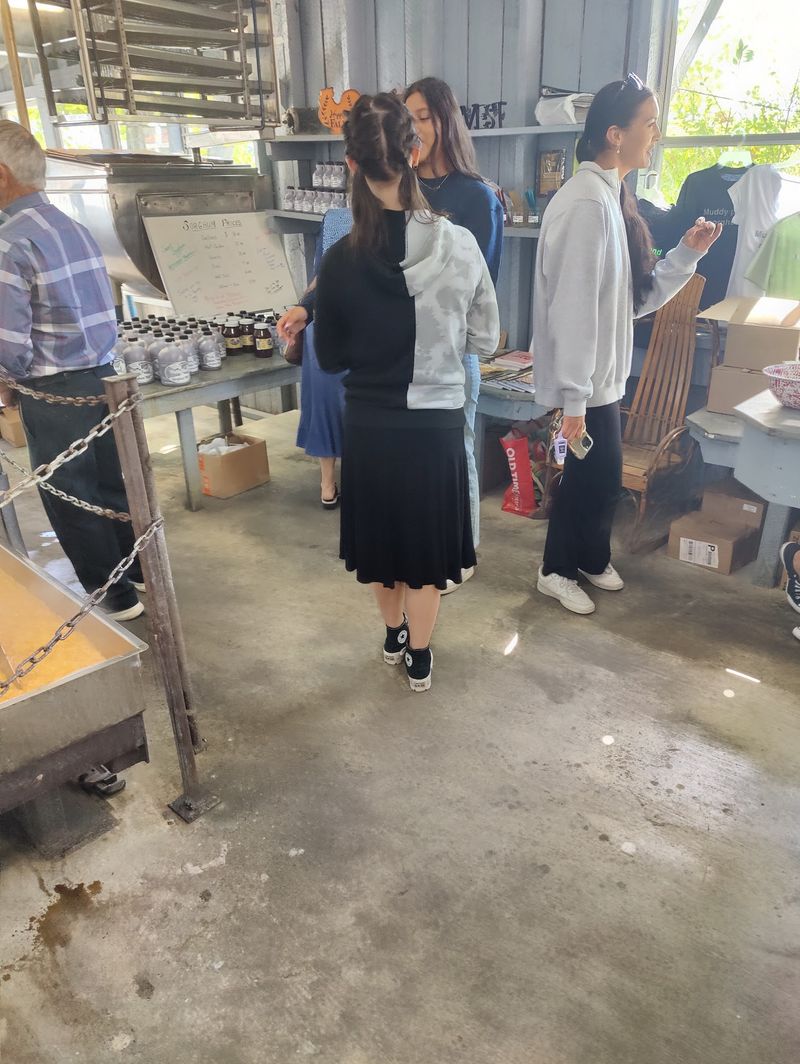
Forget glass windows and roped-off displays. At Muddy Pond, you get a front-row seat to real farm work happening right in front of you.
That is what makes this stop so memorable. Instead of reading about sorghum on a sign, you can follow it from raw cane to finished syrup in one visit. One happy guest summed it up perfectly, saying they loved seeing how sorghum is made from start to finish.
The mill is a true working operation, not a theme park version of the past. Equipment runs, workers stay busy, and syrup gets made for real customers. That honesty is a big part of the appeal.
People who visit often praise the staff. Reviews describe the folks as very friendly and say the trip was worth the drive. Several mention how interesting it was to see the process up close.
Families with kids will find plenty to talk about on the ride home. Children can see how a plant becomes food, which is a lesson many never get in school. Teachers and homeschool parents especially appreciate that kind of hands-on learning.
Try this approach for the best experience. Start near the cane and press, then work your way toward the evaporator pan. Following the order of the process helps everything make sense.
Do not be shy about asking questions. The crew is known for sharing information openly, and you may learn little tricks about how they judge the syrup. Curious minds tend to get the most out of the visit.
Leave time to browse the shop as well. Besides sorghum, visitors have mentioned honey, barbecue sauce, and other natural products. One reviewer even praised the leather goods available nearby in the community.
A quick reminder about manners on a working farm. Stay out of the way of workers and machines, keep pets under control, and supervise kids closely around hot surfaces. A little care keeps the day safe and pleasant for everyone.
Before heading out, call ahead at (931) 445-3509 to confirm hours and what is running that day.
Every Bottle Contains Pure Sorghum With No Additives
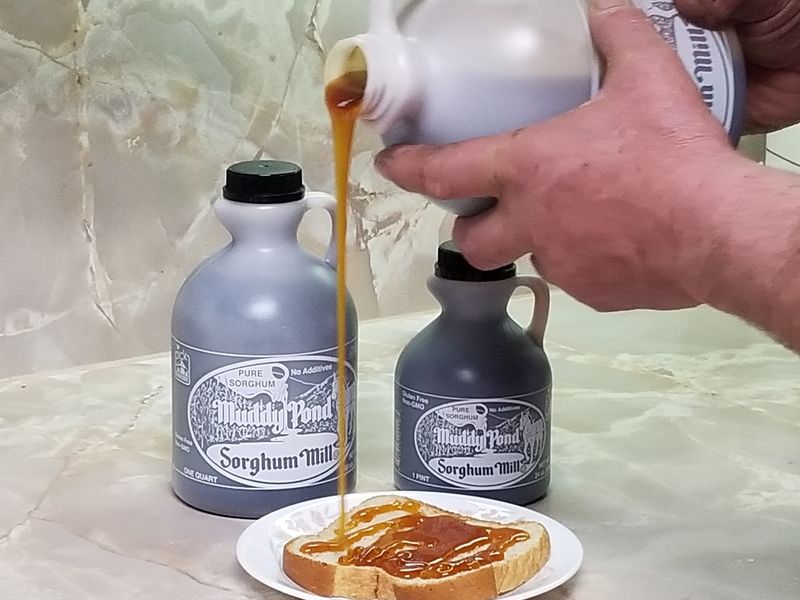
One taste, and some folks are hooked for life. A reviewer admitted to eating half a pint of Muddy Pond syrup straight from the spoon, and honestly, nobody here is judging.
The secret is simplicity. Pure sorghum syrup is made from cooked sorghum juice and that is basically it. There is no need for added sugar, corn syrup, or artificial flavors when the cane does the heavy lifting.
Many store shelves carry products labeled as molasses or syrup that taste very different from the real thing. One fan noted that some store-bought versions did not seem like true molasses at all. Muddy Pond, they said, tasted just like what they remembered from childhood.
That old-time flavor comes up again and again. A visitor in their sixties from western North Carolina called it the best they had ever eaten. Another person shared that their late father said it tasted just like the sorghum he made back in the 1920s and 1930s.
So what does it taste like? Expect a deep, rich sweetness with earthy, slightly tangy notes. It is bolder than honey and less bitter than blackstrap molasses.
Biscuits are the classic pairing. Warm a biscuit, add butter, and drizzle sorghum over the top for a true Southern breakfast. One customer called it some of the best sorghum they had ever poured over homemade biscuits.
Do not stop there, though. Try it in baked beans, gingerbread, cornbread, glazes for pork or chicken, or stirred into oatmeal. A spoonful can also add depth to barbecue sauce or salad dressing.
Storage tip. Keep your jar sealed in a cool cupboard. Over time, pure sorghum can sometimes crystallize, which is natural. Gently warming the jar in water usually loosens it right up.
Cannot make the trip? The mill offers online ordering through muddypondsorghum.com. Shoppers have praised the fast shipping and great communication, so your pantry can get a taste of Tennessee even from far away.
Plan A September Or October Visit To See The Mill In Action
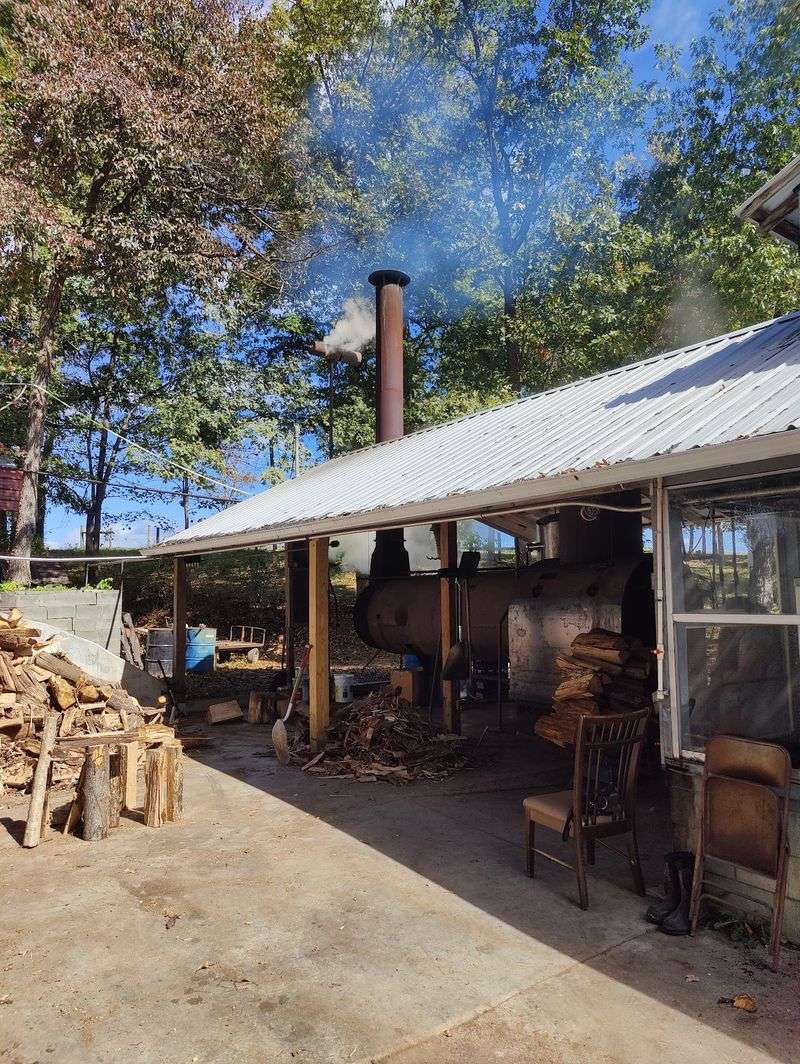
Timing is everything when it comes to sorghum. Show up in the wrong month, and you might find a quiet farm with nothing cooking. Arrive in the fall, and you get the full sweet-smelling experience.
According to one visitor, the mill starts milling cane in mid-September. That kicks off a busy stretch that typically runs into October, when the harvest is in full swing. These weeks are your golden window.
Weather also tends to be lovely around Monterey during this time. Days are often mild, nights get crisp, and the trees on the plateau start showing their colors. It is prime road-trip season in Middle Tennessee.
Getting there is fairly easy. The mill sits at 4064 Muddy Pond Rd, Monterey, TN 38574. It is a scenic drive from Cookeville, and some travelers combine it with longer trips toward the Smokies.
Before you hit the road, call (931) 445-3509 or check the website. Production can depend on weather, crop conditions, and the daily schedule. A quick check saves you from showing up on an off day.
Here is a sample plan for a relaxed outing. Arrive in the morning to see steam rising and the operation warming up. Spend an hour or so watching, chatting, and shopping, then explore the quiet Muddy Pond community before lunch.
Pack a cooler bag if you plan to buy a lot. Syrup jars are sturdy, but other goods like honey or sauces travel better when kept upright and protected. A small box in the trunk works wonders.
Weekends can draw more visitors, especially at peak season. If you prefer smaller crowds and more time to talk with the crew, a weekday visit might suit you better.
Bring a camera, an appetite, and a little patience. Syrup making cannot be rushed, and that slow pace is part of what makes it special.
With a perfect five-star reputation among reviewers, this little mill has earned its loyal fans. Go once in the fall, and there is a good chance you will be planning next year’s trip before you even leave the driveway.
Share this story