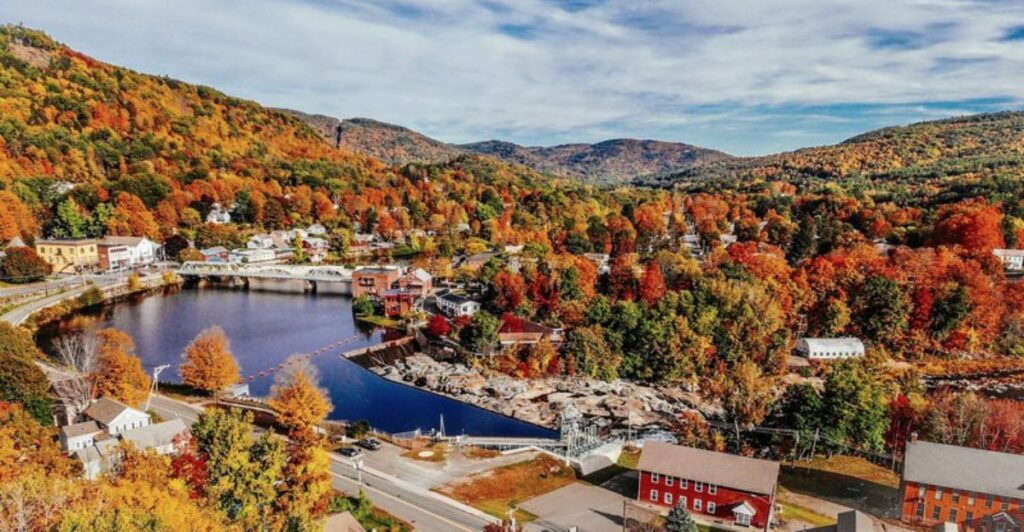
Fall color may bring people to Shelburne Falls, but the village has plenty worth noticing beyond the leaves. Above the Deerfield River, the Bridge of Flowers turns a former trolley crossing into one of western Massachusetts’s most memorable walks, with blooms adding color where trains once passed. The appeal continues into the village, where old storefronts, artists’ studios, and glacial potholes carved by rushing water give you more reasons to keep exploring.
It is the kind of place where a quick foliage stop can easily stretch into a full afternoon. For anyone chasing a Massachusetts fall outing with scenery, history, and a few surprises, Shelburne Falls is worth slowing down for.
Massachusetts Has a Garden Suspended Above the River
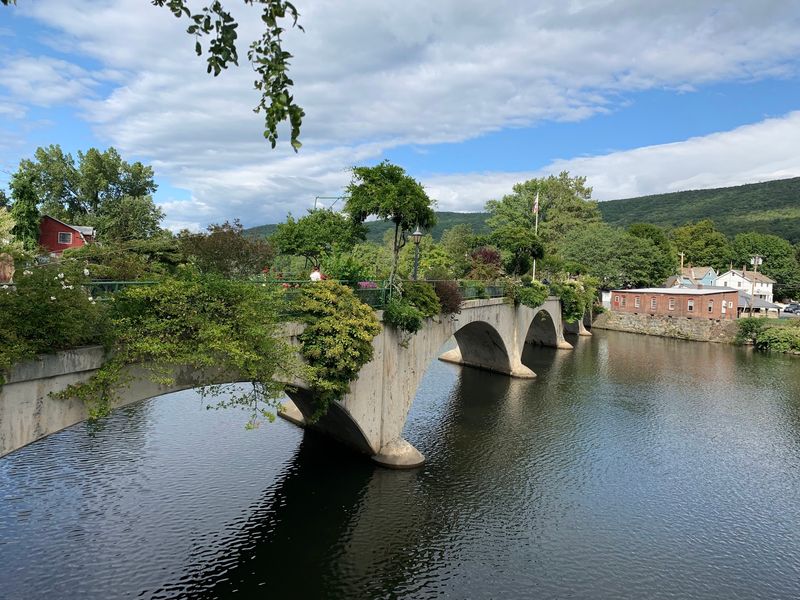
A flower garden is usually something you enter through a gate, not something you cross to reach the other side of a river. In Shelburne Falls, the garden doubles as a bridge, giving an everyday walk an unexpected setting.
The Bridge of Flowers spans the Deerfield River between the Shelburne and Buckland sides of the village. Shelburne Falls belongs to both towns, so crossing the water also helps explain how the community fits together.
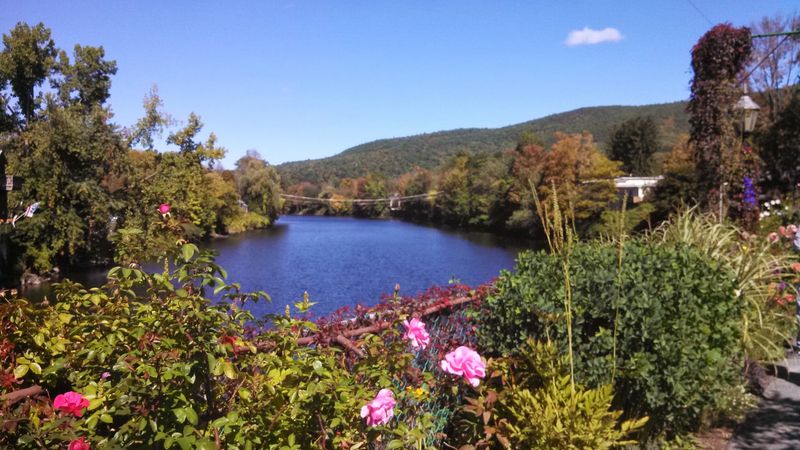
Look beyond the plants and you can see buildings gathered along the banks, wooded slopes rising behind them, and the river moving below. The view holds several layers at once: garden, village, water, and hills.
Nearby, the Iron Bridge provides a useful contrast. Its metal framework makes the planted crossing look even more unusual, while giving you another angle from which to understand the riverfront.
For your first look, pause near a bridge entrance rather than rushing straight onto the path. From there, the flowers frame the crossing, and you can see how a narrow strip of garden stretches across open water.
Keep your camera ready, but avoid treating the whole visit as one long photo stop. Other walkers need room to pass, and the changing views become easier to notice when you move a little between pictures.
On a clear day, the surrounding hills add depth without stealing attention from the planting beds. During foliage season, colored leaves join the scene, but they are only one piece of the picture.
The strongest introduction to Shelburne Falls is this simple contrast: a working village around a river, with a carefully tended garden crossing through the middle. Before exploring shops or choosing lunch, take a moment to look along the water and get your bearings. You will understand the village layout much faster than you would from a street map alone.
Follow the Blooms, Not Just the Leaf Forecast
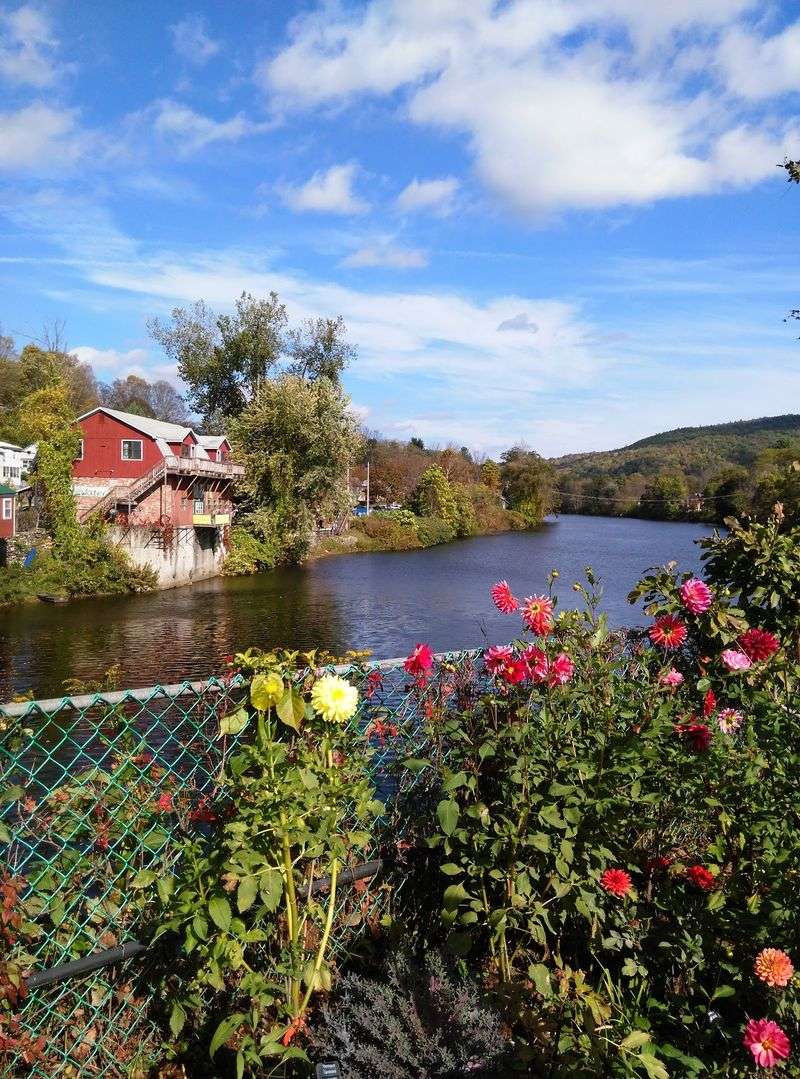
Your eyes may land on the brightest blossom first, but the pleasure of this crossing comes from looking closer. Leaves, stems, seed heads, and flowers share a small space, making the garden interesting beyond any single burst of color.
The planting changes through the growing season. Spring bulbs give way to later flowers, while summer and early autumn bring different combinations of blooms and foliage.
That changing schedule gives Shelburne Falls a reason to visit before the hills turn red and gold. You do not need to wait for peak leaf season to find color along the river.
Rather than expecting every flower to bloom together, approach the bridge as a living garden. Weather, seasonal timing, and the needs of individual plants all shape what you will see.
Start by noticing height. Low plants draw your gaze toward the edge of the beds, while taller stems create a loose screen that changes your view of the water.
Then look for differences in texture: broad leaves beside fine foliage, rounded flower heads beside upright spikes. Even a quieter patch can offer useful ideas if you grow plants at home.
For photographs, choose a small cluster instead of trying to squeeze the entire garden into every frame. A close view of petals with the river softly behind them tells a different story from a wide bridge picture.
Stay on the walkway and leave flowers where they grow. Picking a bloom or stepping into a bed damages the display that other people have come to enjoy.
If you are visiting with children, turn the walk into a simple color hunt without touching the plants. Finding purple, yellow, white, and pink keeps attention on the garden itself.
No complicated garden knowledge is required here. Slow steps and curious eyes are enough to reveal how much fits into this narrow crossing.
An Old Trolley Route Found a Second Life
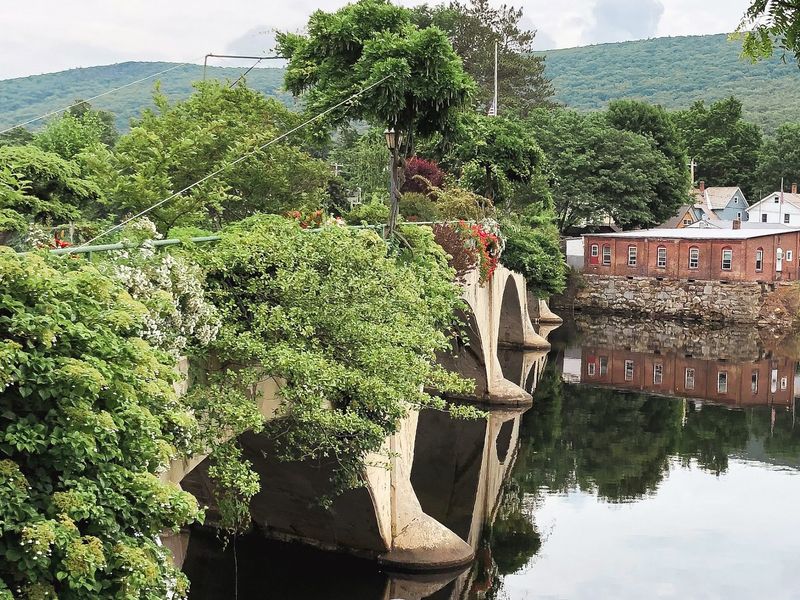
Before anyone planted a flower here, this bridge carried trolley cars. That earlier job explains why the structure looks different from a garden path built simply for strolling.
The concrete bridge opened in 1908 for the Shelburne Falls and Colrain Street Railway. It carried passengers and freight across the Deerfield River as part of a transportation network serving the surrounding area.
When trolley service ended in 1927, the crossing lost its original purpose. Instead of letting the unused structure remain an awkward leftover, local residents developed a plan to turn it into a garden.
The Bridge of Flowers took shape in 1929. Local resident Antoinette Burnham is credited with proposing the idea, and community work helped turn that proposal into the planted crossing known today.
Knowing that history changes the way you look at the bridge. The flowers are not covering a structure made for decoration; they are giving an old piece of transportation infrastructure a new public role.
That reuse also explains the garden’s unusual shape. Its long, narrow beds follow a route once defined by rails and movement rather than by the usual layout of a park.
Look at the concrete arches from a safe public viewpoint along the river. They reveal the sturdy framework beneath the softer scene of petals and leaves.
The nearby Shelburne Falls Trolley Museum provides another connection to this story. Check its seasonal schedule if you want to pair the garden with an exploration of the village’s railway past.
Ongoing care is just as important as the original idea. Garden maintenance, public support, and structural work all help preserve a crossing exposed to weather and river conditions.
When you walk across, imagine the sound of wheels where footsteps now pass. The route has stayed useful, but its cargo has changed from passengers and goods to gardeners, walkers, and cameras.
The River Carved Its Own Strange Showpiece
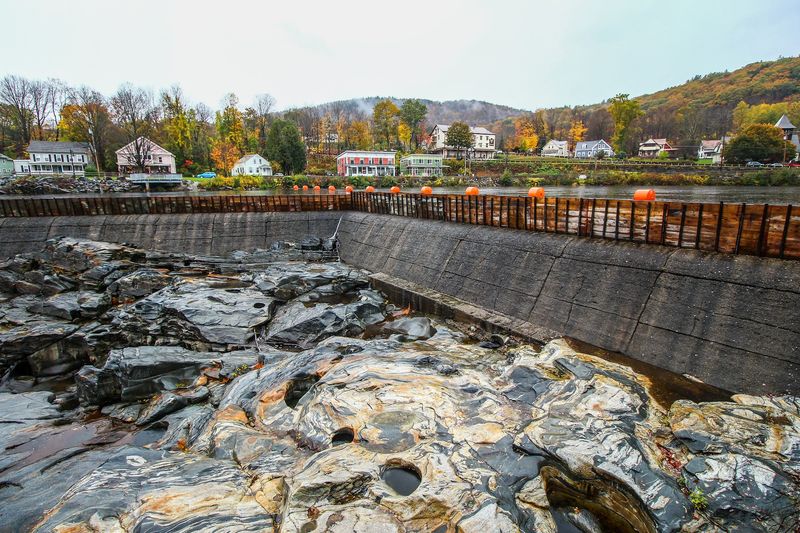
Flowers provide the soft edges; the river supplies the hard ones. Below Salmon Falls, the exposed rock holds rounded holes and curved surfaces that look almost carved by hand.
These formations are known as the glacial potholes. Moving water, swirling stones, and sand helped wear depressions into the bedrock, with their formation linked to powerful flows during the region’s glacial history.
The word pothole can suggest a broken road, but these are natural rock basins. Some are broad and obvious, while smaller shapes reward a closer look from the viewing area.
Visit the designated overlook rather than trying to reach the rocks themselves. Access to the pothole area is restricted, and the river can be dangerous even when part of its surface looks calm.
Water levels affect how much rock is visible. After wet weather, flowing water may hide features that stand out more clearly under lower conditions.
That variation is useful to understand before you arrive. A photograph taken on another day may show a different amount of exposed stone, so avoid expecting an exact match.
Spend a few minutes tracing the shapes with your eyes. Smooth bowls, narrow channels, and uneven edges show that water does more than run straight downstream.
For children, the overlook offers an easy lesson in erosion without needing a long explanation. Ask them to imagine a small stone spinning in one spot while moving water pushes it around.
Keep phones and cameras secure near railings, and supervise younger children closely. The safest view is also the one that lets you study the whole rocky scene.
Adding the potholes to your walk gives the village visit a different scale of time. The bridge tells a story measured in decades, while the riverbed points toward much older forces. Continue back toward the streets with that contrast fresh in mind.
Storefronts Keep the Village in the Picture
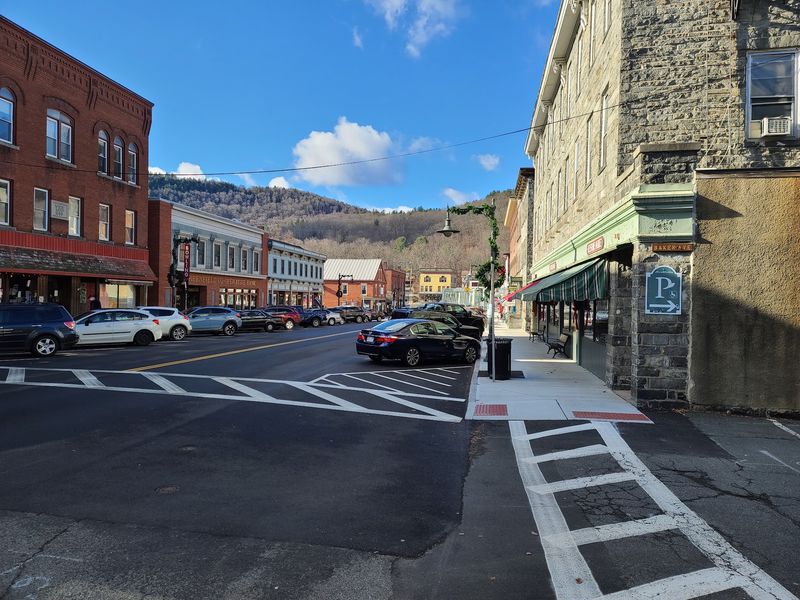
A painted bowl in a shop window can stop you as quickly as a bright flower. Away from the river, Shelburne Falls offers another kind of close looking through its galleries, independent shops, and working creative community.
Bridge Street and nearby village blocks make a natural extension of the garden walk. Storefronts sit within a compact center, so you can explore without turning every stop into another drive.
Begin with the windows rather than a fixed shopping list. Artwork, books, handmade objects, and changing displays help reveal the interests of the businesses behind each door.
Not every space keeps the same hours. Smaller shops and studios may have limited schedules, making a flexible approach more useful than expecting every door to be open.
If a gallery welcomes browsing, take time to look at materials and techniques. A piece of pottery or a print becomes more interesting when you understand how it was made.
Buying something is optional, but shopping locally can support the people who keep the village center active. Choose an object you will actually use rather than grabbing a souvenir simply because you are traveling.
The buildings deserve attention too. Look above eye level for older windows, rooflines, and details that get missed when everyone focuses only on displays.
Keep your route connected to the river. Moving between storefronts and bridge views helps you understand that the garden belongs to a lived community rather than a separate attraction behind an entrance gate.
Be considerate with photography inside businesses. Ask before photographing artwork, displays, or anyone at work, and avoid blocking a doorway while arranging a street shot.
A short browsing stop can easily become the most personal part of the outing. You might leave with a useful handmade cup, a new book, or simply a better sense of what village life includes beyond its famous crossing.
Build a Small Loop Instead of a Rushed Stop
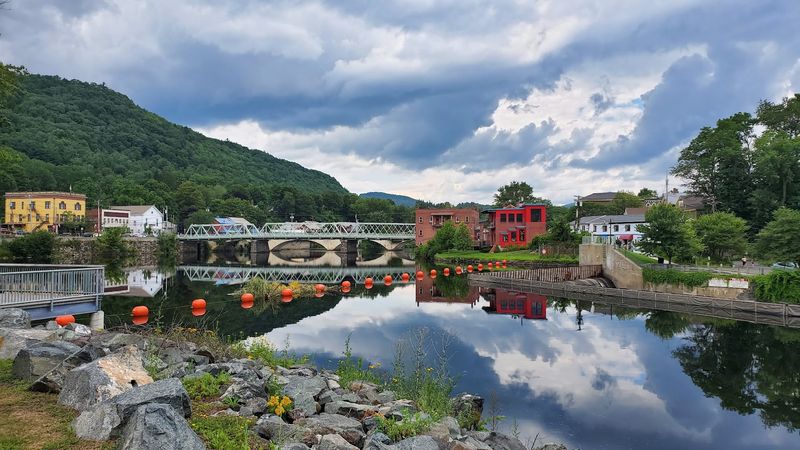
Park once, put the keys away, and let the river organize your outing. Shelburne Falls is easier to appreciate when the bridge becomes part of a village walk rather than a quick photo between drives.
When both crossings are available, the Bridge of Flowers and nearby Iron Bridge can form the heart of a short loop. Use the sidewalks and pedestrian routes, watching carefully wherever your walk meets traffic.
Start with the garden while your attention is fresh. Take one slow pass for the plants, then use the other crossing for a broader look at the river and the planted bridge.
That second angle solves a common photography problem. You cannot capture the entire structure well while standing on it, but a nearby viewpoint lets its shape become clearer.
Add the glacial pothole overlook before settling into the shopping streets. The shift from planted beds to carved stone keeps the walk varied without requiring a long excursion.
Leave a gap for lunch, a snack, or a drink at a village business that is open. A real break gives tired feet some relief and keeps the afternoon from becoming a checklist.
Families can shorten the route by choosing one attraction beyond the garden. Trying to fit every shop and viewpoint into a single visit may make a compact village seem more tiring than it needs to be.
Wear shoes suited to sidewalks and standing, not just photographs. Bring water, and expect riverfront conditions to be breezier or sunnier than a sheltered storefront block.
If someone in your group has limited mobility, confirm current access conditions before choosing the loop. Construction, surface changes, and entrance arrangements can affect a route that looks straightforward on a map.
Finish wherever your group has energy left: a gallery, a riverside view, or a meal. The best route leaves room to stop without falling behind.
Choose Your Season, Then Check the Crossing
A beautiful photograph cannot tell you whether a bridge is open today. Before setting out, check the current Bridge of Flowers access notice, especially because restoration work has affected the crossing in recent years.
Historically, the garden’s public season has run from spring into late autumn, commonly April through October. Treat those months as a planning guide, not a promise of access on a particular date.
Weather and maintenance can change arrangements. Confirm conditions close to your visit, and make sure any information you find is current rather than an older travel account.
For flowers, choose your timing by the growing season. Spring, summer, and early autumn each offer different plant displays, with no single date guaranteeing every color shown in promotional pictures.
For foliage, remember that the surrounding hills follow their own schedule. Temperature, rainfall, and yearly weather patterns affect when leaves change and how long they stay on the trees.
Early autumn can offer a useful overlap between garden interest and developing hillside color. Still, plan around the village experience rather than making one exact shade of red the test of a successful day.
A weekday visit may give you more room to pause than a busy seasonal weekend. Arriving earlier also leaves extra time to adjust if parking or business hours require a change of plan.
Use designated parking and follow posted limits. Do not assume a space beside a business is available for a long sightseeing stop.
Check the weather before leaving, and bring a layer for cooler riverfront air. On hot days, sun protection matters because portions of the crossing and nearby streets are exposed.
Even if access changes, the village still offers river views, the pothole overlook, and downtown browsing. Flowers are the headline, but a flexible plan lets Shelburne Falls show you the rest of its story too.
Share this story