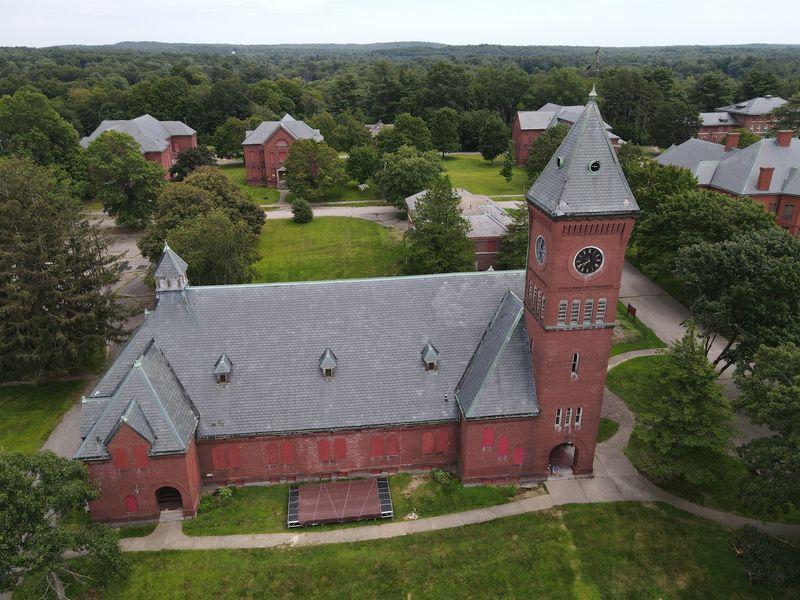
Medfield State Hospital can feel almost ordinary in bright daylight, but the atmosphere shifts as the sun drops behind its empty brick buildings. Boarded windows, long walkways, and quiet grounds give the former Massachusetts hospital an unmistakable sense of mystery without needing ghost stories to make it interesting.
The real draw comes from the contrast between its institutional past and the way the property is used today for walks, open-air events, and community activities. Visitors can explore the grounds while respecting the people whose lives were connected to the hospital.
For anyone drawn to Massachusetts places where history and atmosphere meet, Medfield offers plenty to think about before dark.
When the Light Fades, the Buildings Change
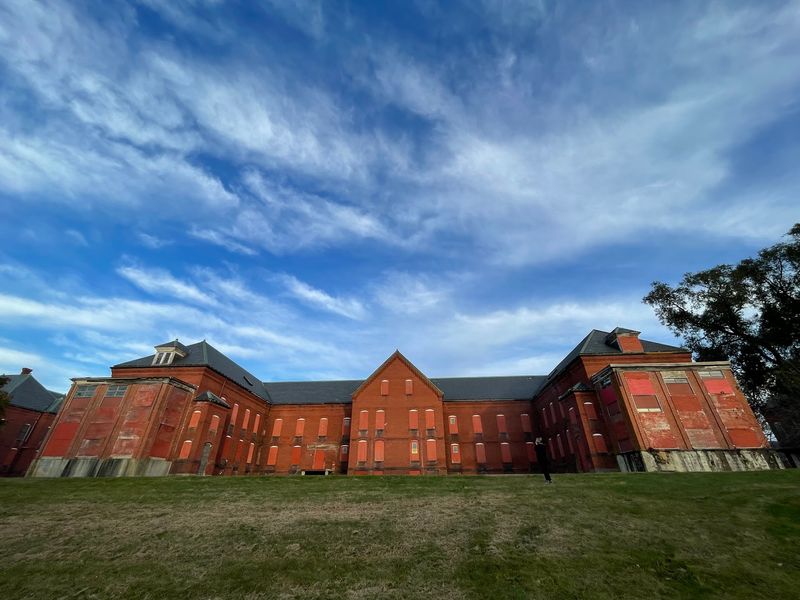
A row of boarded windows can look ordinary at noon and strangely unreadable as daylight fades. At Medfield State Hospital, changing light does much of the work that a haunted house would need props to achieve.
Brick walls lose their warm color, trees become dark outlines, and the gaps between buildings seem deeper. The buildings have not changed, but your eyes have fewer details to work with, which helps explain the sudden sense of mystery.
Look across the campus rather than focusing only on the nearest doorway. Its separate buildings, open lawns, and connecting routes create layers in the view, with one roofline appearing behind another and branches crossing the sky.
Late afternoon offers a practical way to notice this shift without planning an unauthorized nighttime visit. Check current access hours before leaving home, then give yourself enough time to return to your vehicle before the grounds close.
Cloud cover makes a difference, too. A bright evening can leave clear edges around windows and chimneys, while an overcast afternoon flattens colors and makes the same scene appear heavier, even well before sunset.
You do not need to chase complete darkness to appreciate the title’s promise. Watch where sunlight still reaches a wall, then compare it with a nearby facade already in shade; the contrast is stronger than any invented ghost tale.
Keep your attention on the path as well as the view, especially when shadows hide changes in the surface. Comfortable shoes and a familiar return route are more useful here than a dramatic flashlight beam aimed at sealed windows.
The best final look is a simple one: stand on an open, permitted route and let the shapes settle into place. A quiet brick building, a strip of fading sky, and an empty stretch of pavement provide plenty to study without crossing barriers.
Massachusetts History Behind the Empty Windows
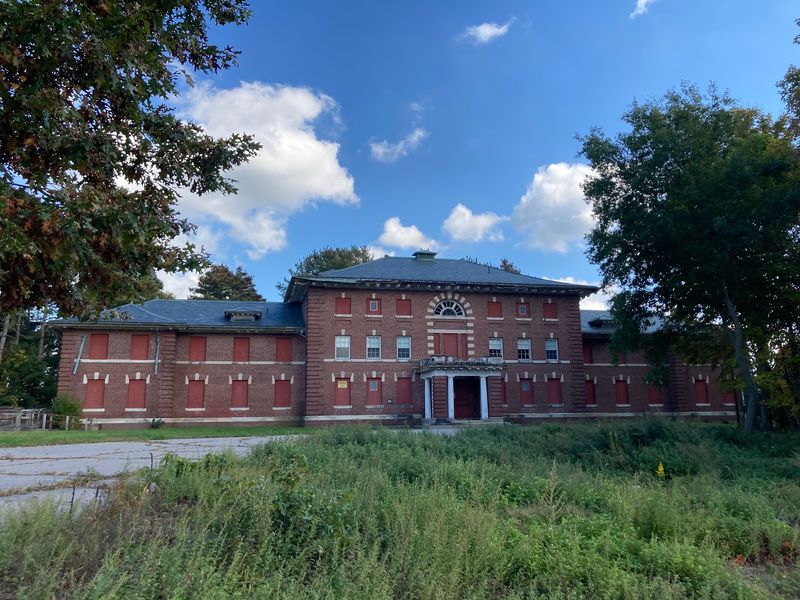
Long before it became a place for quiet walks, this campus was a working state hospital. Medfield State Hospital opened in 1896 and closed in 2003, leaving behind buildings that served generations of patients and staff.
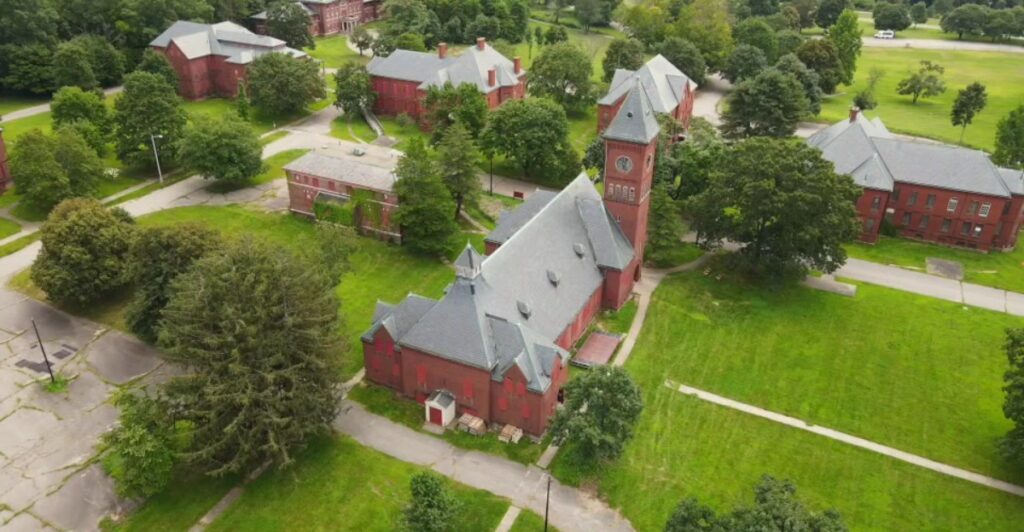
Its layout helps explain what you see today. Rather than concentrating everything inside one enormous structure, the hospital used a cottage plan, with separate buildings spread across the grounds and outdoor space between them.
That arrangement gives a walk an unusual rhythm: a building, a lawn, another building, then a wider view. It also makes the campus easier to read as a former working community rather than a single abandoned shell.
Mental health care changed greatly during the hospital’s lifetime. Standing outside cannot tell you everything about those changes, but it can prompt better questions about treatment, daily routines, public policy, and the people whose lives crossed here.
Keep the human story separate from the spooky setting. Patients were real people, not characters added to make old windows more frightening, and staff members worked in a place that carried serious responsibilities.
If historical signs are available along your route, pause to read them instead of relying only on the mood of the buildings. Dates, original uses, and documented details give you a firmer understanding than rumors about what happened behind closed doors.
A useful approach is to study one exterior slowly, then compare it with another. Differences in entrances, scale, and placement may suggest different functions, although a visual guess should never replace a reliable historical source.
Bring that curiosity home by looking for archival material about Medfield State Hospital itself. Old photographs and records can connect today’s empty campus with its working years, adding context that darkness alone cannot provide and giving the next walk a clearer purpose than simply searching for somewhere that looks eerie or forgotten today.
Read the Brickwork, Not the Locked Doors
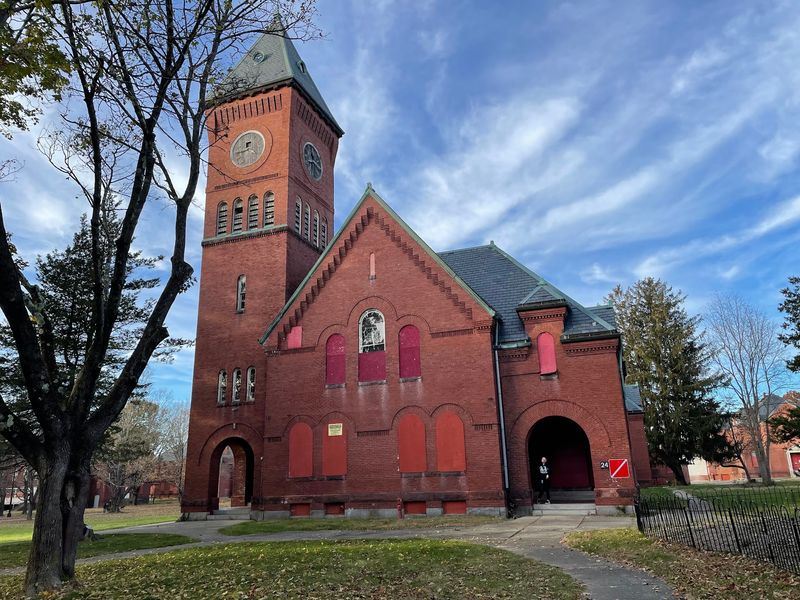
Your eyes have plenty to do here without your hands ever touching a door. Medfield’s building exteriors offer the kind of small details that disappear when you rush through a campus looking only for the most dramatic view.
Start with the windows. Their spacing creates patterns across the walls, while boards interrupt the familiar look of a lived-in building; that mismatch is a large part of the visual tension.
Next, follow the masonry upward toward the roof. Changes in brick color, the edges of an entrance, and the shape of a roofline can make neighboring structures look related without making them identical.
Distance is useful, not a drawback. From an open path, you can see how an entire facade fits together, then move to another permitted viewpoint for a different angle instead of pressing close to a sealed opening.
Weathering deserves careful attention, but it should not become an excuse for guessing. A stain or patched surface may have several causes, and an exterior photograph cannot establish whether a building is structurally safe inside.
Treat closed buildings as closed, even if an opening appears reachable. Do not test handles, move boards, climb steps behind barriers, or follow someone else’s claim that a particular entrance is acceptable.
For a more rewarding walk, choose a small visual theme. You might compare doorways, photograph roof shapes, or notice how trees frame different walls; focusing on one detail turns a casual lap into a closer architectural study.
A phone camera is enough for this kind of exploration, especially in good daylight. Take a wide frame first, then a closer view from the same safe position, so the detail remains connected to its building and surroundings.
Leave every surface as you found it. The most interesting discovery may be a repeated window pattern, not a way inside a locked building.
A Movie Connection Without the Ghost Claims
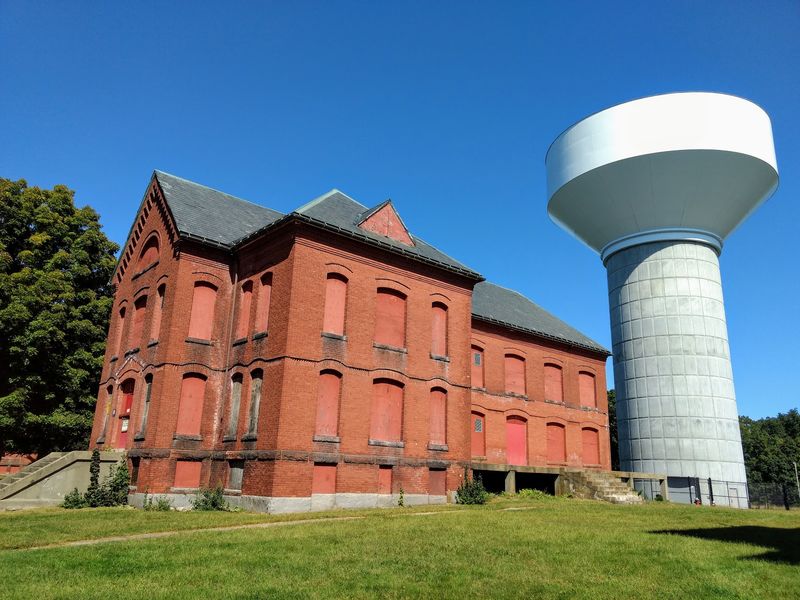
Film fans have a real reason to recognize this setting: Medfield State Hospital was used as a filming location for Shutter Island. That connection adds interest, but it does not turn the actual campus into the fictional institution shown onscreen.
A movie can reshape a location through lighting, editing, set dressing, and carefully chosen angles. Walking the grounds gives you a chance to separate those tools from the real arrangement of buildings and open space.
Notice how a narrow camera view could hide the lawn beside a building or exclude a nearby path. A place that looks isolated within a frame may sit beside an ordinary walking route just outside it.
That is a useful lesson for anyone arriving with a thriller already playing in their head. The campus supplies strong visual material, but the story attached to that material depends on who is telling it.
Claims about ghosts deserve the same careful treatment. A strange sound, an unfamiliar shadow, or a frightening description is not evidence of a haunting, and there is no need to present rumors as established history.
You can still enjoy the suspense. Think of it as noticing how architecture influences your expectations: repeated windows suggest watchfulness, closed entrances raise questions, and a long empty route encourages your attention to drift ahead.
If you bring someone who dislikes scary places, explain the film connection before the visit rather than building up an ominous surprise. A daytime walk gives them room to appreciate the setting without pressure to play along with ghost hunting.
For photographs, borrow the discipline of filmmaking instead of its fiction. Choose a clear subject, watch the edges of the frame, and use available light while staying on permitted grounds.
The strongest image will show what is actually there. No staged figure in a window is necessary to make these exteriors compelling.
The Quiet Campus Has a Social Side
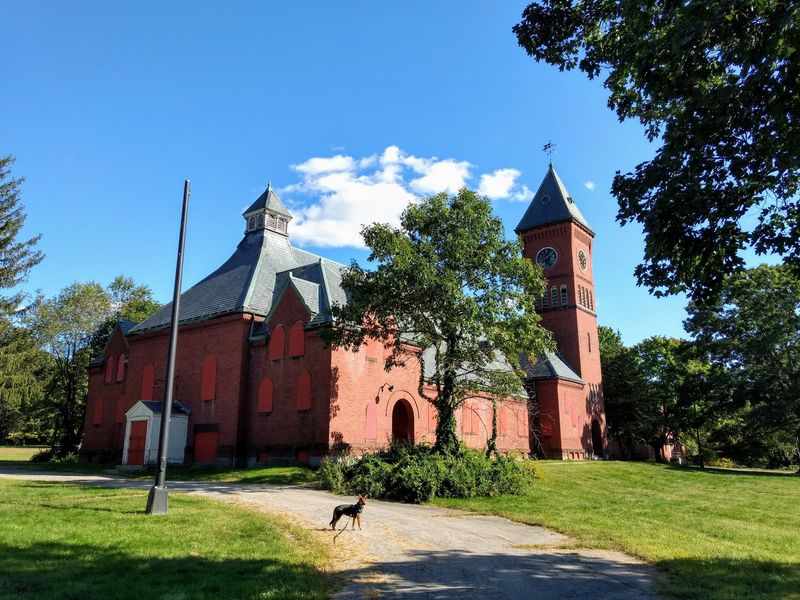
A dog walker rounding a corner can change the whole scene. Despite its empty hospital buildings, Medfield’s grounds are not simply a deserted backdrop waiting for someone to explore them alone.
Walking is a major part of the campus’s present use, and the broad routes give the visit a relaxed outdoor rhythm. You may share space with neighbors, photographers, families, and people enjoying a regular loop with their dogs.
That everyday activity provides a welcome contrast to the boarded facades. A conversation near a lawn or footsteps along the pavement places the old buildings within a living community rather than outside it.
The site has also hosted outdoor arts programming associated with Belleforge, including concerts. Event schedules and available areas can change, so confirm current arrangements before assuming a performance will coincide with your walk.
On an event day, the campus may serve a very different purpose from the quiet outing you pictured. Music, gathering spaces, and more people can shift your attention from empty architecture toward how the grounds are being used now.
Share the routes thoughtfully whether a program is happening or not. Keep photography equipment out of the way, avoid blocking paths for portraits, and give other walkers enough room to pass without stepping into rough ground.
If you bring a dog, follow posted rules, carry waste bags, and keep your pet under control. Do not assume every approaching dog is comfortable with greetings, especially when its handler is trying to maintain distance.
For a quieter visit, choose a time without a scheduled gathering rather than expecting the campus to be empty. Space and silence are different things, and a large setting can still have regular neighborhood use.
Watch the paths for a few minutes before choosing your route. The current life of the grounds is visible in where people actually walk and gather.
Chase Better Light, Not a Riskier Shot
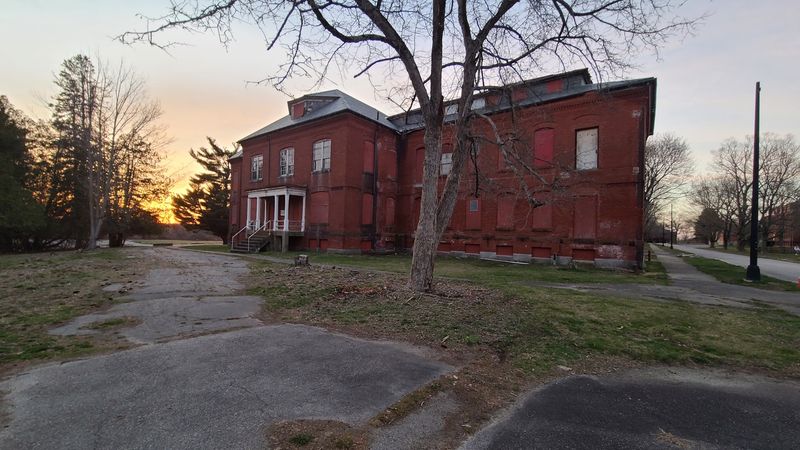
Good photographs here begin with where you stand, not how far you dare to go. The campus offers multiple exterior backgrounds, so a patient change of angle usually does more than edging toward a restricted building.
Use the broad routes to build depth into a frame. A path leading toward a facade creates direction, while a nearby tree can give scale without making the building look smaller or less important.
Side light is especially helpful for brickwork. When sunlight crosses a wall at an angle, edges and surface texture become easier to see; straight overhead light often gives the same wall a flatter appearance.
Autumn adds another visual layer through the mature trees. Leaves can introduce bright color around the buildings, but avoid promising a particular display on a particular date, since weather affects both timing and intensity.
For portraits, keep the person clearly separate from the background. A simple position along an open route can work better than placing someone against a boarded entrance, where the setting may overwhelm the face.
Ask permission before making identifiable strangers the subject of an image. The grounds are shared space, and someone walking a dog or attending an event has not automatically agreed to appear in your photo session.
Professional shoots and organized photography may have different requirements from casual snapshots. Check current town guidance before bringing clients, large equipment, props, or a group that could affect access for others.
As daylight drops, take fewer shots and choose them carefully. Hold your phone steadily, avoid walking backward while watching the screen, and stop if seeing the path becomes difficult.
Never use a drone without checking applicable rules and permissions. An aerial angle is not a reason to ignore restrictions.
Finish with one wide photograph that shows the buildings in their setting. Context gives the smaller details room to make sense.
Plan an Exterior Visit and Leave Room for Change
Put 45 Hospital Rd, Medfield, MA 02052 into your navigation, then plan for a walk rather than a building tour. The appeal is outdoors, and the closed hospital interiors should not be treated as part of ordinary public access.
Before traveling, check current town notices about hours, parking, construction, events, and any temporary closures. A former hospital campus can change over time, so an older photograph or visit account is not a reliable access guide.
Use designated parking and expect to continue on foot. Do not assume you can drive beside every building, and leave emergency routes, gates, and access points clear even when the grounds seem quiet.
Wear shoes suited to pavement and uneven outdoor surfaces. Bring water for a longer walk, dress for the weather, and remember that shade and open lawns can feel quite different on the same afternoon.
If mobility access is a concern, confirm current route conditions before arrival. Broad paths do not guarantee that every surface, slope, or connection will suit every visitor, particularly during maintenance or seasonal weather.
Restrooms and other conveniences should also be checked rather than assumed. Packing for a simple outdoor outing is safer than expecting the services normally found at an operating museum or staffed attraction.
Give yourself time to learn the layout in daylight. Choose a manageable route, note how to return to parking, and avoid adding distant detours just because the buildings make an interesting backdrop.
The title may suggest a nighttime adventure, but posted access rules decide when you can visit. If closing time arrives before dark, leave on schedule; mystery does not require trespassing.
Medfield stands apart because its old architecture remains visible within grounds used by the community. Arrive curious, keep the buildings’ history in perspective, and let a permitted outdoor walk provide the view instead of searching for forbidden access.
📍 45 Hospital Rd, Medfield, MA 02052
Share this story