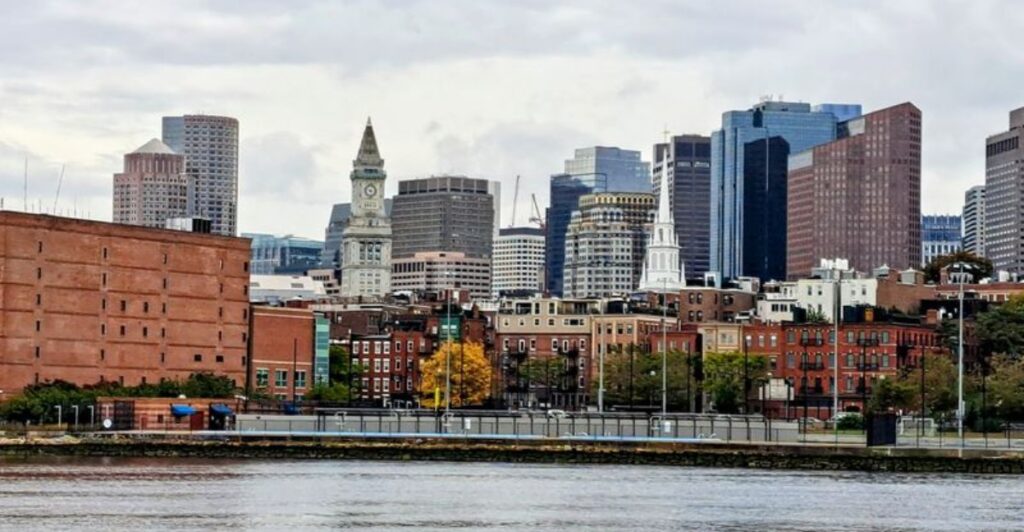
Boston history feels a lot more vivid when you can move from a wooden warship to a colonial home and then into a working waterfront. Boston National Historical Park connects sites tied to revolution, shipbuilding, military history, and the people who helped shape a new nation.
The appeal comes from how different each stop feels, with famous names sharing space with docks, workshops, and everyday details that make the past easier to picture. Starting at the Charlestown Navy Yard gives you one strong entry point before the story spreads across the city.
For anyone who wants more than a quick photo stop, this park turns Boston into a history trail you can actually walk through.
A Massachusetts Waterfront Built for Hard Work
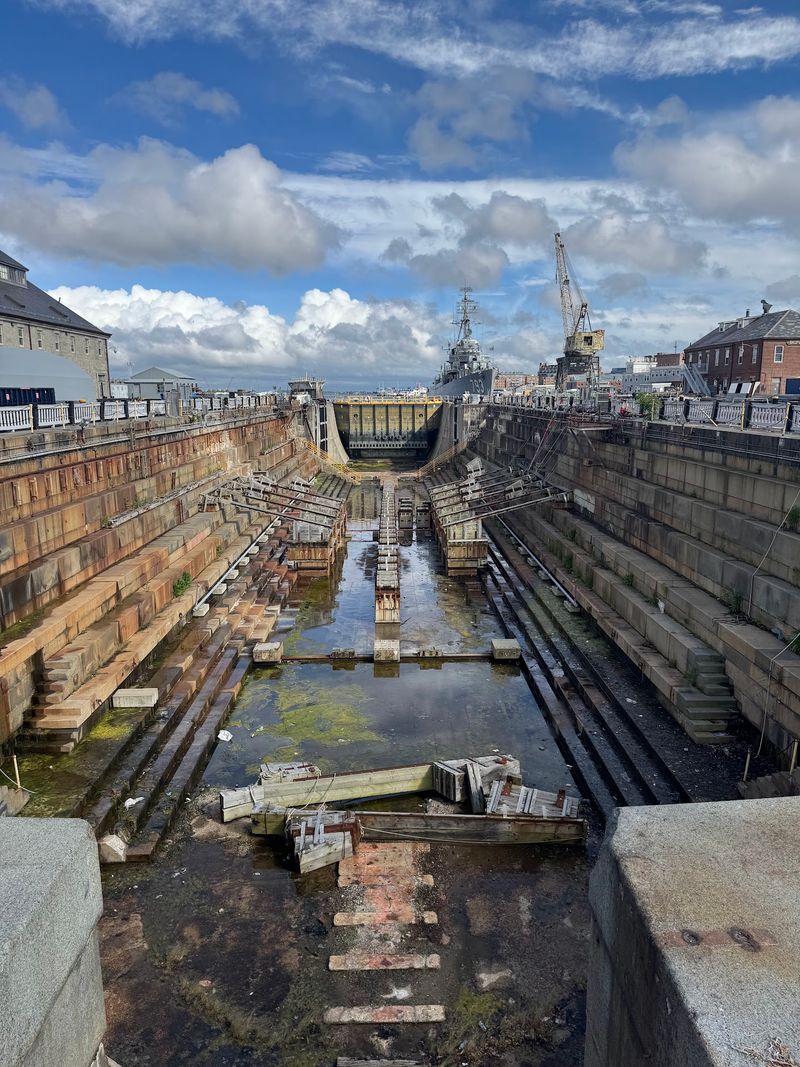
Brick buildings and tall ship masts share the skyline at Charlestown Navy Yard, where the waterfront once ran on skilled labor rather than sightseeing. Before you hurry toward the ships, give the spaces between them a proper look.
The Navy Yard opened in 1800 and served the United States Navy until 1974. Across those years, workers built, repaired, and supplied vessels as naval technology changed from wooden sailing ships to steel warships.
Boston National Historical Park preserves a portion of that much larger former yard. Its historic buildings, waterfront edges, and dry dock help explain the work that kept ships operating, not simply the battles those ships fought.
Look for Dry Dock 1, a major piece of the yard’s early engineering. A dry dock lets workers remove water around a vessel so they can reach parts normally hidden below the surface.
That simple idea changes how you see the waterfront. Instead of treating every basin as scenery, you begin noticing the practical layout of a place designed to move materials, handle heavy equipment, and maintain ships.
Building 5 houses the Charlestown Navy Yard Visitor Center, a useful starting point for understanding the site. Check available exhibits and ask a ranger which areas, programs, and ship visits are operating that day.
Give yourself time to walk rather than treating the yard as a doorway to one attraction. The open spaces offer room to compare building shapes, follow the shoreline, and watch the harbor beyond the historic structures.
On a sunny day, exposed pavement can make this stretch warm, while wind off the water can cool it quickly. Bring water, wear comfortable shoes, and carry a light layer.
Start with the working landscape, and the ships make more sense. Every mast, hull, and dock belongs to a larger story of people keeping a navy afloat through years of change.
Old Ironsides Still Has a Navy Crew
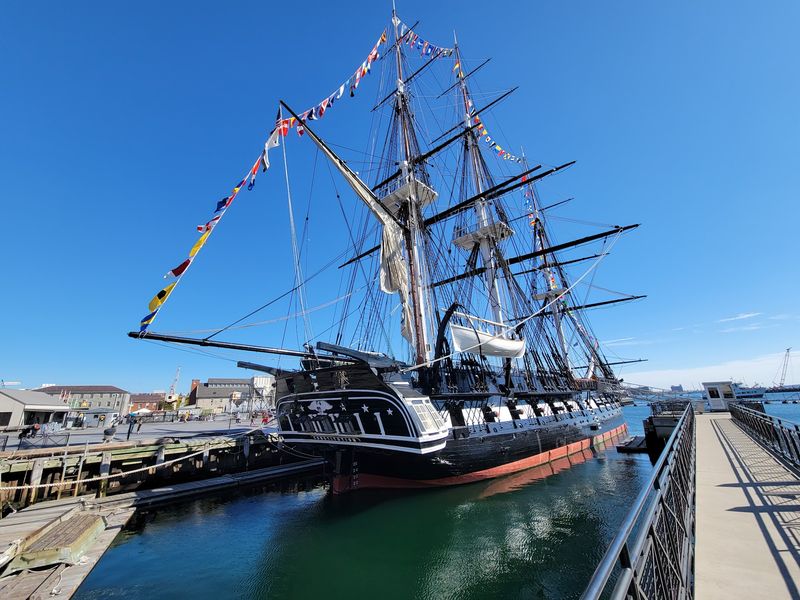
The surprise aboard USS Constitution is not just its age. The ship remains a commissioned United States Navy vessel, and active duty sailors help explain a working tradition that reaches back to the country’s early years.
Launched in Boston in 1797, Constitution earned the nickname Old Ironsides during the War of 1812. British cannonballs appeared to bounce off its strong wooden hull during its battle with HMS Guerriere.
Despite the nickname, the ship is made of wood, not iron. That contrast gives children an easy question to investigate and adults a useful reminder that famous names can hide the most interesting details.
Once aboard, look beyond the tall masts. The deck layout, guns, ropes, and limited space help show how sailors managed a vessel powered by wind while living close together for long periods.
Listen to the crew’s explanations before rushing to take photographs. A detail about handling sails or serving a gun can turn a handsome object into a place where difficult jobs required practice and teamwork.
Boarding requires security screening, and adults should bring identification that meets current Navy requirements. Check the ship’s latest visitor rules before leaving your hotel, especially if you are traveling from outside the United States.
Expect steep steps and low overhead spaces where access below deck is offered. Anyone with mobility concerns should ask about current boarding arrangements rather than assuming the historic ship provides the same access as a modern building.
The nearby USS Constitution Museum is a separate institution and complements the ship with exhibits about its people and history. Confirm its hours and admission policy independently from the ship’s free public visits.
Allow breathing room between both experiences. First study the vessel itself, then use the museum to explore how crews ate, worked, and endured life at sea, far beyond the harbor’s familiar shoreline.
Across the Pier, Steel Replaces Sail
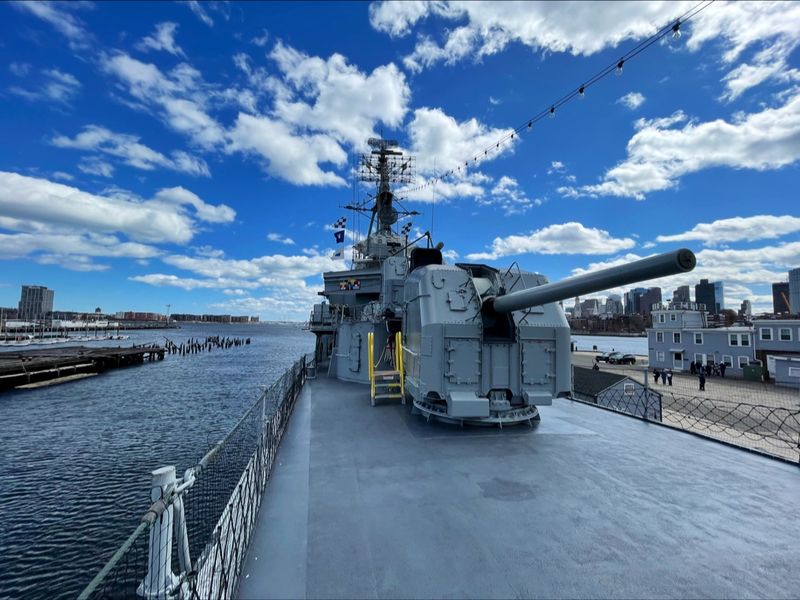
A gray destroyer gives the Navy Yard a sharp change of pace. USS Cassin Young replaces Constitution’s wood and canvas with steel, machinery, and the crowded equipment of naval warfare in the twentieth century.
Commissioned in 1943, this Fletcher class destroyer served during World War II and later returned to service during the Cold War. The National Park Service preserves it at Charlestown as a way to explore those later chapters.
Seeing both ships close together makes technological change easy to understand. You do not need a naval vocabulary to notice that one depends on sails while the other packs weapons, communications equipment, and mechanical systems into its hull.
Cassin Young also connects directly to the yard’s repair history. Ships of its era needed places like Charlestown to keep their machinery and equipment ready, linking the vessel to the industrial landscape around it.
When boarding is available, study how much work fits into a narrow space. Passageways and deck equipment suggest the constant need to move carefully, follow instructions, and share limited room with other crew members.
Ask staff which parts of the ship are open that day. Access to the main deck and any guided visits below can vary with staffing, weather, maintenance, and seasonal schedules.
Do not promise children a full ship tour before confirming availability. Instead, make comparing the two vessels the main activity: find their different materials, look for weapons, and consider how each crew moved through the ship.
Even an exterior visit offers plenty to examine. The angular outline, compact fittings, and practical gray finish give you a different visual language from the tall rigging nearby.
Keep your camera ready for a view that includes both eras. Wooden masts behind a steel destroyer explain the Navy Yard’s long history more clearly than a single photograph of either vessel standing on its own.
Paul Revere’s House Brings the Story Down to Human Size
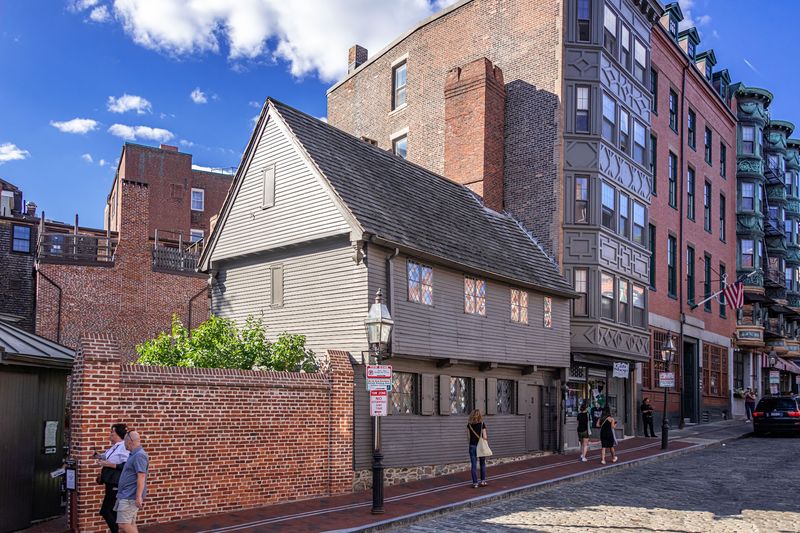
After the scale of the Navy Yard, a modest wooden house changes the conversation. The Paul Revere House brings the park’s wider story into rooms connected to family life, skilled work, and a crowded colonial neighborhood.
Located in Boston’s North End, the house dates to about 1680, making it older than Revere himself. He owned it from 1770 to 1800, including the period of his famous ride in April 1775.
The building is part of Boston National Historical Park’s network, but it is operated by the Paul Revere Memorial Association. That distinction matters when planning, because its admission rules and opening schedule are separate from National Park Service facilities.
Inside, focus on the size of the rooms and the household setting rather than expecting a grand mansion. Revere was a silversmith with a large family, and the home offers a useful counterpoint to monuments honoring public events.
His midnight ride was also part of a wider warning system, not a solo rescue carried out without help. Learning about the other riders and messengers makes the familiar schoolroom story more interesting and more accurate.
Pair the house with Old North Church, another site in the park network. The church’s lantern signal and Revere’s movements belong to the same tense night, but they happened at different places.
Keep those locations separate in your mind as you walk. The house explains where Revere lived; the church helps explain how information moved when British troops were preparing to leave Boston.
Allow extra time for narrow streets, crossings, and entry queues in the North End. A short distance on a map does not always mean a quick visit once you stop to examine buildings.
Before heading toward Charlestown, pause outside the house again. Its small windows and wooden walls make an effective comparison with the enormous ships waiting across the water.
Revolution Took Shape in Meeting Rooms, Too
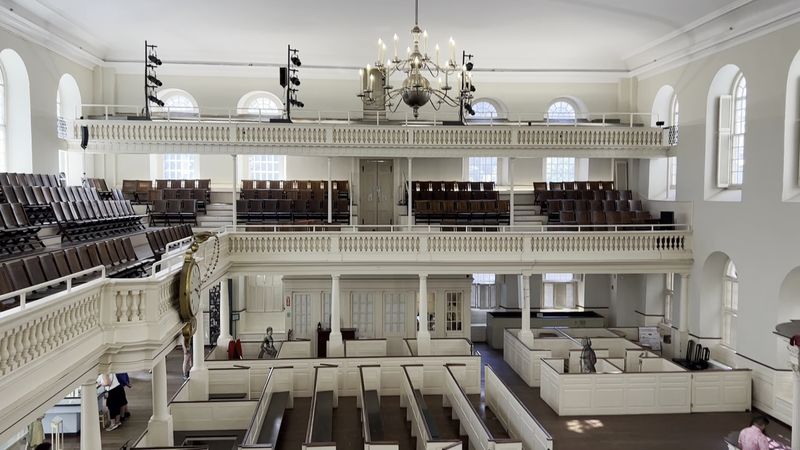
Not every turning point needed a ship or a midnight ride. Some began with people gathering indoors, arguing over power, and deciding whether they would accept decisions made across the Atlantic.
Boston National Historical Park links several places where that public debate unfolded. Faneuil Hall, Old South Meeting House, and the Old State House each reveal a different piece of the city’s political life before independence.
Faneuil Hall combined market activity with a meeting space upstairs. The arrangement puts daily trade and public discussion in the same building, a useful reminder that revolutionary politics grew inside an active town.
At Old South Meeting House, large gatherings in 1773 addressed the dispute over taxed tea. The meeting on December 16 preceded the destruction of tea in Boston Harbor, connecting an indoor assembly to a famous waterfront protest.
The Old State House served as a center of colonial government. Outside, the Boston Massacre site points toward the tension between British soldiers and townspeople, while the building itself helps explain the authorities those townspeople challenged.
Visit these places as connected arguments rather than three unrelated old buildings. One shows civic gathering, another mass protest, and another the seat of government against which opposition formed.
Operating arrangements differ across the network, so admission to one building does not automatically include another. Check current access, ticket requirements, and any room closures before choosing which interiors to prioritize.
If time is tight, use exterior stops to establish the route, then select an indoor visit for deeper context. Trying to enter every attraction can leave little room to absorb what happened there.
Read beyond the famous names when exhibits allow. Merchants, laborers, women, and enslaved people all lived within this city, even when political power was far from equally shared among its residents.
Those differences belong beside the speeches, protests, and celebrated calls for liberty.
Bunker Hill Adds Height and a Harder History
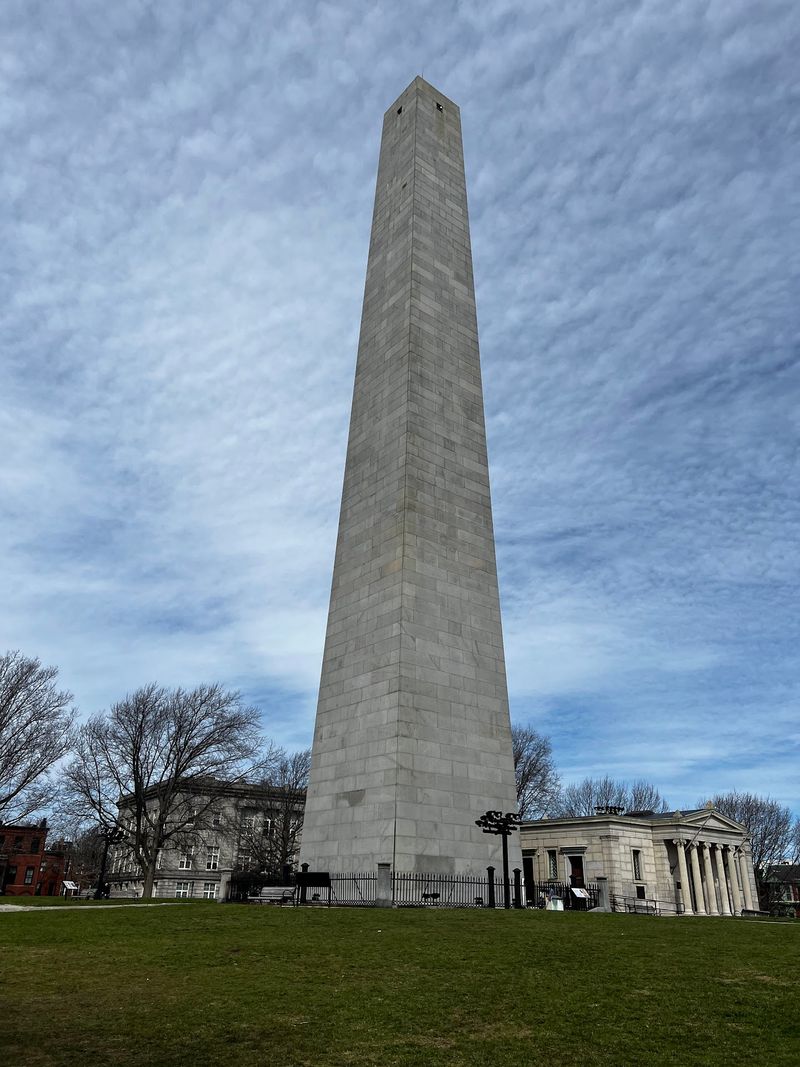
The granite obelisk above Charlestown marks a battle that was both a British victory and a costly warning. Bunker Hill adds a difficult chapter to a route otherwise crowded with bold speeches and celebrated acts of resistance.
The battle took place on June 17, 1775, with much of the fighting on Breed’s Hill. British troops captured the position, but suffered heavy casualties against colonial forces defending hastily built earthworks.
That outcome is worth slowing down for. Winning the ground did not mean the conflict would be easy, and the battle showed how fierce the struggle around Boston had become.
The monument stands on Breed’s Hill, despite carrying the better known Bunker Hill name. Keeping that detail straight helps explain why maps, battle accounts, and the landmark’s title can seem slightly out of step.
Inside the monument, 294 steps lead toward the top when climbing is permitted. There is no elevator, so consider your fitness, comfort in enclosed spaces, and the needs of everyone in your group before committing.
Climbing availability can change with weather, staffing, and safety conditions. Check with park staff first, and treat the ascent as an optional addition rather than the only reason to visit.
The nearby Bunker Hill Museum provides context for the fighting and the monument. It is especially useful if you want to understand the battlefield before looking across the surrounding neighborhood.
From the Navy Yard, reaching the site means walking uphill through Charlestown. Give yourself time for the climb, watch street crossings, and avoid saving it for the moment everyone is already tired.
You can still have a meaningful visit without taking the staircase. Study the monument from the lawn, explore available exhibits, and compare the hill’s position with the waterfront below.
The terrain itself helps explain why controlling high ground mattered during the fighting around Boston that summer.
Build Your Day Around a Network, Not One Gate
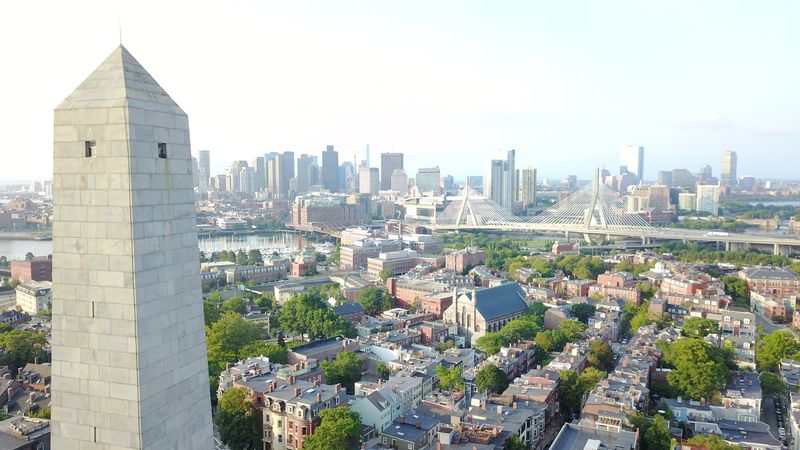
Your biggest planning mistake would be treating Boston National Historical Park as one attraction with one entrance. Its sites are spread through the city, and the Charlestown Navy Yard is a starting point rather than the entire park.
The Freedom Trail connects many of these places, but the trail and national park are not identical. The trail includes additional historic stops, while the park brings together selected sites under different ownership and operating arrangements.
Start at Building 5 if ships and waterfront history lead your interests. The visitor center can help you sort out available programs, current ship access, and the walking route toward Bunker Hill or downtown.
For a focused half day, choose the Navy Yard and Bunker Hill instead of racing through the whole network. A longer day can add North End sites, but indoor visits and security lines quickly expand the schedule.
Do not read a map listing of open 24 hours as a promise that everything is accessible overnight. Visitor centers, museums, ships, monument interiors, and guided programs have their own schedules and may close seasonally or temporarily.
Free admission also varies by location. National Park Service areas and public ship visits differ from independently managed museums and historic buildings, so budget for the particular interiors you want to enter.
Walking shoes are essential, but transportation can save energy. Check current transit and Charlestown ferry service if you want to avoid retracing the entire route, especially after climbing hills or spending hours aboard ships.
Pack for exposed waterfront weather and city walking: water, a light layer, and sun protection. Use open visitor facilities for restroom breaks instead of assuming every outdoor stop has services.
Leave one flexible block in your plan. A ranger talk, an unexpected closure, or a longer museum visit is easier to handle when the next stop is not tightly scheduled.
📍 Building 5, Charlestown Navy Yard, Boston, MA 02109, United States
📞 +1 617-242-5601
Share this story