The post office is still there. So is the church.
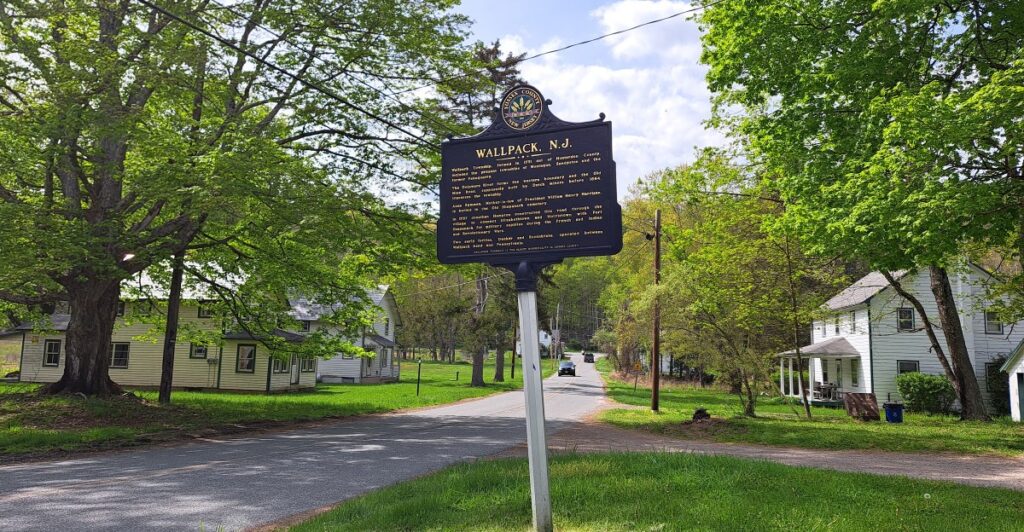
What’s missing is the ordinary village bustle that once made those buildings necessary. In Walpack Center, a small historic settlement tucked into Sussex County’s Delaware Water Gap National Recreation Area, you can walk past the outlines of an entire community without encountering anything resembling a busy downtown.
Houses, a former school, and a general store tell a story that gets stranger once you learn why people left. A massive dam project helped empty this corner of New Jersey, yet the dam itself never materialized.
The buildings remained, and local volunteers have worked to keep their history from disappearing. Calling it a ghost town captures the quiet, but there’s more here than empty windows and an eerie photograph.
There’s a farming village, a bitter federal controversy, and a woodland route connecting two chapters of local history, all within one surprisingly compact visit.
Walpack Center Still Looks Like A Village From Another Era
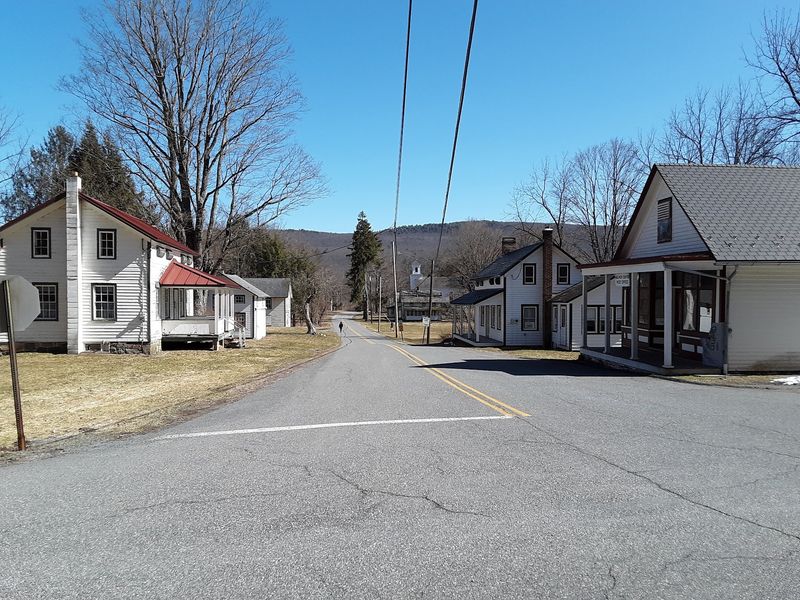
A white church, modest houses, and a former store make a remarkably convincing argument for slowing down. This is a place you can miss by treating it as a quick windshield attraction.
Park where permitted, get out, and the individual buildings begin to make sense together. Walpack Center sits within a national recreation area, but its appeal is unusually small in scale.
You’re looking at a village street rather than a sprawling attraction, with the familiar ingredients of community life gathered close enough to understand on foot. The Methodist church is a particularly useful landmark.
Its tall white exterior and arched windows give it a presence that the surrounding houses don’t try to compete with. Nearby, the former general store and post office represent the more practical side of village life.
Groceries, mail, and neighborhood news once brought people to the same little stretch of road. Today, that relationship between the buildings is part of what makes the settlement interesting.
An empty house can feel anonymous; an old house beside a school and post office suggests routines, neighbors, and errands. Resist the temptation to imagine that every structure has remained untouched since its first owner turned the key.
This is a preserved historic place, with repairs, changes, and continued care woven into its survival. The store building, for example, replaced an earlier structure destroyed by fire in 1915.
What feels frozen is the village’s overall shape and its separation from the development familiar elsewhere in New Jersey. There’s no need to add supernatural explanations to appreciate the effect.
The real pull comes from seeing buildings associated with everyday activity standing in a place where that activity has largely fallen away. Give yourself time to notice proportions, windows, and the short distances between doors.
The village becomes more compelling when you start thinking about the people who once walked those distances daily.
How A Busy Farming Community Became So Quiet
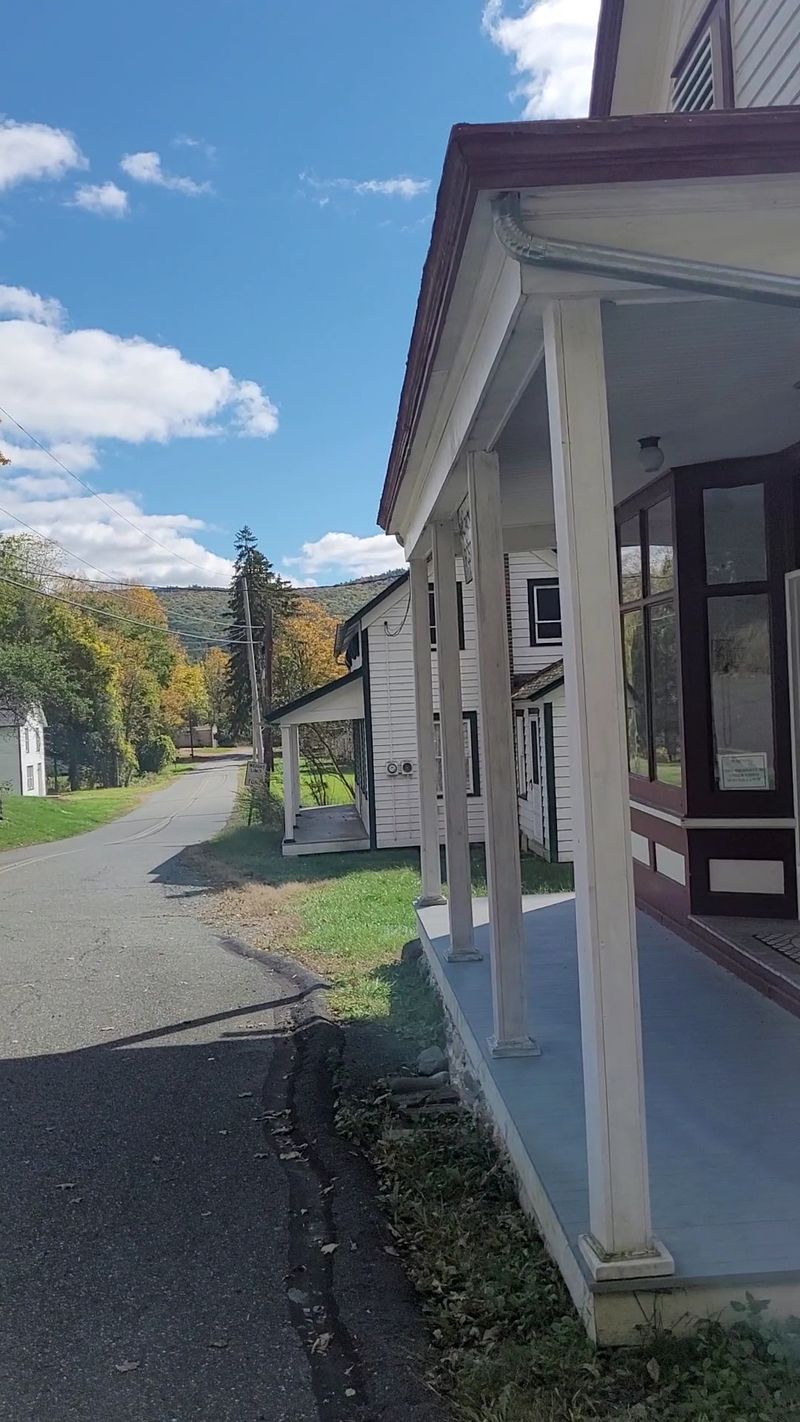
For the farmers living around Walpack Valley, a general store was more than somewhere to pick up a forgotten ingredient. It was part of the infrastructure that made an isolated rural community workable.
Isaac S. and Jasper W. Rundle opened a store at Walpack Center in 1850, and a post office followed in 1854.
By 1872, the settlement included a blacksmith shop, church, and schoolhouse. Those details explain its purpose better than the ghost-town label ever could.
This was a service center for the surrounding countryside, a place where farm households could obtain goods and services they couldn’t supply themselves. Picture the errands behind those building names.
A repair required a blacksmith. A letter required a trip to the post office.
Children needed a school within reach, and families needed places to meet beyond their own farms. The village concentrated those needs along one street.
Its significance wasn’t tied to a spectacular mansion or a famous industrial invention. It rested on doing ordinary things for the people nearby.
That makes the surviving settlement especially readable. You don’t need specialized knowledge of architecture to understand why a store, school, church, and houses belonged together.
You can follow the logic just by walking past them. The later federal land purchases associated with the Tocks Island Dam proposal disrupted the wider valley and helped bring an end to the community represented here.
It’s worth keeping the geography straight, too. Historic Walpack Center is the village at the heart of this visit; Walpack Township is the larger municipality around it.
They aren’t interchangeable descriptions of one empty place. Thinking of the center as a former neighborhood hub gives the visit more depth.
The silence becomes the absence of specific routines, rather than a vague spooky feeling. These buildings once helped people get through the week, and that modest job is precisely what makes their survival matter.
The Dam That Never Got Built Changed Everything
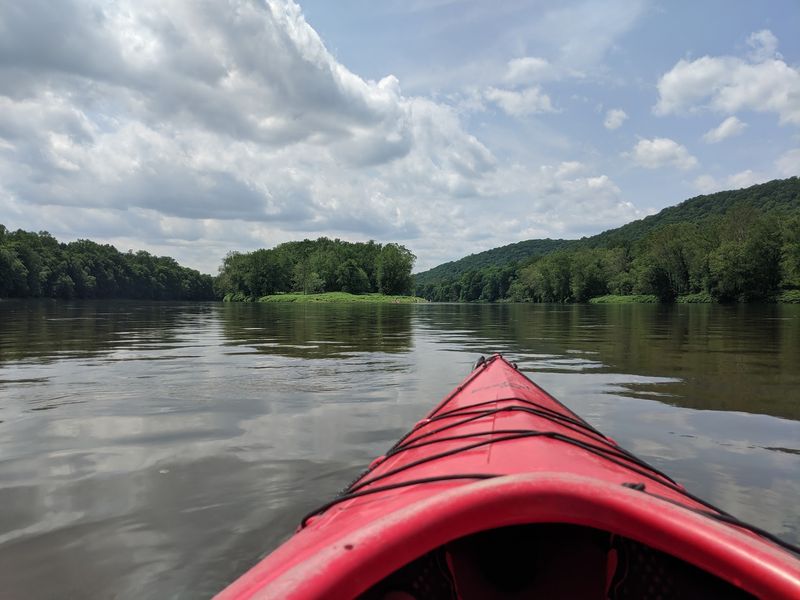
The strangest part of this story is that the enormous project behind the upheaval never reached completion. After devastating flooding in 1955, federal attention turned toward a dam on the Delaware River at Tocks Island.
Congress authorized the project in 1962. The proposed reservoir would have stretched roughly 40 miles, requiring the displacement of hundreds of families and property owners across the affected valley.
Land acquisition brought consequences long before any water rose. Homes and farms changed hands, residents lost their connection to places their families had occupied for generations, and the future of entire communities became uncertain.
That’s the essential context behind Walpack Center’s quiet streets. The emptiness wasn’t simply the result of everyone deciding they preferred somewhere else.
The proposed dam altered the region’s trajectory while it was still a plan. Opposition grew as residents, scientists, conservationists, and others challenged the project.
Financial concerns and questions about its environmental effects also weighed against it. In 1975, the Delaware River Basin Commission voted to shelve the dam; Congress formally deauthorized it in 1992.
By then, canceling construction couldn’t simply restore the communities that had been disrupted. Houses might remain, but a village depends on relationships and livelihoods as much as walls.
That distinction gives this place an emotional weight that a photograph alone can’t convey. The surrounding landscape is now protected for public enjoyment, yet its preservation is connected to a painful chapter for former residents.
Both things can be true at once. As you look along the street, remember that the peace visitors appreciate today came after decisions that were anything but peaceful for the people living here.
The dam never appeared on the river. Its influence remains visible in the village, where buildings outlasted the everyday community they were built to serve.
The Rosenkrans House Keeps The Village’s Stories Alive
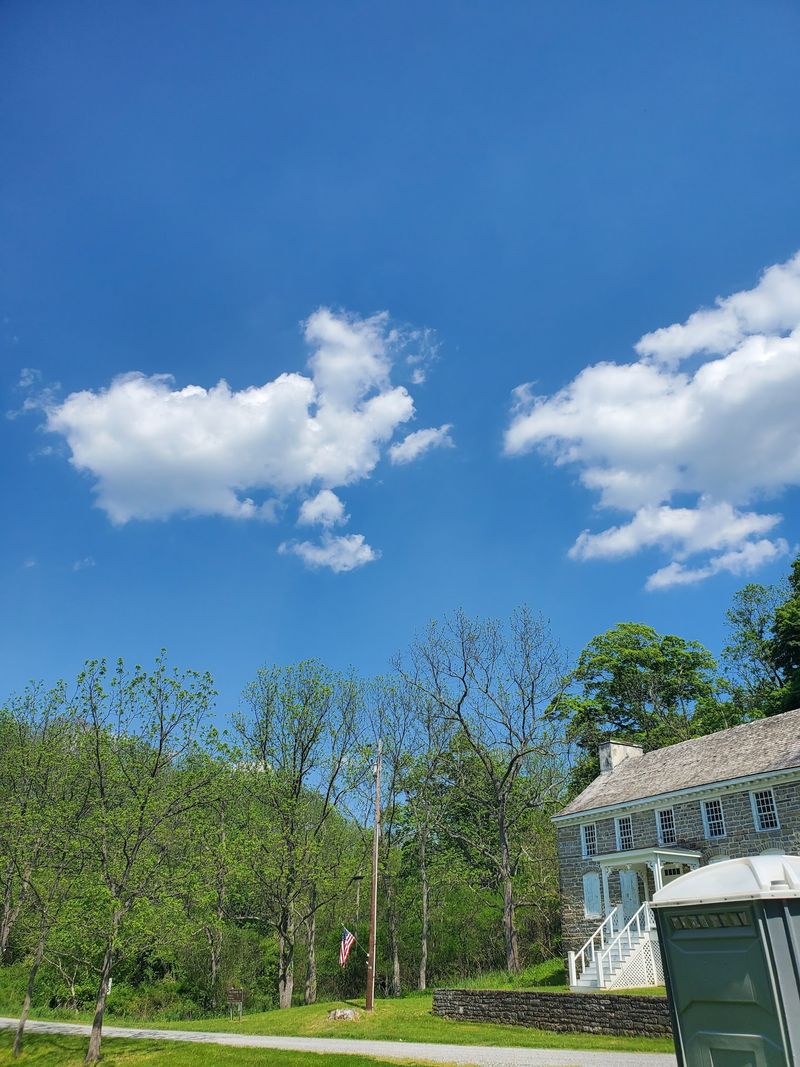
A scheduled open house can change the character of your visit completely. From outside, you’re reading a village through its buildings.
With a volunteer available to explain what you’re seeing, individual names and family histories begin to fill the gaps. The Rosenkrans House serves as a small museum and headquarters for the Walpack Historical Society, making it an important stop for anyone who wants more than a collection of exterior photographs.
The society received use of the house in 1989, several years after organizing in the mid-1980s. That timing says something about the work involved here.
Keeping a nearly empty village meaningful requires people willing to gather its history, explain it, and return season after season. Preservation isn’t finished when a building avoids demolition.
Someone still has to help visitors understand why it deserves attention. The museum gives you an opportunity to ask the questions that naturally arise outside.
Who lived along this street? How did the farming community function?
What changed during the federal acquisitions? A conversation can connect the small settlement in front of you to events that affected the entire Delaware Valley.
Interior access, however, depends on volunteer availability and scheduled openings. Don’t assume that arriving on any Sunday guarantees an unlocked door.
Special events sometimes expand the experience beyond the museum, with tours including the church, schoolhouse, general store, and other village structures. Those occasions offer a fuller view of buildings usually encountered from the road.
Even when the museum is closed, knowing that local people continue to interpret the settlement changes how it feels. The village hasn’t simply been left behind and forgotten.
It has caretakers, researchers, and neighbors invested in keeping its story understandable. That human presence is one of the most satisfying discoveries here.
The buildings may be quiet, but the effort to remember their occupants is still very much alive.
A Woodland Trail Connects Walpack Center To The Van Campen Inn
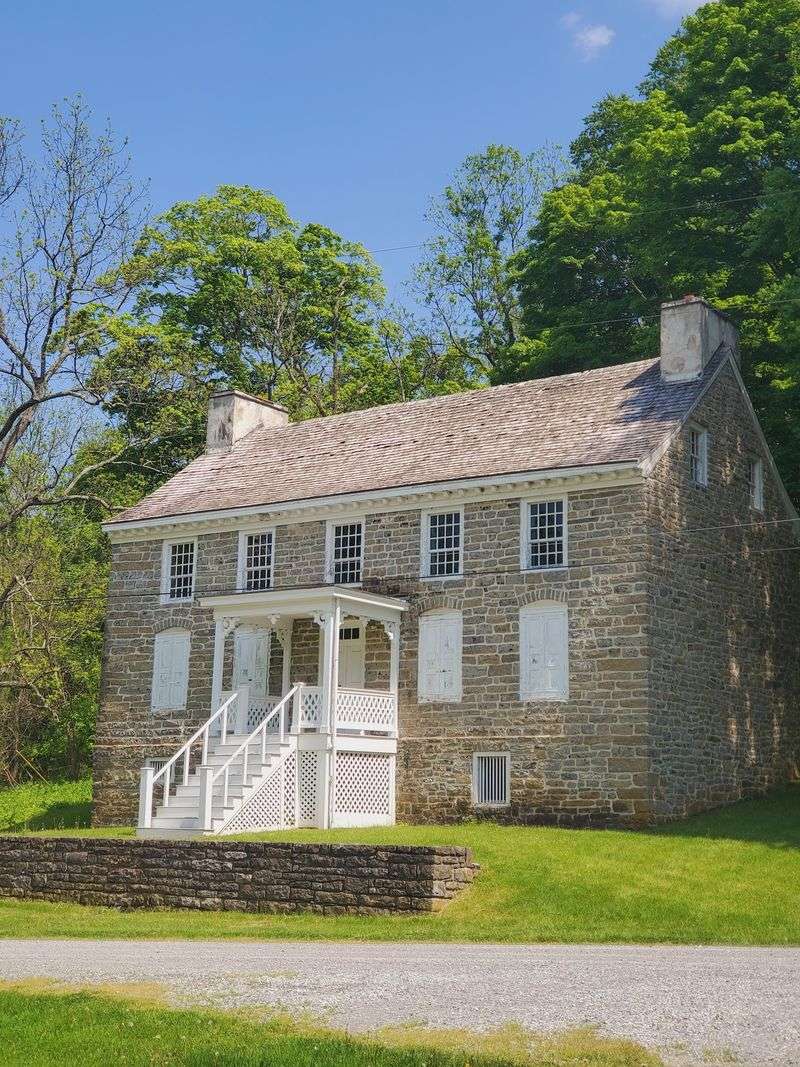
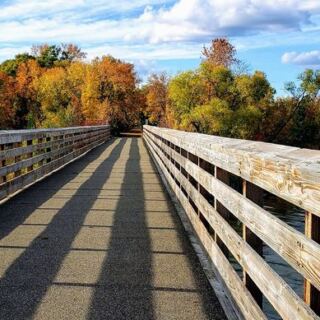
Instead of moving the car between historic stops, you can make the landscape part of the experience. The Military Road Trail connects Walpack Center with the Van Campen Inn on the other side of Walpack Ridge, covering about one mile between the two places.
That’s approximately two miles if you walk out and return along the same route, before adding any exploring at either end. The ridge matters when planning your outing.
A short distance on a map doesn’t mean a level sidewalk, so wear shoes suited to a woodland trail and allow more time than you would for a downtown stroll. The route also helps explain why communities in this area depended on local services.
Once you leave the compact village street and move through the terrain separating neighboring places, distance becomes something you feel rather than read. At the far end, the Van Campen Inn introduces an earlier kind of hospitality.
Originally built as a farmhouse, it served as a “yaugh” house, offering shelter to travelers during the colonial period. Despite the name, this is a historic building to visit rather than a modern inn where you can book a room.
Its location along Old Mine Road connects it to the movement of people through the Delaware Valley before Walpack Center developed into its nineteenth-century service role. Volunteers sometimes open the building on summer Sundays, subject to availability, so coordinate your timing if seeing the interior is important.
Otherwise, the walk still gives the two places a useful relationship. One end represents a village organized around farming families and their everyday needs.
The other recalls travelers relying on a household for shelter along an older route. Walking between them gives the outing a satisfying change of pace, replacing a sequence of roadside stops with a sense of the country those buildings belonged to.
History here extends beyond the front steps.
What To Know Before Exploring This Quiet Corner Of New Jersey
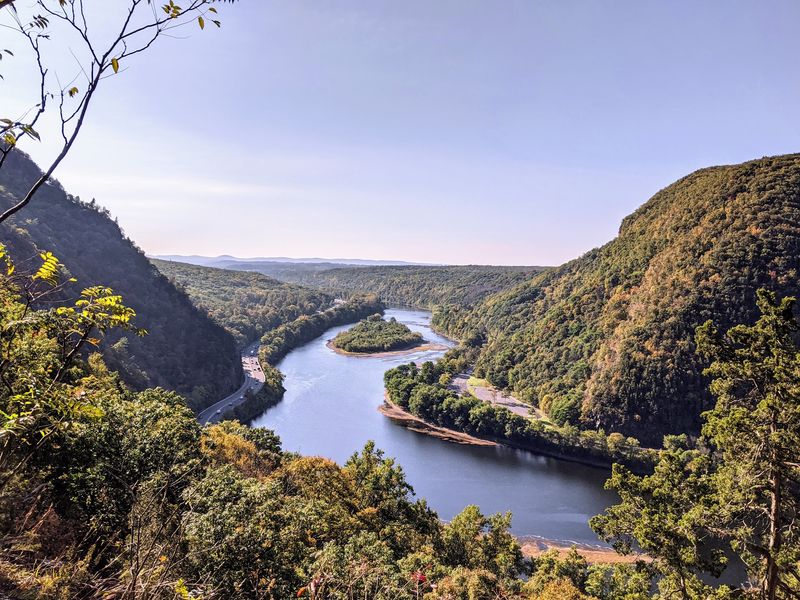
The most useful thing to arrange beforehand is your route. This part of Sussex County rewards a little preparation, especially if you’re combining the village with a walk or another stop in the recreation area.
Road and bridge closures can make two nearby places less straightforward to reach than they appear on a phone screen. Check current park conditions before setting out, and download directions or a map rather than relying entirely on a live connection.
One particularly relevant closure affects the Main Street bridge between Walpack Center and Mountain Road. That crossing remains closed because of structural damage, so don’t assume you can drive straight through from the village toward Buttermilk Falls.
Access to the falls requires a separate approach via Struble Road through Stokes State Forest. Nearby sections of Old Mine Road also have construction restrictions, making an up-to-date route more useful than an old trip itinerary.
For the village itself, daylight gives you the best opportunity to study the buildings and read the place without rushing. Bring water and something to eat if you’re extending the visit with the Military Road Trail; the former general store is a historic attraction, not a dependable snack stop.
Park only where permitted and leave doors, gates, and closed buildings alone. An open-house event offers access that an ordinary visit may not, and checking the volunteer schedule can prevent disappointment if the museum is your main reason for coming.
Allow roughly an hour for an unhurried look around the village, then add time for any guided openings or hiking. It’s a small destination, but its story benefits from a slower pace.
Once the logistics are settled, the visit can be wonderfully simple: a walk along the street, a closer look at familiar buildings, and a little time to consider the everyday life that once connected them.
Share this story