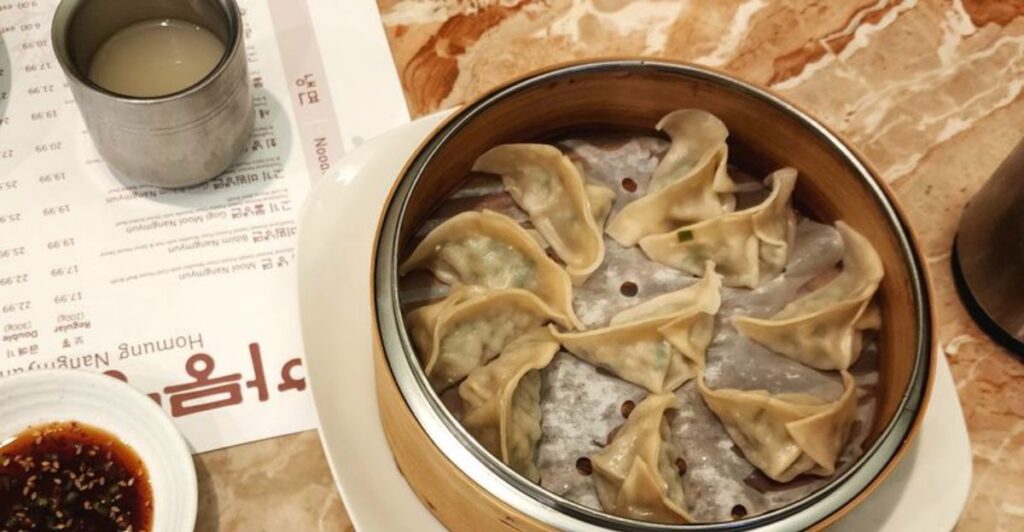
One Korean restaurant in North Jersey ladles out slow-simmered soup 24 hours a day, seven days a week. Yes, that includes 3 a.m. on a random Tuesday.
I love that. It means somebody in New Jersey is getting a bowl of rich broth while most kitchens are dark.
Another spot on this list makes its own organic tofu, inspired by a famous tofu village in South Korea.
Grilled meat gets plenty of attention, and fair enough. But Korean cooking also means bubbling stews, spicy chewy rice cakes, icy noodles, crispy pancakes, and fried chicken with a serious crunch.
Many of these dishes are built for sharing, slurping, and passing across the table.
So I went looking for places across the state where the grill takes a back seat, and the results made me hungry pretty fast.
1. ONGA · 온가
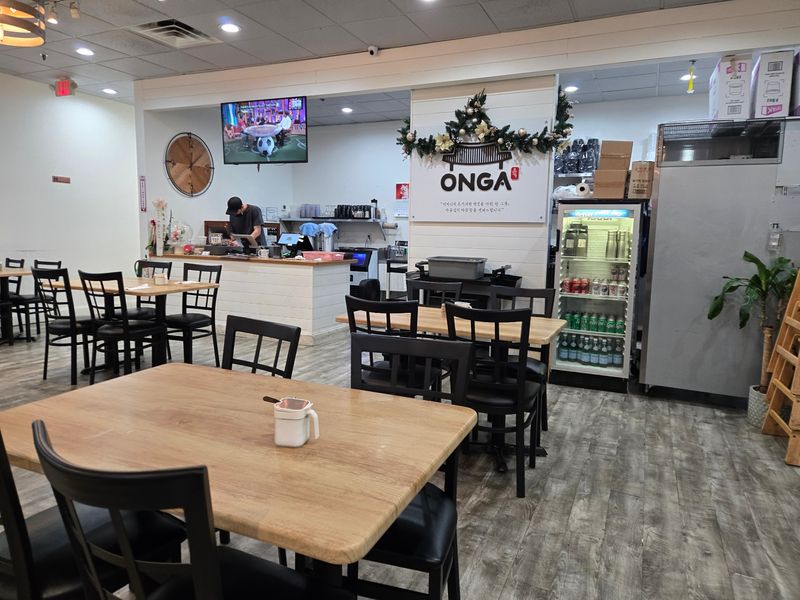
Soup at 4 a.m. sounds like a fantasy, but this Fort Lee kitchen keeps the pots going around the clock. ONGA is open 24 hours a day, seven days a week.
The focus here is Korean soul food, the homestyle cooking that feeds families on cold nights. Think soups, stews, and braised dishes instead of a tabletop grill.
Start with the tang soups. These rich broths simmer for hours, so the flavor has time to build into something deep and comforting.
If you want something heartier, the braised short ribs are a strong pick. Braising cooks meat slowly in liquid, which helps it turn tender.
The restaurant’s big idea is bringing the feel of a Korean home table to Fort Lee. That makes it a smart stop when you want comfort more than flash.
Those round-the-clock hours open up plenty of options. You could swing by after a late shift, before an early flight, or on a lazy Sunday afternoon.
New to Korean soups? Ask which broths are mild and which carry more spice, then build your meal from there.
Sharing works well here too. Order a couple of different soups for the table and compare notes as you go.
Honestly, a place that never closes and specializes in slow-simmered broth feels like a public service. Your midnight cravings finally have a respectable address.
Fort Lee sits right by the George Washington Bridge, so it’s an easy stop for anyone crossing from New York. Just plan for local traffic around the bridge.
Soup fans, this is your clubhouse. Order slowly, sip carefully, and leave room for one more spoonful.
Bring a friend who claims they’re not a soup person. A long-simmered broth might change their mind.
Address: 1475 Bergen Blvd, Fort Lee, NJ 07024
2. BCD Tofu House
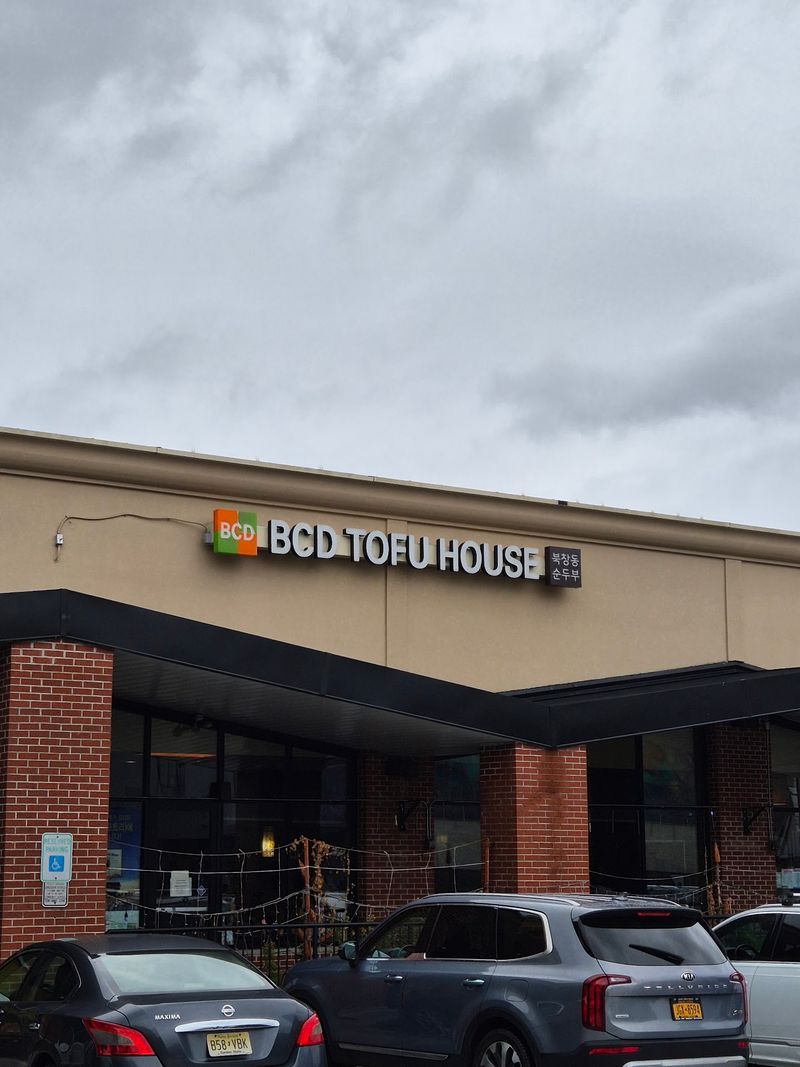
Bubbling tofu stew has its own fan club in Fort Lee, and the meeting spot is BCD Tofu House. The kitchen here has been serving its stews since 2010.
The star is soondubu jjigae, a soft tofu stew with silky tofu in a spicy broth. You get to choose your flavor, which is half the fun.
The list of options is long. Kimchi, seafood, beef, pork, oyster, dumpling, beef tripe, and vegetable versions are on the menu.
Picky eaters can stick with beef or vegetable. Adventurous friends might go straight for beef tripe and dare you to try a bite.
Tofu isn’t the only reason to show up. Grilled mackerel brings a savory option for anyone who loves fish.
Spicy stir-fried pork and spicy stir-fried squid add more heat to the table. Seafood pajeon, a savory Korean pancake, is great for splitting.
Japchae is another crowd-pleaser. Those glass noodles are made from sweet potato starch and tossed with vegetables, and they’re easy to love.
Bibimbap rounds things out for anyone who wants a rice bowl. Mix it well before your first bite so the flavors spread around.
A tip for first-timers: soondubu often arrives seriously hot. Let it cool a minute so your tongue survives the experience.
A stew menu with this many choices means you could come back weekly for a while. That’s not a problem, it’s a plan.
For a New Jersey spot built around one dish, the range is impressive. Your main job is picking a spice level you can handle.
Groups do well here because the menu covers seafood, meat, and vegetables. Everyone finds a lane without much arguing.
Address: 1640 Schlosser St, Fort Lee, NJ 07024
3. BonChon Chicken
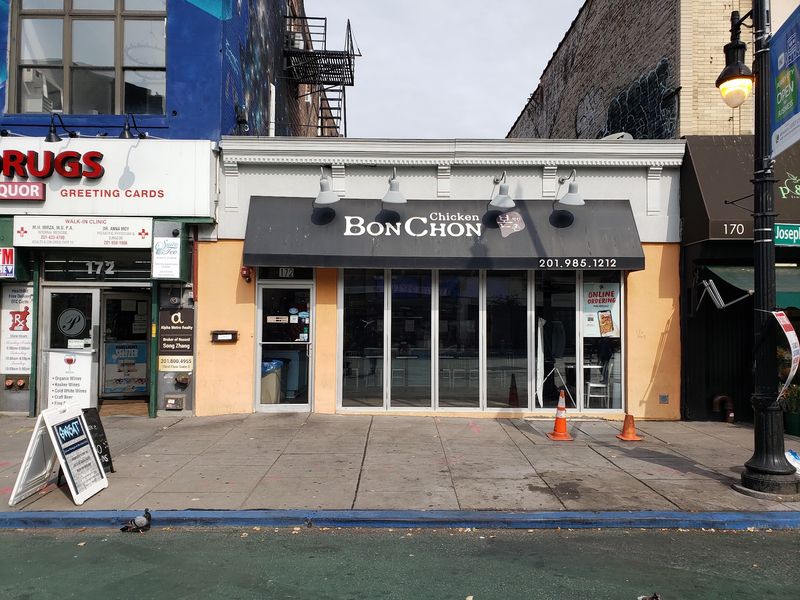
Fried twice and brushed with sauce. That’s the basic idea behind the Korean fried chicken at BonChon in Jersey City.
The double-frying is the signature move here. Korean fried chicken is known for a thin, crackly crust, and this method is how cooks chase it.
You can order wings, drumsticks, strips, or boneless pieces. Each one gets brushed with your choice of soy garlic or hot and spicy sauce.
Soy garlic is the safer pick for spice-shy folks. Hot and spicy is for people who enjoy a little sweat with their snack.
Can’t decide? Bring a friend who picks the other sauce, then trade pieces like baseball cards.
The chicken gets the spotlight, but the rest of the menu deserves a look. Tteokbokki, spicy stir-fried rice cakes, brings a chewy, saucy side.
Japchae and bibimbap are both on hand for anyone who wants noodles or a rice bowl. Fried rice is another easy add-on.
Craving soup? Udon noodle soup gives you something slurpable to balance the crunch.
There’s also a K-Chicken sandwich for days when you want to eat with one hand. Handy if you’re walking around downtown Jersey City.
The Newark Avenue location sits on a busy downtown stretch with lots of shops and restaurants. Grab your chicken and make an afternoon of it.
Napkins are your friend here. Sauced chicken and clean fingers rarely stay together for long.
Korean fried chicken has become a worldwide favorite, and BonChon helped spread it far beyond Korea. The brand now has locations in many countries.
Fried chicken might not sound like a deep cut of Korean food. One crunchy bite should explain why it belongs on this list.
Address: 172 Newark Ave, Jersey City, NJ 07302
4. K-Towne Kitchen
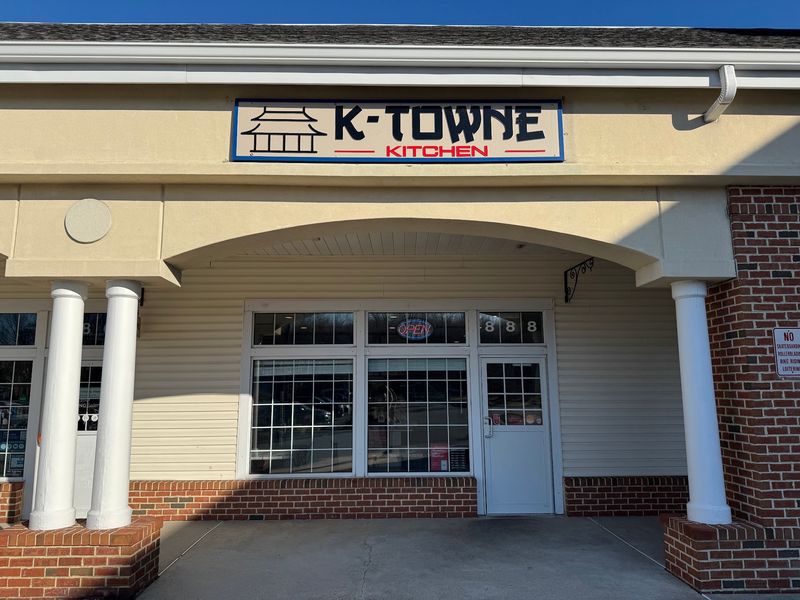
South Jersey got a fresh Korean fix in November 2023, when K-Towne Kitchen opened in Mount Laurel. The menu mixes Korean flavors with an American twist.
Korean corn dogs are a fun place to start. These street-food snacks have become a big hit online, and they practically beg for a photo.
Kimbap comes in several varieties too. Think of it as a Korean rice roll, wrapped in seaweed and sliced into easy bites.
Ramen fans get to pick their own adventure. Choose mild, spicy, or extra spicy, depending on how brave you’re feeling.
Extra spicy is a bold call on a weeknight. Maybe keep a glass of water nearby, just in case.
The Kup Bop bowls are where things get clever. Each one stacks rice, japchae, spring mix, and a pork dumpling.
Then you add a protein. Options include beef bulgogi, spicy pork, tofu, or boneless chicken.
That combo gives you noodles, rice, greens, and a dumpling in one bowl. It’s basically a sampler platter that fits in your lap.
Korean-style fried chicken shows up here too, in wings and boneless versions. Pair it with kimbap for a snack plate that covers plenty of ground.
The fusion angle makes this a friendly first stop for Korean food newbies. Familiar formats like corn dogs and bowls lower the stakes.
Longtime fans will still find classics like japchae and bulgogi. That balance keeps both camps happy.
Mount Laurel isn’t the first town people link with Korean food in New Jersey. K-Towne Kitchen is giving it a solid reason to change that reputation.
Hungry teens, picky siblings, and spice lovers can likely agree on something here. That’s a rare win for a family dinner.
Address: 888 Union Mill Rd, Mount Laurel, NJ 08054
5. Homung Nangmyun
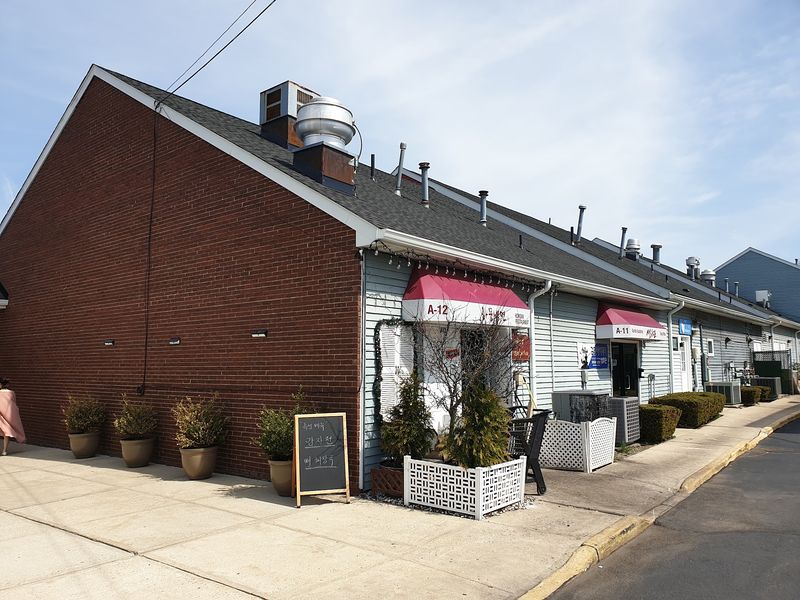
When summer turns the air into soup, cold noodles start sounding like a rescue mission. Homung Nangmyun in Closter puts that idea right in its name.
Nangmyun is another spelling of naengmyeon, a traditional Korean cold noodle dish. The noodles are long, thin, and famously chewy.
Naengmyeon traces back to what is now North Korea, with Pyongyang and Hamhung styles being the best-known versions. Pyongyang style often uses buckwheat noodles in a chilled broth.
Hamhung style tends to feature chewier noodles, often made with potato or sweet potato starch. It’s frequently served spicy with a red pepper sauce.
In Korea, cold noodles are a classic summer meal. Plenty of fans happily eat them in winter too, because good noodles don’t care about the calendar.
Ever heard of cutting noodles with scissors? Naengmyeon noodles are so long that many restaurants offer scissors to snip them.
Some diners also add vinegar or mustard to the broth. A small splash can brighten the bowl, so taste first and adjust slowly.
A restaurant named after one dish is making a clear promise. That focus is a good sign when you’re craving something specific.
Ask about the noodle styles available when you visit. The difference between a broth bowl and a spicy mixed bowl is huge.
Closter is a quieter Bergen County town, a short drive from the busier Korean food strips nearby. That makes it a nice change of pace.
Cold noodles might sound plain on paper. In the bowl, they can be tangy, savory, icy, and surprisingly filling.
Bring a friend and order two different styles. Swapping bites is the fastest way to find your favorite.
Slurping is allowed, by the way. With noodles this long, it’s practically required.
Address: Closter, NJ 07624
6. Soosanghan Pocha
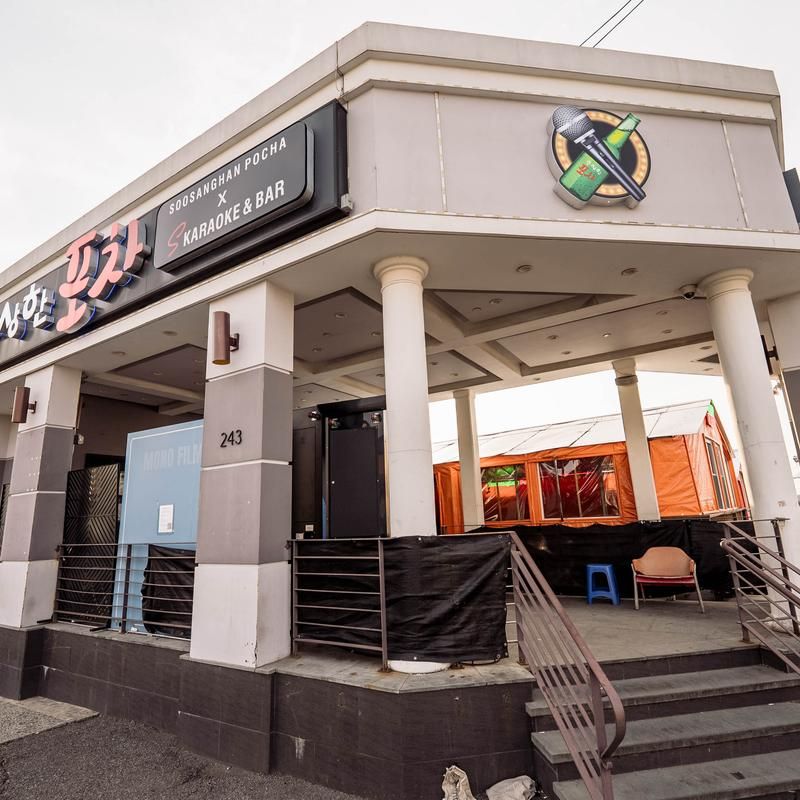
Pocha culture comes from Korea’s street tent eateries, where friends gather around shared plates. Soosanghan Pocha in Palisades Park has been a gathering place since 2017.
The name is fun too. Soosanghan means suspicious in Korean, which is a pretty playful choice for a restaurant.
Army stew, or budae jjigae, is one of the headliners. It grew out of food shortages after the Korean War, when cooks mixed Spam, hot dogs, and other American supplies into spicy stew.
Today, it’s a beloved comfort dish. Instant noodles and cheese often join the party, making it a bubbling pot of happy chaos.
Cheese buldak is another big draw. Buldak means fire chicken, so expect spicy chicken mellowed by a blanket of melted cheese.
Seafood pancakes give the table something crisp to share. Tear off a piece, dip it, and pass the plate along.
Grilled pork belly makes an appearance too. Yes, it’s a grilled dish, but here it’s one player on a much bigger team.
Cheesy egg rolls round out the snacky side of the menu. Korean egg rolls are rolled omelets, and cheese makes them extra gooey.
Pocha food is designed for groups. Order a few plates, plop them in the middle, and let everyone grab what they want.
Spice lovers will feel right at home with the army stew and buldak. Milder eaters can lean on pancakes and egg rolls.
Palisades Park is packed with Korean restaurants, especially along Broad Avenue and Central Boulevard. This spot is a fun way to sample the snacky, social side of that scene.
Go with a crew and a big appetite. Shared plates make dinner feel more like a party.
Address: 131 W Central Blvd, Palisades Park, NJ 07650
7. Hansang
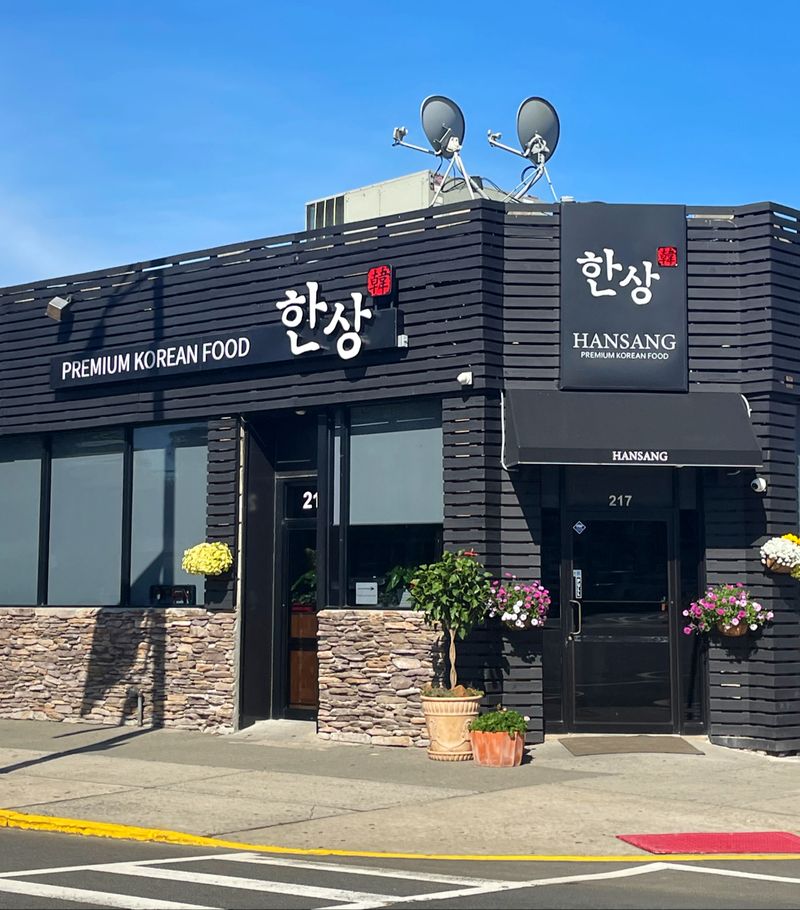
Seoul-style cooking without the plane ticket? Hansang in Palisades Park focuses on Korean dishes in the style of the capital city.
The menu leans hard into comfort. You’ll find a wide variety of stews, hearty soups, and tender braised entrees.
Hansang means a full table set for a meal in Korean. It’s a fitting name for a place built around shared, home-style dishes.
One dish earns special mentions from diners: the eel rice. Eel is rich and savory, and pairing it with rice keeps things simple.
Eel might sound unusual if you’ve never tried it. Think of it as a tender fish that’s often finished with a slightly sweet glaze.
Appetizers come in both cold and hot versions. That variety makes it easy to build a meal that starts light and finishes hearty.
Vegetarians aren’t left out either. The menu includes vegetarian options, which isn’t always a given at Korean restaurants.
Braised dishes are a smart pick on chilly evenings. Slow cooking helps meat turn soft enough to pull apart with chopsticks.
Hansang is open seven days a week. That makes it a reliable option when a soup craving hits on a random Monday.
Its Broad Avenue address puts you right in the heart of the Palisades Park Korean dining strip. Plan a little extra time for a stroll afterward.
Mixing a stew with a cold appetizer is a fun way to explore the menu. You get contrast in temperature and texture in one meal.
Ordering for a group? Pick one soup, one braise, and one appetizer, then share like a family.
New Jersey diners who think Korean means barbecue should start here. A table of stews and braises tells a much bigger story.
Address: 217 Broad Ave, Palisades Park, NJ 07650
8. Cho Dang House
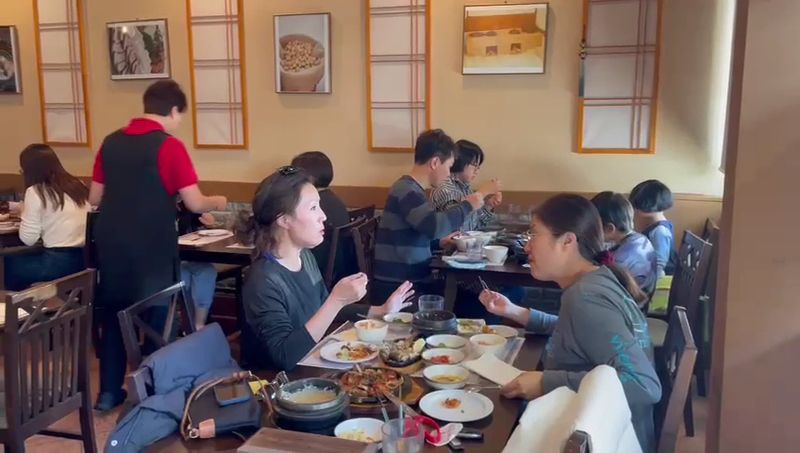
Fresh tofu made in-house is the whole point at Cho Dang House in Fort Lee. The restaurant’s handmade, organic tofu draws inspiration from the Cho Dang tofu village in South Korea.
That village is in Gangneung, a coastal city famous for tofu. Cooks there traditionally use seawater to help set the tofu.
Here, the tofu soups come in several styles. Plain white, beef, seafood, and perilla seed with mushroom are on the menu.
Perilla seed gives soup a nutty, earthy flavor. It’s a nice pick if you want something different from the usual red, spicy broth.
Want more heat? Spicy braised tofu with pork and mushroom brings a bolder plate to the table.
Tofu bossam is a fun one to share. Pork belly, handmade tofu, and kimchi come together in a wrap.
Pancake fans have a leek and shrimp version to try. Tear it into pieces and share, or guard it carefully.
There’s also clear glass noodles with beef. That’s a good side when your group needs something mild and slurpable.
The kitchen skips MSG and artificial preservatives. For diners who read labels closely, that’s a welcome detail.
Fresh tofu is softer and more delicate than the blocks sold in most grocery stores. Eating it in soup is a great way to notice the difference.
The tofu-forward menu also suits lighter eaters. These dishes fill you up without feeling heavy.
Lemoine Avenue is one of the main restaurant roads in Fort Lee. That makes it easy to pair dinner with a walk or errands.
In a town packed with Korean spots, a tofu specialist stands out. It’s a smart reminder that Korean cooking runs deep.
Tofu skeptics, consider this your challenge. One bowl of the good stuff might rewrite your opinion.
Address: 2151 Lemoine Ave, Fort Lee, NJ 07024
9. Myung Dong Noodle House
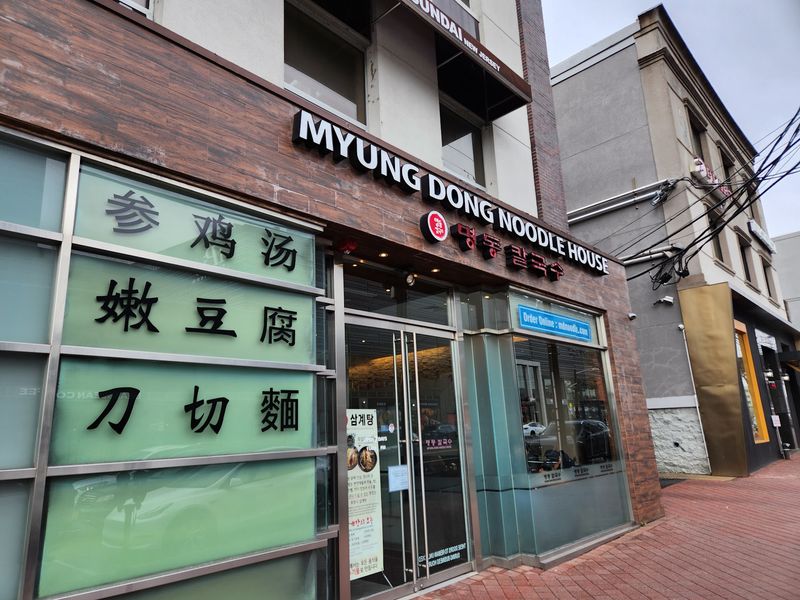
Noodles cut by knife have a charm that machines can’t quite copy. Kalguksu, or knife-cut noodle soup, is the signature at Myung Dong Noodle House in Fort Lee.
The name nods to Myeongdong, a busy shopping district in Seoul famous for its kalguksu shops. That’s a fun connection for a noodle house.
Your kalguksu can come in broth with ground beef and dumplings. Mushroom and seafood versions are options too.
Knife-cut noodles are usually flat and a little uneven. That irregular shape helps them grab more broth with each bite.
Prefer your noodles cold? Naengmyeon is on the menu, made with buckwheat or sweet potato noodles.
It’s served with boiled egg and pickled vegetables. That tangy crunch makes it a strong choice on a hot New Jersey afternoon.
Seafood tteokbokki brings chewy rice cakes into the mix. Adding seafood gives the classic street snack a heartier twist.
Pajeon lovers get choices here, including seafood and kimchi scallion pancakes. Splitting one with the table is a classic move.
Spice fans should check out yukgaejang, a spicy beef soup. Traditional versions are red, bold, and packed with shredded beef.
A good game plan is one hot noodle soup, one cold noodle dish, and one pancake. That way you taste a little of each world.
Noodle soup fills you up quickly. Pace yourself, because you’ll want room for a few bites of pancake.
Kalguksu is a beloved comfort food in Korea, especially on rainy days. Local weather gives you plenty of excuses to test that tradition.
Fort Lee has plenty of Korean food, but noodle specialists stand apart. This one keeps its focus on bowls you slurp.
Grab extra napkins. Broth splashes are part of the deal.
Address: 2013 Lemoine Ave, Fort Lee, NJ 07024
10. HAEJANG 2
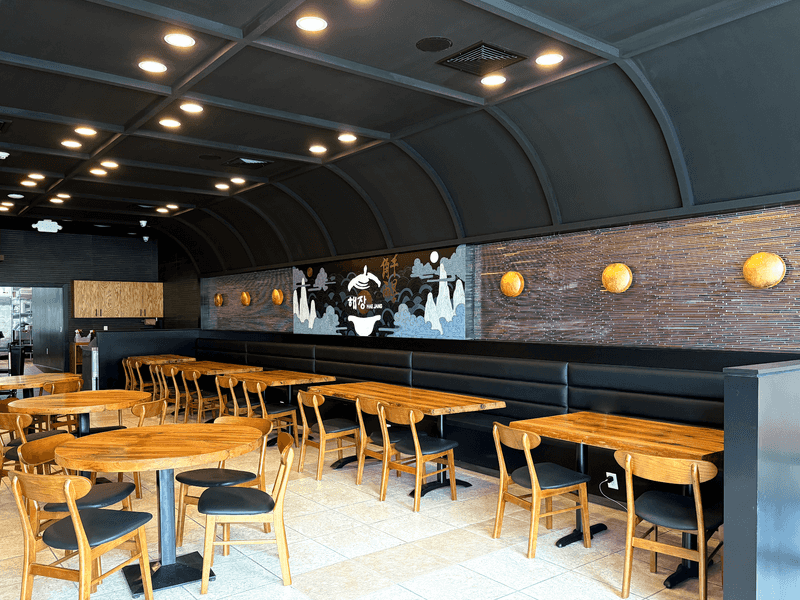
Haejang roughly means soothing a rough stomach in Korean, and soups built for that job are a whole category. HAEJANG 2 in Palisades Park makes them a specialty.
These dishes are famous in Korea as rescue food for rough mornings. Big flavors and hot broth are the general idea.
The soup lineup goes deep. Beef bone, beef blood, sundae, pork, and pork bone gamjatang are on the menu.
Sundae here isn’t ice cream. It’s Korean blood sausage, often stuffed with glass noodles, and it’s a beloved street food.
Army stew shows up too, loaded and bubbly. For something wild, try spicy braised pork back ribs with cheese fondue.
Beef skirt tartare bibimbap is another bold choice. Raw beef over rice might sound daring, but yukhoe is a Korean classic.
Seafood fans can explore soy marinated raw crab and spicy raw crab. Raw crab, or gejang, is a famous dish often nicknamed rice thief.
The nickname makes sense. The sauce is so tasty that people tend to keep reaching for more rice.
Grilled fish gets its own spotlight here. Choices include mackerel, Atka mackerel, Spanish mackerel, salmon, yellow croaker, and hairtail.
Hairtail is a long, silvery fish that’s a favorite in Korean home cooking. Yellow croaker is another classic, often served whole.
Not sure where to start? Pork bone gamjatang is a friendly entry point, with meaty bones and potatoes in a spicy broth.
Adventurous eaters can go for the raw crab or blood soups. Your friends back home will want proof.
The name ends with a 2, so think of it as a sequel worth catching. Sequels rarely come with this many soups.
This ranks among the deeper Korean comfort menus in New Jersey. Show up with questions and an open mind.
Address: 131 W Central Blvd, Palisades Park, NJ 07650
11. Koko Haus
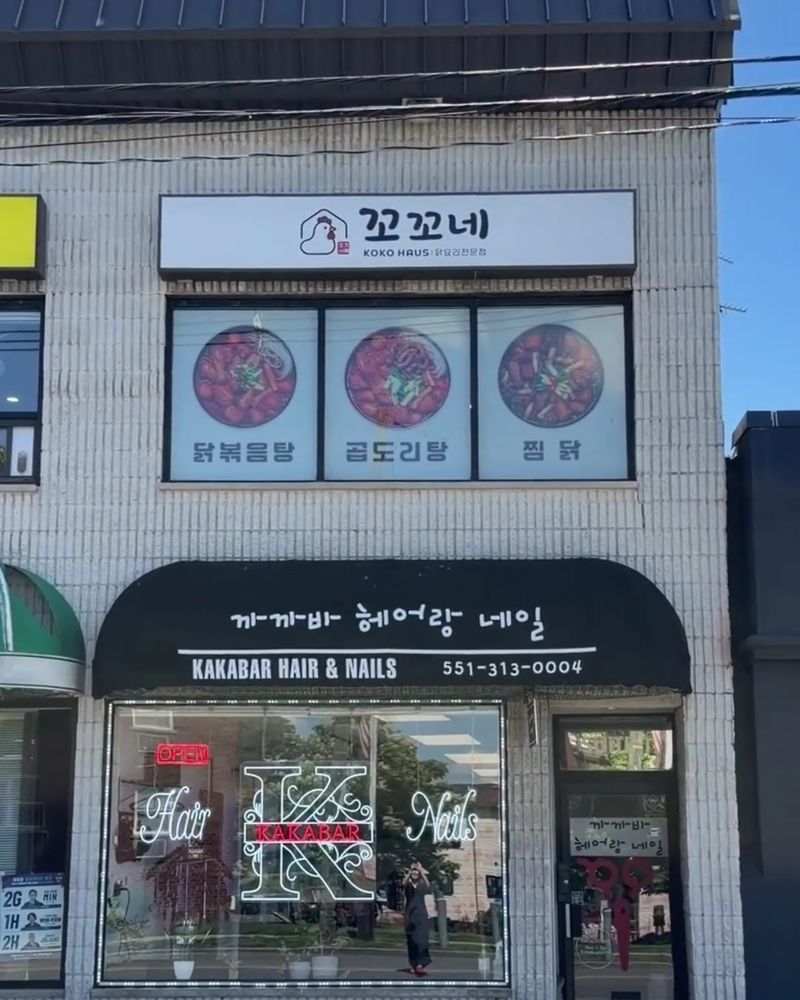
Chicken gets the star treatment at Koko Haus, but not in the fried, crunchy way you might expect. This second-floor spot in Palisades Park leans into stews and braises.
Jjimdak is a great starting point. This braised chicken dish comes from Andong, a city in South Korea, and it’s known for a soy-based sauce.
Glass noodles often soak up that sauce in traditional versions. Expect something savory, a little sweet, and very shareable.
Dakbokkeumtang turns up the heat. It’s a spicy braised chicken dish, often cooked with potatoes and carrots in a red sauce.
Gopdoritang is the curveball. This one pairs braised chicken with tripe, giving you two very different textures in one pot.
Never tried tripe? It’s chewy and soaks up flavor, so a spicy braise is a good place to test it.
The menu also features Chungking spicy chicken. Chungking is another spelling of Chongqing, a Chinese city famous for fiery food.
That dish reflects the Korean-Chinese crossover cooking popular in Korea. It’s a fun detour if you love chili heat.
Flying fish roe fried rice rounds out the menu. Those tiny orange eggs pop when you bite them, which is half the fun.
Many braised chicken dishes in Korea end with rice fried in the leftover sauce. Ask whether that’s an option before you scrape the pot clean.
Bring a group if you can. Stews like these are made for passing around.
The restaurant sits upstairs at its Broad Avenue address. Look for suite S8 on the second floor.
Korean chicken goes far beyond wings, and this menu proves it. Your usual fried chicken order may suddenly feel a little basic.
Address: 110 Broad Ave #S8, 2F, Palisades Park, NJ 07650
12. To Sok Chon
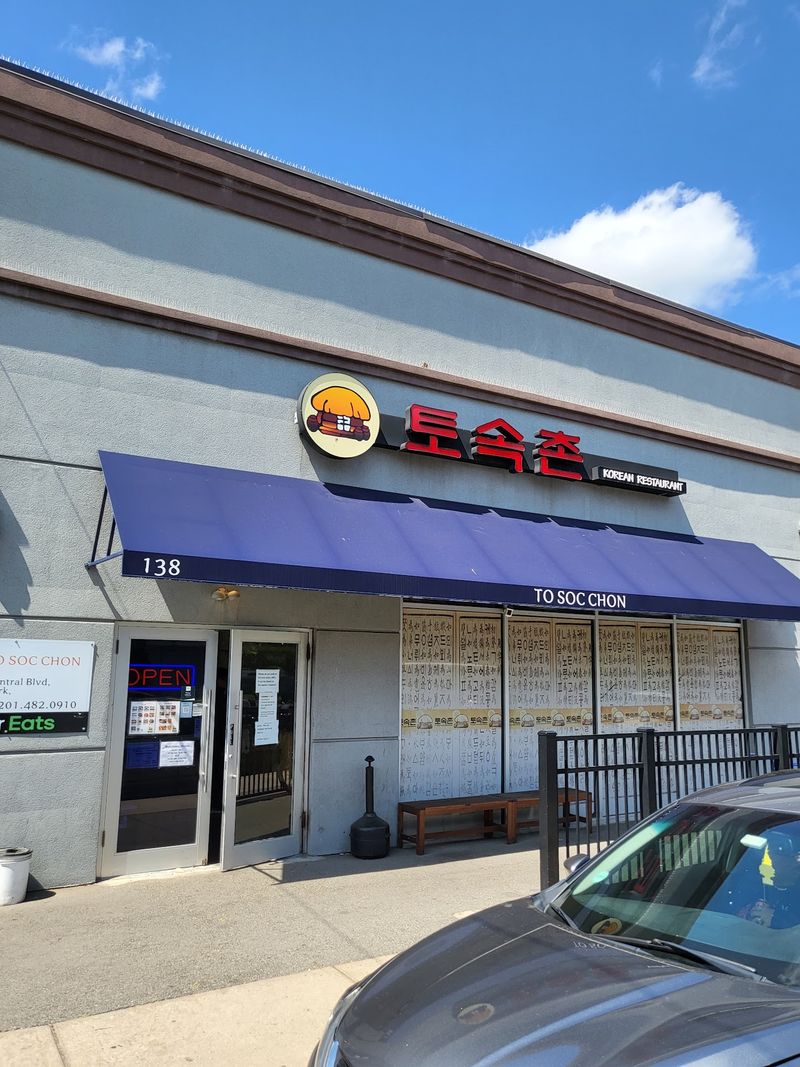
Busan, the big port city of South Korea, is famous for one humble meal: gukbap, or soup with rice. To Sok Chon in Palisades Park makes Busan-style gukbap its calling card.
Gukbap is simple at heart. You get a hot, rich soup, and rice either goes in the bowl or on the side.
Dae Ji Guk Bap, a pork bone soup with rice, is the classic Busan order. Pork-based gukbap is closely tied to the food history of that city.
Soondae Guk Bap features blood sausage in the soup. It’s hearty, rich, and a favorite for people who like bold flavors.
Gam Ja Tang, the pork spine stew, is great for sharing. Pick the meat off the bones and soak up the spicy broth.
Prefer something lighter? Yangji Seolleong Tang is an ox bone soup, usually milky white and gently seasoned.
Many diners add salt and scallions to seolleongtang at the table. That lets you season the bowl just the way you like it.
The menu travels beyond Busan too. Ansung Maeeun Sogogi Gukbap is a spicy beef soup rice bowl with roots in another region.
Jok Bal, or braised pork trotters, is a classic Korean dish for groups. The meat is sliced and usually eaten with dipping sauces.
Kimchi jjigae and jeyuk bokkeum, a spicy stir-fried pork, are easy picks for first-timers. Grilled mackerel, or godeungeo gui, adds a fish option.
Want to eat like a local in Busan? Try the pork bone gukbap and add a bit of kimchi to each spoonful.
Soup and rice might sound basic. Done well, it’s one of the most satisfying meals around.
This Central Boulevard spot is close to Broad Avenue. Make it your first stop on a Korean food crawl.
Address: 138 W Central Blvd, Palisades Park, NJ 07650
13. Eden Korean Restaurant
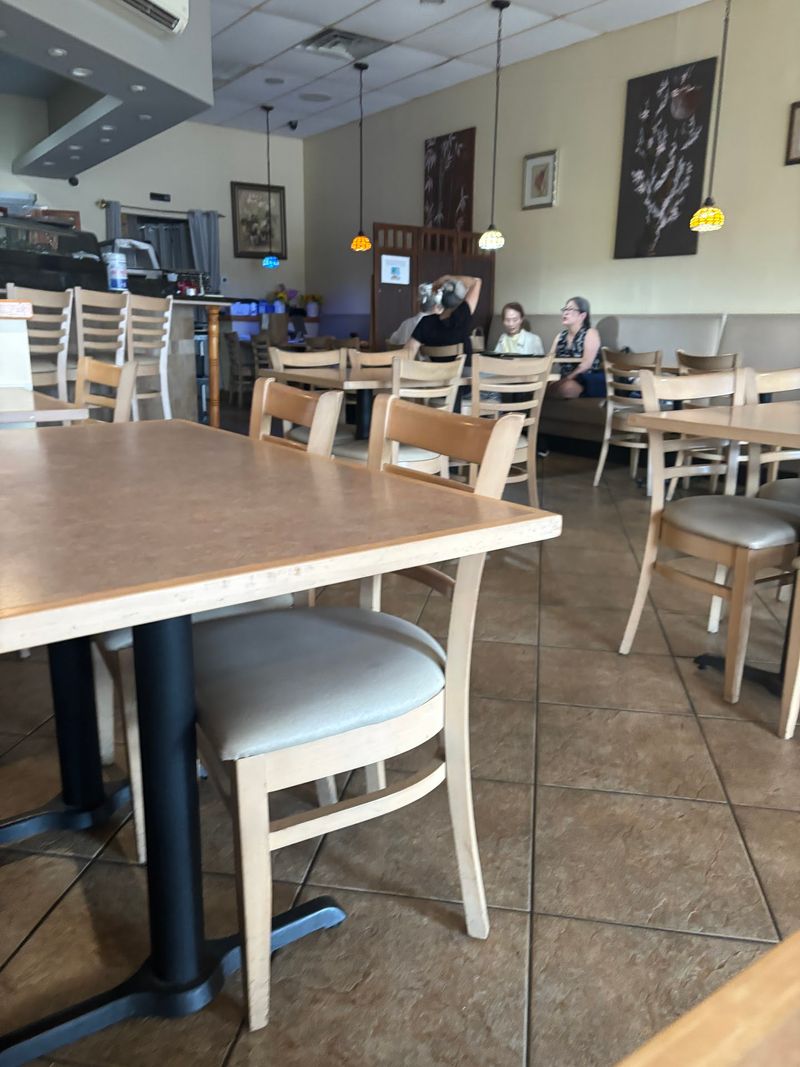
Cherry Hill is better known for its mall than for kimchi pancakes, but Eden Korean Restaurant is changing the conversation. The focus here is homestyle Korean cooking.
Bibimbap is a big part of the menu, with several versions to choose from. Bulgogi, seafood, tofu, chicken, and avocado dolsot bibimbap are all options.
Dolsot means stone pot. The bowl gets heated, so the rice on the bottom turns crispy and golden.
Avocado in bibimbap might raise a few eyebrows. It’s a creamy twist that fits right in with the vegetables and rice.
Pancake fans get two choices: seafood and green onion, or kimchi. Both make great starters for a table.
Rabokki deserves a shout-out. It combines ramen and tteokbokki, so you get noodles and chewy rice cakes in one spicy dish.
Kimbap and spicy rice cake are also on the menu. Those are classic Korean snack foods, perfect for nibbling.
Want something from the sea? Grilled mackerel and deep-fried squid both make appearances.
Fried dumplings and soy garlic wings round out the snacky side. Order a few and turn dinner into a tasting party.
The menu changes with the seasons. That means a return visit might turn up something new.
South Jersey diners don’t have to drive up to Bergen County for Korean comfort food. Eden brings plenty of it to Marlton Pike.
First visit? Try a dolsot bibimbap and one pancake, then let your curiosity guide round two.
Mix the sauce in well before eating. That way, the flavor reaches each bite.
Scrape the bottom of that stone pot, by the way. The crispy rice down there is the prize.
Korean food in New Jersey stretches from the Hudson to the Delaware Valley. Ending here proves it’s worth the drive in either direction.
Address: 1428 E Marlton Pike, Cherry Hill, NJ 08034
Share this story